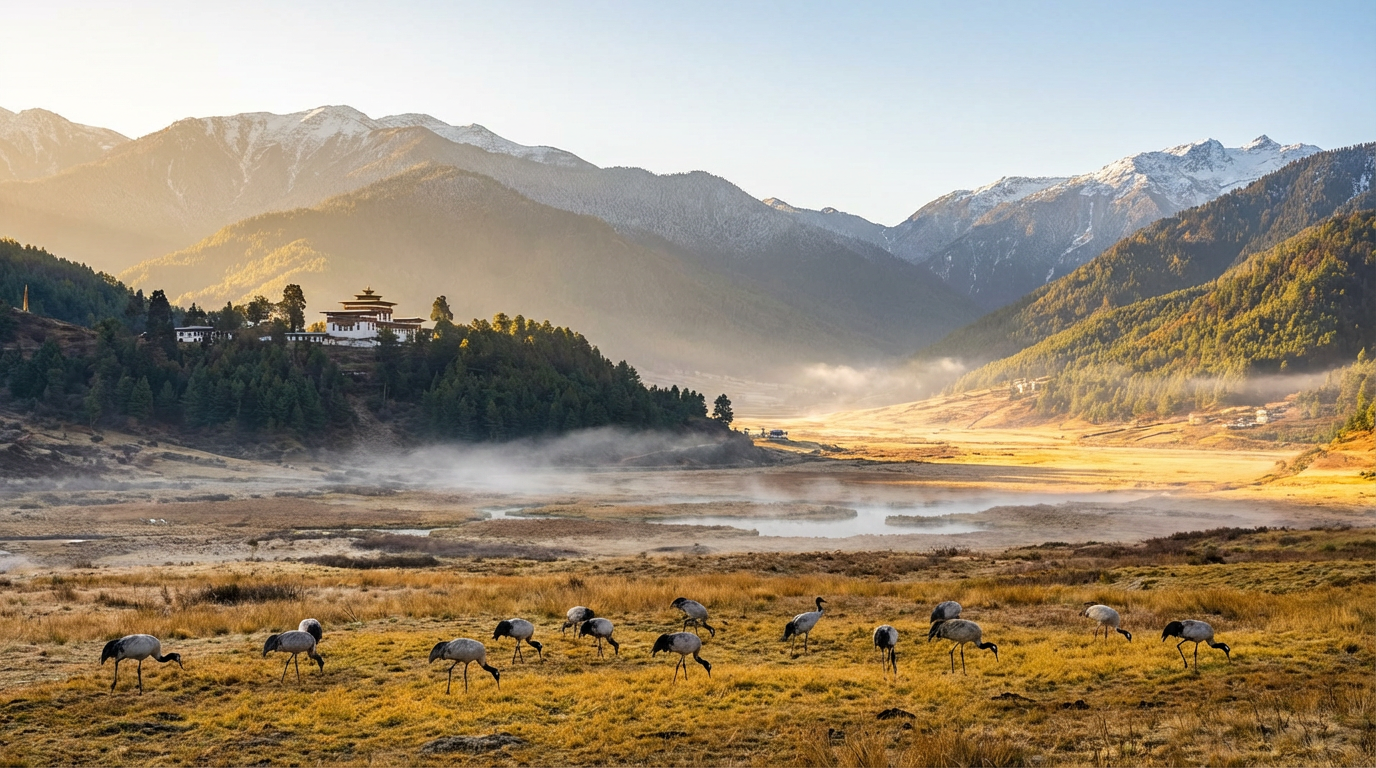
Phobjikha Valley Bhutan: Black-Necked Cranes, Gangtey Monastery & Hiking
Last updated:
Phobjikha Valley in the heart of Bhutan ranks among the most magical places in the Himalayas. This wide, U-shaped glacial valley at 2,900 meters elevation is the winter home of the rare black-necked cranes – majestic birds that fly here from Tibet every October and inhabit the valley until February. As a Ramsar wetland of international importance, Phobjikha Valley enjoys special protection: all power lines run underground to protect the cranes, and gentle ecotourism supports the local community. If you seek authentic, nature-connected Bhutan away from the main tourist routes, you'll find it here.
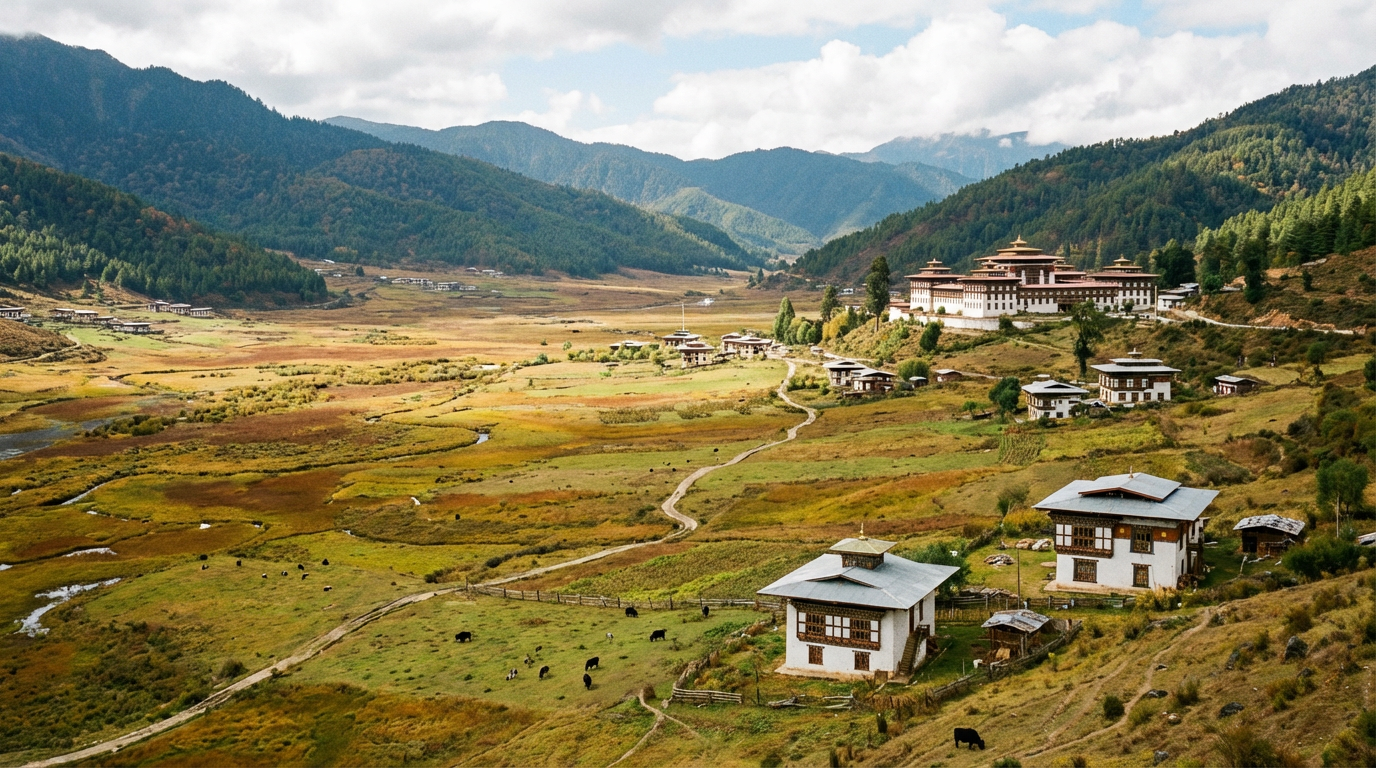
Phobjikha Valley at a Glance
The unique topography of Phobjikha Valley – a wide, open high valley surrounded by gentle mountains – makes it an ideal winter habitat for the cranes. Unlike other regions in Bhutan, you won't see overhead power lines here: all cables run underground to avoid endangering the birds' flight. This consideration for nature defines the valley's entire character – here you experience quiet, authentic Bhutan living in harmony with its environment.
This image was generated with AI.
The Black-Necked Cranes – Bhutan's Sacred Birds
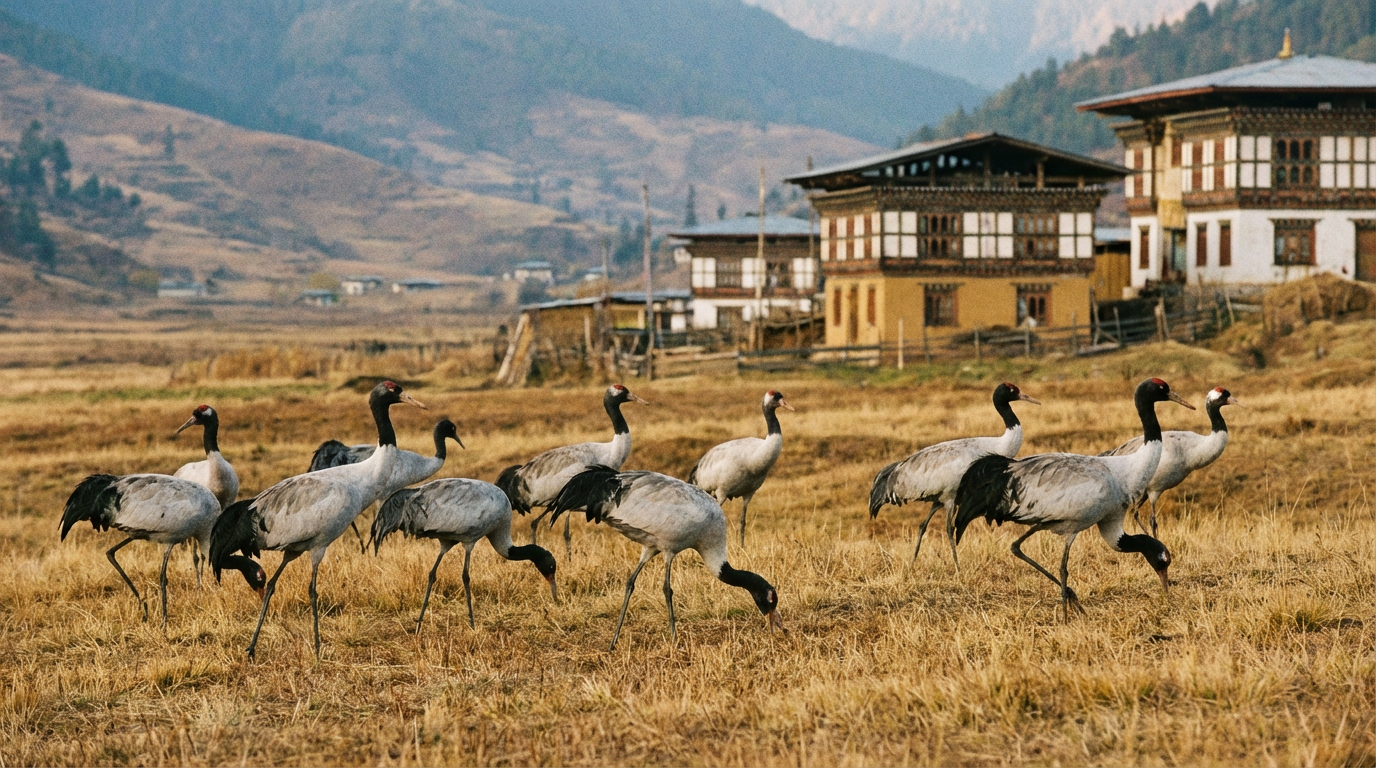
The black-necked cranes (Grus nigricollis) are among Earth's most fascinating birds – and Phobjikha Valley is their most important wintering ground in Bhutan. These majestic birds with their distinctive black neck and red crown are the only cranes that breed in high mountains. With a wingspan of up to 235 centimeters and body height of up to 150 centimeters, they are an impressive sight. In winter 2024/25, 640 cranes were counted in Phobjikha Valley – a testament to successful nature conservation.
This image was generated with AI.
When do the cranes arrive in Phobjikha?
The black-necked cranes typically reach Phobjikha Valley in late October, after flying from their breeding grounds on the Tibetan plateau. They stay until mid-February or early March before returning. The best observation time is November to January, when all birds have arrived and fill the valley. An old legend says that the cranes circle Gangtey Monastery three times upon arrival and departure – a spiritual greeting to this sacred place.
| Period | Activity | Observation chances |
|---|---|---|
| Late October | Arrival of first cranes from Tibet | Good – observe the arrival |
| November | All cranes arrived, Crane Festival on Nov 11 | Very good – highest population |
| December–January | Overwintering, daily routine | Very good – best observation time |
| February–March | Departure toward Tibet | Declining – last chance |
| April–September | No cranes in valley | None – cranes in Tibet |
Where can you observe the cranes?
The best starting point for crane watching is the Black-Necked Crane Information Center of the Royal Society for Protection of Nature (RSPN). From here you have an excellent view of the wetlands where the cranes sleep and feed. The center also offers binoculars for rent, informative exhibits, and cares for two injured cranes that can no longer fly.
The Crane Festival on November 11
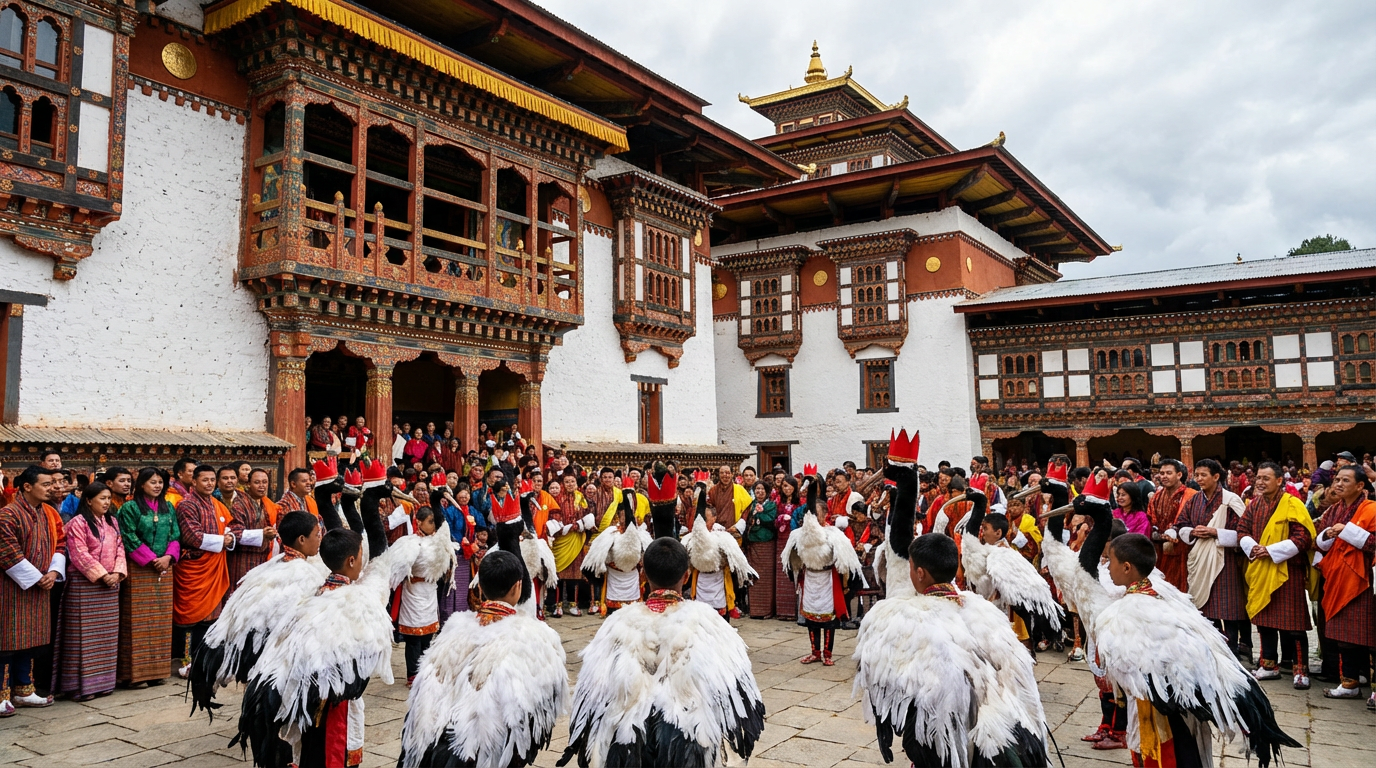
Every November 11, Phobjikha Valley celebrates the arrival of the black-necked cranes with a unique festival. The Black-Necked Crane Festival takes place in the courtyard of Gangtey Goenpa and attracts visitors from across the country. The highlight is the crane dance performed by schoolchildren, who wear elaborate crane costumes and imitate the birds' elegant movements. There are also traditional mask dances (Cham), folk songs and cultural performances – an authentic experience that shows the deep connection Bhutanese people have with these sacred birds.
This image was generated with AI.
Learn more about birdwatching in Bhutan
Gangtey Goenpa – The Historic Monastery
Above Phobjikha Valley stands Gangtey Goenpa – one of Bhutan's most significant Nyingmapa monasteries. Founded in the 17th century, it is one of the few monasteries of the oldest Buddhist school in a country dominated by the Drukpa Kagyu lineage. From its elevated position, the monastery offers spectacular panoramic views across the entire valley – especially impressive when winter cranes fill the fields. The monastery houses a school for young monks and is an important pilgrimage center.
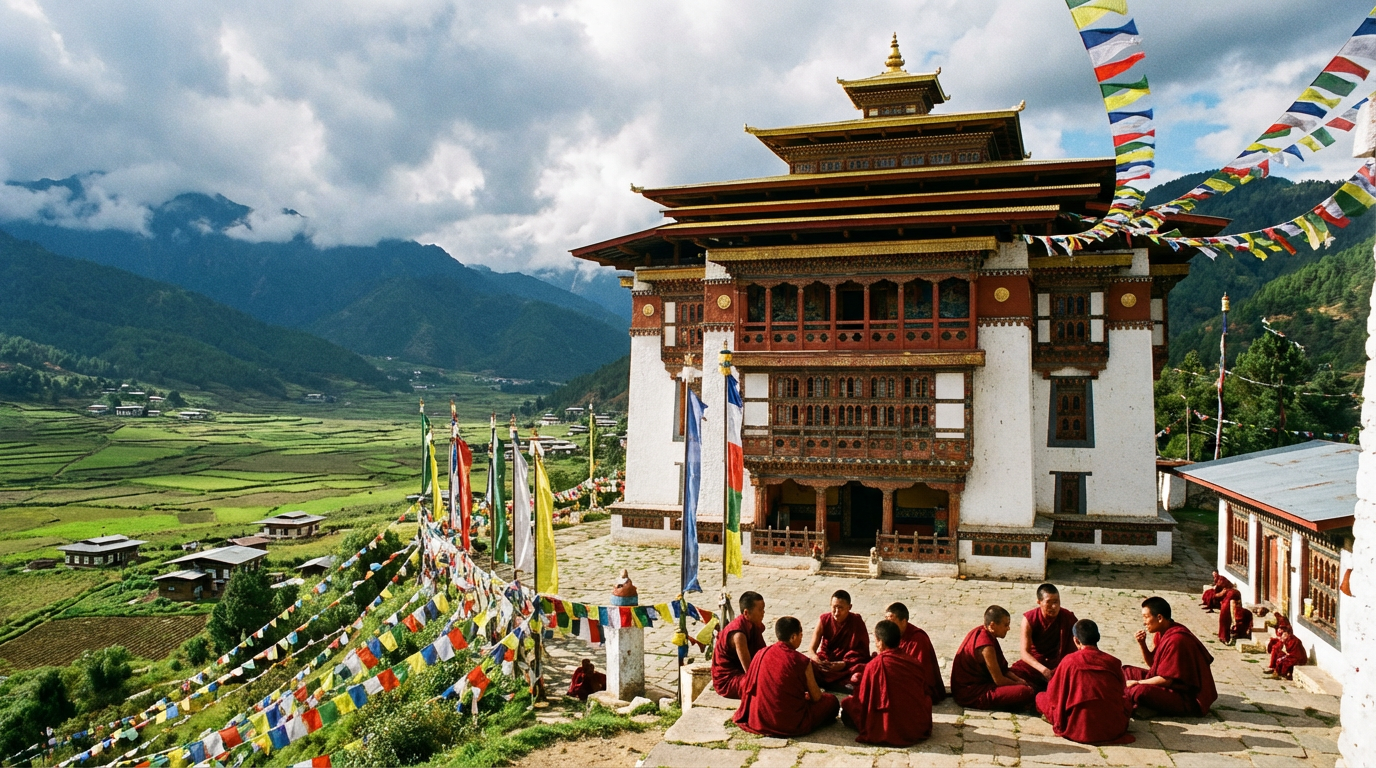
This image was generated with AI.
Besides the Crane Festival in November, September hosts the multi-day Gangtey Tshechu – a traditional mask dance festival that attracts pilgrims from the entire region. It is less touristy than the major festivals in Paro or Thimphu and offers an authentic experience.
Learn more about monasteries and Dzongs in Bhutan
Hiking in Phobjikha Valley
Phobjikha Valley is a hiker's paradise. The gentle topography of the glacial valley allows for leisurely walks and moderate hikes through a unique landscape of wetlands, forests and traditional villages. Along the way, you can observe birds – over 200 species call the valley home – and experience authentic Bhutanese rural life.
| Hike | Duration | Difficulty | Highlights |
|---|---|---|---|
| Gangtey Nature Trail | 1–1.5 hours | Easy | Through the valley, birdwatching, villages |
| Longtey Trail | 3–4 hours | Moderate | To Black-Necked Crane Center, panoramic views |
| Kumbu Trail | 2–3 hours | Moderate | Village walk, traditional houses |
| Shasa Loop | 2 hours | Easy–Moderate | Loop walk with panoramic views |
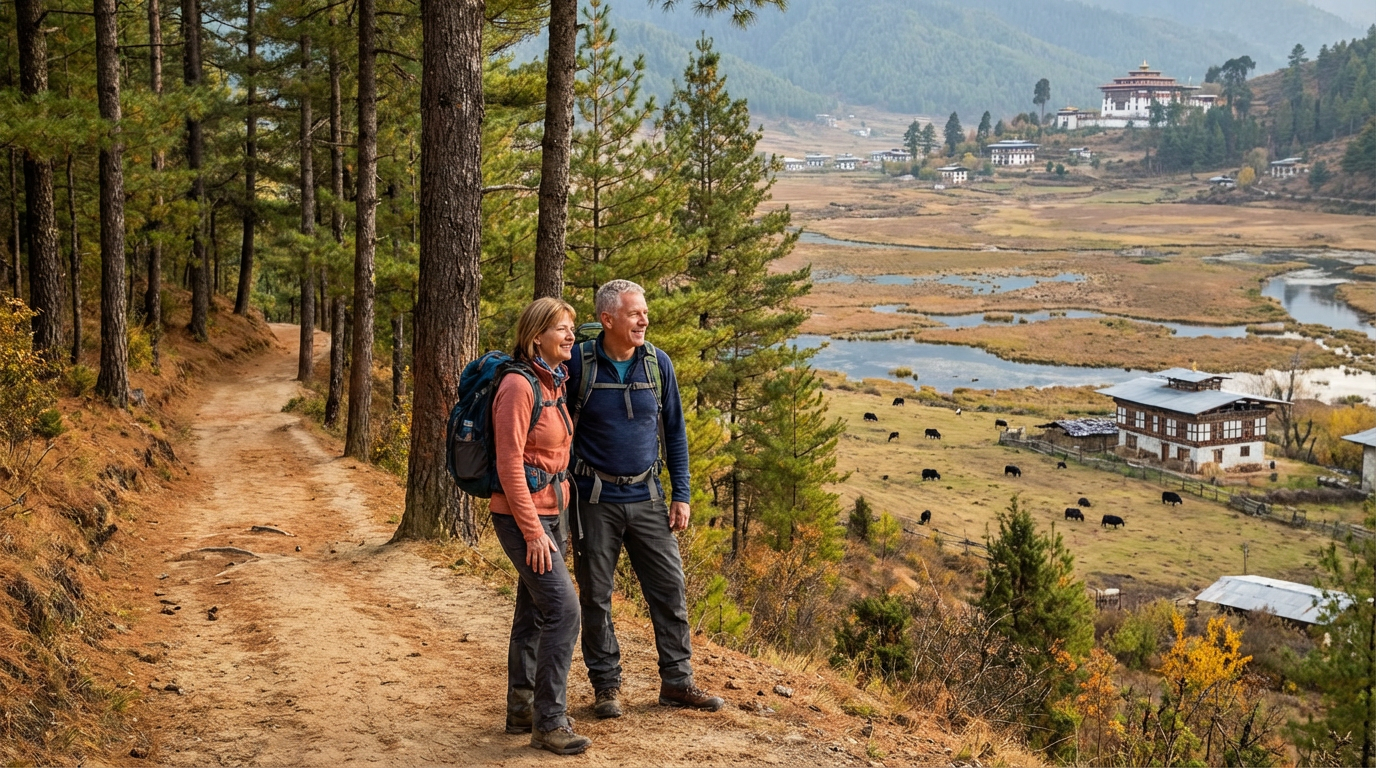
This image was generated with AI.
Nature Conservation and Sustainability in Phobjikha Valley
Phobjikha Valley exemplifies successful nature conservation in Bhutan. Since 2003, the 163 km² area has been protected as the Phobjikha Conservation Area, managed by the Royal Society for Protection of Nature (RSPN). The most striking measure: throughout the valley, there are no overhead power lines – all cables run underground to protect flying cranes. This has cost Bhutan millions, but demonstrates the priority given to nature conservation.
When I first came to Phobjikha Valley in 2007, there was snow for weeks in winter. Now there's barely snow overnight. We're already noticing the wetland drying out.
As a visitor to Phobjikha Valley, you directly contribute to nature conservation: tourism revenue flows to the community and finances protection programs. Choosing a local homestay or eco-lodge further supports this sustainable model.
Learn more about sustainability and nature conservation in Bhutan
Hotels and Lodges in Phobjikha Valley
Phobjikha Valley offers a growing range of accommodations – from international luxury lodges with breathtaking valley views to authentic homestays with local families. Many accommodations follow ecotourism principles and use renewable energy. During the crane season and festival, the best properties book up quickly.
Luxury Lodges
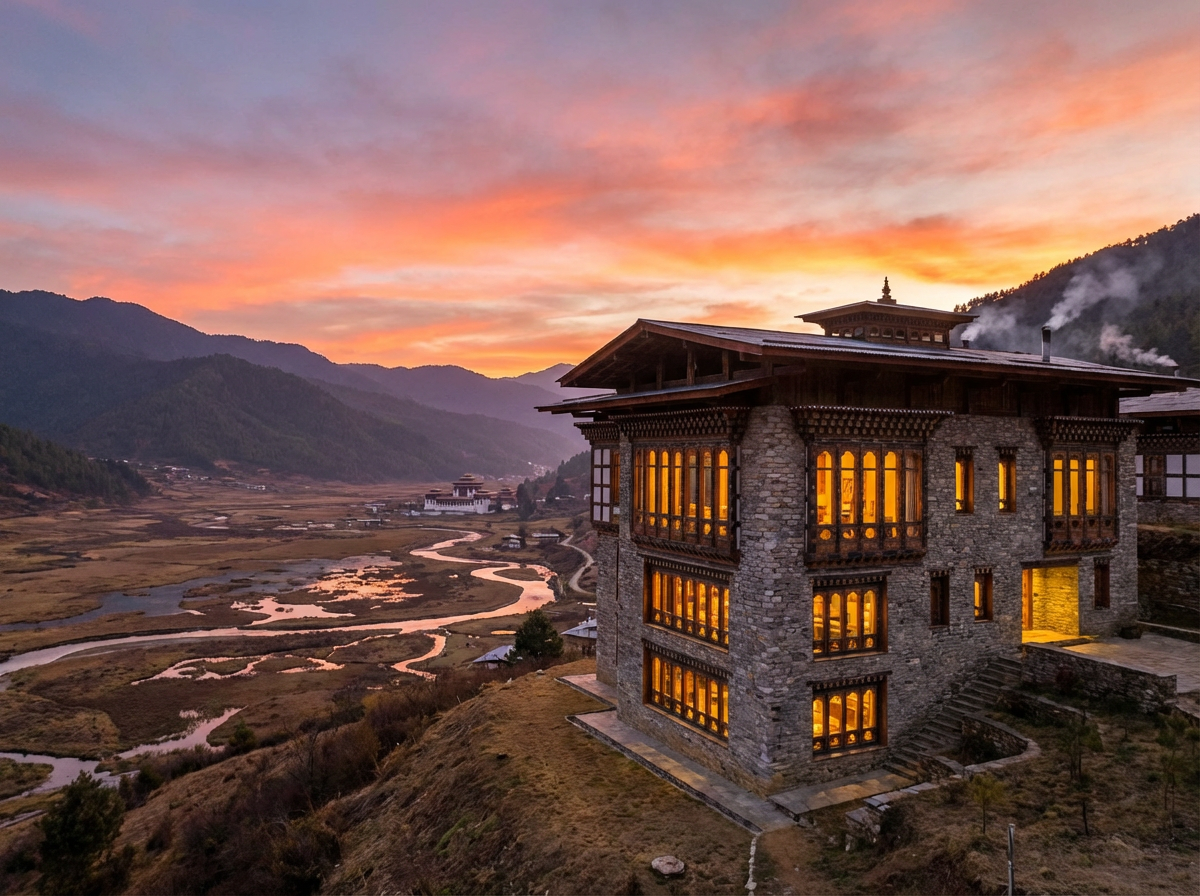 Luxury
 This image was generated with AI.
Gangtey Lodge
The renowned eco-lodge above the valley: Twelve elegant rooms with panoramic views, hot stone baths, excellent cuisine and direct access to hiking trails.
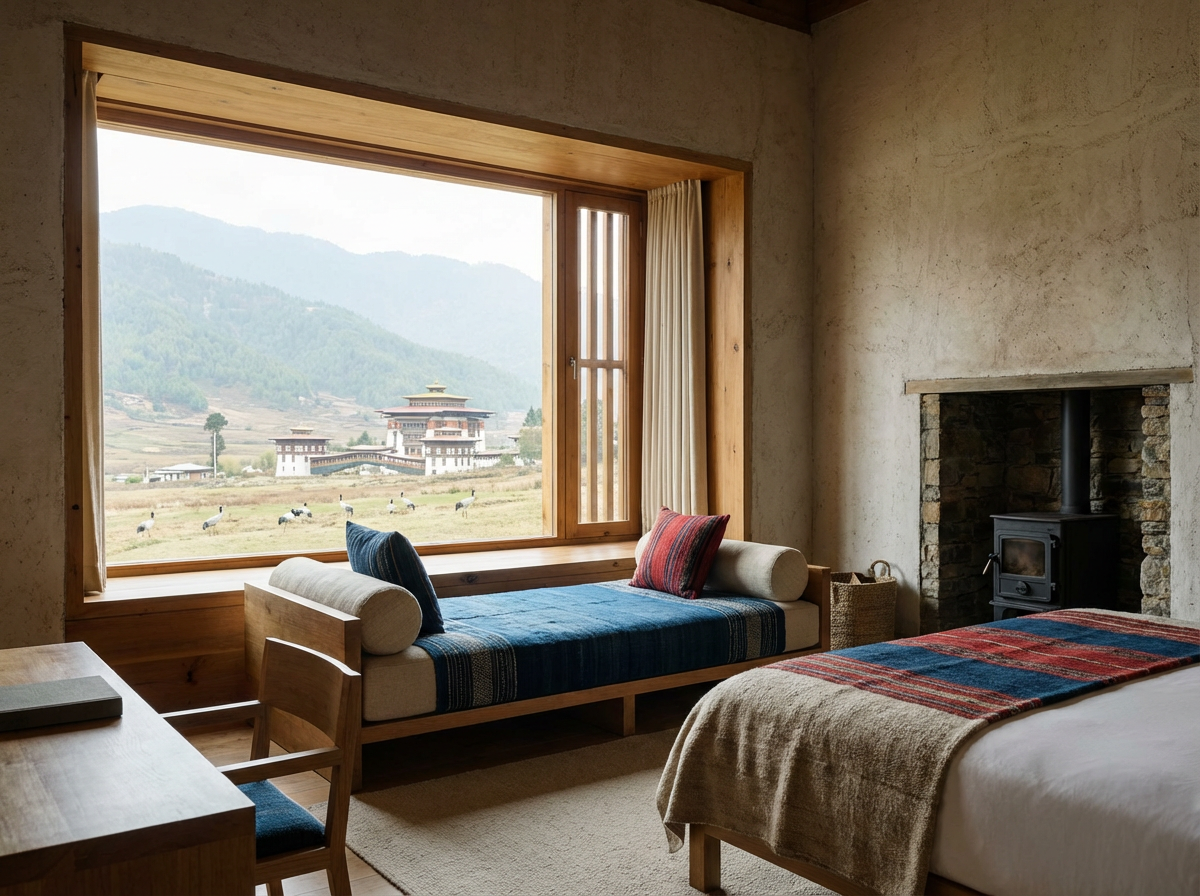 Ultra-Luxury
 This image was generated with AI.
Amankora Gangtey
Part of the exclusive Aman collection: Eight suites in traditional style, minimalist luxury, local cuisine and access to exclusive experiences like private crane watching.
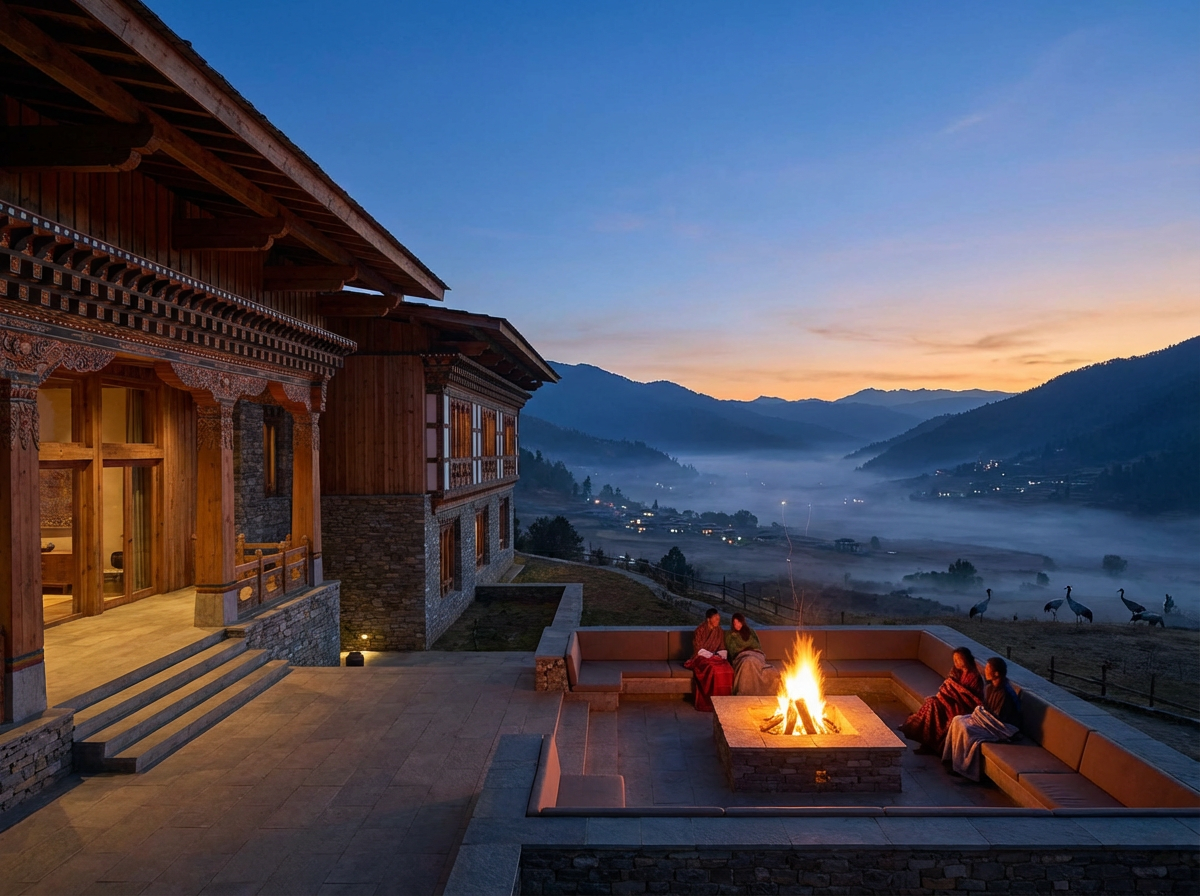 Luxury
 This image was generated with AI.
Six Senses Gangtey
Wellness resort with spa focus: Spacious suites with balconies, traditional treatments, farm-to-table cuisine and guided nature experiences.
Midrange and Homestays
Besides the luxury lodges, Phobjikha Valley has several comfortable midrange hotels like Dewachen Hotel, Hotel Gangtey Palace and Phobjikha Valley Resort. Particularly recommended are homestays with local families – here you experience authentic Bhutanese hospitality, simple comfort and directly support the community.
Learn more about homestays in Bhutan
Recommended Length of Stay in Phobjikha Valley
For a comprehensive visit to Phobjikha Valley, we recommend 1–2 nights – during crane season (November–February), 2–3 nights are worthwhile to observe the birds at leisure. The valley is a place of deceleration: if you only rush through, you'll miss its special character.
Minimum: 1 Night – The Highlights
- Day 1: Arrive from Punakha (2–2.5 hours), visit Gangtey Monastery, short hike on Gangtey Nature Trail, enjoy sunset over the valley
- Day 2: Early morning crane watching (during season), Black-Necked Crane Center, continue to Bumthang or return to Punakha
Optimal: 2 Nights – With Time for Hiking and Nature
- Day 1: Arrive, visit Gangtey Monastery, sunset
- Day 2: Early morning crane watching, Gangtey Nature Trail or Longtey Trail, afternoon: Black-Necked Crane Center, village walks
- Day 3: Last crane watching at sunrise, continue journey
Crane Season: 2–3 Nights – For Intensive Birdwatching
- Recommendation: 2–3 nights for relaxed crane watching at different times of day
- Tip: Cranes are active morning and evening – plan time for both
- Festival: For the Crane Festival on November 11, plan at least 2 nights
10–14-day route with Phobjikha Valley
Weather in Phobjikha Valley and Best Time to Visit
Phobjikha Valley sits at 2,900 meters elevation and has a correspondingly cool climate. In winter (November–February) – the crane season – nighttime temperatures can drop below freezing, while daytime is usually pleasant at 8–14°C and sunny. This is paradoxically the best travel time as the cranes are here. Spring months (March–May) bring wildflower blooms, and the monsoon (June–August) brings mist and rain.
| Period | Day Temp | Night Temp | Weather | Suitability |
|---|---|---|---|---|
| November–February | 8–14°C | -5 to 5°C | Cold, mostly sunny, frost possible | Very good – crane season! |
| March–May | 15–20°C | 5–10°C | Pleasant, wildflowers | Good – no cranes, good hiking |
| June–August | 18–22°C | 10–14°C | Monsoon, often misty and rainy | Limited |
| September–October | 15–20°C | 5–10°C | Autumn, Gangtey Tshechu | Good – first cranes from late Oct |
Detailed information on the best time to visit Bhutan
Getting to Phobjikha Valley
Phobjikha Valley is only accessible by winding mountain roads – there's no nearby airport. Most visitors come from Punakha via Wangdue Phodrang, a scenic drive of about 2–2.5 hours. The road passes through dense forests, over passes and offers spectacular views repeatedly. The drive is part of the adventure.
| From | Distance | Driving time | Route |
|---|---|---|---|
| Punakha | approx. 70 km | 2–2.5 hours | Via Wangdue Phodrang, mountain road |
| Thimphu | approx. 140 km | 5–6 hours | Via Dochula Pass and Wangdue Phodrang |
| Paro | approx. 180 km | 6–7 hours | Via Thimphu, Dochula and Wangdue |
| Trongsa | approx. 80 km | 3–4 hours | Via Pele La Pass, mountain road |
Practical Information for Phobjikha Valley
Frequently Asked Questions about Phobjikha Valley
When are the black-necked cranes in Phobjikha Valley?
The black-necked cranes typically reach Phobjikha Valley in late October and stay until mid-February or early March. The best observation time is November to January, when all birds have arrived. In winter 2024/25, 640 cranes were counted. Outside these months, there are no cranes in the valley.
How high is Phobjikha Valley?
Phobjikha Valley lies at approximately 2,900 meters above sea level. It's higher than Paro (2,250 m) or Thimphu (2,320 m), but lower than many trekking routes. Most visitors have no problems with the altitude but should avoid strenuous activity on the first day.
What is the Crane Festival and when does it take place?
The Black-Necked Crane Festival takes place every November 11 and celebrates the cranes' arrival. It's held in the courtyard of Gangtey Monastery and features traditional mask dances, the famous crane dance by schoolchildren and cultural performances. The festival is a unique experience attracting visitors from across the country.
How long should I stay in Phobjikha Valley?
We recommend 1–2 nights, or 2–3 nights during crane season (November–February). One night allows you to visit the monastery and do a short hike. Two nights give you time for extensive hiking and relaxed crane watching at different times of day. The valley is a place of deceleration – don't rush through.
What hotels are in Phobjikha Valley?
Phobjikha Valley offers accommodations in all categories. In the luxury segment you'll find Gangtey Lodge, Amankora Gangtey and Six Senses Gangtey. Midrange options include Dewachen Hotel, Hotel Gangtey Palace and Phobjikha Valley Resort. Homestays with local families are particularly authentic. Book well in advance during crane season and for the festival.
What is Gangtey Monastery?
Gangtey Goenpa is one of Bhutan's most significant Nyingmapa monasteries. Founded in the 17th century, it sits on a hill with panoramic views across the entire Phobjikha Valley. It houses a monastic school and hosts the annual Gangtey Tshechu (September) and the Crane Festival (November 11). Entry is free; note the dress code (covered shoulders and knees).
Can you hike in Phobjikha Valley?
Yes, the valley is excellent for hiking. The most popular trail is the Gangtey Nature Trail (1–1.5 hours, easy), which runs from the monastery through the valley. The Longtey Trail (3–4 hours) leads to the Black-Necked Crane Center. All hikes offer birdwatching opportunities and insight into traditional village life.
How do I get to Phobjikha Valley?
Phobjikha Valley is only accessible by road. From Punakha the drive takes about 2–2.5 hours (70 km), from Thimphu about 5–6 hours (140 km). The winding mountain road is mostly paved and scenically beautiful. Plan the drive as part of the experience.
Why are there no power lines in Phobjikha Valley?
All power lines in Phobjikha Valley run underground – a unique measure to protect black-necked cranes. Overhead lines would endanger flying birds. This costly infrastructure measure shows Bhutan's extraordinary commitment to nature conservation and makes the valley one of the rare places where nature has genuine priority.
Further Information
Explore Phobjikha Valley
Continue from Phobjikha
Travel Planning
Experience the cranes of Phobjikha?
We plan your individual route to Phobjikha Valley – with the best lodges, perfect timing for crane season and authentic experiences off the tourist beaten path.