Bhutan Tshechu Festival 2026 & 2027 - Dates, Tips & Calendar
Last updated:
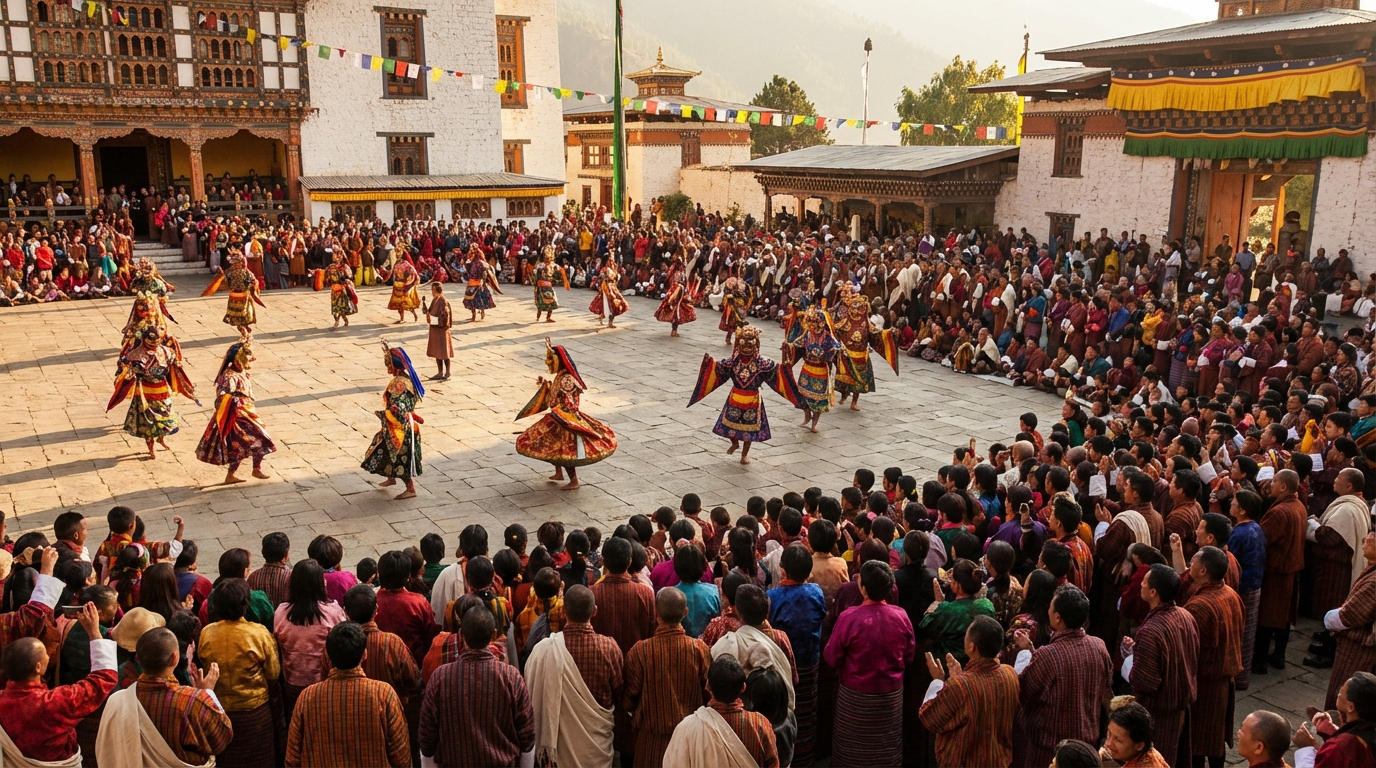
Experiencing a Tshechu in Bhutan means immersing yourself in a world where tradition and spirituality come alive. These religious festivals, celebrated in honor of Guru Rinpoche, rank among Asia's most impressive cultural events. Monks in colorful robes perform ancient mask dances, while locals gather in their finest traditional attire. Whether it's Paro Tshechu in spring or Thimphu Tshechu in autumn – a Bhutan festival in 2026 or 2027 becomes an unforgettable highlight of your journey.
What is a Tshechu?
The word Tshechu comprises two parts: "Tshe" means life and "Chu" stands for the number ten. These festivals traditionally take place on the tenth day of a month in the Tibetan lunar calendar – a date of particular spiritual significance in Vajrayana Buddhism.
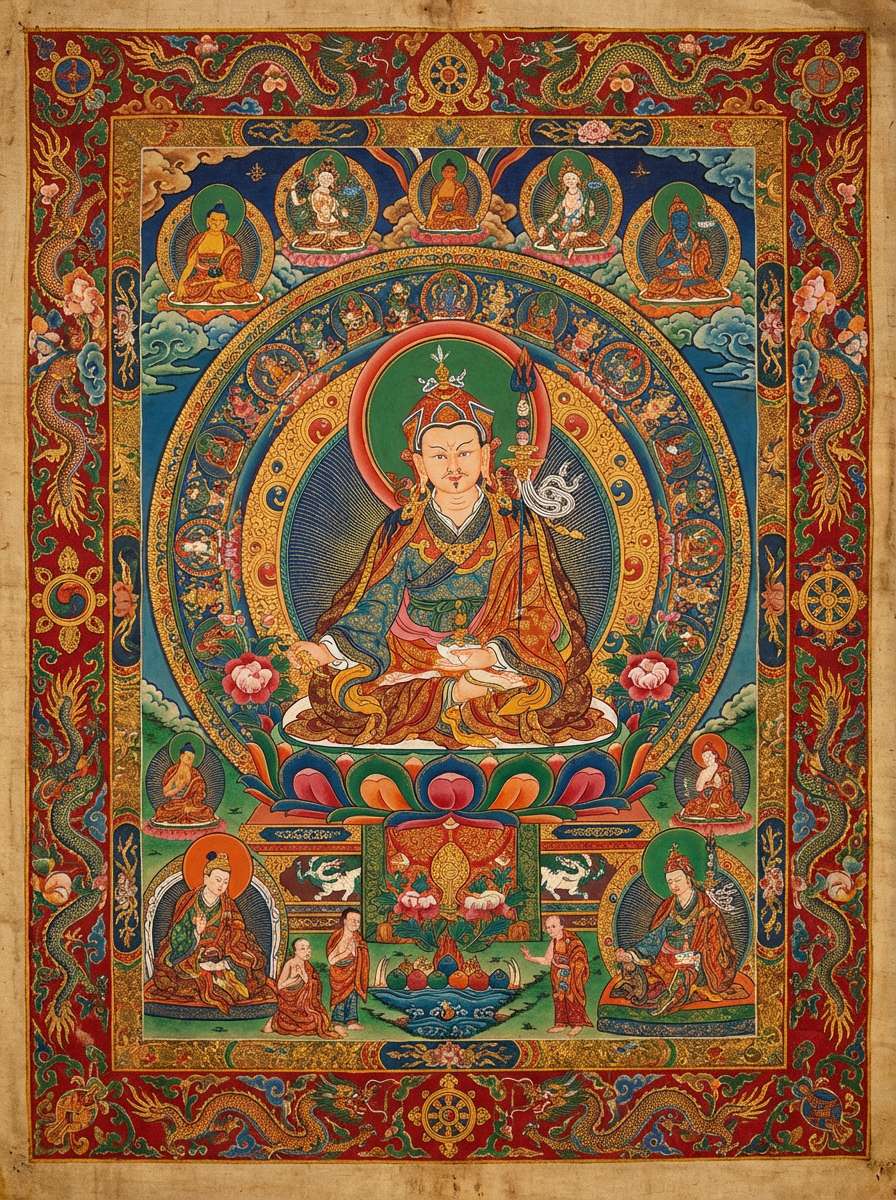
The Tshechu tradition traces back to Guru Rinpoche (also called Padmasambhava), who brought Buddhism to Bhutan in the 8th century. He introduced the dramatic mask dances that form the core of every Tshechu to this day. These dances are far more than folkloric performances: they are considered spiritual practice that brings spiritual merit to both dancers and spectators.
For the Bhutanese population, Tshechus are the most important events of the year. Families travel from remote villages to celebrate together, reunite with relatives, and receive spiritual blessings. It's a rare opportunity to directly experience the unity of religion, culture, and community.
This image was generated with AI.
At a Tshechu, monks and trained lay performers perform traditional Cham dances. They wear elaborately crafted masks representing deities, demons, or animals, and move to the sounds of horns, drums, and cymbals. Each dance tells a story from Buddhist mythology or from the life of Guru Rinpoche.
At the same time, a Tshechu is also a vibrant folk festival. Locals appear in their finest traditional clothing – men in the gho, women in the kira. Families picnic in the shade of Dzong walls, vendors sell food and crafts, and everywhere there's a festive, warm atmosphere. For travelers, this offers the rare opportunity to experience Bhutanese culture not as a staged performance, but as a lived tradition.
Festival Calendar Bhutan 2026
The Tibetan lunar calendar determines the dates of all Tshechu festivals, which means the dates in the Western calendar shift annually. For popular festivals like Paro or Thimphu, booking at least four to six months in advance is recommended, as flights and accommodations sell out quickly.
| Festival | Date 2026 | Location | Highlights |
|---|---|---|---|
| Punakha Drubchen | February 24-26, 2026 | Punakha Dzong | Intensive multi-day religious rituals |
| Punakha Tshechu | February 27 - March 1, 2026 | Punakha Dzong | Unique historical battle reenactment |
| Paro Tshechu | March 29 - April 2, 2026 | Rinpung Dzong, Paro | Largest festival, Thongdrol unfurling at sunrise |
| Thimphu Tshechu | September 21-23, 2026 | Tashichho Dzong, Thimphu | Capital festival, often attended by royal family |
| Festival | Date 2026 | Location |
|---|---|---|
| Talo Festival | March 26-28, 2026 | Talo Monastery, Punakha |
| Rhododendron Festival | April 13-14, 2026 | Lam Pelri Botanical Garden, Punakha |
| Haa Summer Festival | July 2026 | Haa Valley |
| Gangtey Tshechu | September 24-26, 2026 | Gangtey Monastery |
| Jakar Tshechu | October 18-21, 2026 | Bumthang |
| Jambay Lhakhang Drup | October 26-29, 2026 | Bumthang |
| Black-Necked Crane Festival | November 11, 2026 | Phobjikha |
Festival Calendar Bhutan 2027 (Preview)
The 2027 dates are based on the Tibetan lunar calendar and are yet to be officially confirmed. The following dates are preliminary estimates. We'll update this page once official dates are announced.
| Festival | Date 2027 (Preliminary) | Location | Highlights |
|---|---|---|---|
| Punakha Drubchen & Tshechu | February/March 2027 | Punakha Dzong | Intensive religious rituals & battle reenactment |
| Paro Tshechu | March/April 2027 | Rinpung Dzong, Paro | Largest festival with Thongdrol unfurling |
| Thimphu Tshechu | September/October 2027 | Tashichho Dzong, Thimphu | Fall festival in the heart of the capital |
Major Festivals in Detail
Three festivals stand out particularly among Bhutan's numerous Tshechus: Paro, Thimphu, and Punakha. They take place at the country's most significant Dzongs, offer the most comprehensive programs, and attract both locals and international visitors. Each festival has its own character – from the monumental atmosphere in Paro to the urban flair in Thimphu to the intimate beauty in Punakha.
Paro Tshechu – Bhutan's Largest Festival
This image was generated with AI.
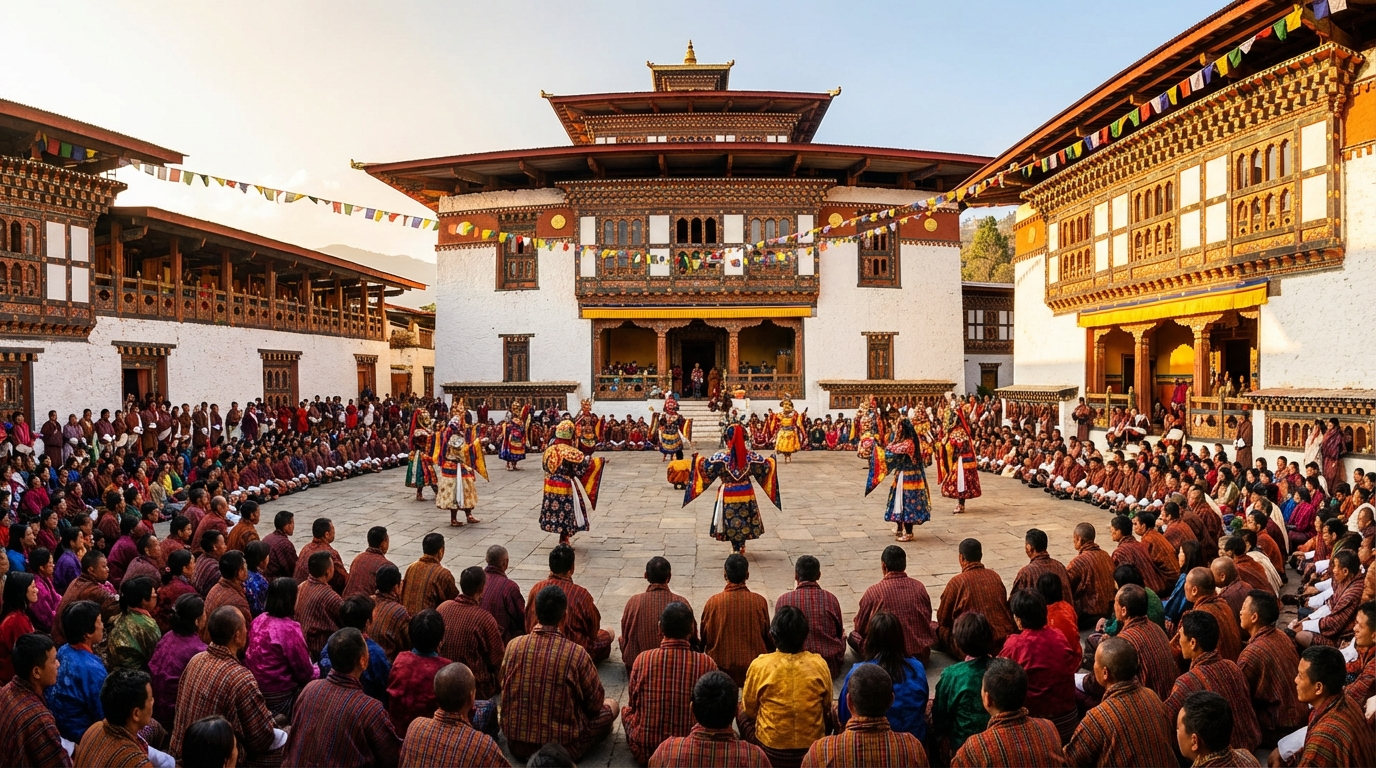
Paro Tshechu takes place annually in spring (March or April) at the historic Rinpung Dzong and spans five days. It's Bhutan's largest and most famous festival, attracting thousands of locals and international visitors. The majestic Dzong, perched high above the Paro Valley, provides a breathtaking backdrop for the vibrant mask dances.
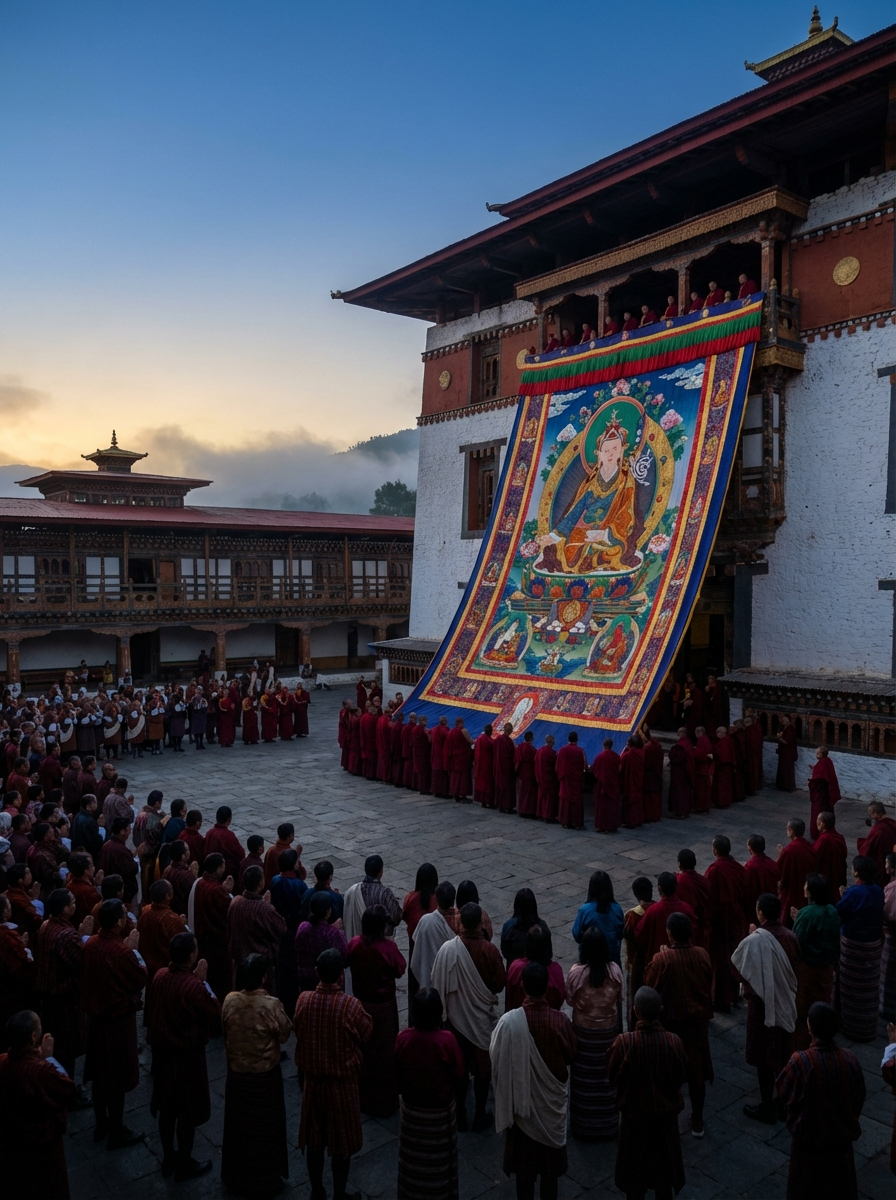
The absolute highlight is the Thongdrol on the festival's final day. This enormous, intricately embroidered religious banner is unfurled just before sunrise and depicts Guru Rinpoche in his glory. According to Bhutanese tradition, merely witnessing this sacred image brings spiritual merit and absolution from sins. To experience this unique ceremony, the faithful gather in darkness.
The atmosphere during Paro Tshechu is electrifying. Between dances, people stream through the courtyard, families share food they've brought, and conversation and laughter echo everywhere. For photographers, the festival offers countless photo opportunities – from the detailed masks to the radiant faces of spectators.
Thimphu Tshechu – The Capital Festival
This image was generated with AI.
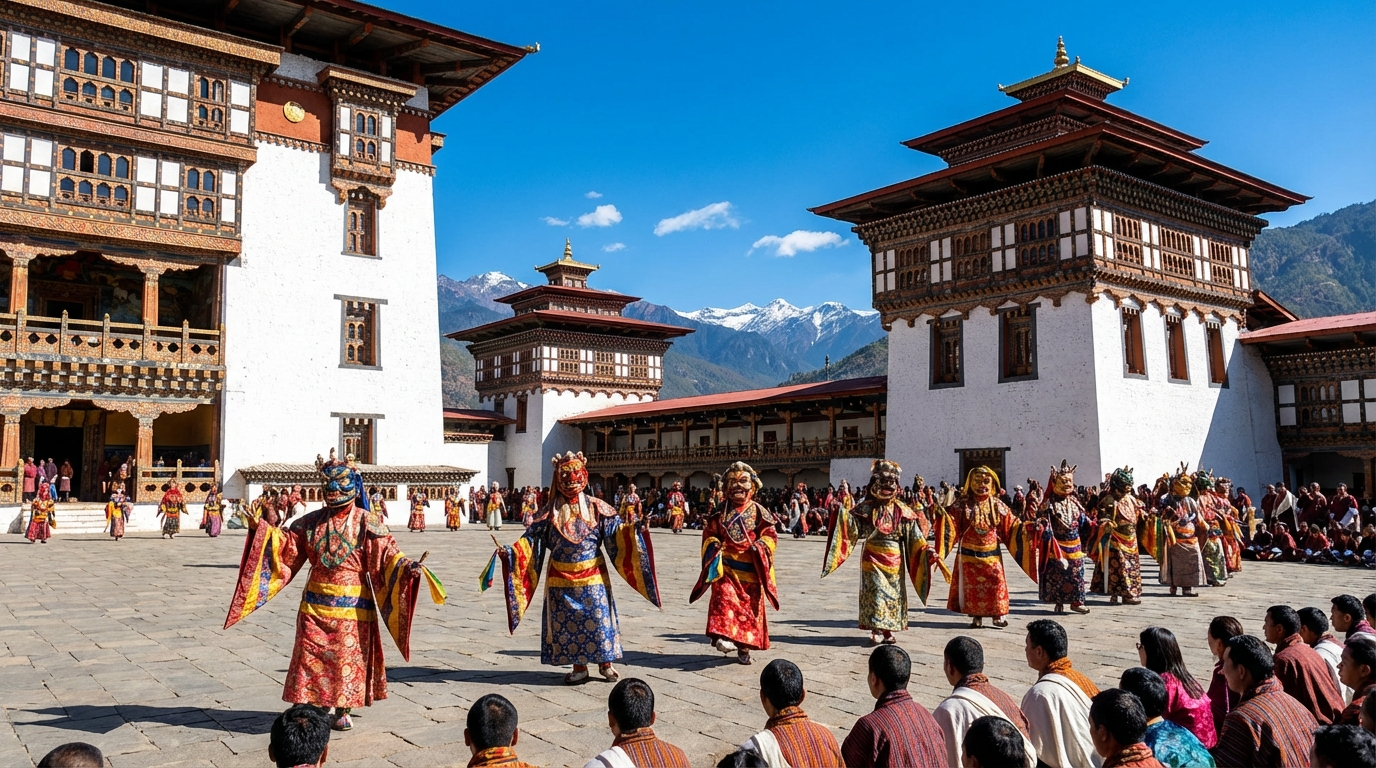
Thimphu Tshechu takes place in autumn (September or October) at the Tashichho Dzong, the seat of government and spiritual center of the capital. Over three to four days, visitors experience a festival that combines tradition and modernity in a fascinating way. The Dzong itself is an architectural masterpiece and provides a dignified setting for the sacred dances.
A special aspect of Thimphu Tshechu is the frequent presence of the royal family, who regularly attend the festival. For travelers, this festival offers practical advantages: the capital has the country's best tourist infrastructure with diverse accommodation and restaurant options. Plus, the festival visit can be easily combined with exploring Thimphu – from the National Museum to the Memorial Chorten to the Buddha Dordenma.
Punakha Drubchen & Tshechu – Unique Combination
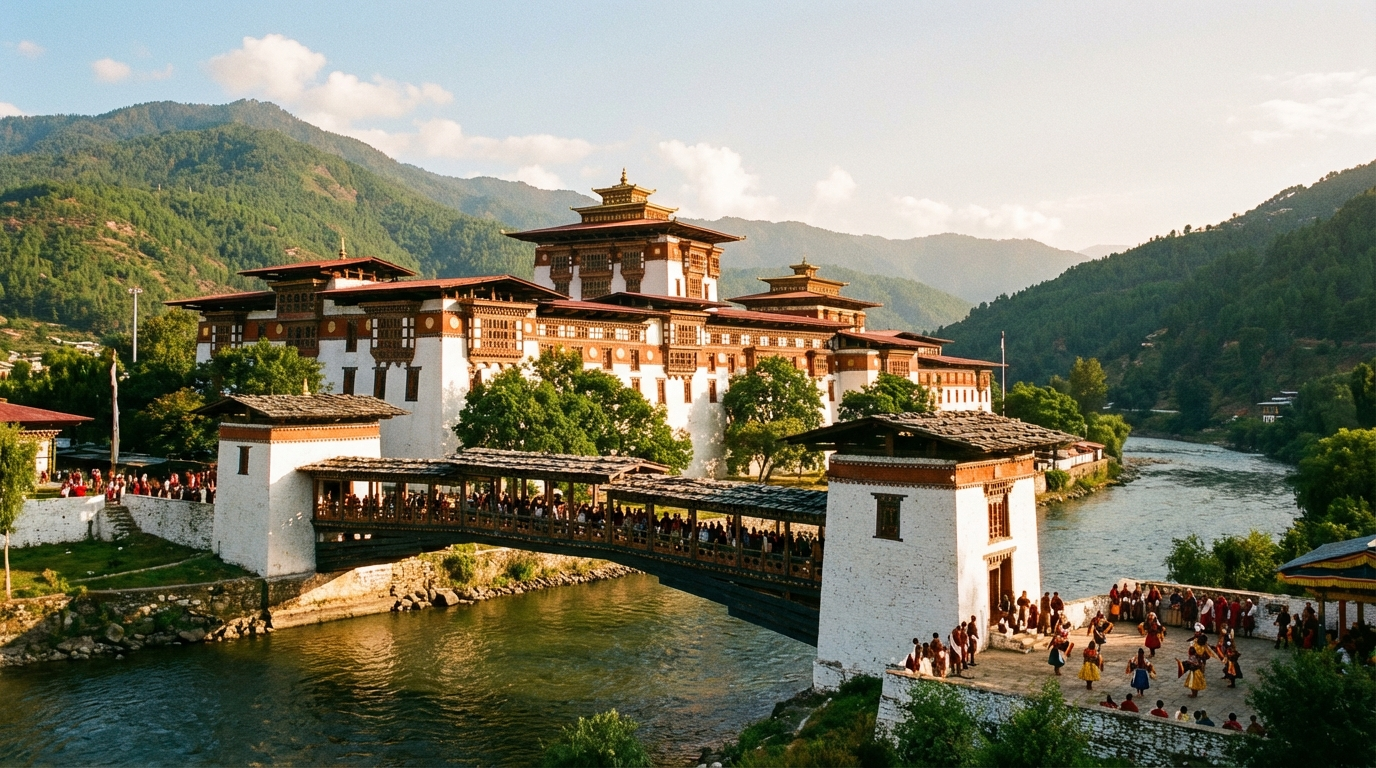
This image was generated with AI.
The Punakha Drubchen and Tshechu in spring (February or March) offer a unique combination of religious rituals and cultural spectacle. The Punakha Dzong, majestically located at the confluence of two rivers, is considered Bhutan's most beautiful Dzong and transforms for about six days into a stage of living history.
What sets Punakha apart from other festivals is the Drubchen – a series of intense religious ceremonies that precede the actual Tshechu. The absolute highlight is the dramatic reenactment of a 17th-century battle in which Bhutanese warriors repelled Tibetan invaders. Hundreds of performers in traditional armor and garments bring this event to vivid life with impressive authenticity.
For travelers wanting to avoid the large crowds at Paro Tshechu, Punakha is an excellent alternative. The festival is less crowded, the atmosphere more intimate, and the mild climate of the Punakha Valley makes the stay pleasant. The journey passes over the spectacular Dochu La Pass with its 108 chortens and offers views of the highest Himalayan peaks in clear weather.
The Mask Dances (Cham) – Living Buddhism
The Cham dances are the heart of every Tshechu and far more than mere entertainment. When a monk or lay dancer puts on a mask, according to Buddhist belief, they become a vessel for the depicted deity or demon. The dances serve to visualize Buddhist teachings and make abstract spiritual concepts experiential for all spectators – even those who cannot read.
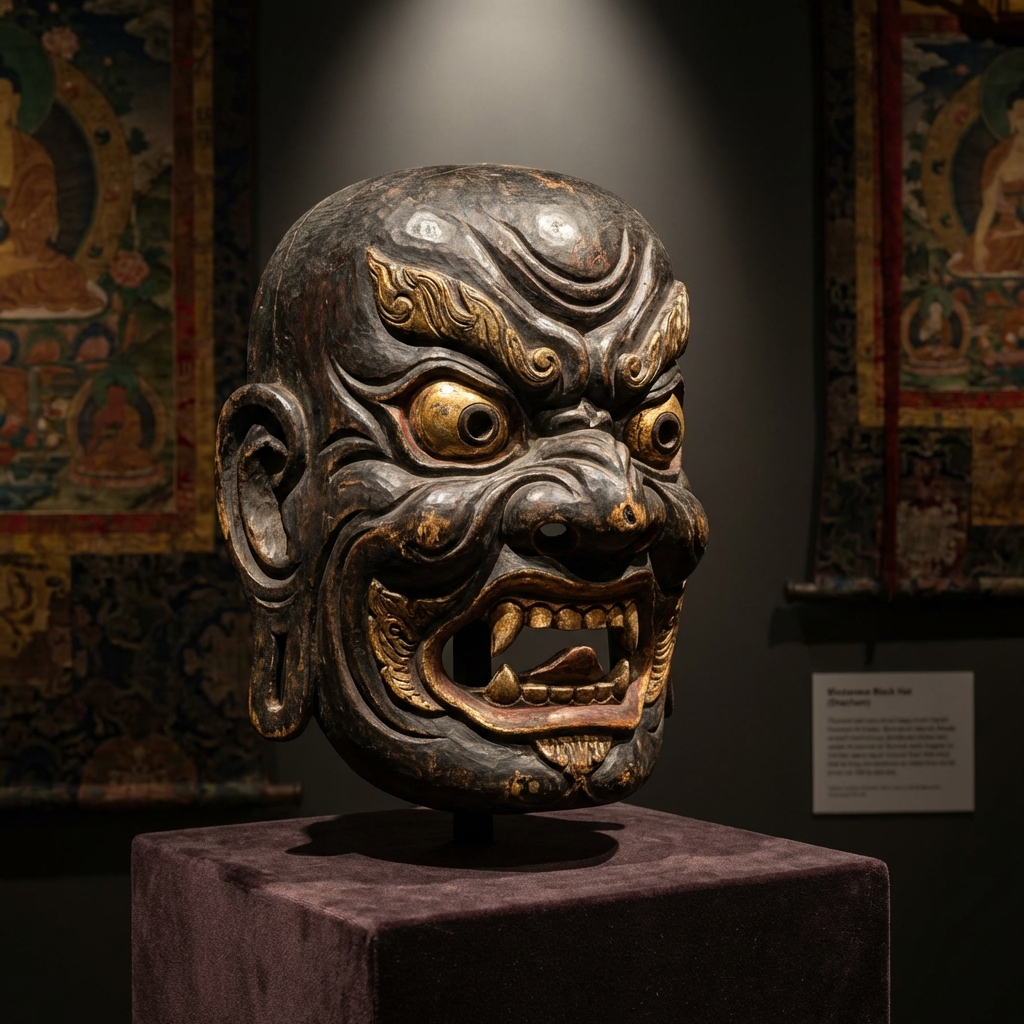
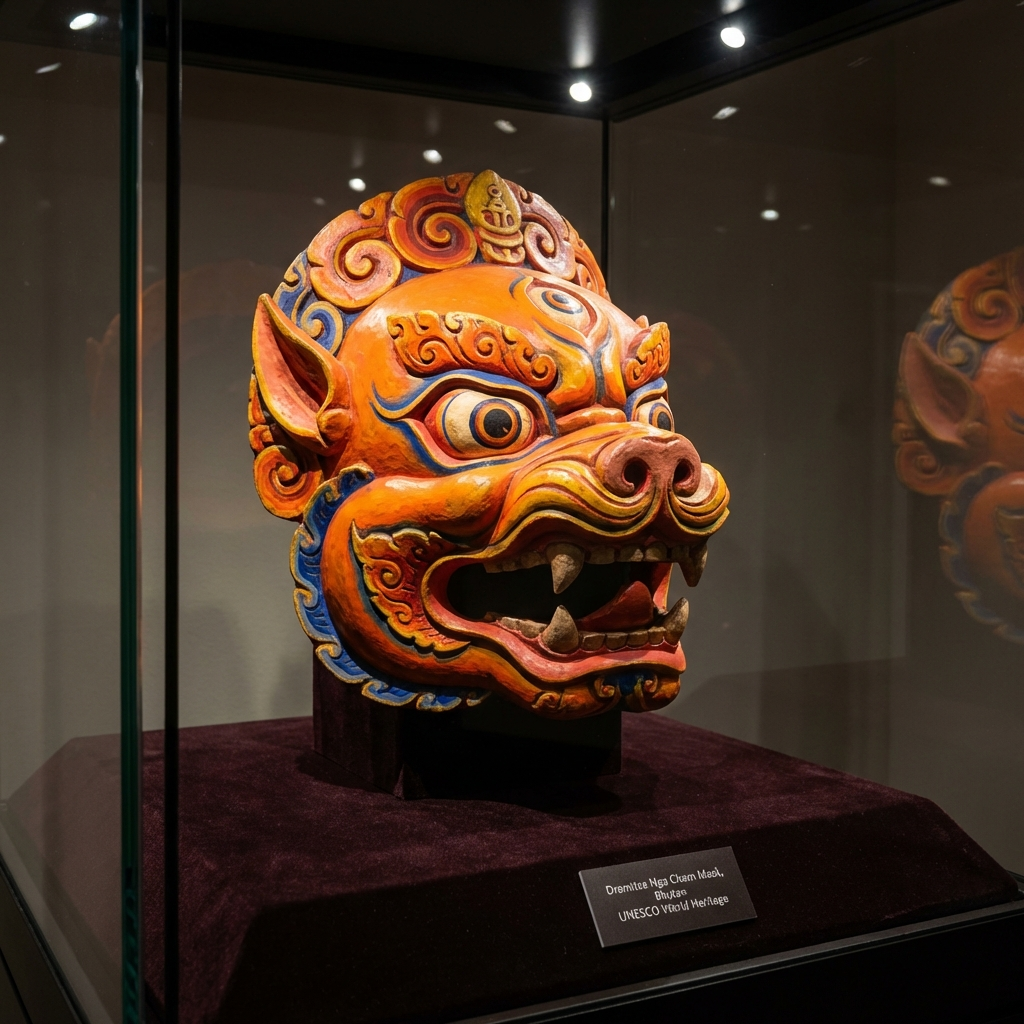
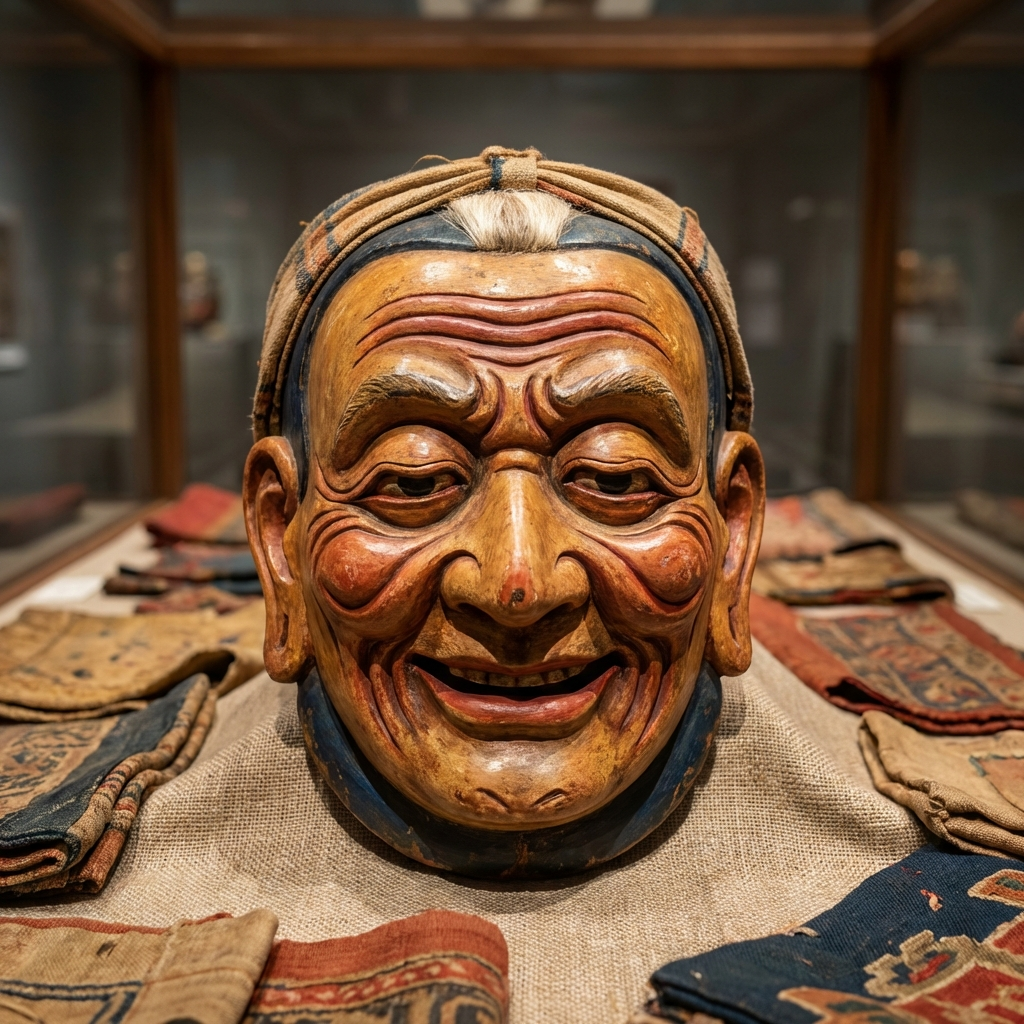
The masks themselves are works of art, crafted by specialized artisans over months of work. Traditionally made from wood or papier-mâché, they are elaborately painted. Every detail carries symbolic meaning: the colors, facial features, and attributes. Some masks are centuries old and are passed down as sacred objects from generation to generation.
This image was generated with AI.
This image was generated with AI.
This image was generated with AI.
The Most Important Dances Explained
Shacham – The Black Hat Dance
The Shacham is one of the most impressive dances of any Tshechu. The dancers wear characteristic large black hats and embody tantric masters who defeat evil spirits. The dance recalls the assassination of Tibetan King Langdarma in the 9th century by a Buddhist monk, which ended the persecution of Buddhism. The slow, hypnotic movements and the dark aura of the masks captivate spectators.
Dramitse Nga Cham – The Drum Dance (UNESCO World Heritage)
This dance was recognized by UNESCO in 2005 as Intangible Cultural Heritage of Humanity – one of the highest accolades for living traditions. The Dramitse Nga Cham originates from Dramitse Monastery in Eastern Bhutan and dates back to a vision from the 16th century. The dancers wear colorful animal masks and beat drums in complex rhythms. The dance is said to depict the heavenly palace of Guru Rinpoche and brings blessings upon all present.
Ging Dram – Dance of the Heroes
The Ging are the warriors and companions of Guru Rinpoche, depicted with golden masks and colorful silk brocade costumes. Their movements are powerful and dynamic, symbolizing the ability to dispel negative forces. The dance imparts protection and spiritual strength to all spectators.
Pholay Molay – The Dance of the Old
After the serious religious dances, the Pholay Molay provides welcome relief. The performers embody an elderly couple with exaggerated features and entertain the audience with comic interludes. This dance reminds us that spirituality also has room for joy and lightness – an important message in Buddhist Bhutan.
The Thongdrol – Liberation Through Sight
The Thongdrol – literally "liberation through seeing" – is a massive religious banner displayed only at a few major festivals and only once during the entire Tshechu. These multi-story silk appliqué hangings depict Guru Rinpoche or other important figures of Buddhism and are prepared by monks in a night-time ceremony.
The unfurling takes place exclusively in the early morning hours before sunrise – before the first rays touch the delicate fabric. According to Buddhist belief, merely seeing the Thongdrol brings spiritual merit and can even free one from accumulated negative karma. For this reason, thousands of devotees gather in darkness. Those not wanting to miss this unique experience should arrive by 3 or 4 a.m.
This image was generated with AI.
Practical Tips for Your Festival Visit
Booking and Planning
A festival trip to Bhutan requires careful advance planning. During the major Tshechus, flights to Paro – the country's only international airport – fill up quickly. The limited number of aircraft approved for the challenging approach makes early booking essential.
The same applies to accommodations: Bhutan doesn't have mass-tourism capacity, and in Paro especially, hotels are often booked months in advance during the Tshechu. We recommend booking at least three to six months before your desired festival.
For the festival visit itself, you don't need a separate ticket. Access is part of your organized tour, and your guide ensures you get good seats and understand the dances. A licensed guide is mandatory in Bhutan anyway – a circumstance that proves a great advantage at the festival.
What to Expect
- Duration: The dances begin early morning and last until late afternoon
- Breaks: There's a longer midday break for meals
- Seating: Spectators sit on the ground or on brought cushions and mats
- Weather: Can be variable – expect sunshine but also cool morning temperatures
Dress Code
Respectful clothing is natural at a Tshechu: shoulders and knees should be covered. At the same time, comfort is important since you'll sit on the ground for extended periods. Dress in layers – mornings can be cool while midday sun is warm.
Choose shoes that come off easily, as you may enter temples or areas where shoes aren't permitted. Comfortable, flat shoes are ideal.
Photography at Festivals
Photography is generally allowed and encouraged at Tshechus – Bhutanese are pleased when their culture is appreciated. Avoid using flash during the dances, as it can disturb the performers. If you want to photograph monks or locals up close, ask politely for permission first.
For the best shots, a telephoto lens is recommended since you'll maintain some distance from the dancers as a spectator. For the Thongdrol event, arrive especially early to secure a good position – and remember it will still be dark when the ceremony begins.
Detailed tips on festival photography
What to Bring
- Sitting cushion or foldable mat for comfortable ground seating
- Snacks and water for the long festival hours
- Sun protection: hat and sunscreen for midday hours
- Camera with telephoto lens for close-ups of the dancers
- Warm jacket or fleece for cool morning hours
Rules of Conduct
A Tshechu is a religious event, even though the festive atmosphere sometimes suggests otherwise. Show respect by not walking across the dance floor or disrupting ceremonies. Take your trash with you and leave the place as you found it.
At large festivals, it can get crowded – practice patience and let yourself be inspired by the relaxed attitude of the locals. If unsure about anything, your guide is the best source: they know local customs and can explain what's happening.
Other Festivals in Bhutan
Beyond the major Tshechus in Paro, Thimphu, and Punakha, Bhutan offers a variety of other festivals, each with its own character. Some celebrate local traditions, others focus on special themes like the arrival of rare migratory birds. For travelers seeking authentic experiences off the beaten path, these smaller festivals are often particularly rewarding.
 July
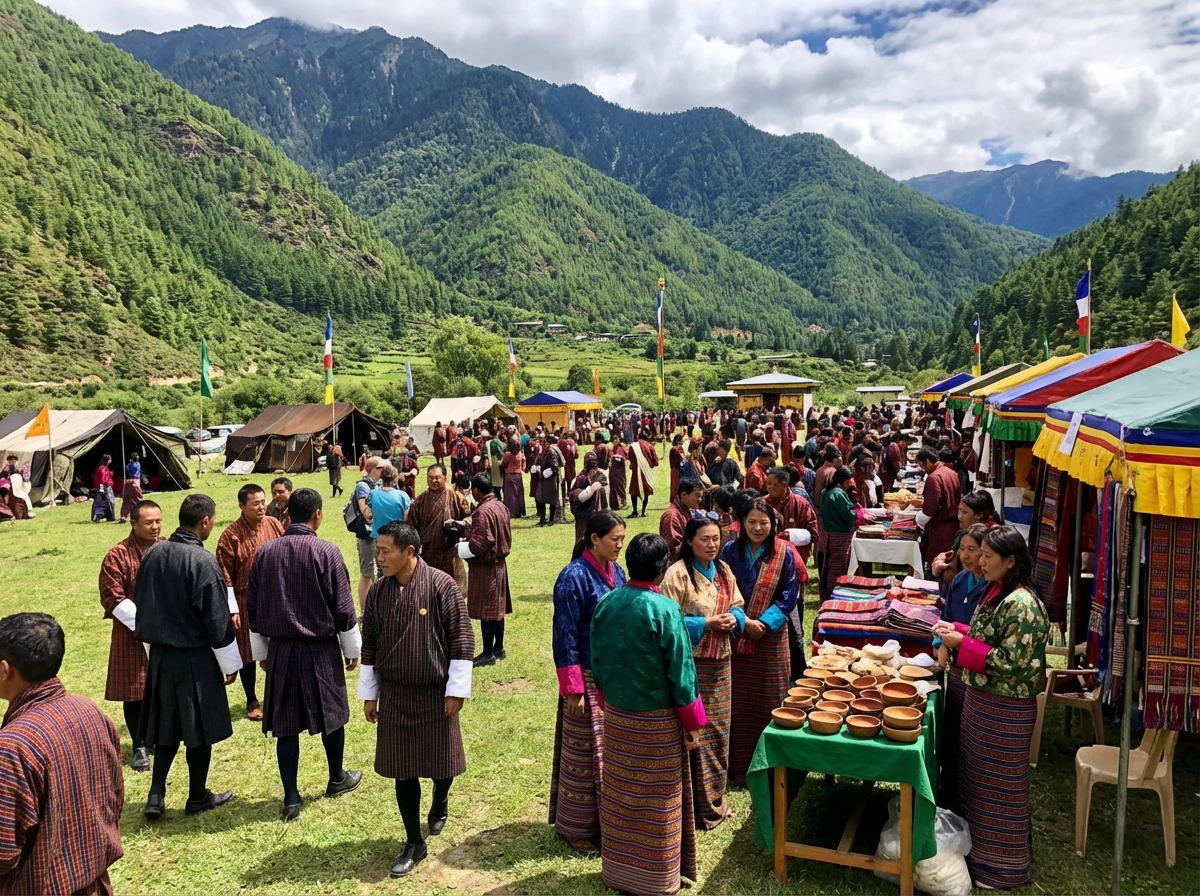
July This image was generated with AI.
Haa Summer Festival
In July, the remote Haa Valley celebrates its nomadic culture with traditional crafts, local cuisine, and folk dances. One of Bhutan's most authentic and least touristy festivals.
 Oct/Nov
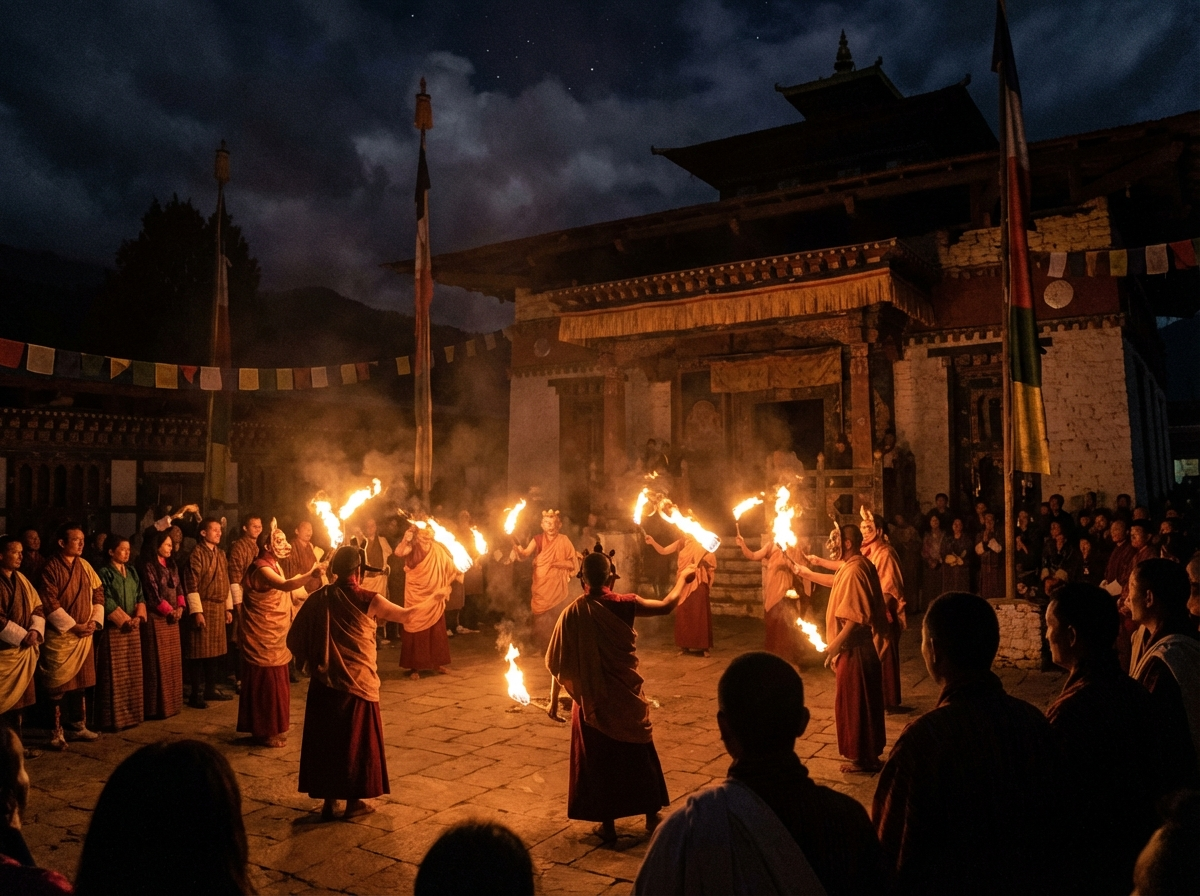
 This image was generated with AI.
Jambay Lhakhang Drup
In autumn, the Jambay Lhakhang becomes the stage for the legendary Tercham – a torch dance performed only in complete darkness. A mystical experience.
 November
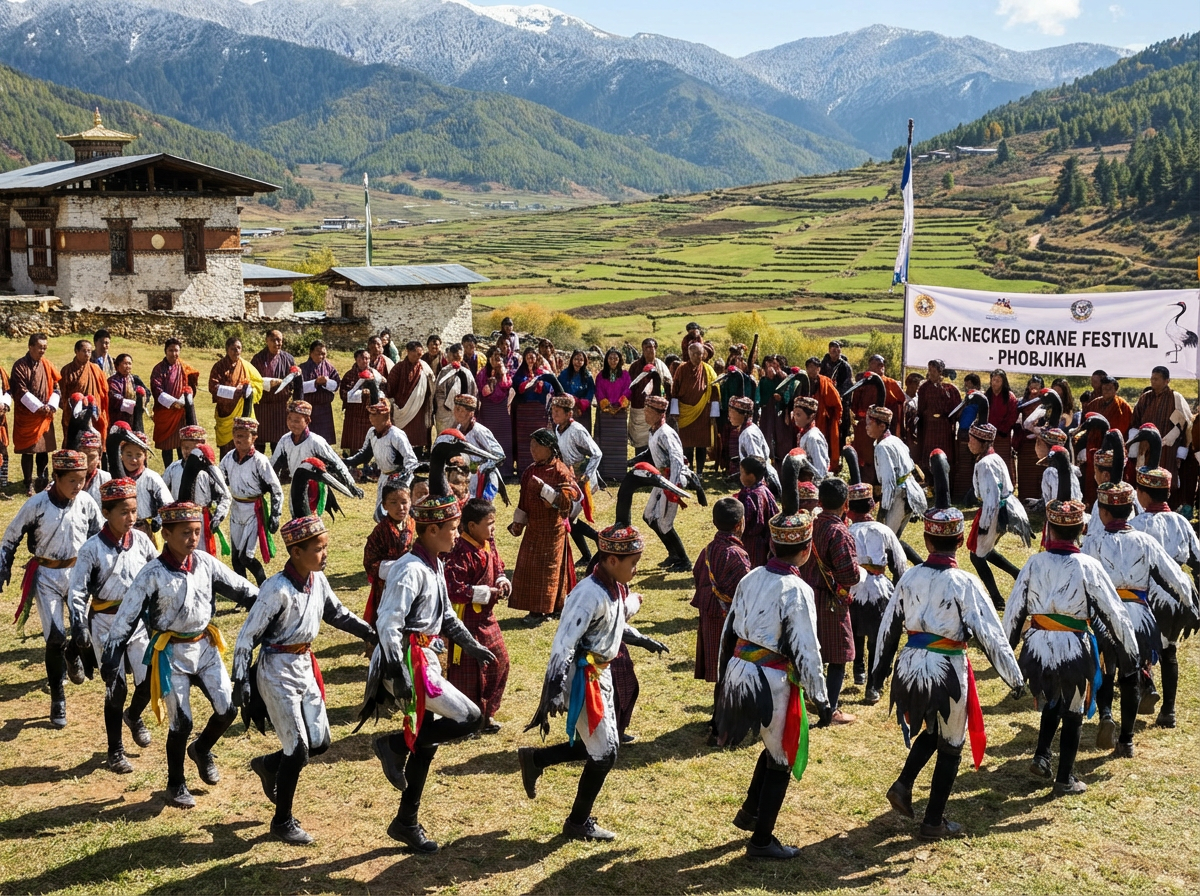
 This image was generated with AI.
Black-Necked Crane Festival
On November 11, Phobjikha Valley celebrates the arrival of rare black-necked cranes from Tibet. School children in crane costumes dance in honor of these sacred birds – a moving festival bridging nature and culture.
"When the drums sound and the dancers put on their masks, you feel that something timeless is happening. For us Bhutanese, the Tshechu is not just a festival – it's the moment when our community comes together and renews our connection to the spiritual world. When I see how guests from around the world are moved by this atmosphere, it fills me with great joy."
Frequently Asked Questions About Bhutan Festivals
When is the next Tshechu in Bhutan?
Find the exact dates in our festival calendar further up on this page. The next major festivals include Punakha Drubchen and Tshechu in spring, as well as Paro Tshechu in March/April. Throughout the year, smaller regional Tshechus take place that are often less crowded.
Do I need a special ticket to enter a Tshechu?
No, there's no separate ticket system for Tshechus. The festival visit is part of your organized Bhutan tour and is included in the daily tour package. Your guide ensures you have access and find a good spot.
Which festival is best for first-time visitors?
Paro Tshechu offers the most comprehensive program and impressive atmosphere – ideal for experiencing the Tshechu tradition in all its splendor. If you prefer more accommodation options and easier planning, Thimphu Tshechu is a good alternative. For travelers wanting to avoid large crowds, we recommend the Punakha festival with its more intimate atmosphere and spectacular Dzong setting.
Can I photograph the festivals?
Yes, photography is explicitly allowed and encouraged at Tshechus. Please avoid flash during the dances and ask monks or locals for permission before taking close-ups. A telephoto lens is recommended since you'll maintain some distance from the dancers as a spectator.
Are Tshechus suitable for children?
Absolutely – Bhutanese families bring children of all ages to the festivals. The colorful costumes, dramatic masks, and rhythmic music fascinate young spectators too. Keep in mind that the dances last many hours – plan breaks and use the midday break to explore the surroundings. The humorous dances like Pholay Molay delight children.
How long does a Tshechu last?
Duration varies by festival: Paro Tshechu spans five days, Thimphu spans three to four days, Punakha (including Drubchen) spans about six days. Daily performances run from morning into late afternoon. You don't need to attend all days – even a single day offers a complete and impressive experience.
Related Topics
- Best time to visit Bhutan – When is the trip worth it for which festival?
- Photography route through Bhutan – Optimal route for festival photographers
- Dzongs and monasteries – The venues of the festivals
- Paro region – Home to the largest Tshechu
- Punakha region – The spectacular Dzong at the river
- Phobjikha Valley – Black-Necked Crane Festival
Plan Your Festival Trip to Bhutan
Get free advice on which festival suits your desired dates. Early booking secures you the best accommodations and flights during popular festival times.