Best Time to Visit Bhutan 2026: Month-by-Month Climate Guide
Last updated:
Choosing the right time to visit profoundly influences how you experience Bhutan. The months March through May and September through November are considered the optimal travel season: pleasant temperatures, minimal rainfall, and crystal-clear views of snow-capped Himalayan peaks make these periods especially attractive. This comprehensive guide helps you find the ideal timeframe for your individual travel plans—whether for challenging trekking, authentic festival visits, or stunning photography.
Best Time at a Glance
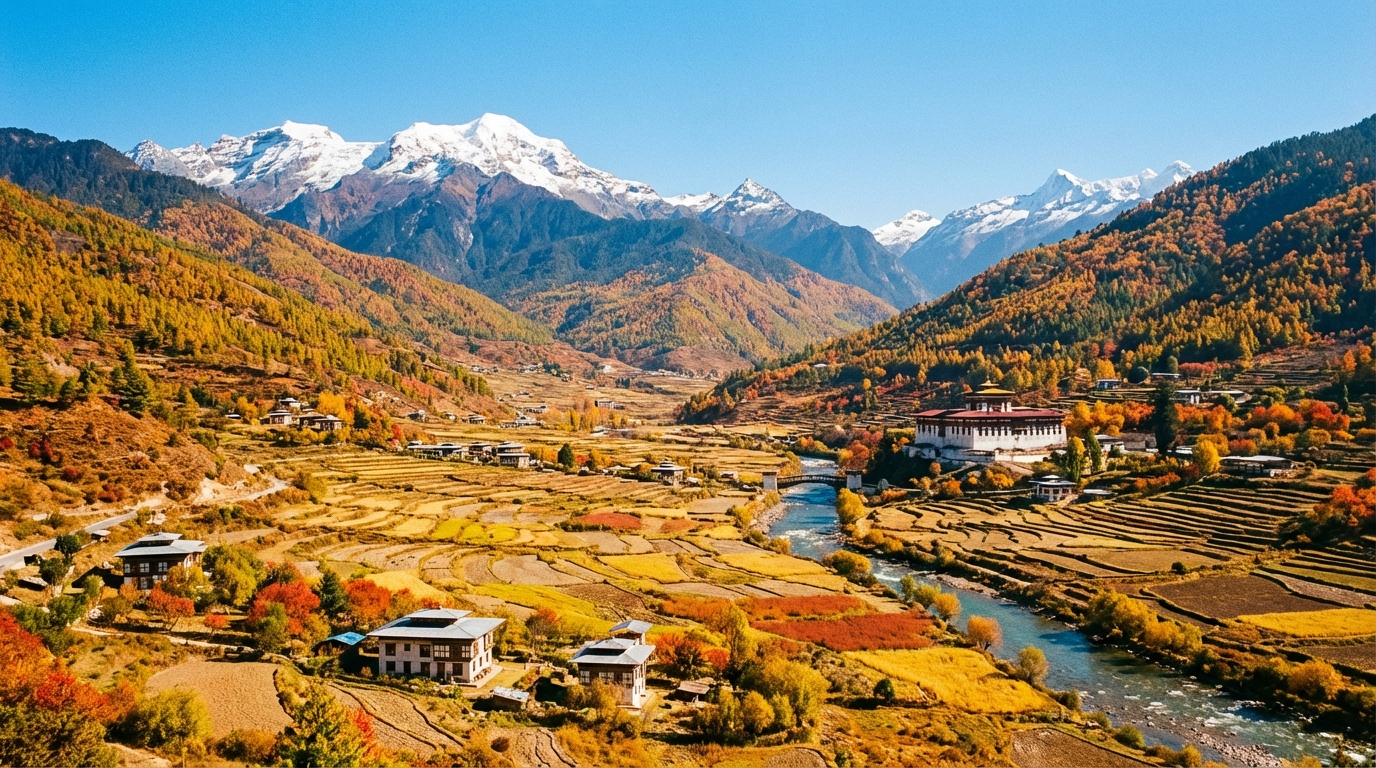
This image was generated with AI.
| Period | Rating | Highlights |
|---|---|---|
| March - May | Optimal | Rhododendron blooms, pleasant temperatures, Paro Tshechu |
| September - November | Optimal | Best visibility, ideal for trekking, Thimphu Tshechu |
| December - February | Off-season | Cold but clear, few tourists, Punakha Tshechu |
| June - August | Not Recommended | Monsoon season, heavy rainfall, limited visibility |
Bhutan's Three Climate Zones
Although Bhutan is geographically only about the size of Switzerland, the kingdom spans extreme elevation differences—from subtropical lowlands on the Indian border at 200 meters to glaciated Himalayan peaks above 7,000 meters. This extraordinary topography creates three distinctly different climate zones that you should consider when planning your trip.
Southern Plains (below 1,500m)
- Climate: Subtropical, humid
- Winter: 14–17°C daytime
- Summer: 25–26°C, high humidity
- Places: Phuentsholing, Indian border regions
Central Bhutan / Valleys (1,500-3,500m)
- Climate: Temperate continental
- Winter: 10–12°C daytime, below 0°C at night
- Summer: 21–22°C, pleasant
- Places: Thimphu, Paro, Punakha, Bumthang
High Mountains (above 3,500m)
- Climate: Alpine to high alpine
- Winter: Severe, snow, passes partially closed
- Summer: Cool, ideal for high mountain treks
- Places: Mountain passes, trekking regions
Monthly Travel Calendar
Each month in Bhutan has its own character—from the colorful rhododendron blooms in spring to crystal-clear mountain air in autumn. The following overview helps you assess the advantages and disadvantages of your planned travel period and make the right decision for your trip.
Spring (March - May)
This image was generated with AI.
March - Spring Begins and Paro Tshechu
| Temperatures (Thimphu) | 4–17°C |
| Rainfall | Moderate, approx. 3 rainy days |
| Advantages | Spring arrival, Paro Tshechu, awakening nature |
| Disadvantages | Still cool nights in higher elevations |
| Ideal for | Cultural tours, festival visits, first hikes |
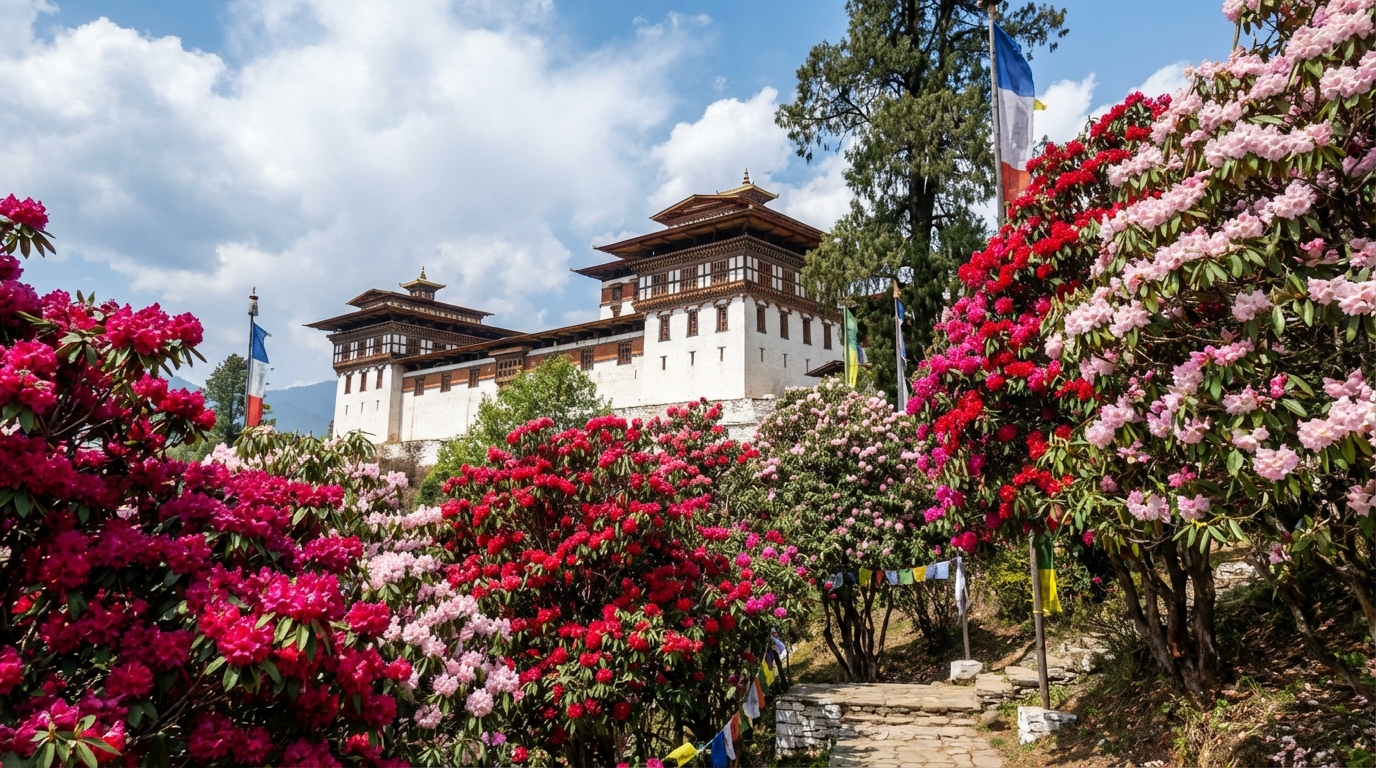
April - Rhododendron Bloom
| Temperatures (Thimphu) | 7–20°C |
| Rainfall | Moderate, approx. 5 rainy days |
| Advantages | Rhododendron bloom, pleasantly warm, green landscape |
| Disadvantages | Peak season—more tourists and higher prices |
| Ideal for | Trekking, nature experiences, photography |
May - Last Chance Before Monsoon
| Temperatures (Thimphu) | 10–22°C |
| Rainfall | Increasing, approx. 8 rainy days |
| Advantages | Still good conditions, lush green landscape |
| Disadvantages | First signs of monsoon possible |
| Ideal for | Last chance for trekking before rainy season |
Summer / Monsoon (June - August)
June - Monsoon Begins
| Temperatures (Thimphu) | 14–24°C |
| Rainfall | High, approx. 15 rainy days |
| Advantages | Few tourists, authentic experiences |
| Disadvantages | Rain, fog, limited visibility, landslide risk |
| Ideal for | Only conditionally recommended—short cultural visits to Paro/Thimphu |
July - Peak Monsoon
| Temperatures (Thimphu) | 15–24°C |
| Rainfall | Very high, approx. 18 rainy days |
| Advantages | Very few tourists |
| Disadvantages | Heavy rain, road closures possible, no visibility |
| Ideal for | Not recommended |
August - Monsoon Waning
| Temperatures (Thimphu) | 15–24°C |
| Rainfall | Very high, approx. 16 rainy days |
| Advantages | End of rainy season in sight |
| Disadvantages | Still much rain and humidity |
| Ideal for | Not recommended |
Autumn (September - November)
This image was generated with AI.
September - Monsoon Ends and Thimphu Tshechu
| Temperatures (Thimphu) | 12–22°C |
| Rainfall | Decreasing, approx. 10 rainy days |
| Advantages | Monsoon ending, lush green landscape, Thimphu Tshechu |
| Disadvantages | Initially still some residual humidity possible |
| Ideal for | Beginning of trekking season, festival visits |
October - The Perfect Travel Month
| Temperatures (Thimphu) | 7–19°C |
| Rainfall | Low, approx. 3 rainy days |
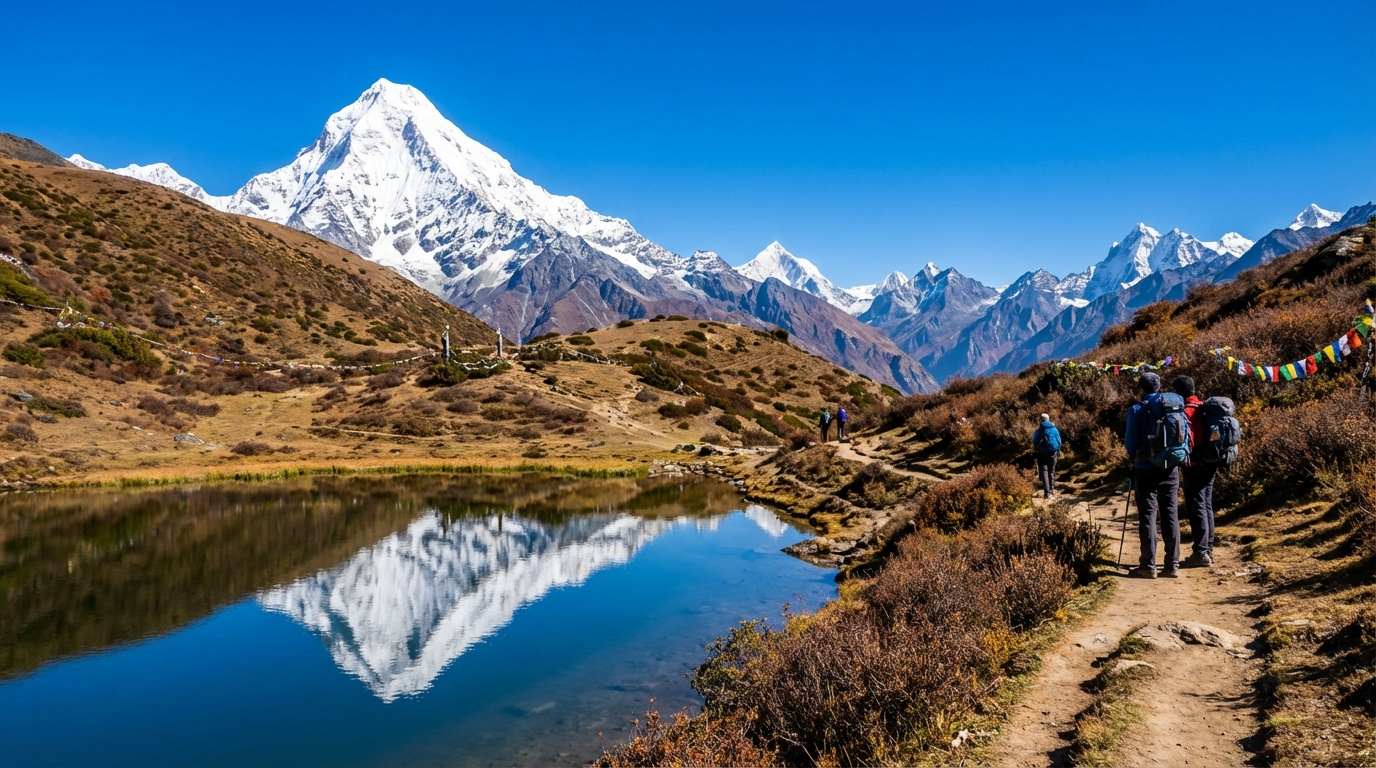
| Advantages | Best visibility of the year, cranes arrive, ideal for trekking |
| Disadvantages | Absolute peak season—book early, higher prices |
| Ideal for | All activities, especially trekking and photography |
November - Cranes and Clear Skies
| Temperatures (Thimphu) | 2–15°C |
| Rainfall | Very low, approx. 1 rainy day |
| Advantages | Excellent visibility, Black-necked cranes in Phobjikha Valley, Jambay Lhakhang Festival |
| Disadvantages | Getting cooler, warm clothing required |
| Ideal for | Trekking, birdwatching, photography |
Winter (December - February)
December - Winter Begins
| Temperatures (Thimphu) | -2 to 12°C |
| Rainfall | Low, approx. 1 rainy day |
| Advantages | Few tourists, clear visibility, cheaper prices |
| Disadvantages | Cold, high passes partially closed |
| Ideal for | Cultural tours in the west, Christmas/New Year travels |
January - Coldest Month
| Temperatures (Thimphu) | -4 to 12°C |
| Rainfall | Low, approx. 1 rainy day |
| Advantages | Clear visibility, very few tourists, authentic experiences |
| Disadvantages | Coldest month, some passes closed |
| Ideal for | Cultural tours in Paro, Thimphu, Punakha |
February - Punakha Tshechu
| Temperatures (Thimphu) | -1 to 14°C |
| Rainfall | Low, approx. 2 rainy days |
| Advantages | Beginning of warming trend, Punakha Tshechu (major festival) |
| Disadvantages | Still wintry, especially cold at night |
| Ideal for | Cultural tours, festival visits in Punakha |
Best Time by Activity
Depending on your main interests, different travel times are recommended. Trekking enthusiasts, culture lovers, and photographers have different requirements for weather and visibility conditions. Here you'll find our detailed recommendations for the most popular activities.
Trekking
| Period | Recommendation | Note |
|---|---|---|
| October | Ideal | Perfect combination of weather, visibility, and temperatures |
| September - November | Optimal | Best conditions, clear mountain visibility |
| March - May | Very Good | Mild, rhododendron bloom on trekking routes |
| June - August | Not Recommended | Monsoon: slippery paths, no visibility, landslide risk |
Detailed information about the various treks—from the popular Druk Path to the legendary Snowman Trek—can be found on our trekking overview page.
Festivals & Tshechus
This image was generated with AI.
| Festival | Period | Location |
|---|---|---|
| Punakha Tshechu | February/March | Punakha Dzong |
| Paro Tshechu | March/April | Paro Dzong |
| Thimphu Tshechu | September/October | Tashichho Dzong, Thimphu |
| Jambay Lhakhang Drup | October/November | Bumthang |
The complete festival calendar with all dates for 2026, 2026, and 2027, as well as detailed descriptions of each Tshechu, can be found on our festivals page.
Photography
| Period | Specialty |
|---|---|
| October - November | Best visibility of Himalayan peaks, clear mountain air |
| March - April | Rhododendron bloom, colorful landscape |
| November - February | Clear air, Black-necked cranes, snow-capped peaks |
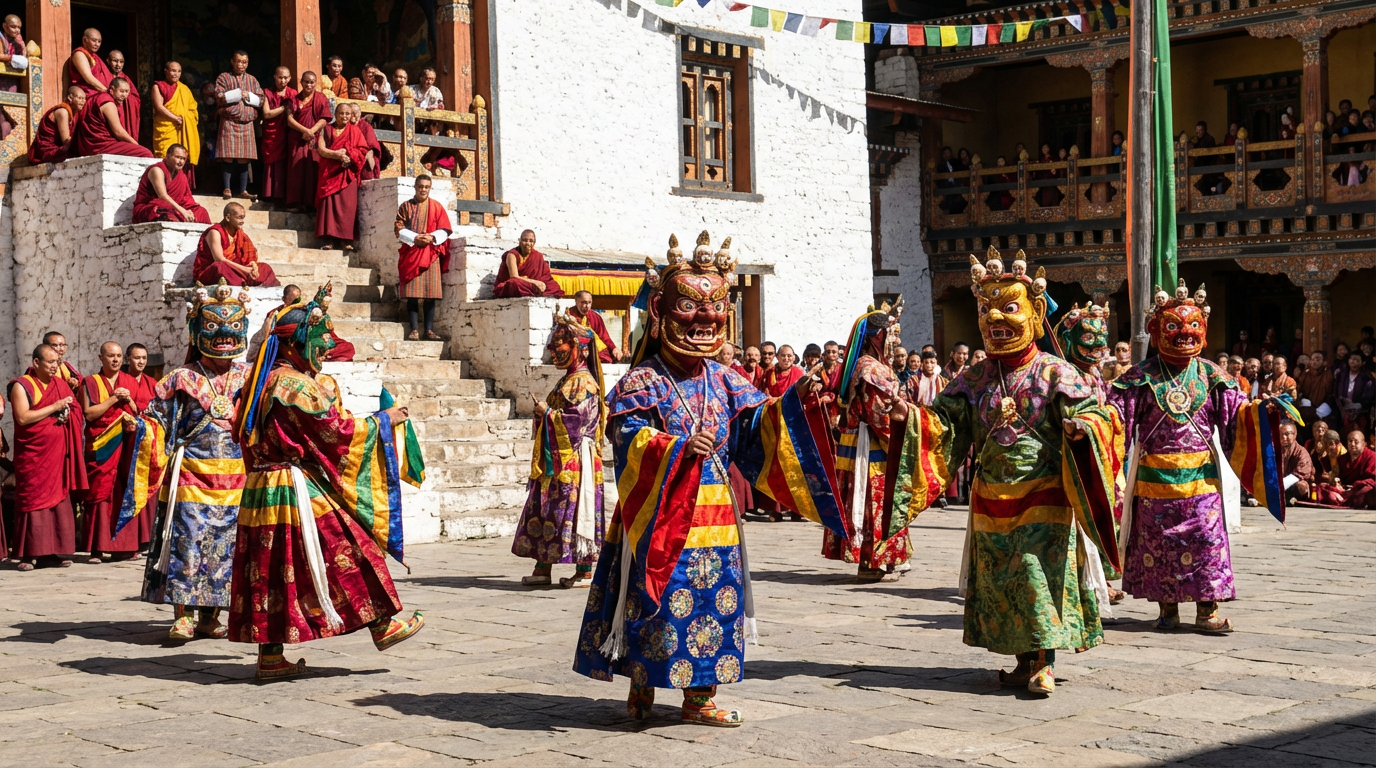
| Festival Times | Colorful mask dances and traditional clothing |
Birdwatching
| Period | Highlight |
|---|---|
| October - February | Black-necked cranes in Phobjikha Valley—peak in November |
| Year-round | Over 700 bird species in diverse habitats |
Climate Data by Region
The following climate tables show average temperatures and rainfall for the three most-visited regions of Bhutan. This data helps you pack the right clothing and plan your activities optimally.
Thimphu (2,320m)
| Month | Min. Temp. | Max. Temp. | Rainy Days |
|---|---|---|---|
| January | -4°C | 12°C | 1 |
| February | -1°C | 14°C | 2 |
| March | 3°C | 17°C | 3 |
| April | 6°C | 20°C | 5 |
| May | 10°C | 22°C | 8 |
| June | 13°C | 24°C | 15 |
| July | 14°C | 24°C | 18 |
| August | 14°C | 24°C | 16 |
| September | 12°C | 22°C | 10 |
| October | 6°C | 19°C | 3 |
| November | 1°C | 15°C | 1 |
| December | -3°C | 12°C | 1 |
Paro (2,280m)
| Month | Min. Temp. | Max. Temp. | Rainy Days |
|---|---|---|---|
| January | -5°C | 10°C | 1 |
| February | -2°C | 13°C | 2 |
| March | 2°C | 16°C | 4 |
| April | 5°C | 19°C | 6 |
| May | 9°C | 21°C | 9 |
| June | 12°C | 23°C | 14 |
| July | 13°C | 23°C | 17 |
| August | 13°C | 23°C | 15 |
| September | 11°C | 21°C | 9 |
| October | 5°C | 18°C | 3 |
| November | 0°C | 14°C | 1 |
| December | -4°C | 10°C | 1 |
Bumthang (2,800m)
Bumthang sits at 2,800 meters, higher than Paro and Thimphu, making it consistently cooler. Nights can be especially cold even in summer months—so pack warm clothing when visiting Bhutan's spiritual heart.
| Month | Min. Temp. | Max. Temp. | Rainy Days |
|---|---|---|---|
| January | -8°C | 8°C | 1 |
| February | -5°C | 10°C | 2 |
| March | 0°C | 14°C | 4 |
| April | 3°C | 17°C | 6 |
| May | 7°C | 19°C | 10 |
| June | 10°C | 21°C | 16 |
| July | 11°C | 21°C | 19 |
| August | 11°C | 21°C | 17 |
| September | 9°C | 19°C | 11 |
| October | 3°C | 16°C | 4 |
| November | -2°C | 12°C | 1 |
| December | -6°C | 9°C | 1 |
Monsoon Season: What's Still Possible
Although June through August are not optimal travel times, visiting Bhutan during the monsoon is not impossible. If school holidays or work commitments mean you can only travel in summer, you should know what works and what to skip. With the right mindset, the monsoon can have its own charm.
Possible During Monsoon Season:
- Cultural visits in Thimphu and Paro
- Dzong and museum visits
- Short hikes during rain breaks
- Authentic experiences with very few tourists
- Lower prices and more negotiating room
Not Recommended:
- Trekking tours—slippery paths, no visibility
- East Bhutan travel—road closures possible
- Crossing high passes—fog, landslide risk
- Photography trips—limited visibility
- Tiger's Nest hike in heavy rain
Frequently Asked Questions
When is the best time to visit Bhutan?
The best time to visit Bhutan is March through May (spring) and September through November (autumn). During these periods, temperatures are pleasant, rainfall is minimal, and visibility of the Himalayan peaks is excellent. October is particularly ideal with perfect conditions for all activities.
Can you visit Bhutan during the monsoon?
Visiting during monsoon season (June through August) is possible but comes with restrictions. Trekking and travel to the east are not recommended due to road closures and slippery paths. However, cultural visits to Paro and Thimphu are possible, and you'll encounter very few other tourists.
How cold does it get in winter in Bhutan?
In the main valleys (Paro, Thimphu), winter temperatures drop to 10–15°C during the day and -5 to 0°C at night. In higher elevations like Bumthang, it can be even colder, with nighttime temperatures down to -8°C. Warm clothing and layering are essential. Most hotels have heating or provide wood stoves.
When do the rhododendrons bloom in Bhutan?
Rhododendron blooms typically peak in April. Depending on elevation, blooms can last from late March through early May. The colorful flowers in pink, red, and white are especially stunning on trekking routes like the Druk Path Trek. Bhutan is home to over 46 different rhododendron species.
When do the Black-necked cranes arrive in Bhutan?
Black-necked cranes typically arrive in late October in Phobjikha Valley and remain through mid-February. November is peak season with most of the 300 to 500 cranes present. The annual Black-Necked Crane Festival takes place in November and offers a special cultural experience.
What clothing should I bring for different seasons?
In spring and autumn, bring layers—lightweight clothing for daytime, a warm jacket for evenings and higher elevations. Winter requires warm winter clothing with hat, gloves, and thermal layers. Summer (monsoon) requires waterproof clothing and good footwear. In Bhutan, layering is always the right choice.
Is October really the best month for Bhutan?
October is indeed considered the optimal travel month—the combination of stable weather, best visibility, pleasant temperatures, and the arrival of Black-necked cranes makes it especially attractive. However, October is also the most-booked month: plan early (three to six months in advance) and expect peak season prices.
Further Information
With the right travel time chosen, you've laid the foundation for your Bhutan trip. The following topics will help you with further planning and preparation.

This image was generated with AI.
Festival Calendar
All Tshechu dates for 2026, 2026, and 2027—plan your trip around an unforgettable festival.
This image was generated with AI.
Trekking in Bhutan
All treks at a glance: from the popular Druk Path to the legendary Snowman Trek.
This image was generated with AI.
Packing List
What to pack for your Bhutan trip—sorted by season and activity.
Your Bhutan Trip at the Perfect Time
We advise you on the best travel time for your individual wishes and plan your customized Bhutan journey.