Paro Bhutan: Airport, Tiger's Nest & Attractions
Last updated:
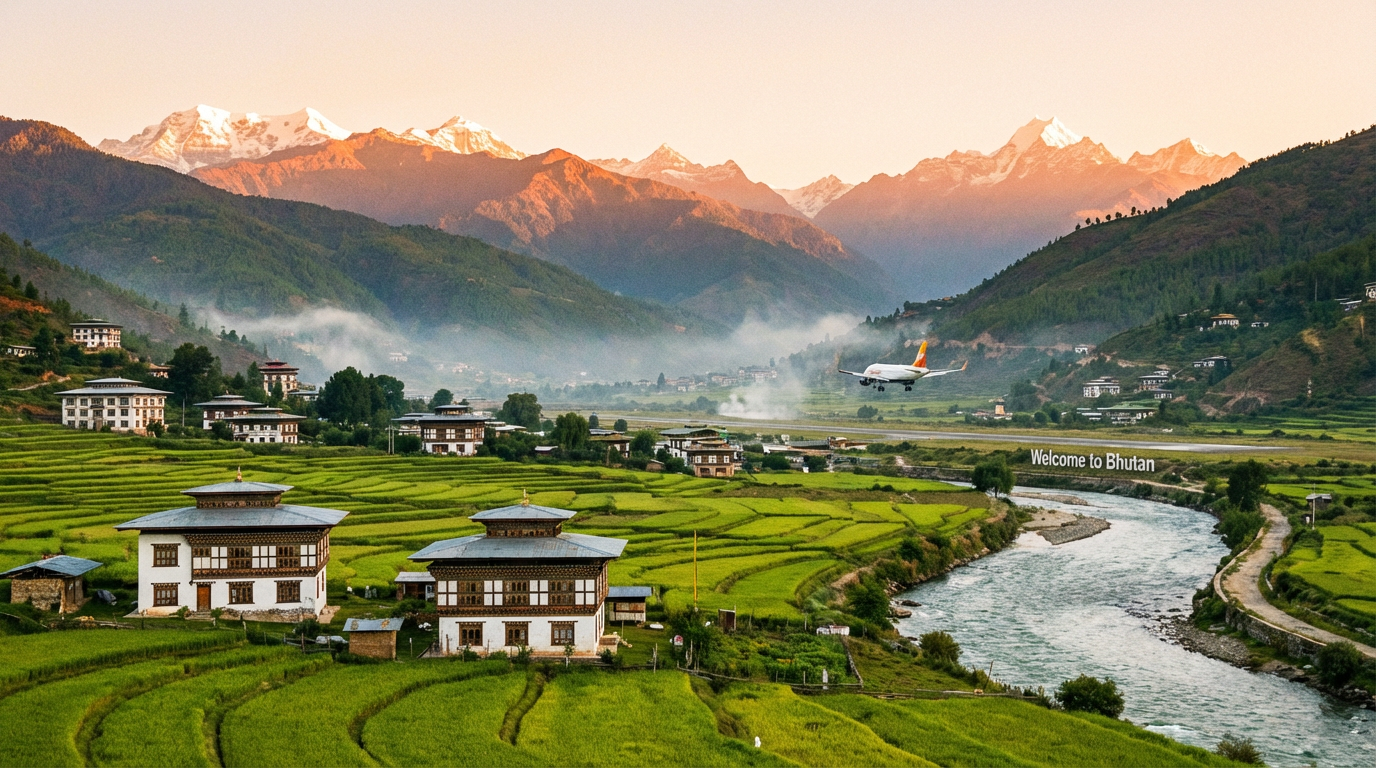
For most Bhutan travelers, Paro is the first contact with the Himalayan Kingdom – and what a contact it is. After the spectacular approach to one of the world's most challenging airports, the picturesque Paro Valley unfolds at approximately 2,250 meters elevation. Here awaits the world-famous Tiger's Nest Monastery, historic Dzongs and a landscape that provides the perfect introduction to Bhutan's unique culture.
Paro at a Glance
The Paro Valley is among the most fertile and oldest settled regions in Bhutan. For centuries it served as an important trade route to Tibet, explaining its strategic significance. Today, Paro is both the economic gateway to the country and a spiritual center with some of Bhutan's most significant religious sites.
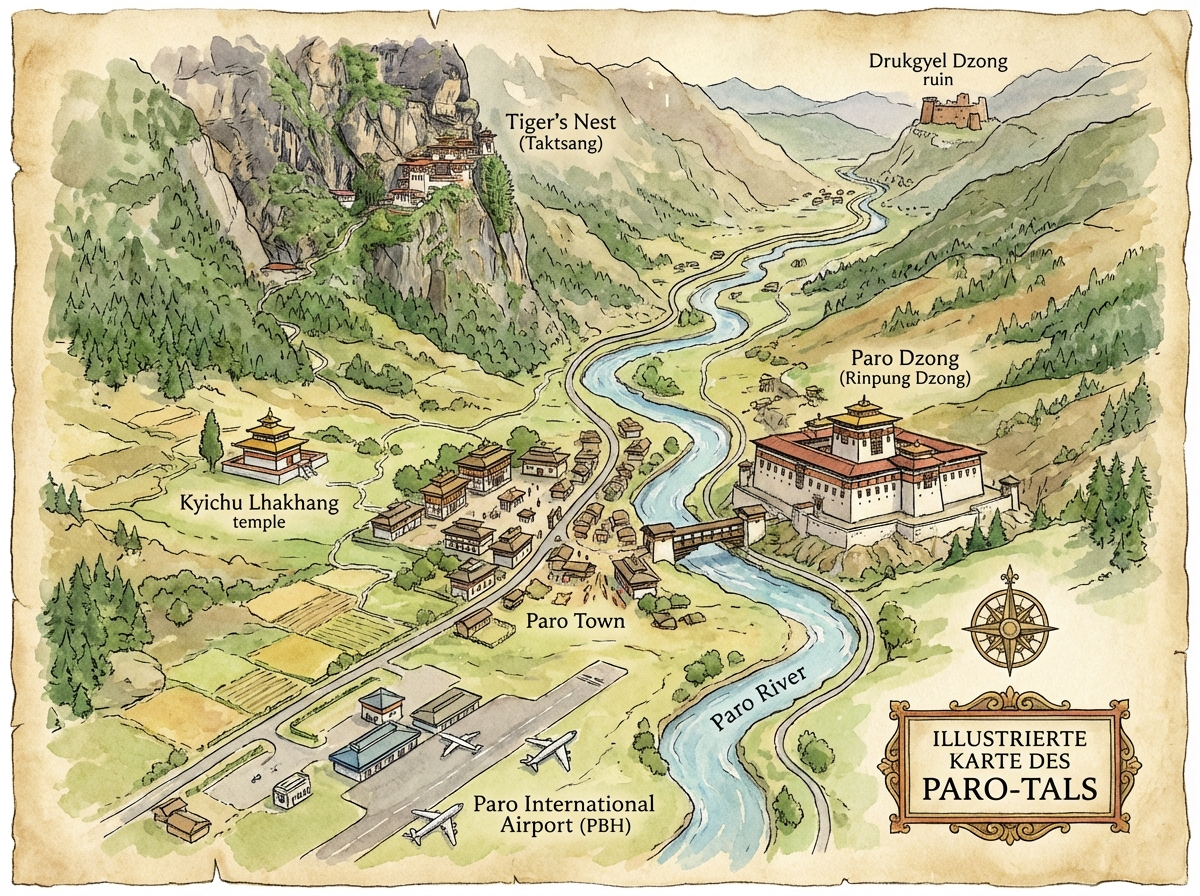
This image was generated with AI.
Paro Airport – Your Spectacular Arrival in Bhutan
Paro Airport (IATA: PBH) is considered one of the world's most challenging airports – and at the same time one of the most spectacular. Nestled in a narrow Himalayan valley at 2,235 meters elevation, surrounded by mountains up to 5,500 meters, the approach requires the highest precision. But don't worry: only specially certified pilots are allowed to land here, and the flight is absolutely safe. More than that: the approach itself becomes an unforgettable part of your Bhutan journey.
The Legendary Approach
During the landing approach to Paro, the aircraft glides in sharp curves through narrow valleys, past mountain slopes that seem within reach. Pilots navigate without radar in pure visual flight – a procedure only possible in good weather conditions and daylight. Through the window you see green hills with monasteries, terraced fields and snow-capped peaks. Many passengers describe the approach as a roller coaster with a view.
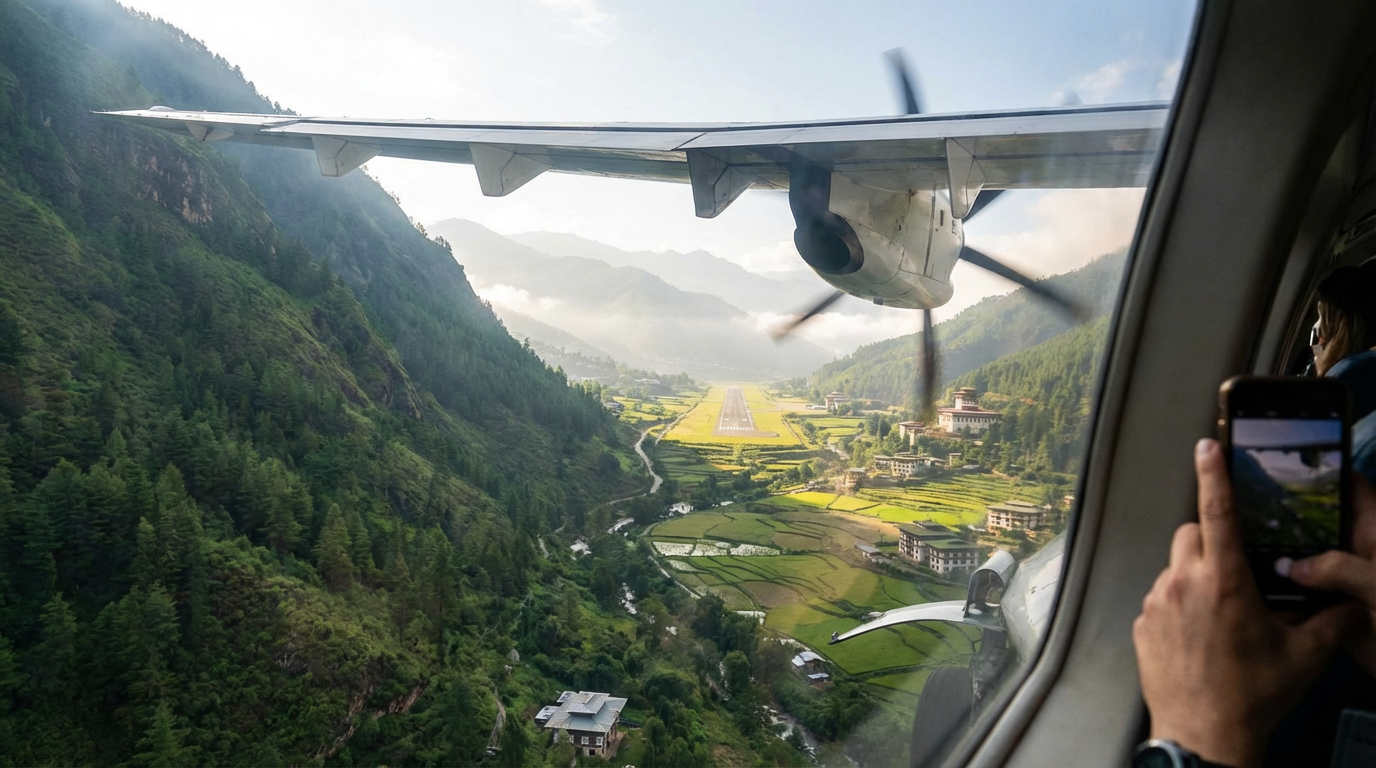
This image was generated with AI.
Airlines and Connections
Paro is served by two airlines: Drukair, Bhutan's national carrier, and Bhutan Airlines. Direct connections exist to Delhi, Kathmandu, Bangkok, Singapore and Kolkata. From Germany, Austria and Switzerland, arrival requires a connection – usually via Delhi or Bangkok.
| Departure City | Airline | Flight Time | Frequency |
|---|---|---|---|
| Delhi (DEL) | Drukair, Bhutan Airlines | approx. 2.5 hours | Daily |
| Kathmandu (KTM) | Drukair | approx. 1 hour | Several times weekly |
| Bangkok (BKK) | Drukair | approx. 4 hours | Several times weekly |
| Singapore (SIN) | Drukair | approx. 5.5 hours | 2–3 times weekly |
Detailed information on flights to Bhutan
Attractions in Paro
Paro combines some of Bhutan's most significant attractions in a compact area. From the world-famous Tiger's Nest Monastery to the imposing Paro Dzong to one of the country's oldest temples – here you experience Bhutan's history and spirituality in all its depth.
Tiger's Nest (Paro Taktsang) – Bhutan's Icon
The Tiger's Nest Monastery (Paro Taktsang) is Bhutan's undisputed icon. Like an eagle's nest, the temple complex clings to a 900-meter high vertical cliff face – a sight that takes every visitor's breath away. Legend has it that Guru Rinpoche flew here on the back of a tigress in the 8th century to meditate in a cave. The hike to the monastery is an absolute must for every Bhutan journey.
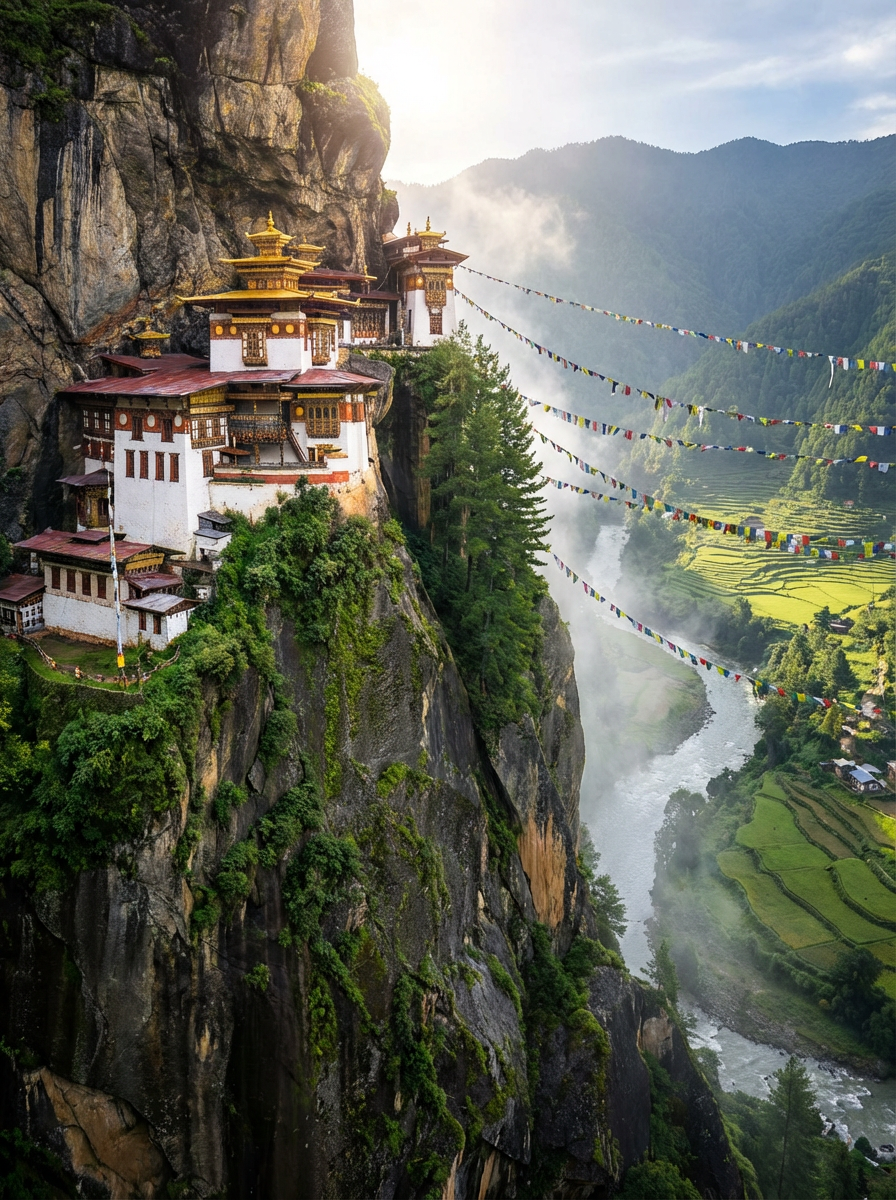
This image was generated with AI.
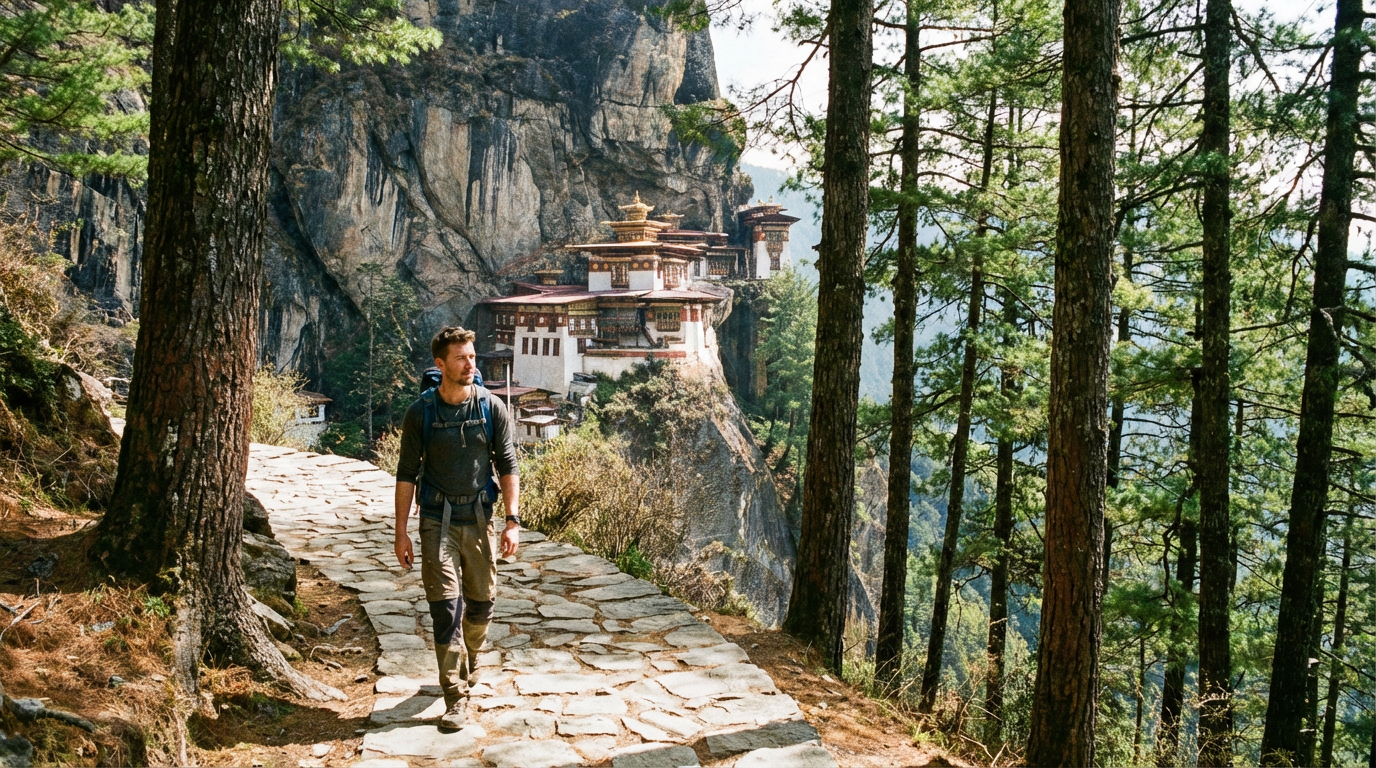 Detail Page
 This image was generated with AI.
Tiger's Nest: Complete Hiking Guide
Everything about the hike: route, duration, difficulty, best time of day, what to bring and the spiritual significance of the monastery.
Paro Dzong (Rinpung Dzong)
Rinpung Dzong, better known as Paro Dzong, sits majestically above the Paro Chhu River. Built in 1646, this monastic fortress is a prime example of Bhutanese architecture: massive white walls, intricate wooden carvings and a central tower (Utse) that forms the religious heart of the complex. Today the Dzong still serves as the district administrative seat and active monastery – you'll encounter monks in their daily rituals here.
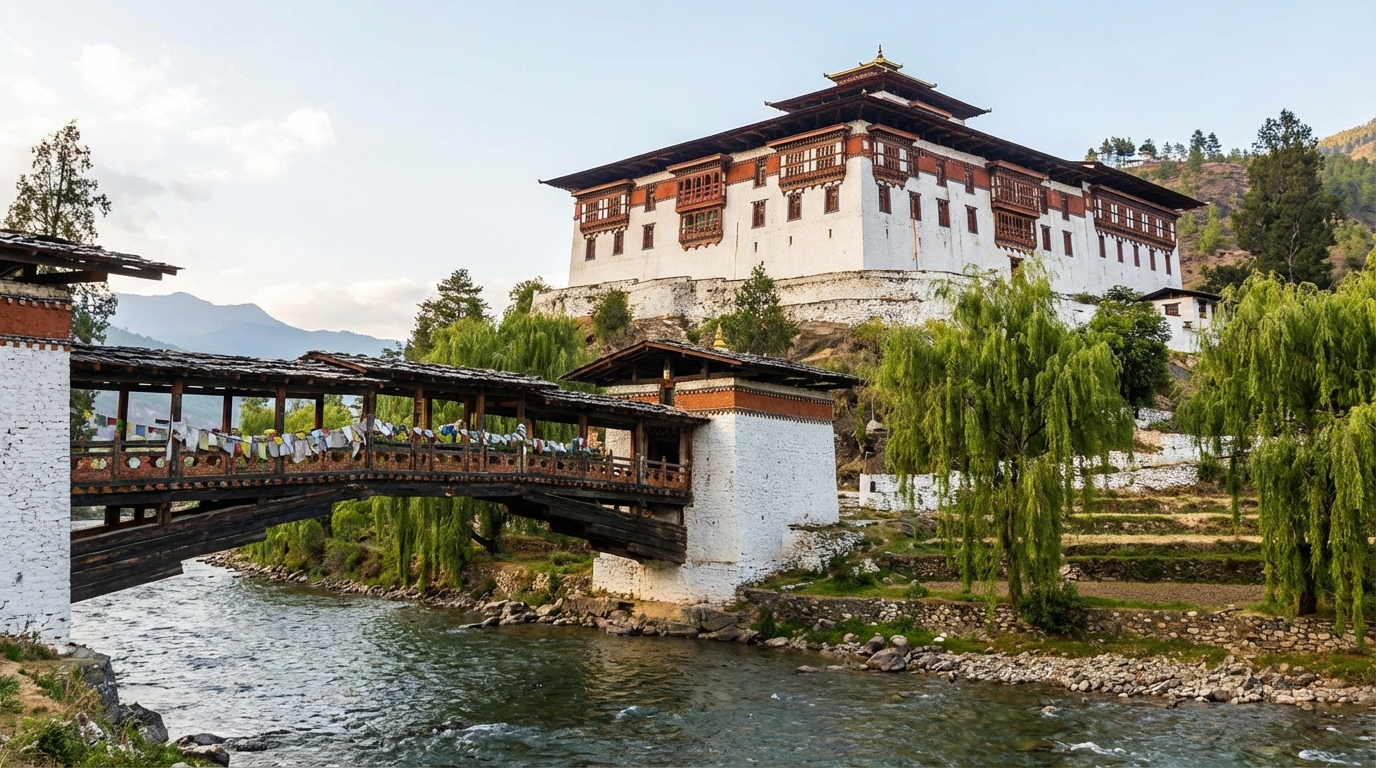
This image was generated with AI.
More Attractions in Paro
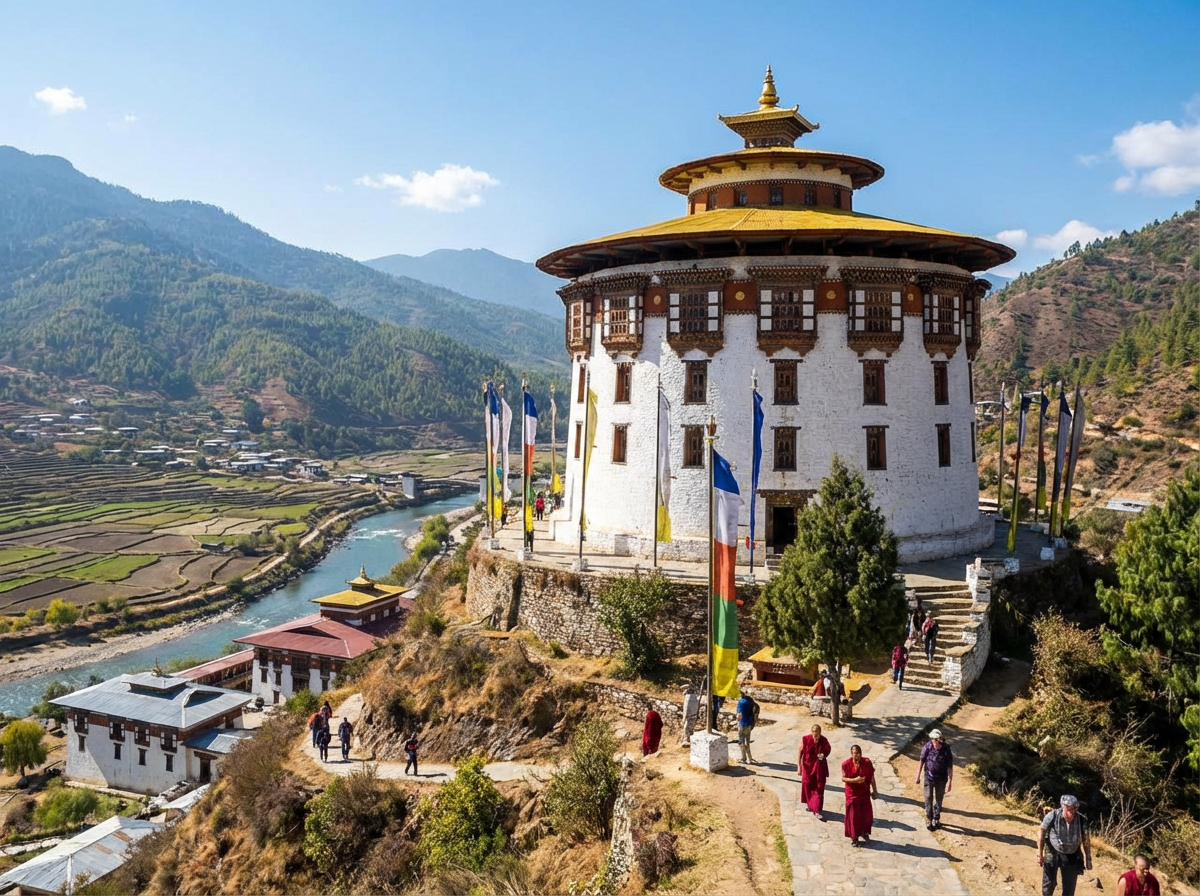 Museum
 This image was generated with AI.
National Museum (Ta Dzong)
In the former watchtower of Paro Dzong: Bhutan's most comprehensive collection of art, artifacts, thangkas and historical weapons.
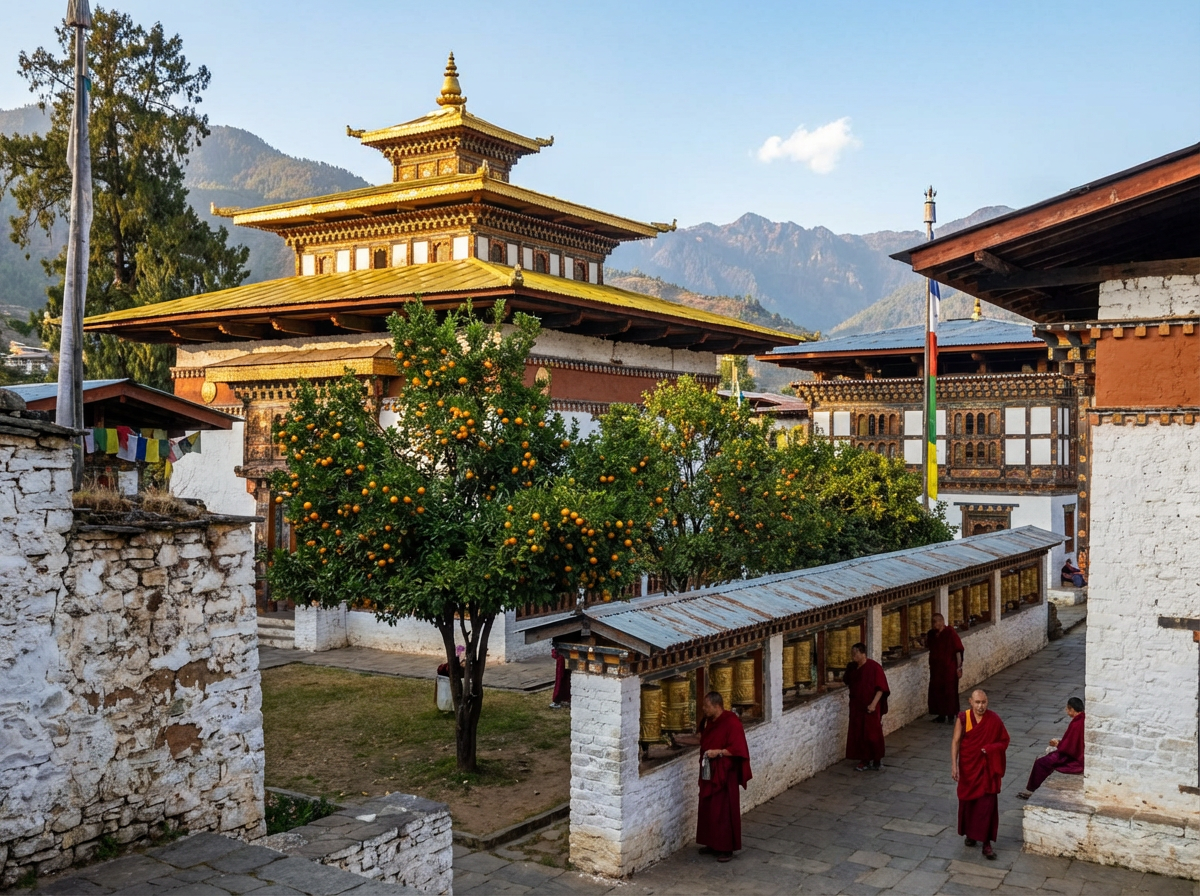 Temple
 This image was generated with AI.
Kyichu Lhakhang
One of Bhutan's oldest temples dating from the 7th century – one of 108 temples built in a single day by the Tibetan King Songtsen Gampo.
 Ruins
Ruins This image was generated with AI.
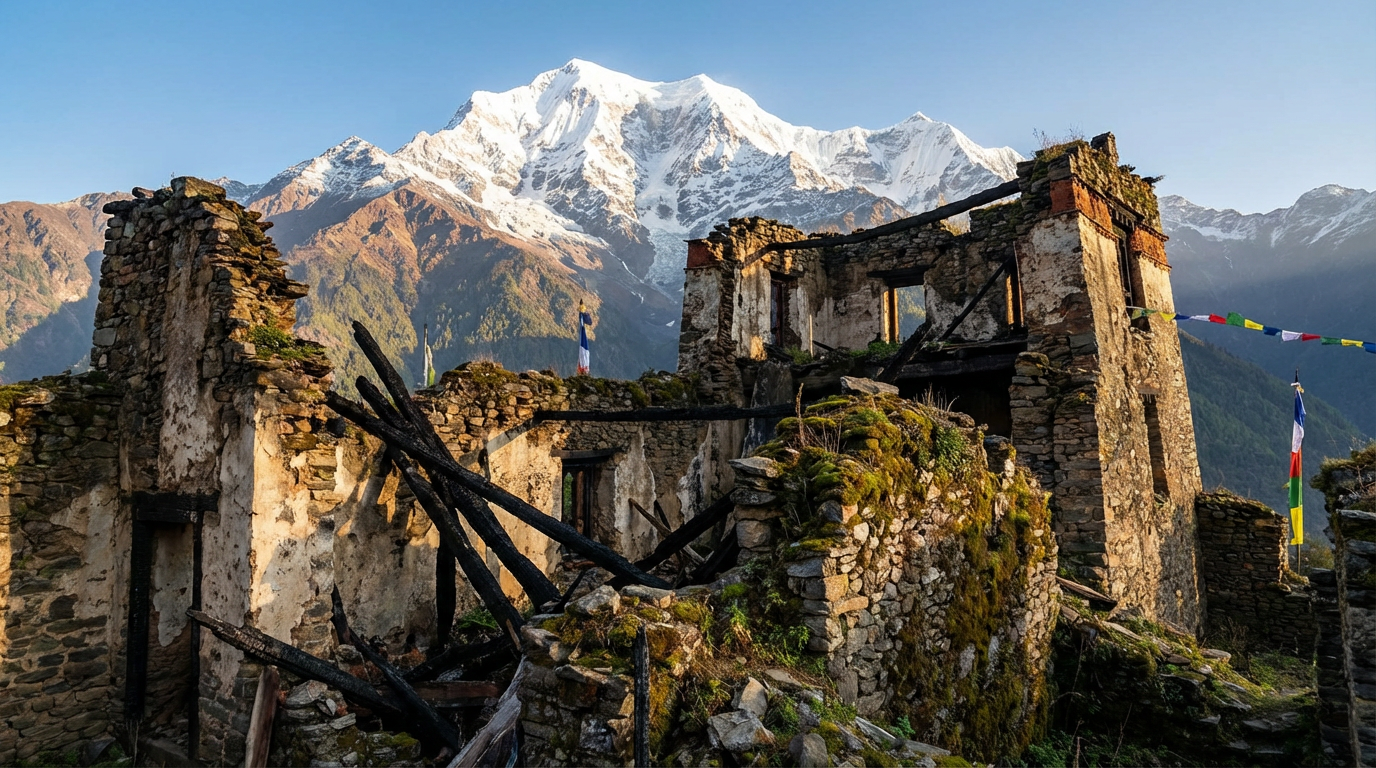
Drukgyel Dzong
The atmospheric ruins of a fortress from 1649, with views of the snow-capped Chomolhari (7,326 m) – on the UNESCO Tentative List.
This image was generated with AI.
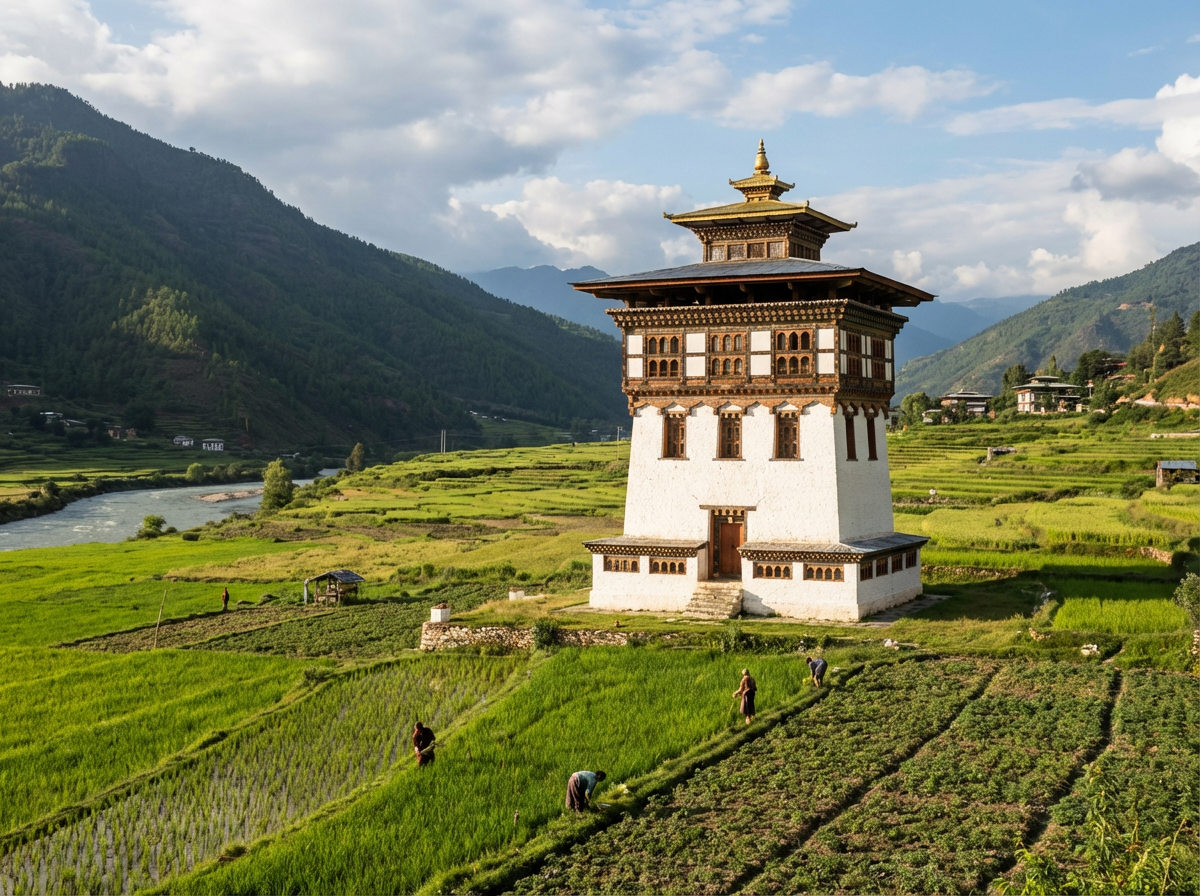
Dungtse Lhakhang
An unusual chorten-shaped temple from the 15th century with impressive interior murals.
Beyond these main attractions, a visit to Paro's weekly market (Sundays) is worthwhile, where you can experience local life firsthand. Archery, Bhutan's national sport, is also frequently observed in Paro – ask your guide about current competitions.
Hikes from Paro
Paro Valley is a hiker's paradise. From the classic Tiger's Nest hike to shorter day excursions to challenging multi-day treks, the region offers options for every fitness level. The moderate elevation of 2,200–3,200 meters allows even untrained hikers unforgettable experiences.
| Hike | Duration | Difficulty | Highlights |
|---|---|---|---|
| Tiger's Nest | 4–6 hours | Moderate | Iconic monastery, spectacular views |
| Zuri Dzong | 3–4 hours | Easy–Moderate | Meditation cave, panoramic views of Paro Valley |
| Drukgyel Dzong | 2–3 hours | Easy | Historic ruins, Chomolhari views on clear days |
| Bumdra Trek | 1–2 days | Challenging | Alternative Tiger's Nest route via Bumdra Monastery |
| Druk Path Trek | 5–6 days | Moderate–Challenging | Trek to Thimphu via alpine lakes |
| Jomolhari Trek | 8–11 days | Challenging | To the base of Chomolhari (7,326 m) |
Accommodation in Paro
Paro offers the largest selection of accommodation in Bhutan – from world-famous luxury resorts to authentic homestays. Most hotels combine traditional Bhutanese architecture with modern comfort. Note: with standard tours, accommodation is often already included in the package price.
Luxury Category
 Ultra-Luxury
 This image was generated with AI.
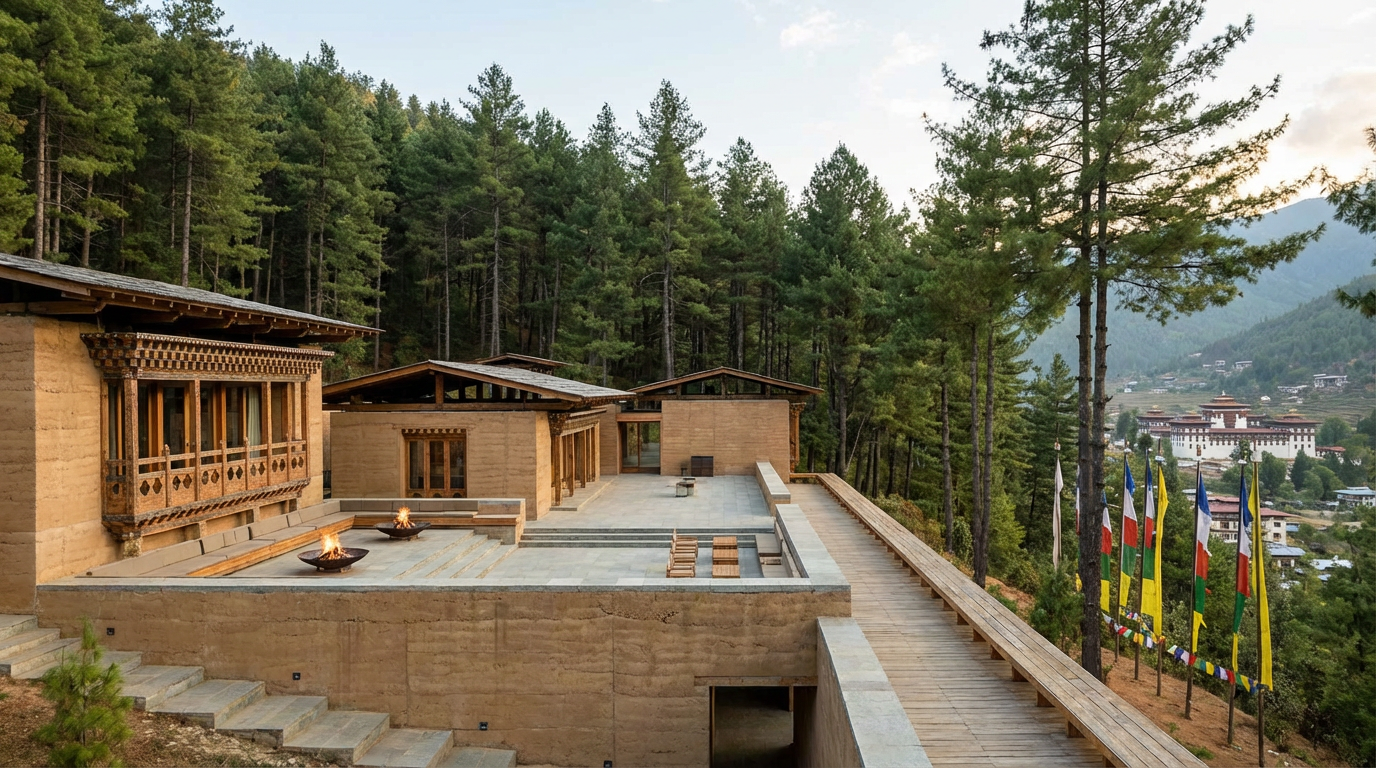
Amankora Paro
Ultra-luxury from the Aman group: Minimalist design meets Bhutanese tradition in one of Asia's most exclusive resorts.
 Luxury
 This image was generated with AI.
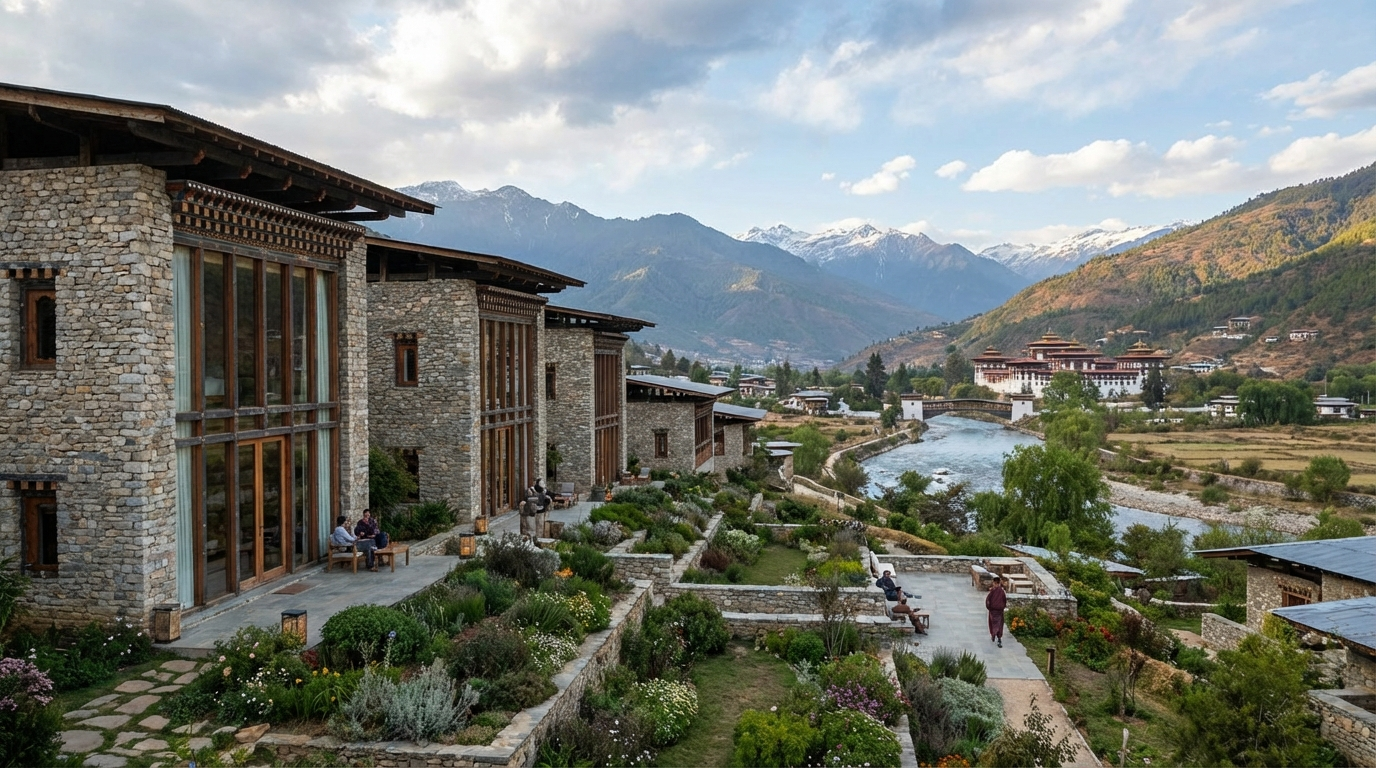
Six Senses Paro
Wellness oasis with spectacular location: Spacious suites, world-class spa and breathtaking valley views.
 Boutique Luxury
 This image was generated with AI.
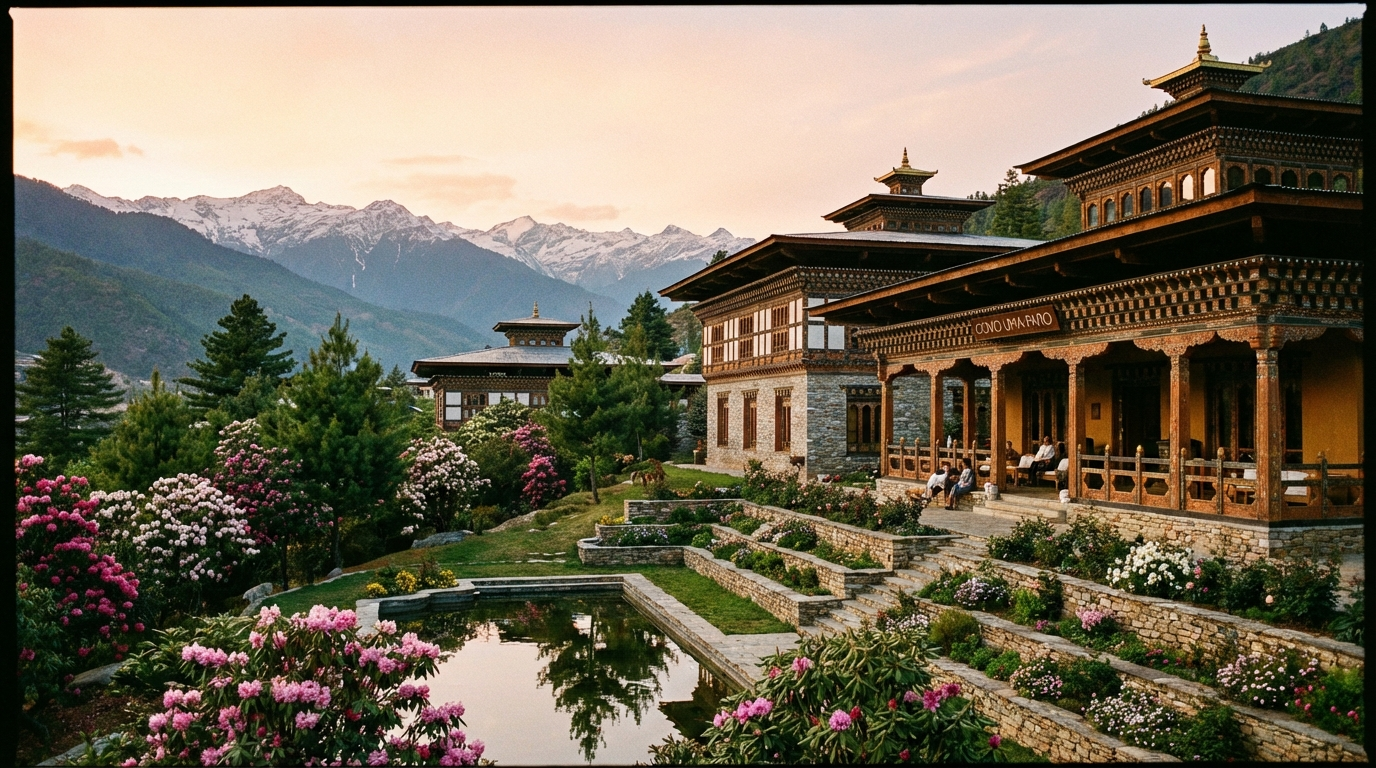
Como Uma Paro
Boutique luxury with Shambhala Spa: Intimate atmosphere, excellent cuisine and personalized service at the highest level.
Mid-Range & Budget
Besides luxury resorts, Paro has numerous comfortable 3–4-star hotels with traditional architecture, restaurants and often small spas. For authentic experiences, homestays offer an opportunity to stay with a Bhutanese family and experience daily life firsthand.
All accommodation in Paro by category | Homestays in Bhutan
Recommended Stay Duration in Paro
For a comprehensive visit we recommend 2–3 nights in Paro. This time is sufficient to explore the main attractions without rushing – and allows your body to adjust to the elevation.
Minimum: 2 Nights – The Highlights
- Day 1: Arrival, Paro Dzong, National Museum, rest
- Day 2: Tiger's Nest hike (full day), Kyichu Lhakhang
- Day 3: Continue to Thimphu or Punakha
Optimal: 3 Nights – With Time for Details
- Day 1: Arrival, explore Paro town, first Dzong visit
- Day 2: Tiger's Nest hike (leisurely, full day)
- Day 3: Drukgyel Dzong, Kyichu Lhakhang, National Museum
- Day 4: Continue to Thimphu
Extended: 4+ Nights – For Explorers and Trekkers
- Option A: Day trip to Haa Valley via Chele La Pass
- Option B: Bumdra Trek (1–2 days) as alternative Tiger's Nest route
- Option C: Start Druk Path Trek to Thimphu (5–6 days)
- Option D: Deeper cultural immersion: cooking class, archery, farm visit
Weather in Paro and Best Time to Visit
Paro sits at approximately 2,250 meters elevation and enjoys a temperate climate with four distinct seasons. Temperatures are pleasant year-round, but can be bitterly cold during winter nights. The best time to visit is spring (March–May) and fall (September–November).
| Month | Temperature (Day) | Temperature (Night) | Precipitation | Suitability |
|---|---|---|---|---|
| January | 10–15°C | -5 to 0°C | Low | Good, cold |
| February | 12–16°C | -3 to 2°C | Low | Good, cold |
| March | 15–18°C | 3–7°C | Increasing | Very good |
| April | 18–22°C | 6–10°C | Moderate | Very good, rhododendron bloom |
| May | 20–24°C | 10–13°C | Increasing | Good |
| June–August | 20–25°C | 12–15°C | High (Monsoon) | Limited, flight cancellations possible |
| September | 20–23°C | 10–13°C | Decreasing | Very good |
| October | 18–22°C | 5–10°C | Low | Very good, clear visibility |
| November | 15–18°C | 0–5°C | Low | Very good, clear visibility |
| December | 12–15°C | -3 to 2°C | Low | Good, cold |
Detailed information on the best time to visit Bhutan
Practical Information for Paro
Frequently Asked Questions About Paro
How high is Paro in Bhutan?
Paro Valley sits at an elevation of approximately 2,200 to 2,400 meters above sea level. The airport is at 2,235 m. This moderate elevation is manageable for most travelers, though it can cause mild symptoms like headaches in sensitive individuals.
Is Paro Airport really dangerous?
No. Although the airport is considered one of the world's most challenging, it is by no means dangerous. Only specially certified pilots are allowed to land here, and flights occur exclusively in good weather conditions. The safety record is excellent. The approach is spectacular but absolutely safe.
How long does the Tiger's Nest hike take?
The Tiger's Nest hike takes 4–6 hours total (round trip) depending on fitness and breaks. The ascent to the viewpoint takes about 1.5–2 hours, with another 30–45 minutes from there to the monastery. Plan for half a day to a full day.
When is the best time to visit Paro?
The best time to visit Paro is spring (March–May) and fall (September–November). In spring, rhododendrons bloom and the Paro Tshechu Festival takes place. In fall, the air is clear with spectacular Himalayan views. Avoid the monsoon months of June–August if possible due to potential flight cancellations.
How far is Paro from Thimphu?
The distance between Paro and Thimphu is approximately 55 km. The drive takes 1 to 1.5 hours depending on traffic. The road is well-maintained and leads along the river through a beautiful valley. Most itineraries combine both locations.
Can I travel in Paro without a guide?
No. All international tourists in Bhutan must travel with a licensed guide – it's not an option but a requirement. Your guide is provided by your tour operator and accompanies you throughout your stay. This is part of Bhutan's tourism model.
What are the attractions in Paro besides Tiger's Nest?
Besides Tiger's Nest, Paro offers the imposing Paro Dzong (Rinpung Dzong), the National Museum (Ta Dzong), the ancient Kyichu Lhakhang temple, the ruins of Drukgyel Dzong with views of Chomolhari, and Dungtse Lhakhang. The Sunday weekly market is also worth a visit.
Are there ATMs in Paro?
Yes, Paro has several ATMs from Bank of Bhutan and Bhutan National Bank. They accept international cards (Visa, Mastercard). It's still wise to bring some cash, as ATMs can occasionally be out of service.
Further Information
Onward from Paro
Travel Planning
Plan Your Bhutan Journey from Paro?
We'll create a customized itinerary for you – with just the right amount of time for Tiger's Nest and all of Paro's highlights.