Haa Valley Bhutan: Hidden Valley, Haa Summer Festival & Cheli La Pass
Last updated:
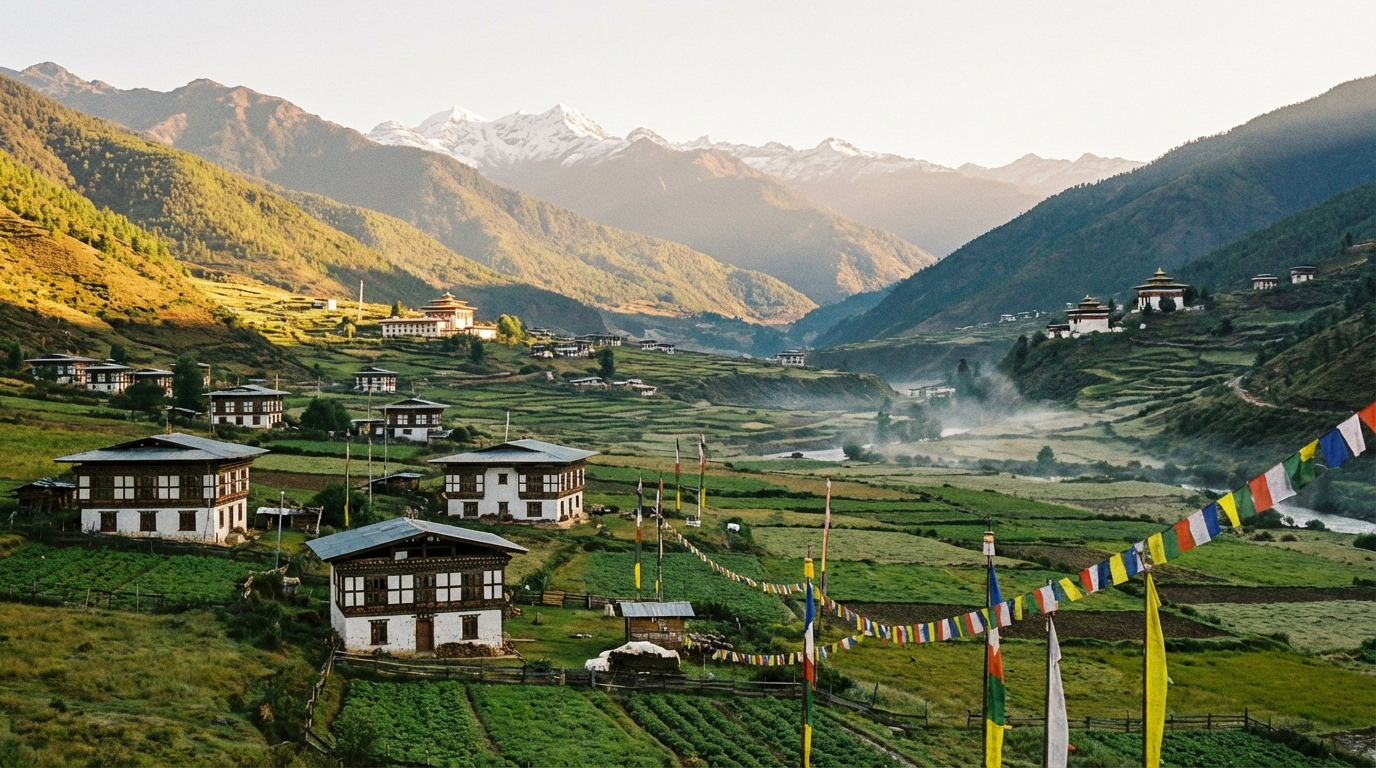
Haa Valley is one of Bhutan's best-kept secrets. Until 2002, this remote valley near the Tibetan border was completely closed to foreign tourists – and even today, it remains one of the country's least visited regions. Those who cross the spectacular Cheli La Pass, Bhutan's highest drivable road pass at nearly 4,000 meters, and descend into Haa Valley enter a world where time seems to move more slowly: Here people still live largely according to traditional ways, a unique festival takes place each summer, and you experience a Bhutan that many Bhutan travelers never get to see. Haa Valley is the perfect complement for those who want more than the standard route.
Haa Valley at a Glance
The strategic location of Haa Valley on the Tibetan border explains why it was closed to visitors for so long. Even today, Indian military is present here, and the Wangchulo Dzong serves as a military base. However, this remoteness has had an unintended side effect: Haa Valley has preserved its original character better than almost any other region in Bhutan. Here you experience authentic Bhutanese rural life, untouched by mass tourism.
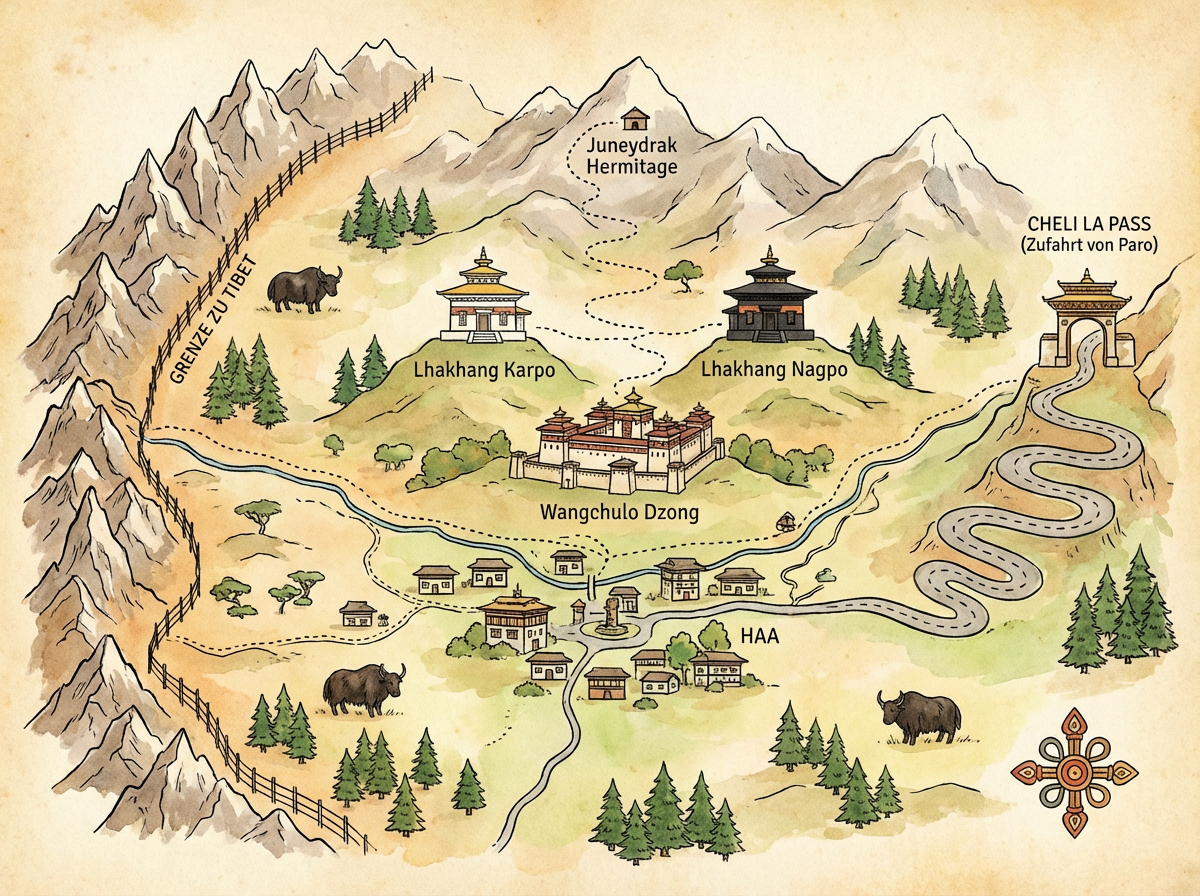
This image was generated with AI.
Why is Haa Called the "Hidden Valley"?
Haa Valley deserves its title as the "hidden valley" for several reasons. Until 2002, it was completely closed to international tourists – longer than any other region in Bhutan. The reason: the strategically sensitive location on the Tibetan border made the valley a restricted zone. Even today, more than two decades after opening, only a few visitors reach this remote valley. The infrastructure is deliberately kept simple, there are only a few hotels, and life here still largely follows the rhythms of past centuries. Those who visit Haa experience a Bhutan that has faded elsewhere.
"Haa Valley was called 'Haa' because the first visitors exclaimed 'Haa!' at the sight of it – so beautiful and unexpected was what they saw." This popular etymology may not be historically documented, but it perfectly captures the essence of the experience: Haa Valley surprises and enchants everyone who sees it for the first time.
Cheli La Pass – Bhutan's Highest Road Pass
The journey to Haa Valley is already an experience in itself: it leads over Cheli La Pass at 3,988 meters elevation – the highest drivable road pass in all of Bhutan. From Paro, the road winds through dense rhododendron forests up to the pass, where on clear days a breathtaking panorama awaits: the majestic Mt. Chomolhari (7,326 m) rises on the horizon, "Bhutan's sacred mountain." At the pass itself, thousands of colorful prayer flags flutter in the wind, and in spring (March to May), blooming rhododendrons transform the landscape into a sea of pink, red, and white.
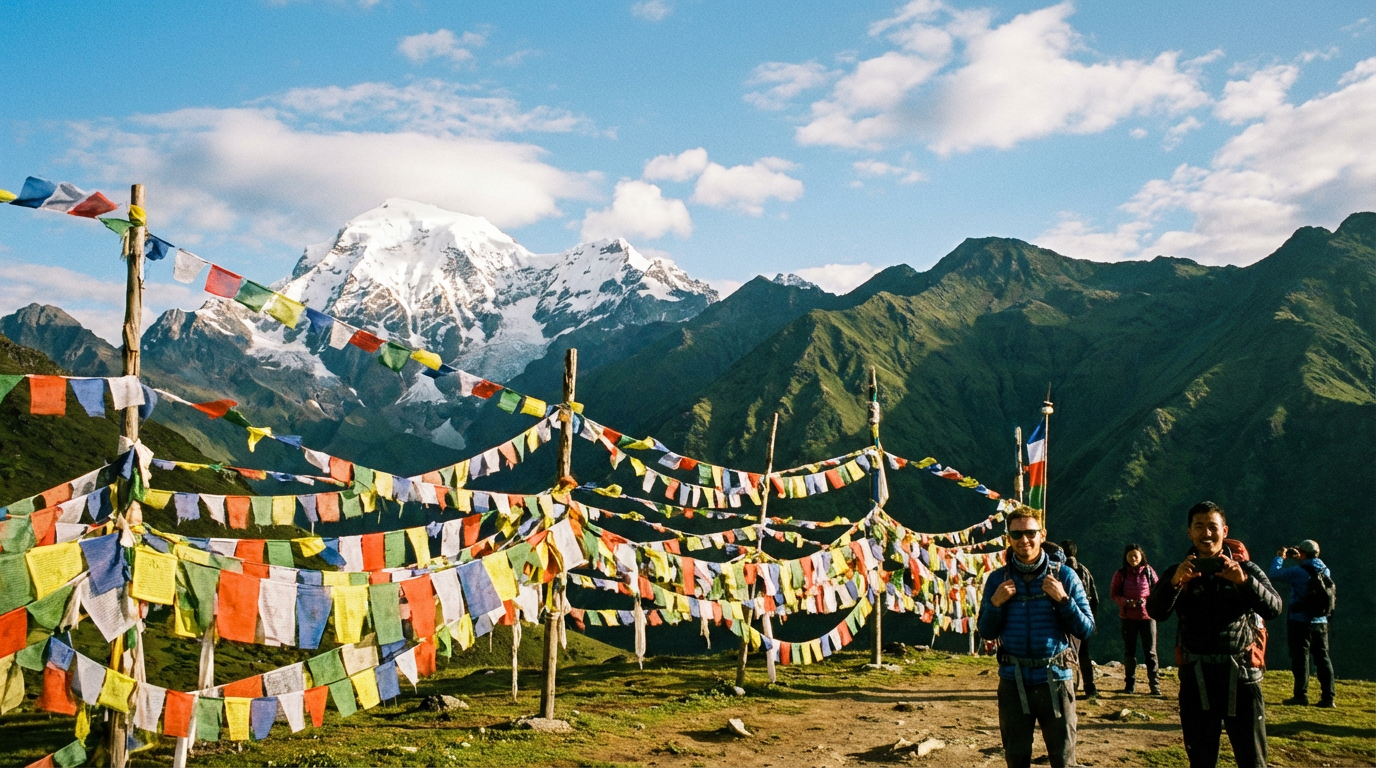
This image was generated with AI.
Attractions in Haa Valley
Haa Valley may have fewer monumental Dzongs than other Bhutanese regions, but its attractions have their own unique charm. The focus is on the two legendary "twin temples" – the White and Black Temples – whose creation legend gave the valley its name. Beyond that, pilgrimages to sacred meditation caves and authentic rural life in traditional villages draw visitors.
Lhakhang Karpo – The White Temple
Lhakhang Karpo, the "White Temple," is one of the two spiritual hearts of Haa Valley. According to legend, it was built at the spot where a white dove landed, sent by the great King Songtsen Gampo. The temple with its simple white facade and colorful window frames is a place of devotion and silence – far removed from the more touristy temples in western Bhutan. Here you experience authentic spirituality.
Lhakhang Nagpo – The Black Temple
Opposite the White Temple stands its counterpart: Lhakhang Nagpo, the "Black Temple." It is said to have been built where a black dove landed – the twin of the white one. The two temples together form the spiritual heart of Haa Valley. Interestingly, the name "Haa" is said to come from the exclamation of surprise that visitors made when they beheld this unique constellation of two temples. Whether history or legend – the twin temples are a fascinating ensemble.
Juneydrak Hermitage – Sacred Meditation Cave
For more active visitors, Juneydrak Hermitage offers a worthwhile destination. This sacred meditation cave lies above the valley and requires a hike of approximately 3–4 hours (round trip). The path leads through dense forest and offers spectacular views of the valley. At the cave itself, a mystical atmosphere prevails – Buddhist masters have meditated here for centuries. Those who make the effort are rewarded with insight into Bhutan's spiritual side.
Learn more about temples and monasteries in Bhutan
The Haa Summer Festival – A Unique Cultural Celebration
The Haa Summer Festival is one of the most unique festivals in all of Bhutan – and perhaps the best reason to visit Haa Valley. Established only in 2011, it differs markedly from the religious Tshechus of other regions: here the living culture of the local population is the focus. The festival showcases nomadic traditions, local crafts, regional cuisine, and traditional sports. It is a window into a world that has disappeared elsewhere – authentic, vibrant, and surprisingly intimate, as relatively few international visitors find their way here yet.
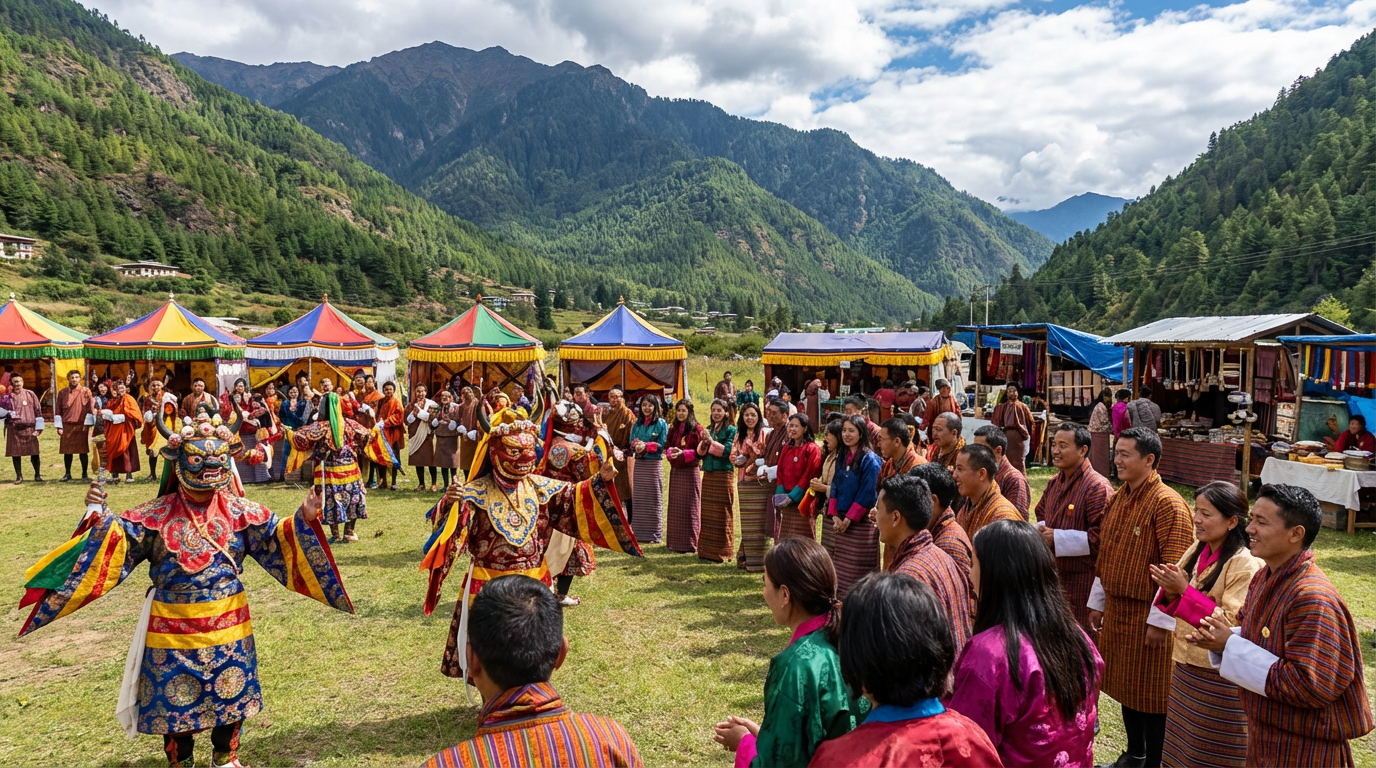
This image was generated with AI.
Festival Dates 2026 & 2026
| Year | Date | Note |
|---|---|---|
| 2026 | July 12–14 (planned) | Dates follow Bhutanese lunar calendar, changes possible |
| 2026 | September 19–21 (planned) | Please confirm dates before booking |
Program Highlights of the Haa Summer Festival
The Haa Summer Festival offers a diverse program covering the full range of local culture. Here are some of the highlights:
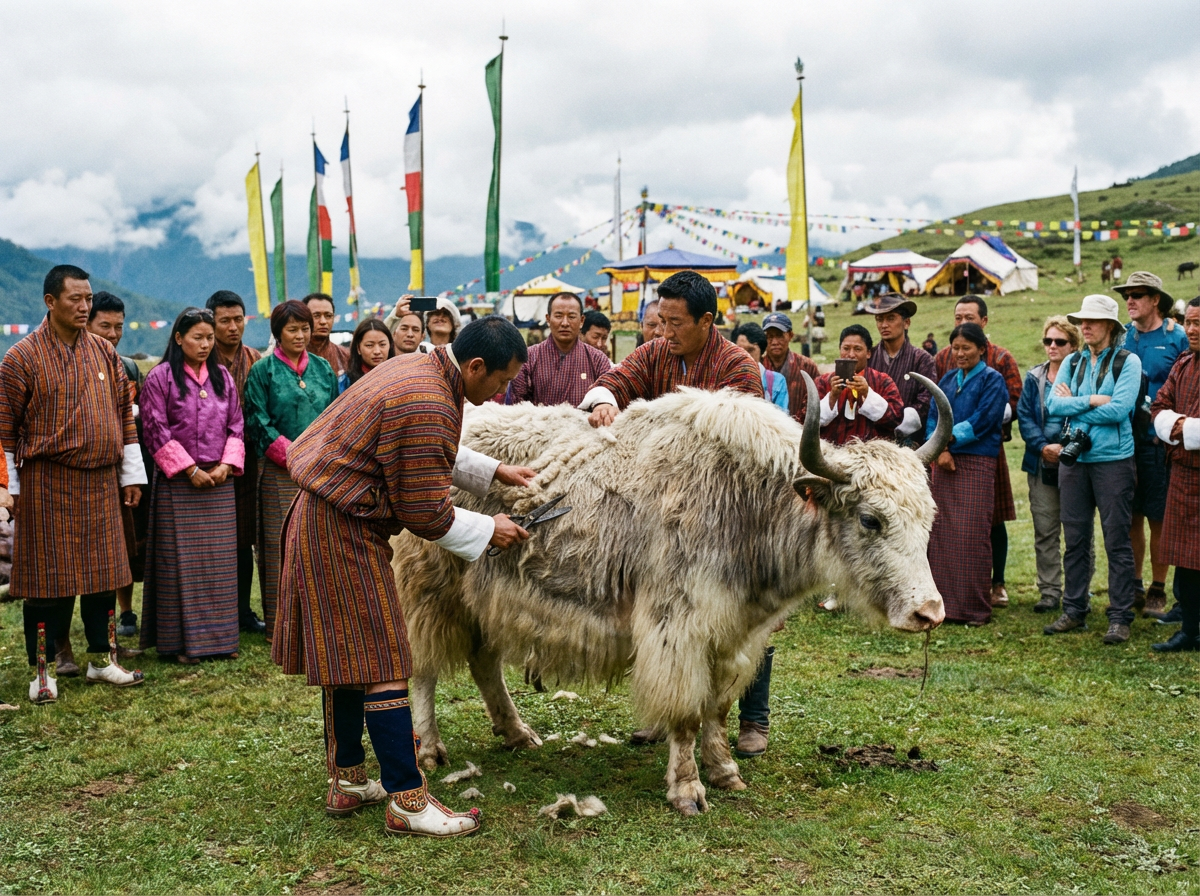 Culture
 This image was generated with AI.
Yak Culture & Nomadic Life
Experience traditional yak shearing, yak riding, yak-hair tent making, and wool processing – Bhutanese nomadic culture firsthand.
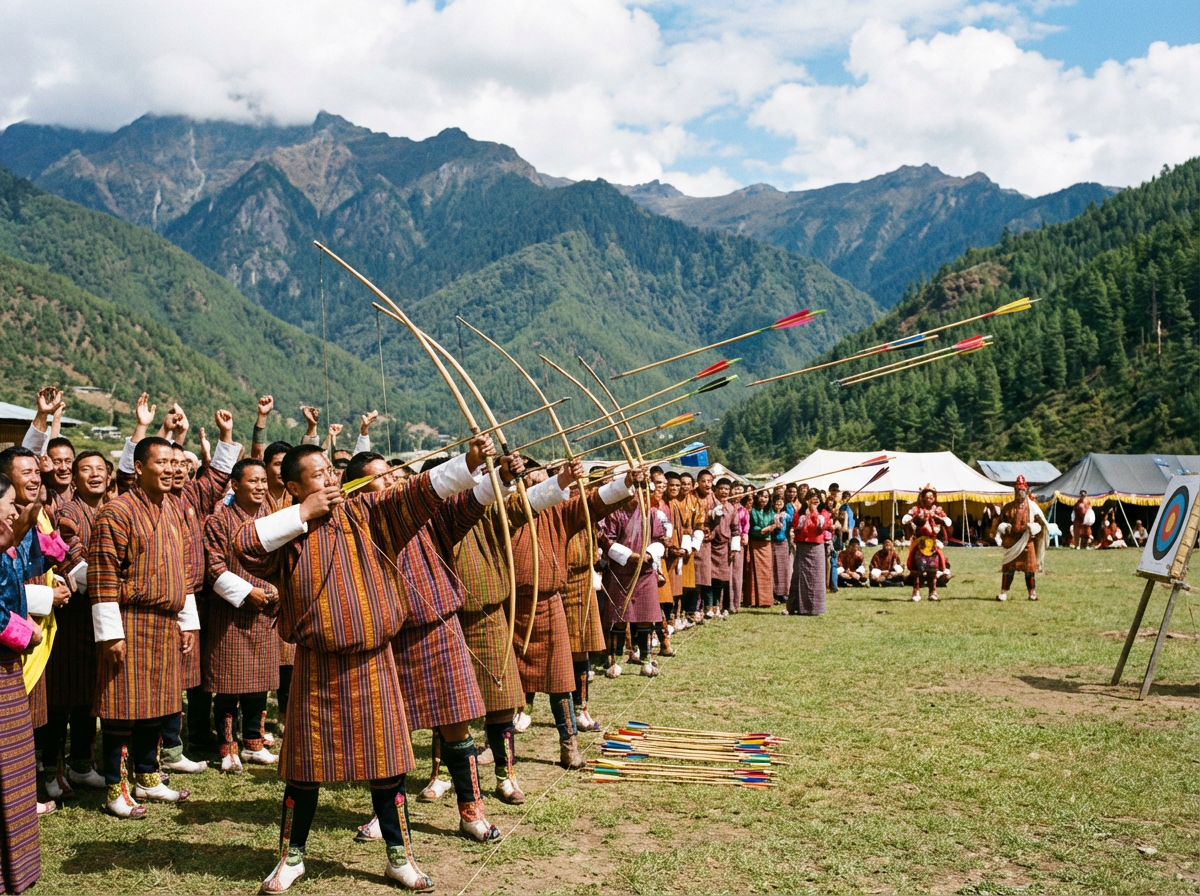 Sport
Sport This image was generated with AI.
Traditional Sports
Archery (Bhutan's national sport), Khuru (dart-throwing game), Soksum (spear throw) – try the traditional competitions yourself.
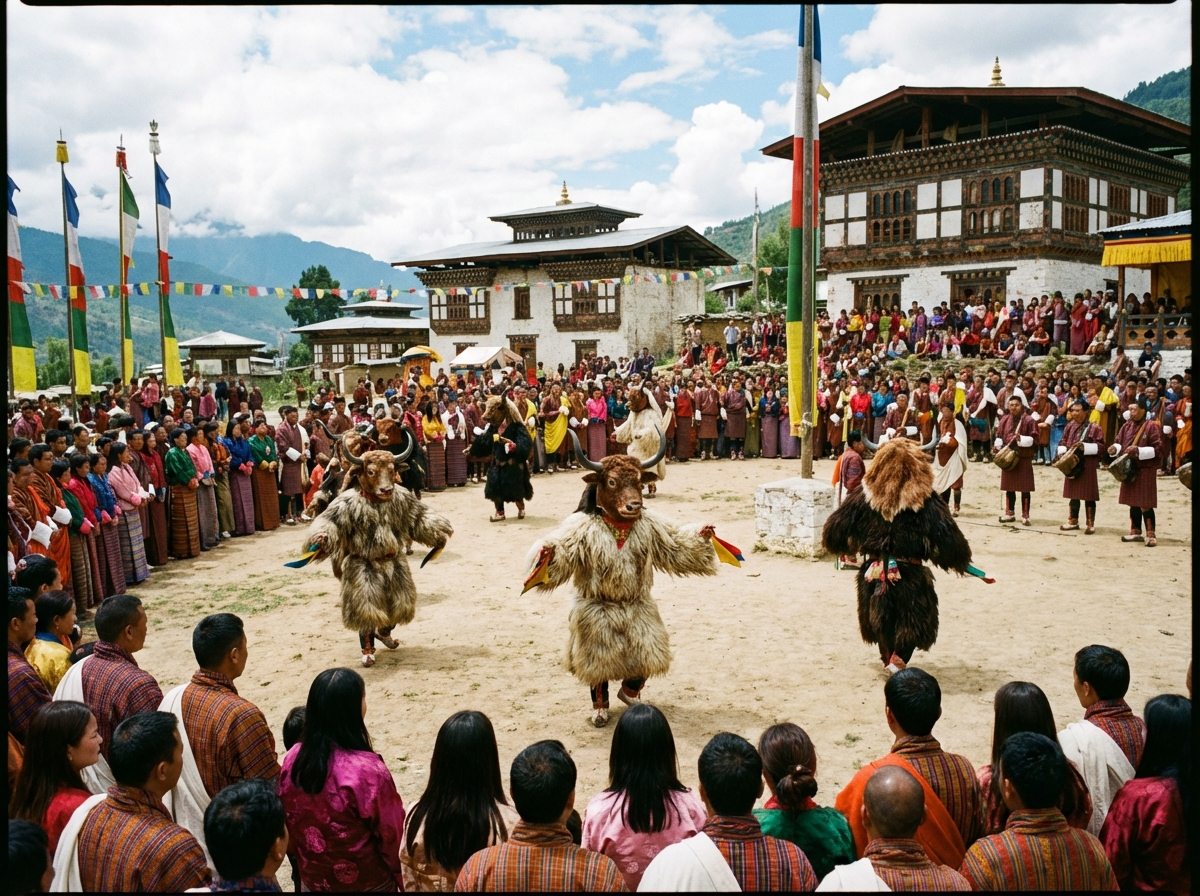 Dance
Dance This image was generated with AI.
Yak Cham – The Yak Dance
The unique Yak Dance is the festival highlight – dancers in elaborate yak costumes perform this traditional dance seen only here.
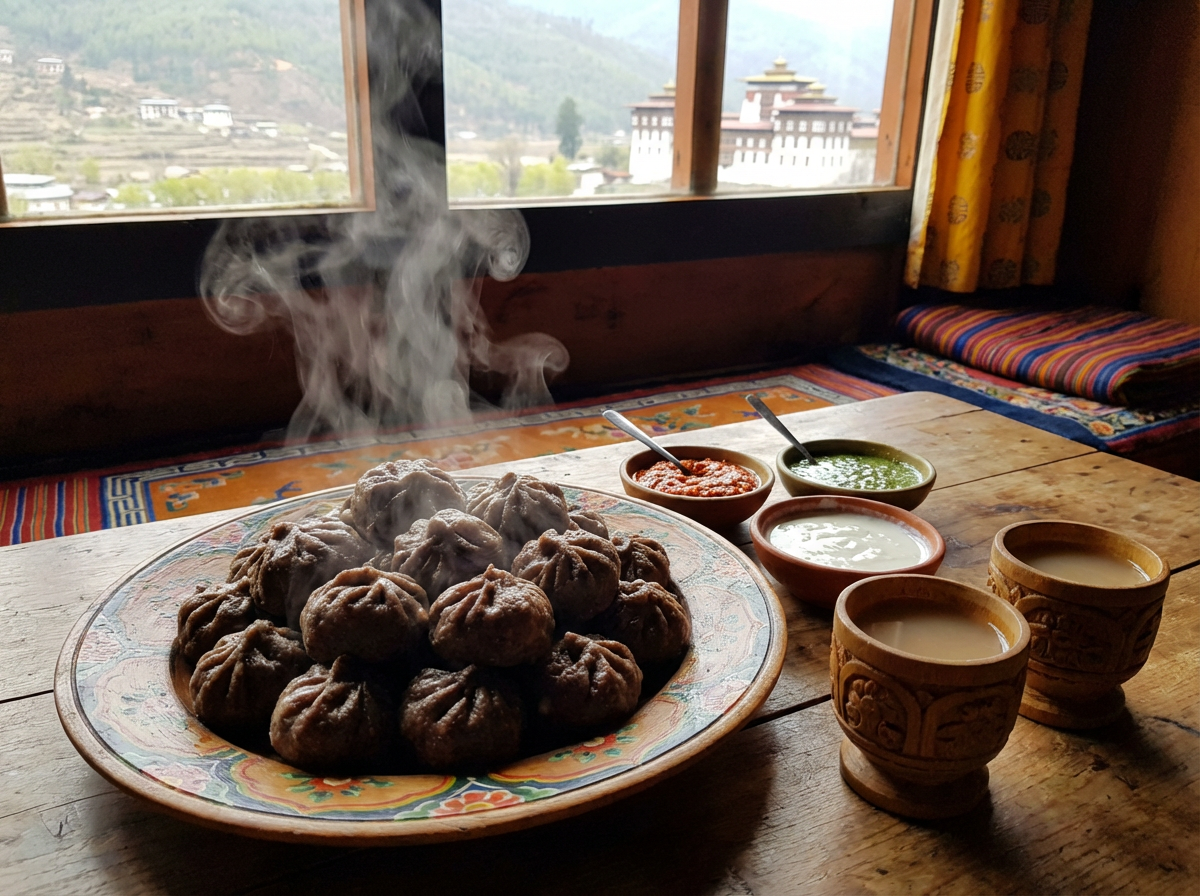 Culinary
 This image was generated with AI.
Culinary Specialties
Try Haapi Hoentoe – the famous buckwheat dumplings from Haa Valley – and other local delicacies found nowhere else in Bhutan.
Learn more about festivals in Bhutan
Hikes in Haa Valley
Haa Valley and its surroundings offer excellent hiking opportunities for various fitness levels. The alpine landscape near Cheli La Pass is particularly appealing, with rhododendron forests, alpine meadows, and spectacular Himalayan views. In the valley itself, leisurely walks between traditional villages and temples are inviting. The elevation (2,700–4,000 m) should be considered in planning.
| Hike | Duration | Difficulty | Highlights |
|---|---|---|---|
| Cheli La – Kila Goenpa | 2–3 hours | Moderate | Nunnery on cliff face, spectacular views |
| Haa Valley Walk | 2–4 hours | Easy | Village visits, twin temples, authentic rural life |
| Juneydrak Hermitage | 3–4 hours | Moderate–Challenging | Sacred meditation cave, forest path, spiritual atmosphere |
| Cheli La Rhododendron Trail | 1–2 hours | Easy–Moderate | Rhododendron forests (bloom March–May), alpine flora |
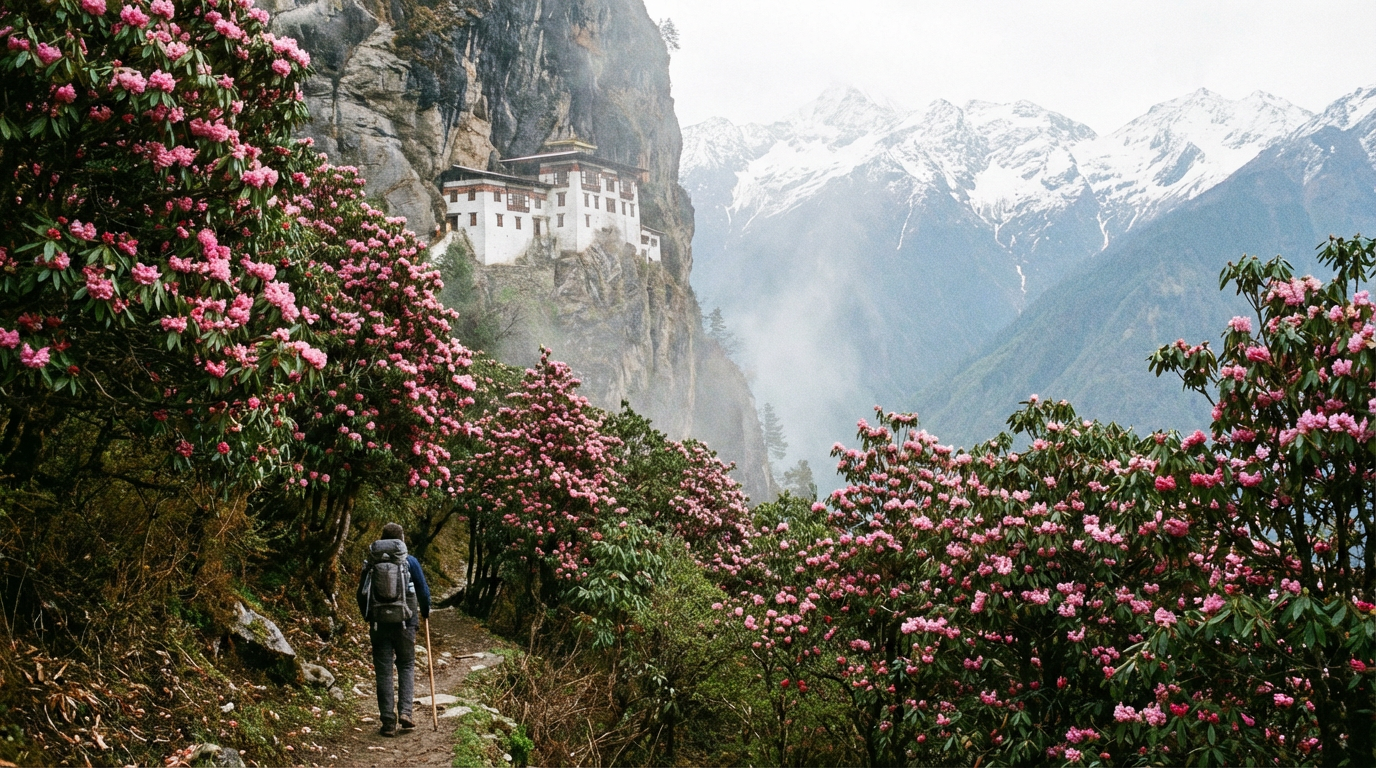
This image was generated with AI.
Local Specialties – Haapi Hoentoe and More
Haa Valley has its own culinary tradition that differs from other Bhutanese regions. The most famous specialty is Haapi Hoentoe – buckwheat dumplings prepared only in this form here. Add to this local Ara (rice wine), yak products, and dishes made from wild herbs and mushrooms of the surrounding forests.
Who Should Visit Haa Valley?
Haa Valley is not the right choice for every Bhutan visitor – but for the right travelers it's an unforgettable experience. Here's an honest assessment:
Ideal for...
Less suitable for...
Accommodation in Haa Valley
Accommodation options in Haa Valley are more limited than in more touristic Bhutanese regions – which is part of its charm. You won't find international luxury chains here, but mainly simple to comfortable local hotels and guesthouses. The most authentic experience is offered by homestays with local families, which have increased in recent years.
Learn more about homestays in Bhutan
Recommended Stay Duration in Haa Valley
Haa Valley can be visited as a day trip from Paro, but this option is strenuous and leaves little time for intensive experiences. We recommend 1–2 nights to really get to know the valley – for Haa Summer Festival, at least 2 nights.
Day Trip from Paro – The Minimum
- Morning: Early departure from Paro (7:00–8:00 AM), drive over Cheli La Pass with photo stop
- Forenoon: Arrival in Haa Valley, visit the twin temples
- Midday: Traditional lunch with Haapi Hoentoe
- Afternoon: Walk through the valley, return to Paro over Cheli La
- Note: Strenuous but doable. You'll see the highlights but miss the evening light and relaxed atmosphere.
1 Night – Relaxed Visit
- Day 1: Drive from Paro over Cheli La Pass (with photo stop and possible short hike), arrival in Haa Valley, visit temples, dinner at homestay
- Day 2: Morning walk, village visit or hike to Juneydrak Hermitage, lunch, return to Paro
2 Nights – Intensive Experience or Festival
- Day 1: Arrival via Cheli La, hike to Kila Goenpa Nunnery, arrival in Haa Valley, visit temples
- Day 2: Full festival experience or extended hikes, experience local culture, homestay evening
- Day 3: Morning walk, return at relaxed pace, optional stop at Cheli La for last photos
Discover longer routes including Haa Valley
Weather in Haa Valley and Best Time to Visit
Haa Valley lies at 2,700 to 3,000 meters elevation and has a temperate to cool climate with four distinct seasons. Summer temperatures are pleasant, in winter it can be quite cold with occasional snow. Note: Cheli La Pass at nearly 4,000 meters is always significantly colder than the valley itself – even in summer temperatures here can be 5–10°C.
| Period | Day Temp | Night Temp | Weather | Suitability |
|---|---|---|---|---|
| January–February | 8–12°C | -5 to 2°C | Cold, possible snow, mostly dry | Limited, cold, few tourists |
| March–May | 12–18°C | 3–8°C | Spring, rhododendron bloom at Cheli La | Excellent – best hiking season |
| June–August | 18–22°C | 10–14°C | Monsoon, possible rain, festival time (July) | Good – despite rain due to festival |
| September–November | 14–20°C | 5–10°C | Autumn, clear, colorful foliage | Excellent – clear views |
Detailed information about the best time to visit Bhutan
Getting to Haa Valley
Haa Valley is accessible only via Cheli La Pass from Paro. The approximately 65-kilometer stretch takes around 2 hours – a spectacular drive that is part of the experience. There is no alternative route and no nearby airport. The road is paved but winding and steep in places.
| From | Distance | Drive Time | Route |
|---|---|---|---|
| Paro | Approx. 65 km | Approx. 2 hours | Via Cheli La Pass (3,988 m) |
| Thimphu | Approx. 120 km | Approx. 3.5–4 hours | Via Paro and Cheli La Pass |
| Paro Airport (PBH) | Approx. 70 km | Approx. 2–2.5 hours | Via Paro town and Cheli La Pass |
Practical Information for Haa Valley
Frequently Asked Questions About Haa Valley
What is the Haa Summer Festival and when does it take place?
The Haa Summer Festival is a unique cultural celebration that has taken place each July in Haa Valley since 2011 (2026: July 12–14 planned, 2026: September 19–21 planned). Unlike the religious Tshechus, nomadic culture is the focus here: yak dances, traditional sports like archery, local cuisine, and crafts. It's one of Bhutan's most authentic festivals.
How do I get to Haa Valley?
Haa Valley is only accessible by road from Paro. The route goes over Cheli La Pass (3,988 m), Bhutan's highest drivable road pass. The 65 km journey takes about 2 hours. The spectacular drive over the pass is itself a highlight with panoramic views of Mt. Chomolhari. There is no nearby airport.
What is Cheli La Pass?
Cheli La Pass at 3,988 meters is Bhutan's highest drivable road pass. It connects Paro Valley with Haa Valley and offers breathtaking views of Mt. Chomolhari (7,326 m) on clear days. Thousands of prayer flags flutter at the pass, and in spring rhododendrons bloom. The crossing is an experience in itself – plan time for photo stops.
Is it worth visiting Haa Valley?
Haa Valley is especially worthwhile for travelers seeking authentic, little-touristic Bhutan. It's ideal for: off-the-beaten-path explorers, festival enthusiasts (July), photographers, and hikers. Less suitable for first-time visitors with limited time (under 10 days), luxury travelers (limited upscale options), or mobility-impaired travelers. With 10+ days in Bhutan, Haa is a valuable addition.
Why was Haa Valley closed for so long?
Haa Valley lies strategically on the Tibet/China border and was closed to foreign tourists until 2002. The sensitive location led to military presence (Indian military is still stationed today) and restricted access. Paradoxically, this isolation has helped the valley preserve its original character better than other regions.
What hotels are there in Haa Valley?
Accommodation options in Haa Valley are more limited than in other regions. In the upper category you'll find Risum Resort and Lechuna Heritage Lodge. Mid-range options include Lhayul Hotel and various guesthouses. Homestays with local families are particularly authentic. All accommodations fill up quickly during the festival – book early!
What is Haapi Hoentoe?
Haapi Hoentoe are the famous buckwheat dumplings from Haa Valley, similar to dumplings. They're filled with grated radish, dried radish leaves, mushrooms, garlic, and onions, and served steamed in broth. This dish is a regional specialty found nowhere else in Bhutan. You must try it – best in a homestay or at Haa Summer Festival.
How high is Haa Valley?
Haa Valley lies at approximately 2,700 to 3,000 meters above sea level. Cheli La Pass, which you cross when arriving from Paro, lies at 3,988 meters – Bhutan's highest drivable road pass. This elevation requires appropriate clothing (warm, even in summer for the pass) and time for acclimatization.
How many days do you need for Haa Valley?
Haa Valley can be visited as a day trip from Paro (strenuous but doable). Recommended are 1–2 nights for a relaxed experience. For Haa Summer Festival, plan at least 2 nights. The valley works well as a complement to a longer Western Bhutan route (10+ days).
Further Information
Explore Haa Valley
Neighboring Regions
Travel Planning
Discover Bhutan's Hidden Gem?
We plan your personalized trip to Haa Valley – with authentic homestays, perfect timing for the Summer Festival, and spectacular experiences at Cheli La Pass.