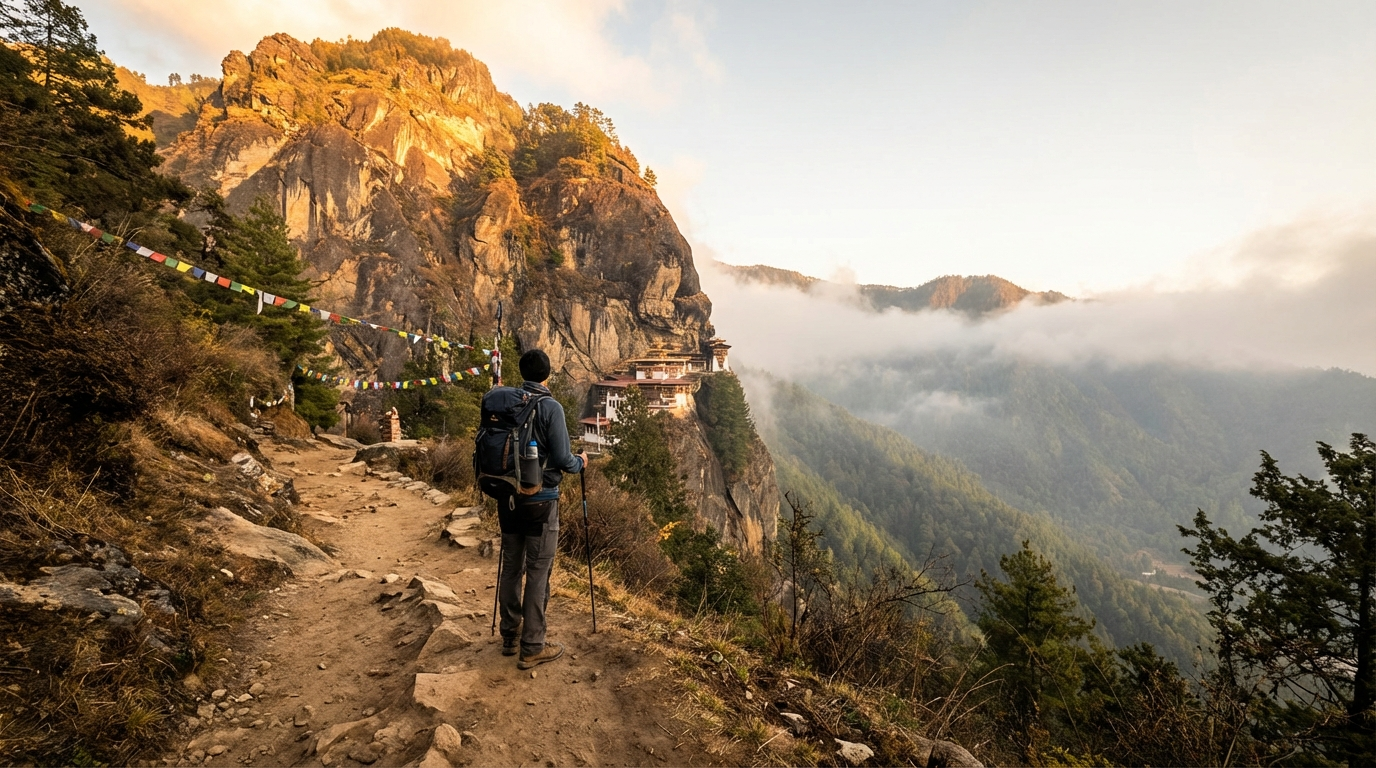
Day Hikes in Bhutan - The Most Beautiful Hiking Trails
Last updated:
Discovering Bhutan on foot opens up a very special perspective on the kingdom in the Himalayas. The good news: You don't need to undertake multi-day treks to do this. Day hikes lasting two to eight hours take you to iconic monasteries, through blooming rhododendron forests, and to viewpoints with breathtaking Himalayan panoramas. Your guide knows the best trails, and comfortable hotel accommodations await you in the evening instead of a tent.
Bhutan Hiking Trails at a Glance
From the legendary Tiger's Nest hike to the relaxing nature trail in Phobjikha Valley – the following overview shows you all important day hikes with duration, difficulty, and the best season at a glance.
| Hike | Region | Duration | Difficulty | Best Time | Special Feature |
|---|---|---|---|---|---|
| Tiger's Nest (Paro Taktsang) | Paro | 4-5 hours | Moderate | Year-round | Bhutan's iconic landmark |
| Lungchutse Temple Hike | Dochula Pass | 4 hours | Easy-Moderate | October-May | Himalayan panorama |
| Gangtey Nature Trail | Phobjikha Valley | 2-3 hours | Easy | October-February | Black-necked cranes |
| Longtey/Rhododendron Hike | Phobjikha Valley | 3-4 hours | Moderate | March-May | Rhododendron blooms |
| Chele La Pass Trails | Paro | 2-4 hours | Variable | March-May | Highest drivable pass |
| Bumthang Temple Hikes | Bumthang | Variable | Easy-Moderate | Year-round | Bhutan's oldest temples |
| Khamsum Yulley Chorten | Punakha | 1-2 hours | Easy | Year-round | View over Punakha Valley |
| Tango Monastery | Thimphu | 2-3 hours | Easy-Moderate | Year-round | Active monastery |
Tiger's Nest Hike – The Highlight of Every Bhutan Trip
This image was generated with AI.
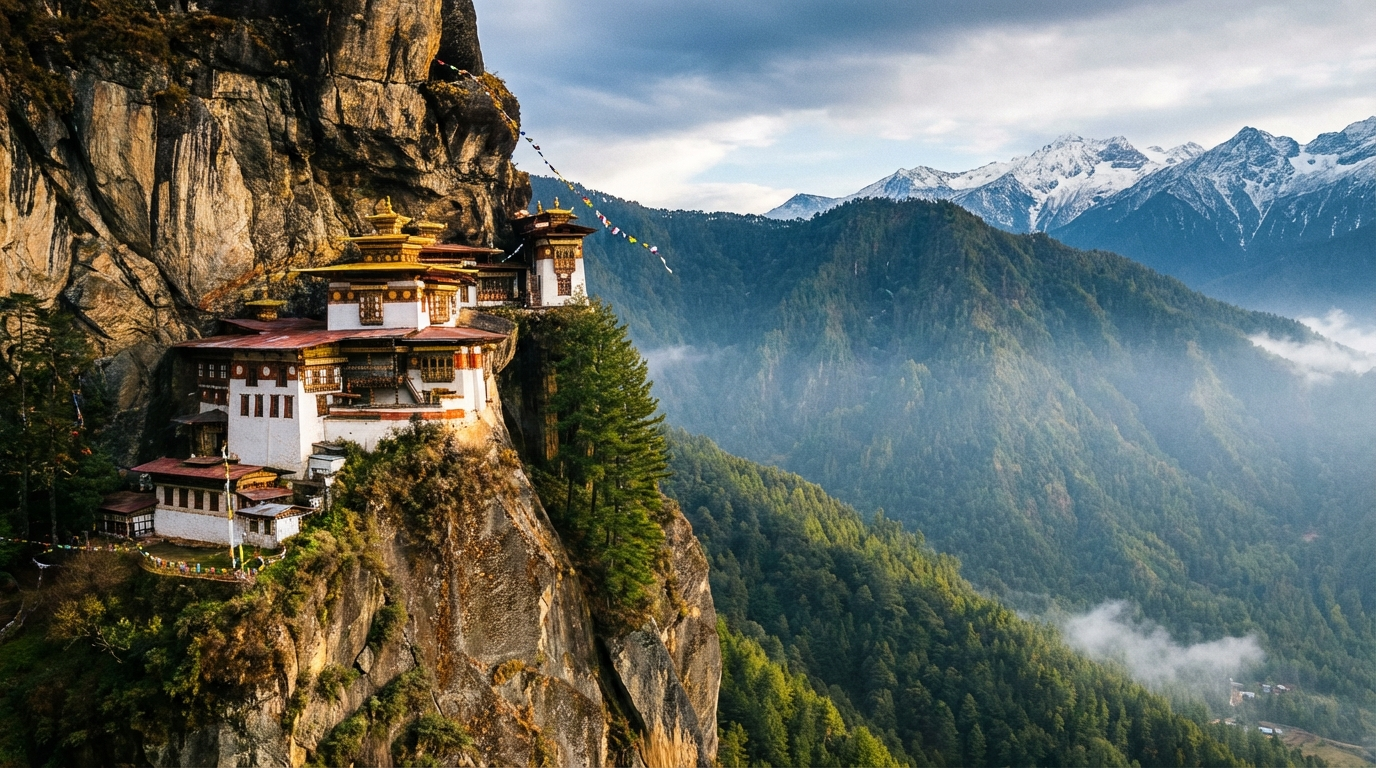
No visit to Bhutan is complete without the ascent to Tiger's Nest. The monastery of Paro Taktsang, clinging to what appears to be a vertical cliff face, is Bhutan's spiritual landmark. Legend has it that Guru Rinpoche landed here on the back of a tigress in the 8th century. The hike there combines physical challenge with deep spirituality – and rewards you with one of Asia's most iconic sights.
The Ascent in Detail
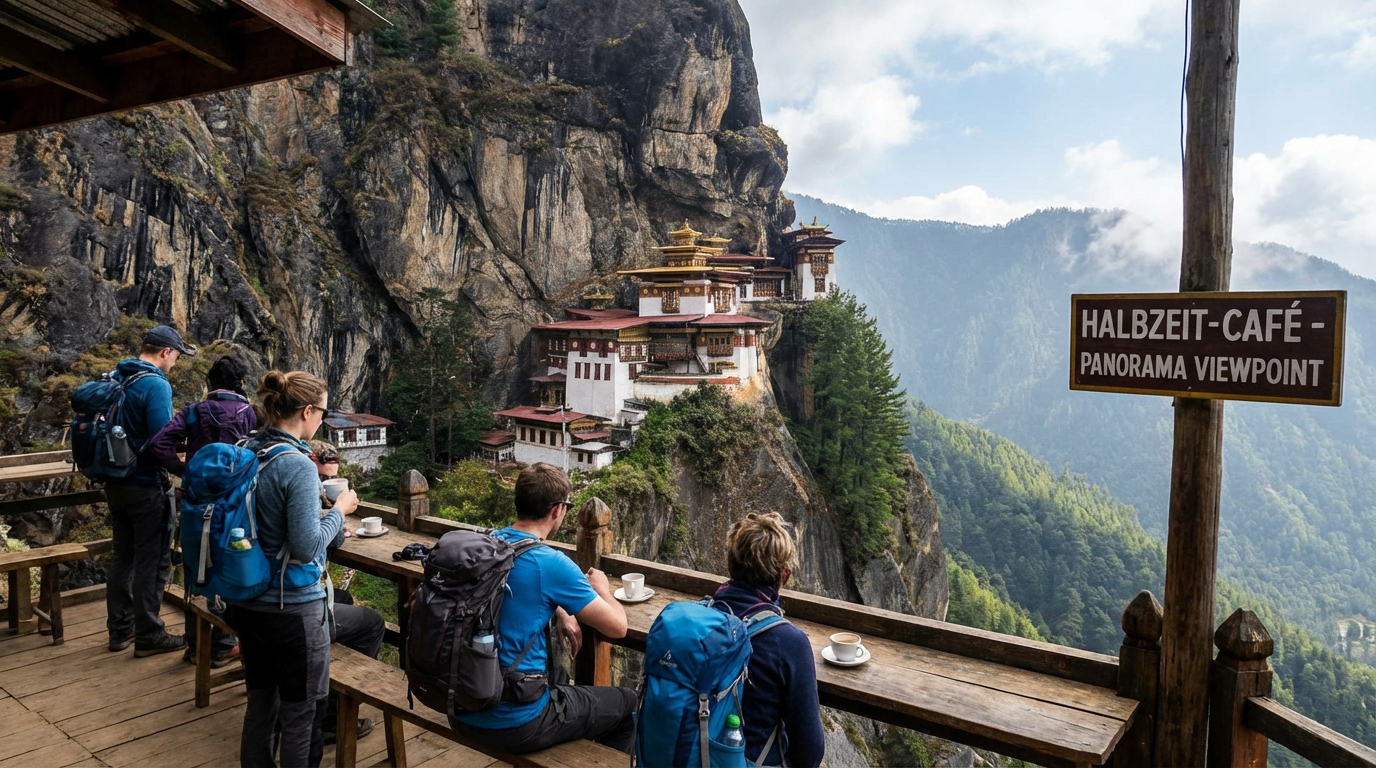
The hike begins at a parking area below the monastery. The first section leads through fragrant pine forests, lined with colorful prayer flags fluttering in the wind. After about an hour and a half, you reach the halfway café on a clearing – the perfect place for a break with your first panoramic view of the monastery across the way. From here, the path becomes steeper. The final section includes about 700 steps that lead you down into a gorge and back up to the monastery entrance. Plan two to three hours for the ascent; the descent is somewhat quicker at one and a half to two hours.
This image was generated with AI.
Practical Tips for the Ascent
If you'd like to make the first section easier, you can rent a horse to the café (approximately $20 USD). At the café itself, you have the option to rent traditional Bhutanese clothing for photos – a popular souvenir. Bring plenty of water, sun protection, and your camera. For the temple visit: shoulders and knees should be covered; long pants are recommended.
All details about the monastery's history and further tips can be found in our comprehensive guide. Visit the complete Tiger's Nest guide
Dochula Pass Hike – Himalayan Panorama at 3,100 Meters
This image was generated with AI.
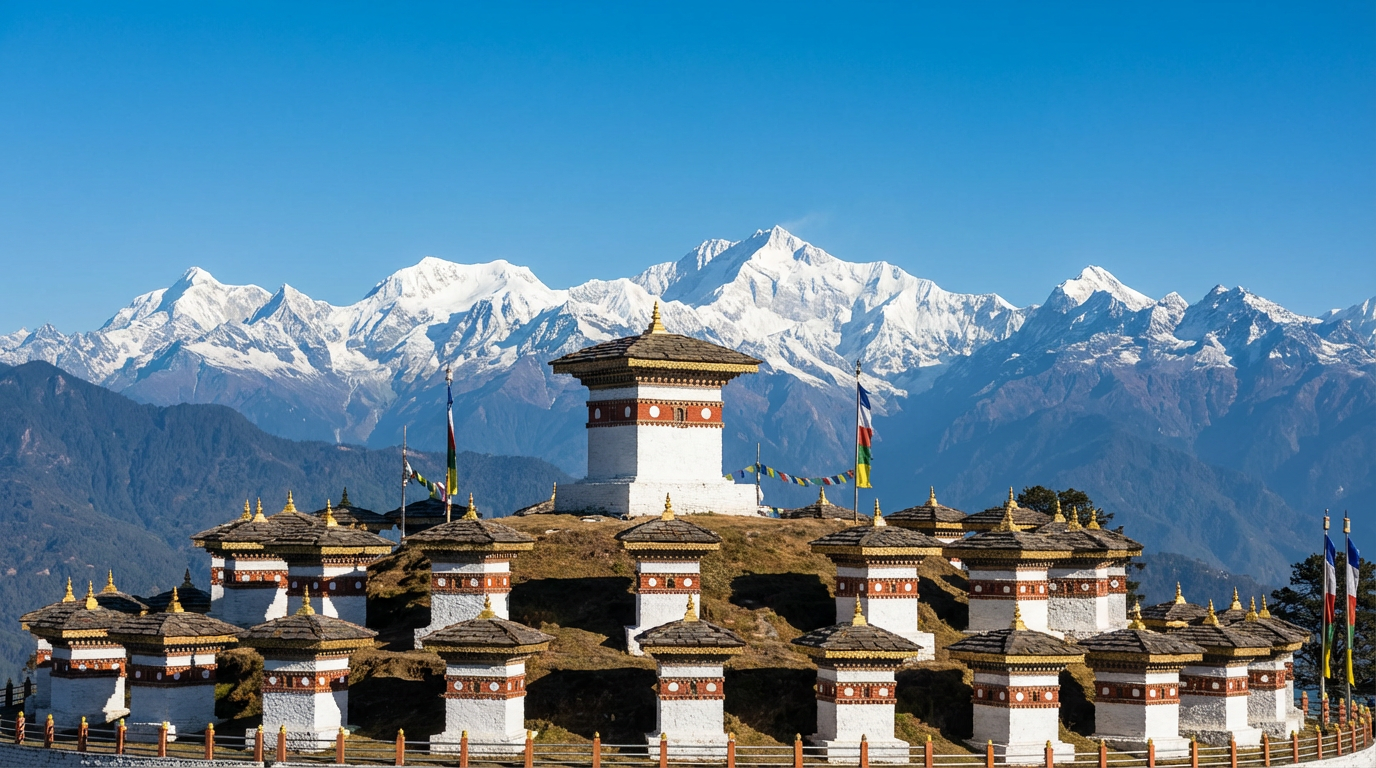
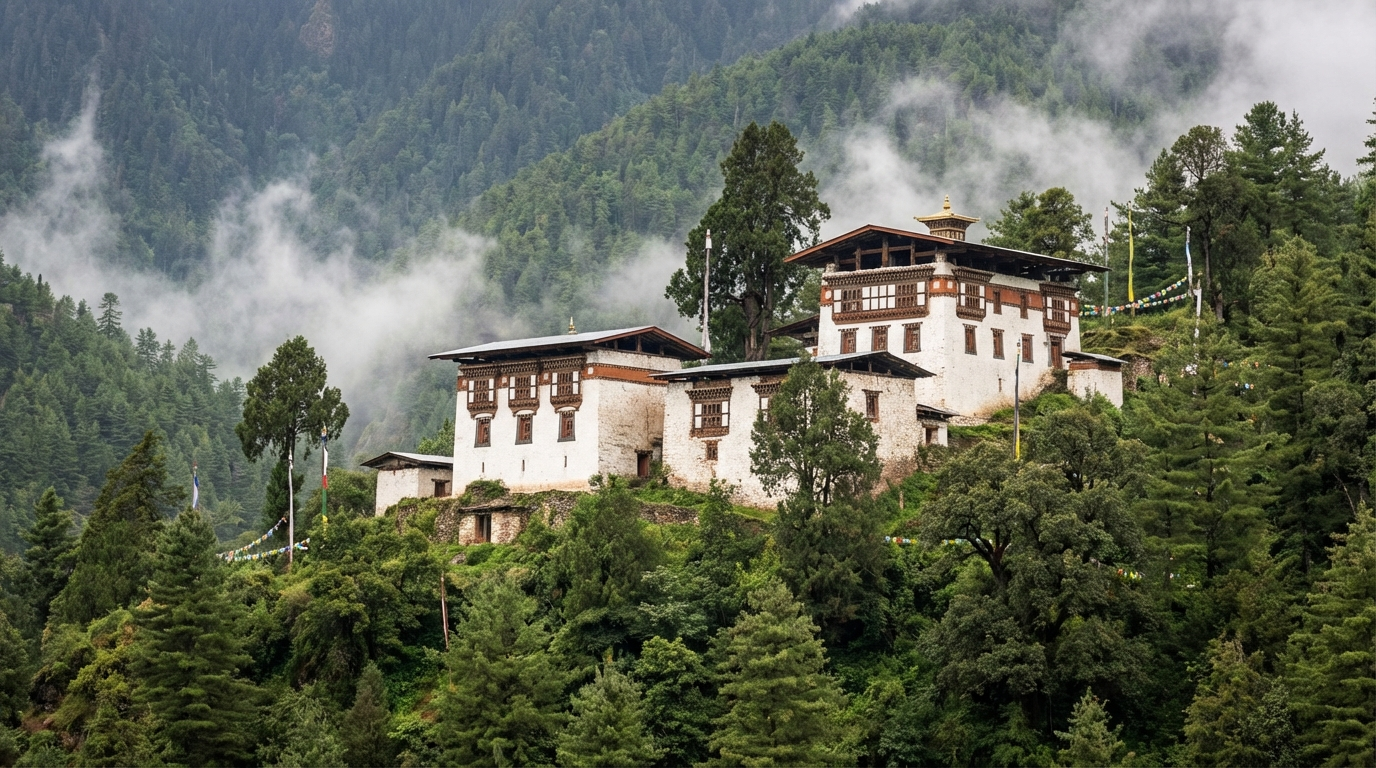
Dochula Pass sits at 3,100 meters between Thimphu and Punakha and is a natural stop on any Bhutan tour. Famous are the 108 Druk Wangyal Chortens (Buddhist stupas), which rise picturesquely on a mountain ridge. On clear days, a spectacular panorama of snow-capped Himalayan peaks opens up here – a photo opportunity you won't forget.
Lungchutse Temple Hike
From the pass, a rewarding circular hike starts to Lungchutse Temple at about 3,500 meters elevation. The path leads through forests of giant hemlocks and rhododendrons that bloom in full splendor in spring. After approximately two hours of climbing, you reach the peaceful temple with its quiet atmosphere of prayer. On the way back, you can take a detour to Trashigang Goenpa, an 18th-century monastery. The entire round trip takes about four hours.
Trans Bhutan Trail – The Divine Madman Hike
From Dochula Pass also starts a section of the historic Trans Bhutan Trail. This ancient trade route, named after the eccentric holy man Drukpa Kunley, combines cultural significance with impressive landscapes. An ideal option for hikers who want to combine history and nature.
Hikes in Phobjikha Valley – Where the Cranes Winter Over
This image was generated with AI.
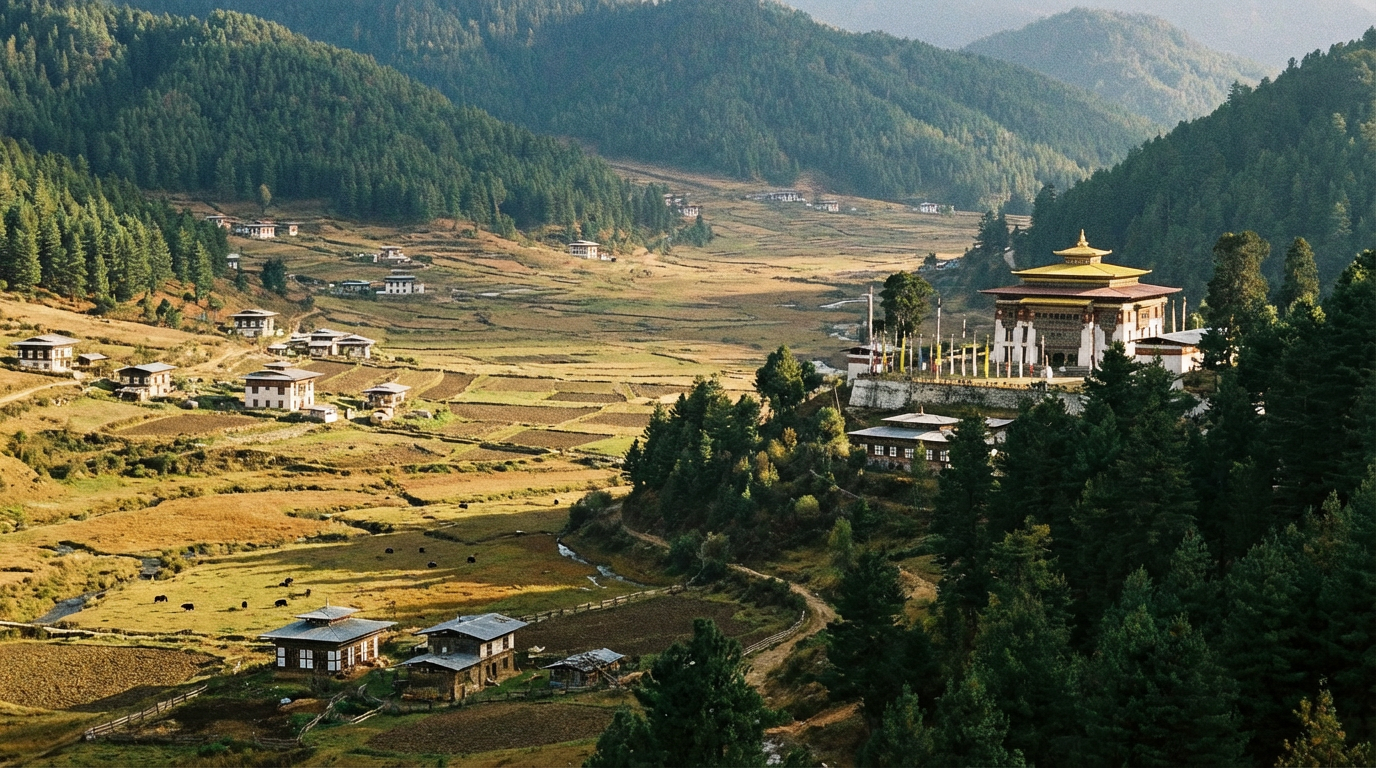
Phobjikha Valley is a wide glacial valley at about 3,000 meters elevation – and one of the few areas in Bhutan where trees don't obstruct your view. From October to February, the rare black-necked cranes winter here, sacred birds in Bhutanese tradition. The gentle hiking trails through open meadows and past traditional farmhouses are ideal for those seeking authentic, less touristy Bhutan.
Gangtey Nature Trail
The Gangtey Nature Trail is a five-kilometer loop that you can comfortably complete in two to three hours. The hike starts at the mani wall in front of Gangtey Goenpa, an important monastery on the valley's edge. The path takes you through open meadows, past traditional farmhouses with colorful wooden decorations, through small pine forests, and across simple river crossings. In winter, you have good chances of observing the majestic black-necked cranes grazing. The trail is excellent for hiking beginners and families.
Longtey Hike – The Rhododendron Trail
Those seeking more challenge should choose the six-kilometer Longtey Hike. In three to four hours, this path leads to Kheychey La Pass at 3,700 meters. In late spring, crimson rhododendrons transform the path into a tunnel of blooms. Along the way, you pass remote villages whose inhabitants still live traditionally today. Upon reaching the pass, a sweeping view of the entire Phobjikha Valley rewards you.
Learn more about this fascinating region and its special features. Learn more about Phobjikha Valley
Bumthang Hikes – Exploring the Spiritual Heart of Bhutan
This image was generated with AI.
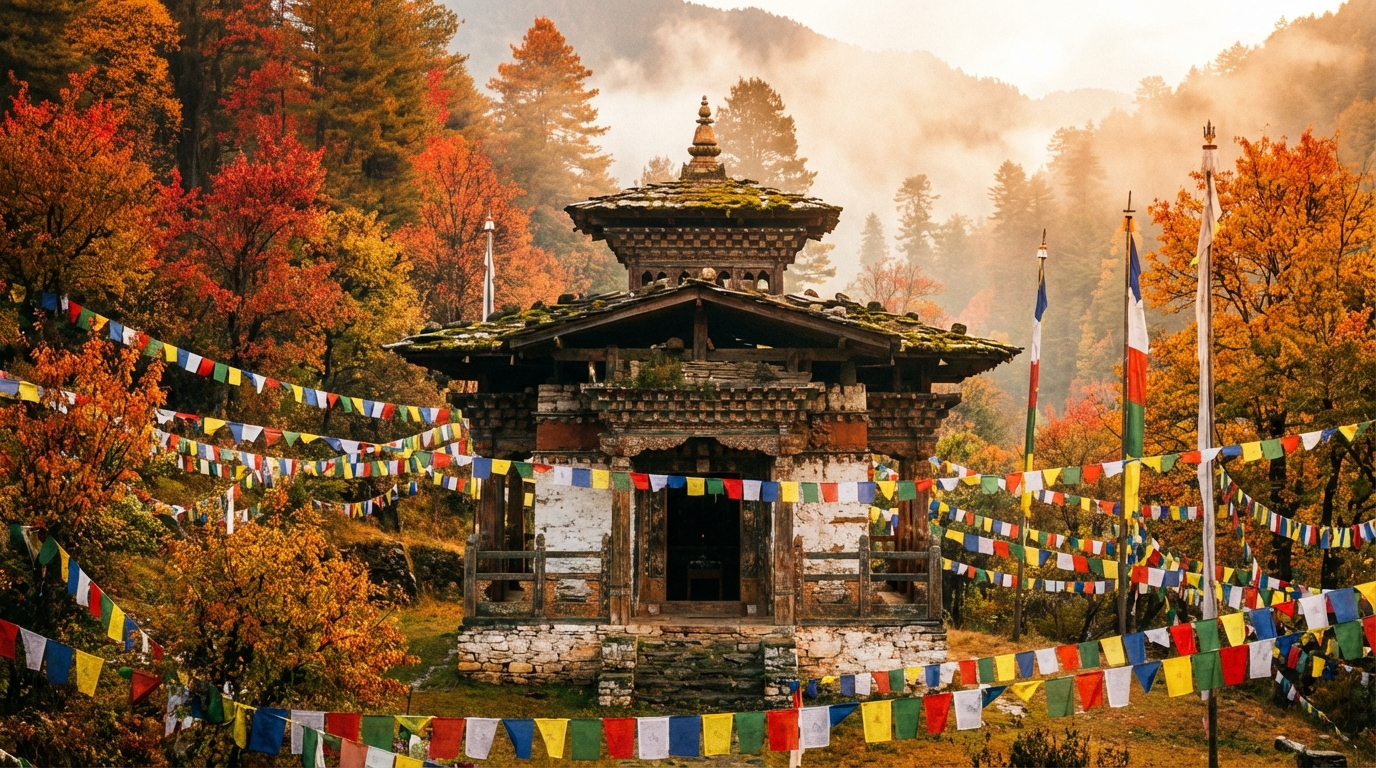
Bumthang is considered the spiritual heart of Bhutan. The region consists of four valleys – Chokhor, Tang, Ura, and Chumey – where some of the country's oldest and holiest temples are located. If you spend more than ten days in Bhutan, you should definitely include this remote area. Here you experience authentic Bhutan away from typical tourist routes, where monks still live and pray as they have for centuries.
Temple Hikes in Chokhor Valley
Chokhor Valley offers the opportunity to connect several historical temples on foot. Kurjey Lhakhang (temple), one of Bhutan's holiest sites, is just as accessible as numerous smaller temples and monasteries. The hikes vary in length and difficulty, from easy walks between temples to multi-hour explorations through all four valleys. A big advantage: You'll encounter significantly fewer tourists here than in Paro or Thimphu and can absorb the spiritual atmosphere in peace.
Other Worthwhile Hikes in Bhutan
Besides the major highlights, Bhutan offers numerous other hikes that fit perfectly into your travel itinerary. These three options are particularly recommended and can be easily incorporated into a travel day.
 Paro
Paro This image was generated with AI.
Chele La Pass
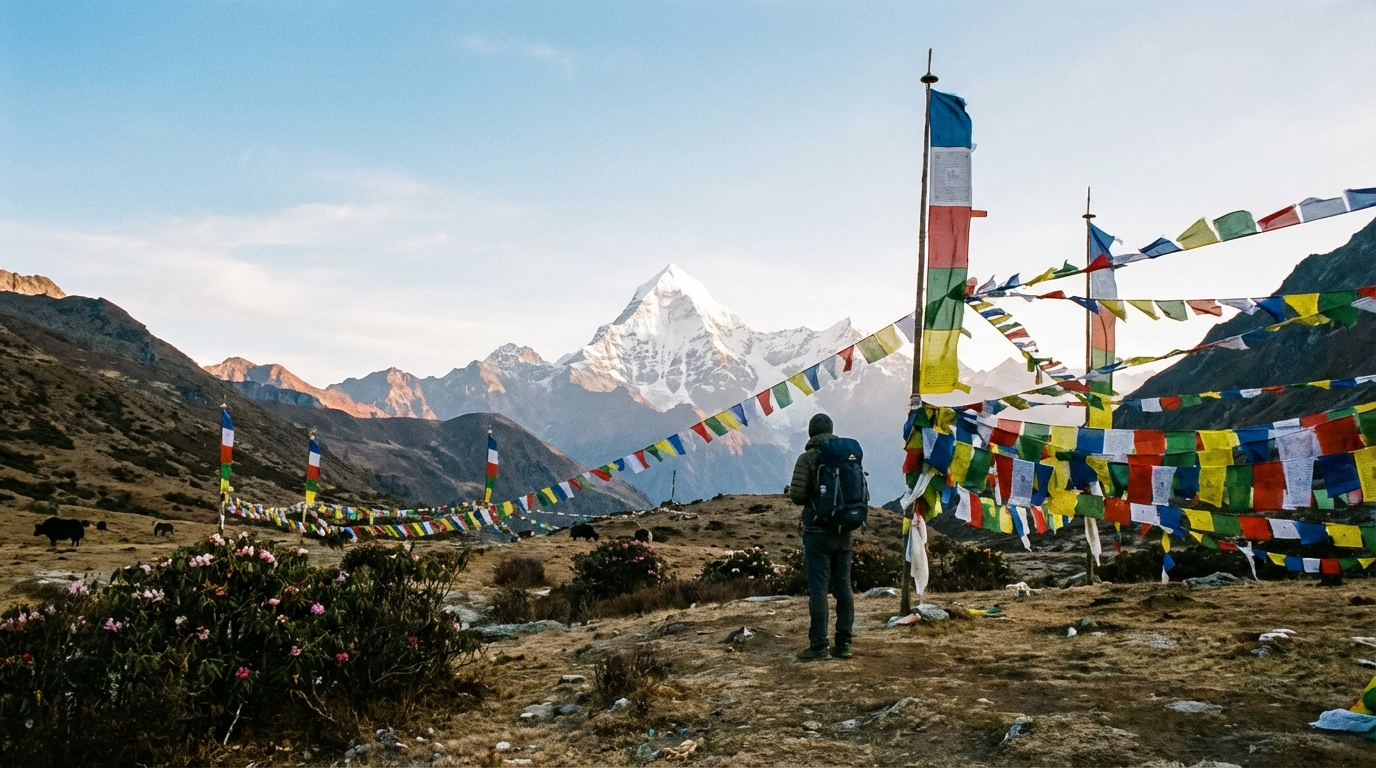
Bhutan's highest drivable pass at 3,988 meters. On clear days, views extend to the snow-capped pyramid of Chomolhari – Bhutan's sacred mountain.
 Punakha
 This image was generated with AI.
Khamsum Yulley Chorten
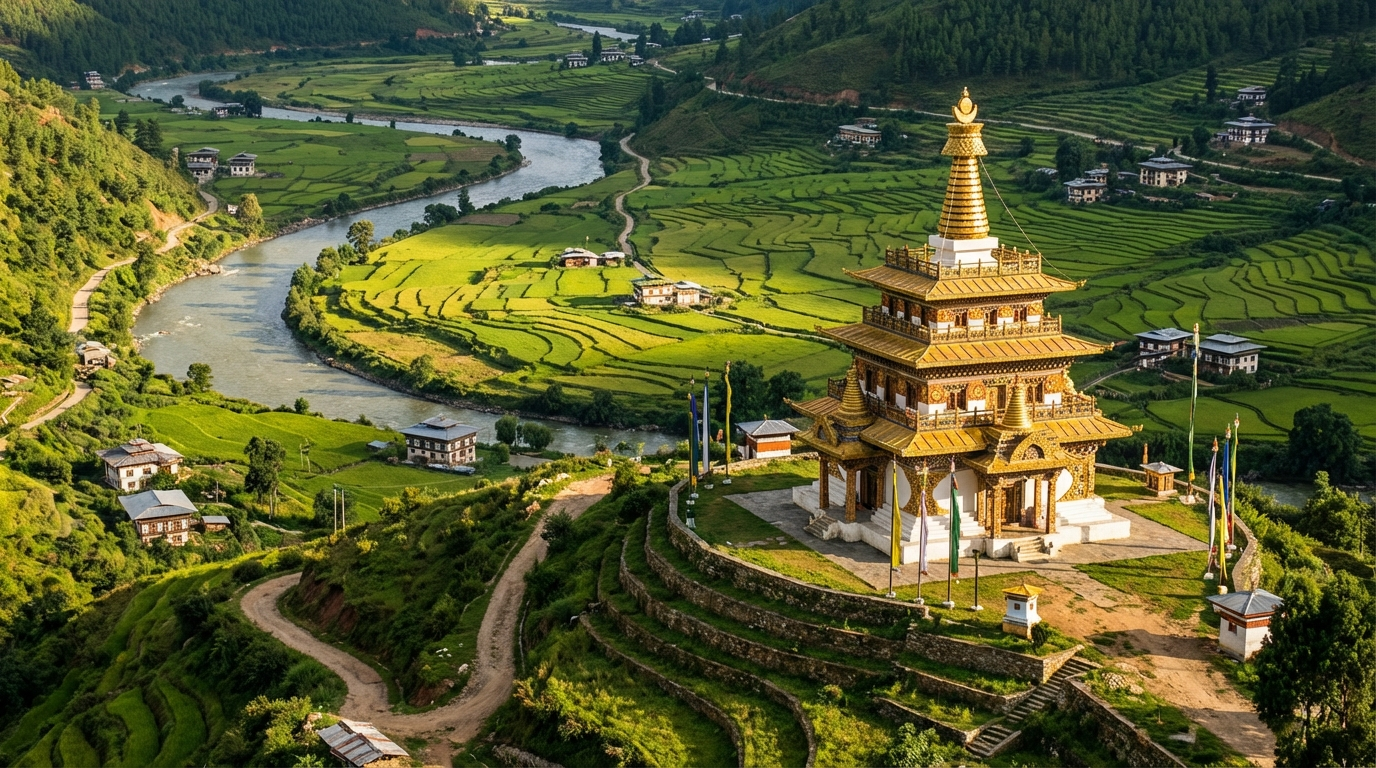
A short ascent of one to two hours leads to this artistically decorated temple. The view over the fertile Punakha Valley is well worth the effort.
 Thimphu
 This image was generated with AI.
Tango Monastery
A two- to three-hour hike through dense mountain forest leads to this active monastery near Thimphu. Young monks still live and study here today.
The Right Hike for Your Fitness Level
Bhutan offers hikes for every fitness level. Whether you prefer leisurely walks or athletic challenges – you'll find your perfect route here. No one needs to miss out on the experience of exploring Bhutan on foot.
Beginners: Easy Hikes
For hiking beginners, the Gangtey Nature Trail (2–3 hours, flat and wide) and the ascent to Khamsum Yulley Chorten (1–2 hours, short but worthwhile) are suitable. Tango Monastery is also manageable with moderate incline. These hikes follow broad, well-maintained paths with gentle slopes. You can take breaks anytime and set your own pace. No prior experience required.
Moderate Fitness: Challenging Day Hikes
With solid basic fitness, you can tackle the legendary Tiger's Nest hike – the effort is worthwhile, and horses are available for relief. The Longtey Hike in Phobjikha Valley (3–4 hours) and the Lungchutse Temple Hike at Dochula Pass (4 hours, up to 3,500 m) are also quite manageable. Expect steeper sections and longer overall duration. Regular walking or light sports are good preparation.
Advanced: Ambitious Hikers
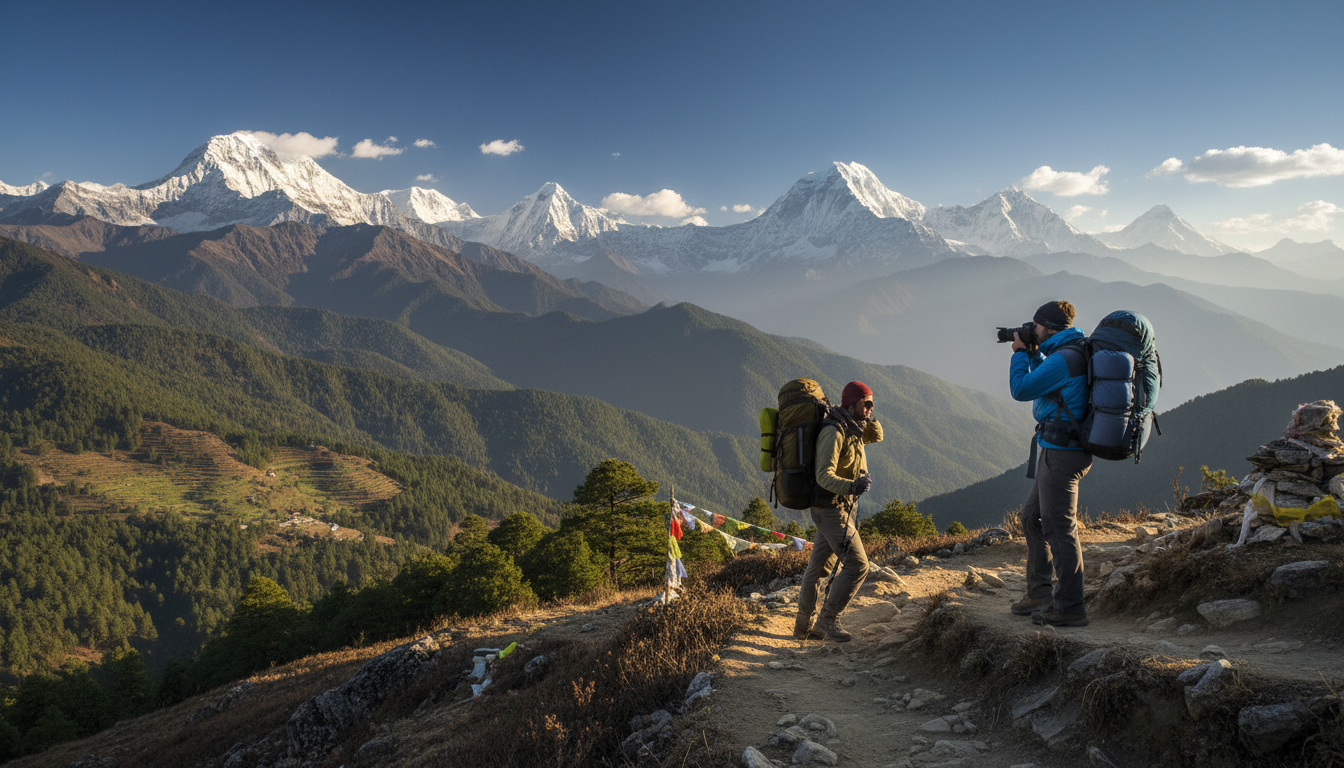
Athletic visitors can combine the Tiger's Nest hike with other trails in the surrounding area or explore Chele La Pass at nearly 4,000 meters. Several hikes in a single day are possible with good acclimatization. Those seeking even more adventure will find multi-day options on our trekking page, such as the Druk Path Trek or the legendary Snowman Trek.
Best Season for Hiking in Bhutan
Hikes in Bhutan are possible year-round. Each season has its own character – from blooming rhododendron forests in spring to cranes in winter. Here's an overview of what to expect when.
Spring (March–May)
Rhododendron and wildflower blooms transform mountain forests into a sea of color. Temperatures are pleasant, and mountain views are usually clear. Especially recommended for the Longtey Hike in Phobjikha and hikes at Dochula Pass.
Fall (September–November)
The most stable weather period with the clearest views of Himalayan peaks. Temperatures are ideal for hiking – neither too hot nor too cold. This is high season – popular hikes like Tiger's Nest can be busier.
Winter (December–February)
Black-necked cranes visit Phobjikha Valley. Days are cold, but often sunny and crystal clear. Significantly fewer tourists on the trails. Tiger's Nest is accessible year-round and especially peaceful in winter.
Monsoon (June–August)
Often foggy and rainy with limited distant views. Hikes are possible, but trails can be slippery. Those with flexibility and appreciation for lush greenery will find charm in this season too. Less recommended for peak panoramas.
Gear for Day Hikes in Bhutan
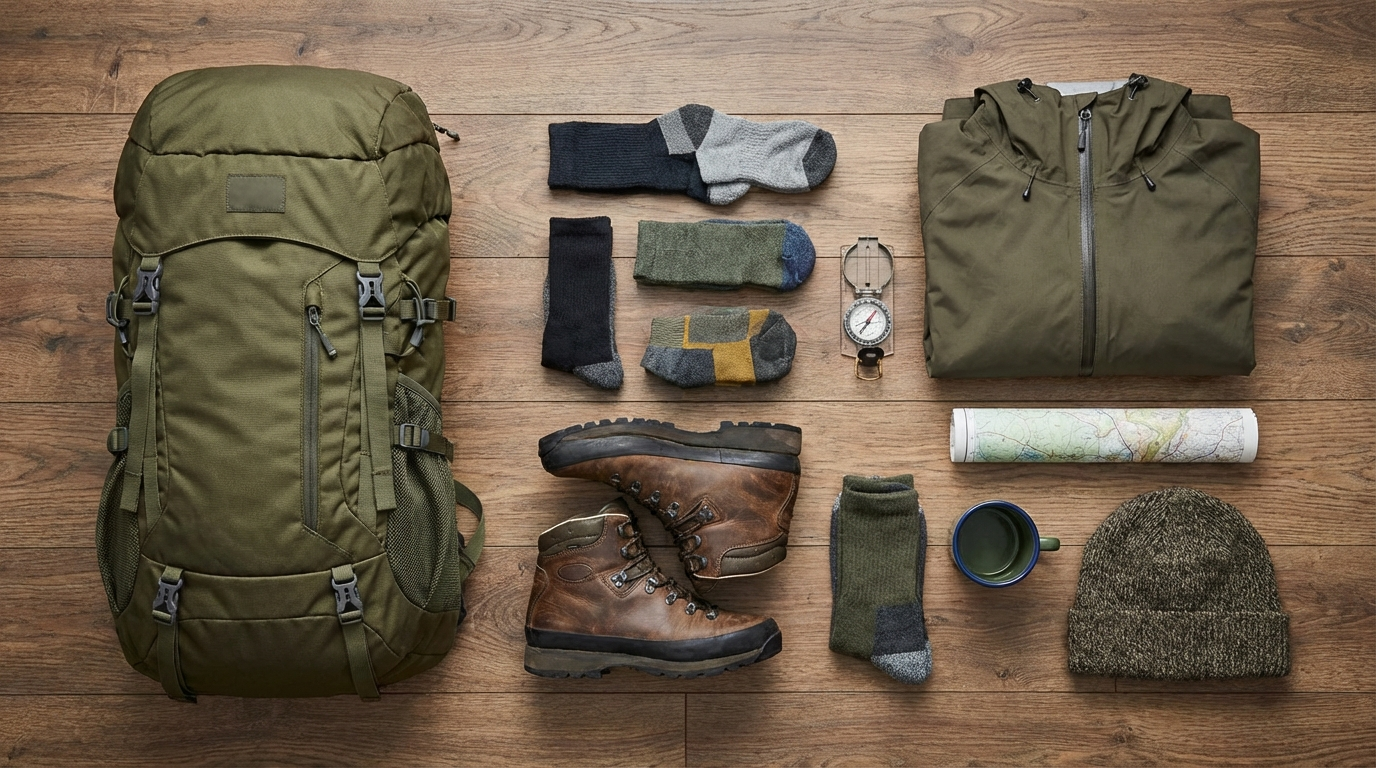
For day hikes in Bhutan, you don't need specialized trekking equipment. Solid basic gear is entirely sufficient. Here's our tried-and-tested packing list for a successful hiking day.
Incorporating Hikes into Your Bhutan Trip
All day hikes are part of your Bhutan tour – your guide organizes the logistics and accompanies you on every trail. You don't need to worry about anything except enjoying the experience. Depending on your trip duration, different options are possible.
7-Day Classic Route
With a week's visit, you focus on the highlights: The Tiger's Nest hike in Paro is an absolute must-do. On the way to Punakha, a stop at Dochula Pass with a short hike is worthwhile. Time permitting, the ascent to Khamsum Yulley Chorten is a nice addition.
10–14 Days Extended Route
With more time, you can additionally visit Phobjikha Valley and enjoy the Gangtey Nature Trail – especially worthwhile during crane season. At two weeks, the drive to Bumthang is worthwhile, where you can hike to Bhutan's oldest temples on foot. This way, you experience the full diversity of Bhutanese hiking landscapes.
The ascent to Tiger's Nest was strenuous, no question about it. But when we reached the top and saw this incredible monastery in front of us, everything was worth it. Our guide told us stories that brought this place to life. A moment we'll never forget.
Frequently Asked Questions About Hiking in Bhutan
Do I need a guide for hikes in Bhutan?
Yes, a guide is mandatory in Bhutan and is already included in your tour. This isn't a drawback but a real advantage: Your guide knows the best trails, tells stories about places, explains cultural connections, and ensures your safety. Most travelers appreciate this personal accompaniment as an enrichment.
Is the Tiger's Nest hike suitable for beginners?
The hike is considered moderate but manageable for most people with the right attitude. The key: Take your time and make regular breaks. You can rent a horse to the halfway café, which significantly eases the ascent. Basic fitness and comfortable footwear are recommended.
What does a hike in Bhutan cost?
All day hikes are included in your Bhutan tour – guide, transport to the trailhead, and return are already covered in the trip price. Extra costs only occur for optional extras like horse rental at Tiger's Nest (approximately $20 USD) or souvenirs and snacks along the way.
Can I hike multiple days without doing a trek?
Absolutely. You can do several different day hikes on consecutive days and stay in a hotel each evening. The difference from trekking: No camping, no heavy gear, a comfortable bed each night. Those who do want multi-day tent adventures will find suitable options on our trekking page.
Which hike do you recommend for families with children?
The Gangtey Nature Trail is ideal for families: flat, not too long, and with exciting wildlife viewing opportunities (cranes in winter). The ascent to Khamsum Yulley Chorten is also manageable for older children. We recommend the Tiger's Nest hike from about 10–12 years old, depending on the child's fitness and hiking experience.
Do I need to prepare for the altitude?
For day hikes, altitude acclimatization is less critical than for multi-day treks. Still, most hikes range from 2,500 to 3,500 meters. Important: Walk slowly, drink plenty of water, and listen to your body. Most travelers acclimatize within one to two days.
Plan Your Bhutan Hiking Trip
Let us advise you and receive a customized route tailored exactly to your wishes and fitness level. Personal, non-binding, and with local expertise.
You Might Also Be Interested In
This image was generated with AI.
Multi-Day Treks in Bhutan
For more adventure: Discover the Druk Path Trek, the legendary Jomolhari Trek, or the challenging Snowman Trek through untouched mountain worlds.
This image was generated with AI.
Best Time to Visit Bhutan
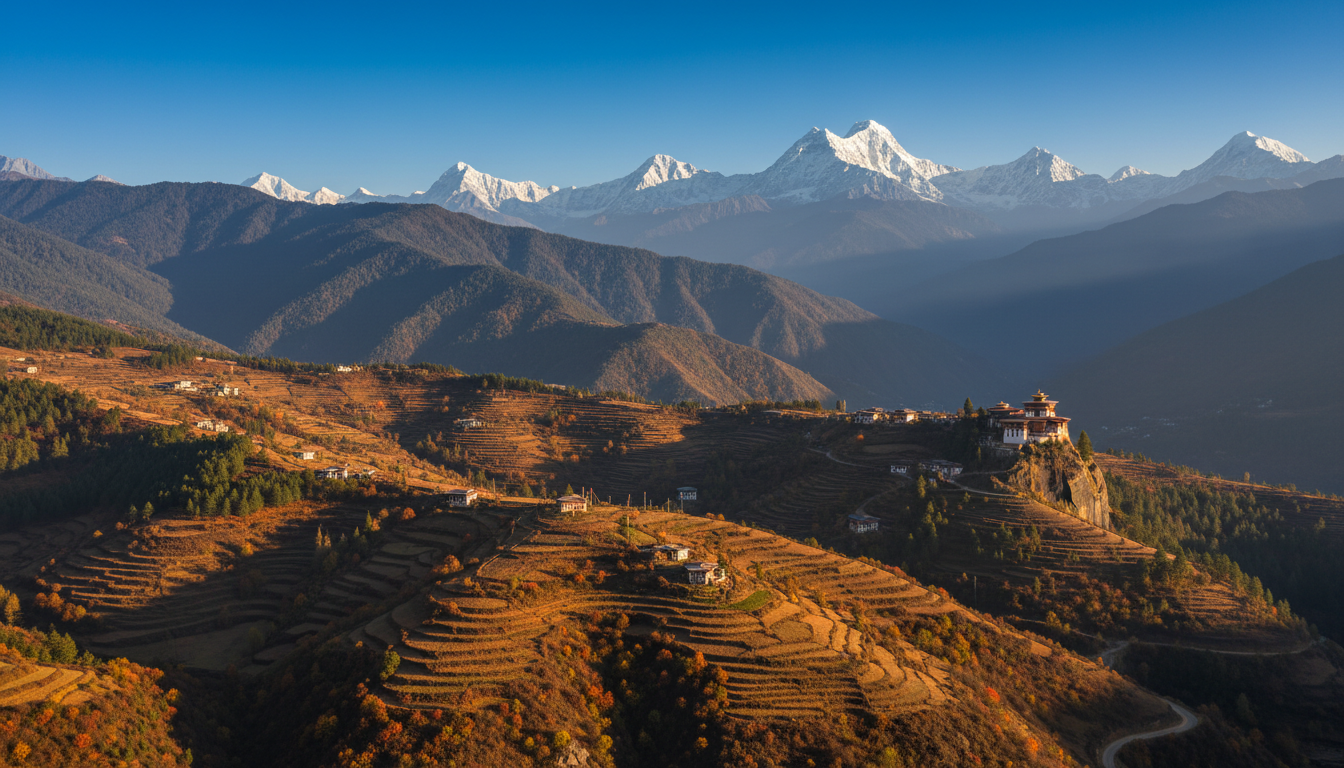
When is the ideal time for your Bhutan trip? Find out which months are best for hiking, festivals, and nature experiences.
This image was generated with AI.
Packing List for Bhutan
What you should pack for your Bhutan trip: From the right clothing and hiking gear to often-forgotten essentials.