Thimphu Bhutan: Capital, Sights & Hotels
Last updated:
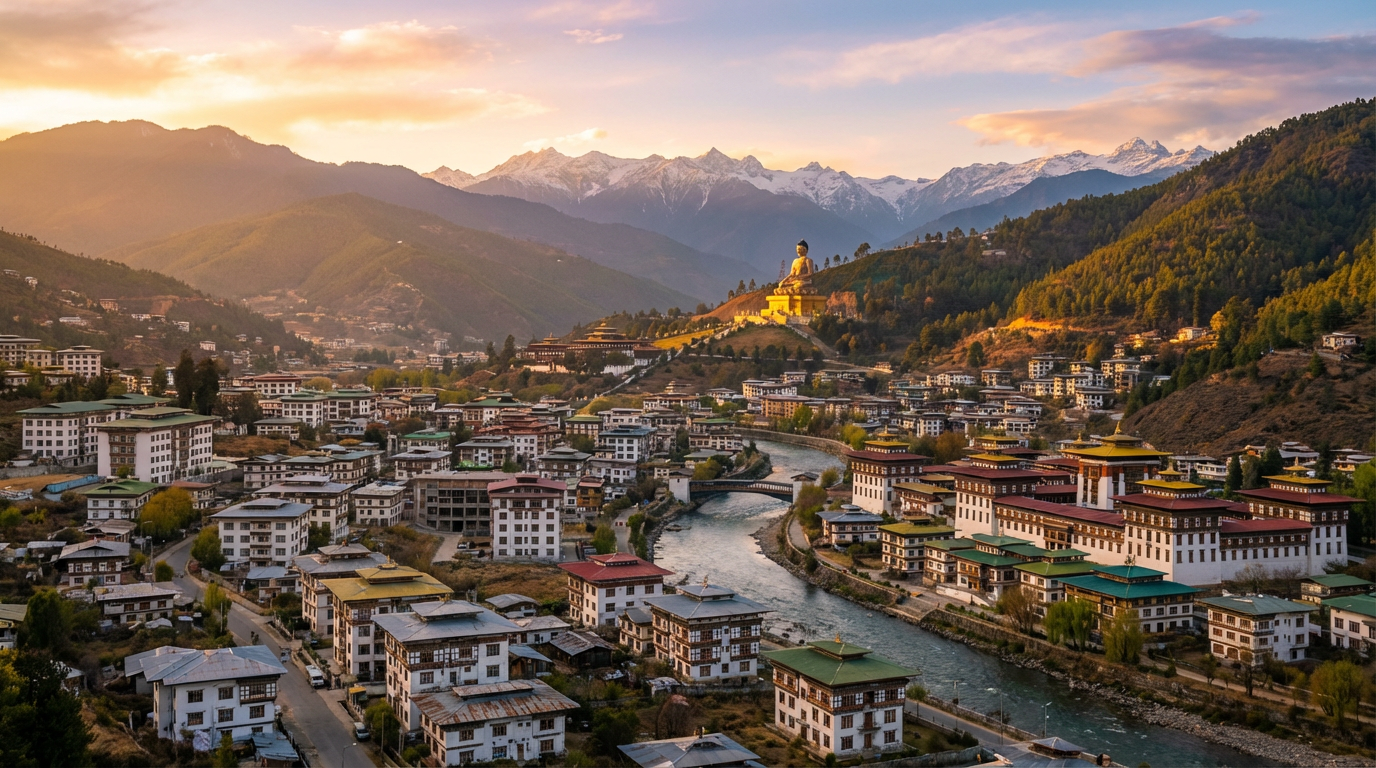
Thimphu is no ordinary capital. As Asia's highest capital city, it stands at 2,320 meters in the Wang Chhu River valley – and is the world's only capital without a single traffic light. Here, police officers in white gloves direct traffic with elegant hand gestures, while all around traditional Dzong architecture and modern development create a unique symbiosis. With approximately 100,000 residents, Thimphu is simultaneously Bhutan's political center, economic engine, and cultural soul of the kingdom.
Thimphu at a Glance
Thimphu was declared Bhutan's year-round capital only in 1961 – before that, Punakha served as the winter residence of the kings. Since then, the city has developed rapidly, but maintains its traditional character through strict building regulations. All new constructions must be built in traditional Bhutanese style – with intricate wooden carvings and characteristic window frames.
This image was generated with AI.
The City Without Traffic Lights – A Unique Phenomenon
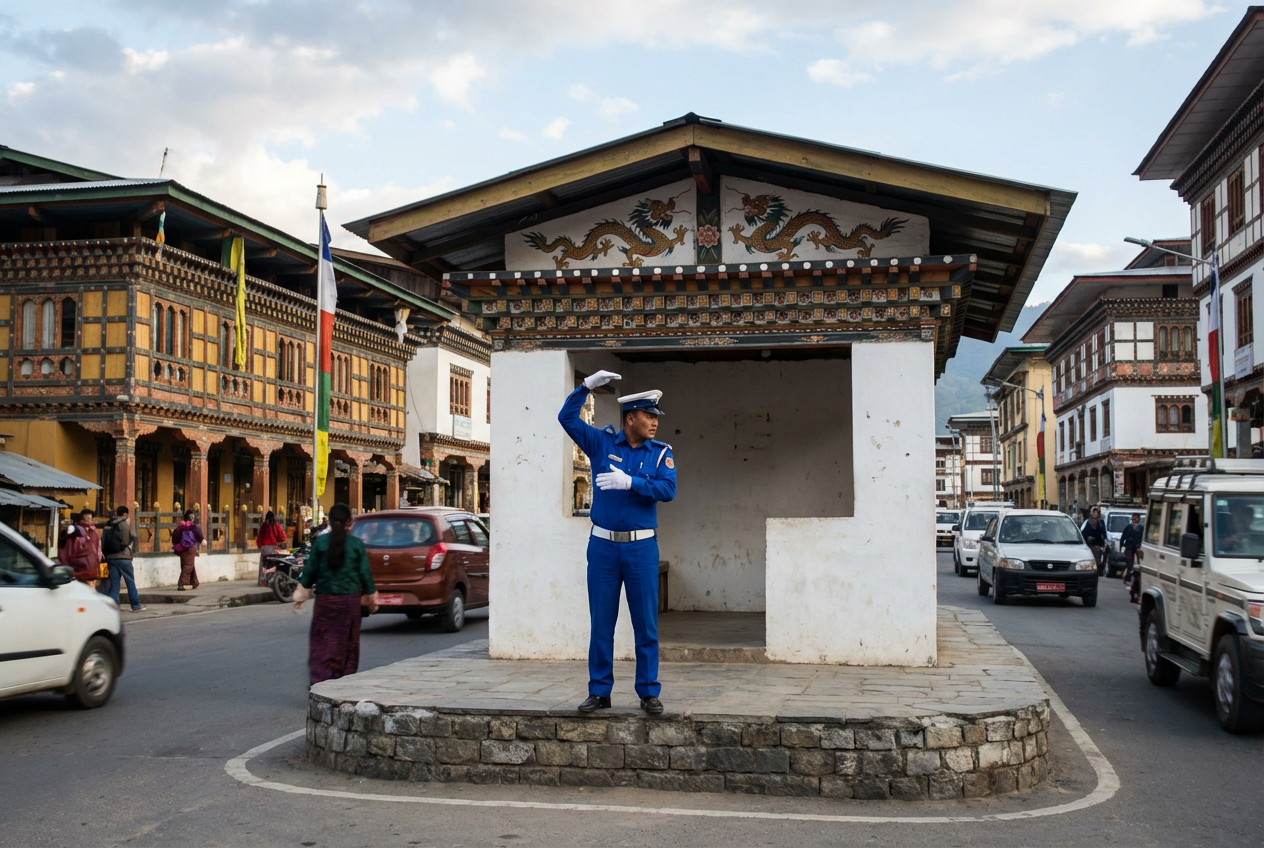
What hardly anyone can believe is true: Thimphu is the world's only capital with not a single traffic light. In the 1990s, a traffic light was actually installed at a major intersection – but the population protested. Bhutanese people found the mechanical signal impersonal and cold. So the traffic light was removed and replaced with a traffic police officer.
This image was generated with AI.
Today, the traffic police officers with their almost choreographed hand movements have become a tourist attraction in their own right. They stand in small, lovingly decorated houses and direct traffic with dignity and precision. For Bhutan, this decision is more than folklore: it symbolizes a conscious commitment to human interaction in an increasingly automated world.
Attractions in Thimphu
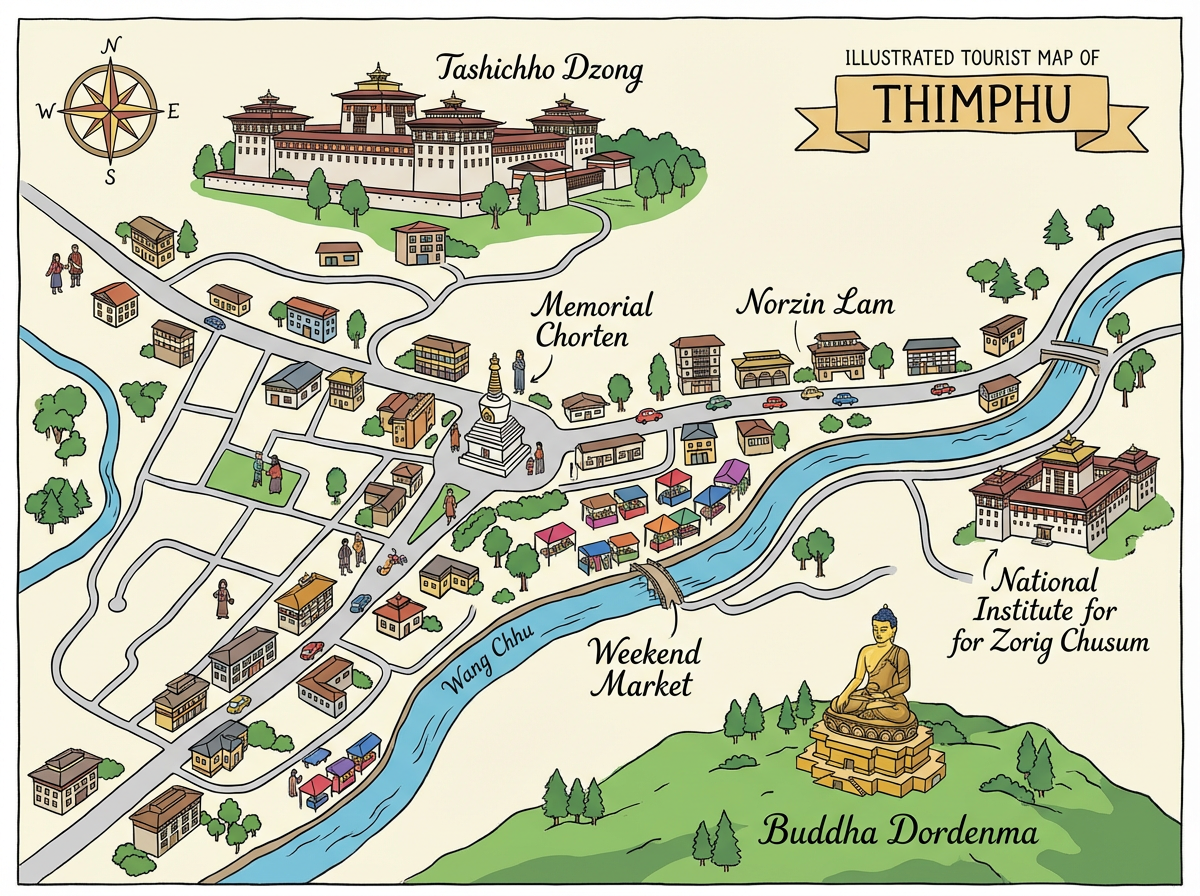
Thimphu combines an impressive variety of attractions in a small area. From the largest Buddha statue in Bhutan to the majestic government seat to lively markets and quiet monasteries – here you experience the full spectrum of Bhutanese culture and spirituality.
Buddha Dordenma – Bhutan's Largest Buddha Statue
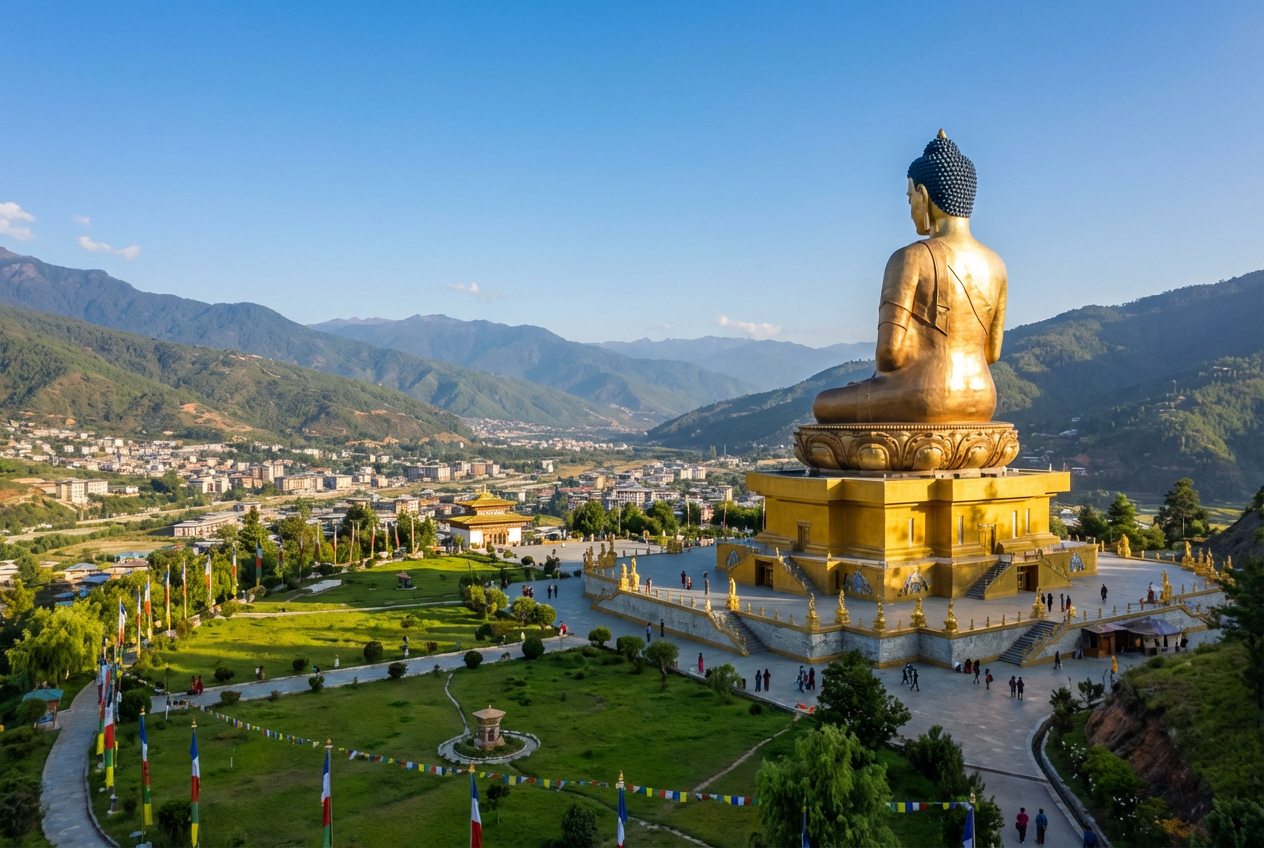
The Buddha Dordenma stands majestically on a hill south of the valley and overlooks all of Thimphu. At 51.5 meters tall, this gilded bronze statue is among the largest Buddha statues in the world. Built for the 60th birthday of the fourth king Jigme Singye Wangchuck, it houses over 100,000 smaller Buddha figures inside – each one also made of gilded bronze.
This image was generated with AI.
Tashichho Dzong – Bhutan's Seat of Power
The Tashichho Dzong – literally "Fortress of the Glorious Religion" – is Bhutan's political and religious seat of power. The imposing complex with its gleaming white walls and golden roofs houses the King's Throne Room, important ministries, and a community of monks. Originally built in the 13th century, the Dzong received its current form through a comprehensive reconstruction in the 1960s.
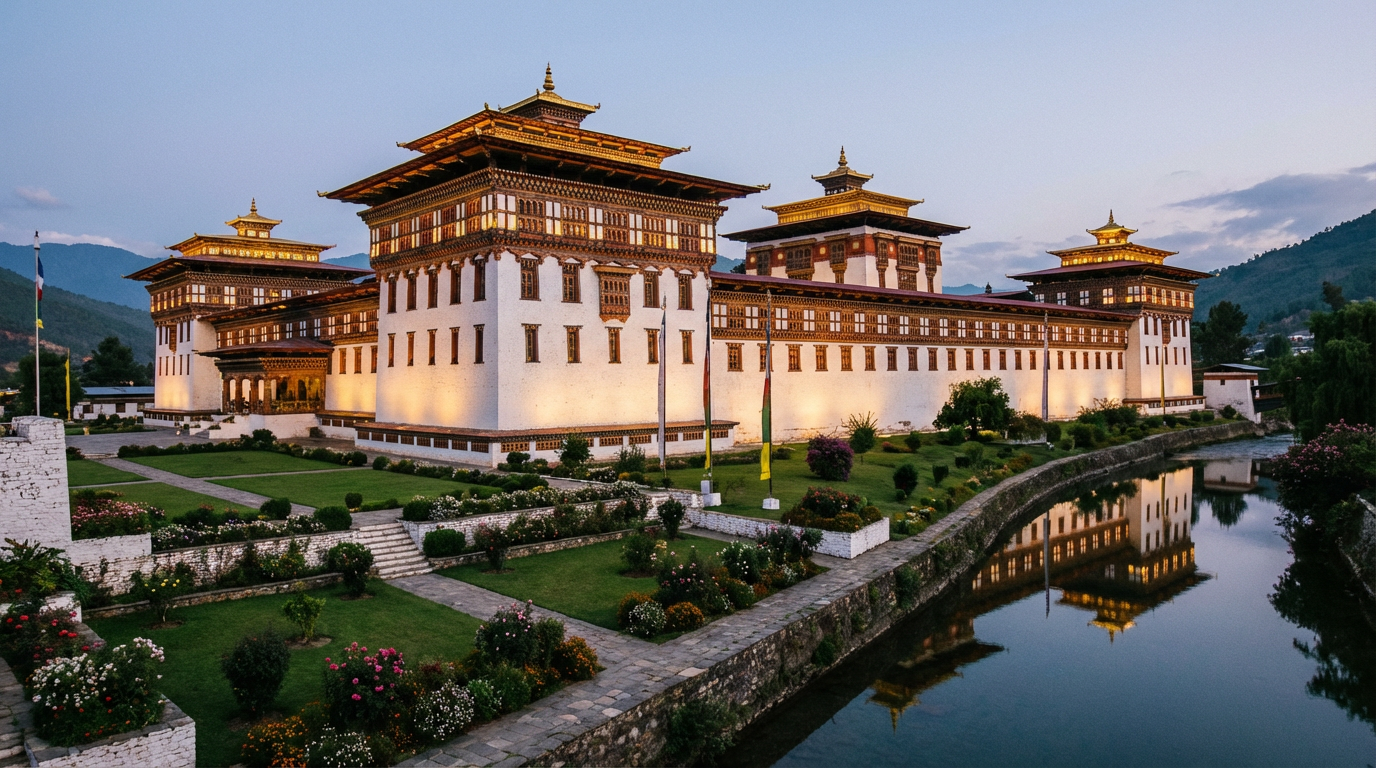
This image was generated with AI.
Memorial Chorten – The Spiritual Heart of the City
The Memorial Chorten (memorial stupa) is the most visible religious landmark in the heart of Thimphu. Built in 1974 to commemorate the third king Jigme Dorji Wangchuck, it is with its golden spires and bells a masterpiece of Tibetan-Buddhist architecture. More importantly: it is a living place of worship where you can observe locals every day circumambulating the stupa clockwise while praying.
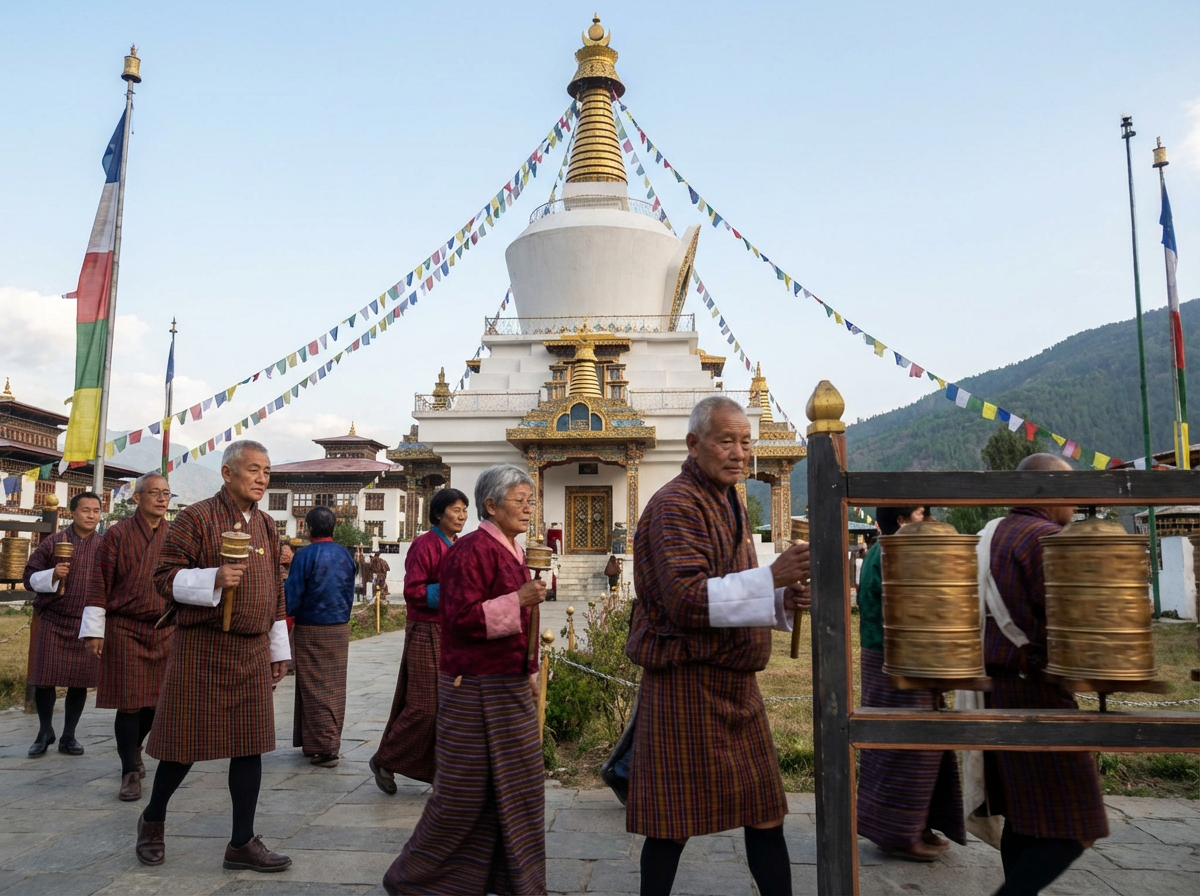
This image was generated with AI.
Further Attractions in Thimphu
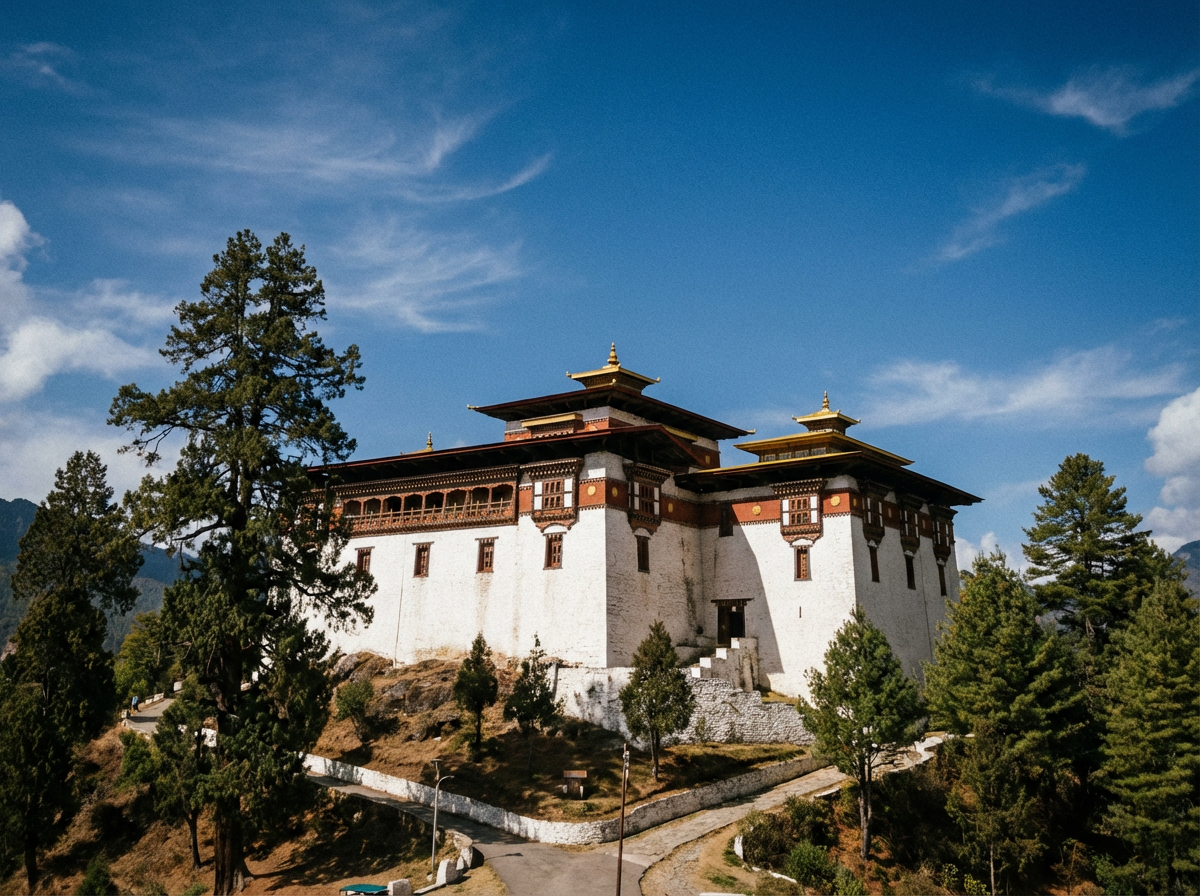 Historical
 This image was generated with AI.
Simtokha Dzong
Bhutan's oldest Dzong (circa 1630), located just 6 km south of Thimphu. Today it houses a school for Buddhist studies.
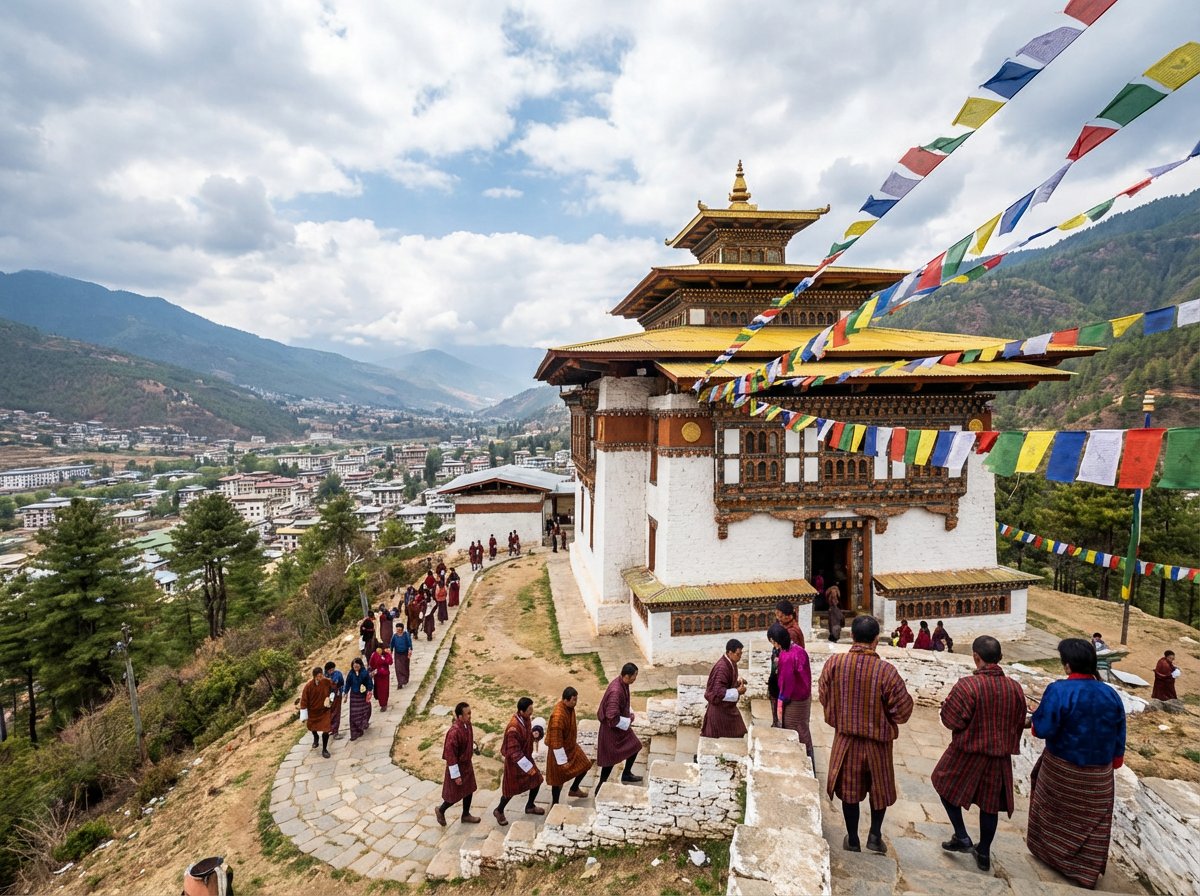 Temple
 This image was generated with AI.
Changangkha Lhakhang
12th-century temple with spectacular views over the city. Locals bring their newborns here for blessing.
 Nature
 This image was generated with AI.
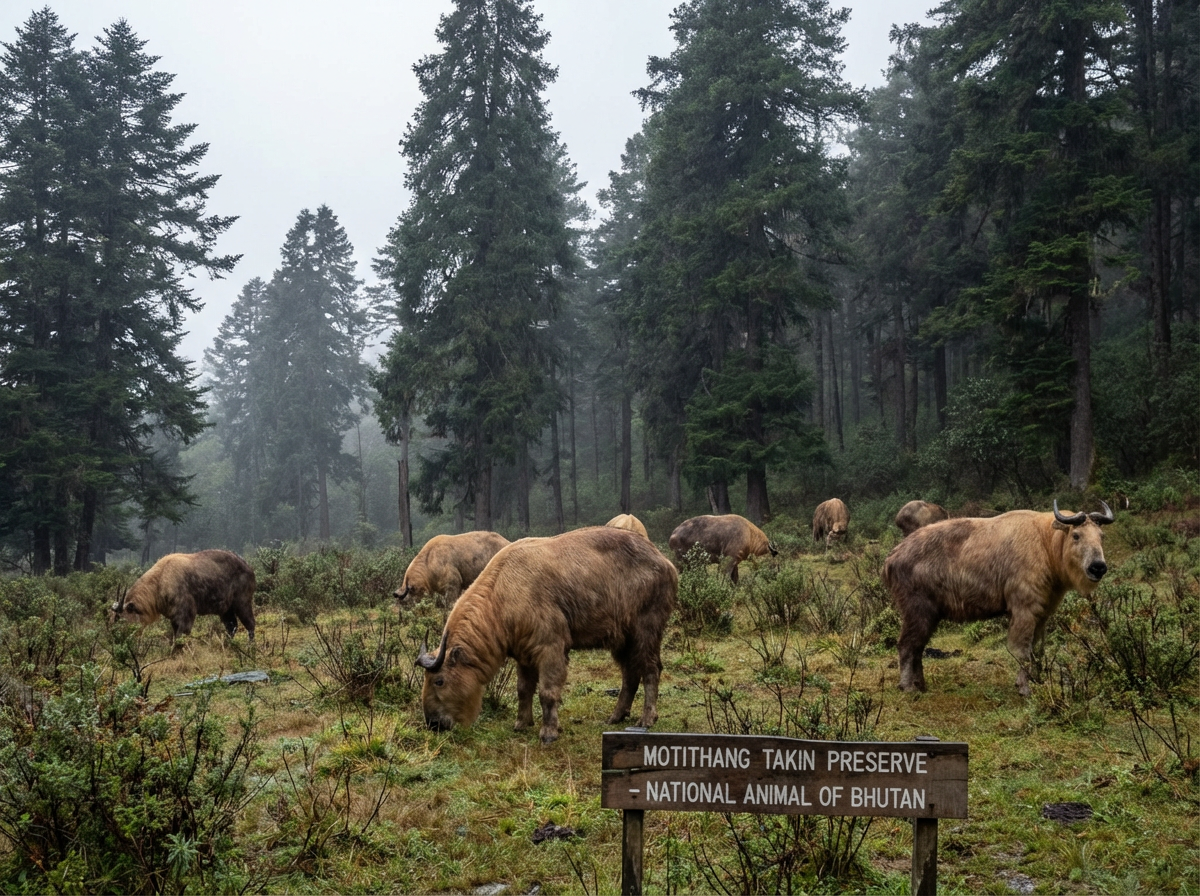
Motithang Takin Preserve
Meet the Takin, Bhutan's national animal. This peculiar creature with a goat's head and ox body is found nowhere else.
 Museum
 This image was generated with AI.
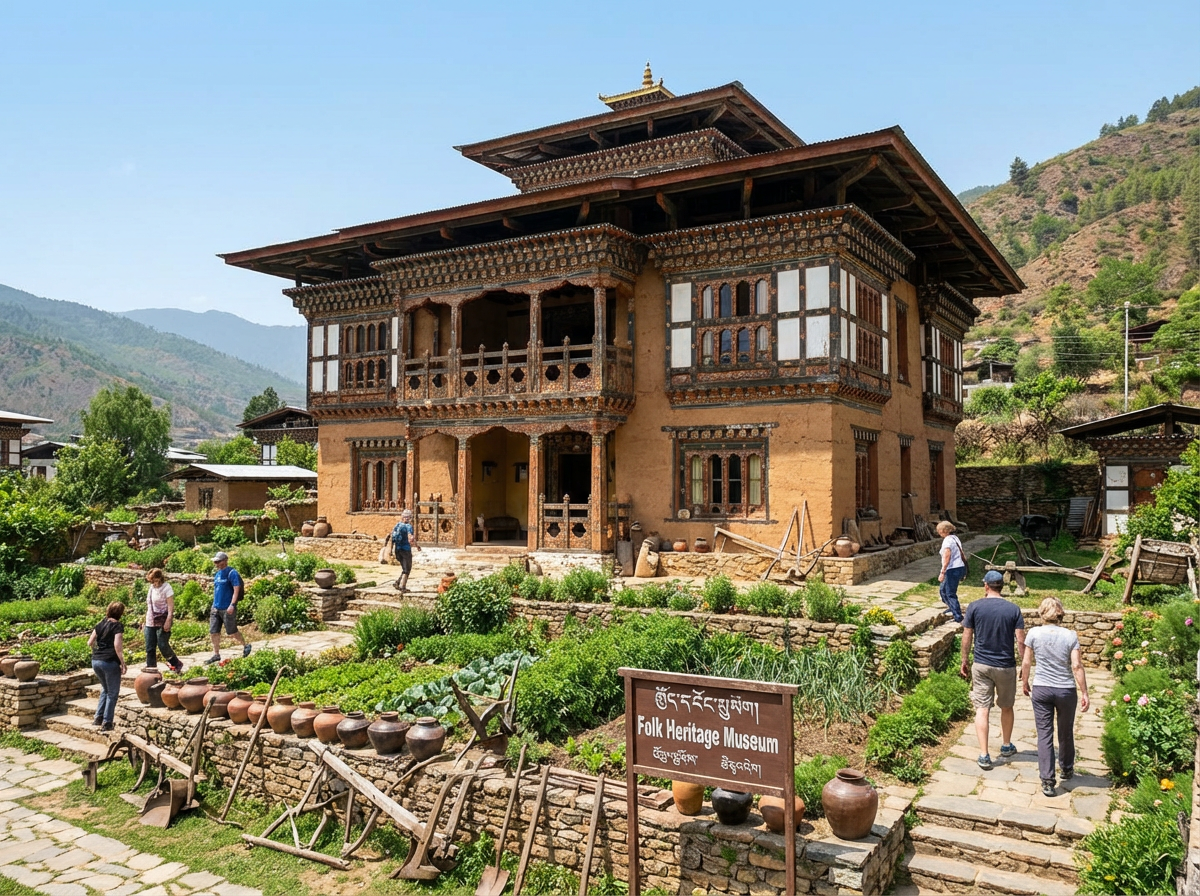
Folk Heritage Museum
An authentic 100-year-old farmhouse that displays traditional Bhutanese life – from kitchen to home chapel.
The 13 Traditional Arts – Zorig Chusum
Bhutan cultivates thirteen traditional art forms, collectively known as "Zorig Chusum" – from weaving to painting to woodcarving. At the National Institute for Zorig Chusum in Thimphu, you can look over the shoulders of young craftspeople during their training. It is one of the best places to experience Bhutan's living art tradition firsthand.
| Art | Bhutanese Name | Description |
|---|---|---|
| Weaving | Thagzo | The famous Bhutanese textiles and fabrics |
| Painting | Lhazo | Religious wall paintings and thangkas |
| Woodcarving | Parzo | Decorations on temples and houses |
| Sculpture | Jimzo | Clay and earth work for religious figures |
| Bronze Casting | Lugzo | Buddha statues and ritual objects |
| Turning | Shagzo | Wooden bowls, cups, and containers |
| Blacksmithing | Garzo | Jewelry and metal ritual objects |
| Embroidery | Tshemzo | Decorations on fabrics and garments |
| Bamboo Work | Tsharzo | Baskets, hats, and containers from bamboo |
| Papermaking | Dezo | Traditional daphne paper for religious texts |
| Carpentry | Shingzo | Construction of temples, houses, and bridges |
| Stonemasonry | Dozo | Stone work for temples and monuments |
| Goldsmithing | Trelzo | Gold and silver jewelry, rarely taught |
Learn more about Bhutanese craftsmanship and shopping
Markets and Shopping in Thimphu
As Bhutan's only real city, Thimphu offers the country's best shopping opportunities. From the lively weekend market to government craft shops to small boutiques along the main street Norzin Lam – here you'll find everything Bhutanese craftsmanship has to offer.
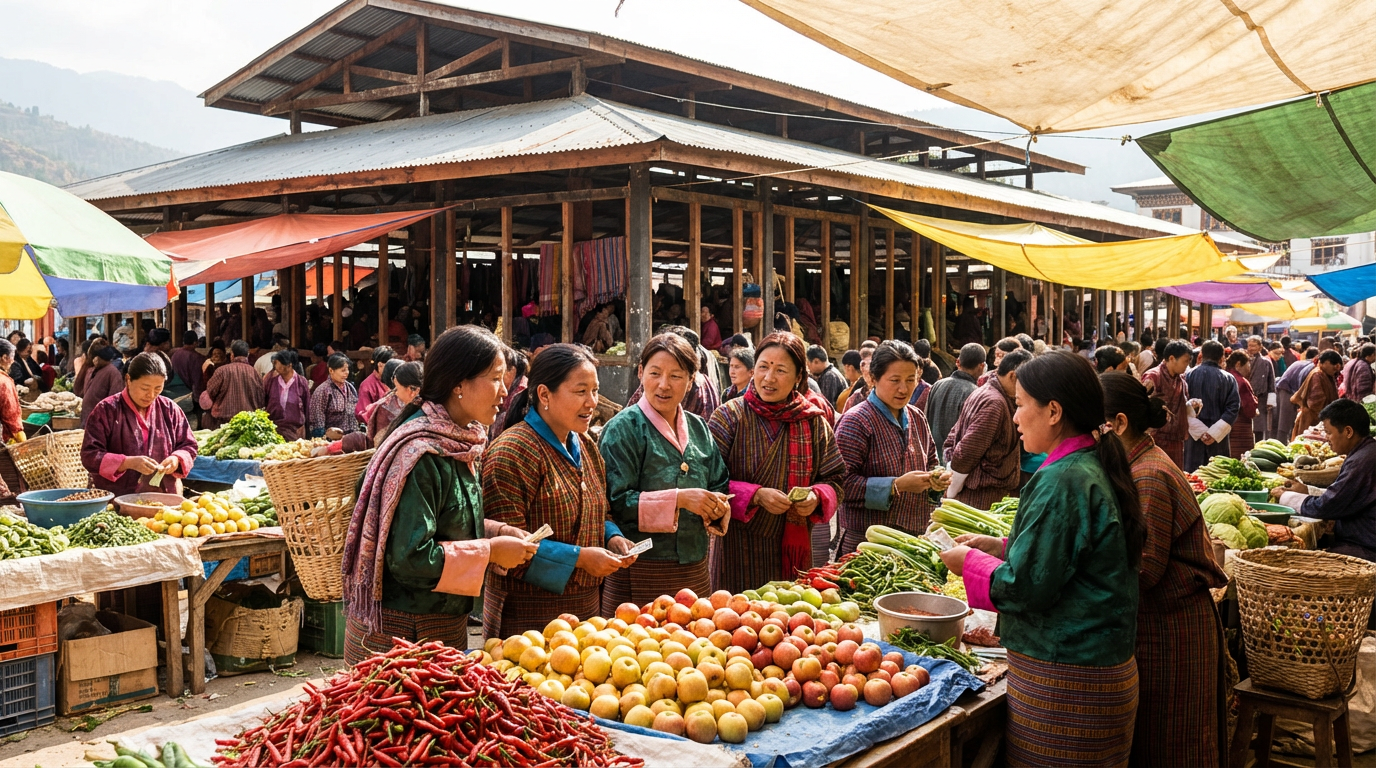
Thimphu Weekend Market
The Thimphu Weekend Market is Bhutan's largest market and a must for every visitor. From Friday to Sunday – with Saturday as the busiest day – the riverside transforms into colorful activity. Farmers from surrounding valleys bring vegetables, rice, chili, and dried yak cheese; merchants offer textiles, masks, and incense. Here you experience Bhutanese everyday life more authentically than anywhere else.
This image was generated with AI.
Further Shopping Options
 Crafts
 This image was generated with AI.
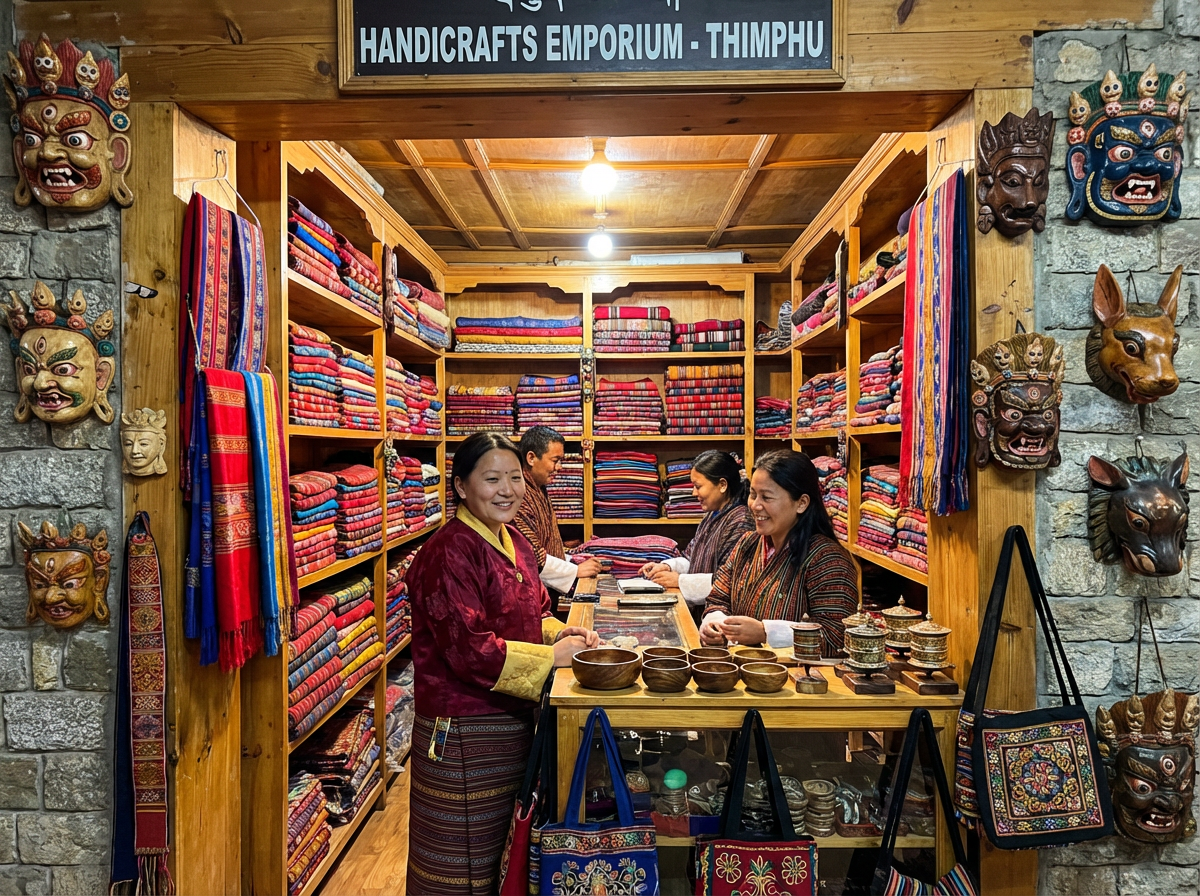
Handicrafts Emporium
Government-supported shop with guaranteed quality and fair prices. Ideal for high-quality textiles, masks, and jewelry.
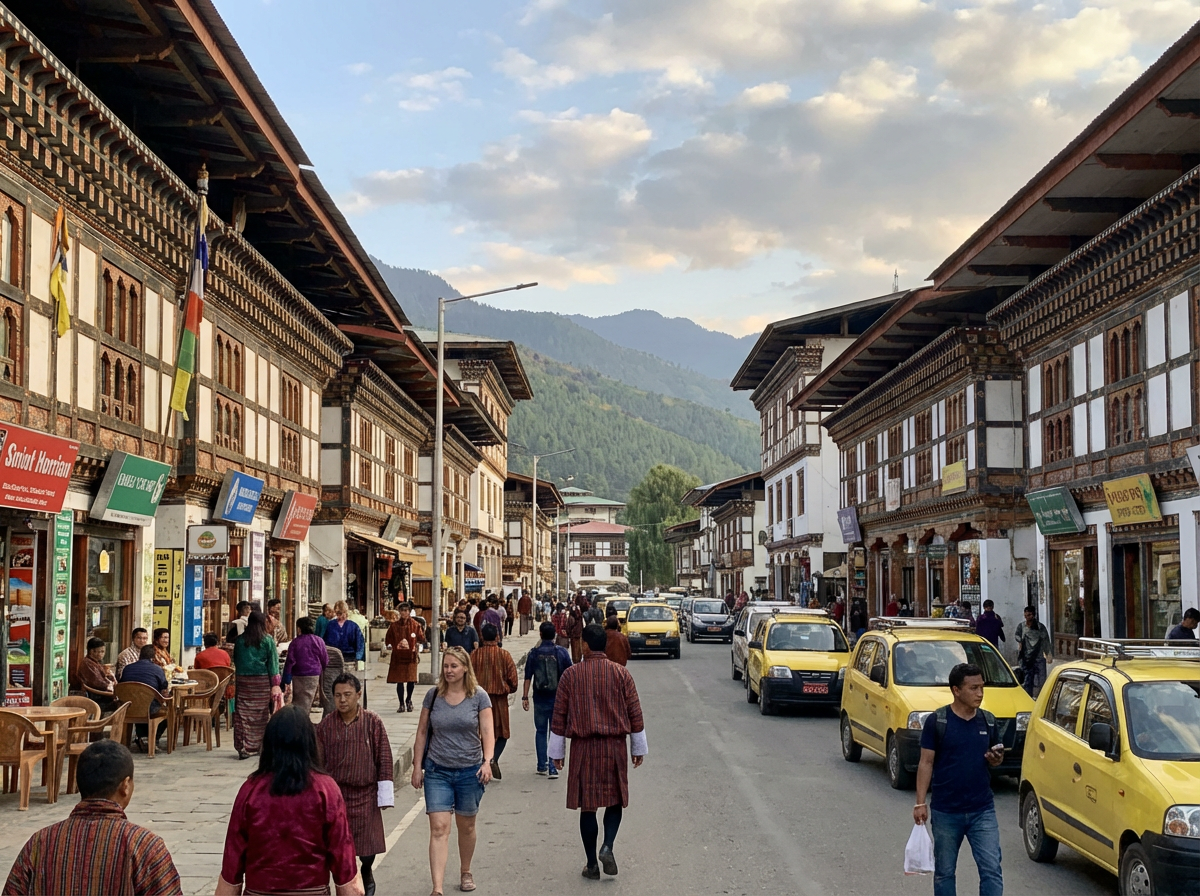 Shopping Street
 This image was generated with AI.
Norzin Lam
Thimphu's main street with many small shops, bookstores, cafés, and boutiques – perfect for a city stroll.
Food and Restaurants in Thimphu
As the capital, Thimphu offers Bhutan's most diverse restaurant scene. Whether you want to try traditional Bhutanese cuisine, relax in a cozy café, or enjoy international dishes – you'll find it here. Particularly worthwhile is trying the national dishes.
Bhutanese Specialties to Try
| Dish | Description | Note |
|---|---|---|
| Ema Datshi | Hot chili peppers in creamy cheese sauce – the national dish | Very spicy! Ask for mild version |
| Kewa Datshi | Potatoes in cheese sauce – milder than Ema Datshi | Good introduction to Bhutanese cuisine |
| Momos | Steamed dumplings with meat or vegetable filling | Available everywhere, varies in quality |
| Jasha Maru | Spicy chicken dish with ginger and chili | Popular everyday dish |
| Suja | Butter tea with salt – requires an acquired taste, but authentic | Trying it is part of the experience! |
Hotels in Thimphu
Thimphu offers Bhutan's largest hotel selection – from international luxury brands to characterful boutique hotels to simple guesthouses. Most accommodations combine traditional Bhutanese architecture with modern comfort and often offer views of the valley or surrounding mountains.
Luxury Category
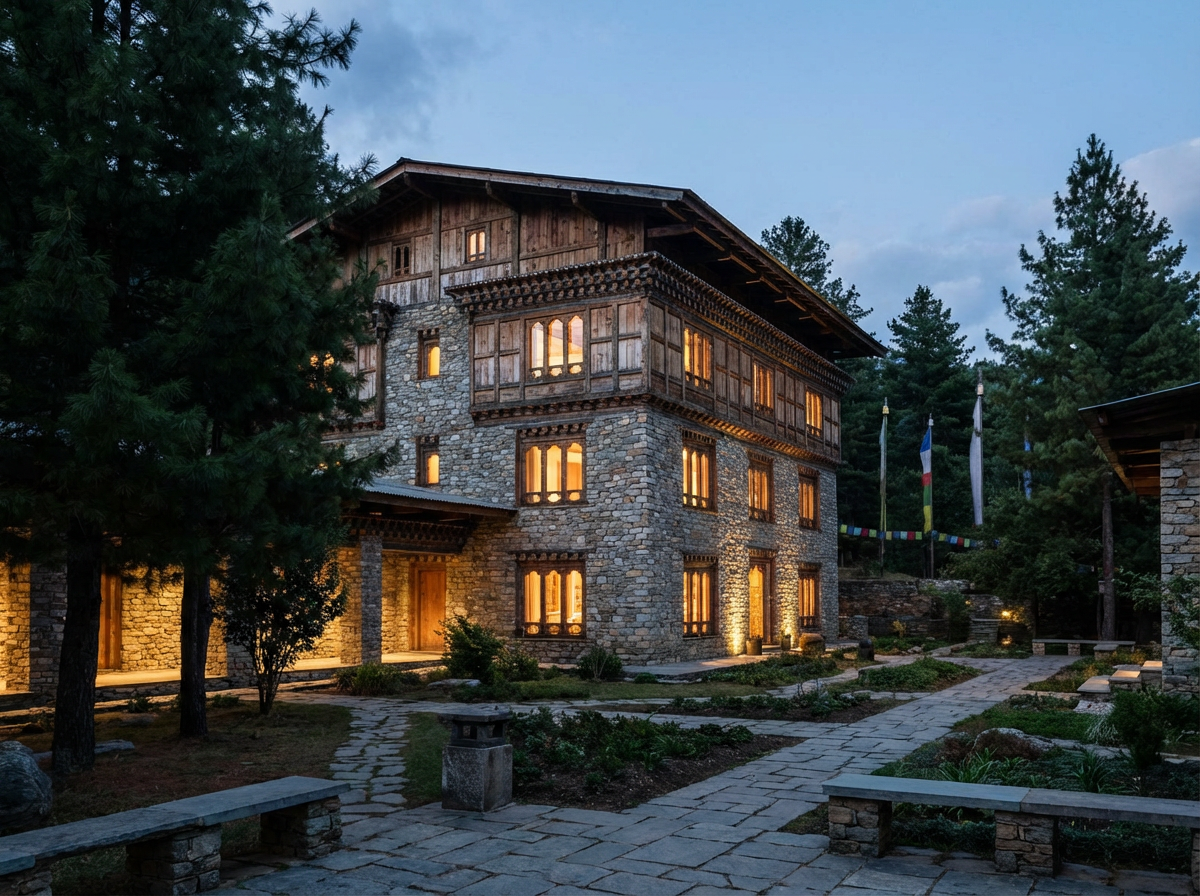 Ultra-Luxury
 This image was generated with AI.
Amankora Thimphu
The Thimphu lodge of the renowned Aman group: Minimalist luxury in a restored manor house, intimate atmosphere with only 16 suites.
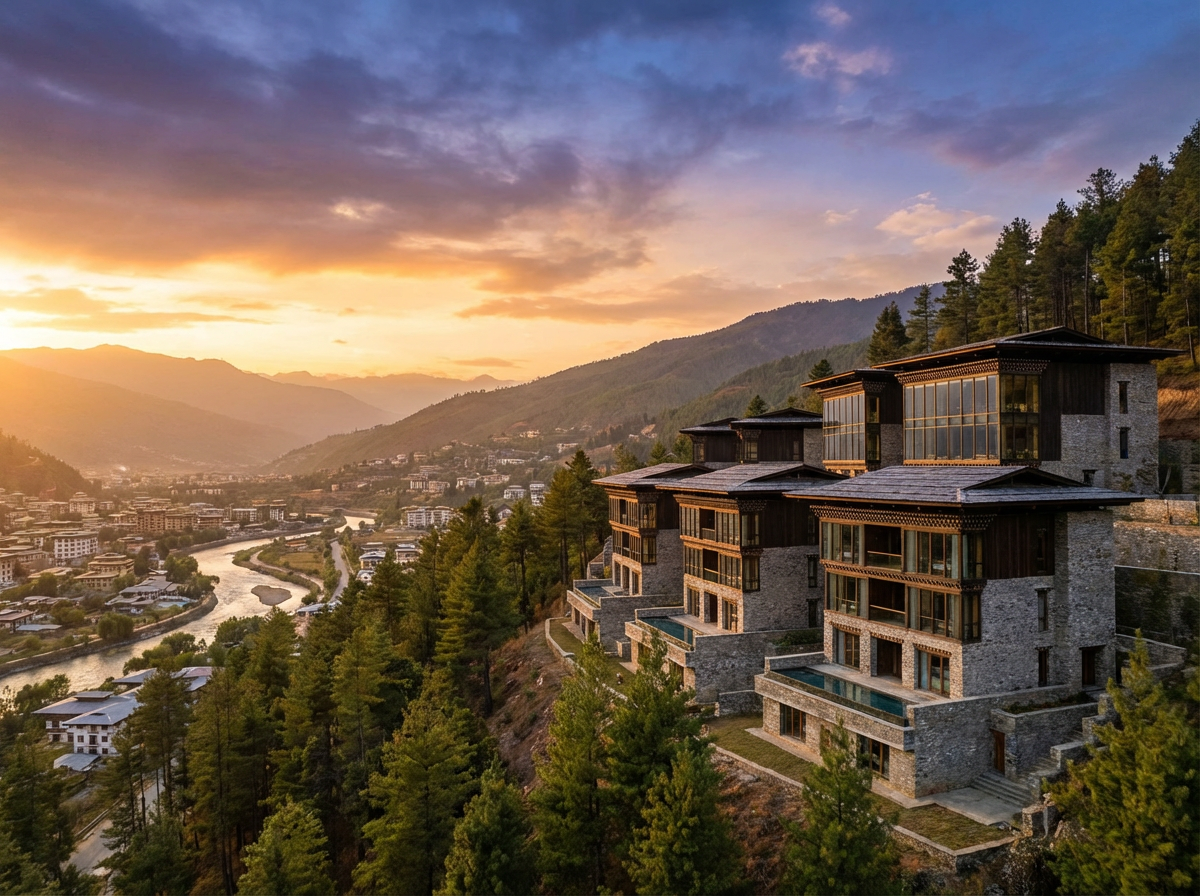 Luxury
 This image was generated with AI.
Six Senses Thimphu
Wellness resort with views over the capital: Spacious suites, world-class spa, and traditional hot-stone baths.
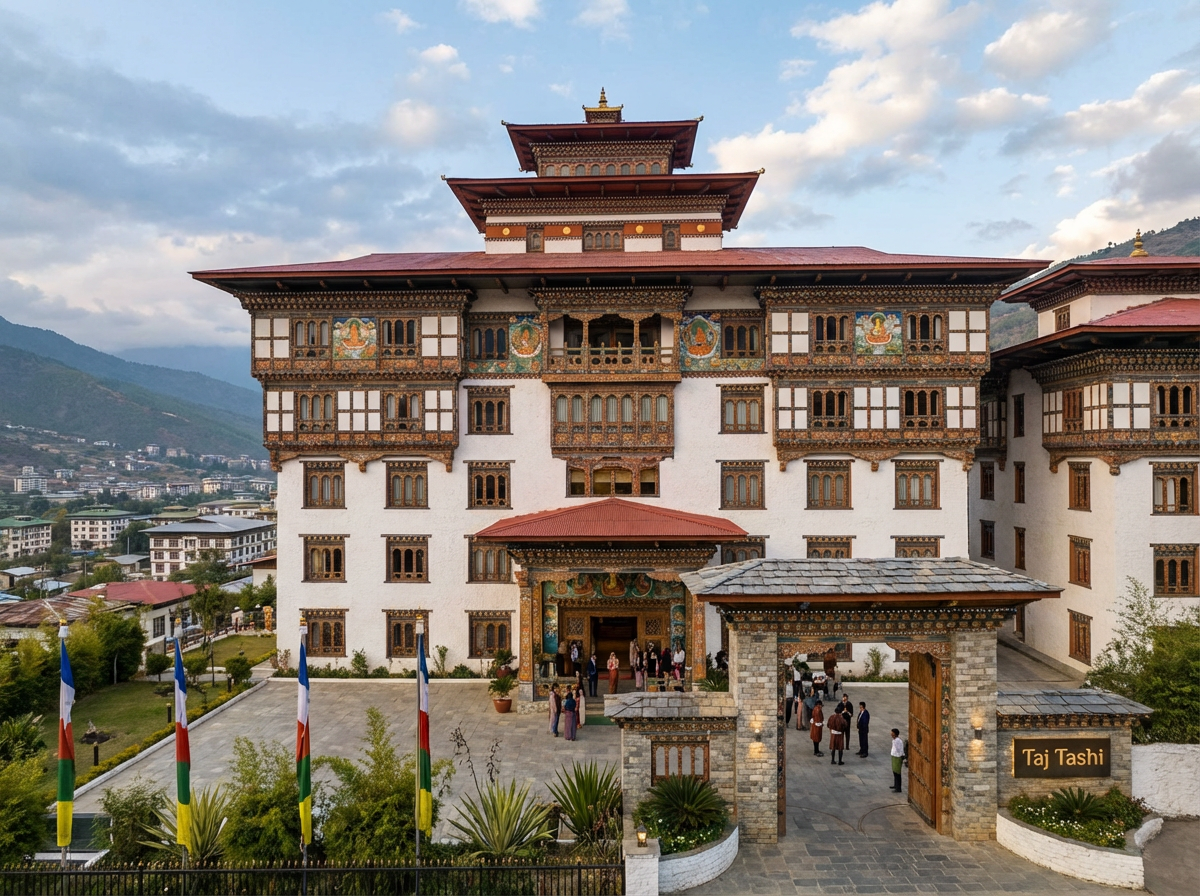 5-Star
 This image was generated with AI.
Taj Tashi
The only 5-star hotel in the city center: Spacious rooms, multiple restaurants, and spa – just minutes' walk from all attractions.
Mid-Range and Boutique Hotels
Thimphu offers a growing number of boutique hotels that combine traditional charm with personal service. Hotels like Namgay Heritage Hotel or Hotel Druk offer comfortable rooms, restaurants with Bhutanese and international cuisine, and central locations at reasonable prices.
All accommodations in Thimphu by category
Recommended Length of Stay in Thimphu
For the main attractions of Thimphu, 1–2 nights are sufficient. This time allows a relaxed visit to the main attractions, a museum, and the weekend market – plus enough room for spontaneous discoveries in the capital.
Express: 1 Night – The Highlights
- Day 1: Arrival from Paro, Buddha Dordenma at sunset, dinner in the city
- Day 2 Morning: Tashichho Dzong, Memorial Chorten, short market visit, travel on to Punakha
Optimal: 2 Nights – With Time to Explore
- Day 1: Arrival, city stroll on Norzin Lam, Buddha Dordenma at sunset
- Day 2: Tashichho Dzong, National Institute for Zorig Chusum, Folk Heritage Museum, Memorial Chorten
- Day 3: Weekend Market (if weekend), Changangkha Lhakhang, travel on
In-Depth: 3 Nights – For Culture Enthusiasts
- Additional Options:
- Day trip to Simtokha Dzong and Changangkha Lhakhang
- Visit Motithang Takin Preserve and the Textile Museum
- Watch archery (Bhutan's national sport)
- Attend Thimphu Tshechu (if timing is right)
Classic 7-day route with Thimphu
Weather in Thimphu and Best Time to Visit
Thimphu sits at approximately 2,320 meters altitude and enjoys a temperate climate with distinct seasons. Summers are mild and wet, winters are cold with occasional snowfall. The best times to visit are spring (March–May) with rhododendron blooms and autumn (September–November) with clear skies and the famous Thimphu Tshechu Festival.
| Month | Day Temp | Night Temp | Precipitation | Suitability |
|---|---|---|---|---|
| January | 10–12°C | -3 to 0°C | Low | Good, but cold |
| February | 12–14°C | -2 to 2°C | Low | Good, but cold |
| March | 15–18°C | 3–6°C | Increasing | Excellent |
| April | 18–20°C | 6–9°C | Moderate | Excellent, rhododendrons |
| May | 20–22°C | 10–13°C | Increasing | Good |
| June–August | 22–25°C | 13–15°C | High (Monsoon) | Limited |
| September | 20–22°C | 10–13°C | Decreasing | Excellent, Tshechu |
| October | 18–22°C | 5–10°C | Low | Excellent, clear skies |
| November | 15–18°C | 0–5°C | Low | Excellent, clear skies |
| December | 12–14°C | -3 to 2°C | Low | Good, but cold |
Detailed information about the best time to visit Bhutan | Everything about the Thimphu Tshechu
Practical Information for Thimphu
Frequently Asked Questions About Thimphu
What is Thimphu's altitude?
Thimphu is located at an altitude of 2,248 to 2,648 meters above sea level, with the city center at approximately 2,320 m. This makes Thimphu Asia's highest capital and the world's fifth highest. Most visitors have no serious problems at this altitude, but should listen to their bodies on the first day.
Why doesn't Thimphu have traffic lights?
Thimphu is indeed the world's only capital without traffic lights. In the 1990s, a traffic light was installed, but after public protests it was removed – Bhutanese felt it was impersonal. Instead, traffic police direct traffic with elegant hand gestures at major intersections.
How large is the Buddha Dordenma statue?
The Buddha Dordenma statue in Thimphu is 51.5 meters tall, making it one of the world's largest Buddha statues. It is made of bronze and gilded. Inside are over 100,000 smaller Buddha figures, each also made of gilded bronze. The statue was completed in 2015.
Is there an airport in Thimphu?
No, Thimphu has no airport. The nearest airport is Paro International Airport (PBH), about 55 km away. The drive between Paro and Thimphu takes 1 to 1.5 hours. There are plans for a new international airport in Gelephu, but it is considerably farther from Thimphu.
When does Thimphu Tshechu take place?
Thimphu Tshechu takes place annually in fall – usually late September or early October, depending on the Bhutanese lunar calendar. The festival lasts three days and is held at Tashichho Dzong. It is one of Bhutan's largest festivals with spectacular mask dances.
How long should I stay in Thimphu?
For the main attractions, 1–2 nights are sufficient. With one night, you can visit the main attractions (Buddha Dordenma, Tashichho Dzong, Memorial Chorten). With two nights, you have time for museums, the Weekend Market, and a more relaxed pace. Culture enthusiasts can also plan three nights.
What is the best day to visit Weekend Market?
Thimphu Weekend Market operates Friday to Sunday, with Saturday being the busiest and most authentic day. That's when most farmers from surrounding valleys bring their products. Come early (before 9 am) for the best selection and less crowding.
What is the weather like in Thimphu?
Thimphu has a temperate climate with four seasons. Summers (June–August) are mild but wet due to monsoons. Winters (December–February) are cold with occasional snow. The best time to visit is spring (March–May) and fall (September–November) with pleasant temperatures and clear skies.
Further Information
Explore Thimphu
Traveling On From Thimphu
Experience Bhutan's Capital?
We plan your individual trip to Thimphu – with the best hotels and exclusive experiences off the beaten path.