Bhutanese Cuisine – Experience Ema Datshi, Momos and More
Last updated:
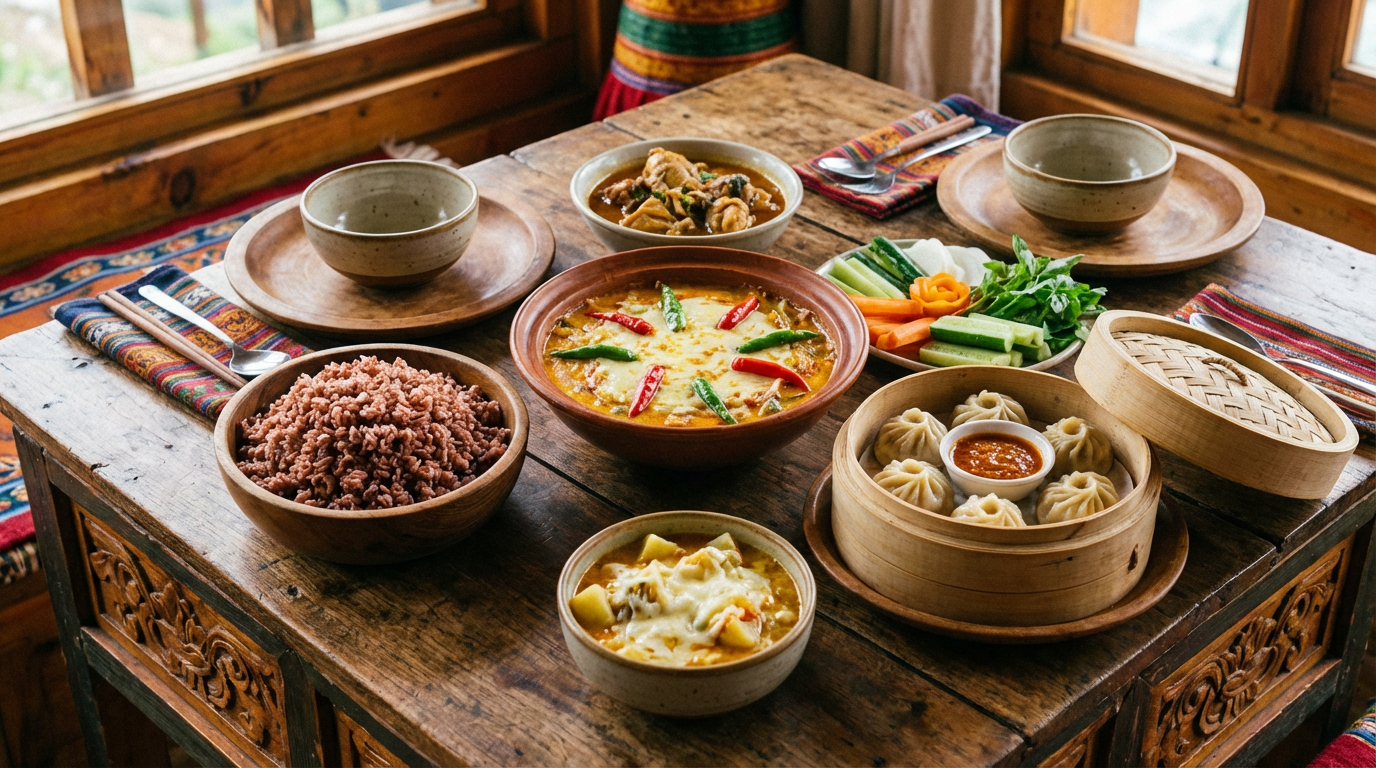
Bhutanese food is an experience for all the senses – and an honest challenge for the palate. The Kingdom in the Himalayas possesses one of the world's spiciest cuisines: here, chili is not a side dish but the main ingredient of nearly every dish. Combined with creamy cheese and nutty red rice, a flavor world emerges that you won't find anywhere else.
On this page, we introduce you to the most important dishes – from the legendary national dish Ema Datshi to steamed Momos. You'll learn which drinks you should try and get practical tips for vegetarian options and sensitive stomachs.
Bhutanese Cuisine Overview
Bhutanese cuisine differs fundamentally from what you know from other Asian countries. Chili is not a spice here but the central ingredient – used generously and present in nearly every dish. Red rice accompanies every meal as a satisfying base. Creamy Datshi, a homemade cheese made from yak or cow's milk, gives many dishes their characteristic texture. Although Tibetan influences are evident, Bhutanese cuisine has developed independently over centuries – with a unique character that rewards bold diners.
The Staple Foods
- Red Rice from the high valleys – nutty in flavor and rich in nutrients
- Buckwheat – especially in the Bumthang region, processed into noodles and dumplings
- Chilis – fresh, dried, green and red, always used generously
- Datshi (yak or cow cheese) – melts creamily and mitigates the heat
- Potatoes and radishes as versatile vegetable bases
Ema Datshi – Bhutan's National Dish
This image was generated with AI.
This image was generated with AI.
This image was generated with AI.
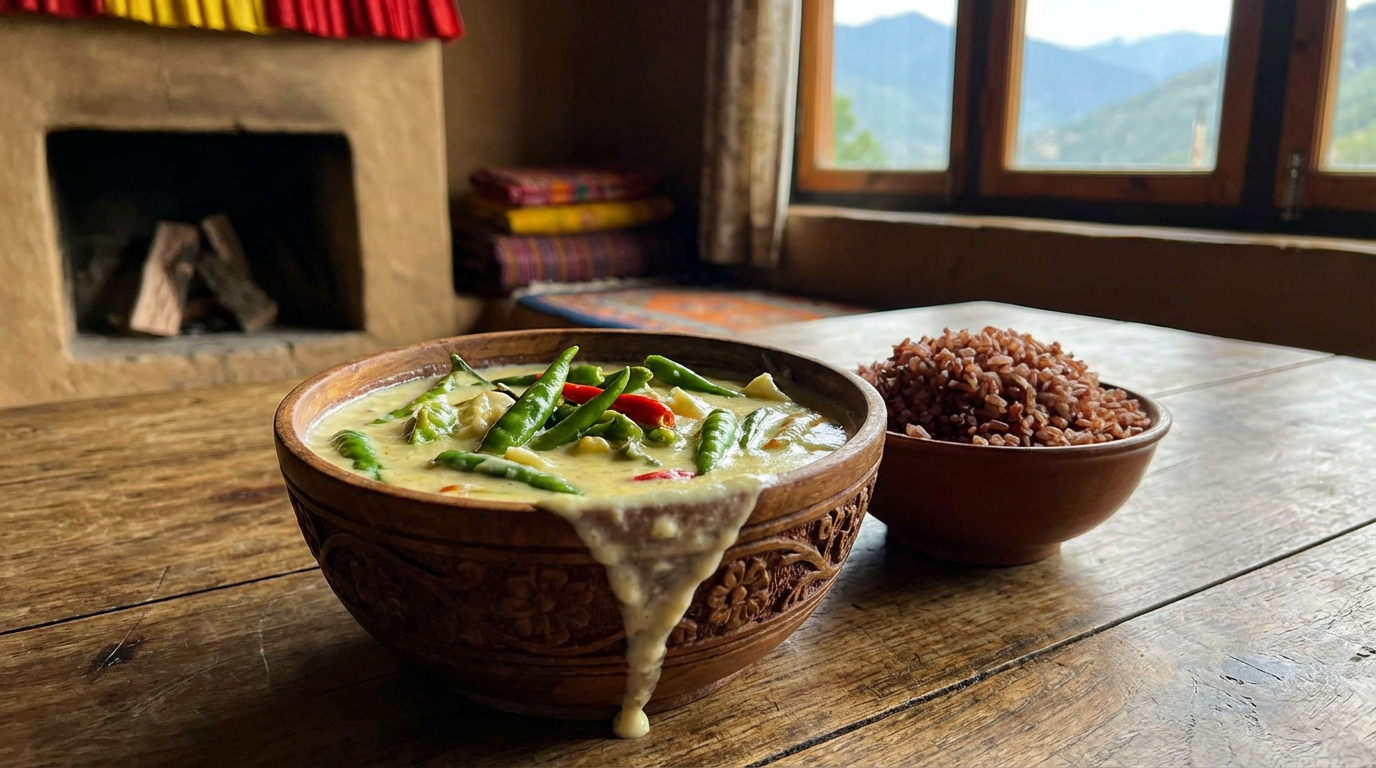
The name says it all: Ema means chili, Datshi means cheese. This dish is the culinary heart of Bhutan and is served with every meal – from breakfast to dinner. The base consists of green or red chilis swimming in a creamy cheese sauce. What appears simple at first glance is actually a dish with countless variations: every family guards its own recipe, every region has its own specialties. To travel to Bhutan without trying Ema Datshi would be like visiting Italy without pasta.
The Preparation
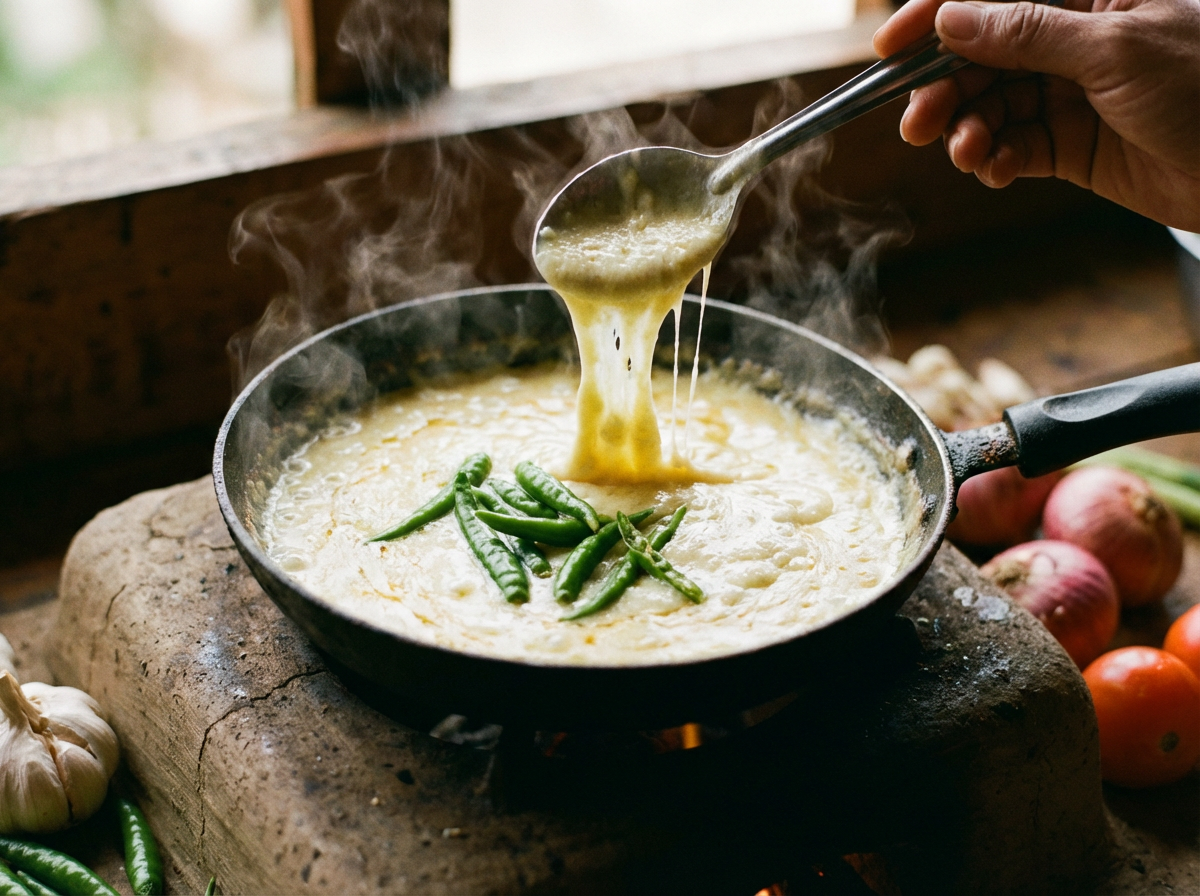
The preparation is surprisingly simple: fresh chilis are first boiled in water until soft. Then the homemade cheese is added and melts over low heat into a creamy sauce. Garlic, onions and ginger add additional depth to the dish. Traditionally, Ema Datshi was prepared in a clay oven – today, a gas stove is usually used, but the flavor remains authentically unchanged.
Datshi Variations
| Dish | Main Ingredient | Description |
|---|---|---|
| Ema Datshi | Chili | The original – whole chilis in creamy cheese sauce, intensely spicy |
| Kewa Datshi | Potatoes | Milder and more filling – boiled potatoes with cheese and some chili |
| Shamu Datshi | Mushrooms | Aromatic mushrooms in creamy cheese sauce, popular with vegetarians |
| Shakam Datshi | Dried Meat | Spicy dried beef with cheese, hearty and protein-rich |
| Sikam Datshi | Pork | Pork belly with cheese and chili, particularly rich |
Other Traditional Dishes
Besides Ema Datshi, Bhutanese cuisine has many more classics to offer. From steaming dumplings to spicy stews to rustic buckwheat noodles – here are the dishes you absolutely must try.
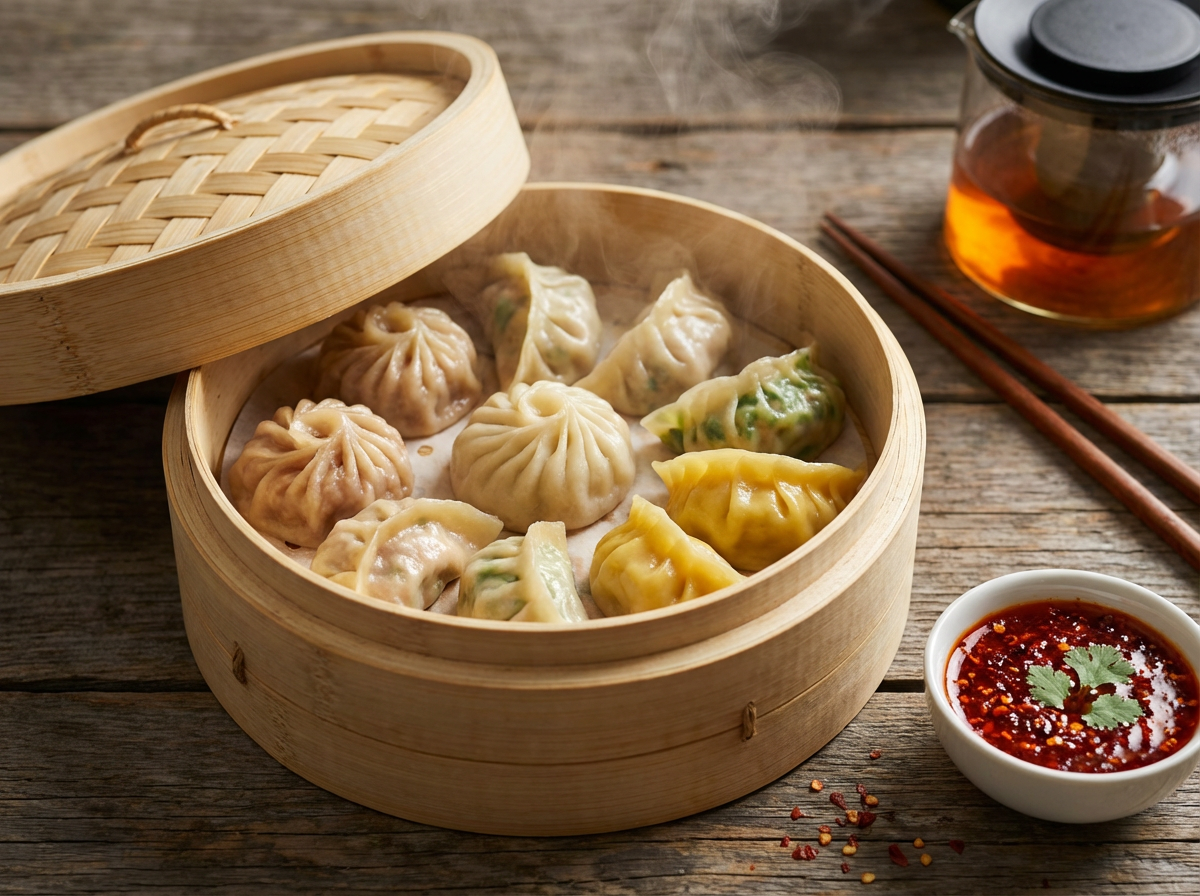
Momos – The Popular Dumplings
This image was generated with AI.
Momos are widespread throughout the Himalayas and originally come from Chinese-Tibetan cuisine. In Bhutan, these steamed or fried dumplings are a popular snack at any time of day. Fillings vary: ground beef, pork or chicken is as common as vegetarian variants with cheese and cabbage. Momos are always served with a spicy dipping sauce made from chili, soy sauce and vinegar. You'll find them everywhere – at street stalls, in markets and in restaurants.
Other Specialties to Try
Phaksha Paa
A hearty stir-fry dish with thinly sliced pork and dried red chilis. The slightly smoky aroma comes from the dried chilis. Spice level: medium to hot. Often served with radish and red rice.
Jasha Maroo
A warming chicken stew with tomatoes, onions, garlic and ginger. Compared to other Bhutanese dishes, Jasha Maroo is more mildly spiced – perfect for beginners who want to gradually adjust to the local heat.
Hoentay
These buckwheat dumplings are a specialty from the remote Haa Valley. Similar to Momos, but made from nutty buckwheat flour. A particularly authentic dish that you'll rarely find outside Bhutan.
Puta
Fresh buckwheat noodles from the Bumthang region, traditionally handmade. Served with creamy cheese sauce or refreshing buttermilk. A rustic specialty that reflects the character of the mountain region.
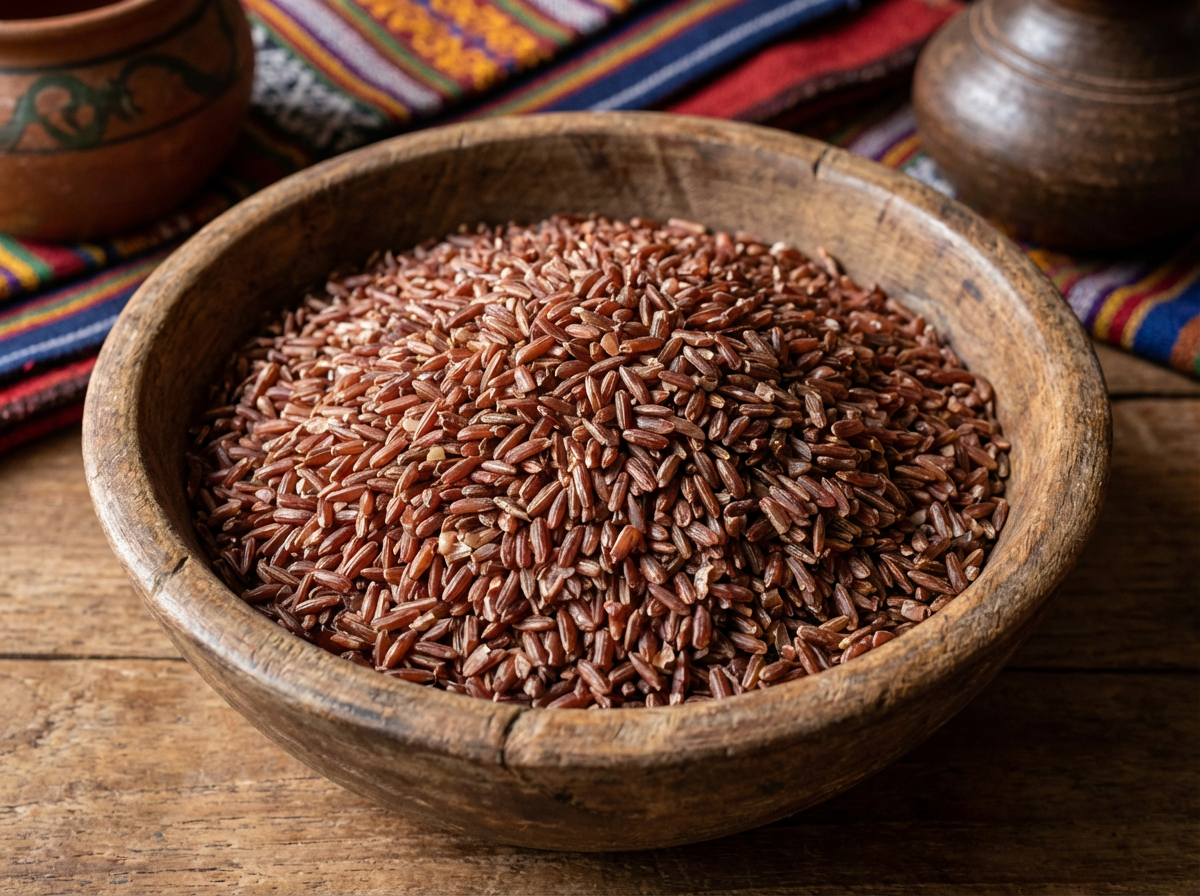
Red Rice – The Basis of Every Meal
This image was generated with AI.
Bhutanese red rice is far more than a side dish – it is the foundation of every meal. Grown in the high valleys at 2,500 to 2,700 meters altitude, it develops its characteristic reddish-brown color and slightly nutty flavor. Compared to white rice, it has a firmer bite and is significantly more nutritious: rich in fiber, minerals and with a lower glycemic index. In Bhutan, red rice is served with every meal – and you'll quickly understand why.
Traditional Beverages in Bhutan
Bhutan's beverage culture is as fascinating as the cuisine itself. From salty butter tea that has warmed travelers for centuries to home-distilled rice wine at celebrations – here are the drinks that are part of the Bhutanese experience.
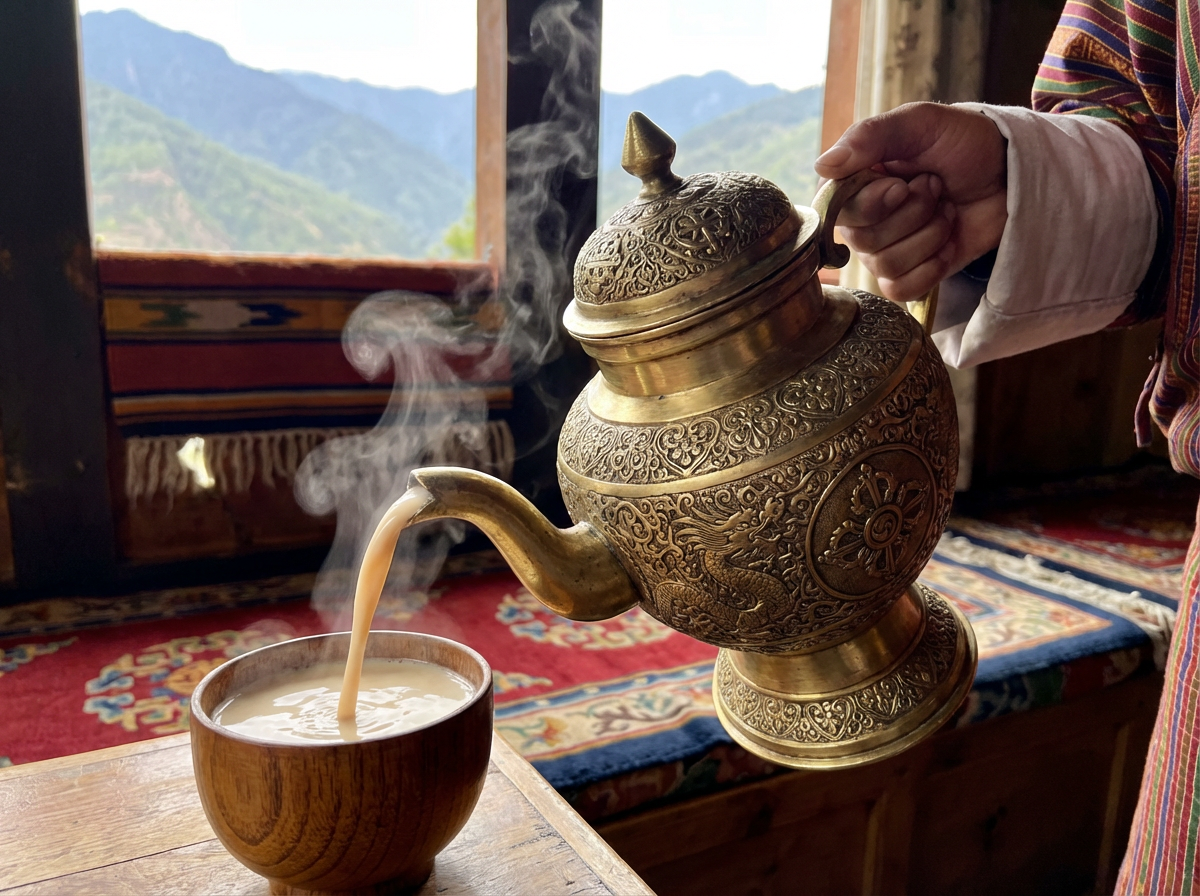
Suja – The Legendary Butter Tea
This image was generated with AI.
Suja is far more than a drink – it is a symbol of Bhutanese hospitality. The ingredients are simple: strong tea, yak butter and salt. The result is surprising for Western palates: salty instead of sweet, creamy and calorie-rich. In the thin mountain air, Suja is an important energy source that warms the body and provides calories. In traditional households, guests are always offered butter tea – refusing it is considered impolite.
"The first sip is surprise, the second is adaptation, the third is enjoyment."
Ara – The Local Rice Wine
Ara is the traditional rice wine of Bhutan, distilled from rice, corn or millet. The strength varies considerably – from mild to very strong – depending on who made it. Many families distill their own Ara for special occasions and celebrations. It is drunk neat, warmed or traditionally mixed with melted butter and a raw egg. In taste, Ara resembles Mediterranean grappa or Turkish raki.
Other Beverages
| Beverage | Type | Description |
|---|---|---|
| Bangchang | Alcoholic | Lightly fermented rice beer with mild taste, significantly lighter than Ara |
| Ngaja | Tea | Black tea with milk and sugar – the familiar alternative to butter tea |
| Ginger Tea | Tea | Warming tea with fresh ginger, particularly soothing for the stomach |
| Red Panda Beer | Beer | Local beer from the country's only brewery in Bumthang – a must for beer lovers |
Regional Specialties
Each region of Bhutan has developed its own culinary traditions. Bumthang in the center of the country is particularly a highlight for gourmands – here buckwheat specialties meet a surprising Swiss cheese tradition.
 Recommendation
 This image was generated with AI.
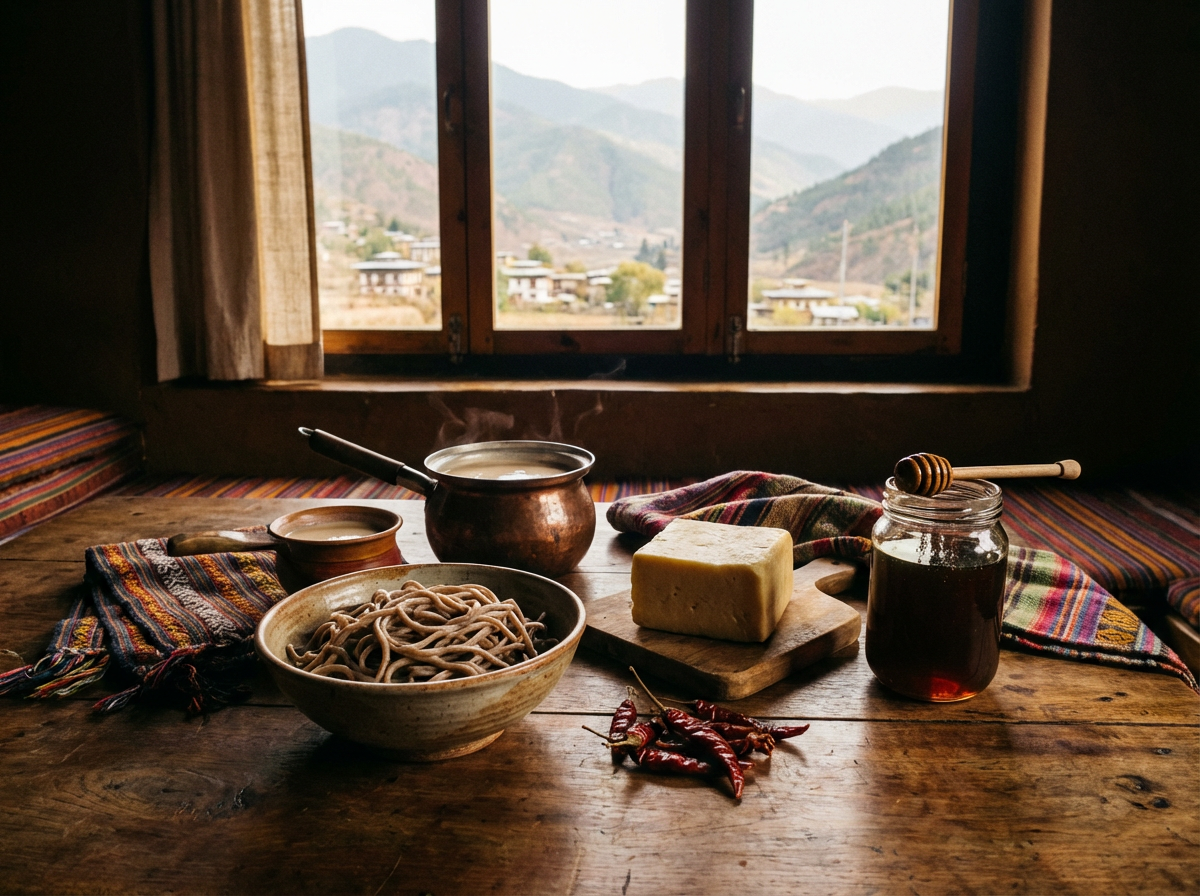
Bumthang – Bhutan's Culinary Heart
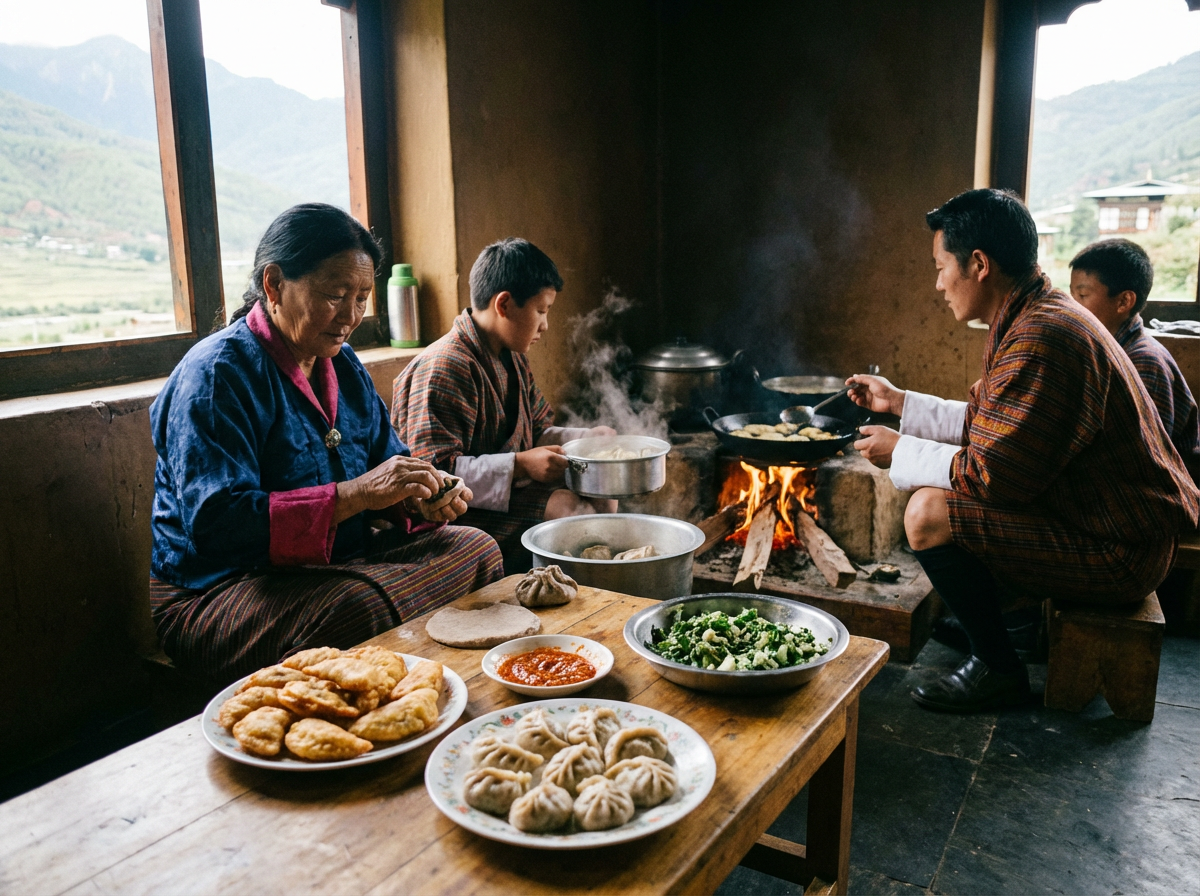
Buckwheat noodles, aromatic mountain honey, Swiss cheese and the country's only brewery – Bumthang is a paradise for food lovers.
This image was generated with AI.
Haa Valley – Hoentay and More
The remote Haa Valley is home to buckwheat dumplings and authentic yak products far from tourist crowds.
Bumthang – The Valley of Delights
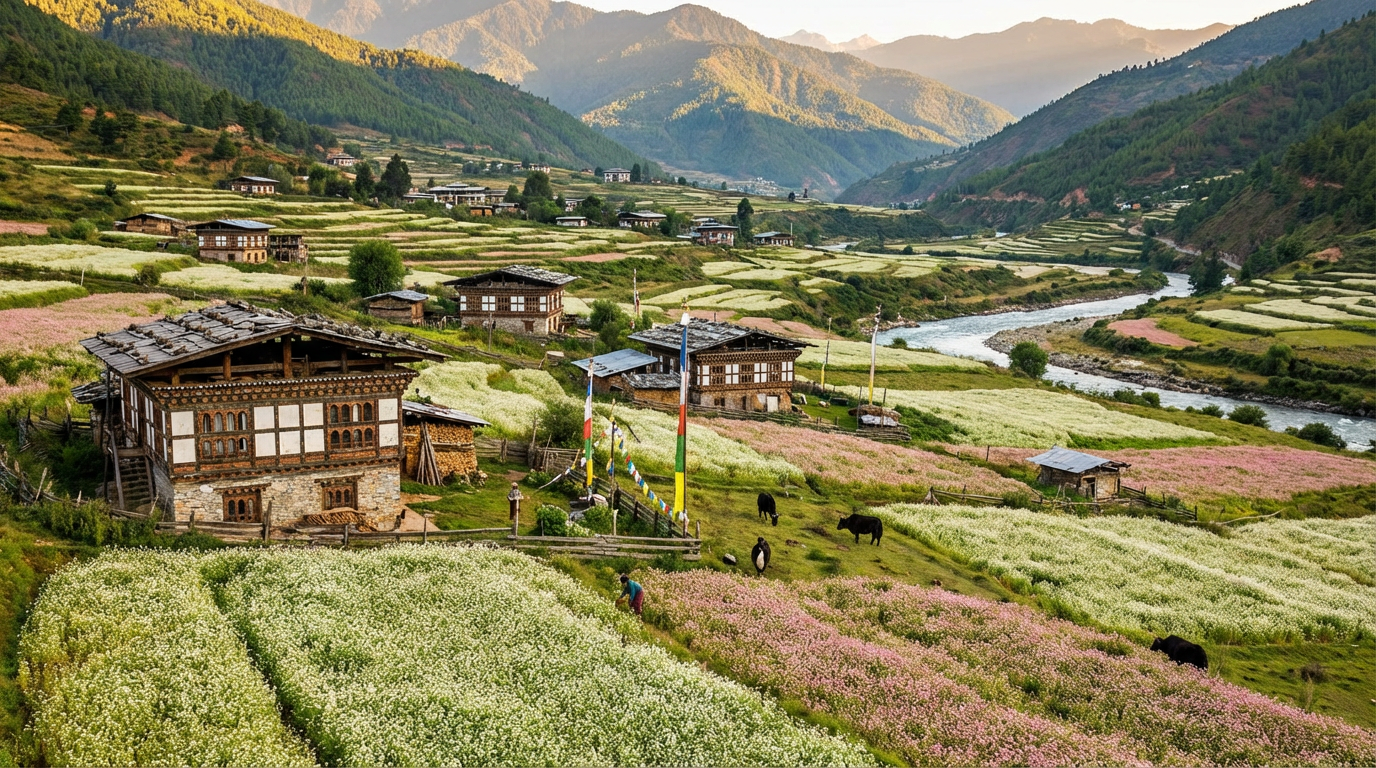
The Bumthang region is the culinary heart of Bhutan. Here, the famous Puta are made – fresh buckwheat noodles that you won't find in this quality anywhere else. The local honey from the high valleys is aromatic and sought-after. Surprisingly, since the 1970s there has been cheese production here following Swiss tradition, initiated by a development worker. The Red Panda Brewery also produces the country's only local beer and even whisky. For food travelers, a detour to Bumthang is a must.
Vegetarian and Vegan in Bhutan
Good news for vegetarians: Bhutan offers surprisingly many meat-free options. Many of the most popular Datshi dishes come without meat. Vegan travel is more difficult, but certainly doable with some planning. The key is communication: inform your guide about your dietary preferences at the beginning of your trip.
Vegetarian Options
- Ema Datshi – the national dish is vegetarian (contains cheese)
- Kewa Datshi – potatoes in creamy cheese sauce
- Shamu Datshi – aromatic mushrooms with cheese
- Vegetarian Momos – filled with cheese, cabbage and onions
- Red Rice with Vegetables – simple, but nutritious and delicious
Tips for Communication
Mention your dietary preferences to your guide on the first day. Hotels and restaurants are happy to accommodate special requests – they just need some notice. A useful term: "Sha me" means "without meat". Be patient if special requests can't always be implemented immediately – Bhutanese hospitality will ensure you're well looked after.
Culinary Experiences in Bhutan
Bhutan offers far more than just restaurant visits. Those who want to dive deeper into food culture can learn to cook themselves, dine with a family or combine a traditional bath with a feast.
Cooking Classes
Some hotels and resorts offer cooking classes where you can learn to prepare Ema Datshi and Momos yourself. Often the experience begins with a visit to the local market, where you select the ingredients. At the end, you take home not just knowledge but also authentic recipes – a souvenir you can share with family and friends.
Homestay Meals
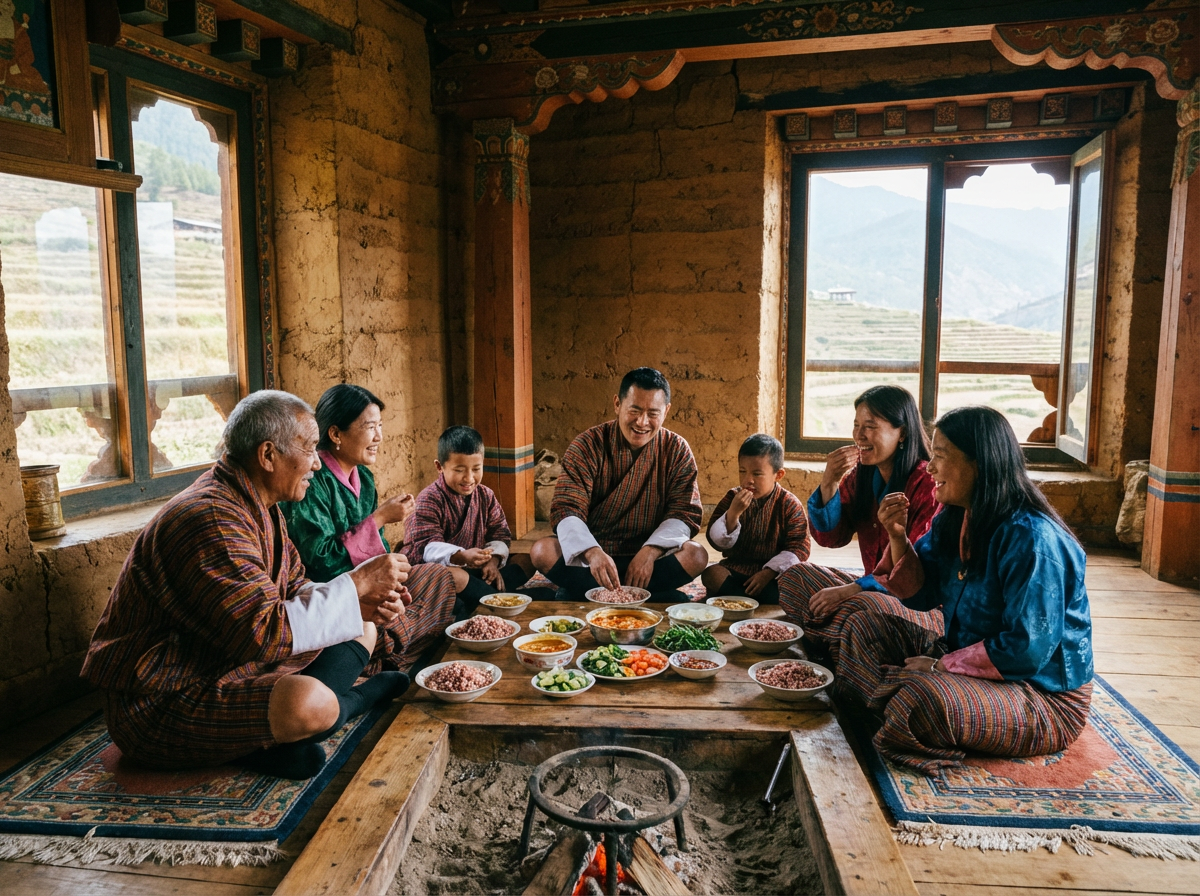
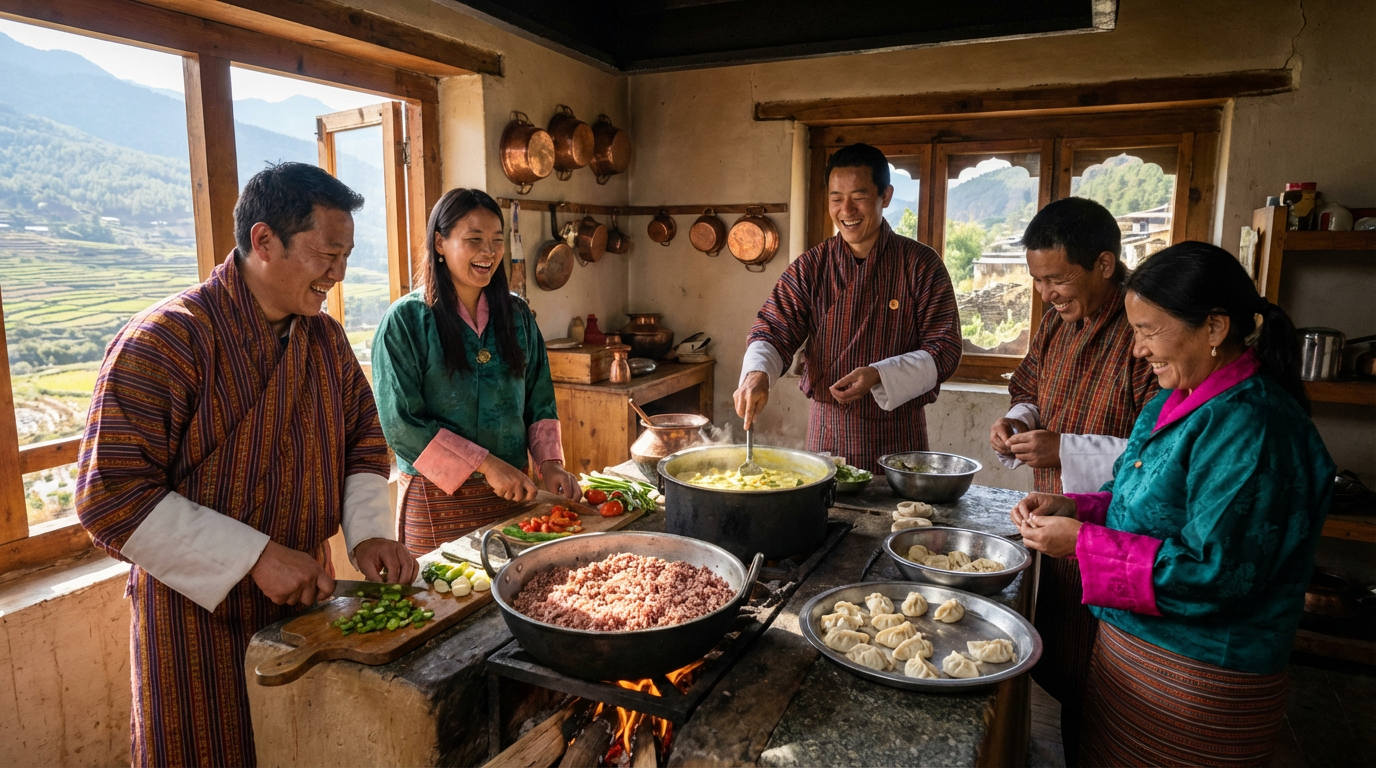
The most authentic culinary experience in Bhutan is dinner with a local family. You sit together on the floor, share the dishes and experience Bhutanese hospitality firsthand. Here, regional specialties are served that you won't find in any restaurant – and you gain genuine insight into the daily life of the people.
Hot Stone Bath with Meal
A particularly atmospheric combination: first you relax in a traditional hot stone bath, where river-heated stones warm water that releases healing herbs. Then follows a local meal – the perfect combination of wellness and cuisine. This experience can be booked in many regions.
Hygiene Tips for Carefree Dining
The good news up front: Bhutan has very good hygiene standards compared to many other Asian countries. With a few simple ground rules, you can enjoy the cuisine without worry and avoid stomach problems.
What to Do About Stomach Problems?
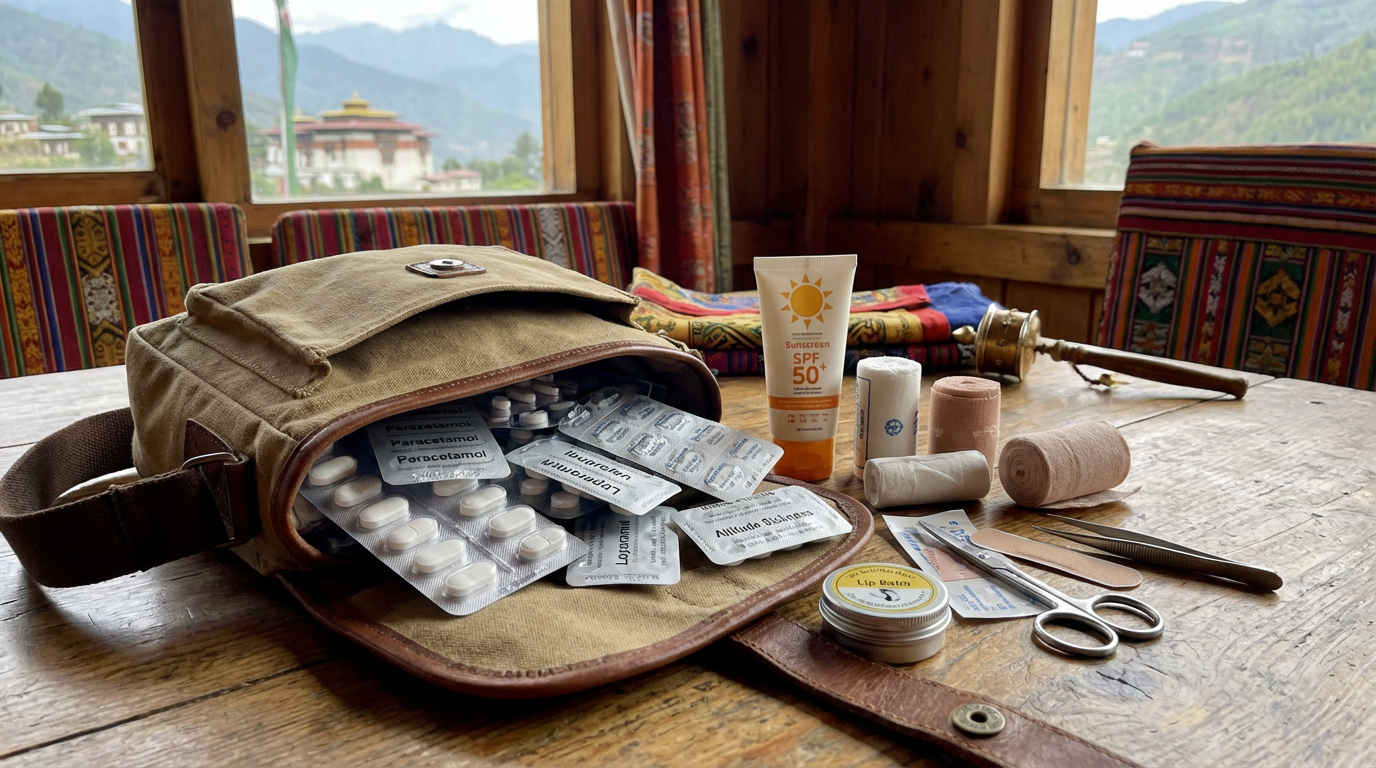
Mild discomfort from the unusually spicy food is normal and nothing to worry about. Your guide can help communicate with restaurants and order milder dishes. Pack a travel first aid kit with remedies for diarrhea and nausea. For more serious or persistent symptoms, inform your guide – he knows the nearest medical facilities and can help with communication.
Restaurant Recommendations
From authentic family restaurants to upscale hotel restaurants – Bhutan offers culinary experiences for every taste. Here are some tried-and-tested places. However, your guide knows the best local insider tips.
| Region | Restaurant | Recommendation |
|---|---|---|
| Thimphu | Folk Heritage Museum Restaurant | Authentic Ema Datshi in traditional setting with insight into Bhutanese culture |
| Thimphu | Babesa Village Restaurant | Dining in a restored farmhouse, local specialties in rustic atmosphere |
| Paro | Sonam Trophel Restaurant | Popular local classics, good value for money, friendly service |
What Does Food Cost in Bhutan?
Most meals are already included in your travel package. Those who want to try additional local dishes in between or dine out on free evenings can use these rough guidelines.
| Category | Price Range | Example |
|---|---|---|
| Local Restaurant | USD 3–8 | Ema Datshi with red rice and a drink |
| Mid-Range Restaurant | USD 8–15 | Multiple dishes to share, drinks included |
| Hotel Restaurant | USD 15–30+ | Multi-course menu with international and local options |
| Street Stall | USD 2–5 | A portion of Momos (6–8 pieces) with spicy dipping sauce |
Frequently Asked Questions About Bhutanese Cuisine
How spicy is the food in Bhutan really?
Very spicy – Bhutan actually has one of the world's spiciest cuisines. The crucial difference: chili is not seasoning here but the main ingredient of many dishes. Even if you order "mild," the result can still be quite spicy for inexperienced palates. Red rice is your best ally against the heat – much more effective than water.
Can I eat vegetarian in Bhutan?
Yes, vegetarian eating is very possible in Bhutan. Many of the most popular Datshi dishes like Ema Datshi, Kewa Datshi and Shamu Datshi are meat-free. Vegan eating is more difficult because cheese and butter are ubiquitous – but certainly manageable with advance communication. Inform your guide at the start of your trip so hotels and restaurants can prepare.
Is Street Food Safe in Bhutan?
Yes, cooked dishes like Momos are generally safe at street stalls. Be more cautious with raw ingredients. Overall, Bhutan has good hygiene standards compared to many other Asian countries – so you can explore the local street food culture without major concerns.
What's the Difference Between Ema Datshi and Kewa Datshi?
The difference lies in the main ingredient: Ema Datshi uses chilis, Kewa Datshi uses potatoes. Both are prepared with creamy cheese. Kewa Datshi is significantly milder and therefore a good entry option for those who want to gradually adjust to Bhutanese heat.
Do I Have to Try Butter Tea?
You don't have to, but we recommend it – it's part of the complete Bhutan experience. The salty, creamy taste of Suja is initially surprising for Western palates and takes some getting used to. If it doesn't appeal to you, you can politely ask for regular tea with milk – this is understood and accepted everywhere.
Can I Take a Cooking Class in Bhutan?
Yes, some hotels and resorts offer cooking classes. Typically you learn to prepare Ema Datshi and Momos yourself – often combined with a visit to the local market. Mention it to us when planning your trip and we'll happily organize this experience for you.
Is There Local Beer in Bhutan?
Yes, the Red Panda Brewery in Bumthang is the country's only brewery and produces both beer and whisky. Red Panda Lager is available in most restaurants and a welcome alternative to imported beverages. For beer lovers, a visit to the brewery in Bumthang is worthwhile.
Experience Bhutanese Cuisine
We'll plan your culinary discovery journey through Bhutan – with authentic homestay meals, cooking classes and the best restaurant recommendations from our local guides.
Further Information
This image was generated with AI.
Bumthang – Bhutan's Culinary Heart
Buckwheat noodles, local honey, Swiss cheese and the country's only brewery – Bumthang is a must for food lovers.
This image was generated with AI.
Homestays in Bhutan
Experience authentic Bhutanese hospitality and enjoy homemade meals with a local family.
This image was generated with AI.
Health and Vaccinations
Everything you need to know about travel medicine, recommended vaccinations and medical care for a healthy stay in Bhutan.