Bhutan Homestays 2026: Authentic Experiences with Local Families
Last updated:
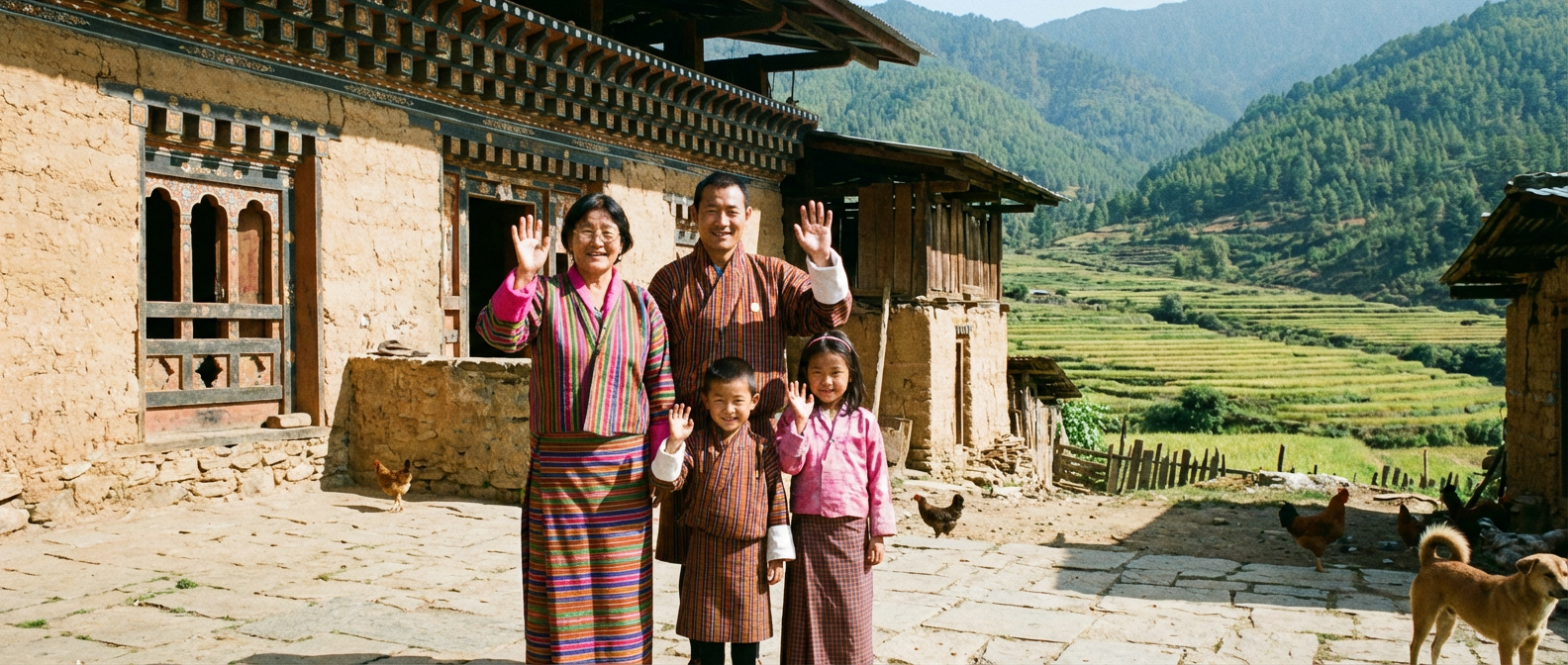
If you want to experience Bhutan rather than just see it, a homestay offers the most intensive form of travel. In one of Bhutan's 158 certified homestays, Bhutanese families open their doors – and their lives – to guests from around the world. You sleep in traditional houses, cook Ema Datshi together, and hear stories in the evening that you won't find in any guidebook.
This image was generated with AI.
What are Homestays in Bhutan?
Homestays are private homes of Bhutanese families that accommodate guests. Unlike hotels, you experience authentic daily life here: you live in the family's house, eat together, and participate in their daily activities. The Tourism Council of Bhutan has actively promoted the homestay program to strengthen rural communities and provide visitors with deeper insights into Bhutanese culture.
All 158 homestays are certified by the Tourism Council of Bhutan and regularly inspected. This guarantees hygiene and safety standards comparable to 3-star hotels – combined with the warmth and authenticity of a private home.
What Can You Expect in a Homestay?
Each homestay is unique – shaped by the family, the region, and the house itself. However, there are core elements you can expect everywhere: warm hospitality, authentic cuisine, and an unfiltered insight into Bhutanese life.
The Accommodation
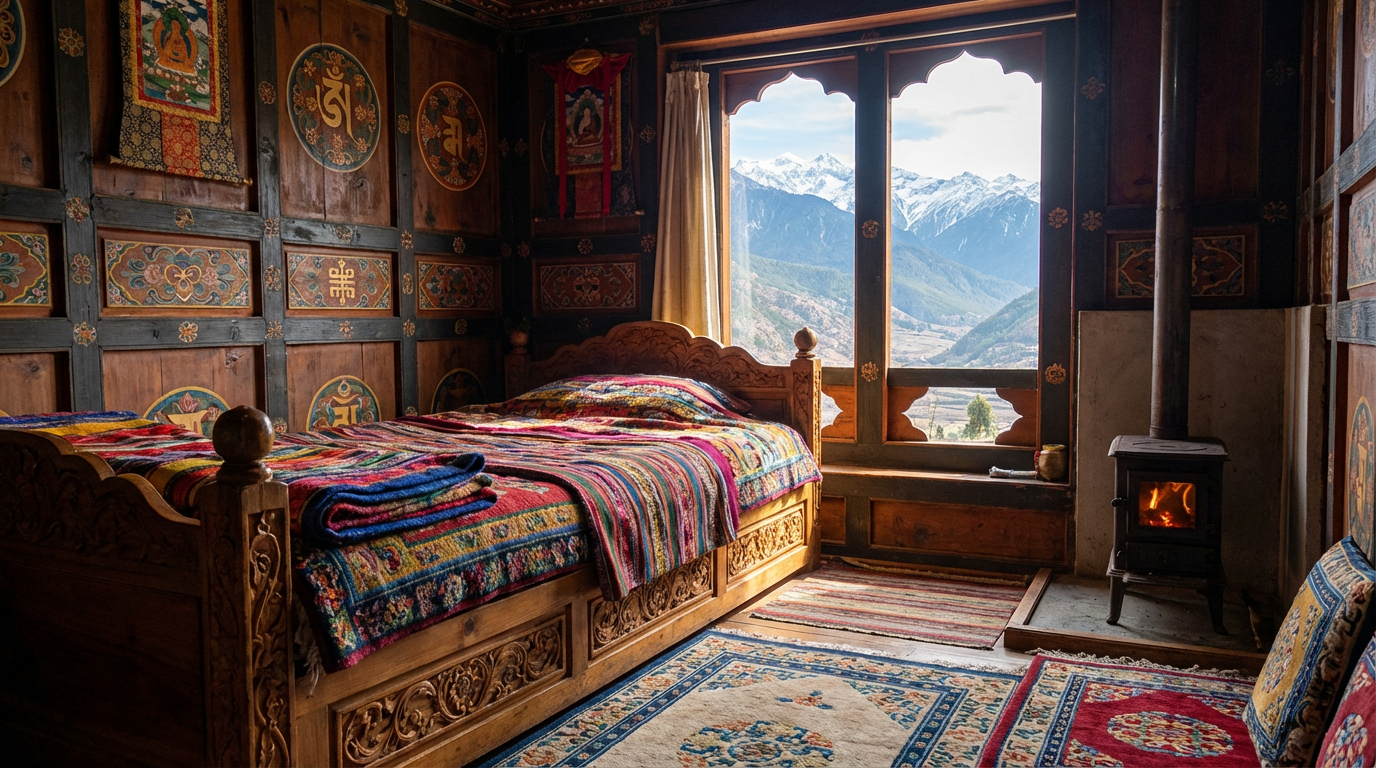
Guest rooms are simple but comfortably furnished. You sleep in a separate room with a bed or mattress, bedding, and plenty of blankets for the cool Himalayan nights. Depending on the homestay, you may share a bathroom with the family or have your own ensuite bath.
| Amenity | Standard | Notes |
|---|---|---|
| Room | Separate guest room | Privacy guaranteed |
| Beds | Bed or floor mattress | Bedding included |
| Bathroom | Ensuite or shared | Depends on homestay |
| Heating | Bukhari (wood stove) | In colder regions |
| Hot water | Available | Sometimes limited hours |
| WiFi | Partial | Limited in remote regions |
This image was generated with AI.
Food and Drinks
Meals in a homestay differ fundamentally from hotel cuisine. Here you eat what the family eats – authentic Bhutanese home cooking, often using ingredients from their own garden. Vegetarian meals are readily available; simply share your dietary preferences in advance.
Experiences and Activities
Homestays offer far more than just a bed and meals. Host families enjoy sharing their traditions and daily life – from farm work to craftsmanship to spiritual practices.
Learn to prepare authentic dishes like Ema Datshi or Kewa Datshi
Traditional bath where hot stones warm the water – relaxing and therapeutic
Help with harvesting, feed animals, or learn traditional farming
Bhutan's national sport – many hosts enjoy teaching visitors the basics
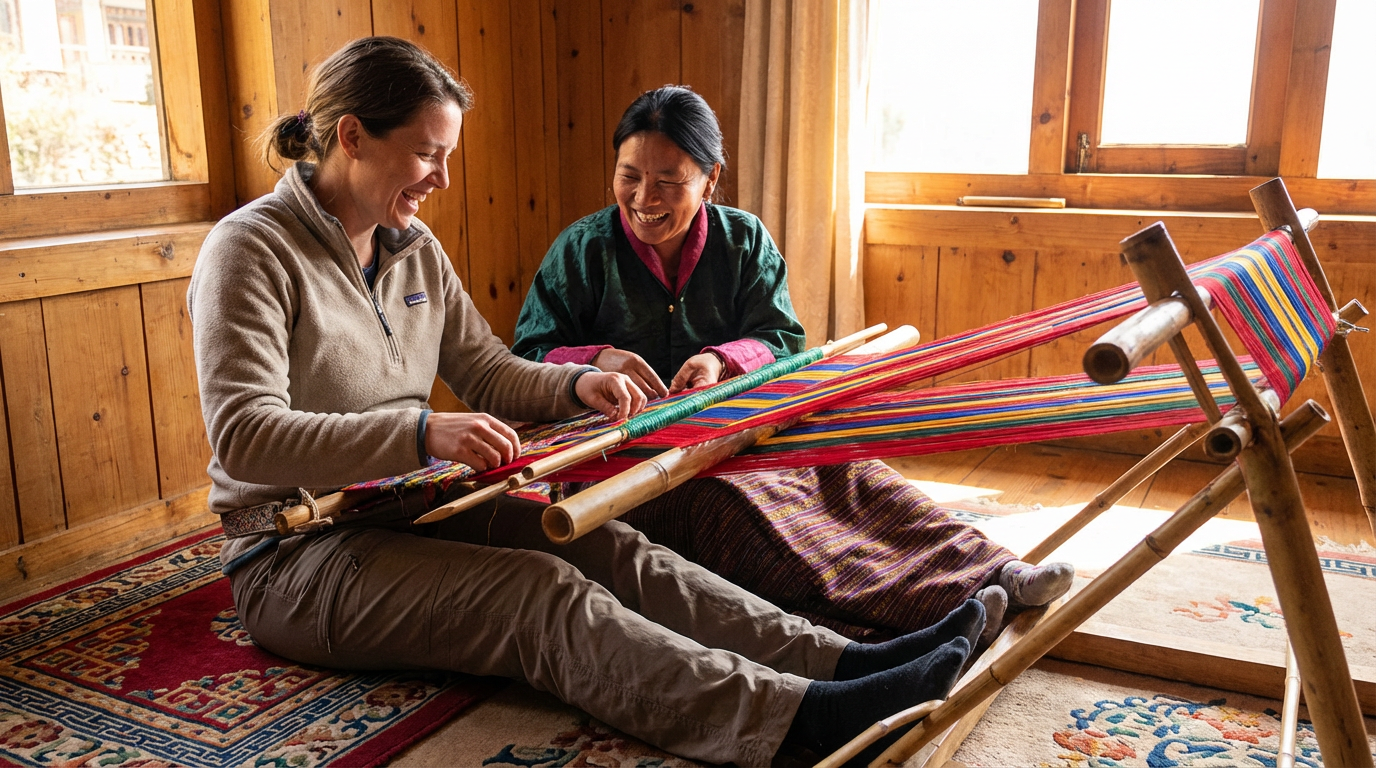
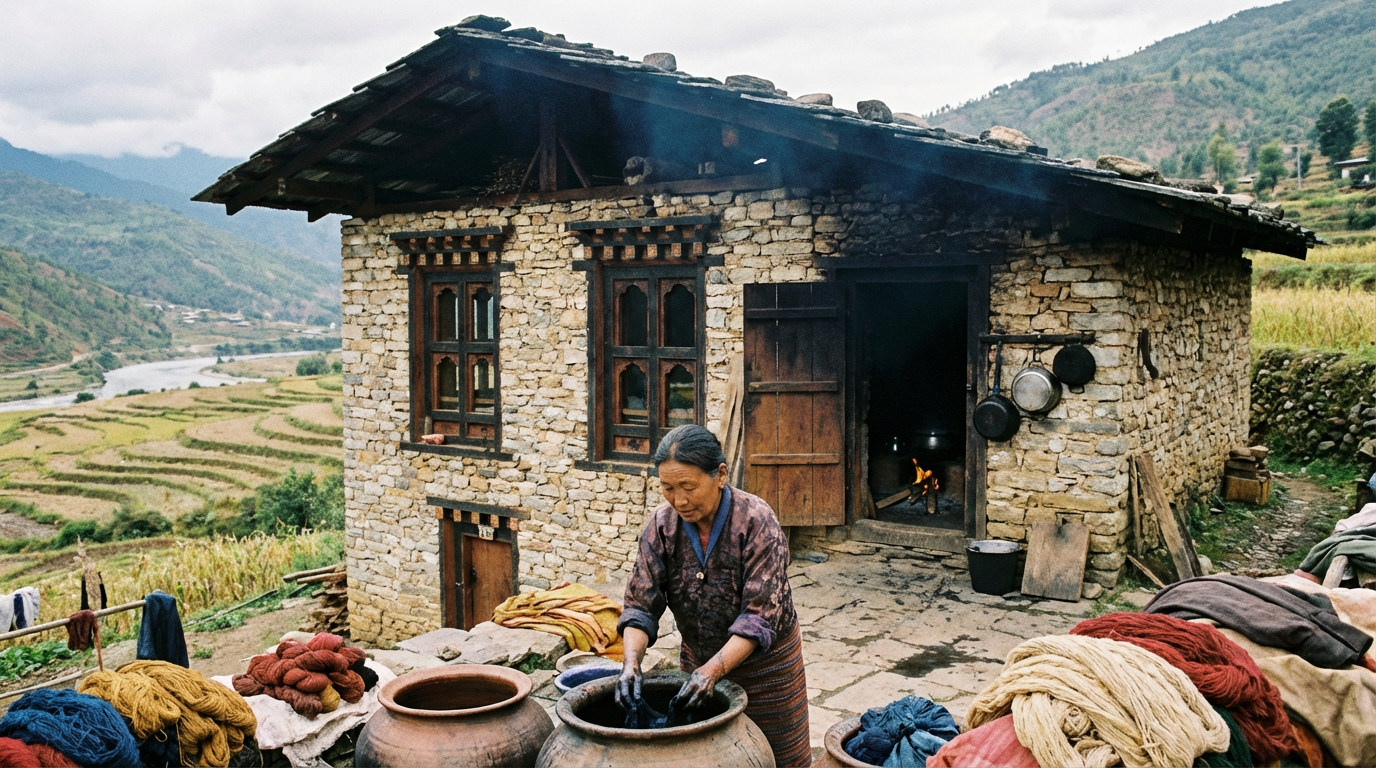
Discover weaving, traditional dyeing, or other craft techniques
Explore the neighborhood with your host, meet neighbors, visit local temples
This image was generated with AI.
A Typical Day in a Homestay
In a homestay, you don't follow a strict schedule – the day unfolds organically, in rhythm with the family and your wishes. Here's an example of how a day might look:
Wake Up and Breakfast
Wake to the aroma of Suja (butter tea) kept warm on the wood stove. Breakfast with the family – perhaps Eza (fried rice) or fresh chapati with honey from their own beehives. Conversation about the day's plans.
Activities and Exploration
Accompany your host on farm work or take a guided walk to a nearby temple. Alternatively: relax on the veranda with a book while village life unfolds around you.
Shared Lunch
Back at the house, a hearty lunch awaits. Time for deep conversations – about life in Bhutan, family, Buddhism, or whatever interests you. Bhutanese hospitality shows in the openness of these conversations.
Cooking Class or Crafts
The afternoon is perfect for immersive experiences: learn traditional cooking, try your hand at a loom, or practice archery with your host. In Punakha, a relaxing hot stone bath might be on the program.
Dinner and Stories
Dinner is often the most sociable part of the day. Sitting by the warm bukhari while the hostess pours ara (local rice wine) and the host tells old legends of the region. Sometimes extended family gathers – an insight into Bhutanese community life.
What Do Homestays Cost?
Homestays in Bhutan cost about the same as 3-star hotels – roughly $40 to $80 USD per night. The key difference: the price includes not just accommodation, but also three meals and local experiences. This makes homestays a cost-effective option with added cultural value.
| Service | Price | Notes |
|---|---|---|
| Overnight with Full Board | $40–80 USD/night | 3 meals included |
| Hot Stone Bath | Usually included | Depends on homestay |
| Cooking Class | Usually included | Upon request |
| Farm Activities | Included | Season-dependent |
| Village Walks | Included | With host |
What's Included in the Price?
- Accommodation: Private guest room in the family home
- Meals: Breakfast, lunch, and dinner – authentic home cooking
- Beverages: Tea, coffee, and water unlimited
- Activities: Local experiences according to host's offerings
- Cultural Exchange: Time and conversations with the host family – priceless
What's NOT Included?
- Sustainable Development Fee (SDF) – $100 USD/night
- Alcoholic beverages
- Guide services for external excursions
- Transport to/from homestay
- Tips (voluntary but appreciated)
Best Regions for Homestays
The 158 certified homestays are distributed across 13 districts, but not all regions have the same selection. The best options are in western Bhutan and some remote valleys known for particularly authentic experiences.
| Region | Availability | Highlights |
|---|---|---|
| Paro | Good | Happiness Farm, close to Tiger's Nest |
| Punakha | Good | Warmer climate, Gatshothang, Dhumra Farm |
| Phobjikha/Gangtey | Good | Black-necked crane viewing Oct–Feb, nature focus |
| Bumthang | Moderate | Spiritual center, highly authentic |
| Haa | Limited | Off-the-beaten-path, very pristine |
| Laya | Limited | High altitude, unique Layap culture |
| Merak | Limited | Brokpa culture in the east, remote |
| Thimphu | Few | Capital, more hotels than homestays |
Paro
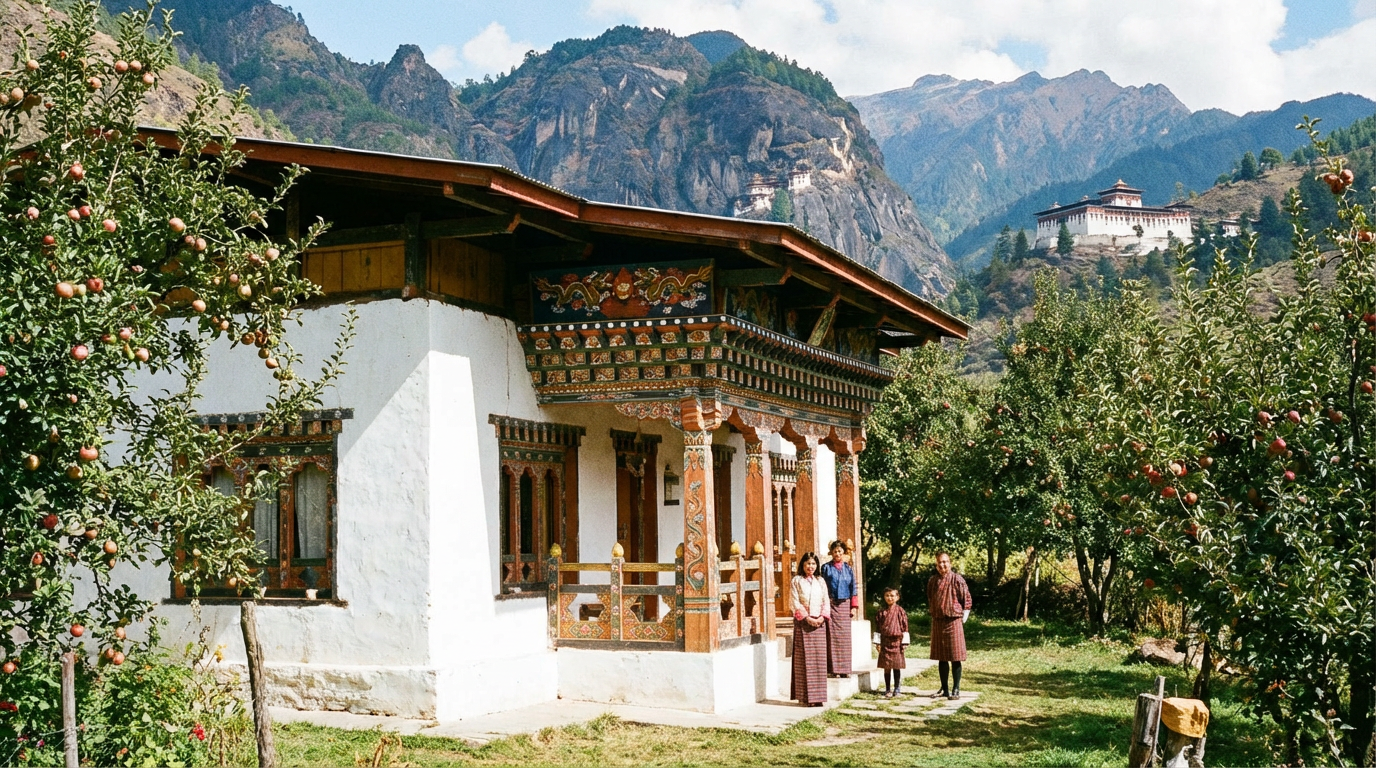
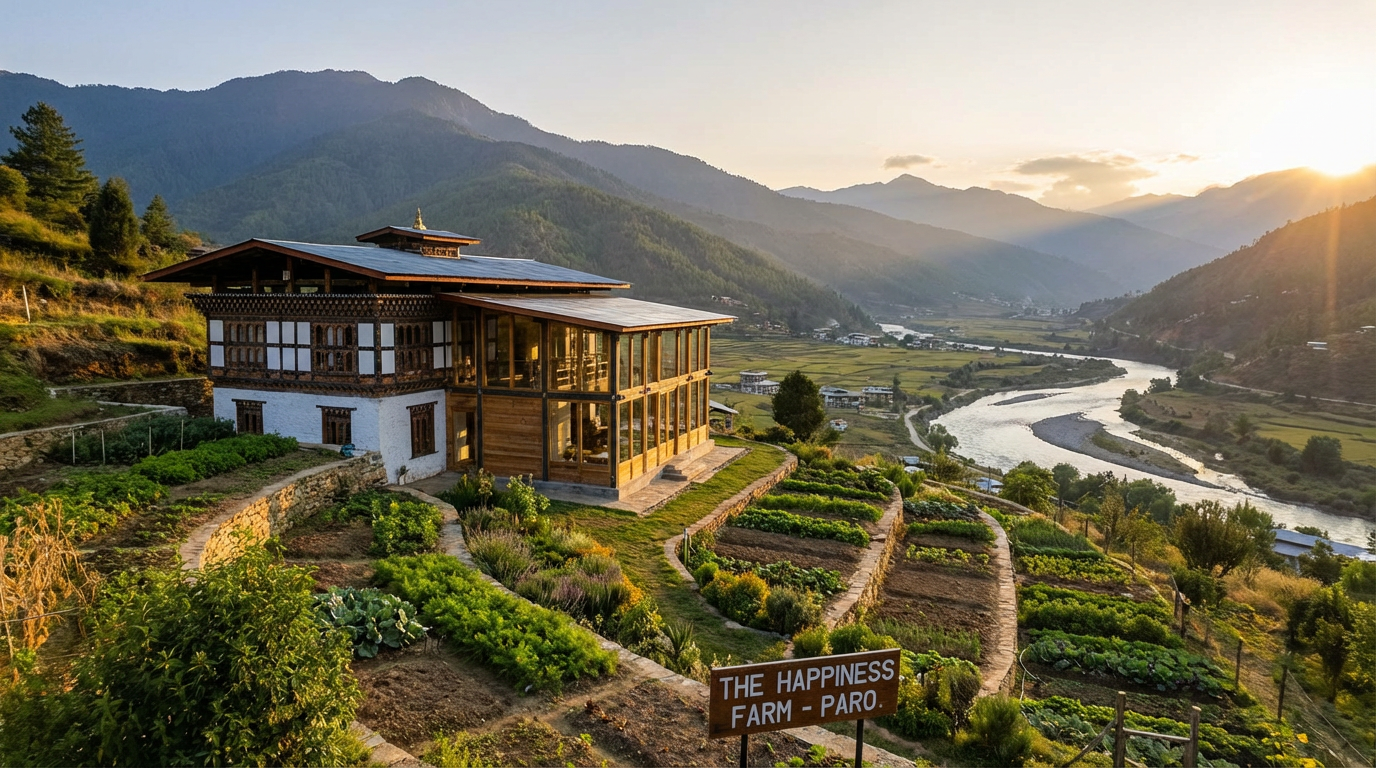
The Paro Valley offers an excellent selection of homestays – ideal as a base for your first days in Bhutan. Returning from the Tiger's Nest trek to a warm, family home is a completely different experience than an anonymous hotel room. The most well-known option here is The Happiness Farm.
This image was generated with AI.
Punakha
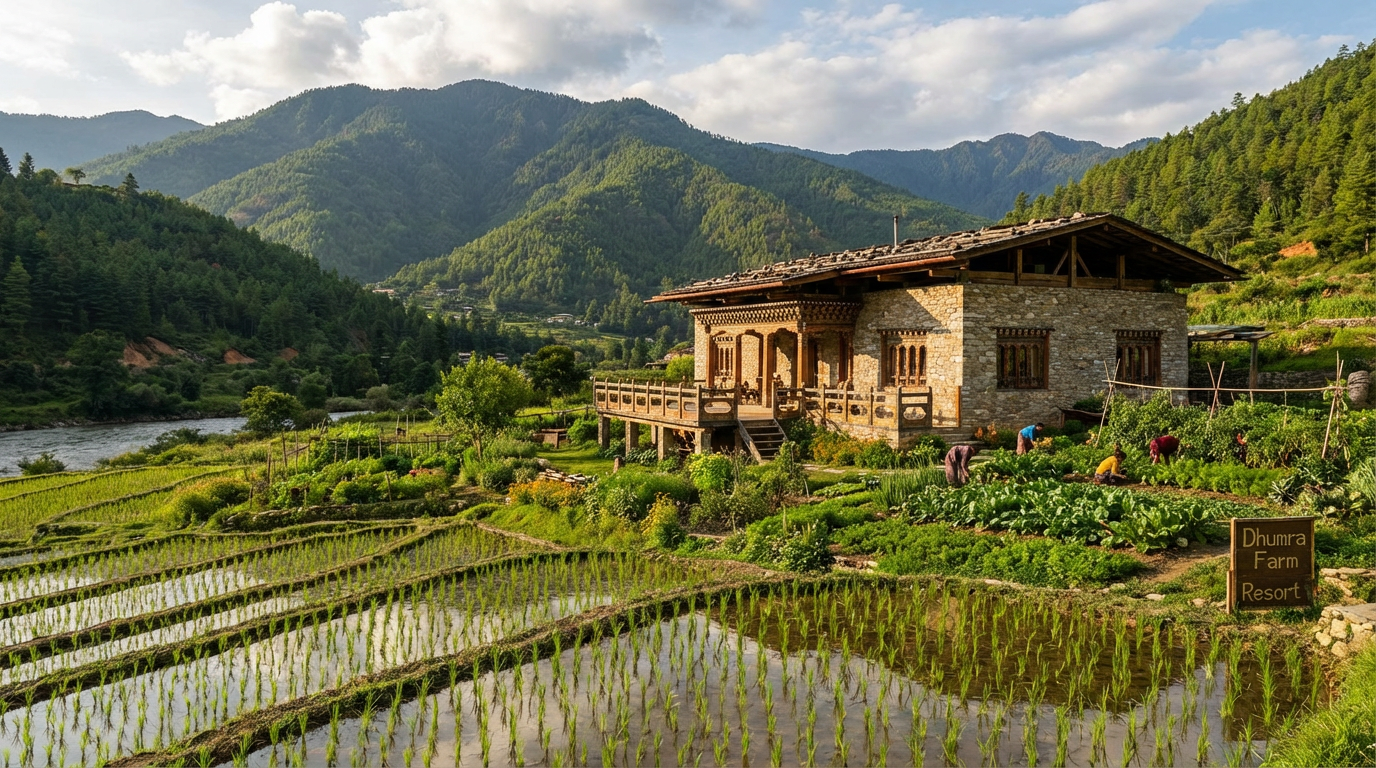
Punakha impresses with its mild climate – rice and citrus fruits thrive here, and nights are warmer than in other regions. Homestays like Gatshothang ("Happiness Fields") or Dhumra Farm offer particularly immersive farm-to-table experiences. Proximity to the magnificent Punakha Dzong makes the region culturally attractive as well.
Phobjikha/Gangtey
The wide glacial valley of Phobjikha is a nature paradise – and between October and February, home to rare black-necked cranes. A homestay here means seclusion, endless vistas, and the chance to observe these majestic birds up close. The surrounding area is ideal for hiking.
Bumthang
As the spiritual heart of Bhutan, Bumthang hosts some of the country's oldest monasteries. A homestay here is for travelers wanting to delve deeper – the region lies off the main routes and offers particularly authentic insights. Bumthang is also renowned for its honey and cheese.
Remote Regions: Laya and Merak
For adventurers, the remote regions of Laya (north) and Merak (east) offer homestays with ethnic groups with their own traditions – the Layaps and Brokpas. These experiences are only accessible by multi-day trekking or long drives, but offer unparalleled cultural insights. Comfort levels here are more basic than elsewhere.
Recommended Homestays
The following homestays have earned their reputation through exceptional hospitality, interesting activity offerings, or unique location. All can be booked through licensed tour operators.
The Happiness Farm – Paro
This image was generated with AI.
| Location | Hilltop with panoramic views of Chunzom River valley |
| Level | 3-star equivalent |
| Special Features | Focus on Gross National Happiness and environmental protection, traditional farming |
| Ideal for | Philosophy enthusiasts, nature lovers |
The Happiness Farm combines traditional Bhutanese living with the concept of Gross National Happiness. The hilltop property offers spectacular views and practical insights into ecological farming. An ideal place to experience Bhutan's philosophy firsthand.
Gatshothang – Punakha
This image was generated with AI.
| Name Means | "Happiness Fields" |
| Location | Gubjithang, Punakha |
| Special Features | Stone-clad walls, rustic charm, hostess's textile dyeing expertise |
| Ideal for | Craft enthusiasts, photographers |
Gatshothang is run by Aum Karma Yangchen – a designer and expert in traditional Bhutanese textile dyeing. The smoke-blackened kitchen and stone-clad walls create an authentic atmosphere. Here you can learn the art of natural dyeing.
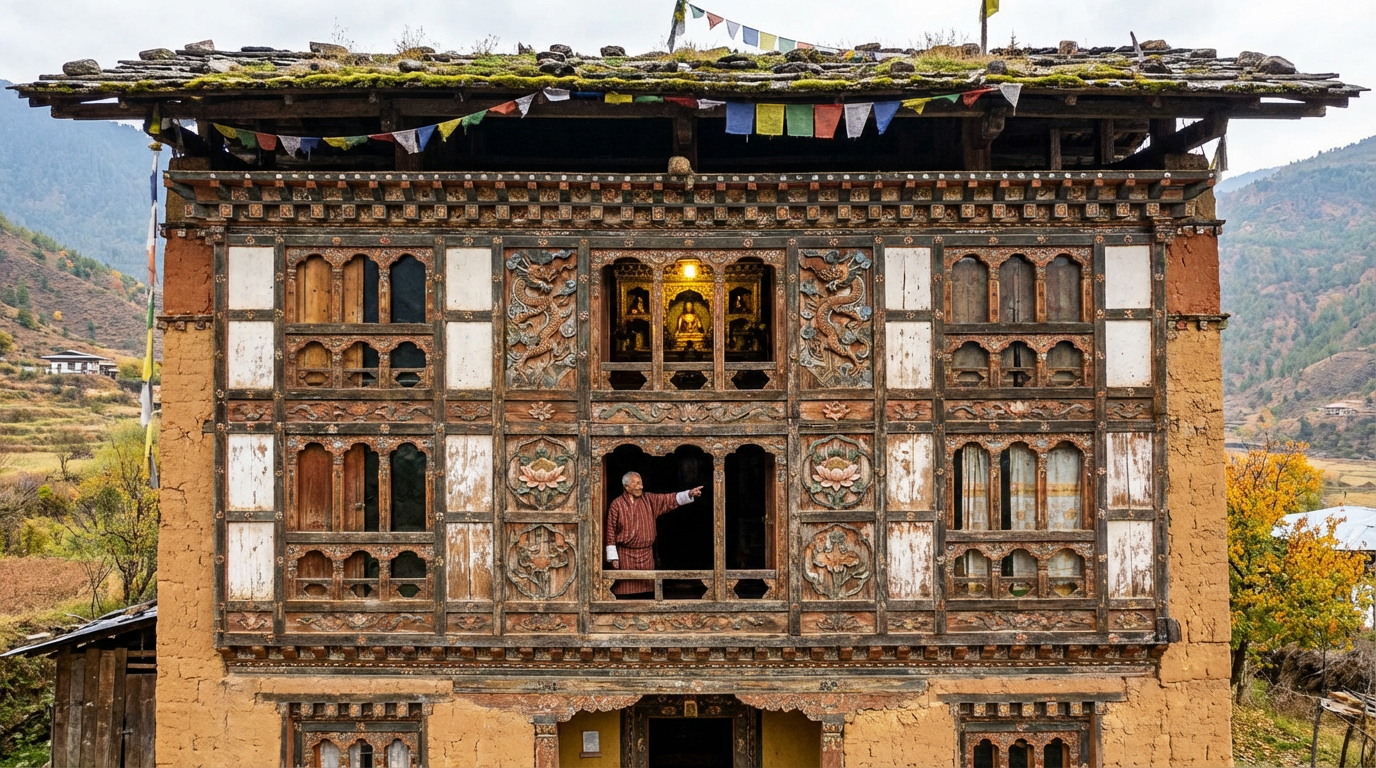
Ugyen's Homestay
This image was generated with AI.
| Building | 400-year-old ancestral home |
| Layout | Upper floor: Sacred altar | Middle: Guest room | Ground floor: Family museum |
| Activities | Hot stone bath, archery with Ugyen |
| Ideal for | History enthusiasts, active travelers |
In Ugyen's Homestay, you literally stay in history. The 400-year-old ancestral home is a living museum – the ground floor houses family artifacts spanning generations. Ugyen himself is an enthusiastic archer and enjoys sharing his passion with guests.
Dhumra Farm Resort – Punakha
This image was generated with AI.
| Concept | Farm-to-table from own production |
| Location | Near Puna Tsangchhu River, Punakha |
| Own Production | Rice, vegetables, herbs, fruits |
| Services | Hot stone baths, camping option available |
"Every meal tells a story of the land" – the philosophy of Dhumra Farm. Everything on the table comes from their own fields. Proximity to the river provides refreshment, and for adventurers, there's even a camping option on the property.
How to Book a Homestay?
Homestays in Bhutan cannot be booked directly – all bookings go through licensed Bhutanese tour operators. This might sound complicated, but has advantages: the operator handles coordination, communicates with the host family in their language, and seamlessly integrates the homestay into your itinerary.
Step-by-Step Guide to Homestay Booking
- Contact a Tour Operator: Choose a licensed tour operator and tell them you'd like homestay nights. Mention which regions and experiences interest you.
- Check Availability: The operator checks which homestays are available for your dates. Popular homestays book up quickly – early inquiries recommended.
- Choose Your Homestay: Based on your preferences (region, activities, comfort level), you'll receive suggestions. Share any special requests or constraints (dietary needs, mobility).
- Integrate into Your Route: The homestay is built into your overall itinerary. Transport to and from the homestay is included in your tour package.
- Book and Pay: Homestay costs are part of your overall package. You pay everything together – no separate payments to the host family needed.
Learn more about choosing the right tour operator
Combining with Hotels
A popular strategy is combining hotels and homestays. You don't have to choose – plan one or more homestay stays as highlights of your trip and enjoy the comfort of a good hotel in between. This way you get the best of both worlds.
Example: 10-Day Route with Homestay Highlights
| Day | Location | Accommodation | Why? |
|---|---|---|---|
| 1–2 | Paro | Hotel (4-star) | Arrive, rest, recover from jet lag |
| 3–4 | Thimphu | Hotel (4-star) | City sightseeing, museum immersion program |
| 5–6 | Punakha | Homestay (Gatshothang) | Cultural immersion, learn weaving, hot stone bath |
| 7–8 | Phobjikha | Homestay | Nature experience, crane viewing (seasonal), peace |
| 9–10 | Paro | Hotel (4-star) | Tiger's Nest hike, rest before departure |
Who Are Homestays Suitable For?
Homestays offer unparalleled experiences – but aren't the right choice for every traveler type. The following assessment helps you decide if a homestay matches your expectations.
Homestays are ideal for...
- Culture Enthusiasts: Those who want to truly understand Bhutanese life, not just see it
- Sustainability-Conscious Travelers: Those who want to directly support rural communities
- Adventure Seekers: Those who can embrace the unexpected
- Communicative People: Those who enjoy conversations with others
- Families with Older Children: Those seeking authentic shared experiences
- Budget-Conscious Travelers: Those who appreciate good value for money
Homestays are less suitable for...
- Comfort-Oriented Travelers: Those expecting luxury amenities
- Those Needing Much Privacy: Sometimes shared bathrooms, thin walls
- Those with Language Concerns: Host families' English is often basic
- Mobility-Limited Guests: Some homestays difficult to access, steep stairs
- Those Needing Fixed Schedules: Homestays are flexible, not structured
"I came for one night and stayed three. Aum Yangchen became a friend, her children called me 'Aunty' by the end. This isn't a vacation – it's living."
Frequently Asked Questions
Do I need to speak English?
Basic English is sufficient. All certified host families speak enough English to communicate. Conversations won't be philosophically deep, but they'll be warm and understandable. Gestures, smiles, and cooking together overcome language barriers more easily than expected.
How clean are the accommodations?
All homestays are inspected by the Tourism Council of Bhutan for hygiene standards – comparable to 3-star hotels. Rooms are clean, bedding freshly washed, bathrooms well-maintained. Bhutanese families have high cleanliness standards, even if comfort is simpler than in hotels.
Can I eat vegetarian or vegan?
Vegetarian meals are common in Bhutan and easily arranged – many traditional Bhutanese dishes are vegetarian. Vegan eating requires a bit more coordination, but is possible. Definitely inform your tour operator of dietary preferences in advance so the host family is prepared.
How many nights should I spend in a homestay?
At least two nights to really settle in and absorb the atmosphere. One night feels more like a quick visit. Ideal are 2–3 nights per homestay – enough time for activities, conversations, and feeling part of the family.
What if I don't like the homestay?
This rarely happens, but if you're uncomfortable, speak with your tour operator or guide. A rebooking to a hotel is usually possible, even on short notice. Most "concerns" resolve themselves after the first shared meal.
Is there WiFi in the homestay?
Some homestays in Paro and Punakha offer WiFi, but don't rely on it. In remote regions, connections are often weak or nonexistent. See it as an opportunity for a digital detox – or get a local SIM card for mobile data.
Do I need to tip?
Tipping isn't obligatory but is appreciated. $5–10 USD per person per night is appropriate if you're satisfied. Alternatively, host families appreciate small gifts from home – chocolate, postcards, or small presents for the children.
Are homestays suitable for families with children?
Yes, Bhutanese love children. For families, a homestay can be particularly enriching – kids play with the host family's children, learn while cooking, and experience a completely different world. For small children (under 5), consider the comfort level carefully.
How do I book a specific homestay?
Mention your preferred homestay (e.g., "The Happiness Farm in Paro") when inquiring with your tour operator. They'll check availability and reserve it for you. For popular homestays, early booking is recommended – 2–3 months advance notice during peak season.
What's the difference between homestay and farmstay?
The terms are often used interchangeably in Bhutan. A "farmstay" emphasizes the agricultural aspect – actively experiencing farm work. A "homestay" could also be in a village without a farm. In practice, most accommodations offer both: family connection and farm experiences.
Further Information
These pages help with further planning of your Bhutan trip:
This image was generated with AI.
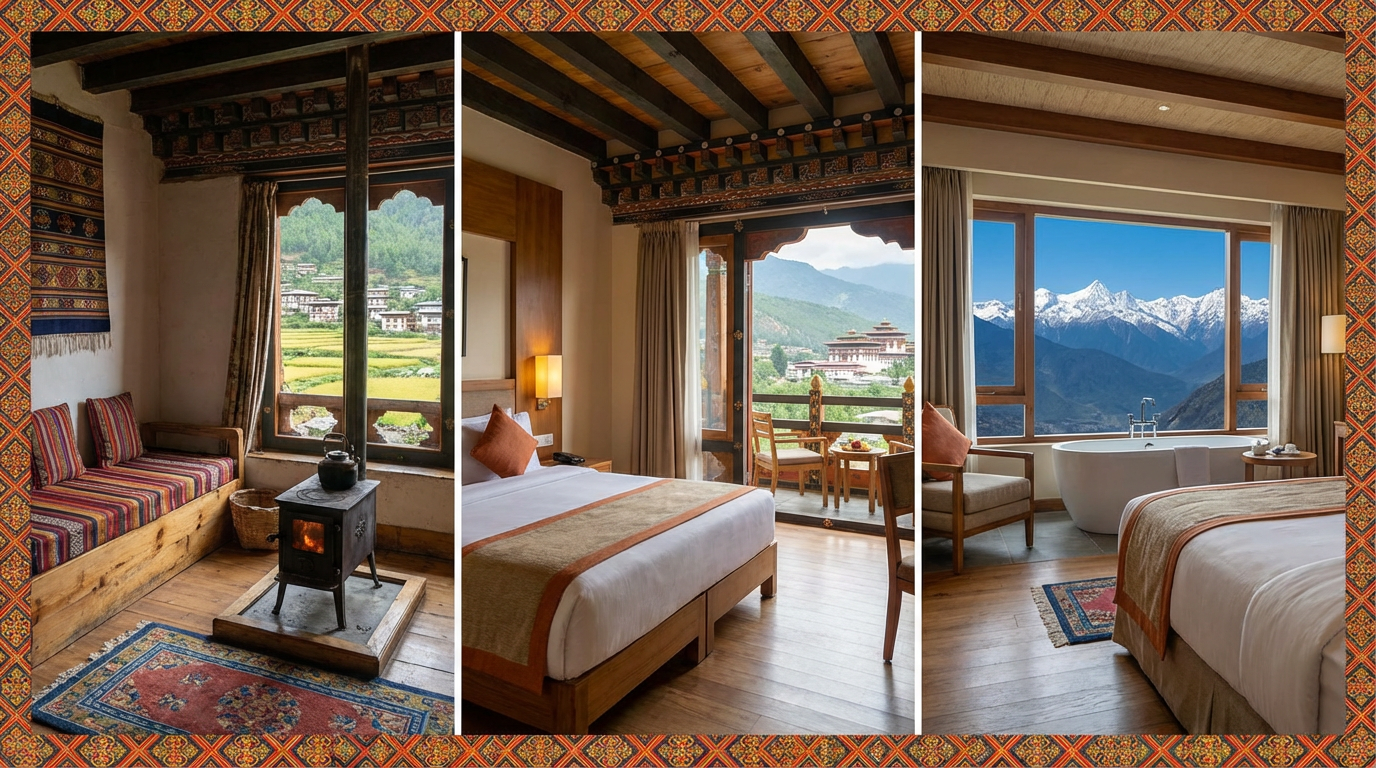
All Accommodation Types
From budget to luxury: overview of all accommodation categories in Bhutan.
This image was generated with AI.
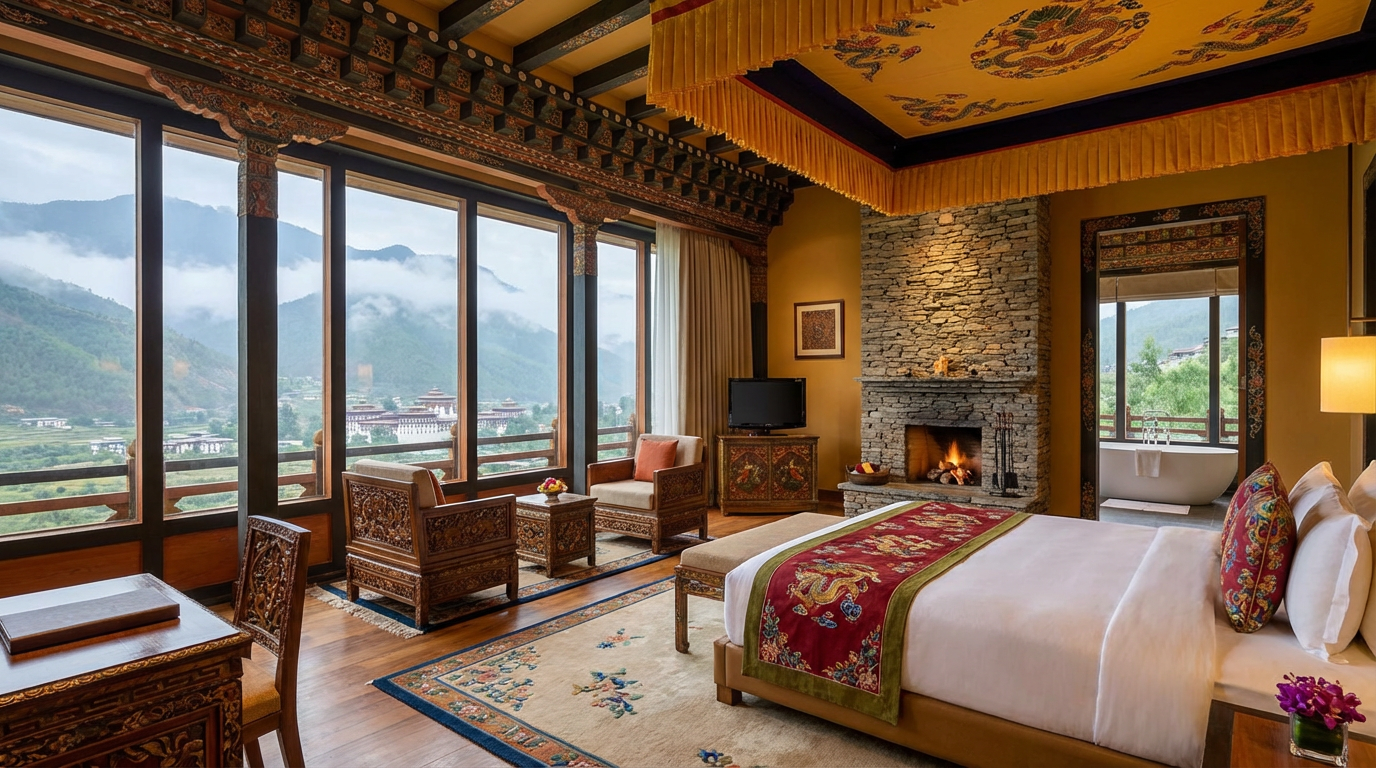
Luxury Hotels
Aman, Six Senses, Como: Comparison of Bhutan's most exclusive accommodations.
This image was generated with AI.
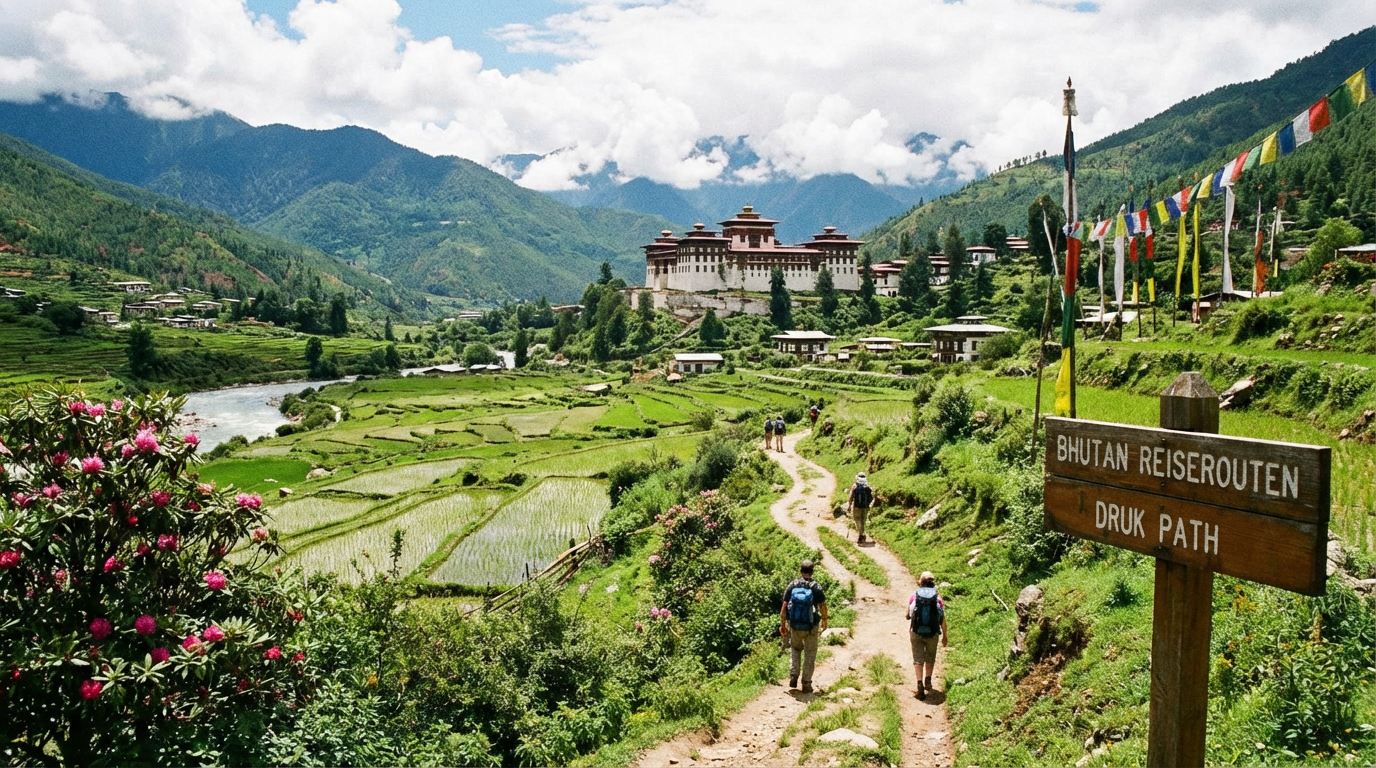
Suggested Routes
From 7 to 21 days: Find the perfect route for your Bhutan trip.
Planning a Homestay Experience?
We help you find the perfect homestay for your Bhutan trip – tailored to your wishes.