Bhutan in 7 Days: The Classic Round Trip Through West Bhutan
Last updated:
The 7-day route through West Bhutan is the perfect introduction to the last Buddhist kingdom in the Himalayas. It combines the three most fascinating regions of the country – the historic Paro Valley, the vibrant capital Thimphu, and subtropical Punakha – and leads you to the legendary Tiger's Nest Monastery. This route has become the ideal travel plan for first-time visitors: you experience Bhutan's essence in a week and can easily align the trip with a week of vacation.
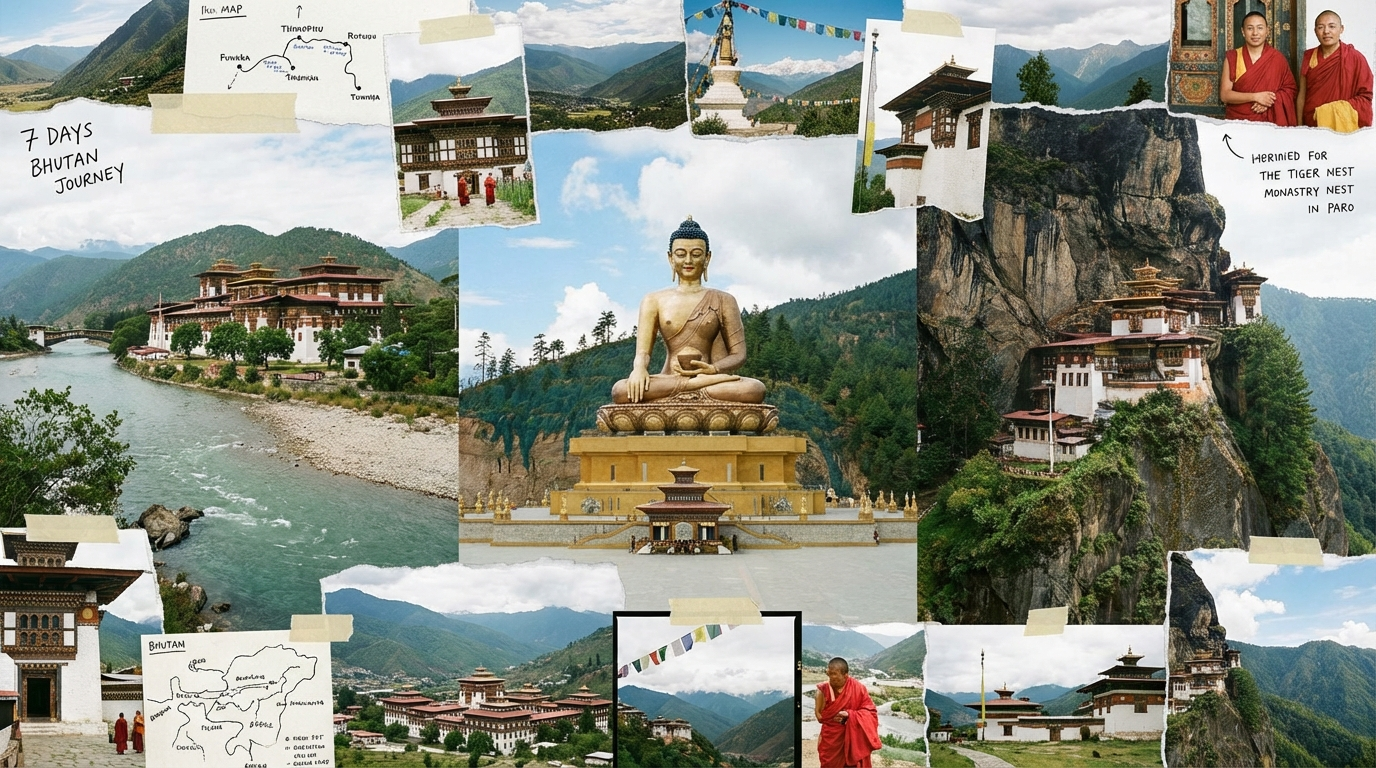
This image was generated with AI.
Route Overview
Who is this route ideal for?
The 7-day route is the most booked itinerary for Bhutan – and for good reason. It offers the ideal balance between cultural highlights, impressive nature, and a realistic time frame.
Perfect for:
- First-time Bhutan visitors who want to experience the essence
- Travelers with limited vacation time (one week off)
- Culture enthusiasts interested in exploring Dzongs and monasteries
- Active travelers interested in a day hike
- Couples and solo travelers
- Photographers seeking iconic shots
Less suitable for:
- Travelers who want to explore Bhutan off the beaten path
- Trekking enthusiasts (no multi-day treks possible)
- Visitors wanting to see East Bhutan or Bumthang Valley
- Those who want to see black-necked cranes (only Nov–Feb in Phobjikha)
Day-by-Day Route
The following daily schedule is the classic itinerary that has proven itself in practice. Depending on flight times and personal interests, your guide can adapt the route flexibly.
Day 1: Arrival in Paro - Transfer to Thimphu
This image was generated with AI.
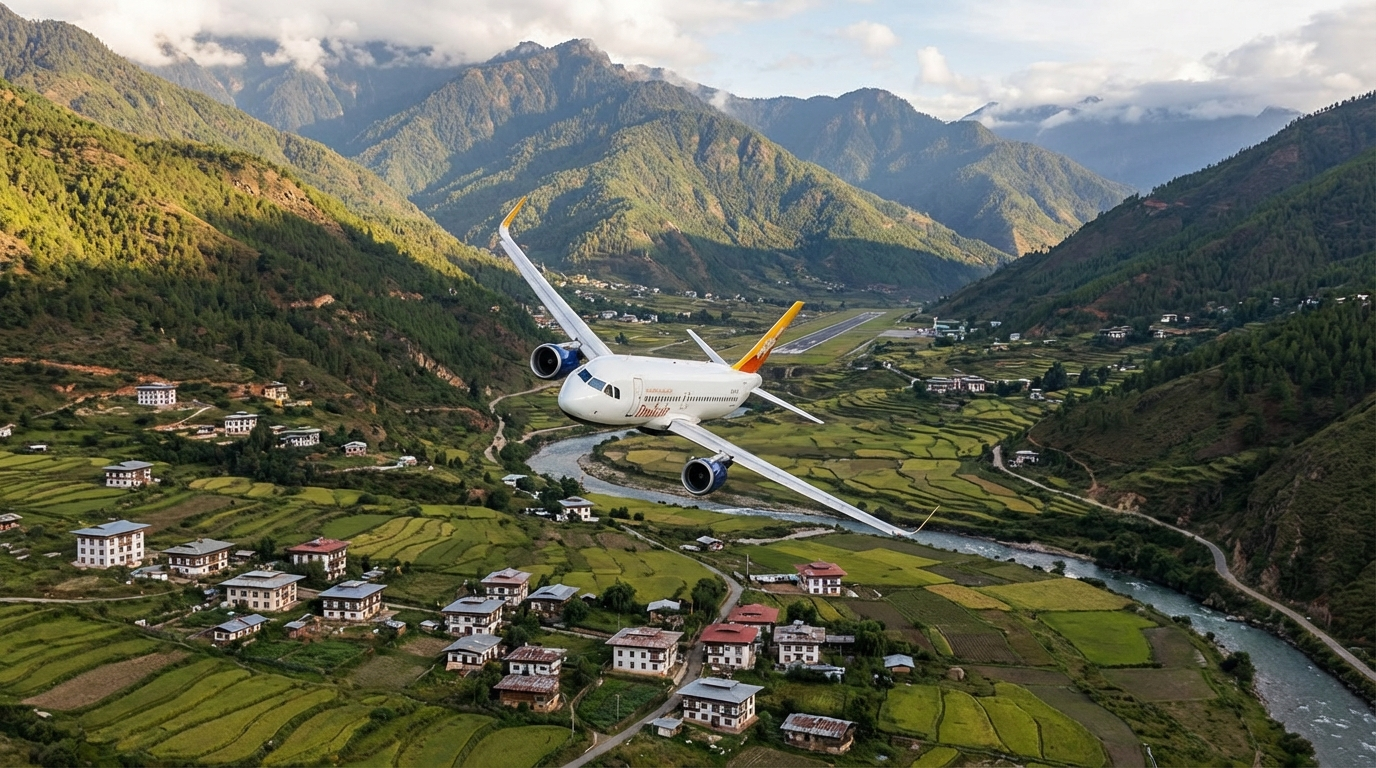
The flight to Paro is one of the most spectacular flying experiences in the world. The plane navigates between snow-capped Himalayan peaks, glides through narrow valleys, and finally lands on one of the world's most challenging airports – at 2,300 meters altitude in the narrow Paro Valley.
Already at the airport, you notice the difference from other travel destinations: The terminal building is constructed in traditional Bhutanese style, the clear mountain air fills your lungs, and an unusual calm surrounds you. Your guide is already waiting and escorts you to your vehicle.
The drive to Thimphu leads through the picturesque Paro Valley, past terraced fields and traditional farmhouses. Depending on arrival time, you may have time in the afternoon for first explorations in the capital – perhaps a visit to the Memorial Chorten or a walk along the main street Norzin Lam.
Day 2: Thimphu - Full Day Exploration
This image was generated with AI.
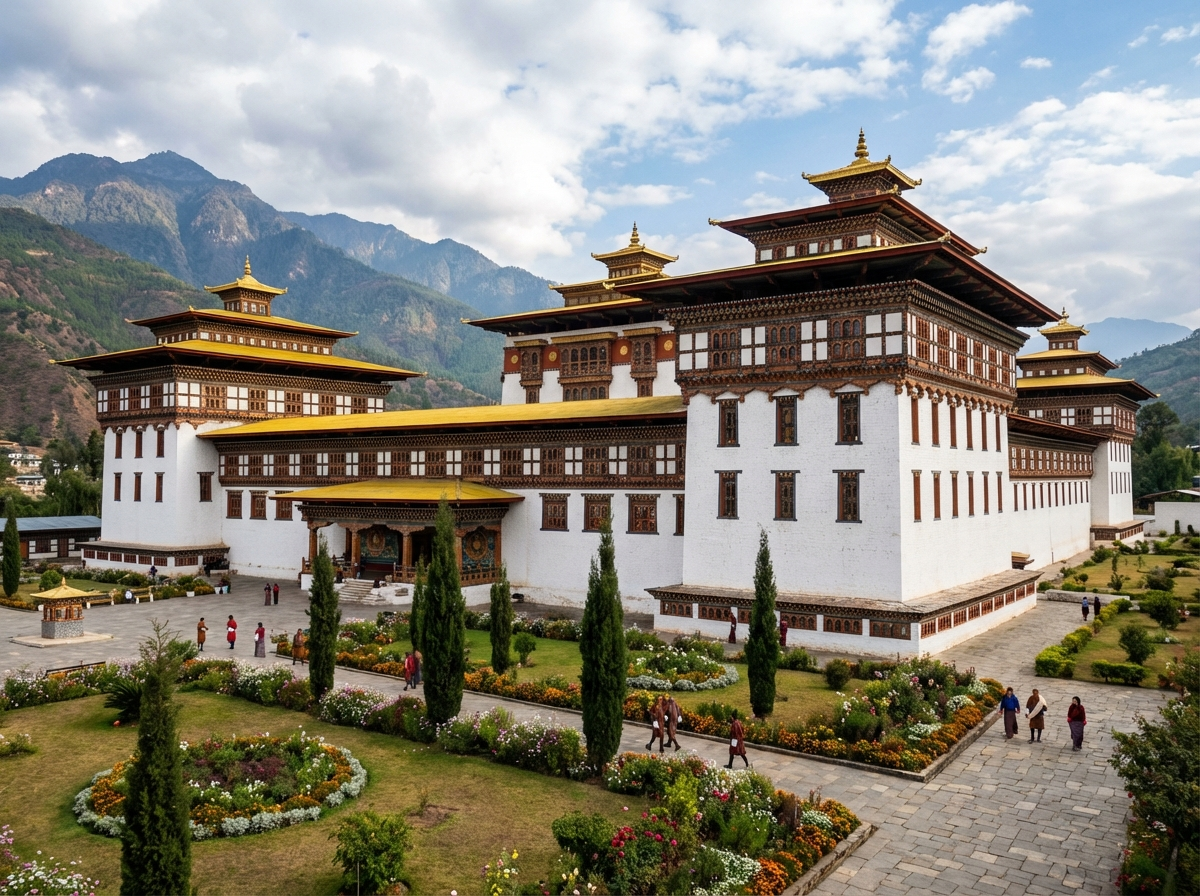
The day begins with a visit to Tashichho Dzong, the impressive monastery-fortress that serves as the seat of government and royal residence. Built in 1641 and expanded many times, it's a masterpiece of Bhutanese architecture that unites worldly and religious power under one roof.
Next is the National Memorial Chorten, an important pilgrimage site for Bhutanese. The white stupa was erected in 1974 in memory of the third king. Here you can observe locals praying, walking clockwise around the Chorten while spinning their prayer wheels.
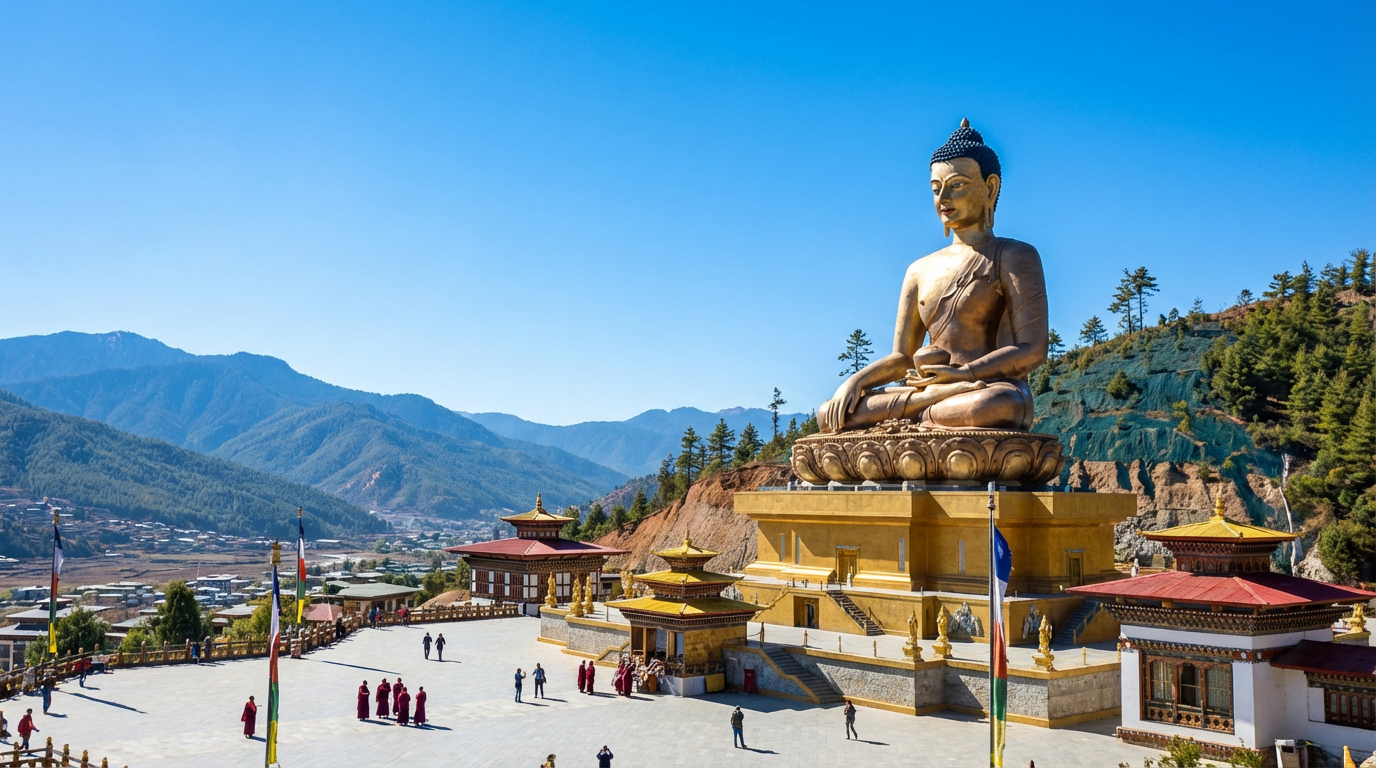
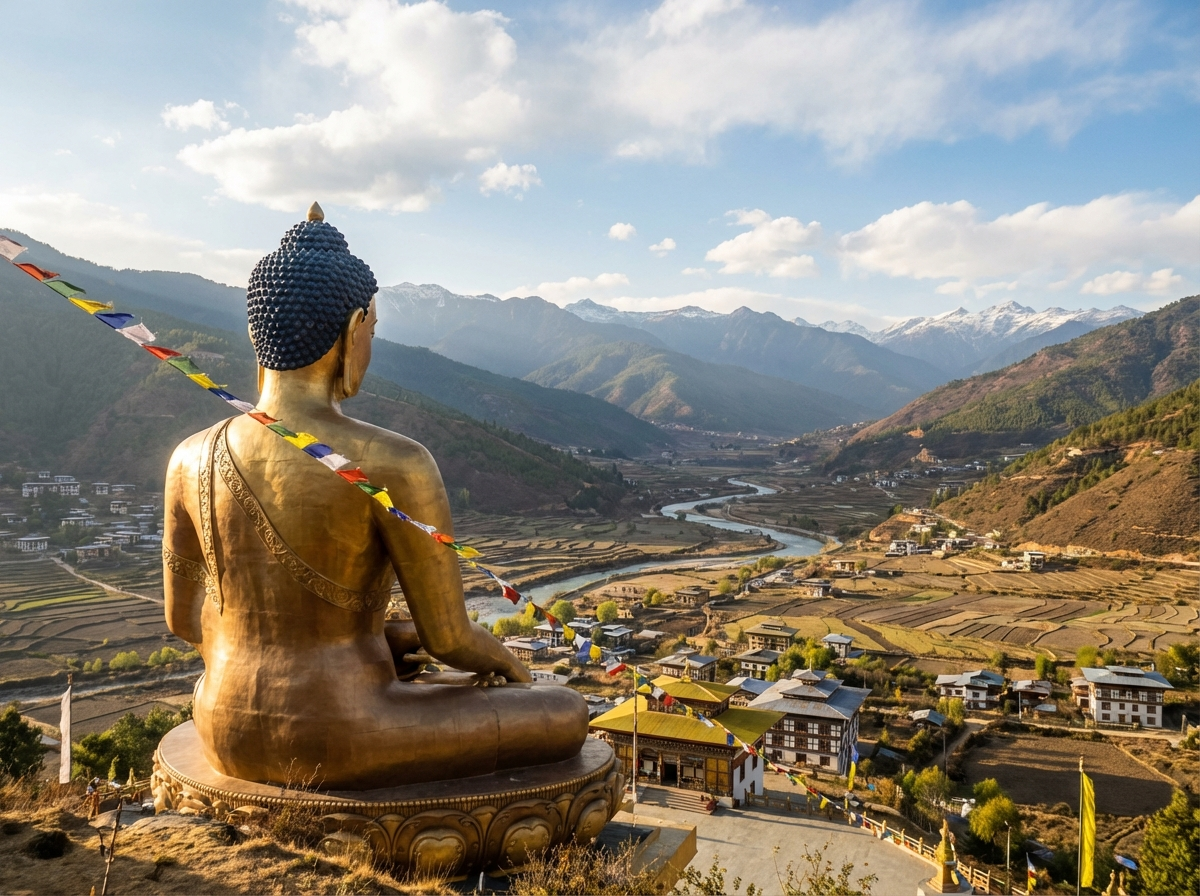
In the afternoon, you encounter the 51-meter-high Buddha Dordenma statue at Kuenselphodrang. Inside this bronze statue are over 100,000 smaller Buddha figures. The panoramic view from here over the entire Thimphu Valley is spectacular – especially at sunset.
Day 3: Thimphu - Punakha (via Dochula Pass)
This image was generated with AI.
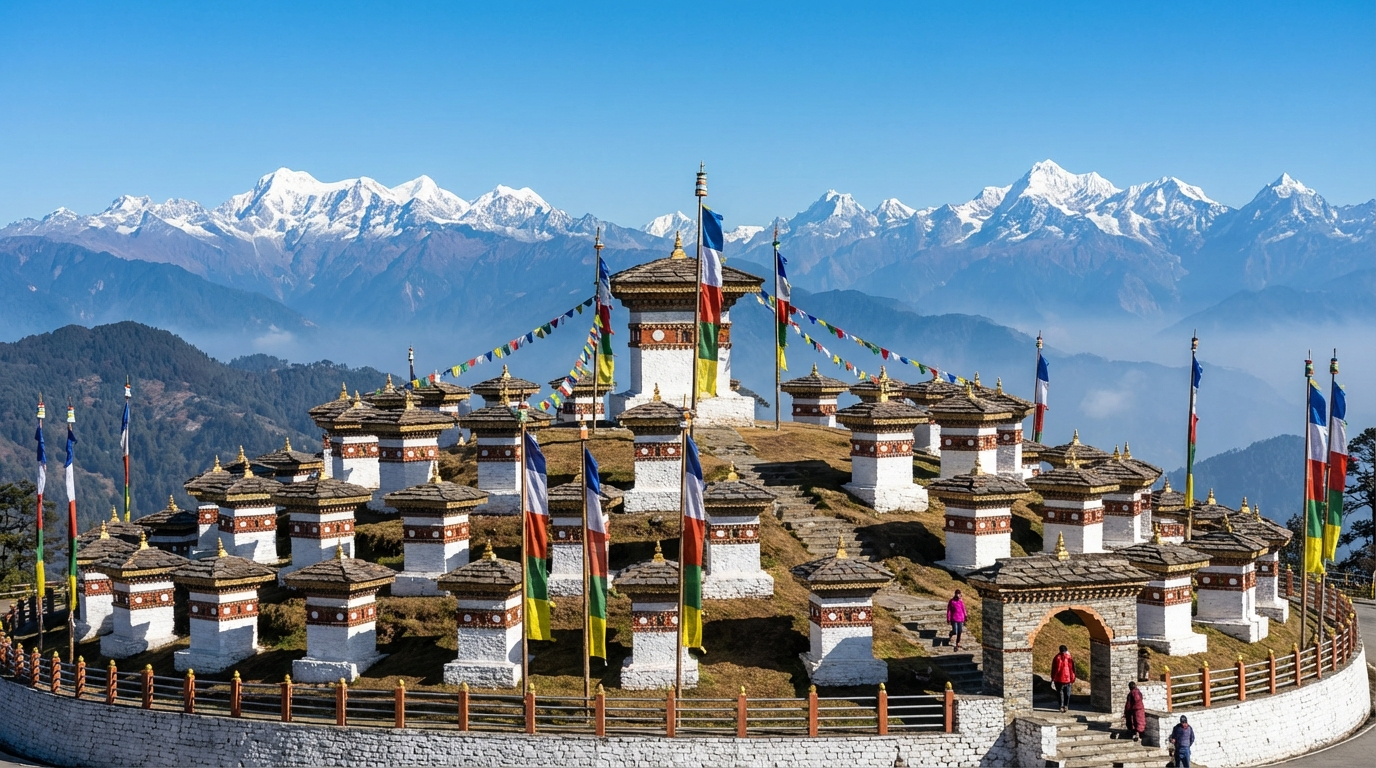
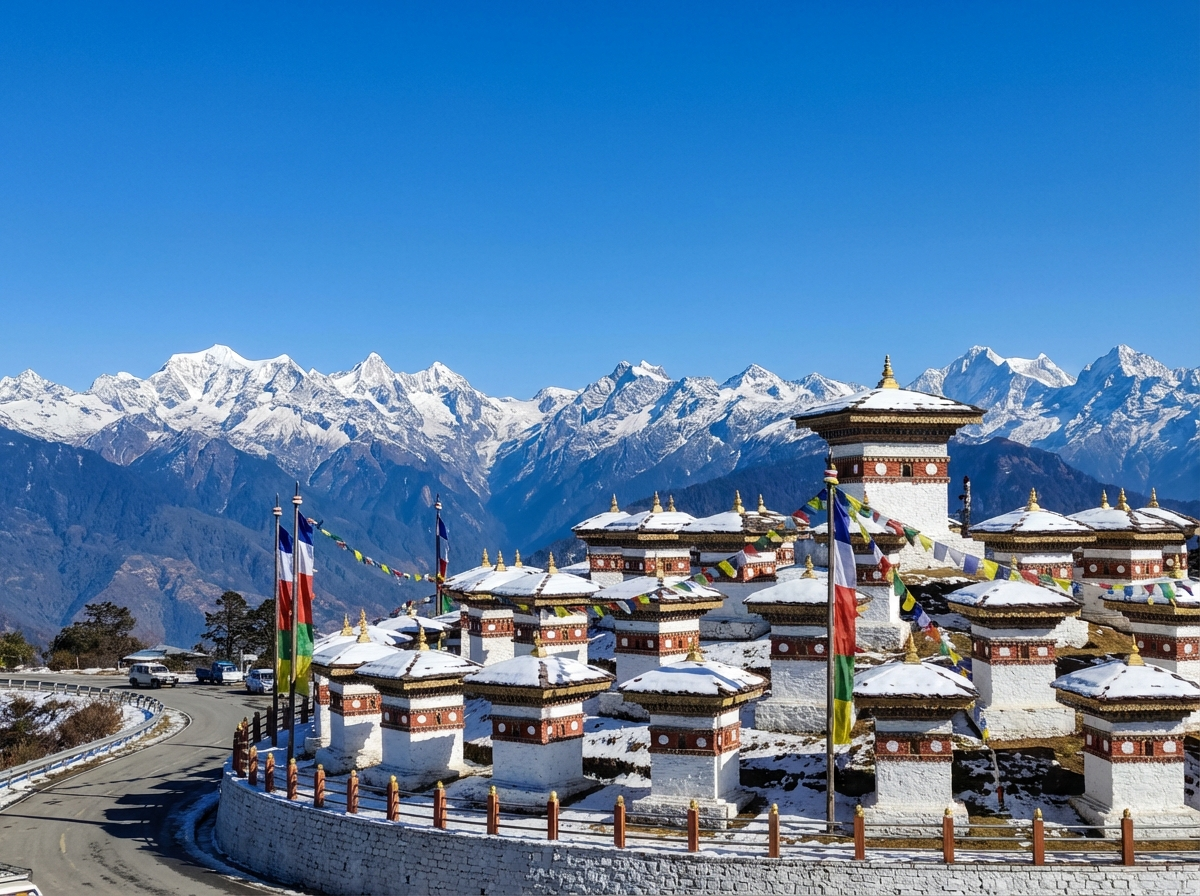
In the morning, you leave Thimphu heading east. The road winds upward to Dochula Pass at 3,150 meters. Here awaits one of Bhutan's most impressive photo subjects: 108 white Chortens (Buddhist stupas), erected in 2003 in memory of fallen soldiers. Colorful prayer flags flutter in the wind.
With clear visibility – especially in autumn and winter – the pass opens a spectacular panorama of snow-capped Himalayan peaks. The highest visible mountains exceed 7,000 meters. Take time for photos and a cup of hot tea at the café on the pass.
The drive descends into the much warmer Punakha Valley at only 1,300 meters. The subtropical climate enables rice and orange cultivation – a noticeable contrast to the cooler mountain regions you just left.
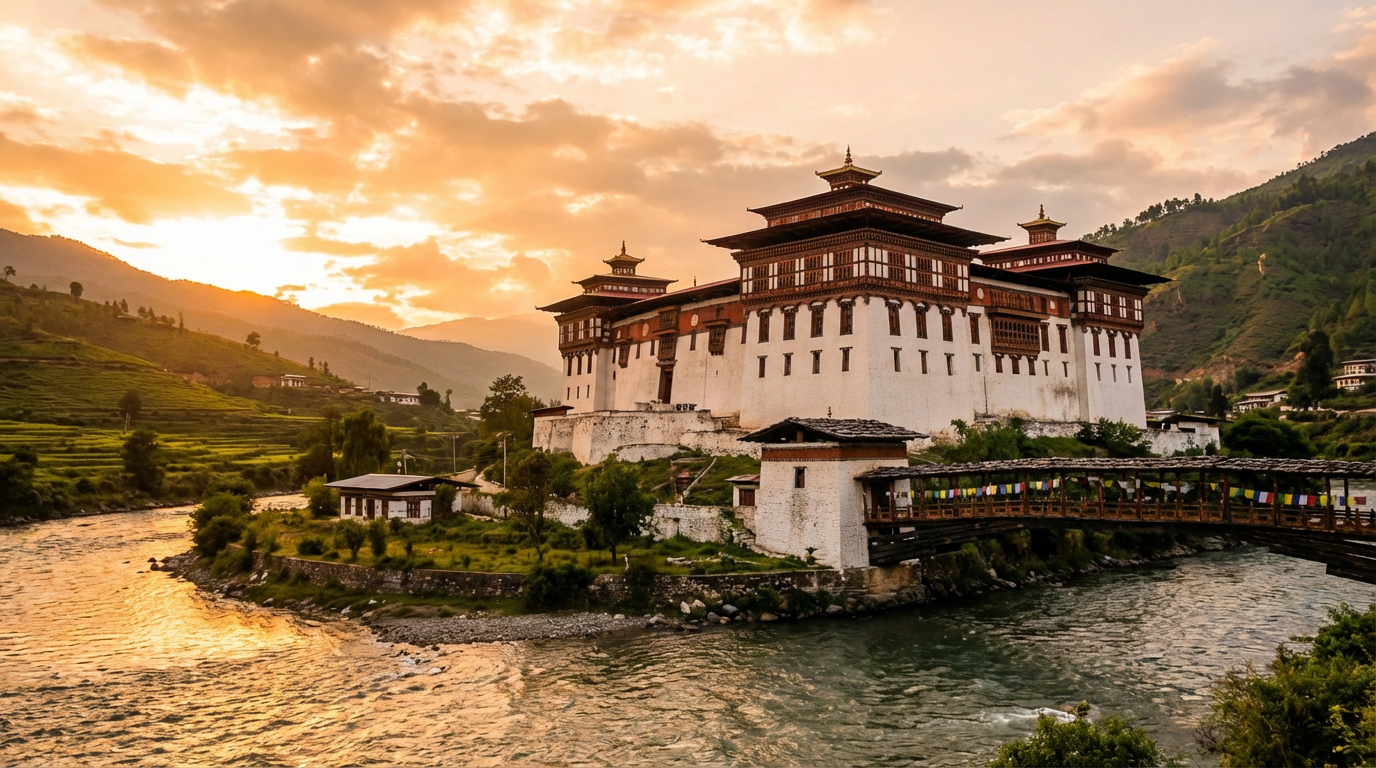
In the afternoon, you visit Punakha Dzong, considered the most beautiful Dzong in Bhutan. It majestically overlooks the confluence of Mo Chhu (Mother River) and Pho Chhu (Father River). Built in 1637–38, it serves as the winter residence of the Je Khenpo, the religious leader of Bhutan.
Day 4: Punakha - Full Day Exploration
This image was generated with AI.
The day begins with a hike through golden rice fields to Chimi Lhakhang, the fertility temple. The temple is dedicated to the "Divine Madman" Drukpa Kunley, an eccentric saint of the 15th century. Couples wishing for children pilgrimage here for a blessing.
The path leads through typical Bhutanese villages with traditional farmhouses. The rice fields shimmer in different shades of green depending on the season or glow golden. An easy hike of about 30 minutes each way – with time to pause and photograph.
In the afternoon, several options are available: a hike to Khamsum Yulley Namgyal Chorten (approx. 1 hour uphill with lovely valley views) or a walk to Punakha Suspension Bridge, Bhutan's longest suspension bridge. The gentle sway of the bridge over the turquoise river is an experience in itself.
Day 5: Punakha - Paro
The drive back to Paro again crosses Dochula Pass – a second chance at the Himalayan panorama if it was cloudy the first time. The total driving time is about 4 hours with breaks, enough time to enjoy the changing landscape.
In the afternoon, you explore Paro Valley. Rinpung Dzong ("Fortress of Jewels") is one of the most impressive Dzongs in the country. The covered wooden bridge over Paro Chhu creates a picturesque entrance – a favorite photo spot.
In the historic Ta Dzong, the former watchtower above Paro Dzong, is the National Museum. The collection includes Buddhist art, historical weapons, and traditional textiles – a good overview of Bhutan's cultural history and the perfect preparation for what awaits you the next day.
Day 6: Paro - The Tiger's Nest Hike
This image was generated with AI.
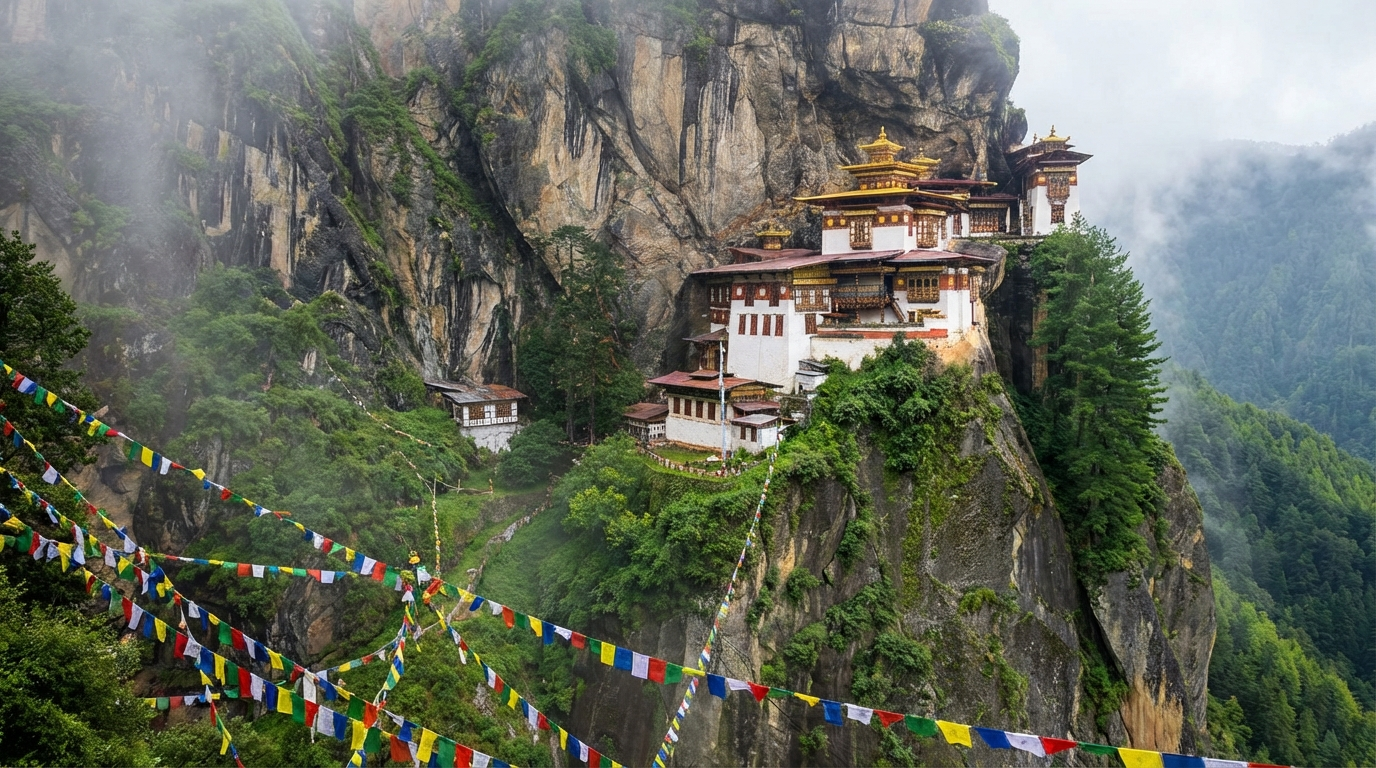
Day 6 is the highlight of your Bhutan trip: the hike to the legendary Tiger's Nest Monastery (Paro Taktsang). The monastery seems to cling to a 900-meter-high cliff face and is the most photographed landmark in the country. The sight is breathtaking – and the journey there is an experience in itself.
According to legend, Guru Rinpoche, who brought Buddhism to Bhutan, flew here on the back of a tiger in the 8th century and meditated in a cave for three years. The current monastery was built in 1692 and was meticulously reconstructed after a devastating fire in 1998.
The hike begins at the parking lot at about 2,400 meters. A well-maintained path leads through pine and rhododendron forest steadily uphill. After about an hour, you reach the cafeteria halfway up – here the first spectacular view of the monastery opens up. Time for a break and a photo.
From the cafeteria, it's another 45–60 minutes to the monastery. The path first descends to a bridge over a waterfall, then climbs steeply to the entrance. In total, you should plan 4–5 hours for the entire hike.
After the descent and a well-deserved rest, you can optionally visit Kyichu Lhakhang, one of Bhutan's oldest temples from the 7th century. A quiet, meditative ending to an intensive day.
Day 7: Departure
The last day is usually short. After breakfast, transfer to nearby Paro Airport – just about 15–20 minutes' drive. Most departures occur in the morning. Depending on flight time, you might have time for a final stroll down Paro's main street or last-minute shopping. And then: one last look at the mountains before the plane takes off.
Highlights of This Route
These five highlights make the 7-day route an unforgettable Bhutan experience – each one represents a different aspect of the kingdom.
This image was generated with AI.
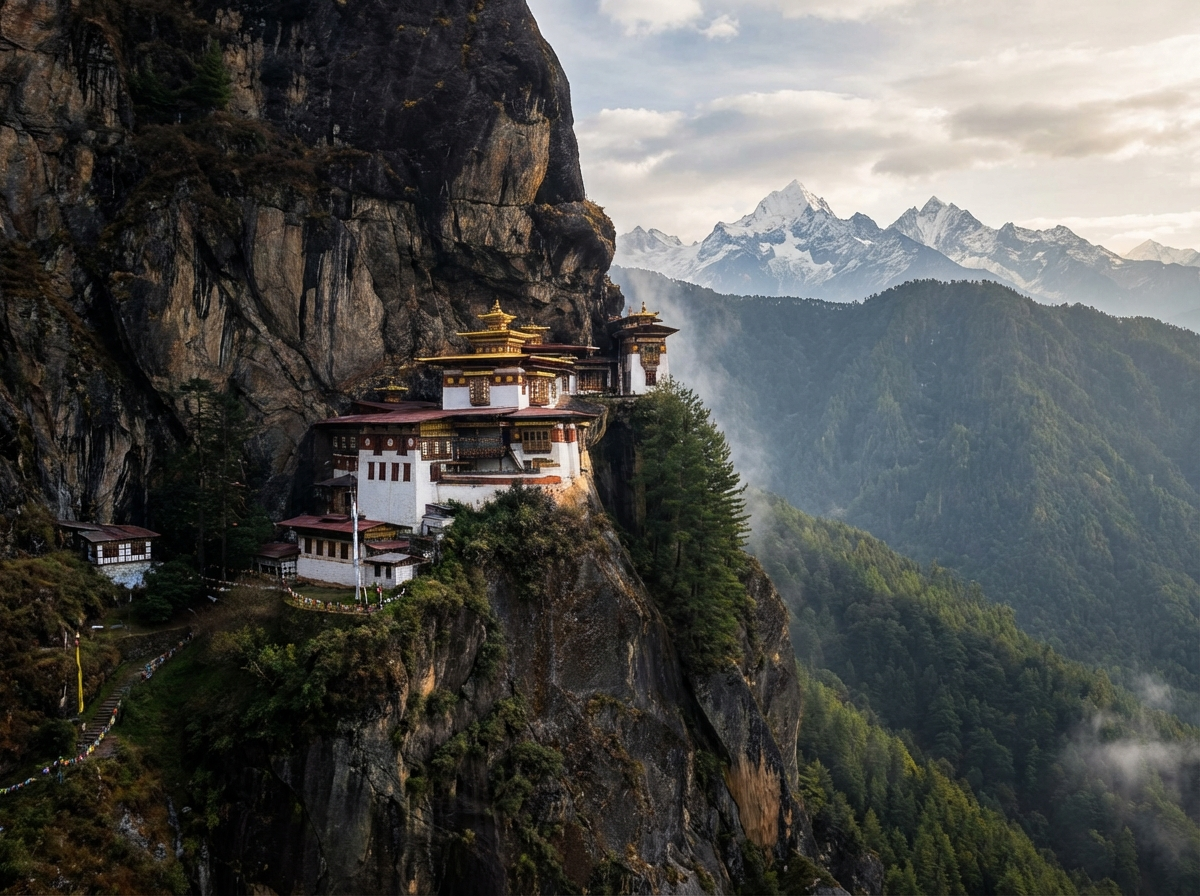
Tiger's Nest (Paro Taktsang)
The iconic monastery on the cliff face – the emotional highlight of every Bhutan trip.
This image was generated with AI.
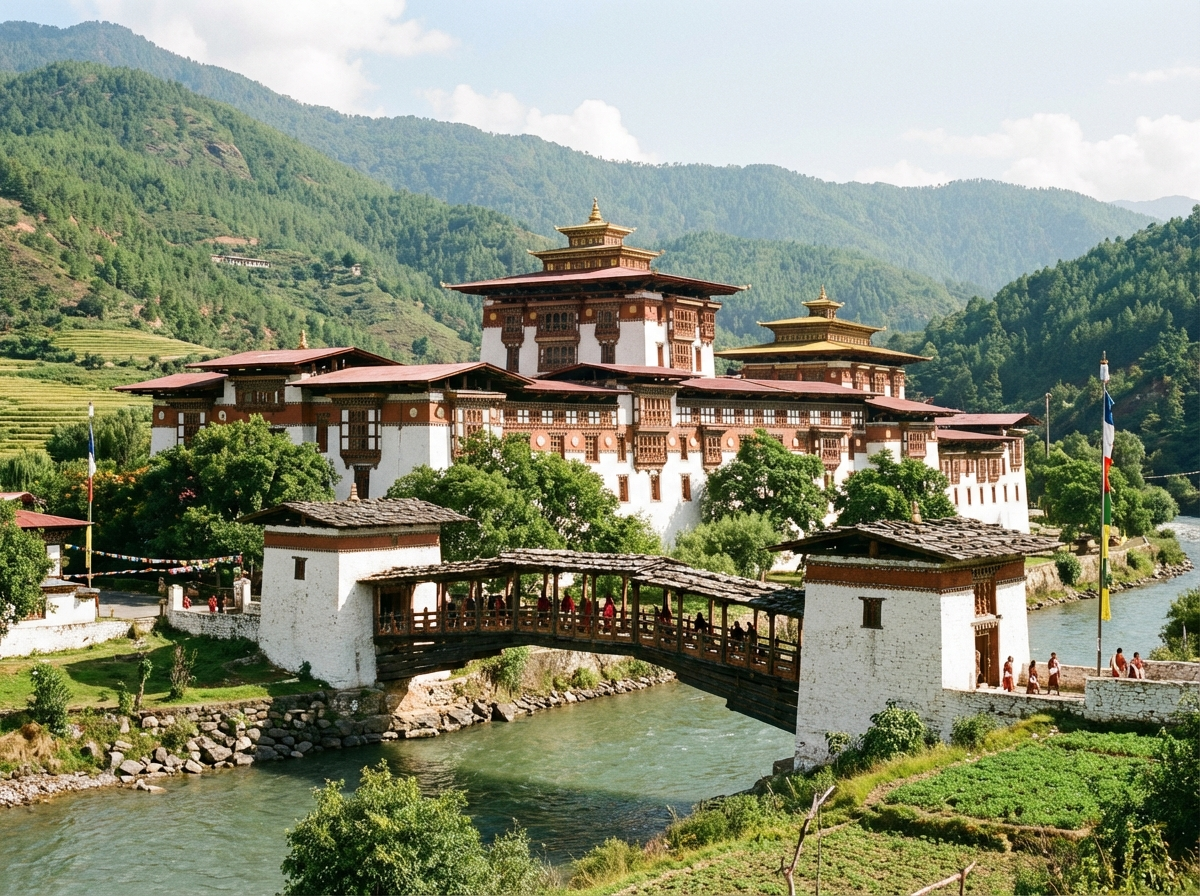
Punakha Dzong
Bhutan's most beautiful Dzong at the confluence of two rivers – architectural perfection.
This image was generated with AI.
Dochula Pass
108 Chortens with Himalayan panorama – one of Bhutan's most beautiful viewpoints.
This image was generated with AI.
Buddha Dordenma
The 51-meter-high statue towers over Thimphu – with panoramic views over the valley.
This image was generated with AI.
Tashichho Dzong
The seat of government in Thimphu – impressive architecture and living tradition.
Driving Times and Distances
Roads in Bhutan are winding and pass through mountainous terrain. The stated driving times already account for moderate speed – plan additional time for photo stops and breaks.
| Route | Distance | Driving Time | Road Condition |
|---|---|---|---|
| Paro → Thimphu | 60 km | approx. 1 hour | Well paved |
| Thimphu → Punakha | 85 km | approx. 2–2.5 hours | Mountain road, winding |
| Punakha → Paro | approx. 120 km | approx. 4 hours | Via Thimphu, winding |
| Paro → Tiger's Nest (Hike) | 6–7 km | 4–5 hours (round trip) | Mountain trail, partly steep |
Costs for 7 Days in Bhutan
A 7-day trip to Bhutan requires an appropriate budget. The largest costs are the Sustainable Development Fee (SDF) and the tour package. The advantage: costs are transparent and plannable. Couples travel more cheaply per person since vehicle and guide are shared.
Solo Travelers (Standard 3-Star)
| Item | Amount |
|---|---|
| SDF (6 nights x 100 USD) | 600 USD |
| Visa | 40 USD |
| Tour package (accommodation, guide, transport, meals) | 1,400–1,800 USD |
| Total (without flights) | 2,040–2,440 USD |
Couple (Standard 3-Star)
| Item | Amount per Person |
|---|---|
| SDF (6 nights x 100 USD) | 600 USD |
| Visa | 40 USD |
| Tour package (accommodation, guide, transport, meals) | 950–1,200 USD |
| Total per person (without flights) | 1,590–1,840 USD |
Additional Costs
| Item | Estimated Cost |
|---|---|
| Flights from Europe (round trip) | 800–1,500 USD |
| Monument entrance fees (sometimes separate) | approx. 50–100 USD |
| Guide gratuity (recommended) | 8–10 USD/day |
| Driver gratuity (recommended) | 5–8 USD/day |
| Souvenirs, personal expenses | As desired |
Best Time to Visit for This Route
The 7-day route through West Bhutan is possible year-round. The best time depends on your priorities – clear views of the mountains, blooming nature, or fewer tourists.
| Season | Months | Advantages | Disadvantages |
|---|---|---|---|
| Spring | March–May | Blooming rhododendrons, pleasant temperatures, Paro Tshechu festival | Paro Tshechu very crowded, higher prices |
| Autumn | September–November | Best visibility, clear skies, many festivals | Peak season, higher prices, early booking needed |
| Winter | December–February | Fewer tourists, lower prices | Colder, some higher passes may be closed |
| Monsoon | June–August | Green landscape, fewer tourists | Rain, limited mountain views, landslide risk |
Learn more about the best time to visit
Practical Tips
Altitude Acclimatization
The trip takes you to altitudes between 1,300 m (Punakha) and 3,150 m (Dochula Pass). Most of your time is spent at 2,300–2,400 m. The route is deliberately designed so you acclimatize slowly – the Tiger's Nest at the end of the trip allows the best adjustment.
| Location | Altitude |
|---|---|
| Paro Airport | 2,300 m |
| Thimphu | 2,320 m |
| Dochula Pass | 3,150 m |
| Punakha | 1,300 m |
| Tiger's Nest (Monastery) | 3,120 m |
Packing List Essentials for 7 Days
- Hiking Boots – Essential for Tiger's Nest, well broken in
- Layered Clothing – Temperature variations between 10°C and 25°C
- Rain Jacket – Useful even outside monsoon season
- Sun Protection – High UV radiation at altitude, sunglasses + sunscreen
- Camera with Large Storage – You'll take many photos
- Power Bank – Not everywhere reliable power supply
- Modest Clothing – For temple and Dzong visits
Complete packing list for Bhutan
Tips for the Tiger's Nest Hike
- Start early (7–8 AM) for less crowding and cooler temperatures
- Hiking poles are recommended, especially for the descent
- Horses can be rented to the cafeteria (approx. 20–25 USD)
- Bring at least 1.5 liters of water
- Don't forget energy bars or snacks
- Cameras forbidden in the monastery – photos only from outside
Alternative: Including Phobjikha Valley
For travelers who want to see Phobjikha Valley with its black-necked cranes, there is an alternative 7-day route. This is more compact and includes more driving time, but offers the unique Phobjikha Valley.
| Day | Location | Highlights |
|---|---|---|
| Day 1 | Paro → Thimphu | Arrival, transfer |
| Day 2 | Thimphu | City sightseeing |
| Day 3 | Thimphu → Punakha | Dochula Pass, Punakha Dzong |
| Day 4 | Punakha → Phobjikha | Black-necked cranes (Nov–Feb), Gangtey Goenpa |
| Day 5 | Phobjikha → Paro | Long drive with stops |
| Day 6 | Paro | Tiger's Nest Hike |
| Day 7 | Departure | – |
What This Route Does Not Cover
In 7 days, you see the main highlights of West Bhutan. However, some regions and experiences require more time. These aspects are not realistic in one week:
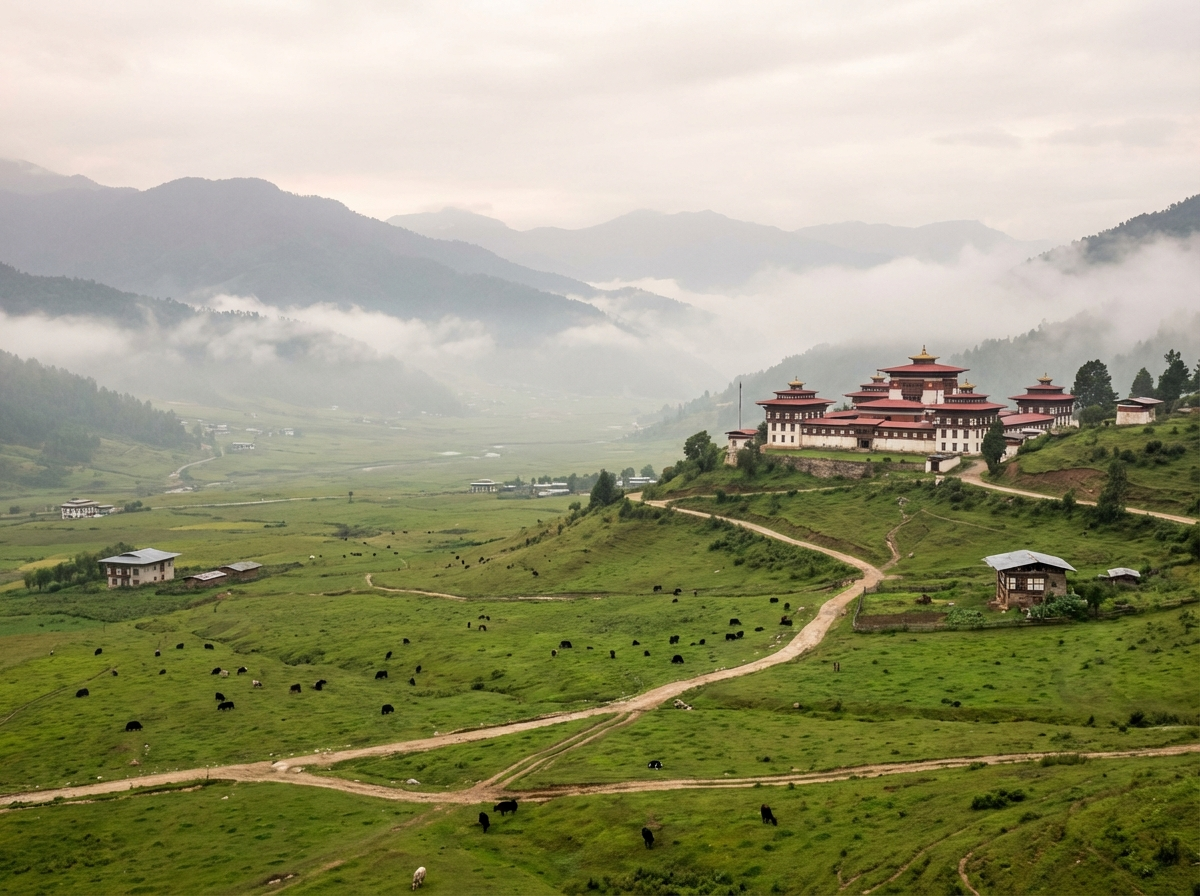
- Phobjikha Valley – The valley of black-necked cranes, only in the alternative route
- Bumthang – The spiritual center with the oldest monasteries
- East Bhutan – The most pristine region, very remote
- Haa Valley – The hidden valley near the Tibetan border
- Multi-Day Treks – Druk Path, Jomolhari or Snowman Trek
This image was generated with AI.
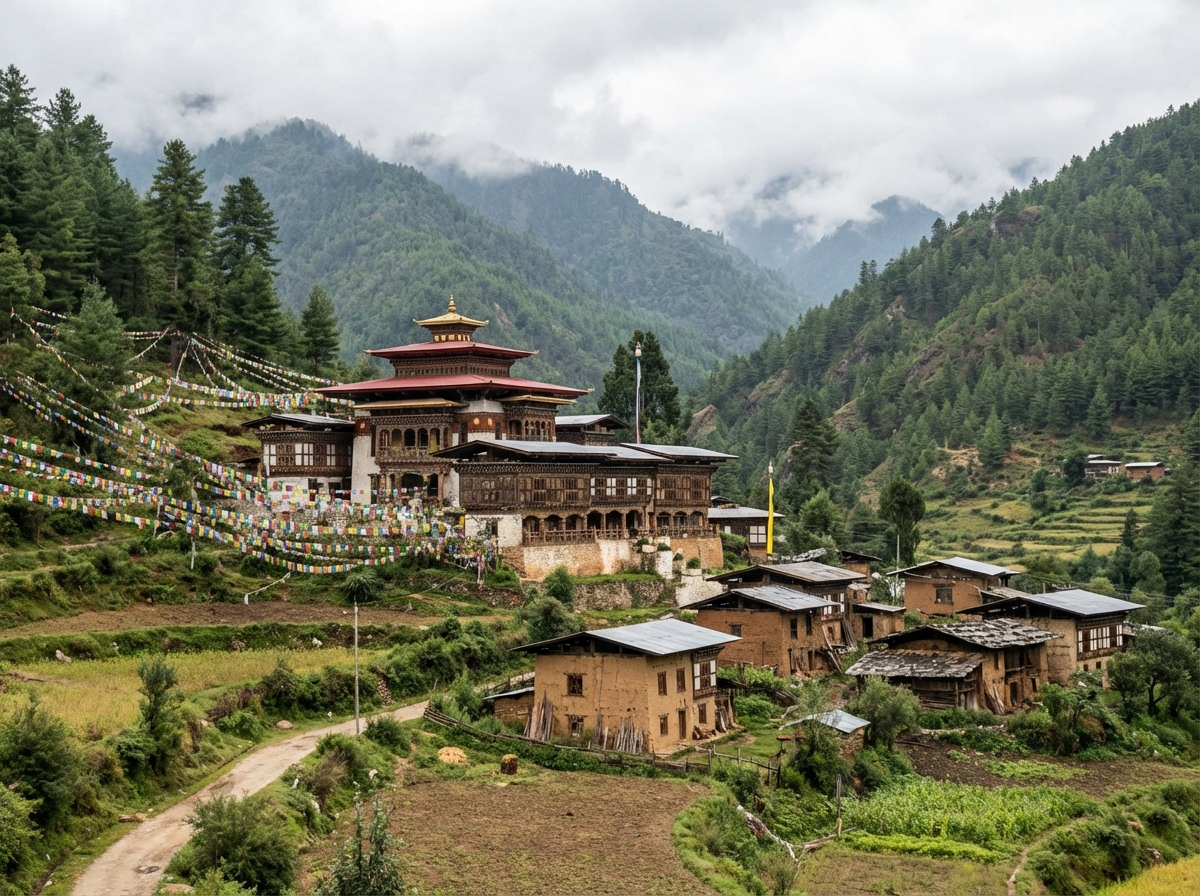
10-14 Days Bhutan
Extended route with Phobjikha Valley or Bumthang – for a deeper Bhutan experience.
This image was generated with AI.
14-21 Days Bhutan
The ultimate Bhutan journey with East Bhutan and optional trek.
Frequently Asked Questions
Is one week really enough for Bhutan?
Yes, one week is sufficient for the main highlights of West Bhutan. You'll see Tiger's Nest, Punakha Dzong, and experience the capital Thimphu. For deeper insights or more remote regions, we recommend 10–14 days.
What does 7 days in Bhutan cost in total?
Plan for approx. 2,040–2,440 USD per person (without flights) for solo travelers. Couples pay approx. 1,590–1,840 USD per person. Add flights from Europe (800–1,500 USD). Luxury hotels increase the budget accordingly.
Do I need a guide for this route?
Since 2022, you can move freely within Paro, Thimphu, and Punakha. However, a guide is mandatory for Dzong visits and temples. Practically speaking: for the full experience of this route, a guide is worthwhile.
How fit do I need to be for Tiger's Nest?
The hike to Tiger's Nest requires good basic fitness. You'll overcome approx. 700–900 meters elevation in 4–5 hours. If you walk or hike regularly, you can do it. If you have concerns, you can rent a horse to the cafeteria and hike only the last section.
Can I do the route in reverse order?
The classic sequence (Thimphu → Punakha → Paro) is deliberately chosen: Tiger's Nest at the end allows the best altitude acclimatization. Reverse order is possible, but not recommended.
When is the best time for this route?
October and November offer the best conditions: clear views, pleasant temperatures, and many festivals. March to May is the second peak season with blooming rhododendrons. Monsoon (June–August) is less ideal.
Can I organize this route myself?
Since 2022, Bhutan is visitable without a package tour. You can book accommodation and transport separately. However, you must still pay SDF and visa fees. For first-timers, we still recommend booking through an experienced operator – the added value from a good guide is substantial.
Next Steps for Your 7-Day Journey
You now know the classic 7-day route in detail. These topics will help with further planning:
This image was generated with AI.
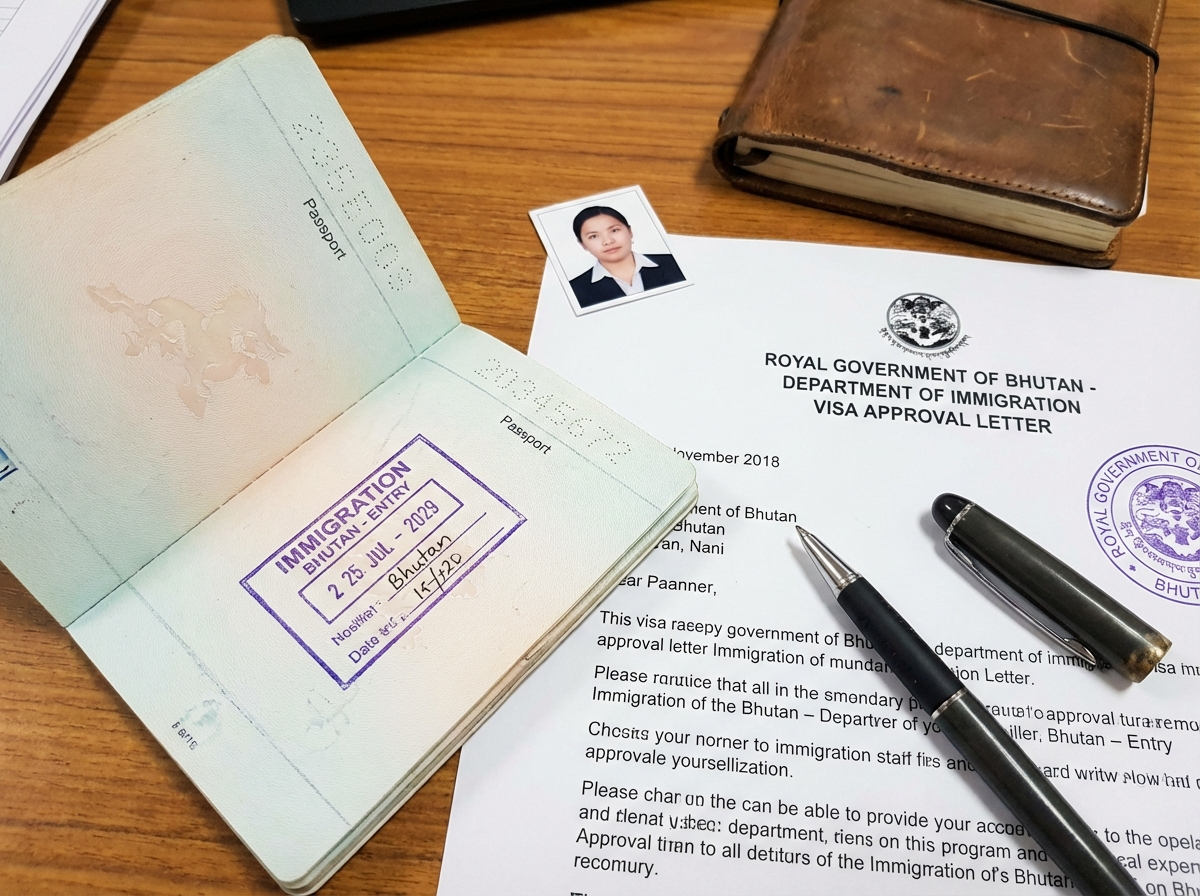
Visa & Entry
Everything about visa application: e-visa, costs, and step-by-step procedure.
This image was generated with AI.
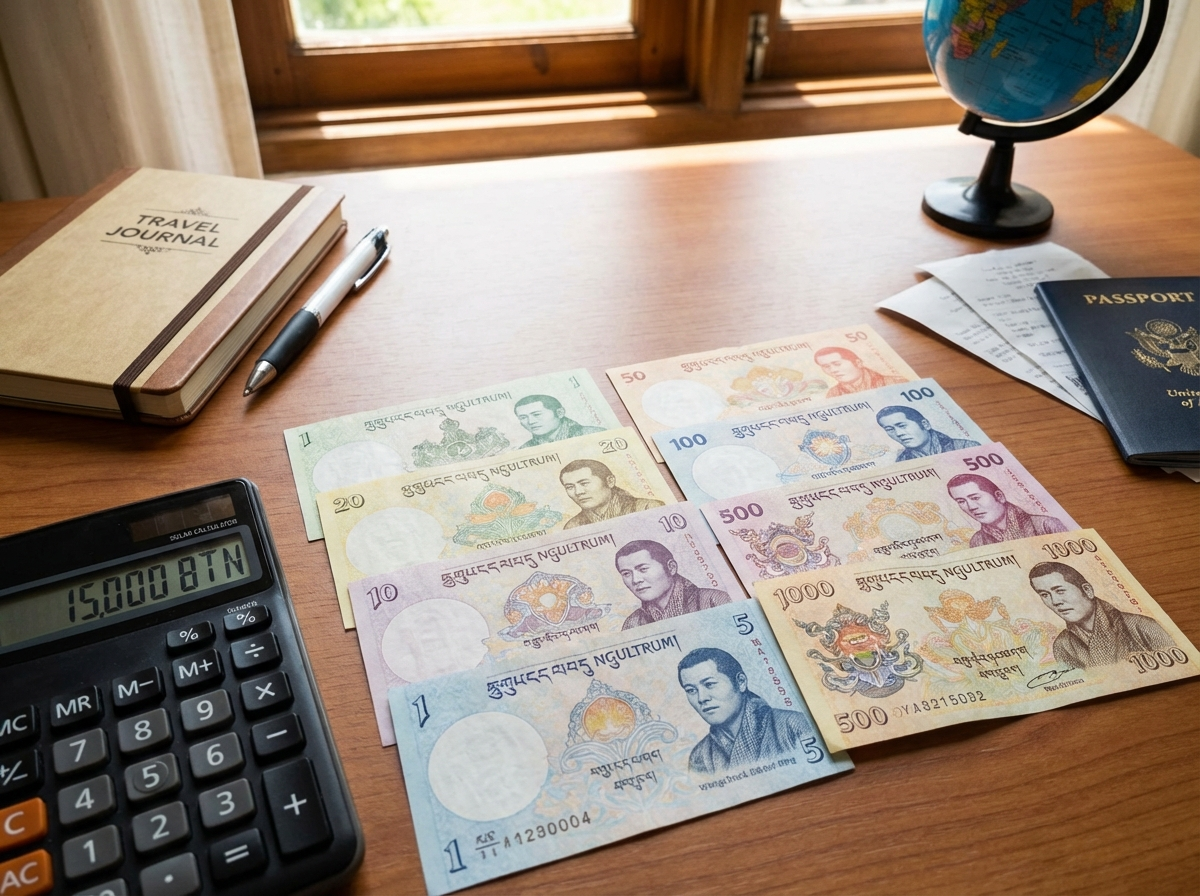
Costs & Budget
Complete cost breakdown for your Bhutan trip including SDF, flights, and accommodation.
This image was generated with AI.
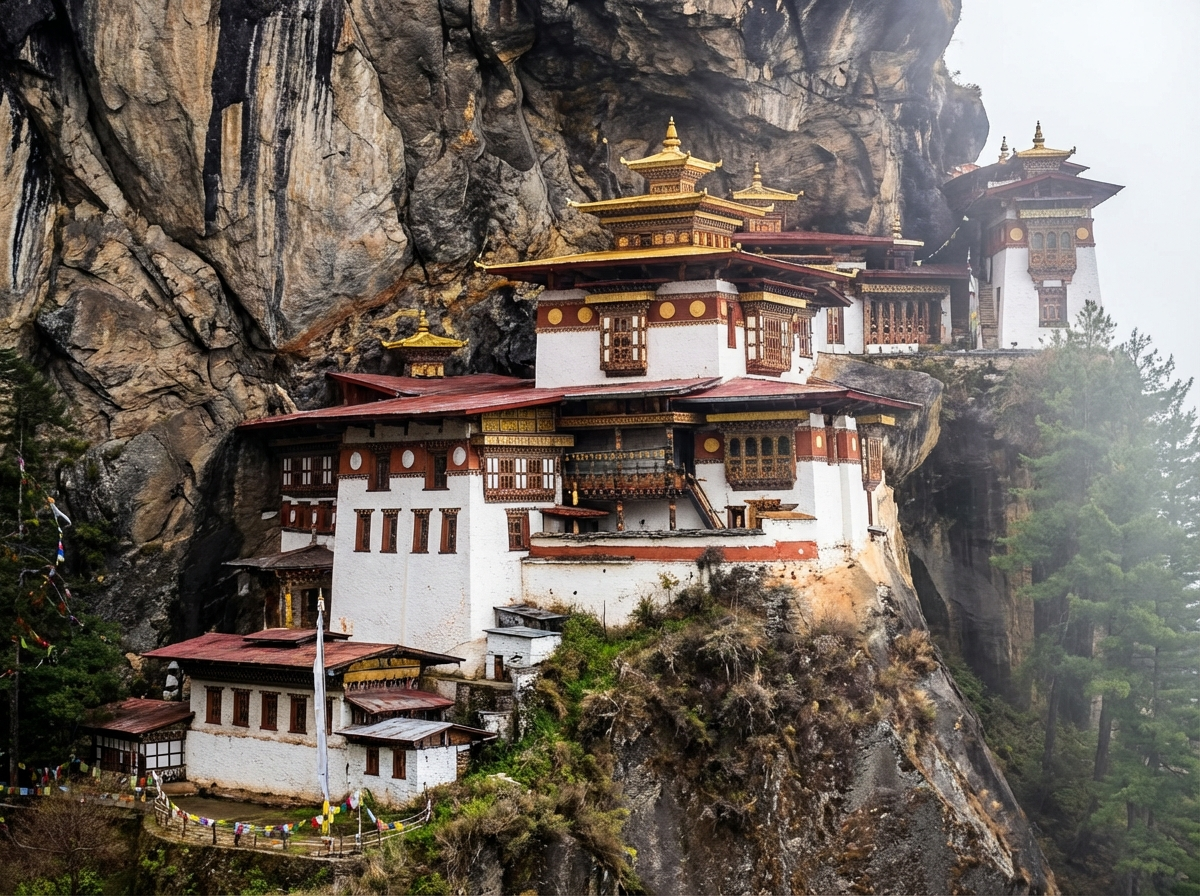
Tiger's Nest in Detail
Everything about the highlight of your trip: hike, history, and practical tips.
The regions of this route in detail
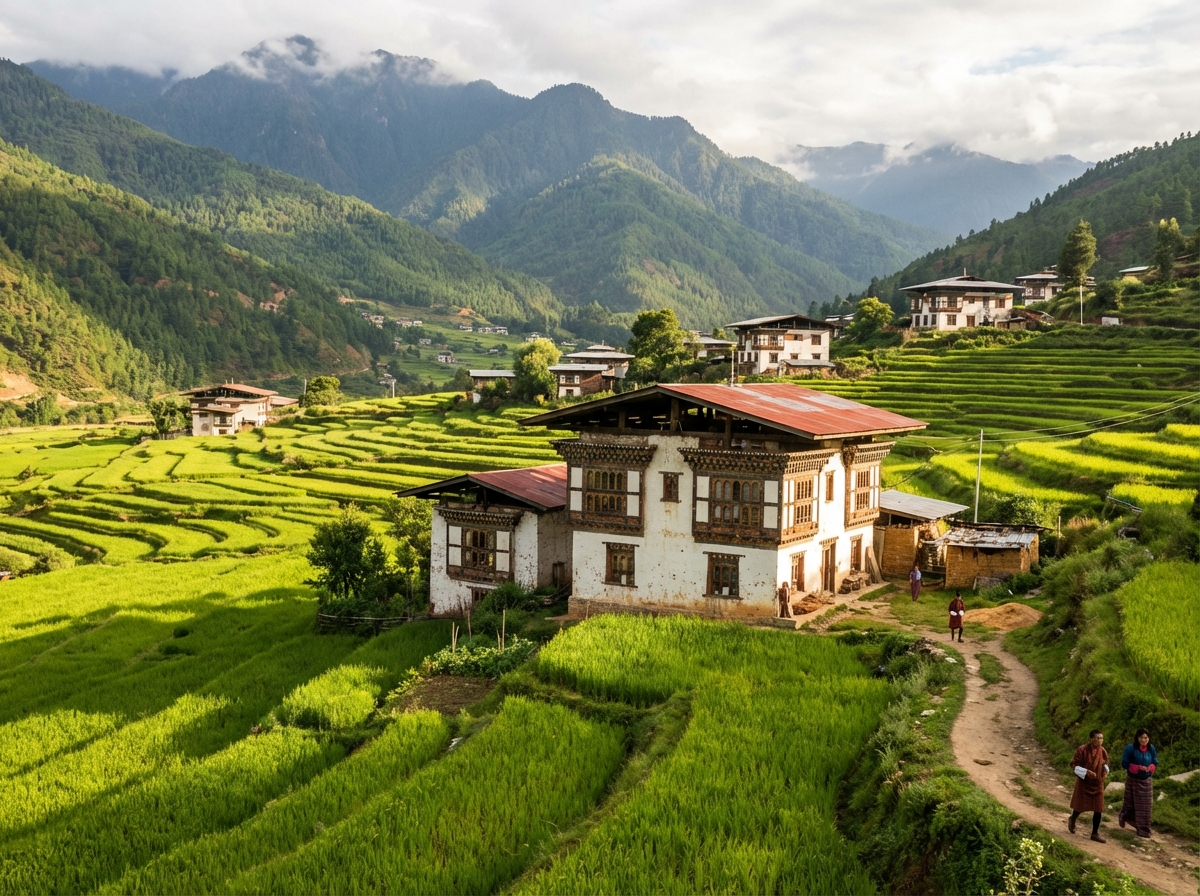
This image was generated with AI.
Paro
The gateway to Bhutan: airport, Tiger's Nest, and traditional valley.
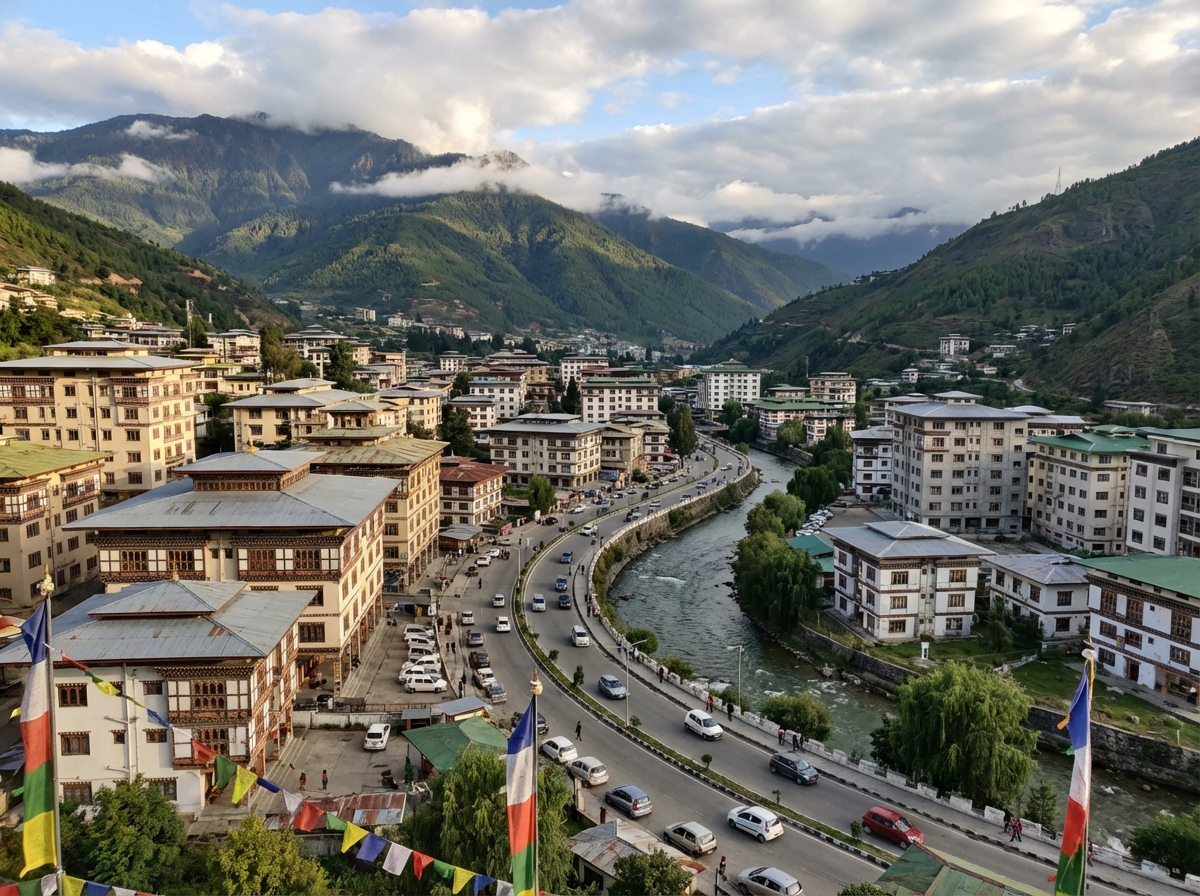
This image was generated with AI.
Thimphu
The capital without traffic lights: modernity meets tradition.
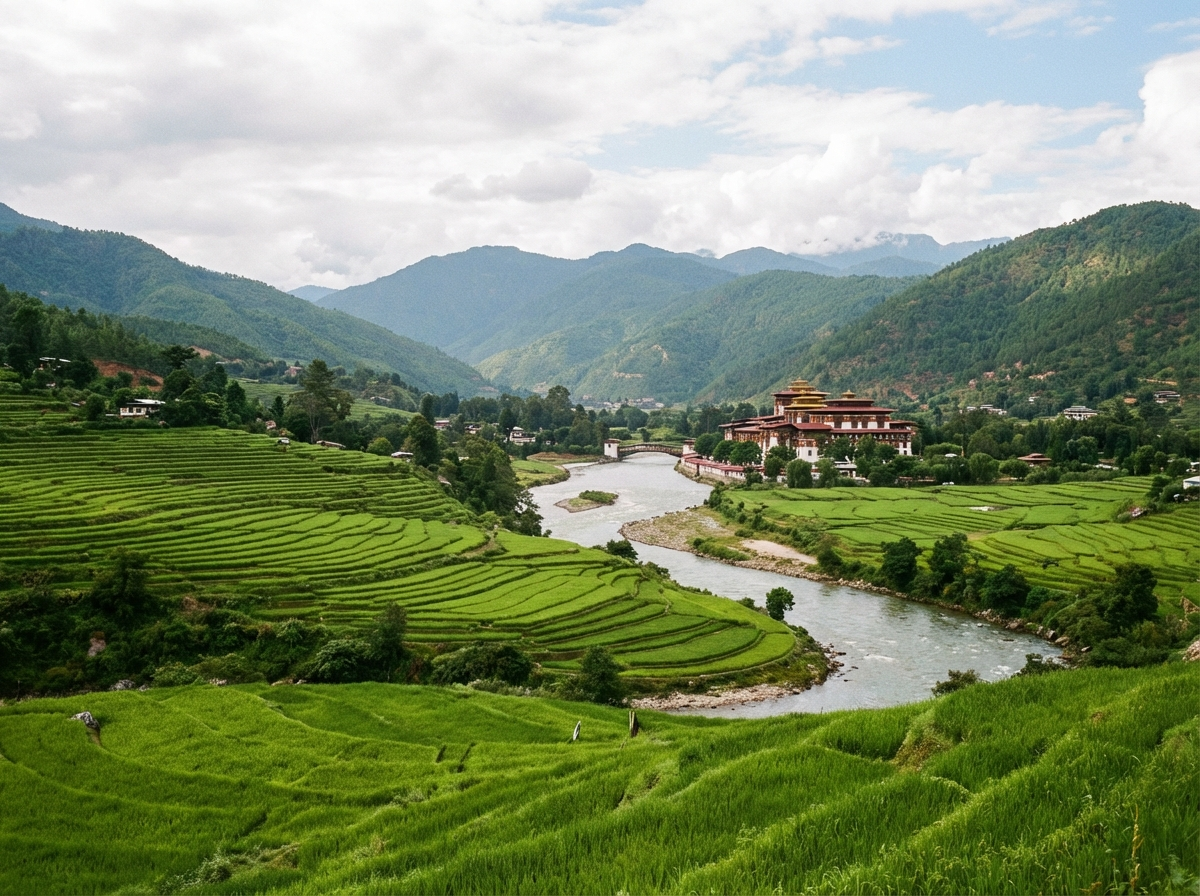
This image was generated with AI.
Punakha
The subtropical valley with Bhutan's most beautiful Dzong.
Ready for your 7-day journey to Bhutan?
We'll help you plan your classic Bhutan route – tailored to your individual wishes.