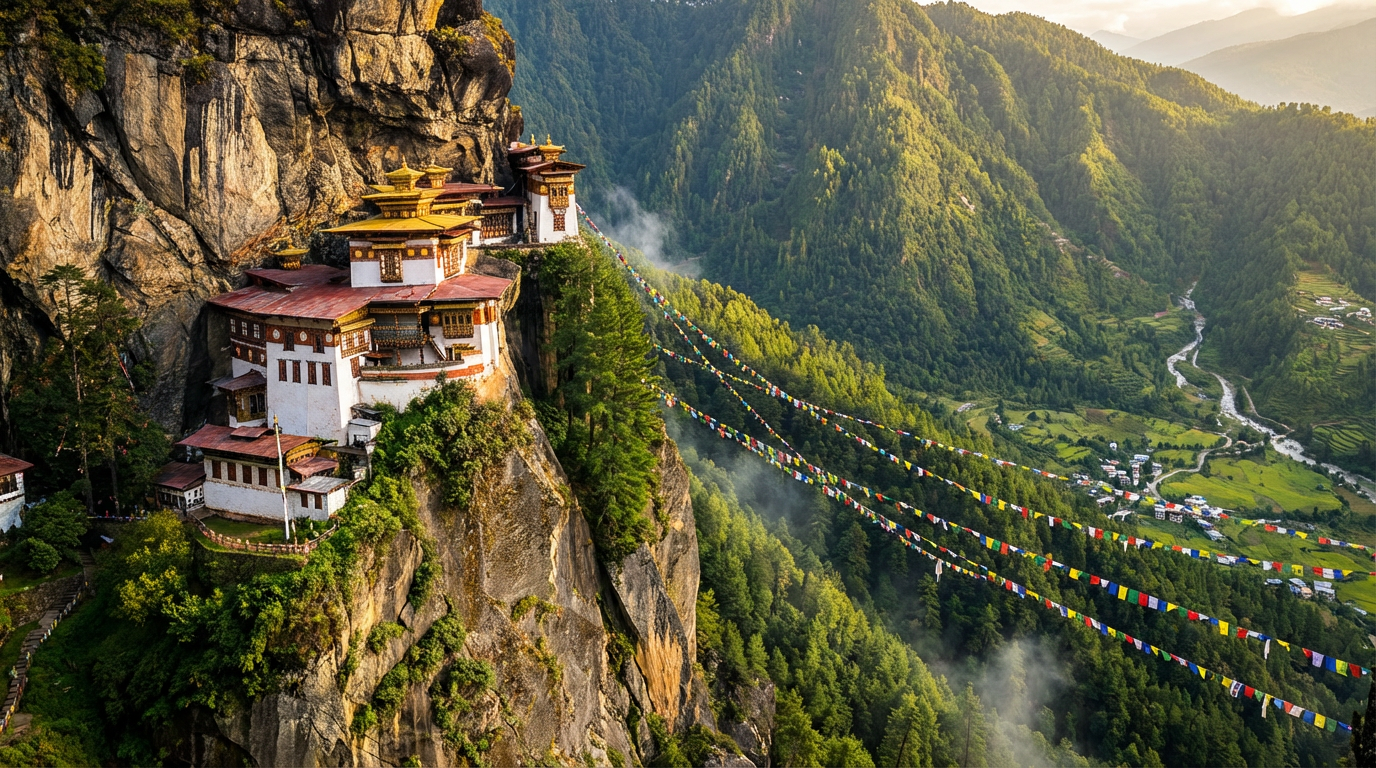
Tiger's Nest Bhutan: Hiking, Altitude & Trek to Paro Taktsang
Last updated:
There are places you must see to believe them – Tiger's Nest Monastery in Bhutan is undoubtedly one of them. Like an eagle's nest, the white temple complex nestles against a 900-meter high, nearly vertical rock wall in the Paro Valley. Paro Taktsang, as the monastery is officially known, is not only Bhutan's most famous landmark, but one of the holiest Buddhist pilgrimage sites in the world. The trek up is demanding, but every step is rewarded with breathtaking views – and the sight of the monastery itself is simply unforgettable.
Tiger's Nest at a Glance
Tiger's Nest is not just an architectural marvel, but a living monastery where monks still live and pray today. For Buddhists worldwide, this place holds immense spiritual significance – here Guru Rinpoche, founder of Tibetan Buddhism in Bhutan, is said to have meditated in the 8th century. Hardly any Bhutan trip is complete without this visit.
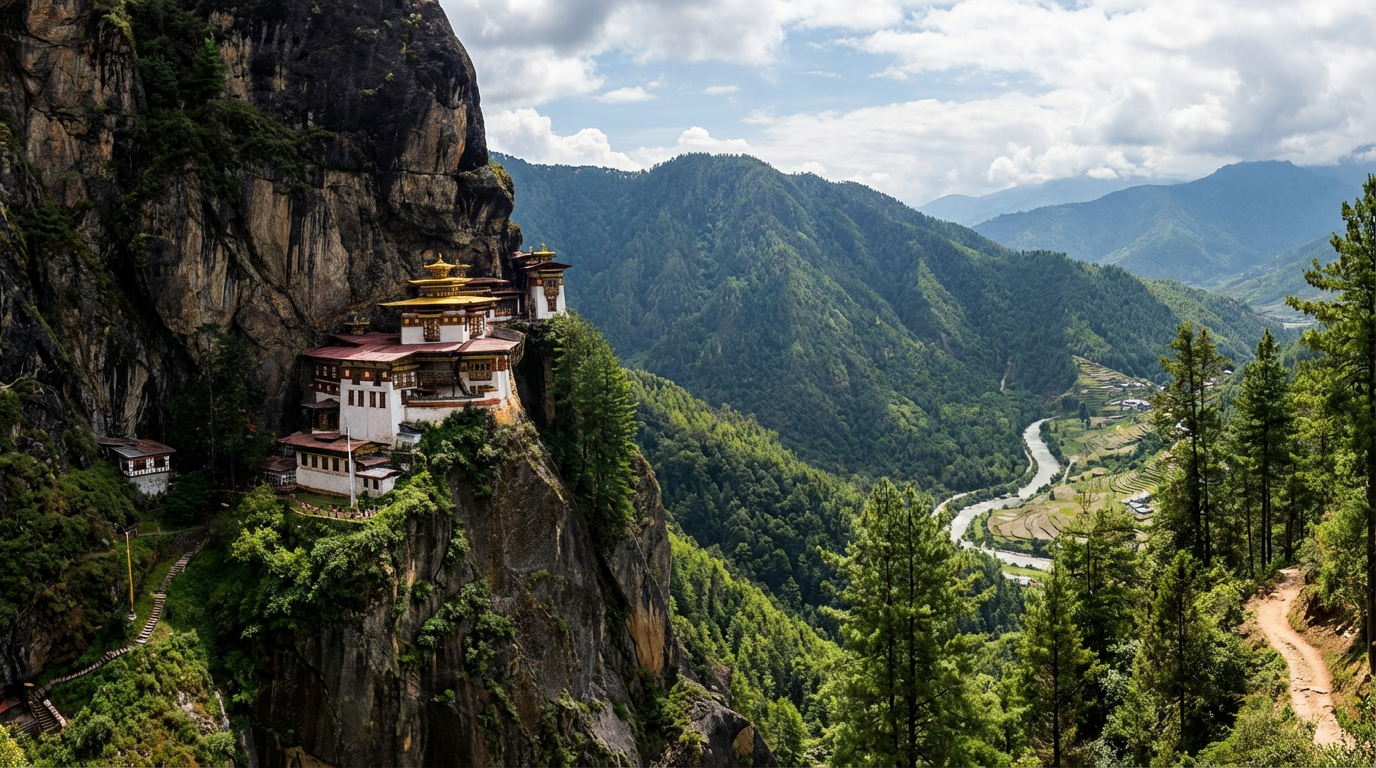
This image was generated with AI.
The Hike to Tiger's Nest
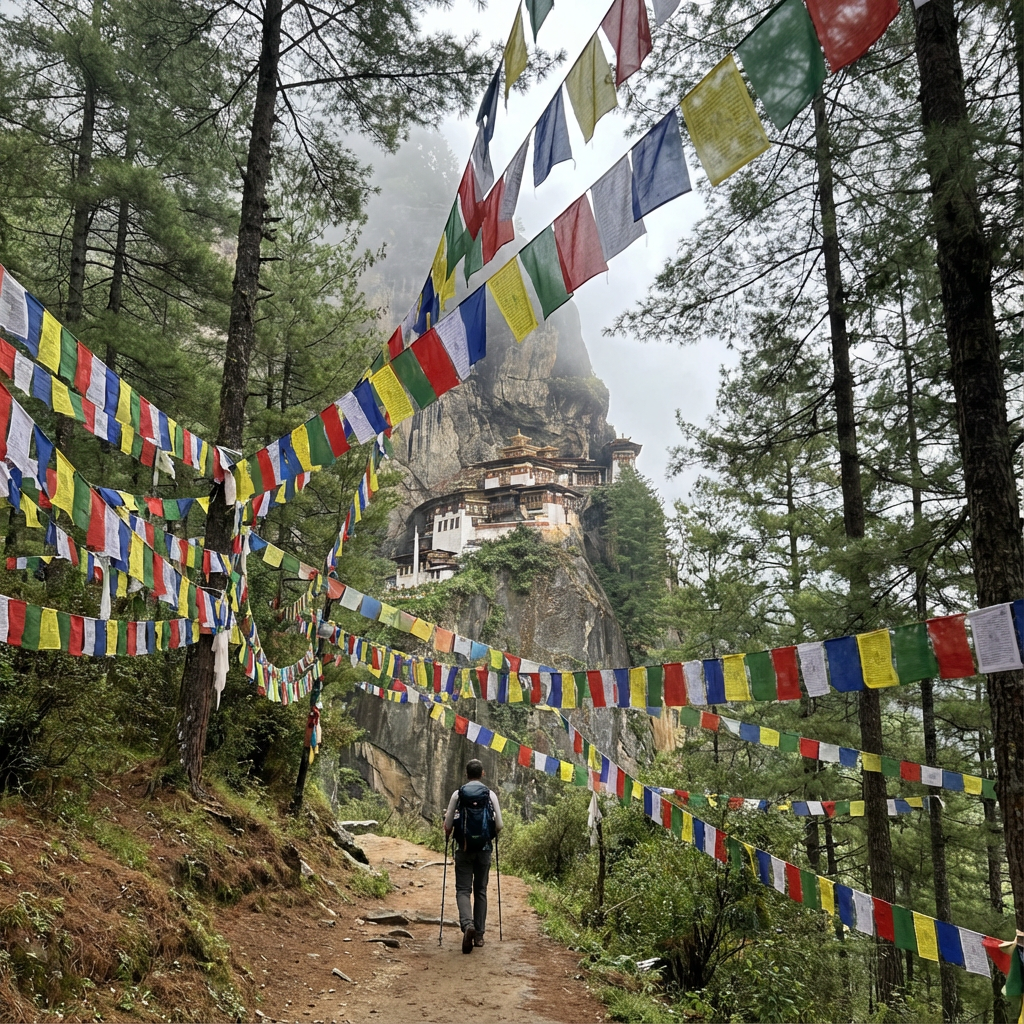
The hike to Tiger's Nest is more than just a path to a landmark – it is itself a spiritual and natural experience. The well-maintained trail leads through fragrant pine forest, past prayer wheels and colorful prayer flags, accompanied by the distant sound of temple bells. The route divides into two clearly distinct stages: the steady climb to the cafeteria with the first view of the monastery, and the more demanding section down into a gorge and back up to the monastery itself.
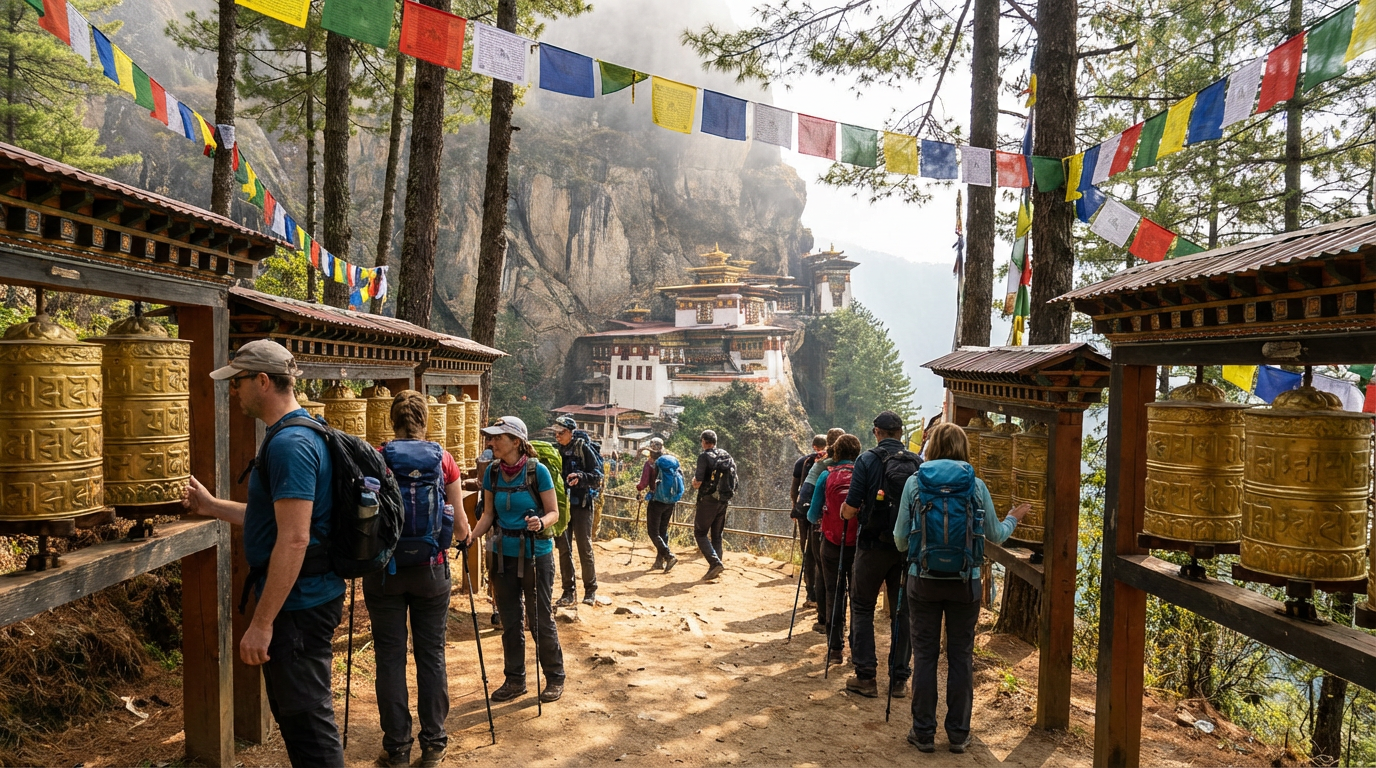
This image was generated with AI.
Stage 1: From the Parking Area to the Cafeteria
The first stage begins at the parking area at about 2,600 meters altitude. The path is broad and well-maintained, but climbs continuously – don't underestimate the ascent, especially at altitude. After about an hour, the forest opens up and you catch your first glimpse of the monastery on the opposite rock wall – a moment that literally takes your breath away. If you want to spare your legs, you can hire a mule for this first stage (for a fee).
Stage 2: From the Cafeteria to the Monastery
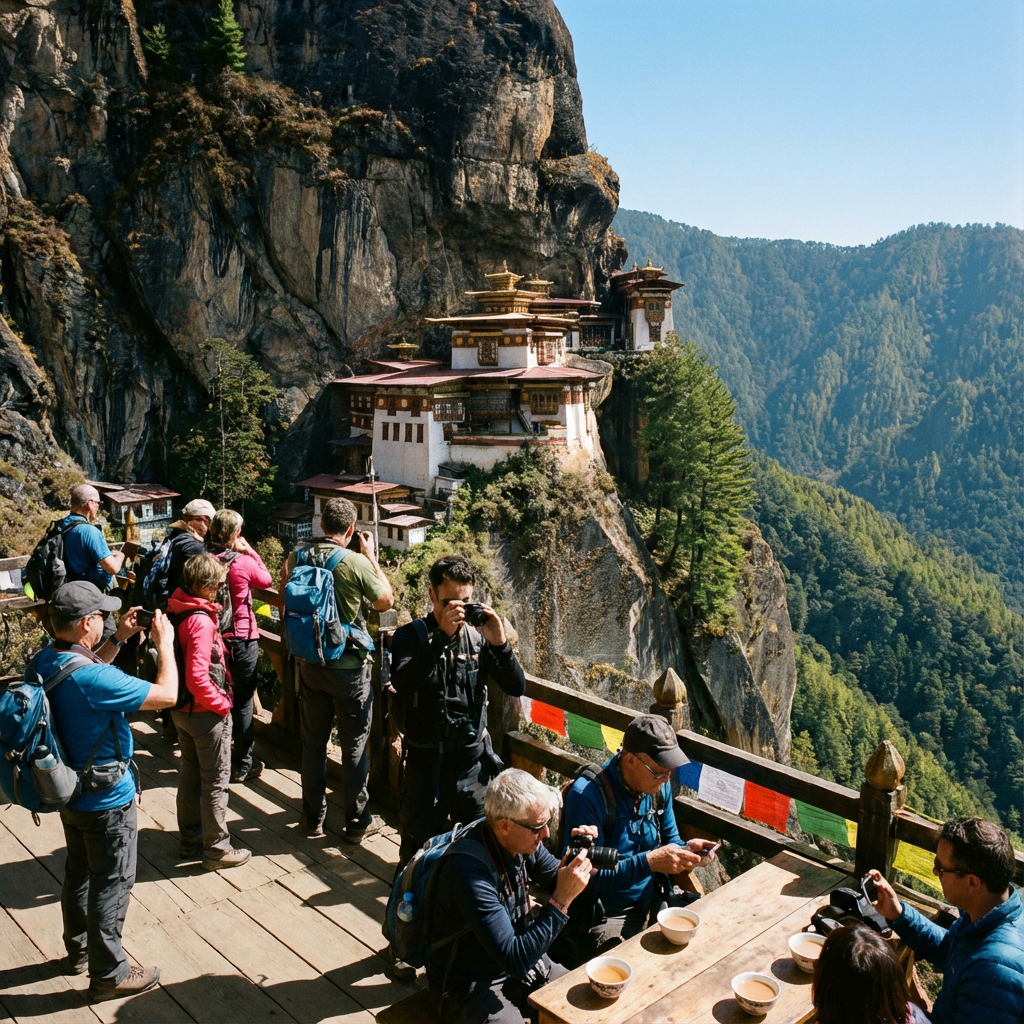
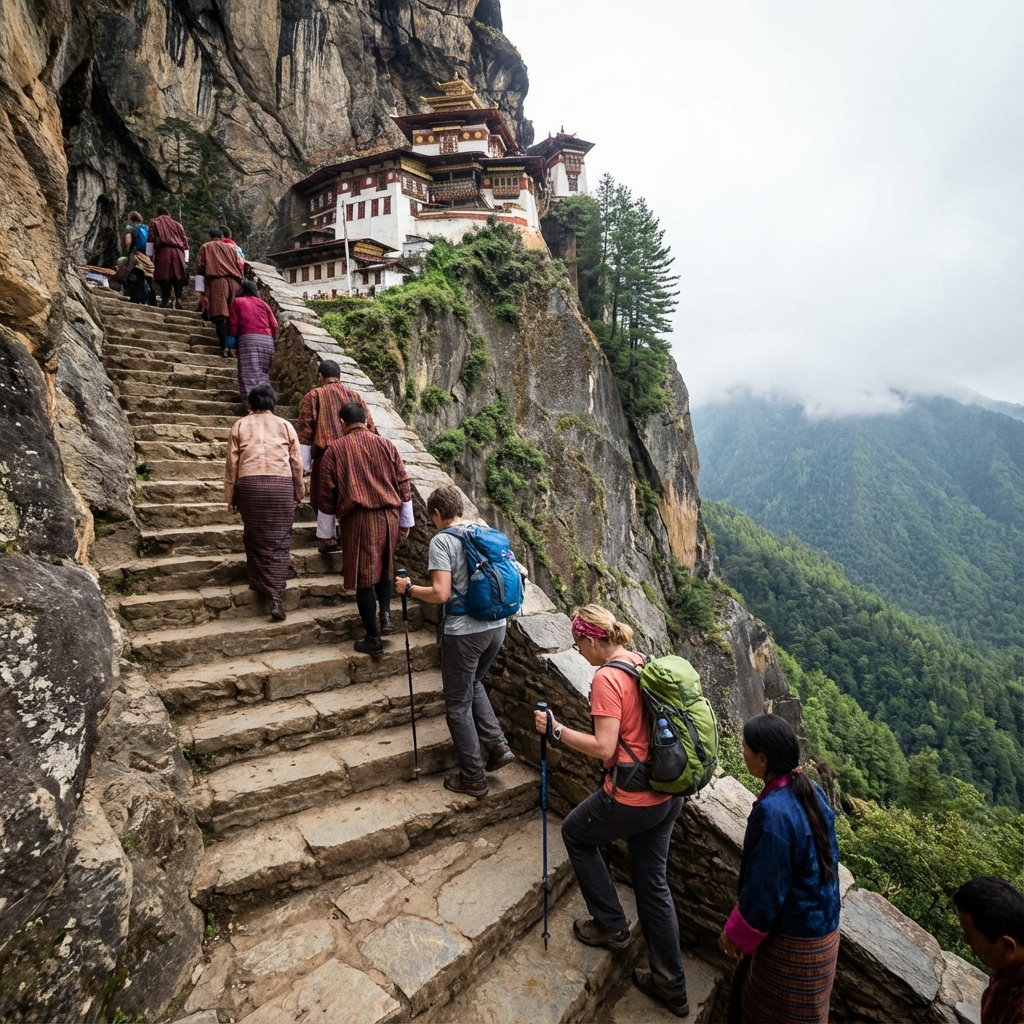
The cafeteria at the halfway point is the perfect place for a break – with spectacular views of the monastery, which now seems within reach. From here begins the more demanding section: First, the path leads about 100 steps down into a gorge, where a waterfall cascades over the rocks. Many hikers find this descent psychologically challenging because they know they'll have to climb back up later. After crossing a small bridge, the final ascent begins – steep stairs carved into the rock lead directly to the monastery entrance. The last meters are exhausting, but the moment you enter the courtyard makes it all worthwhile.
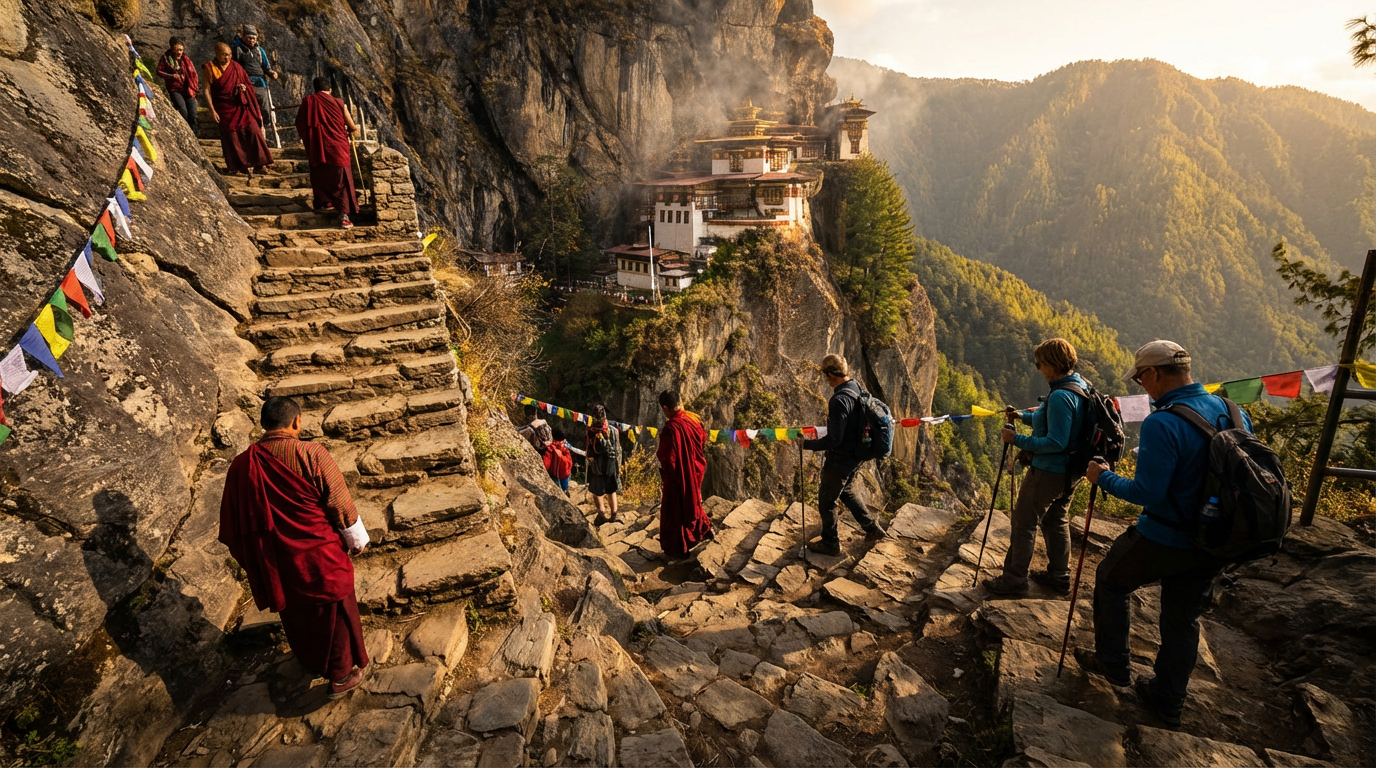
This image was generated with AI.
Difficulty and Fitness Level
The hike to Tiger's Nest is technically not difficult – the trail is well-maintained and requires no climbing. The real challenge is the altitude: You start above 2,600 meters and reach 3,120 meters. The thinner air makes every step more strenuous than it would be at sea level. People with average fitness can manage the hike if they allow enough time and take regular breaks. If you have serious heart or lung problems, consult your doctor first.
| Section | Duration | Elevation | Character |
|---|---|---|---|
| Parking Area → Cafeteria | 1–1.5 hrs | +400 m | Moderate climb through forest |
| Cafeteria → Monastery | 1.5–2 hrs | -100 m, +500 m | Descent, then steep stairs |
| Monastery Visit | 1–1.5 hrs | – | Exploring the temples |
| Descent (total) | 2–2.5 hrs | -800 m | Easier than ascent |
| Total | 4–6 hrs | ~1,600 m | Moderate |
Practical Information
Opening Hours and Admission
| Information | Details |
|---|---|
| Opening Hours | 6:00–17:00 (last admission approximately 16:00) |
| Closed Day | Tuesday (all year round) |
| Adult Admission | 1,000 Nu / approximately $12 USD |
| Children Admission | 500 Nu / approximately $6 USD |
| Ticket Purchase | At the parking area before the hike |
What to Bring
The right equipment makes the difference between an enjoyable hike and a struggle. Most important: sturdy footwear and sufficient water – don't underestimate either!
Best Time of Day to Visit
The ideal start for the Tiger's Nest hike is between 6:00 and 7:00 in the morning – right at opening time. At this time it's still cool, the air is clear, and you'll reach the monastery before most tour groups. In the afternoon it can get very warm at altitude, and the monastery fills with visitors. An early start also means you have plenty of buffer time if the weather turns in the afternoon.
At the Monastery: What to Expect
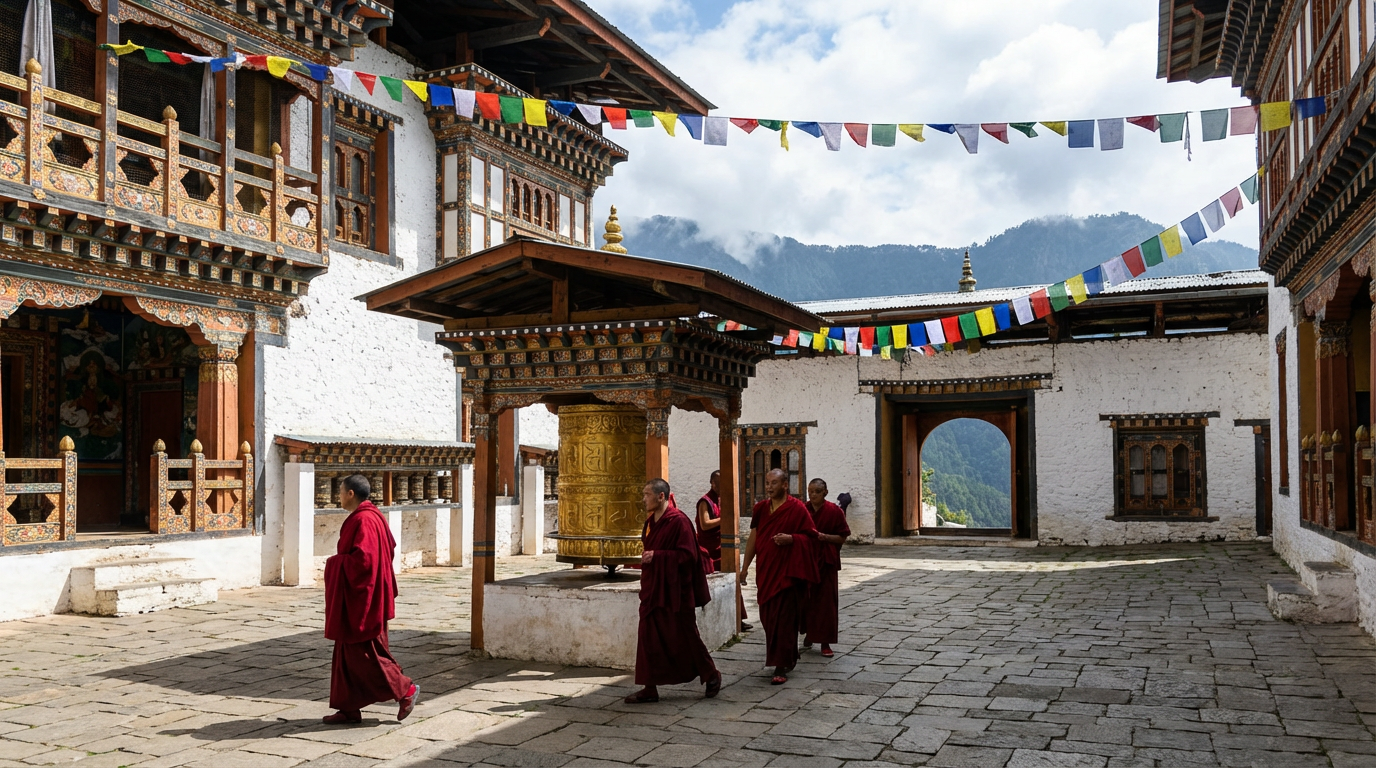
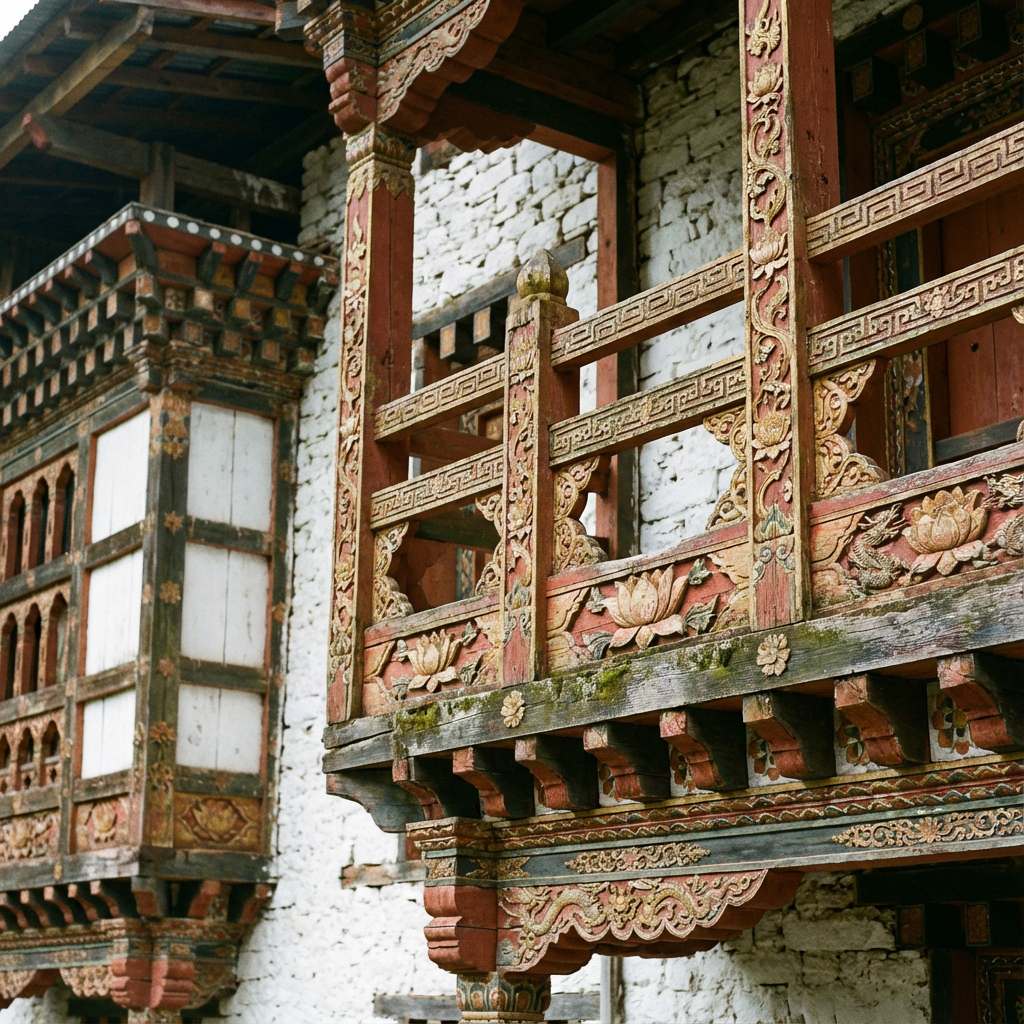
Tiger's Nest is not a museum, but a living monastery. When you enter the courtyard, you're enveloped by the scent of incense and the sound of soft prayers. The complex consists of several temples connected by steep stairs and narrow galleries – all built into the rock wall. You'll see golden Buddha statues, centuries-old murals, flickering butter lamps, and the sacred cave where Guru Rinpoche is said to have meditated. Monks go about their daily rituals – you are a guest in their spiritual home.
This image was generated with AI.
Photography and Behavior Rules
These rules may seem strict, but they protect a sacred place and enable an authentic experience. Without smartphones and cameras, you can truly absorb the moment rather than just document it. Your guide will lead you through the various temples and explain their religious significance.
History and Spiritual Significance
Tiger's Nest is far more than a spectacular structure – it is one of the holiest sites of Tibetan Buddhism. To understand the significance of this monastery, one must know the legend surrounding Guru Rinpoche, the "Second Buddha," who brought Buddhism to Bhutan and Tibet.
The Legend of Guru Rinpoche and the Tigress
This legend explains the name "Tiger's Nest" (Taktsang) and makes this place one of the most important pilgrimage sites of Vajrayana Buddhism. The cave where Guru Rinpoche is said to have meditated is still the spiritual center of the monastery and can be visited. For believing Buddhists, a visit here is a life-changing event – many walk from all parts of Bhutan to pray here.
Construction and Reconstruction of the Monastery
| Year | Event |
|---|---|
| 8th Century | Guru Rinpoche allegedly meditates in the cave |
| 1692 | Monastery construction by Gyalse Tenzin Rabgye, the fourth Druk Desi |
| 1998 | Tragic fire nearly completely destroys the monastery |
| 2000–2005 | Extensive, faithful restoration |
| 2005 | Ceremonial reopening of the reconstructed monastery |
The devastating 1998 fire shocked all of Bhutan. The fire destroyed large parts of the historic monastery, including irreplaceable artworks and religious artifacts. The reconstruction was a national project: Financed by the royal family and donors worldwide, traditional craftspeople worked for years to faithfully reconstruct the monastery. The Tiger's Nest you see today is this reconstruction – a testament to Bhutanese craftsmanship and deep devotion.
Insider Tips for Your Visit
The Best Season for Tiger's Nest
The optimal months are October–November and March–May. In autumn the air is particularly clear with spectacular views. In spring rhododendrons bloom along the trail – a splash of color against the monastery backdrop. Avoid monsoon season (June–August): fog often obscures the monastery and trails can be slippery. In winter (December–February) it's cold, but usually sunny and least crowded.
Avoid the Peak Times
Most tour groups start around 9:00–10:00 and reach the monastery at lunchtime. If you start early (6:00–7:00), you'll have the monastery almost to yourself. Alternatively: Start late morning and plan to reach the monastery around 15:00–16:00 – then most groups are already on their way back.
Using the Cafeteria Strategically
The cafeteria halfway up offers more than just refreshments – it has the best views! Plan time here deliberately: on the way up for a quick break and photos, on the way down for a relaxed lunch with a view of the monastery. The food is simple but good: tea, coffee, dal with rice, momos. The restrooms here are the last before the monastery.
Descent: The Way Down Takes Time Too
Many underestimate the descent. While it's downhill, steep stairs are hard on the knees and altitude fatigue sets in faster. Plan almost as much time for the descent as the ascent – especially if you're not sure-footed. Trekking poles are particularly helpful on the way down. Take your time and enjoy the views one more time.
What Your Guide Might Not Tell You
Most guides take you through the main temples, but ask about the "Pelphug" – Guru Rinpoche's original meditation cave. It's small and dark, but the most spiritually significant spot in the entire complex. The terrace overlooking the abyss is also worth visiting – from here you truly understand how incredibly situated the monastery really is.
Alternatives and Combinations
For visitors with more time or looking for a special challenge, there are alternatives to the classic Tiger's Nest hike. Combining this with other Paro attractions is also easy to plan.
 2-Day Trek
 This image was generated with AI.
Bumdra Trek: The Alternative from Above
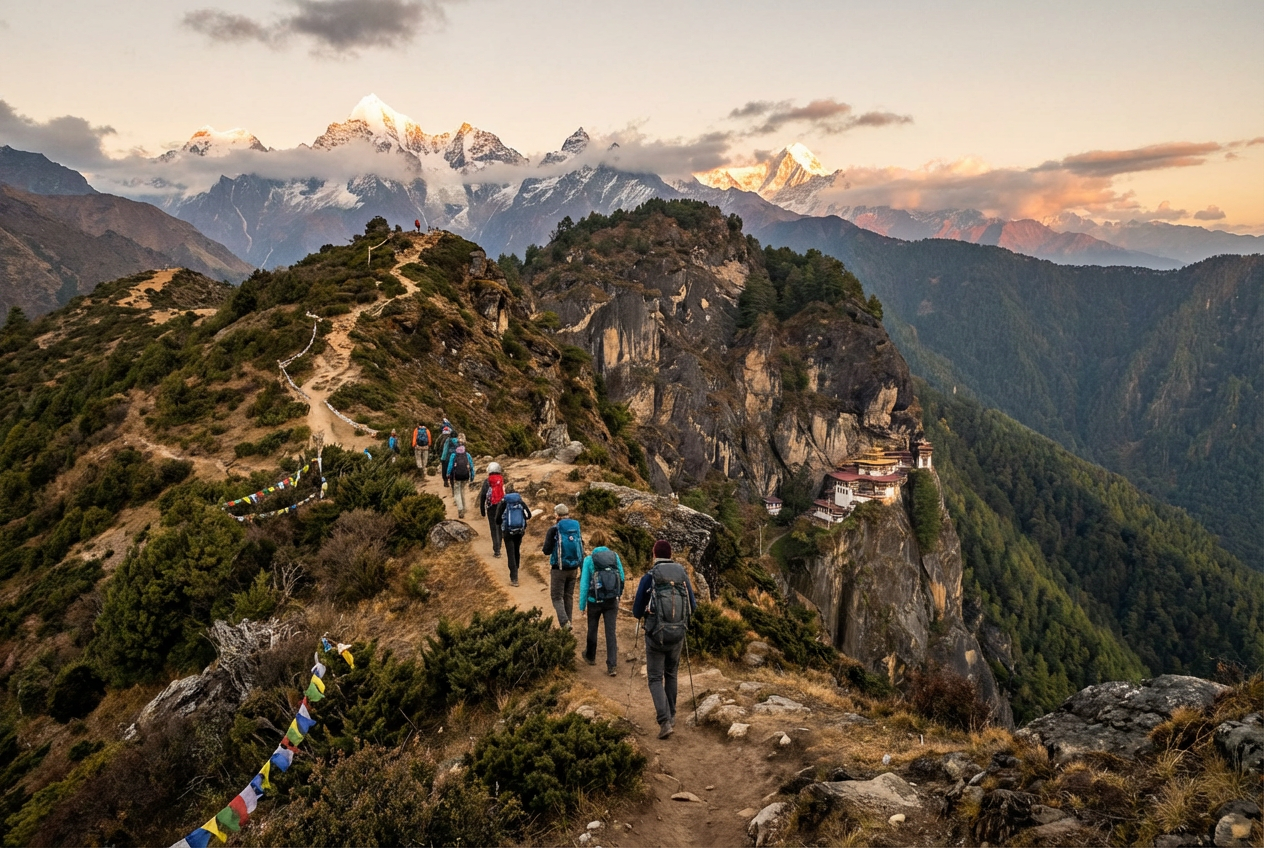
Two-day trek with overnight camp stay. You reach Tiger's Nest from above – more spectacular and less crowded than the standard route. For experienced hikers.
 Day Planning
 This image was generated with AI.
Paro in One Day: Tiger's Nest + Kyichu Lhakhang
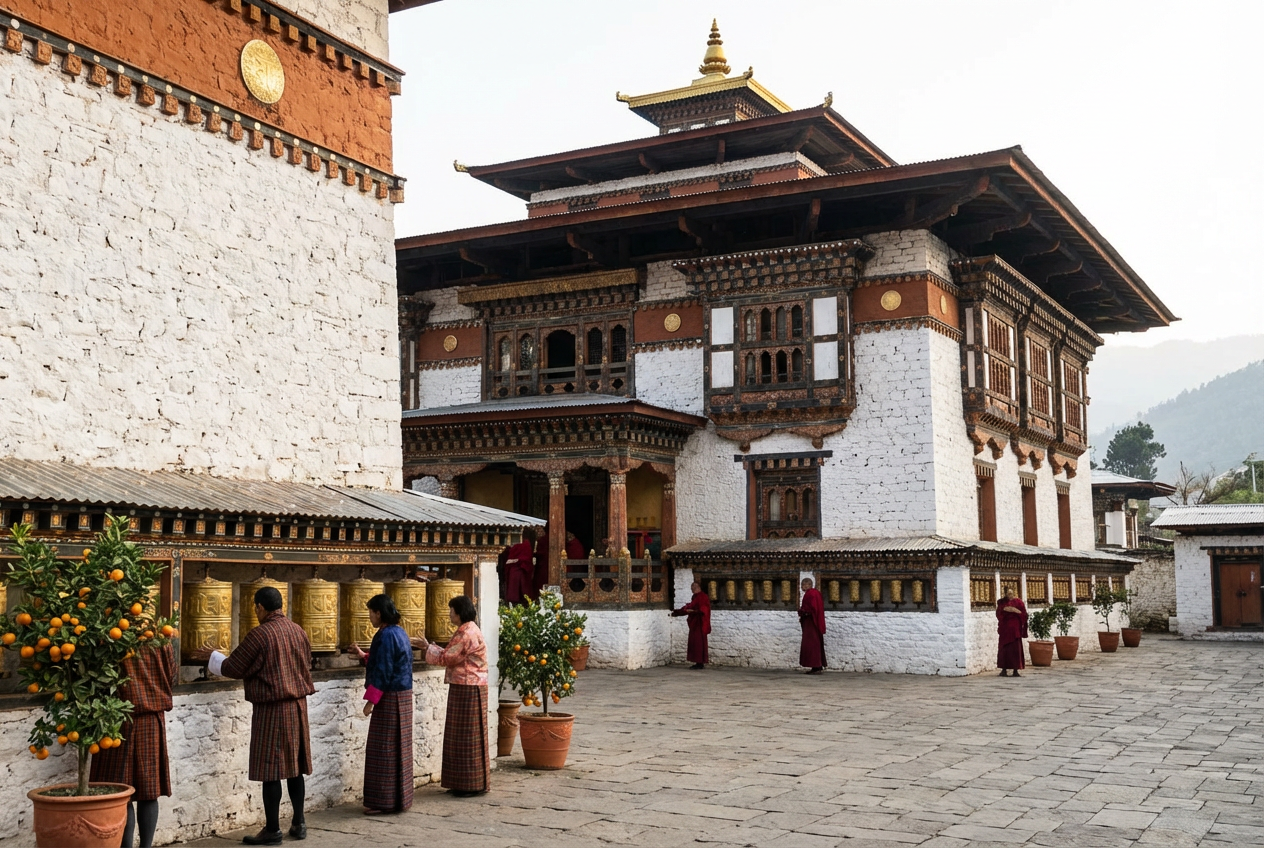
Combine the Tiger's Nest hike in the morning with a visit to the ancient Kyichu Lhakhang in the afternoon – two spiritual highlights in one day.
Frequently Asked Questions About Tiger's Nest
How long does the Tiger's Nest hike take?
The entire Tiger's Nest hike and return takes 4–6 hours, depending on fitness level and breaks taken. The ascent to the monastery takes about 2–3 hours, the descent 1.5–2 hours. Plan an additional 1–1.5 hours for the monastery visit. Overall, you should budget half to a full day.
How high is Tiger's Nest?
Tiger's Nest Monastery is located at approximately 3,120 meters above sea level. The starting point at the parking area is about 2,600 meters. So you gain about 500–600 meters in elevation during the ascent. The monastery itself clings to a rock wall about 900 meters above the valley floor.
Is the Tiger's Nest hike difficult?
The hike is moderately difficult. Technically it's not demanding – the trail is well-maintained and requires no climbing. The challenge is the altitude: At 2,600–3,100 meters the air is thinner, which increases the effort. People with average fitness can manage the hike if they allow enough time and take breaks. Anyone with serious heart or lung problems should consult a doctor first.
When is Tiger's Nest closed?
Tiger's Nest is closed to visitors every Tuesday all year round. It may also be closed on some religious holidays. Regular opening hours are daily (except Tuesday) from 6:00 to approximately 17:00, with last admission around 16:00.
Can I reach Tiger's Nest on horseback?
Partially. You can rent a mule or horse for the first stage – from the parking area to the cafeteria at the halfway point. Cost: about 500–1,000 Nu ($6–12 USD) per leg. From the cafeteria onward, the trail is only passable on foot – steep stairs and narrow paths don't allow animals. Everyone must walk the final hour.
Can I take photos at Tiger's Nest?
Photography and filming are strictly forbidden inside the monastery. Cameras, smartphones, and bags must be deposited in free lockers at the entrance. The best Tiger's Nest photos are taken outside anyway: The classic photo spot is the viewpoint at the cafeteria or along the hiking trail. Photography is only forbidden inside the monastery itself.
What does admission to Tiger's Nest cost?
Admission for adult visitors is 1,000 Ngultrum (approximately $12 USD), for children 500 Nu (approximately $6 USD). Tickets are purchased at the parking area before the hike. Additional costs may apply for a mule ($500–1,000 Nu) and refreshments at the cafeteria.
What should I wear to Tiger's Nest?
For the hike: Comfortable hiking clothes, sturdy shoes (no sandals!), layers you can add and remove. For the monastery: Shoulders and knees must be covered. Bring loose long pants and a long-sleeved shirt in case your hiking clothes don't meet the requirements. Hats and sunglasses must be removed inside the monastery.
When is the best time to visit Tiger's Nest?
The best season is March–May (spring with rhododendron blooms) and September–November (clear air, best visibility). The best time of day is early morning from 6:00 – cooler temperatures, fewer visitors, best light. Avoid monsoon season (June–August) due to fog and slippery trails.
How early should I start?
Ideally, start between 6:00 and 7:00 in the morning, right at opening time. Benefits: cool temperatures, clear air, fewer other visitors, plenty of buffer for weather changes. Most tour groups start around 9:00–10:00 – if you start earlier, you'll have the monastery almost to yourself.
Impressions of Tiger's Nest
This image was generated with AI.
This image was generated with AI.
This image was generated with AI.
This image was generated with AI.
This image was generated with AI.
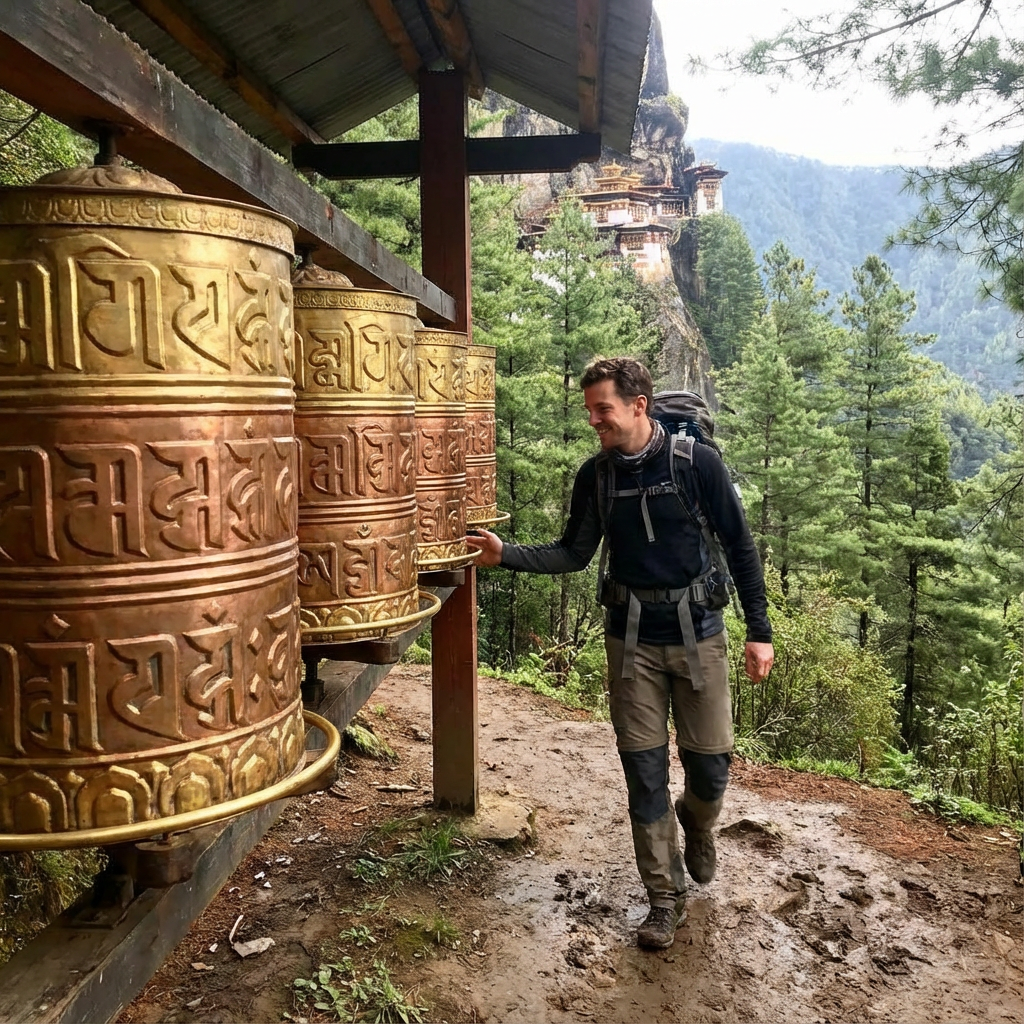
This image was generated with AI.
More Information
Hiking in Bhutan
Experience Tiger's Nest Yourself?
We plan your Bhutan trip including the unforgettable Tiger's Nest hike – with perfect timing and all practical details.