Bhutan Vaccinations & Health 2026: Altitude Sickness, Travel Medicine Kit & Tips
Last updated:
Bhutan presents no extraordinary health risks for travelers from English-speaking countries. The two most important factors for your preparation are recommended vaccinations and the elevation of tourist areas between 1,300 and 3,100 meters. With proper precautions and a good travel insurance policy, your Bhutan trip is safe from a health perspective.
Key Facts at a Glance
Recommended Vaccinations for Bhutan
When entering from most English-speaking countries, no mandatory vaccinations are required. However, there are clear recommendations from health authorities that you should follow. Individual consultation with your doctor or tropical medicine specialist is advisable to review your personal vaccination status.
Mandatory Vaccinations
Standard Vaccination Recommendations for All Bhutan Travelers
| Vaccination | Recommendation | Notes |
|---|---|---|
| Tetanus | Strongly recommended | Booster every 10 years |
| Diphtheria | Strongly recommended | Booster every 10 years |
| Pertussis (Whooping Cough) | Recommended | Combination vaccine with Tetanus/Diphtheria available |
| Polio | Recommended | Verify baseline immunization |
| Measles | Recommended | Especially relevant for those born after 1970 |
| Hepatitis A | Strongly recommended | Health authority recommendation for all travelers |
Vaccinations for Specific Risks
Depending on your travel style, length of stay, and planned activities, additional vaccinations may be advisable. Discuss these options with your doctor or tropical medicine specialist.
| Vaccination | Recommended For | Notes |
|---|---|---|
| Hepatitis B | Longer stay, close contact with local population | Combination vaccine with Hepatitis A available |
| Typhoid | Adventure travel, extended stays, basic accommodation | Oral vaccine or injection available |
| Rabies | Trekking, rural areas, children | Moderate risk from street dogs in cities |
| Japanese Encephalitis | Rainy season, rural areas in the south | Seasonal and regionally limited |
| Influenza | Older travelers, chronic conditions | Seasonal recommendation |
Vaccination Timeline: When to Plan
Begin vaccination planning well in advance, as some vaccinations require multiple doses over several weeks. Here's how to proceed:
| Timeframe Before Departure | Action |
|---|---|
| 6–8 weeks before | Vaccination consultation with doctor or tropical medicine clinic |
| 4–6 weeks before | Start vaccination series if multiple doses required |
| 2 weeks before | Last possible time for single dose vaccinations |
| Shortly before departure | Verify vaccination record, make copy for travel documents |
Altitude Sickness in Bhutan
Elevation is the most important health factor for Bhutan travelers. The good news: most tourist destinations are between 1,300 and 2,600 meters – an elevation that most people adapt to well within a few days. It only becomes critical during trekking with passes over 4,000 meters.
Elevation of Key Locations
| Location | Elevation | Altitude Sickness Risk |
|---|---|---|
| Punakha | 1,300 m | Minimal |
| Paro | 2,280 m | Low |
| Thimphu | 2,320 m | Low |
| Bumthang | 2,600 m | Low to moderate |
| Dochula Pass | 3,100 m | Moderate – brief pass crossing |
| Tiger's Nest (Taktsang) | 3,120 m | Moderate – day hike |
| Trekking Passes | up to 5,000 m | High – good acclimatization required |
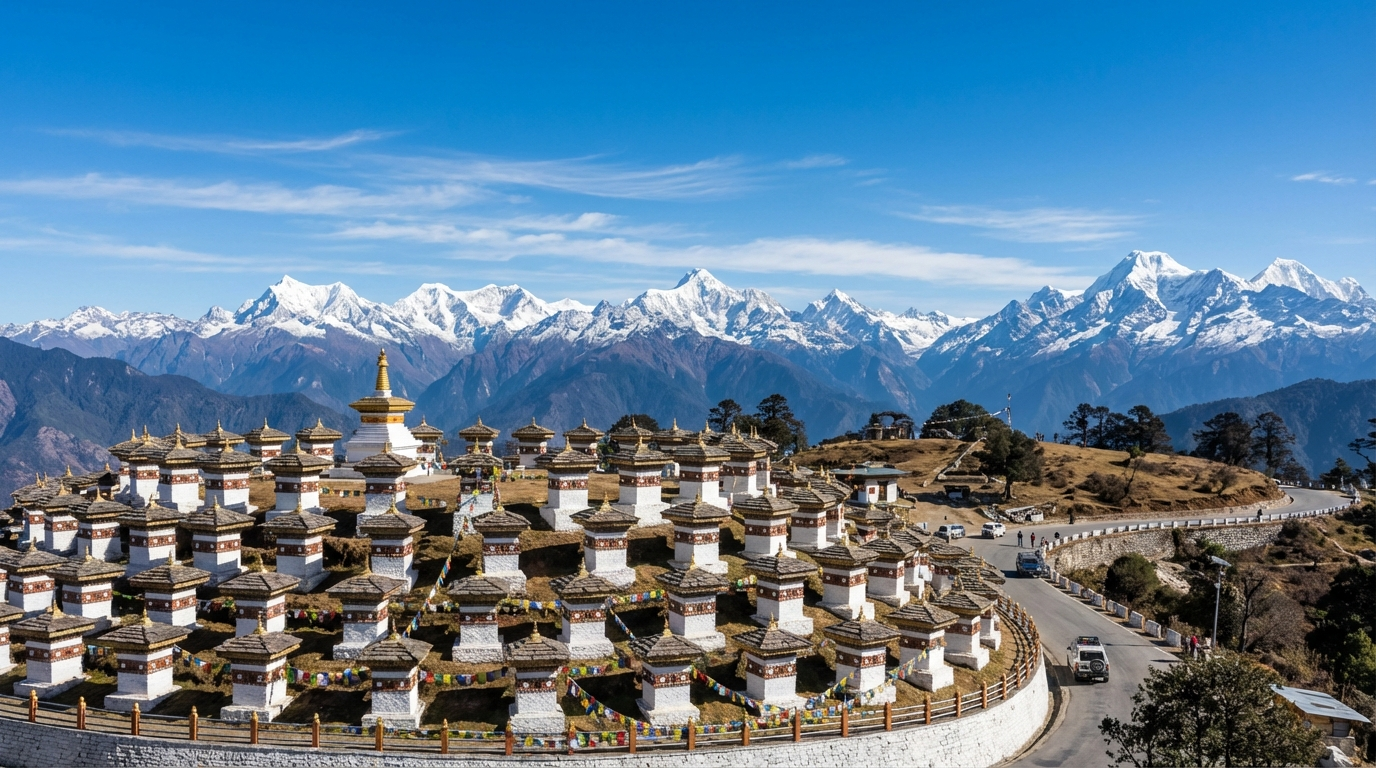
This image was generated with AI.
Recognizing Symptoms
Mild Symptoms (Often above 2,500 m)
- Headaches
- Nausea
- Loss of appetite
- Sleep disturbances
- Fatigue
- Mild dizziness
These symptoms are normal and usually subside after 1–2 days of acclimatization.
Severe Symptoms (Warning Signs!)
- Severe, persistent headaches
- Vomiting
- Shortness of breath at rest
- Confusion
- Loss of coordination
- Gurgling breathing sounds
Prevention and Acclimatization
| Measure | Recommendation |
|---|---|
| Gradual Acclimatization | Plan 1–2 nights at moderate elevation, e.g., Punakha (1,300 m) |
| Drink Plenty of Water | 3–4 liters per day |
| No Alcohol | At least first 1–2 days after arrival |
| Light Meals | Don't overeat, choose easily digestible foods |
| Adequate Sleep | Your body needs rest to adjust |
| Limit Physical Exertion | No strenuous activities the first few days |
Diamox (Acetazolamide) – Medication Support
Diamox is a prescription medication that can accelerate acclimatization. It is primarily recommended for trekking at elevations over 4,000 meters. Use must be discussed with a doctor beforehand.
| Aspect | Information |
|---|---|
| Effect | Accelerates the body's adaptation to altitude |
| Typical Dosage | 125–250 mg, twice daily – only with doctor's prescription |
| Start Taking | 1 day before ascending to higher elevations |
| Common Side Effects | Tingling in hands/feet, increased urination |
| Contraindications | Sulfonamide allergy, kidney disease |
Travel Medicine Checklist
A well-equipped travel medicine kit is essential for Bhutan. Pharmacies locally have limited selections, and familiar medication brands are rarely available. Bring all needed medications from home.
Basic Kit for All Travelers
| Category | Recommended Medications |
|---|---|
| Pain & Fever | Acetaminophen, Ibuprofen |
| Gastrointestinal | Loperamide (diarrhea), Electrolyte powder, Metoclopramide (nausea) |
| Cold/Respiratory | Nasal spray, Throat lozenges |
| Allergies | Cetirizine or Loratadine |
| Wound Care | Antiseptic, Bandages, Dressing materials |
| Insect Protection | DEET-based insect repellent (30–50%) |
| Sun Protection | SPF 50+, altitude-appropriate, lip balm included |
| Eyes | Eye drops for dry eyes (altitude = dry air) |
Additional for Trekking
| Medication/Material | Use |
|---|---|
| Diamox (Acetazolamide) | With doctor's prescription – altitude adaptation |
| Dexamethasone | Emergency medication for severe altitude sickness – consult doctor |
| Broad-spectrum Antibiotic | With doctor's prescription for emergencies |
| Blister Plasters (Compeed) | Plenty of supply – essential for trekking |
| Sports Tape | For joints and ankles |
| Emergency Blanket | For emergencies |
Travel Insurance with Medical Evacuation
Why is good insurance so important?
| Reason | Explanation |
|---|---|
| High Evacuation Costs | Helicopter or medical flight can cost 10,000+ EUR |
| No Government Coverage | Home country health plans may only cover home-country rates |
| Limited Local Care | Serious cases often cannot be adequately treated locally |
| Trekking Risks | Rescue from remote areas requires helicopter |
Insurance Requirements
| Coverage | Recommendation |
|---|---|
| Medical Treatment | Unlimited or at least 500,000 EUR |
| Medical Evacuation | Medically reasonable AND medically necessary |
| Rescue Costs | At least 10,000 EUR – important for trekking |
| Altitude Coverage | Up to at least 6,000 m for trekking |
| 24h Emergency Hotline | Reachable from Bhutan |
Recommended Insurance Providers
International Options
- World Nomads
- SafetyWing
- IMG Global
- AXA Travel Insurance
Regional Providers
- Allianz Travel
- AIG Travel
- Generali
- ERGO Travel Insurance
Medical Care On-Site
Medical care in Bhutan is not comparable to European standards but adequate for basic treatment. Doctors practice exclusively in hospitals – private practices don't exist. For serious illnesses, evacuation to India or Thailand is recommended.
Hospitals in Major Towns
| City | Facility | Standard |
|---|---|---|
| Thimphu | Jigme Dorji Wangchuck National Referral Hospital | Best hospital in the country, specialists available |
| Paro | Paro Hospital | Basic care |
| Punakha | District Hospital | Basic care |
| Bumthang | Jakar Hospital | Basic care |
| Mongar | Eastern Regional Referral Hospital | Better coverage for East Bhutan |
Realistic Expectations
| Aspect | Situation |
|---|---|
| Language Skills | English often possible, local languages less common |
| Medical Equipment | Not comparable to European standards |
| Medication Selection | Limited |
| Specialists | Only available in Thimphu |
| Wait Times | Can be long |
For Serious Illnesses
For serious illness or injury, we recommend evacuation to a modern hospital. The nearest options with international standards are New Delhi (approximately 2.5 hours flight) and Bangkok (approximately 4 hours flight).
Emergency Numbers in Bhutan
| Service | Number |
|---|---|
| Police | 113 |
| Ambulance | 112 |
| Fire Department | 110 |
| Jigme Dorji Wangchuck Hospital (Thimphu) | +975-2-322496 |
Additional Health Risks
Malaria
Diarrheal Illnesses
Diarrheal illnesses are the most common health problem for tourists in Asia. In Bhutan, the risk is low when staying in good hotels, but caution is still advised. The rule "Cook it, peel it, boil it or forget it" applies here too.
- Drink water only from sealed bottles
- No ice cubes made from tap water
- Eat fruit only peeled
- Ensure food is thoroughly cooked
Rabies
Bhutanese cities have many stray dogs. If bitten or scratched, seek medical care immediately. Post-exposure prophylaxis is available, but vaccine may not be available everywhere – another reason to get vaccinated before travel if planning extended stays.
Dengue Fever
There is risk for dengue fever in southern lowland regions. Since no vaccine exists, consistent daytime mosquito protection is important.
Practical Health Tips
Before Your Trip
- Tropical Medicine Consultation: See doctor or tropical medicine clinic 4–6 weeks before departure
- Check Vaccination Status: Update recommended vaccinations
- Purchase Travel Insurance: With medical evacuation – absolutely essential!
- Assemble Travel Medicine Kit: See checklist above
- Dental Checkup: Dental problems can worsen at altitude
- Chronic Conditions: Plan adequate medications plus extra supply
During Your Trip
- Drink Plenty: Elevation causes increased fluid loss – 3–4 liters daily
- Sun Protection: UV radiation is more intense at altitude – apply consistently
- Practice Hygiene: Wash hands regularly, use sanitizer
- Avoid Tap Water: Drink only sealed bottled water
- Listen to Your Body: With altitude symptoms, rest – never ignore them
Frequently Asked Questions
Do I need special vaccinations for Bhutan?
No mandatory vaccinations. However, Hepatitis A, Tetanus, Diphtheria, and Polio are strongly recommended. Depending on your travel style, Hepatitis B, Typhoid, and Rabies may also be useful. Individual consultation with a tropical medicine doctor 4–6 weeks before departure is advisable.
Will I get altitude sickness in Bhutan?
Most tourist locations are between 1,300 and 2,600 meters – an elevation that most people adapt to well. Mild symptoms like headaches or fatigue are normal in the first days. It only becomes critical for treks over 4,000 meters. Gradual acclimatization and adequate hydration minimize risk.
Do I need malaria prophylaxis for Bhutan?
No, not for most Bhutan trips. All major tourist areas (Paro, Thimphu, Punakha, Bumthang) are above 1,700 meters and malaria-free. Prophylaxis would only be needed for travel to the southern lowland near the Indian border.
What is the medical care like in Bhutan?
Care is adequate for basic treatment but not comparable to international standards. The best hospital is Jigme Dorji Wangchuck National Referral Hospital in Thimphu. For serious illness, evacuation to Delhi or Bangkok is recommended – which is why travel insurance with medical evacuation is essential.
Can I buy medications in Bhutan?
We strongly recommend bringing all needed medications from home. Pharmacies in Bhutan have limited selection, and familiar brands are often unavailable. Prescription medications should be carried in original packaging with English medical documentation.
Is tap water in Bhutan safe to drink?
No, do not drink tap water in Bhutan. Use only sealed bottled water. This applies to ice cubes and brushing teeth as well. In good hotels, tap water is safe for bathing.
What travel insurance do I need for Bhutan?
International health insurance with medical evacuation is essential. Look for: Unlimited treatment costs (or minimum 500,000 EUR), rescue costs of at least 10,000 EUR, 24h emergency hotline, and if trekking, coverage up to at least 6,000 meters elevation.
What do I do in a medical emergency in Bhutan?
Call ambulance (112) or your guide immediately. Contact your travel insurance 24h emergency line. For serious cases, evacuation to Delhi or Bangkok is best. In Thimphu, Jigme Dorji Wangchuck Hospital is the first contact (+975-2-322496).
More Important Information for Your Bhutan Trip
With proper preparation, you can enjoy your Bhutan trip with confidence. These topics will help with further planning:

This image was generated with AI.
Safety in Bhutan
Current safety situation, government advisories, and tips for solo travelers.
This image was generated with AI.
Regions & Elevations
Overview of all regions with detailed elevation information for trip planning.
This image was generated with AI.
Bhutan Packing List
What to pack – from travel medicine kit to the right clothing.
Questions about Trip Preparation?
We are happy to advise you on health topics and help plan your Bhutan journey.