Bhutan Trekking: Hiking Routes in the Himalayas for Nature Lovers
Last updated:
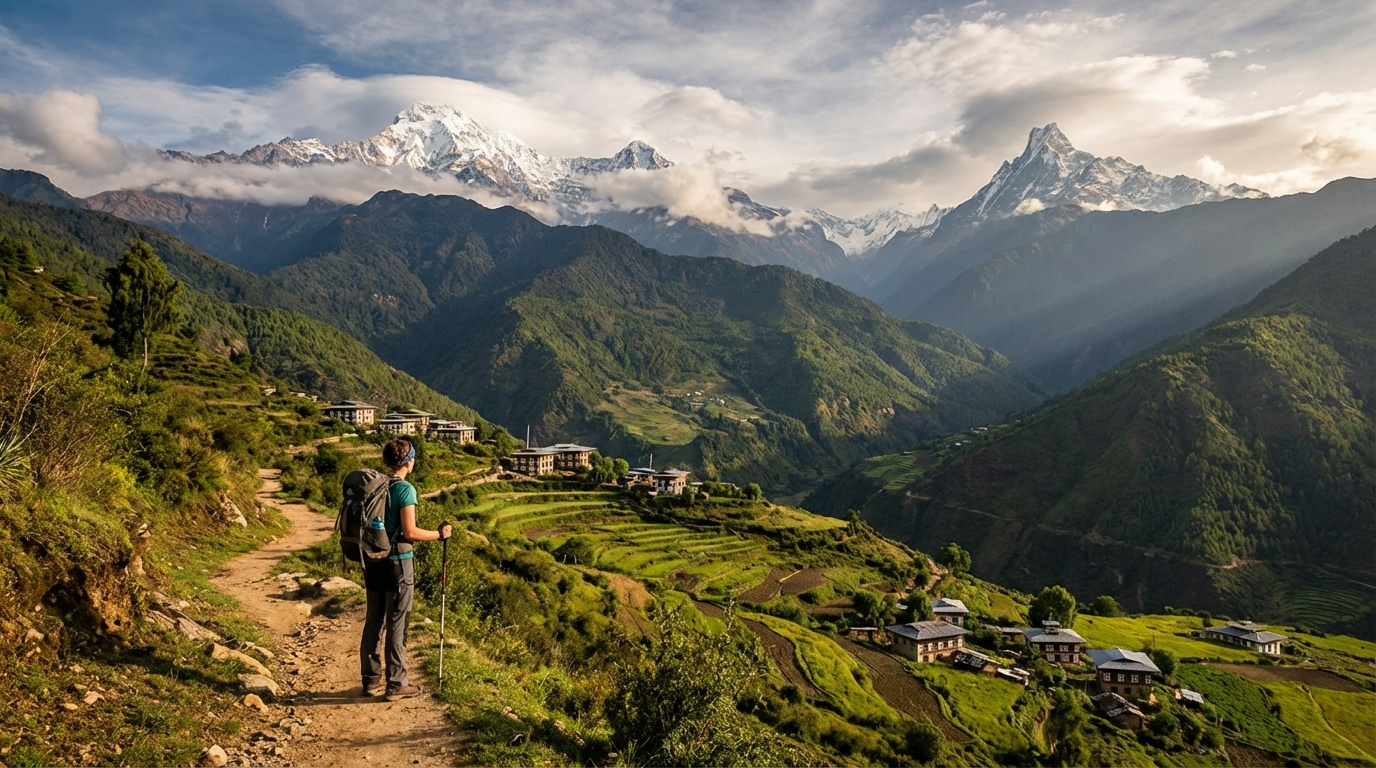
Bhutan is regarded as one of the last trekking paradises on Earth. While Nepal and Tibet have long been crossed by tourist streams, in Bhutan you still hike through virtually untouched mountain landscapes. Whether a multi-day high-altitude tour or a day's walk through rhododendron forests - this thematic route shows you how to combine trekking adventures with the cultural highlights of the Kingdom.
This image was generated with AI.
Why Trekking in Bhutan?
Bhutan's strict tourism policy has a decisive advantage: the trekking routes are not overcrowded. Where hundreds of hikers are on the way in Nepal, in Bhutan you often don't meet anyone for days except yak herders and your own group.
What to Expect
On a trek in Bhutan, you don't have to worry about anything. The complete camping equipment is provided, a cook prepares all meals, and pack animals transport the luggage. The tour operator organizes all necessary permits. You can fully focus on the experience.
Basic Requirements
- Good to very good physical fitness
- Willingness to plan for altitude acclimatization
- No technical climbing skills required
- Adaptability to simple conditions
Included in the Trek
- Licensed trekking guide
- Complete camping equipment (tents, mats)
- Cook and assistants
- Pack animals (horses or yaks)
- All meals during the trek
The Most Important Treks at a Glance
The following overview helps you choose the right trek. Pay special attention to the duration, maximum altitude, and required fitness level - we go into detail on each trek.
| Trek | Duration | Difficulty | Max. Altitude | Best Time |
|---|---|---|---|---|
| Druk Path | 4-6 Days | Moderate | 4,200 m | March-May, Sept-Nov |
| Jomolhari | 8-11 Days | Challenging | 4,930 m | March-May, Sept-Oct |
| Snowman | 25+ Days | Extreme | 5,320 m | Sept-Oct |
| Dagala Thousand Lakes | 5-6 Days | Moderate | 4,720 m | April-June, Sept-Oct |
| Bumthang Owl | 3-4 Days | Easy-Moderate | 3,600 m | Year-round |
Druk Path Trek: The Classic
This image was generated with AI.
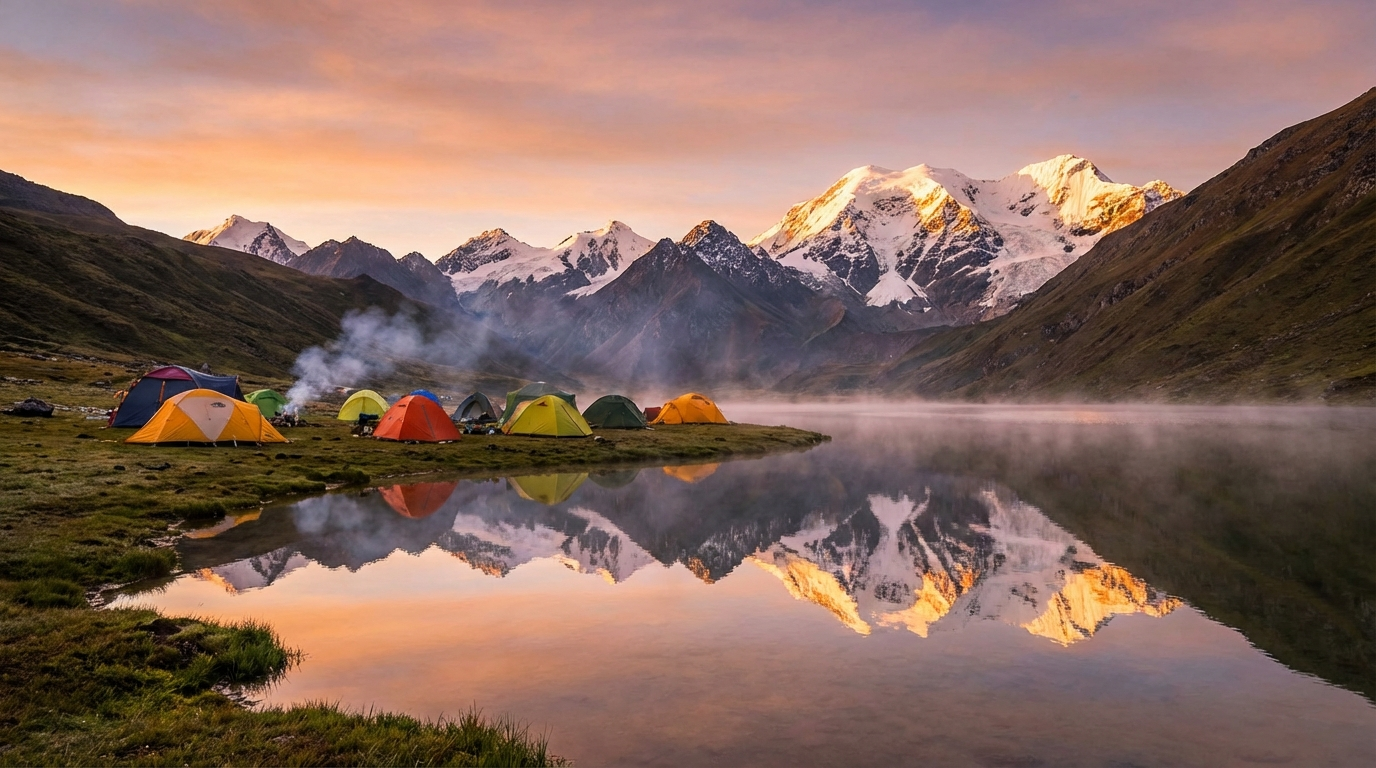
The Druk Path Trek connects Bhutan's two most important cities via a historic trade route through the high mountains. In 4-6 days you hike from Paro to Thimphu through rhododendron forests, past alpine lakes and with views of snow-capped peaks. The trek is ideal for first-time visitors who want to combine trekking and cultural sightseeing.
Key Facts
- Route: Paro to Thimphu (or reverse)
- Distance: approx. 65 km
- Duration: 4-6 days
- Difficulty: Moderate (good fitness required)
- Highest point: 4,200 m
Highlights
- Camping at alpine lakes (Jimilang Tsho, Simkotra Tsho)
- Panoramic view of Gangkar Puensum (7,570 m)
- Rhododendron bloom in spring
- Yak pastures and encounters with herders
- Historic Jele Dzong monastery fortress
Daily Stages
| Day | Stage | Altitude | Hiking Time |
|---|---|---|---|
| 1 | Paro (2,280 m) - Jele Dzong | 3,450 m | 5-6 hrs |
| 2 | Jele Dzong - Jangchulakha | 3,770 m | 4-5 hrs |
| 3 | Jangchulakha - Jimilang Tsho | 3,870 m | 4 hrs |
| 4 | Jimilang Tsho - Simkotra Tsho | 4,110 m | 3-4 hrs |
| 5 | Simkotra Tsho - Phajoding - Thimphu | 2,350 m (destination) | 6-7 hrs |
Detailed information on preparation, packing list, and booking can be found on our comprehensive guide to the Druk Path Trek.
Comprehensive Guide to the Druk Path Trek
Jomolhari Trek: The Adventure
This image was generated with AI.
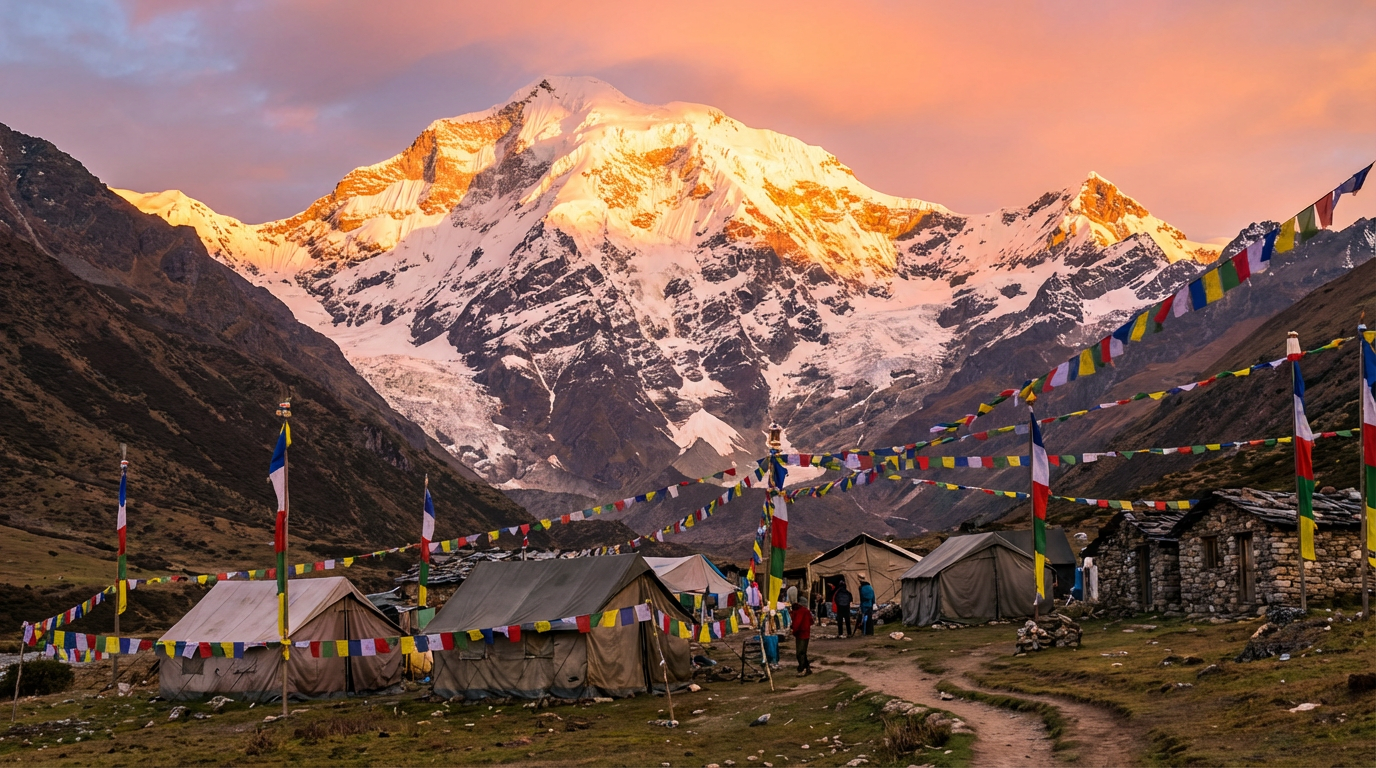
The Jomolhari Trek takes you to the foot of one of Bhutan's holiest mountains. The 7,326 m high Mount Jomolhari, also called the "Bride of Kanchenjunga," dominates the scenery from the spectacular Jangothang Basecamp. This trek is for experienced mountain hikers who are comfortable at altitudes up to 5,000 m and have 8-11 days available.
Key Facts
- Route: Drukyel Dzong (Paro) - Jangothang - Thimphu
- Distance: approx. 115 km
- Duration: 8-11 days
- Difficulty: Challenging
- Highest point: Yale-La Pass, 4,930 m
Highlights
- Jangothang Basecamp beneath the Jomolhari east face
- Glaciers and high-altitude lakes
- Encounters with yak herds and Brokpa herders
- Remote Lingshi Dzong fortress
- Crossing several passes above 4,500 m
Costs (Estimate)
| Item | Amount (approx.) |
|---|---|
| Trek package (incl. guide, equipment, meals) | 2,500-3,500 USD |
| SDF (10 nights) | 1,000 USD |
| Visa | 40 USD |
| Total Trek Portion | 3,540-4,540 USD |
All details about the Jomolhari Trek - from the daily route to optimal preparation - can be found in our comprehensive guide.
Comprehensive Guide to the Jomolhari Trek
Snowman Trek: The Ultimate Challenge
This image was generated with AI.
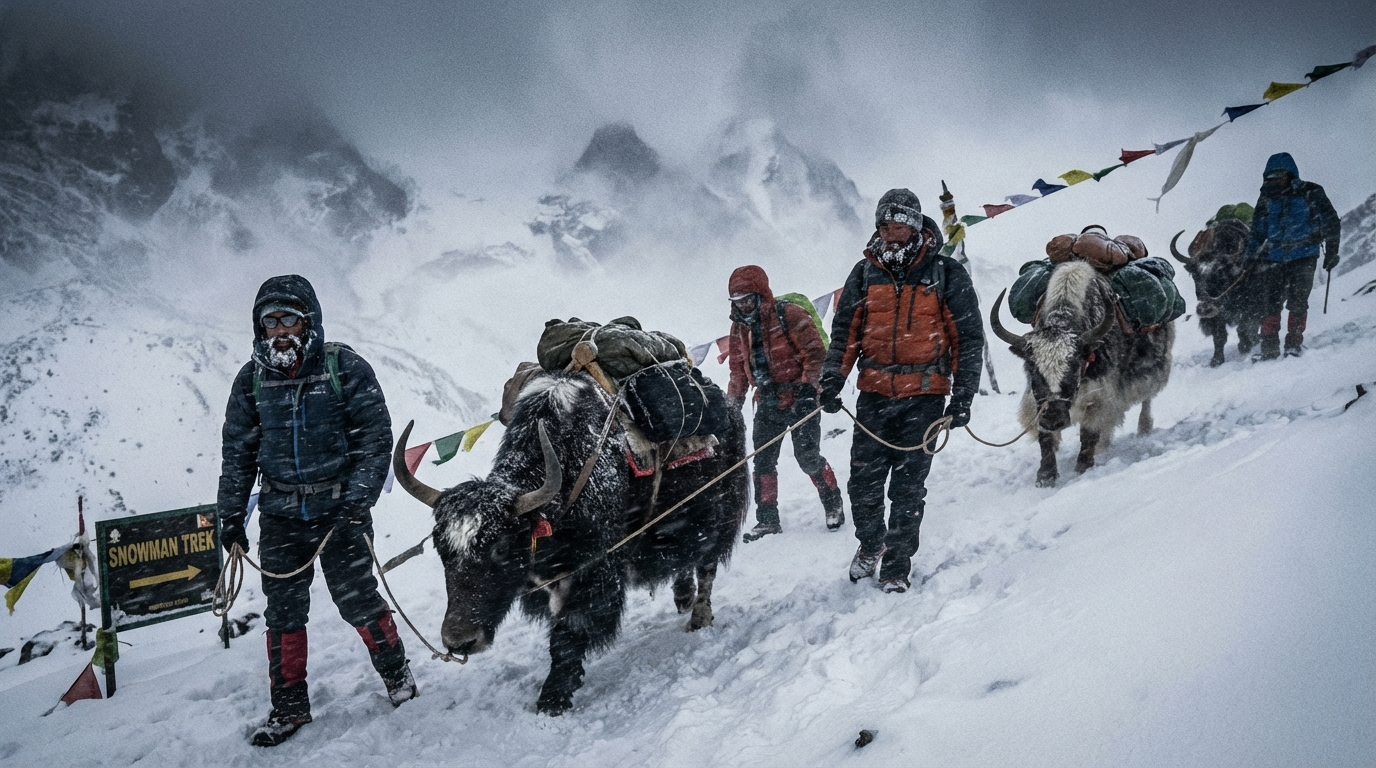
The Snowman Trek is considered one of the most demanding treks in the world. Over 25 to 30 days you traverse the remote Lunana region, cross 11 passes above 4,500 m and experience Bhutan's wildest mountain region. With a success rate of about 50 percent, this trek is only suitable for expedition-experienced trekkers.
Key Facts
- Route: Paro - Laya - Lunana - Trongsa/Bumthang
- Distance: approx. 320 km
- Duration: 25-30 days
- Difficulty: Extreme
- Highest passes: Several above 5,000 m
Requirements
- Proven high-altitude experience (5,000 m+)
- Excellent physical fitness
- 4-6 weeks available time
- Budget starting from 7,000 USD
- Mental readiness for hardship
Best and Only Time
The Snowman Trek is only possible in September and October. Before September, the monsoon blocks the routes; after October, the passes are snow-covered. This narrow time window also explains why only a few groups attempt the trek each year.
Learn Everything About the Snowman Trek
Other Recommended Treks
Besides the three best-known treks, Bhutan offers other worthwhile routes for different demands. These alternatives are often less crowded and offer special experiences.
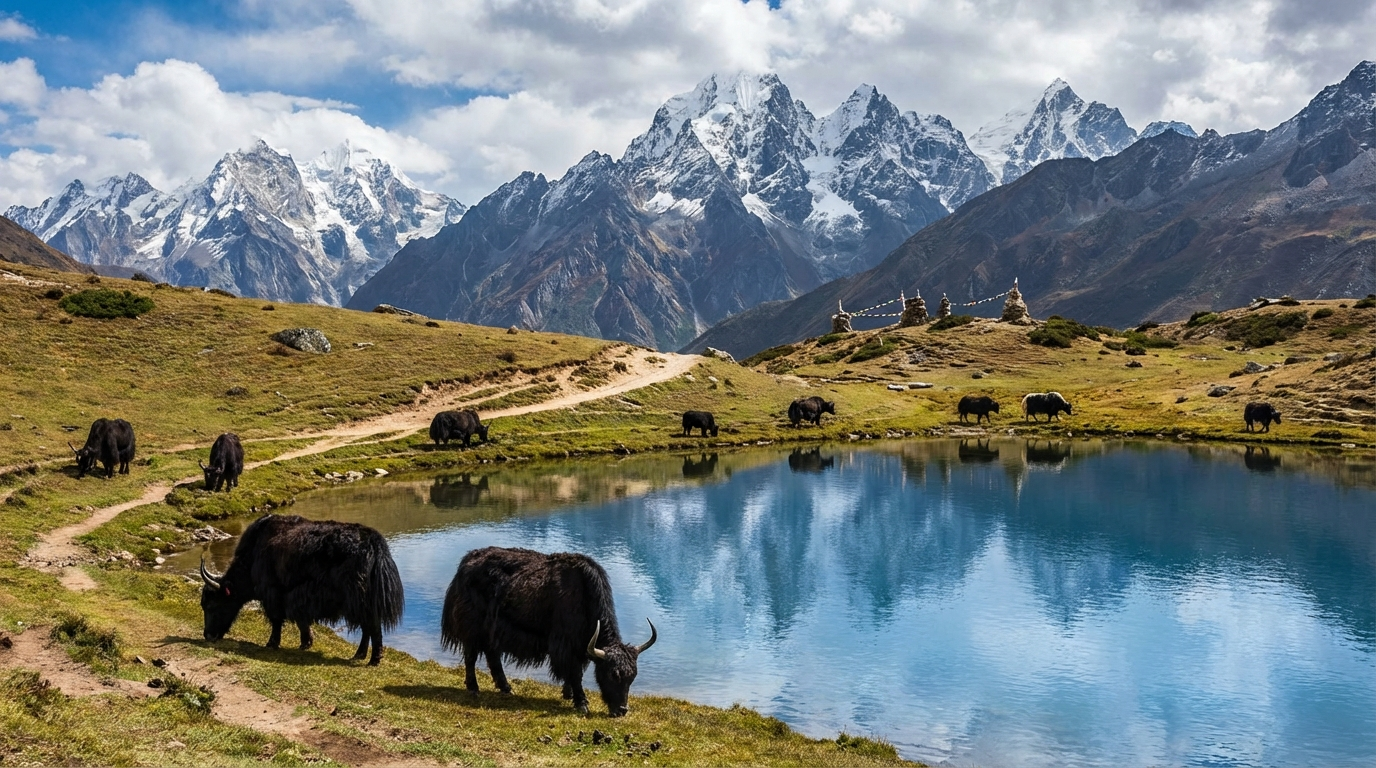 Moderate
 This image was generated with AI.
Dagala Thousand Lakes Trek
5-6 days through a high plateau with countless mountain lakes. Less known, very scenic, and technically less demanding than the Jomolhari.
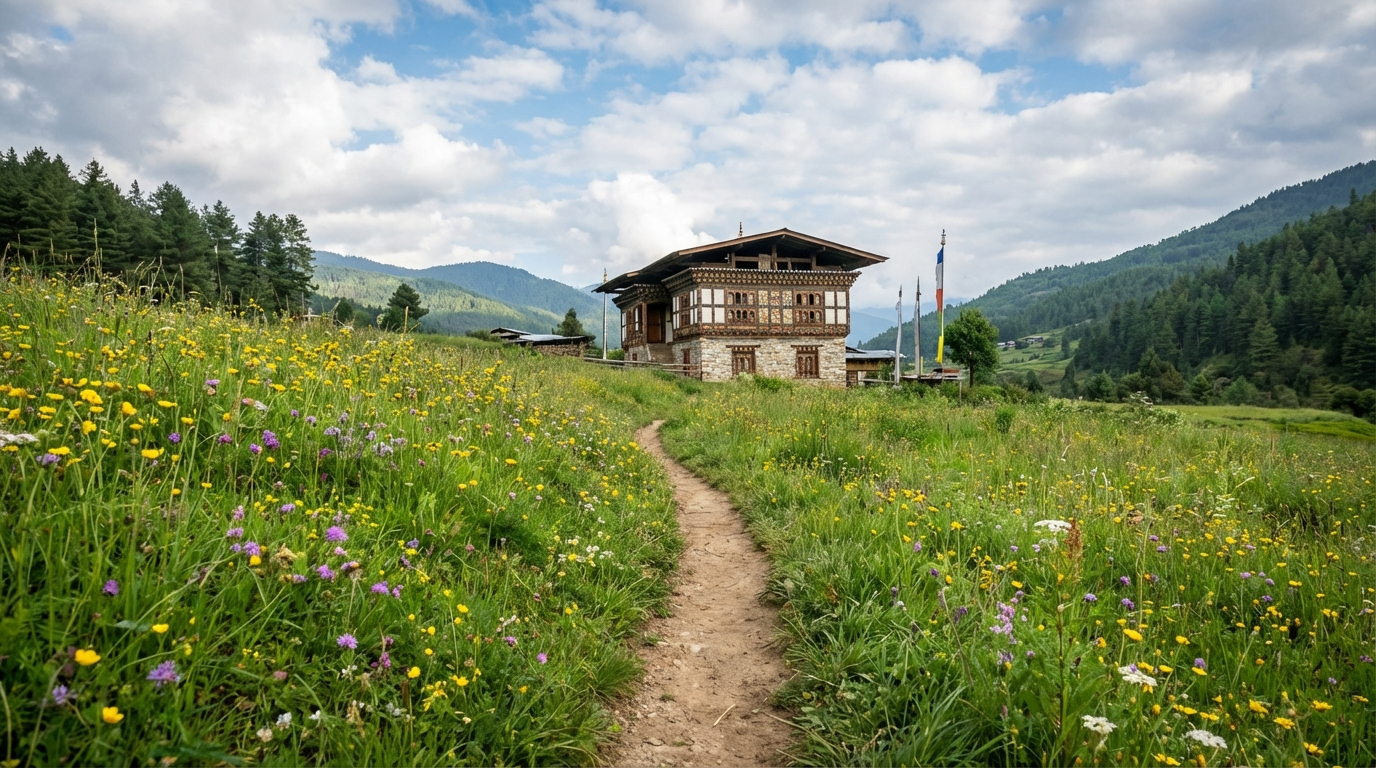 Easy-Moderate
 This image was generated with AI.
Bumthang Owl Trek
3-4 days ideal for beginners: connecting the Bumthang valleys with moderate altitudes and cultural encounters along the way.
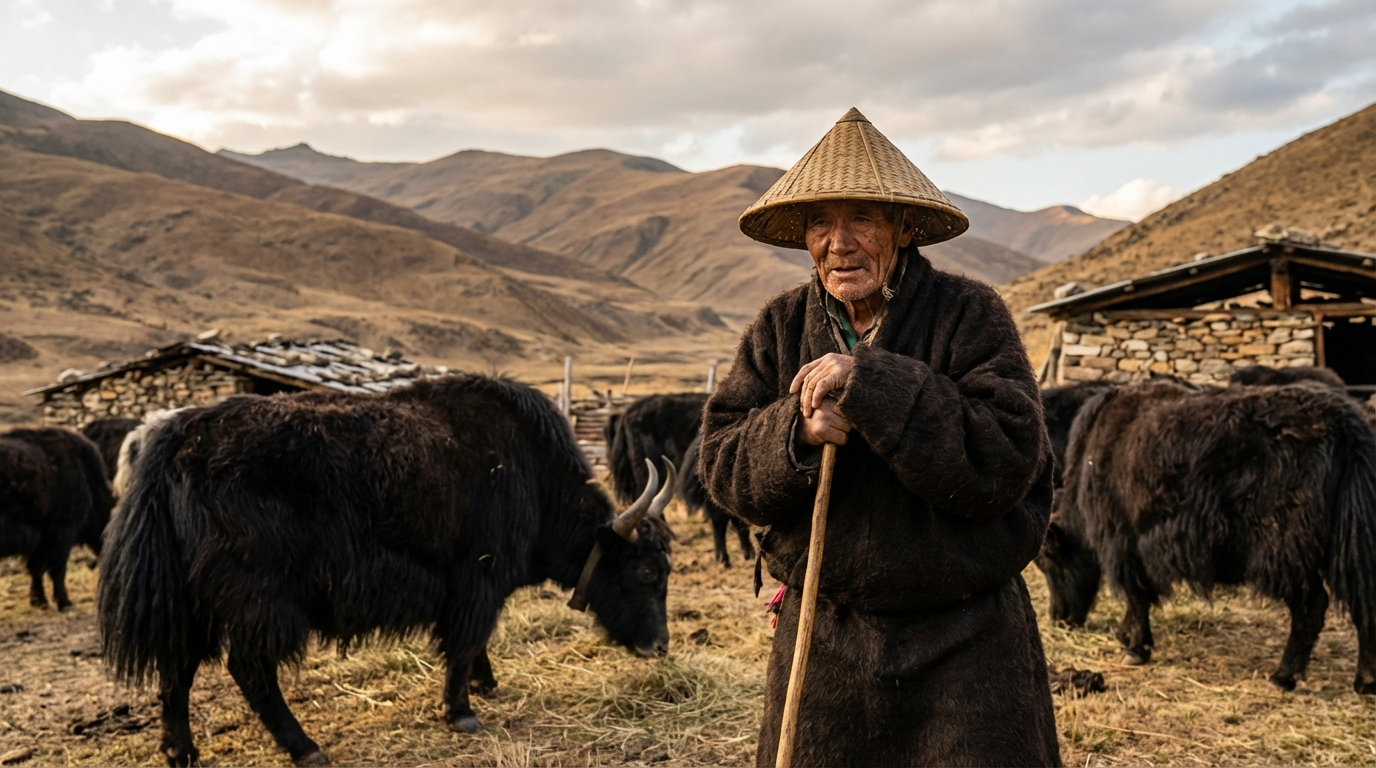 Moderate
 This image was generated with AI.
Merak-Sakteng Trek
5-6 days in Eastern Bhutan: culturally unique trek through the homeland of the Brokpa, a semi-nomadic people with their own language and traditional dress.
Trekking + Culture: Combined Routes
The smartest way to experience Bhutan is to combine trekking with cultural sightseeing. The cultural days before the trek also serve as acclimatization. And after days in the wilderness, you'll appreciate the cultural highlights all the more.
Route A: Druk Path + Western Bhutan (12-14 Days)
This route combines the cultural highlights of Western Bhutan with the classic Druk Path Trek. Ideal for first-time visitors with good fitness who want to experience the full Bhutan spectrum.
| Days | Activity | Accommodation |
|---|---|---|
| 1-2 | Arrival Paro, acclimatization, Paro Dzong | Paro |
| 3 | Thimphu: Buddha Dordenma, Memorial Chorten | Thimphu |
| 4 | Drive to Punakha, Punakha Dzong, Chimi Lhakhang | Punakha |
| 5-9/10 | Druk Path Trek (5-6 days) | Camping |
| 10/11 | Rest day Thimphu, optional sightseeing | Thimphu |
| 11/12 | Phobjikha Valley: Gangtey Monastery, hike | Phobjikha |
| 12/13 | Drive back to Paro, Tiger's Nest hike | Paro |
| 13/14 | Departure | - |
Route B: Jomolhari + Highlights (18-21 Days)
The comprehensive route for experienced trekkers: The challenging Jomolhari Trek combined with the most important cultural sites and an excursion to the spiritual Bumthang Valley.
| Days | Activity | Accommodation |
|---|---|---|
| 1-2 | Arrival Paro, acclimatization, Paro highlights | Paro |
| 3 | Thimphu: Tashichho Dzong, market | Thimphu |
| 4 | Punakha Dzong, Chimi Lhakhang, Phobjikha | Phobjikha |
| 5-14 | Jomolhari Trek (10 days) | Camping |
| 15 | Rest day Paro, recovery | Paro |
| 16-17 | Drive to Bumthang, Jambay Lhakhang, Kurjey | Bumthang |
| 18-19 | Drive back via Trongsa, Dochula Pass | Paro |
| 20 | Tiger's Nest hike | Paro |
| 21 | Departure | - |
Best Season for Trekking
For trekking in Bhutan there are two ideal time windows: spring (March to May) and autumn (September to November). The monsoon from June to August makes most treks impossible, and in winter the high passes are snow-covered.
| Month | Conditions | Recommendation |
|---|---|---|
| March | Clear, rhododendron begins to bloom | Good |
| April | Peak bloom, pleasant temperatures | Excellent |
| May | Warm, before monsoon | Good |
| June-August | Monsoon, wet, slippery trails | Not recommended |
| September | End of monsoon, still damp, clearing skies | Possible |
| October | Perfect: clearest views, stable weather | Best Time |
| November | Cool to cold, very clear skies | Excellent |
| December-February | Cold, snow on passes | Low treks only |
Detailed Information About the Best Time to Visit
Equipment and Preparation
The good news: your tour operator provides the complete camp equipment. You don't need to bring tents, sleeping bags, or cooking equipment. However, there is essential personal gear that you should obtain yourself.
Provided by Operator
- Tents (sleeping and kitchen/dining)
- Sleeping mats/mattresses
- Sleeping bags (on request, better to bring your own)
- Pack horses or yaks
- Cook and assistants
- Guide
- All meals
Bring Yourself
- Hiking boots (must be well-broken in!)
- Trekking poles
- Layered clothing (layering principle)
- Down jacket for cold evenings/mornings
- Headlamp with spare batteries
- Sun protection (glasses, cream, hat)
- Water bottle or hydration bladder
- Personal first aid kit
Comprehensive Packing List for Bhutan | Health and Altitude Sickness
Costs for Trekking Tours
Trekking in Bhutan is a premium experience with corresponding costs. Unlike Nepal, almost everything is included in the price: guide, equipment, meals, and transport. The following examples give you a realistic overview.
| Item | Amount (approx.) |
|---|---|
| SDF (13 nights) | 1,300 USD |
| Visa | 40 USD |
| Tour + Trek package (culture + trek) | 3,500-4,500 USD |
| Total on-site | 4,840-5,840 USD |
| Item | Amount (approx.) |
|---|---|
| SDF (20 nights) | 2,000 USD |
| Visa | 40 USD |
| Tour + trek package | 5,500-7,000 USD |
| Total on-site | 7,540-9,040 USD |
Detailed Cost Breakdown for Bhutan Trips
Frequently Asked Questions
How fit do I need to be for trekking in Bhutan?
It depends on which trek you choose. For the Druk Path you should exercise regularly and be able to handle 6-8 hours of hiking with a backpack. For the Jomolhari or Snowman Trek, high-altitude experience and excellent endurance are required. Start targeted endurance and strength training at least 3 months before your trip.
Can I visit Bhutan without trekking?
Of course. Bhutan offers wonderful day hikes like the ascent to Tiger's Nest (4-5 hours) or walks through Phobjikha Valley. A culture-focused trip is as rewarding as a trekking tour. Many visitors combine both.
Do I need my own trekking equipment?
Camp equipment (tents, mats, cookware) is completely provided. You only need personal gear: well-broken-in hiking boots, weatherproof clothing, sleeping bag (often provided, your own is better), headlamp, sun protection, and daypack. Trekking poles are highly recommended.
Is there cell phone coverage on the trek?
Usually not. On multi-day treks you'll be in areas without mobile coverage. That's part of the experience: genuine isolation. For emergencies, guides carry satellite phones.
What happens in bad weather?
Light rain is part of it and the trek continues. With severe storms or snow on passes, the guide decides on next steps - safety comes first. In rare cases, a trek must be aborted or rerouted. Good travel insurance is therefore essential.
How is the food on the trek?
Surprisingly good! The traveling cook prepares three hot meals daily: breakfast, lunch (often as a picnic), and dinner. The cuisine is simple but nutritious: rice, dal, vegetables, occasionally meat. Vegetarian meals are no problem - just mention this when booking.
Can I book the trek individually?
No, all treks in Bhutan must be booked through a licensed tour operator. This is legally required and serves your safety and environmental protection. The operator arranges all permits, logistics, and provides the mandatory guide.
Plan Your Trekking Adventure
Bhutan offers trekking experiences that are increasingly rare elsewhere in the world. These pages will help with your further planning:
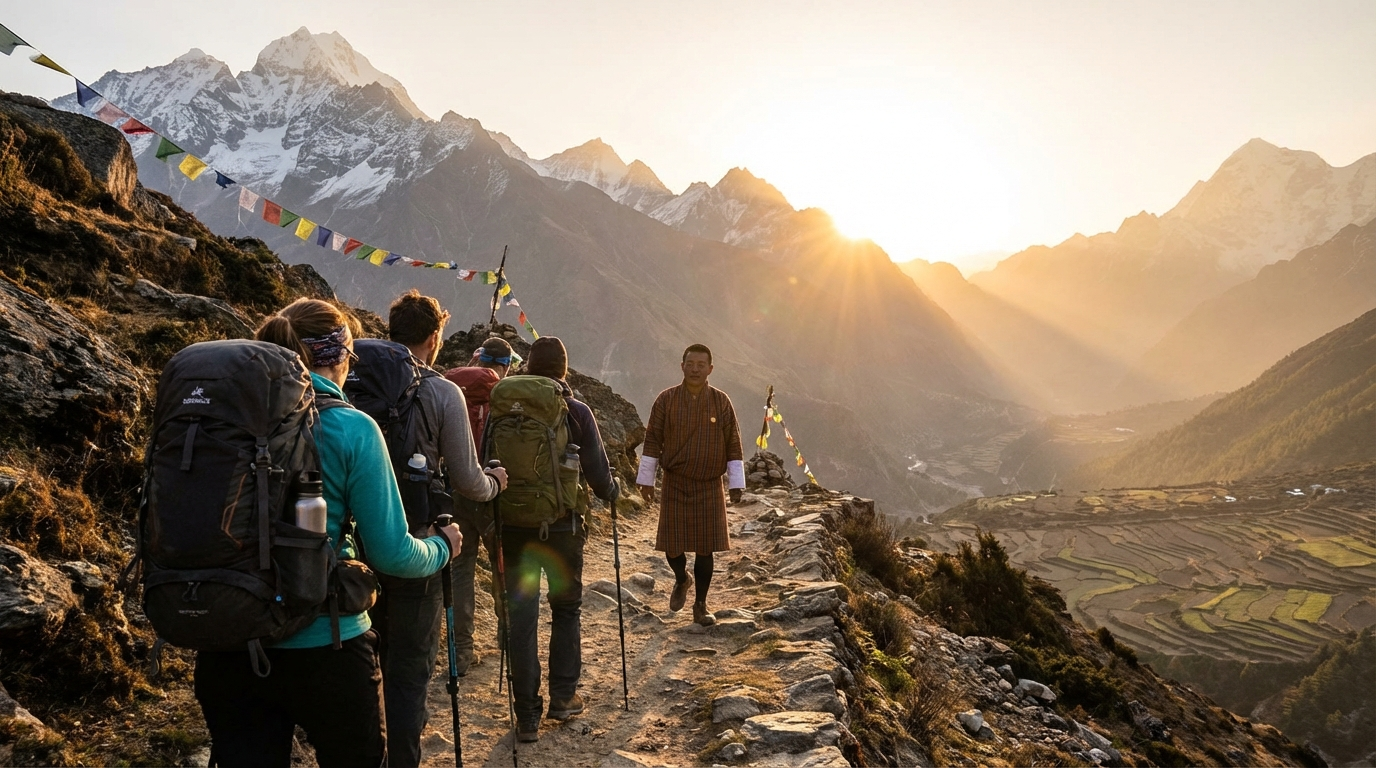
This image was generated with AI.
All Treks in Detail
Detailed information on each trek: routes, elevation profiles, packing lists, and booking tips.
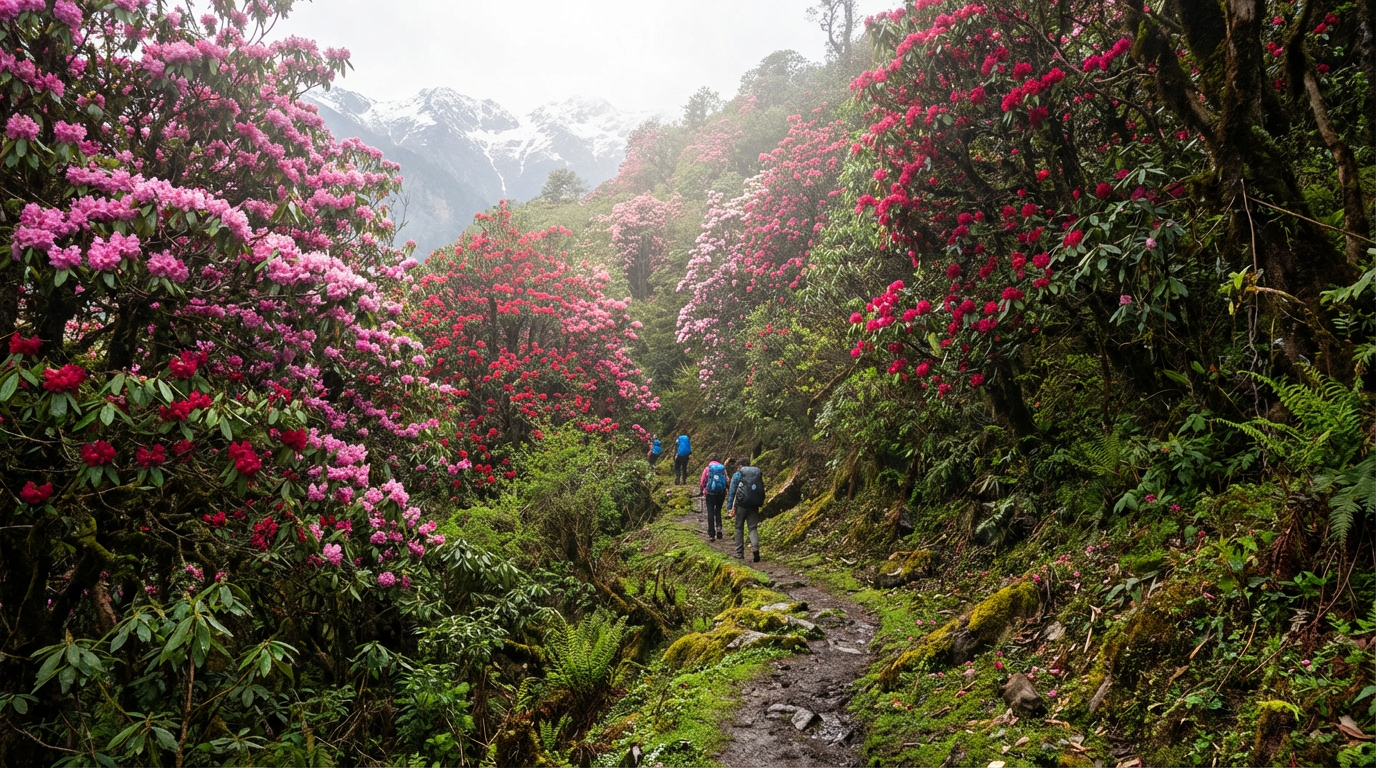
This image was generated with AI.
Best Time to Visit
When is the ideal time for trekking? Climate tables and seasonal recommendations for your planning.
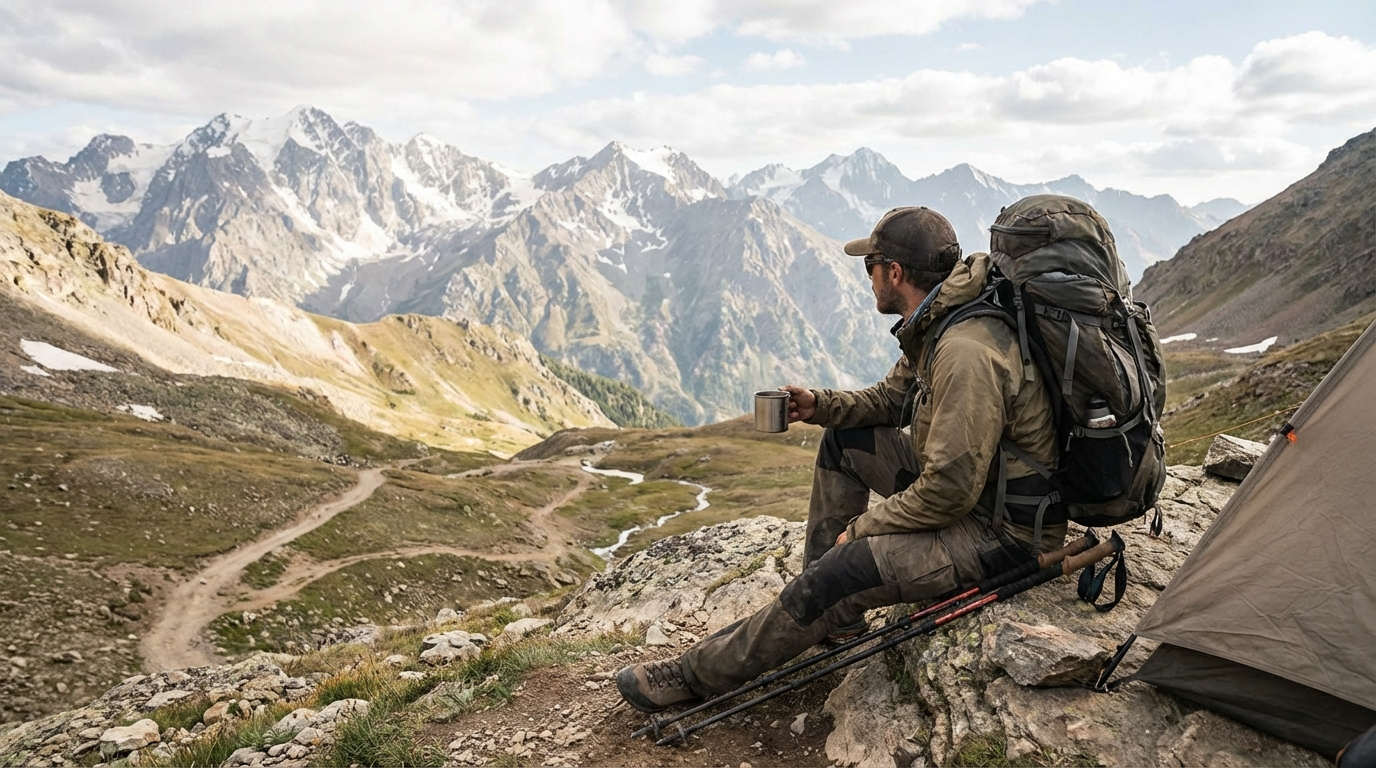
This image was generated with AI.
Health & Altitude
Everything about altitude acclimatization, preventing altitude sickness, and medical preparation.
Ready for Your Bhutan Trekking Adventure?
We're happy to advise you on trek selection, travel timing, and the optimal combination of nature and culture.