Druk Path Trek: Route, Costs & Stages | Paro to Thimphu
Last updated:
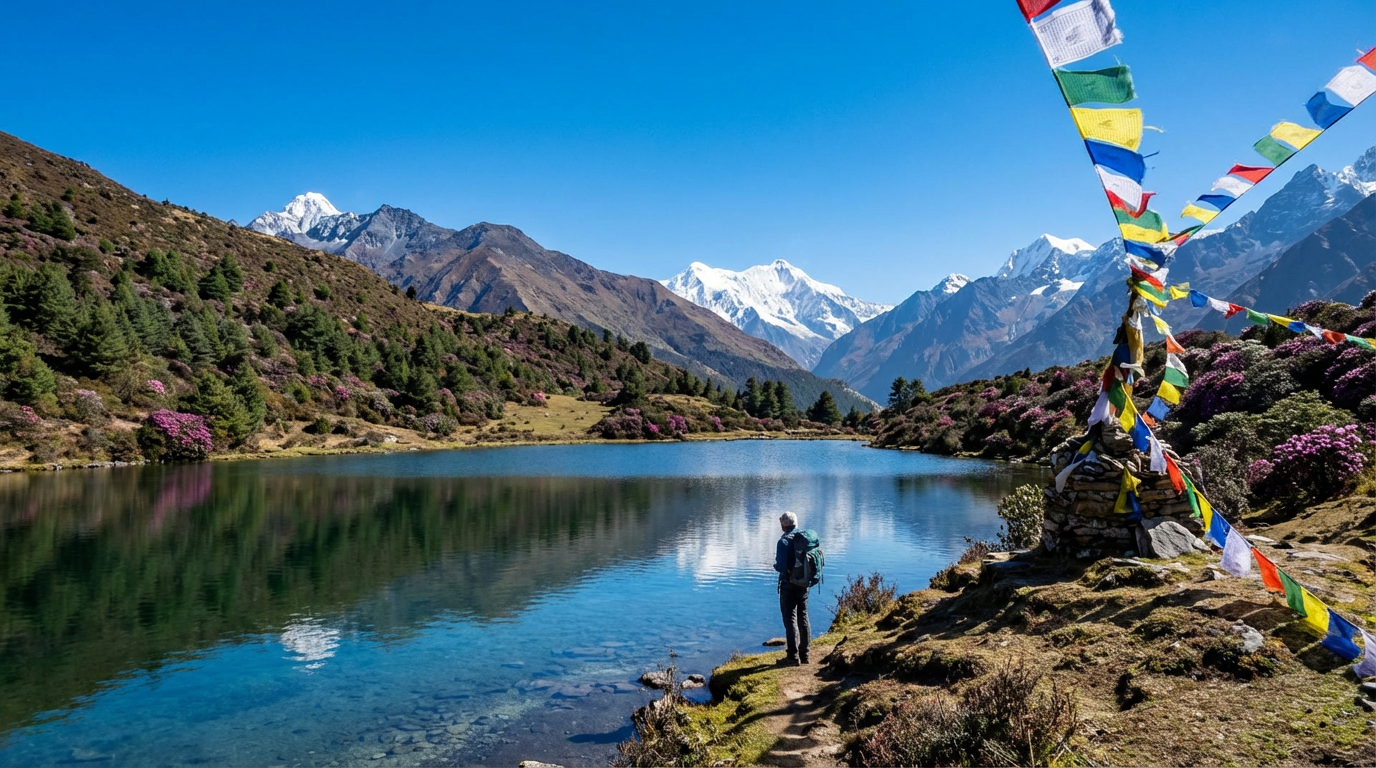
The Druk Path Trek connects Bhutan's two most important cities along a route that people have used for centuries – and which today is considered the finest introduction to the world of Bhutanese trekking. Over five to six days, this historic trade route leads from Paro to Thimphu through a landscape that has few equals: crystal-clear high-altitude lakes, forests of fragrant blue pine and blooming rhododendrons, and repeatedly breathtaking views of the snow-capped peaks of the eastern Himalayas. What makes the Druk Path Trek so special is the perfect balance – challenging enough to be a true adventure, yet accessible to anyone with good basic fitness. You don't need any previous trekking experience to master this unforgettable route.
Druk Path Trek at a Glance
The Druk Path Trek is popular not only for its scenic beauty but also for its practical advantages: the route begins and ends at the two places you'll visit on any Bhutan trip anyway. Unlike longer treks, the daily stages are moderate – rarely more than five hours of walking per day. And despite elevations exceeding 4,000 meters, there are no technically difficult passages to navigate.
The Route: From Paro to Thimphu
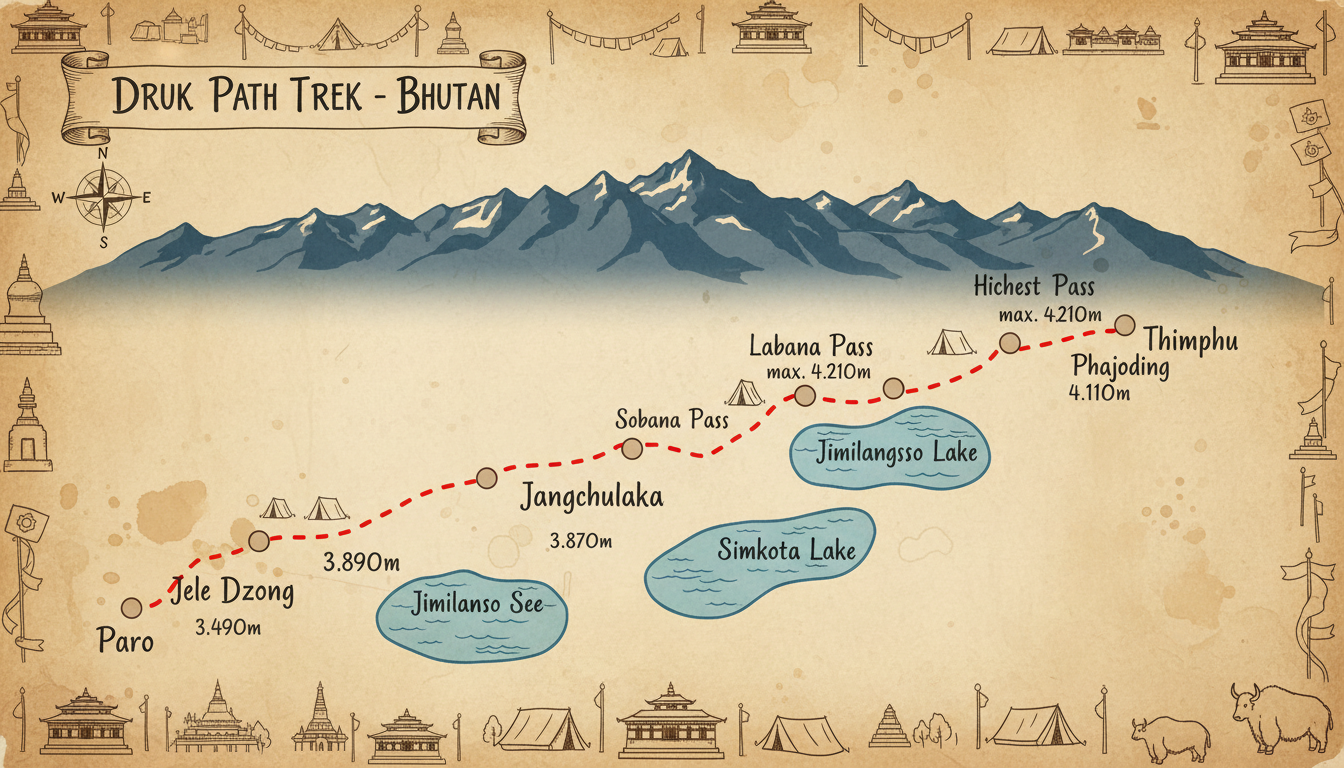
The Druk Path Trek follows a centuries-old trade route that once formed the connection between Paro and Thimphu – long before roads existed. The route initially climbs steeply from the Paro Valley, then traverses relatively consistent elevation through the highlands between the two valleys, before descending steeply to Thimphu at the end. Along the way, you pass through forests of firs, blue pine, and rhododendrons, open yak pastures, several crystal-clear high-altitude lakes, and the ruins of historic fortresses. On clear days, you'll enjoy views of Gangkhar Puensum – at 7,570 meters, the highest unclimbed mountain in the world.
This image was generated with AI.
Elevation Profile and Topography
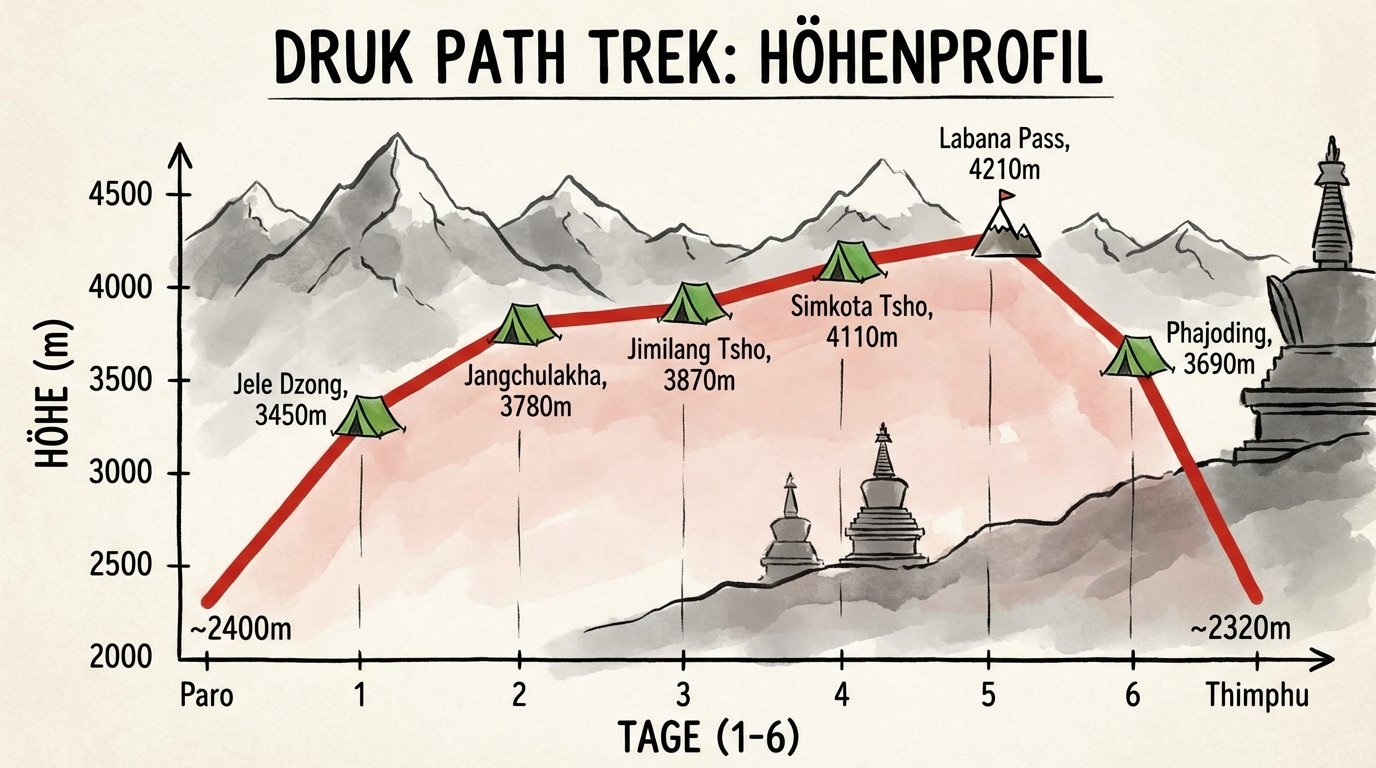
The elevation profile of the Druk Path Trek is characterized by a steep ascent on the first day, followed by several days at consistent elevation in the highlands, and a steep descent on the last day. The first day, with over 1,000 meters of elevation gain, is the most challenging – afterward, you'll mostly travel between 3,500 and 4,200 meters. The highest point, Labana Pass at 4,210 meters, is crossed on day five. Thanks to the gradual ascent, you have time to acclimatize, effectively preventing altitude problems.
| Day | Stage | Start | End | Elevation Gain |
|---|---|---|---|---|
| 1 | Paro/Dopshari → Jele Dzong | 2,400 m | 3,450 m | +1,050 m |
| 2 | Jele Dzong → Jangchulakha | 3,450 m | 3,780 m | +330 m |
| 3 | Jangchulakha → Jimilangtso | 3,780 m | 3,880 m | +100 m |
| 4 | Jimilangtso → Simkota | 3,880 m | 4,100 m | +220 m |
| 5 | Simkota → Phajoding | 4,100 m | 3,750 m | +110 m / -460 m |
| 6 | Phajoding → Thimphu | 3,750 m | 2,300 m | -1,450 m |
This image was generated with AI.
Daily Stages in Detail
The following itinerary describes the classic 6-day version of the Druk Path Trek. Some operators offer compressed 4–5-day versions with longer daily stages. The detailed description of each day helps you prepare optimally and not miss the highlights.
Day 1: Paro/Dopshari to Jele Dzong
The first day is also the most demanding of the entire trek – and perfect preparation for what's to come. The ascent begins in the Paro Valley at Dopshari and leads through dense forests of pine and rhododendrons steadily upward. With each meter of elevation, the air thins and vegetation becomes sparser, while behind you increasingly spectacular views of the Paro Valley open up. After about four to five hours, you reach the ruins of Jele Dzong at 3,450 meters – a historic fortress of which only the foundations remain. Camp is set up nearby, with your first views of the mountain world you'll traverse over the coming days.
Day 2: Jele Dzong to Jangchulakha
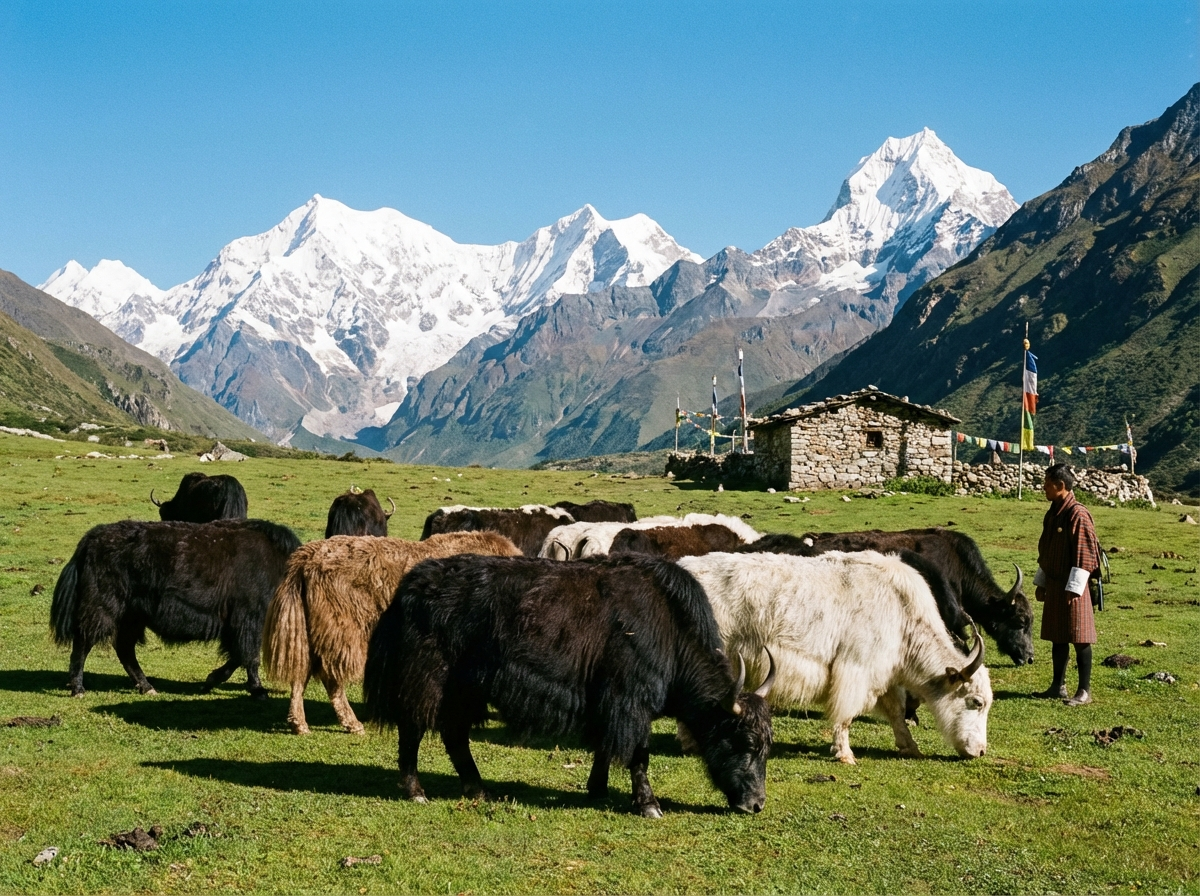
After the demanding first day, the second day offers recovery with only moderate elevation gain. The trail leads through open highland meadows where you'll likely see yaks grazing – the shaggy animals are accustomed to hikers and allow close observation. On clear days, first spectacular panoramic views of the snow-capped eastern Himalayan peaks open up. The camp at Jangchulakha lies on a sprawling meadow with 360-degree views – one of the most beautiful camping spots on the entire route.
Day 3: Jangchulakha to Jimilangtso
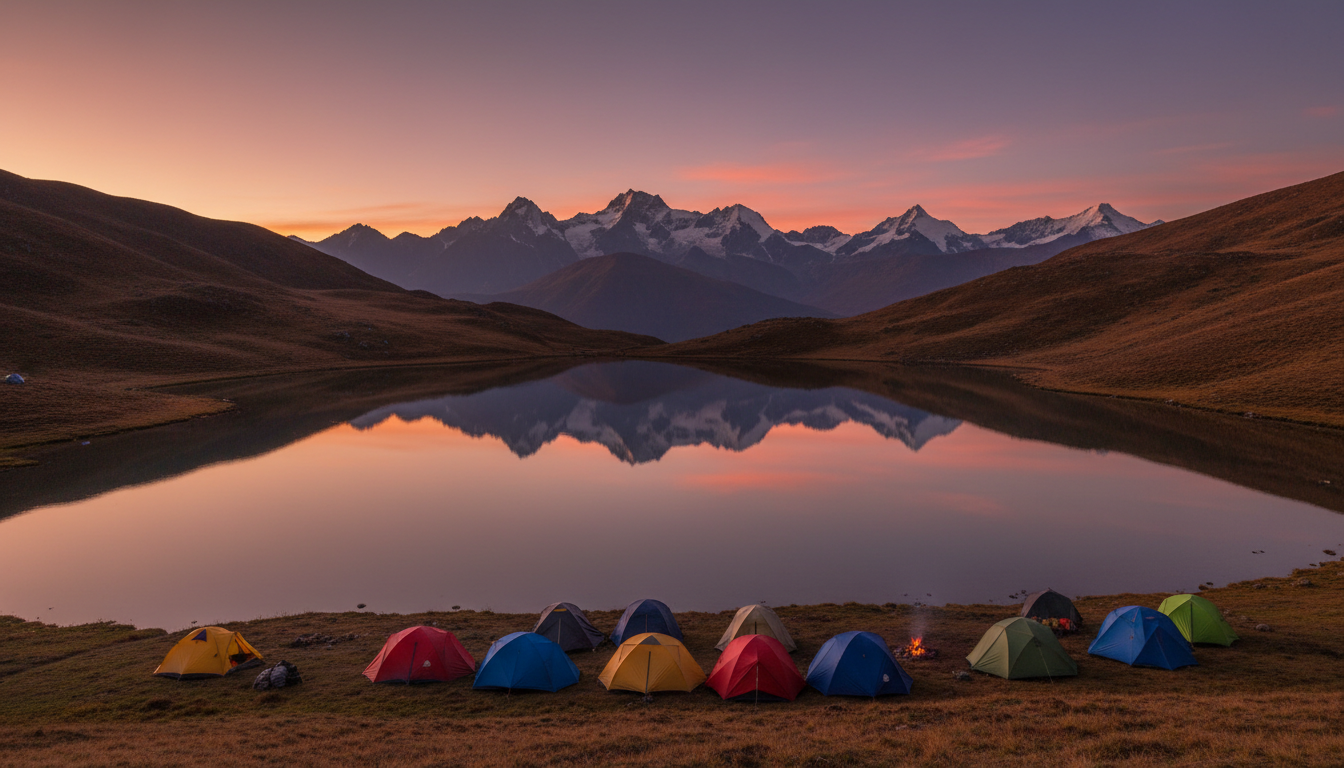
Day three leads you to one of the scenic highlights of the trek: Jimilangtso Lake. The path runs at relatively constant elevation through a mix of open highland meadows and dwarf rhododendron forests. In good weather, you'll repeatedly enjoy views of Gangkhar Puensum – at 7,570 meters, Bhutan's highest mountain and the highest unclimbed peak in the world. Jimilangtso Lake itself is a deep blue mountain lake known for its trout-rich waters. The camp on the lakeshore is one of the most magical places on the entire trek – at sunset, the mountain panorama reflects in the still water.
This image was generated with AI.
Day 4: Jimilangtso to Simkota
On day four, you cross the 4,000-meter mark for the first time and reach the route's second major lake: Simkota. The landscape becomes more alpine – vegetation is sparse, terrain wide and open, the sky seems within reach. Simkota Lake lies in a wide high-altitude basin with crystal-clear, ice-cold water. The camp nearby is the trek's highest overnight stop – dress warmly, as nights at this elevation can be bitterly cold, even during peak season.
Day 5: Simkota to Phajoding
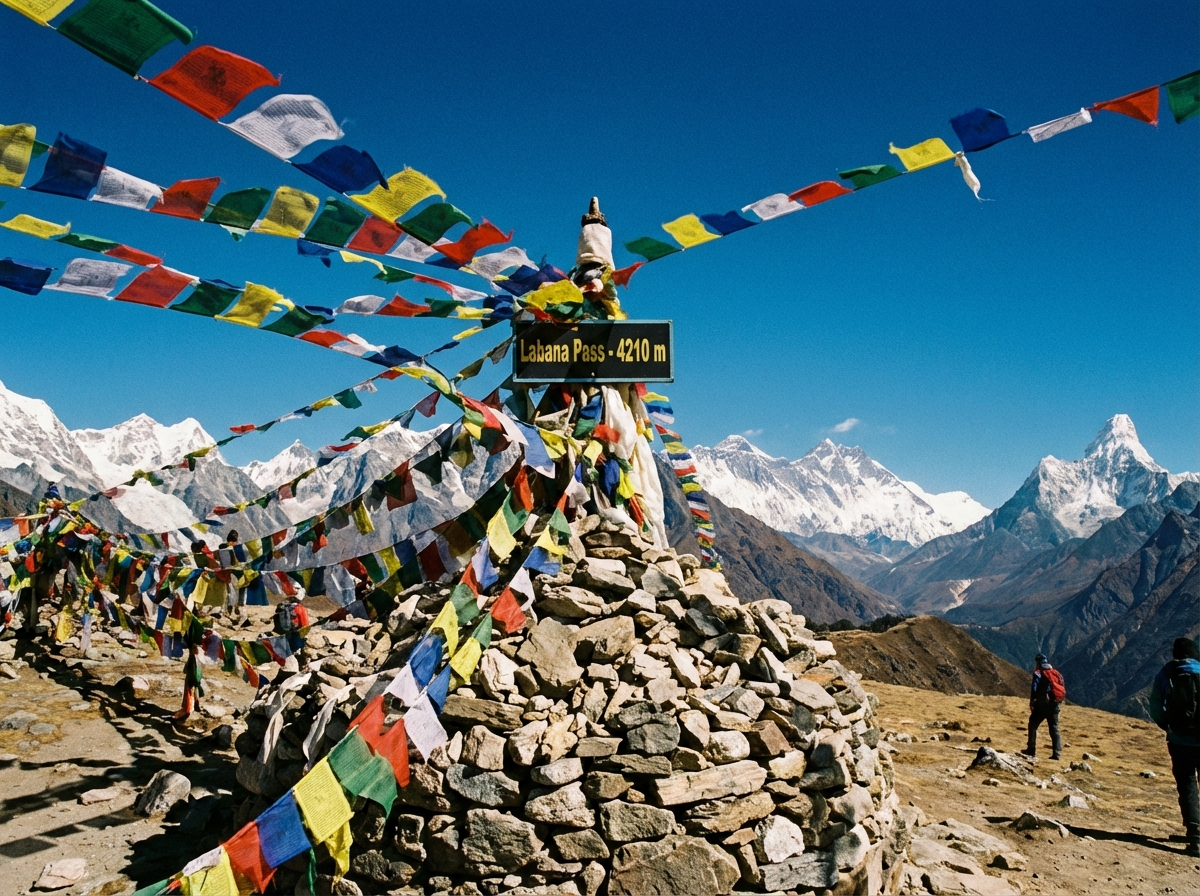
Day five brings two highlights: the trek's highest point and a significant spiritual destination. In the morning, you climb to Labana Pass (4,210 m) – in clear weather, the most spectacular mountain panorama of the entire route awaits here. After the pass, the descent begins, and soon the Thimphu Valley opens beneath you – a moving moment, as you see your destination for the first time. The day ends at Phajoding Goemba, an important meditation center with dozens of small meditation caves where monks have practiced for centuries. If you're lucky, you can watch the monks during their rituals.
Day 6: Phajoding to Thimphu
The last day is a steep descent – you'll lose almost 1,500 meters of elevation on the way down to Thimphu. The path leads through dense forests, and with each step the air becomes warmer and more oxygen-rich. The sounds of the city slowly become audible, until finally you arrive at Thimphu's outskirts, where your driver is waiting. It's a special feeling to return to civilization after days in the solitude of the mountains – marked by fulfillment and pride in what you've achieved.
Difficulty and Fitness Requirements
The Druk Path Trek is officially rated as "moderate" – and this assessment is fair. It's challenging enough to be a real trekking experience, but accessible to people with good basic fitness, even without previous trekking experience. The main challenges are the steep climb on the first day and the elevation above 3,500 meters.
| Aspect | Requirement | Recommendation |
|---|---|---|
| Basic Fitness | Regular physical activity | Before the trek: 2–3x per week sports or longer walks |
| Endurance | 3–5 hours of walking per day | Day hikes of 10–15 km as preparation |
| Altitude Experience | Helpful, but not mandatory | First time over 3,000 m: walk slowly, drink plenty of water |
| Trekking Experience | Not required | Basic hiking experience is sufficient |
Best Time to Trek the Druk Path
The Druk Path Trek is optimally trekable in two main seasons: spring (March to May) and autumn (mid-September to early November). Outside these times, the trek is either impossible due to monsoon rains or snow on the passes.
A special experience: Plan your Druk Path Trek to coincide with one of the major festivals. In spring, the trek ends nicely with Paro Tshechu; in autumn, you can combine it with Thimphu Tshechu. Learn more about festivals and optimal travel timing at Best Time to Visit Bhutan.
Costs and What's Included
The Druk Path Trek typically costs between USD 2,000 and USD 2,500 per person – a price that may seem high at first glance but practically includes everything you need for the trek. Unlike treks in Nepal where you organize and pay for much yourself, in Bhutan everything is included in the package price.
| Service | Details | Estimated Value |
|---|---|---|
| Sustainable Development Fee (SDF) | USD 100 per night x 5–6 nights | USD 500–600 |
| Visa | One-time fee | USD 40 |
| Trekking Permit | All required permissions | included in SDF |
| Licensed Guide | English-speaking, experienced | included |
| Cook & Crew | Professional trek cook, porters | included |
| Pack Horses/Porters | Transport of camping equipment | included |
| Camping Equipment | Tents, sleeping mats, kitchen equipment | included |
| All Meals | Breakfast, lunch, dinner during trek | included |
| Transportation | Travel to starting point, pickup at end | included |
Costs can vary by operator and season. During peak season (October/November, April), prices tend to be higher, but conditions are optimal. For a detailed cost breakdown of your entire Bhutan trip, see Costs & Budget for Bhutan.
Highlights Along the Route
The Druk Path Trek offers much more than a walk through beautiful scenery. Each day holds special moments – from spiritual sites to spectacular natural phenomena to encounters with local wildlife.
Crystal-Clear High-Altitude Lakes
Jimilangtso and Simkota Lakes are two of Bhutan's most beautiful mountain lakes. Their deep blue, mirror-smooth water reflects the surrounding mountains and offers unforgettable photo opportunities. Jimilangtso even has trout.
View of Gangkhar Puensum
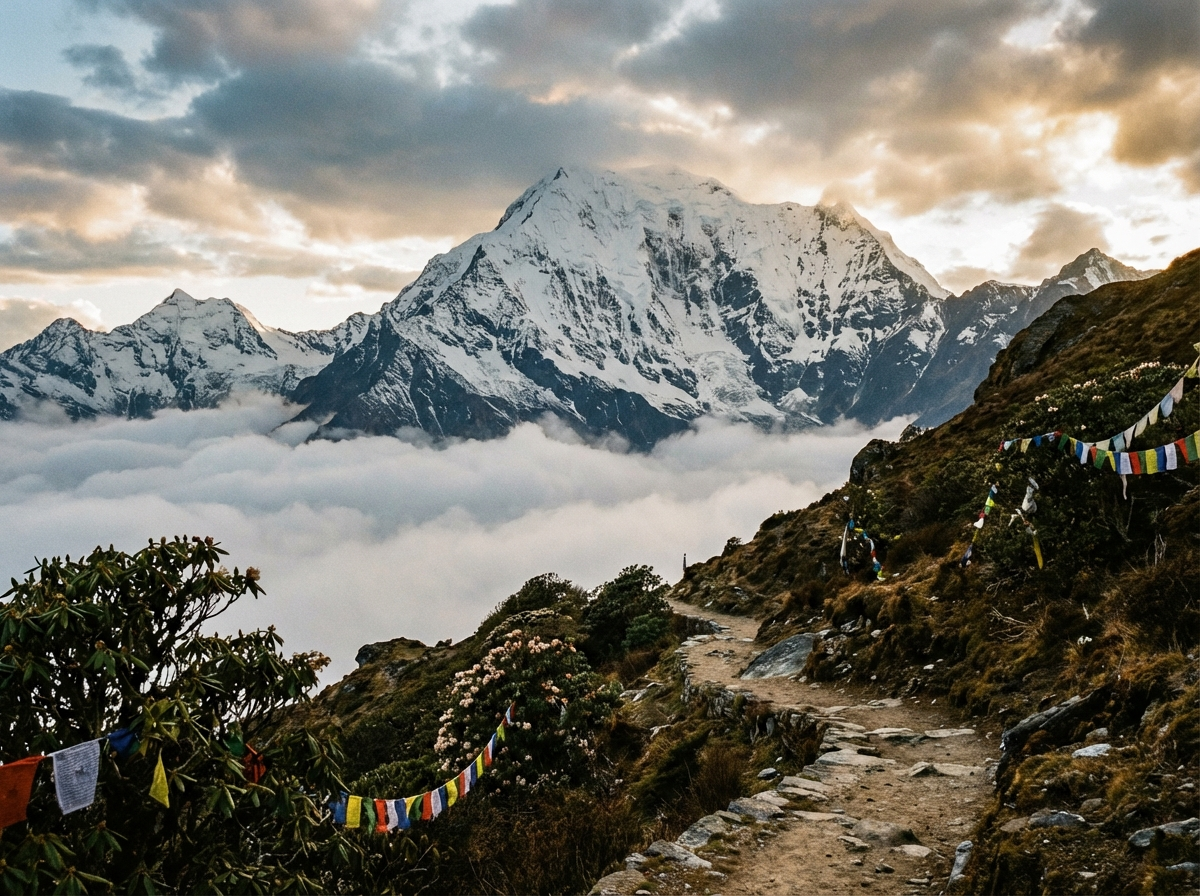
At 7,570 meters, Gangkhar Puensum is the highest unclimbed mountain in the world. On clear days, the Druk Path Trek offers spectacular views of this majestic peak multiple times, especially from Labana Pass.
Phajoding Meditation Center
One of Bhutan's most important meditation centers with dozens of small meditation caves where monks have practiced for centuries. A place of deep spirituality that adds a special dimension to the trek.
Blue Pine and Rhododendrons
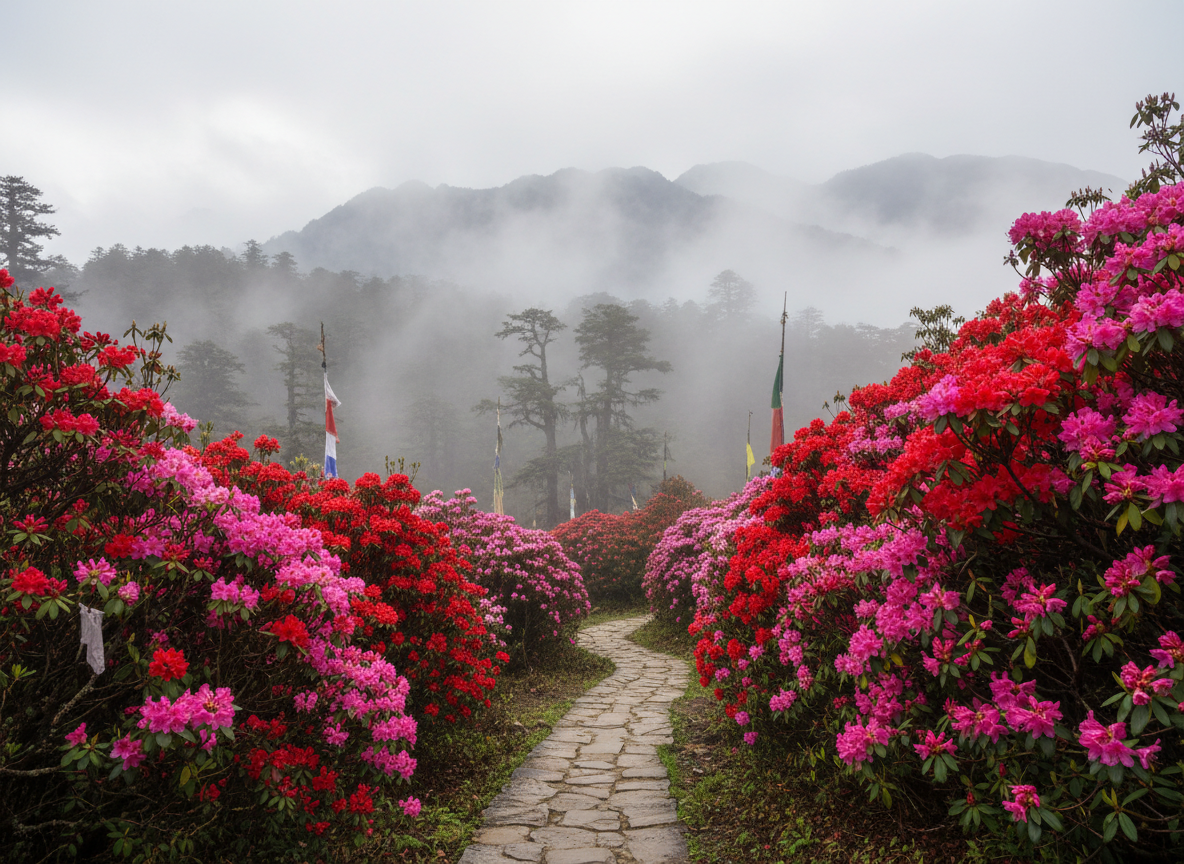
The forests along the route consist of fragrant blue pine and wild rhododendrons. In spring, the route literally explodes in color when the rhododendrons are in full bloom.
This image was generated with AI.
This image was generated with AI.
This image was generated with AI.
This image was generated with AI.
This image was generated with AI.
This image was generated with AI.
Packing List for the Druk Path Trek
The tour operator provides complete camping equipment (tents, kitchen, sleeping mats), but you must bring your personal gear yourself. The biggest challenge: temperatures fluctuate significantly between warm 12–15 °C during the day and below freezing at night. The layering principle is crucial.
A complete, category-organized packing list with additional recommendations for medicines and hygiene items can be found on our Bhutan Packing List page.
Practical Information
Booking and Operators
Like all treks in Bhutan, the Druk Path Trek must be booked through a licensed Bhutanese tour operator – independent trekking is not permitted in Bhutan. While this may sound restrictive, it has clear advantages: you receive a complete crew with experienced guide, cook and porters, and all logistics are professionally organized. Booking should be made 2–3 months in advance, or earlier during peak season.
Tips for selecting a reputable operator and quality criteria can be found on our Book a Guide & Operator page.
Accommodation During the Trek
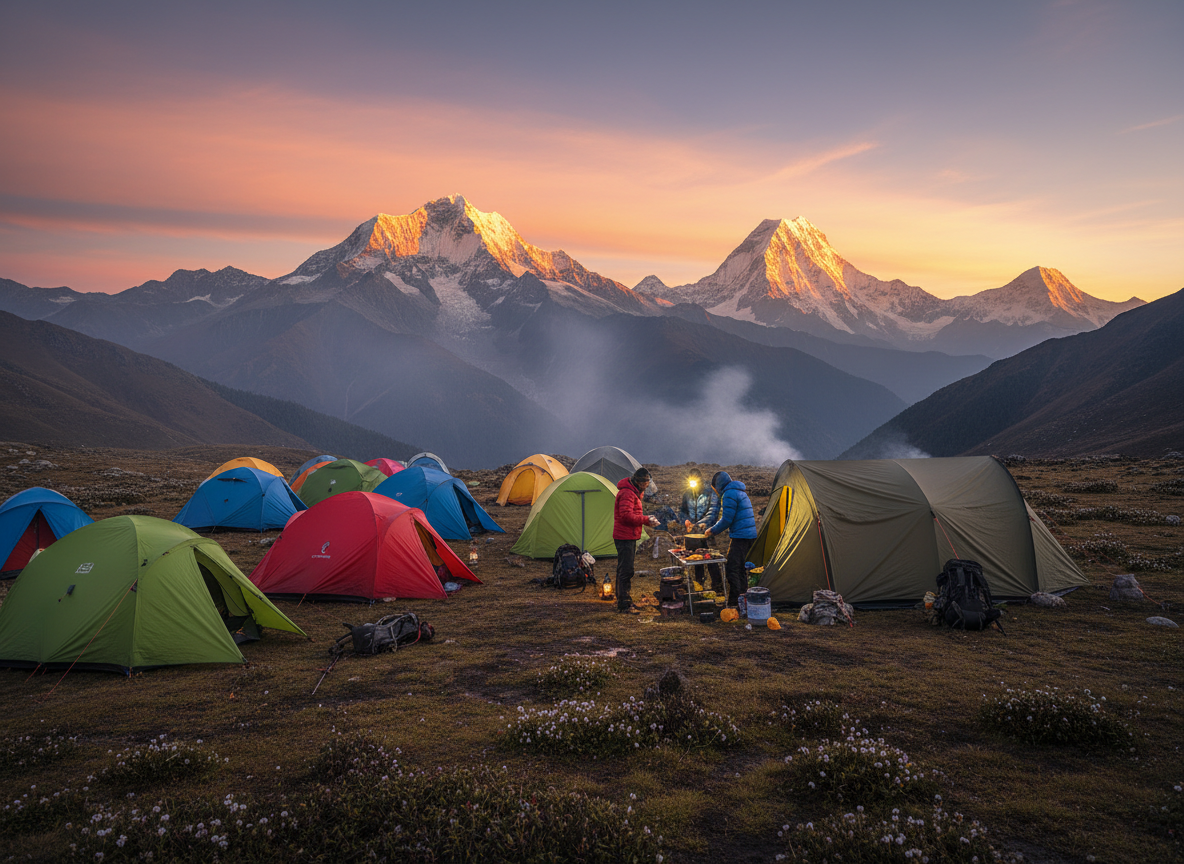
The Druk Path Trek is pure camping – there are no lodges or teahouses along the route. You sleep in two-person tents set up by the crew. There's also a dining tent where meals are served and often a separate toilet tent. Sleeping mats are provided; bring your own warm sleeping bag or rent one from the operator.
Meals on the Trek
Food on the Druk Path Trek is surprisingly good and substantial. The trek cook prepares three warm meals daily – typically a mix of local Bhutanese cuisine and international food. Breakfast usually includes porridge, eggs, toast and tea; lunch and dinner feature rice, vegetable curry, dal and often meat dishes. Vegetarian meals are easily accommodated – mention your preferences when booking.
Frequently Asked Questions About the Druk Path Trek
How Difficult is the Druk Path Trek?
The Druk Path Trek is rated as "moderate" difficulty. It requires good basic fitness but no previous trekking experience. The main challenges are the steep climb on day one (over 1,000 meters elevation gain) and the elevation above 3,500 meters. People with regular physical activity and the ability to walk 3–5 hours daily will manage the trek. Important: allow enough time for altitude acclimatization and walk particularly slowly.
How Long is the Druk Path Trek?
The Druk Path Trek is approximately 54 km long and is typically completed in 5–6 days. Daily stages vary between 7 and 11 km, with 3–5 hours of walking per day. Some operators offer compressed 4-day versions with longer daily stages, but these are recommended only for fitter trekkers.
How Much Does the Druk Path Trek Cost?
The Druk Path Trek typically costs between USD 2,000 and USD 2,500 per person for the 5–6-day version. This price includes practically all costs: Sustainable Development Fee (USD 100/night), visa, guide, cook, porters, camping equipment, all meals, permits and transportation. Not included are international flights, travel insurance, personal equipment and tips. Costs vary by operator and season.
When is the Best Time for the Druk Path Trek?
The best times for the Druk Path Trek are spring (March to May) and autumn (mid-September to early November). Spring features blooming rhododendrons with spectacular colors. Autumn offers the clearest views for mountain panoramas. The monsoon season (June–August) should be avoided due to heavy rainfall and poor visibility. In winter (December–February), passes may be snow-covered.
Do I Need Trekking Experience for the Druk Path Trek?
No, previous trekking experience is not required. The Druk Path Trek is suitable as a beginner trek, provided you have good basic fitness. If you regularly take longer hikes and are accustomed to walking several hours continuously, you're well-prepared. Altitude experience is helpful but not mandatory – important is that you take time to acclimatize.
Can I Trek the Druk Path Independently / Without a Guide?
No, independent trekking is not permitted in Bhutan. All treks must be booked through licensed Bhutanese tour operators. This is part of Bhutan's sustainable tourism concept. The advantage: you receive a professional crew with guide, cook and porters, and all logistics are organized for you. Group size can be kept small – private treks for 2 people are also possible.
Are There Lodges on the Druk Path Trek?
No, the Druk Path Trek is pure camping. Unlike Nepal with its teahouses, you stay in tents set up by the trek crew on the Druk Path. The camping equipment (tents, sleeping mats, kitchen) is provided by the operator. You only need your own sleeping bag (or rent one). The camps are in beautiful locations – on lake shores, on mountain meadows – and are part of the experience.
Can I Trek in the Opposite Direction (Thimphu to Paro)?
Yes, the Druk Path Trek can be trekked in both directions. The classic route runs from Paro to Thimphu, but Thimphu to Paro is also possible and offered by some operators. The main difference: in the Paro direction, you have the steep descent on the first rather than last day, which some knees find more comfortable. The highlights remain the same.
What's the Cell Phone Coverage on the Trek?
Cell phone coverage on the Druk Path Trek is very limited. Signal may briefly be available at some points (particularly passes), but don't rely on it. In remote areas, there's no coverage. Your guide should have emergency communication equipment. Use the trek days as a digital detox – it's part of the experience.
How Much Should I Tip?
Tipping is not obligatory in Bhutan, but much appreciated. Typical guidelines for a 5–6-day trek per person: guide approximately USD 50–80, cook approximately USD 40–60, helpers/porters approximately USD 25–40. Tips are given personally at the end of the trek. It's a good idea to bring small bills in USD.
Trekkers' Experiences
When I woke on the morning of the third day by Jimilangtso Lake and the first rays of sun turned the mountain peaks golden, I knew: this journey would change me. The silence there up high, far from everything – that does something to you. Our guide Tshering and his team amazed us every single day, not just with fantastic food, but with their genuine love for this country. The moment I saw Thimphu below me after six days was one of the proudest moments of my life.
Further Information
This image was generated with AI.
All Treks in Bhutan
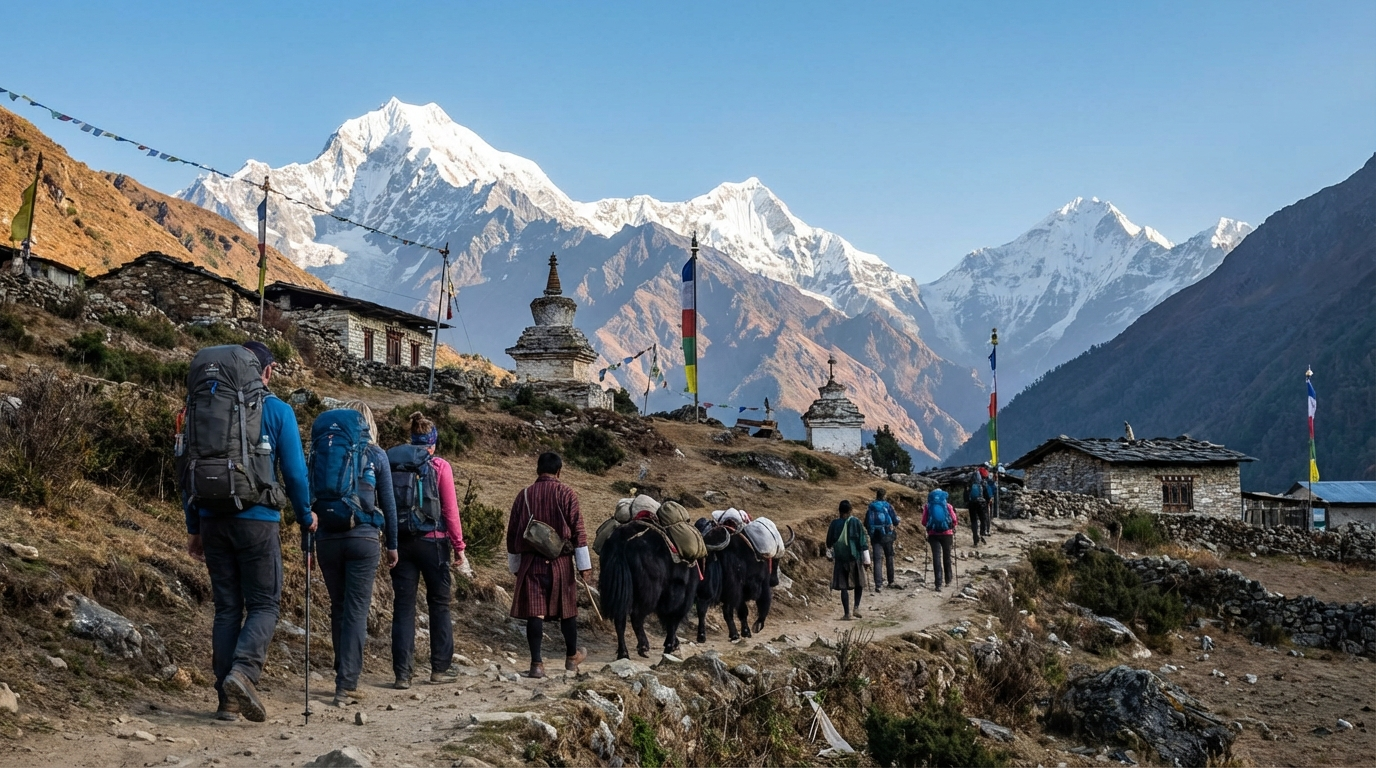
Comparison of all trekking routes: Druk Path, Jomolhari, Snowman and more – find the trek that matches your level.
This image was generated with AI.
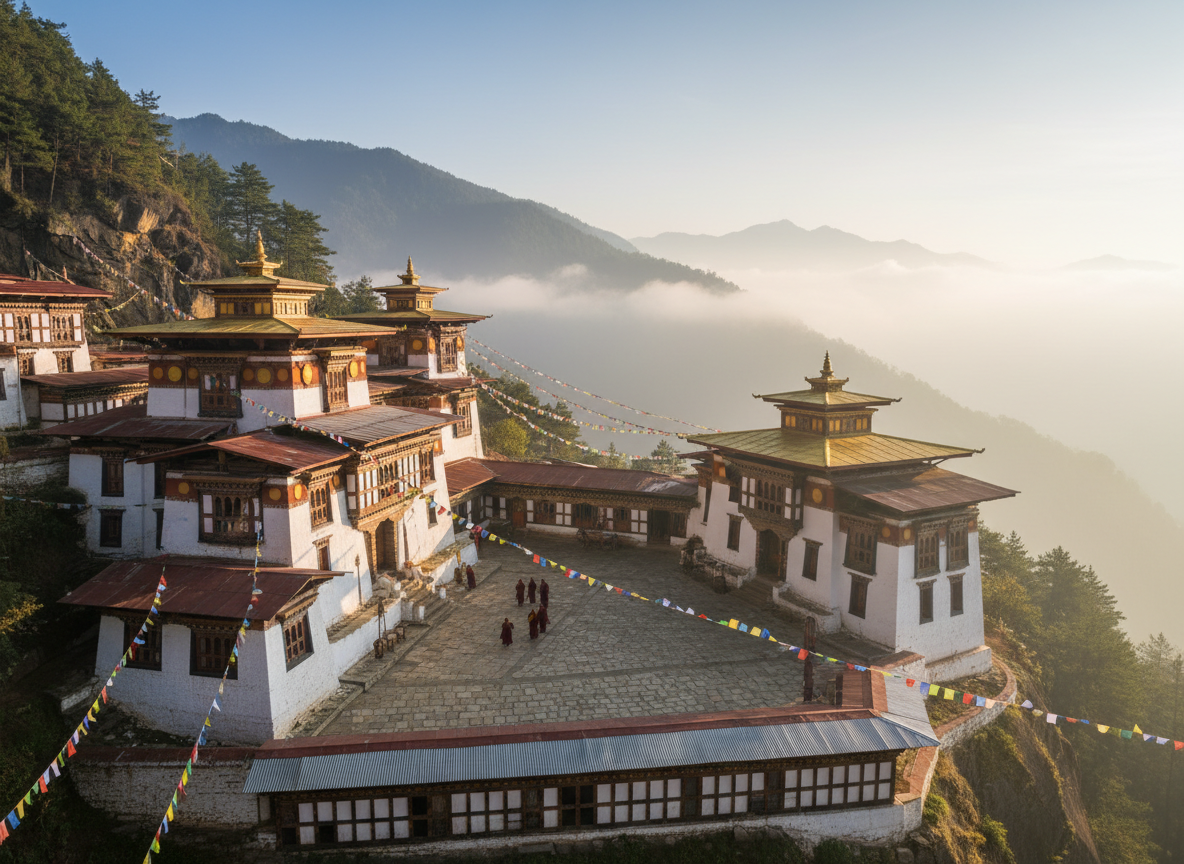
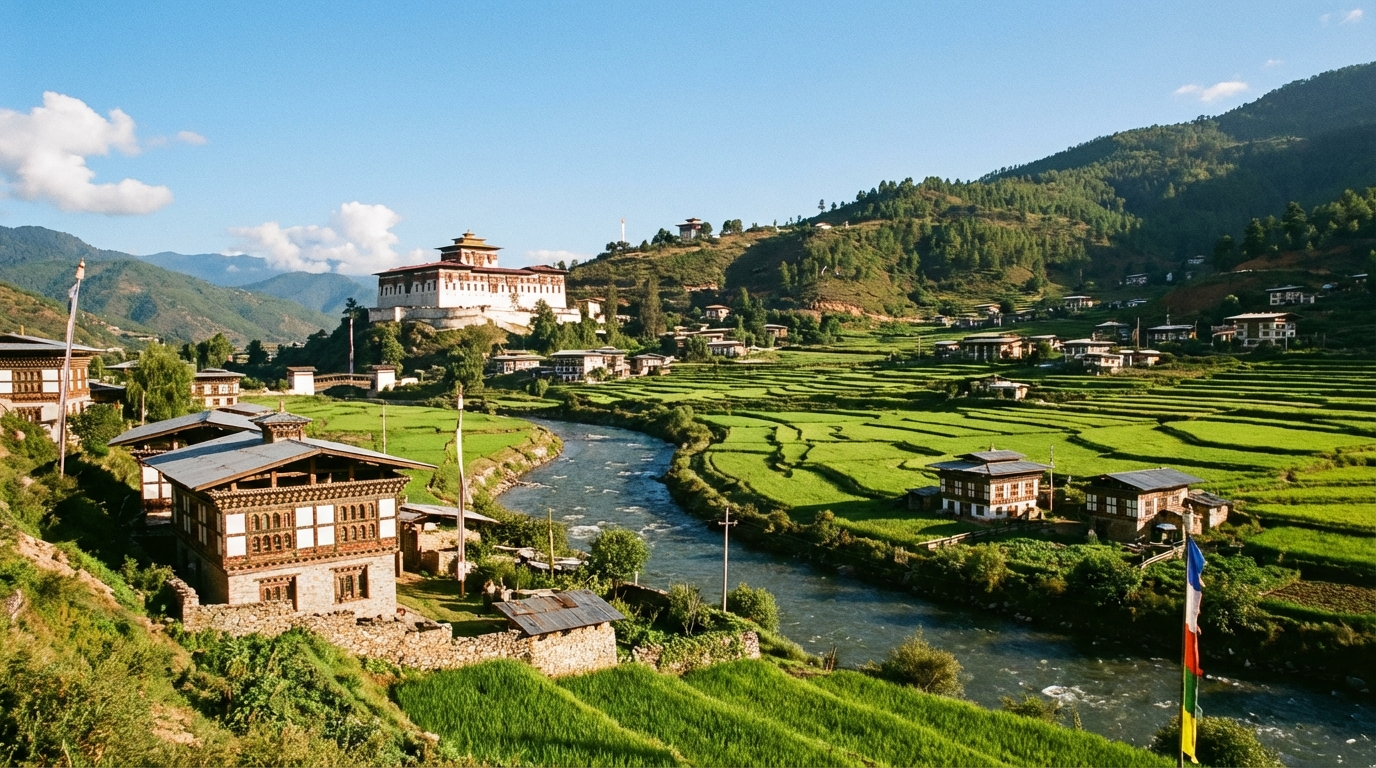
Paro – Trek Starting Point
Paro Valley: airport, Tiger's Nest, Dzong and more – discover the region where your trek begins.
This image was generated with AI.
Thimphu – Trek End Point
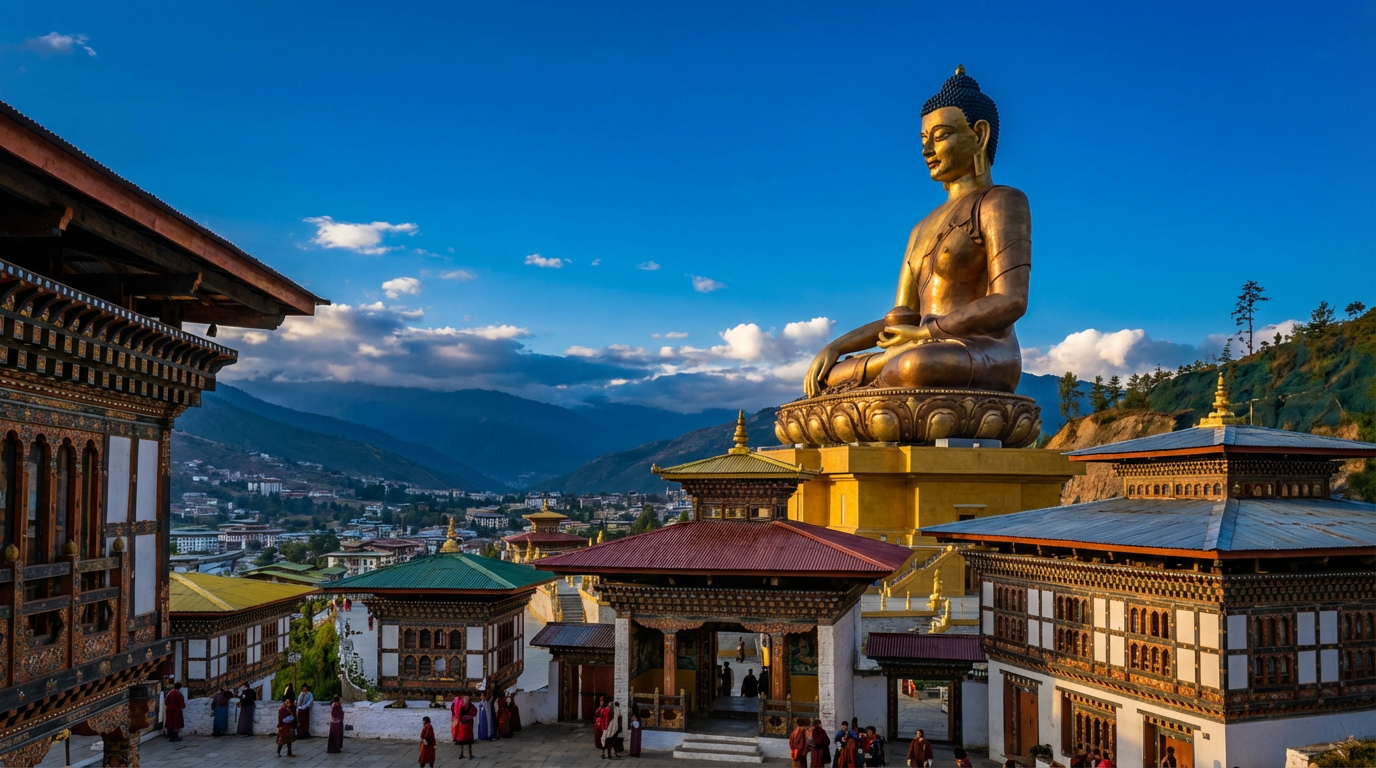
Bhutan's capital: Buddha Dordenma, markets, Dzong – what awaits you in Thimphu after the trek.
This image was generated with AI.
Prevent Altitude Sickness
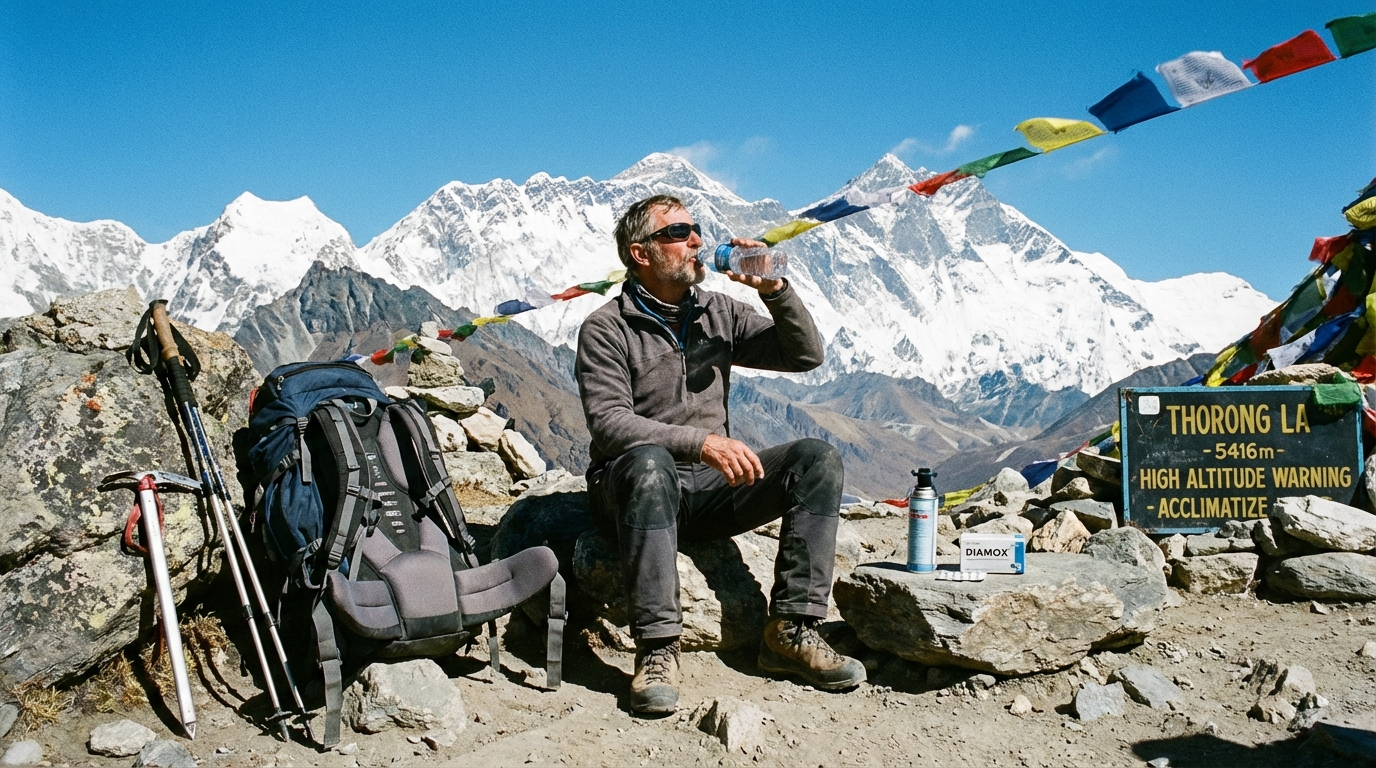
Everything about altitude acclimatization, symptoms and prevention – important for every trek above 3,000 meters.
Experience the Druk Path Trek Yourself?
We organize your Druk Path Trek – with experienced guide, optimal travel time and personal advice for your Bhutan journey.