Punakha Bhutan: Dzong, Suspension Bridge & Attractions
Last updated:
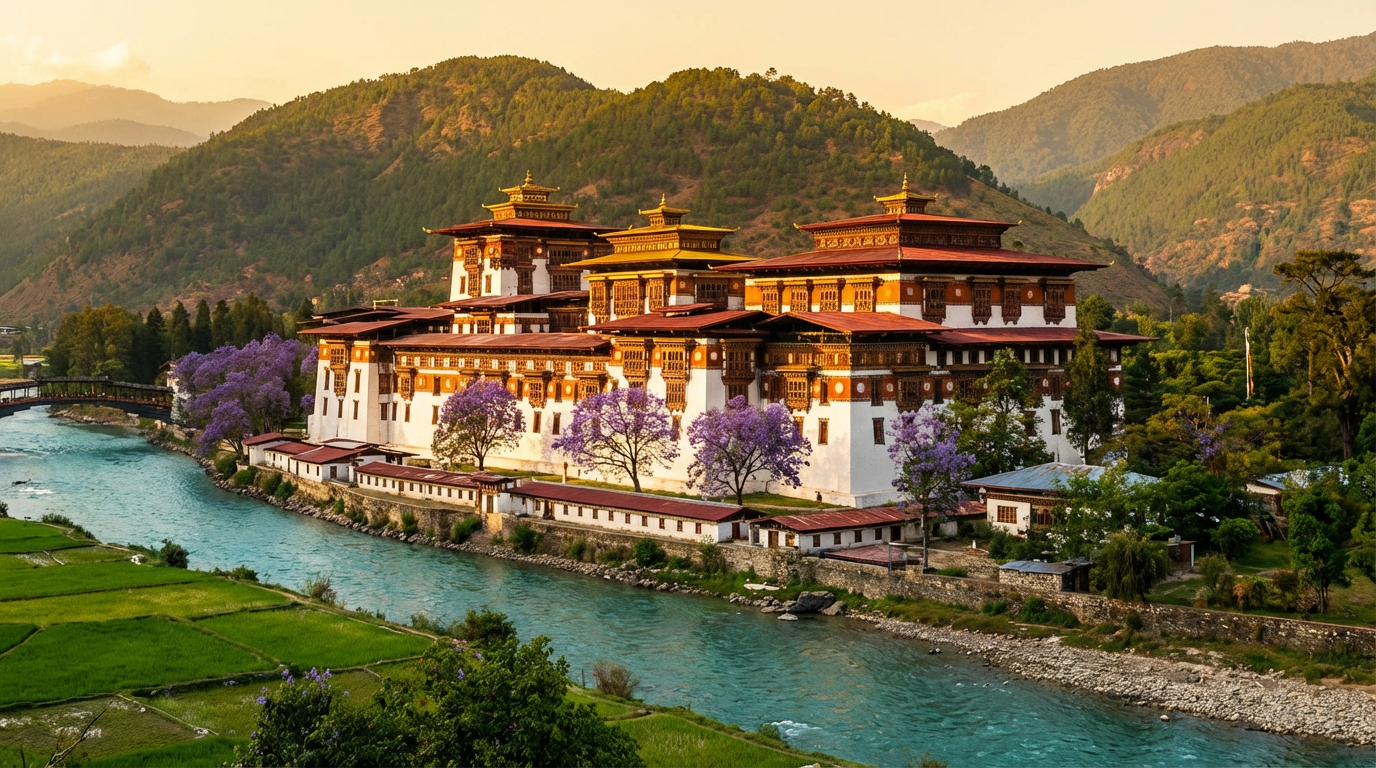
Punakha is where Bhutan is at its most beautiful – at least if you ask the Bhutanese. The fertile valley at just 1,200 meters elevation is home to the Punakha Dzong, arguably the most magnificent monastic fortress in the entire Himalayas. Here, where the Mo Chhu (Mother River) and Pho Chhu (Father River) converge, was the winter seat of government until 1955. Even today, the King and monks migrate here during the cold months from Thimphu – the mild subtropical climate makes Punakha the warmest and greenest region of Western Bhutan.
Punakha at a Glance
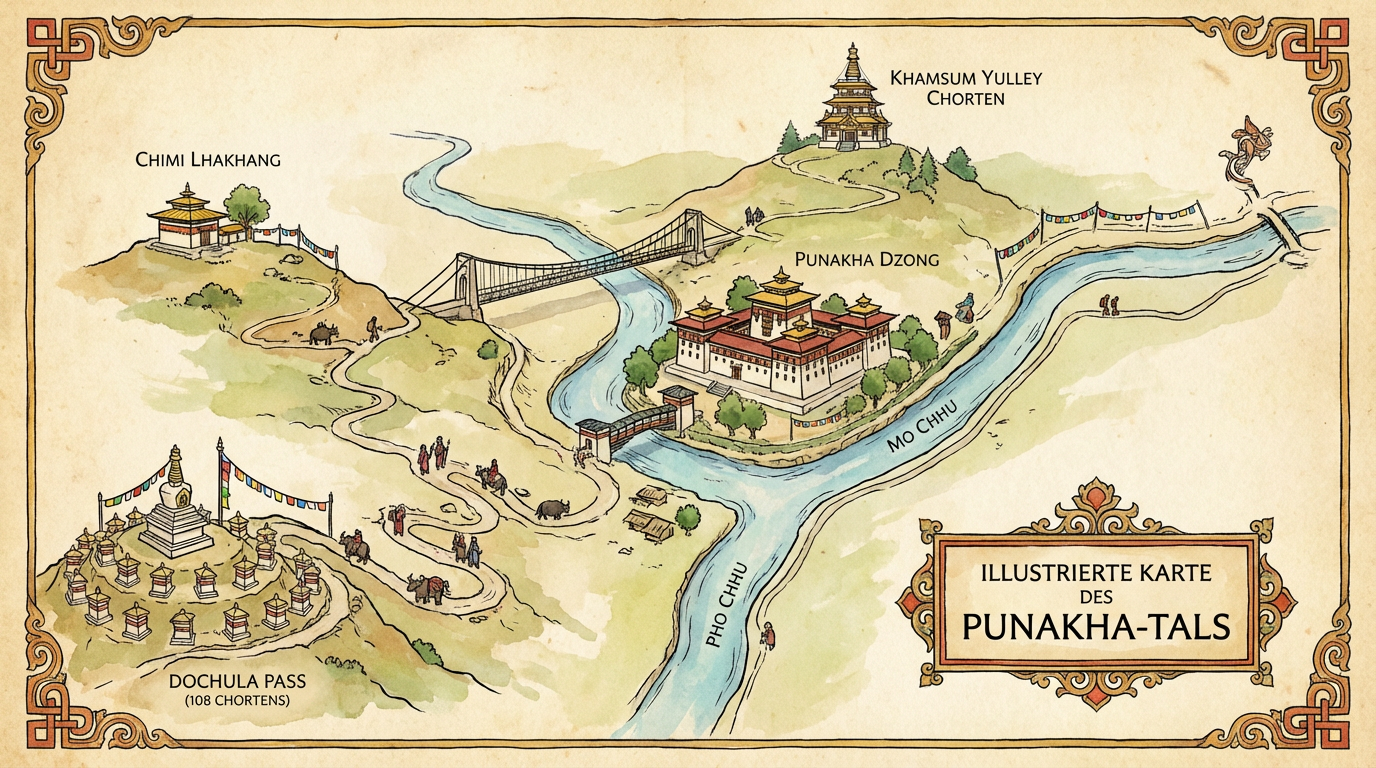
The unique location at the confluence of two rivers – the "Father River" Pho Chhu and the "Mother River" Mo Chhu – gives Punakha not only spiritual significance, but also extraordinary fertility. Rice, oranges, and bananas thrive in the terraced fields of the valley. When the jacaranda trees bloom in May, Punakha transforms into a purple-blue sea of flowers.
This image was generated with AI.
Punakha Dzong – The Most Beautiful Dzong in Bhutan
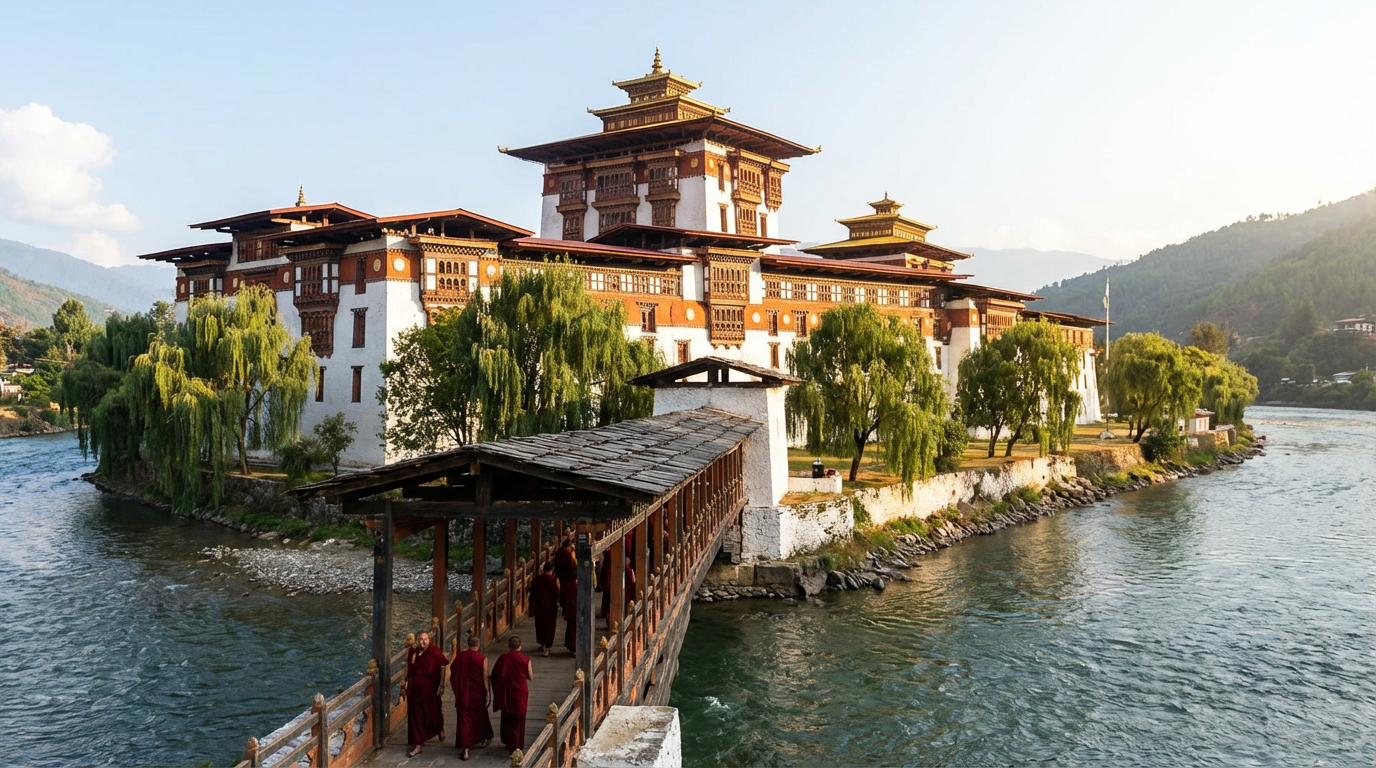
The Punakha Dzong, with its full name Pungtang Dechen Photrang Dzong – "Palace of Great Happiness" – is undisputedly the most beautiful and magnificent Dzong in all of Bhutan. The majestic structure rises on a headland between the turquoise waters of Mo Chhu and Pho Chhu, surrounded by willow trees and rice fields. Seeing this sight for the first time – especially in warm afternoon light – makes it immediately clear why Punakha is considered the jewel of Bhutan's Dzongs.
This image was generated with AI.
Architecture and History
The Punakha Dzong was built in 1637–1638 under the instructions of Zhabdrung Ngawang Namgyal – that visionary monk-leader who unified Bhutan. At 180 meters long and 72 meters wide, it is the second-largest Dzong in the country, and its up to six stories make it one of the most imposing. The architecture combines defensibility with elegance: massive white walls, intricate wood carvings on windows and balconies, golden roofs that shine in the sun.
Like many historic structures in Bhutan, the Punakha Dzong has a turbulent history: fires in the 1750s and 1994, earthquake damage in 1897, and a devastating glacial lake outburst in 1986 required repeated reconstructions. The comprehensive restoration in 2003–2004 has brought the Dzong to its current magnificent state – a testament to living Bhutanese craftsmanship traditions.
Religious and Historical Significance
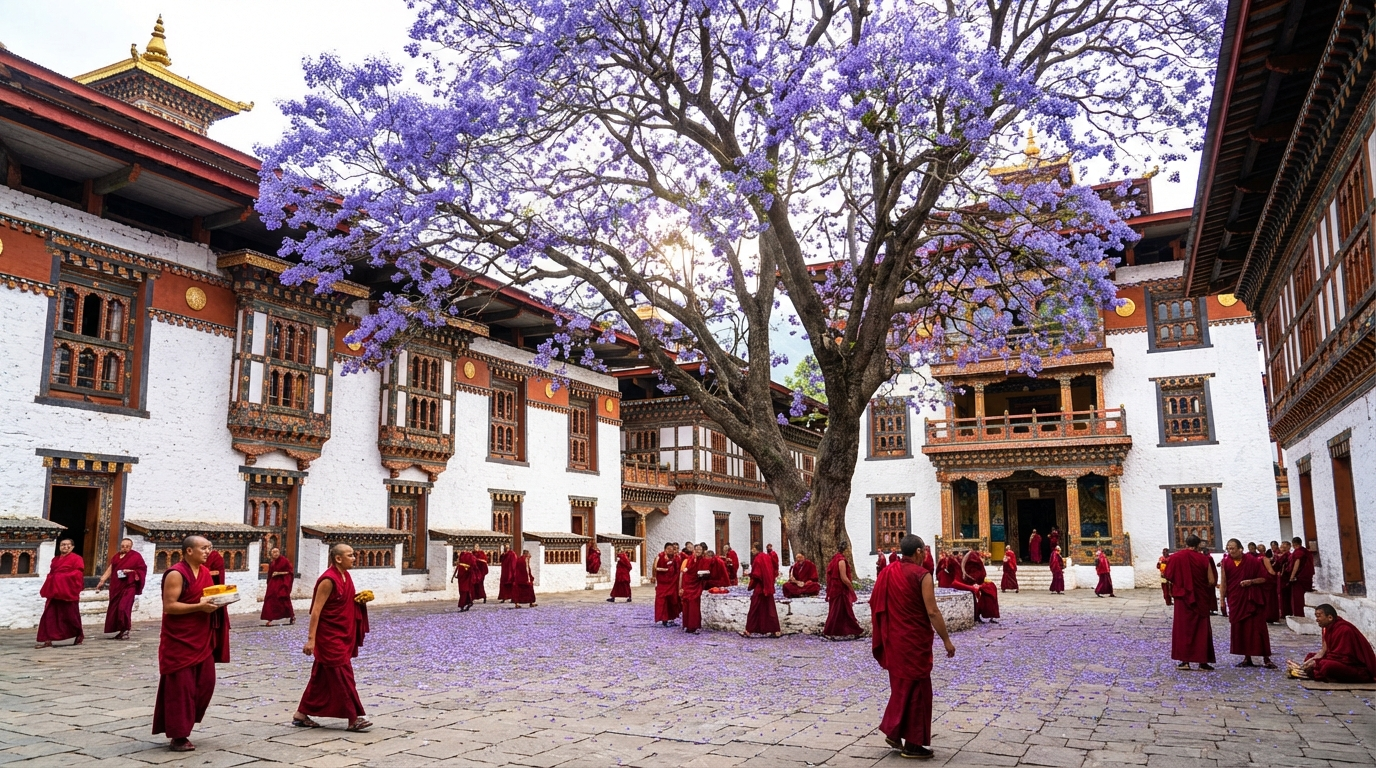
The Punakha Dzong is far more than an architectural masterpiece – it is the spiritual heart of Bhutanese Buddhism. Every winter, when it gets too cold in Thimphu, the Je Khenpo (supreme abbot of Bhutan) moves here with about 1,000 monks. The Dzong houses sacred relics of the Drukpa Kagyu lineage and has been the site of all royal coronations – including that of the current fifth King in 2008.
This image was generated with AI.
Learn more about Bhutanese Dzong architecture
Punakha Suspension Bridge – Spectacular River Crossing
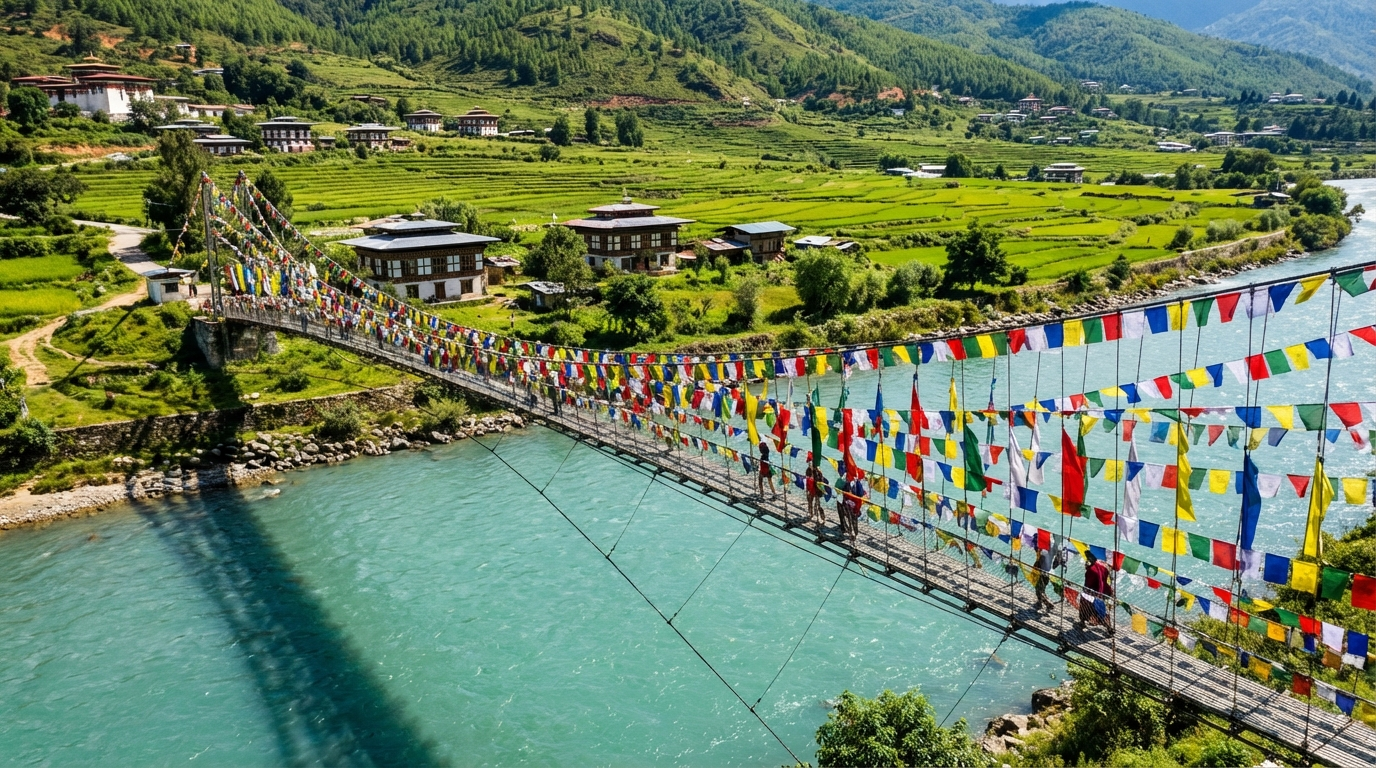
The Punakha Suspension Bridge is among the longest and most spectacular suspension bridges in Bhutan. With a 160-meter span, it soars high above the turquoise Pho Chhu, connecting Punakha to villages on the other side of the river. The bridge is covered with colorful prayer flags fluttering in the wind – a sight that delights every photographer. The slight swaying as you cross is part of the experience.
This image was generated with AI.
Crossing the bridge is free and an unforgettable experience. From the middle, you have a spectacular view upstream to the Himalayas and downstream to the fertile Punakha Valley. If you're not afraid of heights, you can venture onto the swaying structure – the bridge is completely safe.
More Attractions in Punakha
Beyond the majestic Dzong, the Punakha Valley has more treasures to offer. From the unusual fertility temple to a royal Chorten to the spectacular Dochula Pass on the way from Thimphu – there's much to discover here.
Chimi Lhakhang – The Fertility Temple
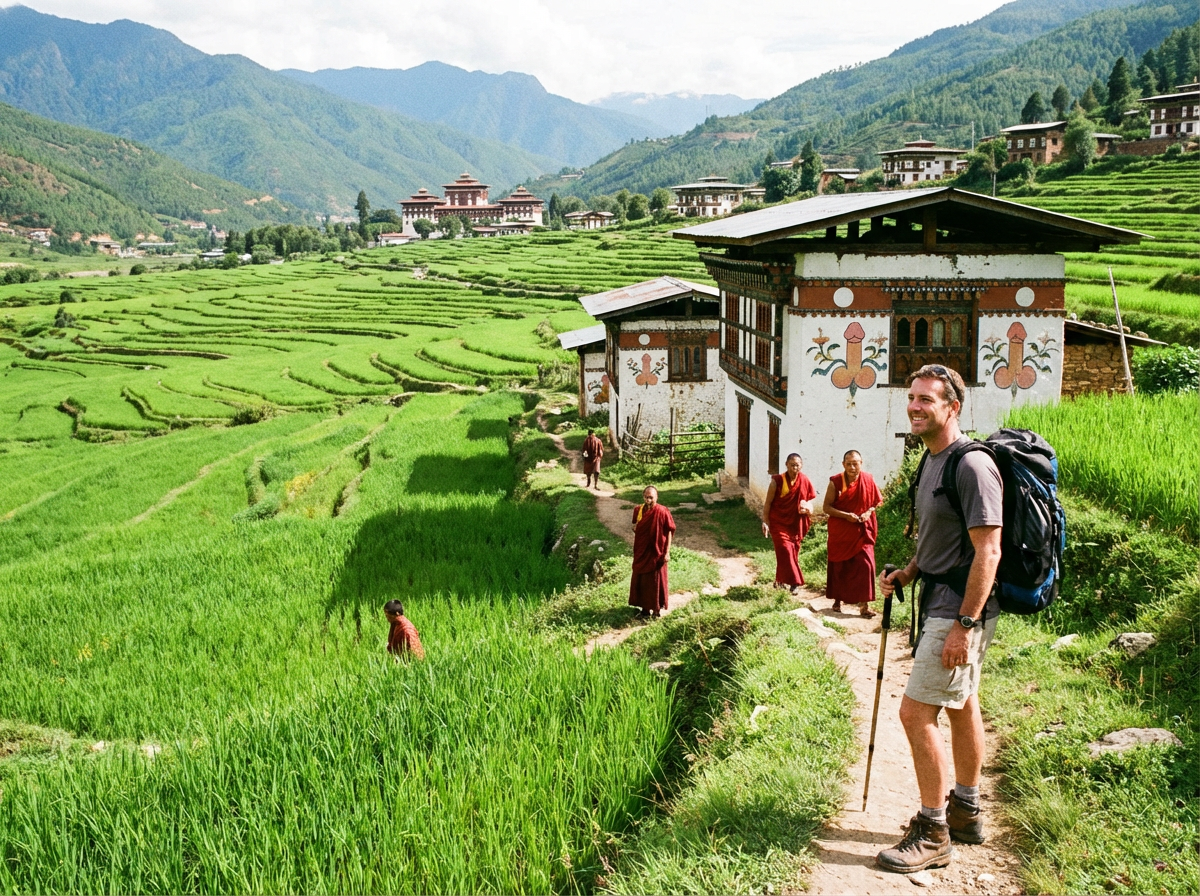
Chimi Lhakhang is one of Bhutan's most unusual temples – and one of the most popular. Built in 1499, the temple is dedicated to the "Divine Madman" Drukpa Kunley, an eccentric Buddhist master who taught using unconventional methods in the 15th century. Today, the temple is a pilgrimage site for couples seeking children, who receive blessings here with a wooden phallus. The phallus symbols you see everywhere in the valley on house facades trace back to this tradition.
This image was generated with AI.
Khamsum Yulley Namgyal Chorten
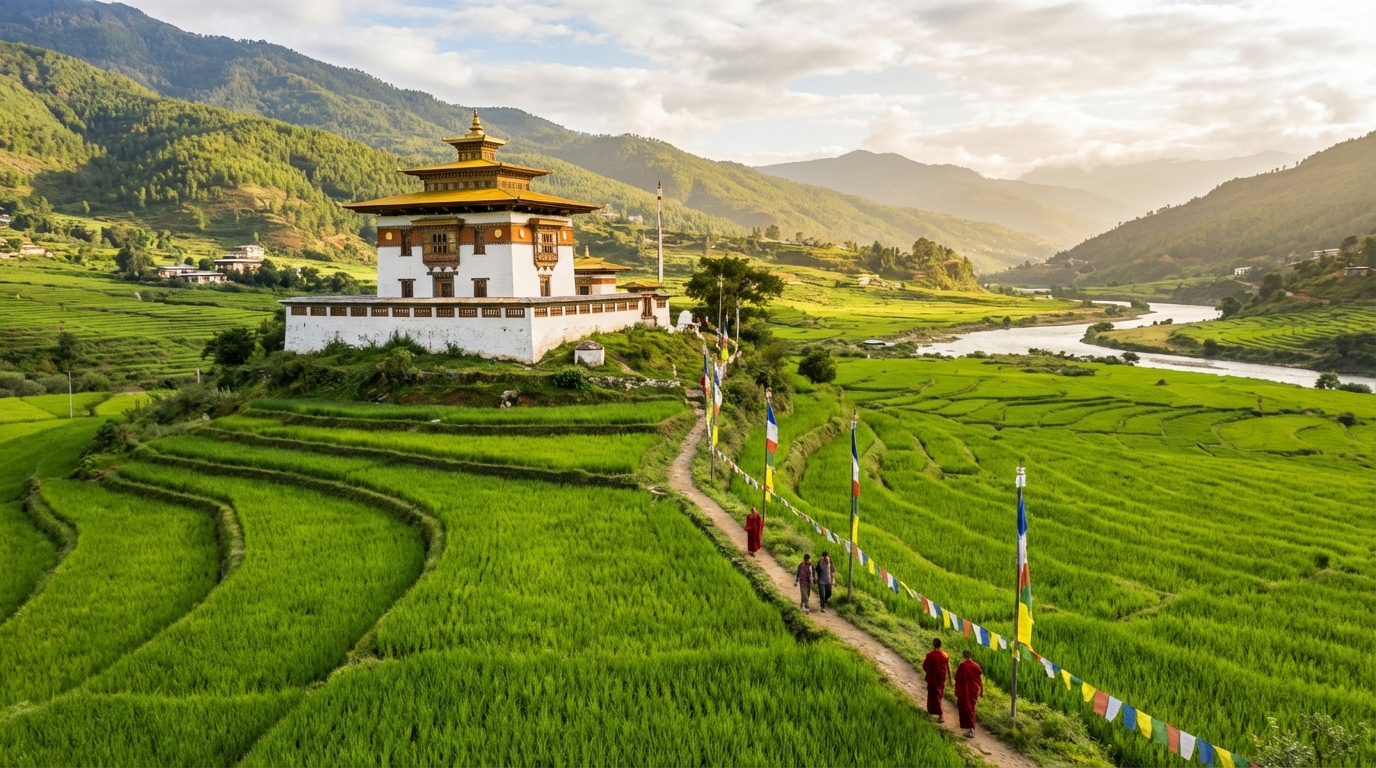
The Khamsum Yulley Namgyal Chorten is a relatively new, but impressive structure. Built in 1999 by the Queen Mother for protection from negative forces, the multi-story Chorten sits on a hill above the valley. The approximately one-hour hike up is rewarded with a spectacular panoramic view over the entire Punakha Valley.
Dochula Pass – On the Way to Punakha
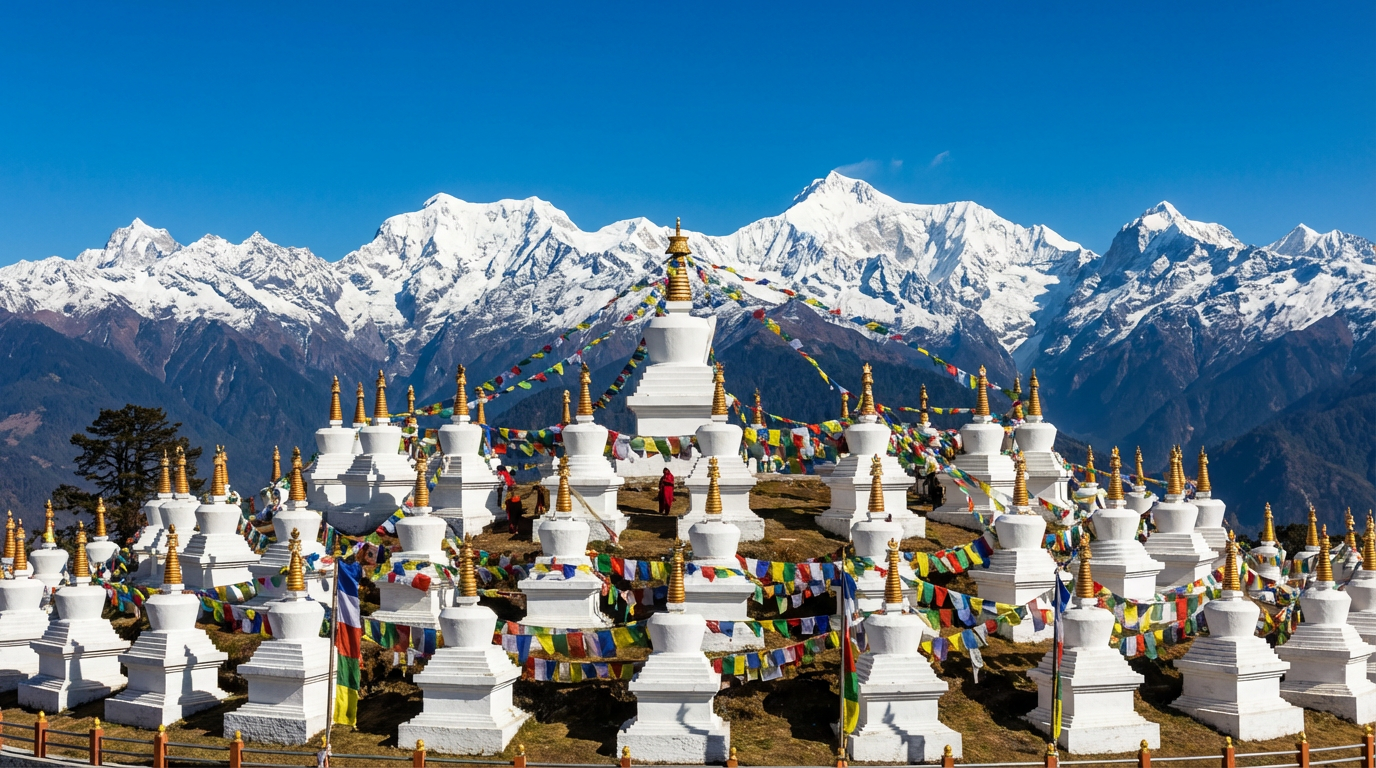
On the way from Thimphu to Punakha, you cross Dochula Pass at 3,100 meters elevation – a highlight in itself. The 108 white Chortens (Druk Wangyal Chortens), built in 2005 to honor fallen soldiers, form one of Bhutan's most iconic photo subjects. On clear days – especially in the winter months – an breathtaking panorama of snow-capped Himalayan peaks opens up from here.
This image was generated with AI.
 Hiking Trail
 This image was generated with AI.
Divine Madman Heritage Trail
New cultural hiking trail following eccentric Drukpa Kunley – connects several historic sites in the Punakha Valley.
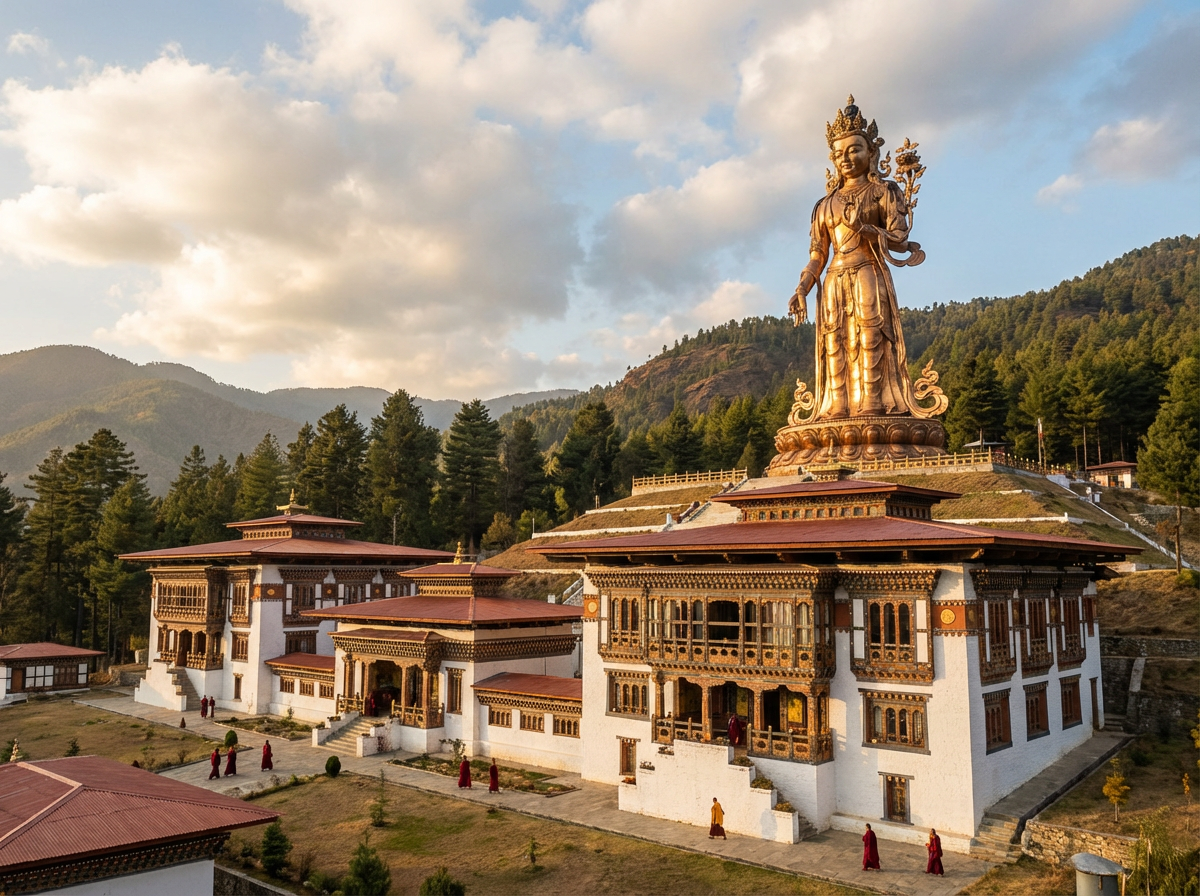 Monastery
 This image was generated with AI.
Sangchhen Dorji Lhuendrup Nunnery
Modern convent on a hill with panoramic views over the Punakha Valley – impressive bronze statue of Avalokiteshvara.
Activities in Punakha
The mild climate and unique river landscape make Punakha an ideal location for outdoor activities. Beyond cultural highlights, the valley offers opportunities for rafting, hiking, and leisurely walks through rice fields.
Rafting on the Mo Chhu
A rafting tour on the Mo Chhu is one of the most exciting experiences in Bhutan. From October to March, when water levels are optimal, you can tackle Class II–III rapids – challenging enough for adrenaline, but also suitable for beginners. The approximately 2–3-hour tour takes you through breathtaking gorges and offers a unique perspective on the landscape – including views of Punakha Dzong from the water.
Hiking in the Punakha Valley
The Punakha Valley offers several worthwhile hikes – from leisurely walks through rice fields to more challenging climbs. The moderate elevation of just 1,200 meters makes the hikes pleasant even for less experienced visitors.
| Hike | Duration | Difficulty | Highlights |
|---|---|---|---|
| Chimi Lhakhang | 30–45 minutes | Easy | Rice fields, fertility temple, village atmosphere |
| Khamsum Yulley Chorten | 1–1.5 hours | Moderate | Panoramic view of the entire valley |
| Pho Chhu Trail | 2–3 hours | Moderate | River landscape, remote villages |
| Divine Madman Heritage Trail | 3–4 hours | Moderate | Cultural hiking path, historic sites |
Festivals in Punakha
Punakha is home to two major festivals that follow one another and together offer a unique experience. Punakha Drubchen and the subsequent Punakha Tshechu take place annually in February or March and attract thousands of pilgrims and visitors.
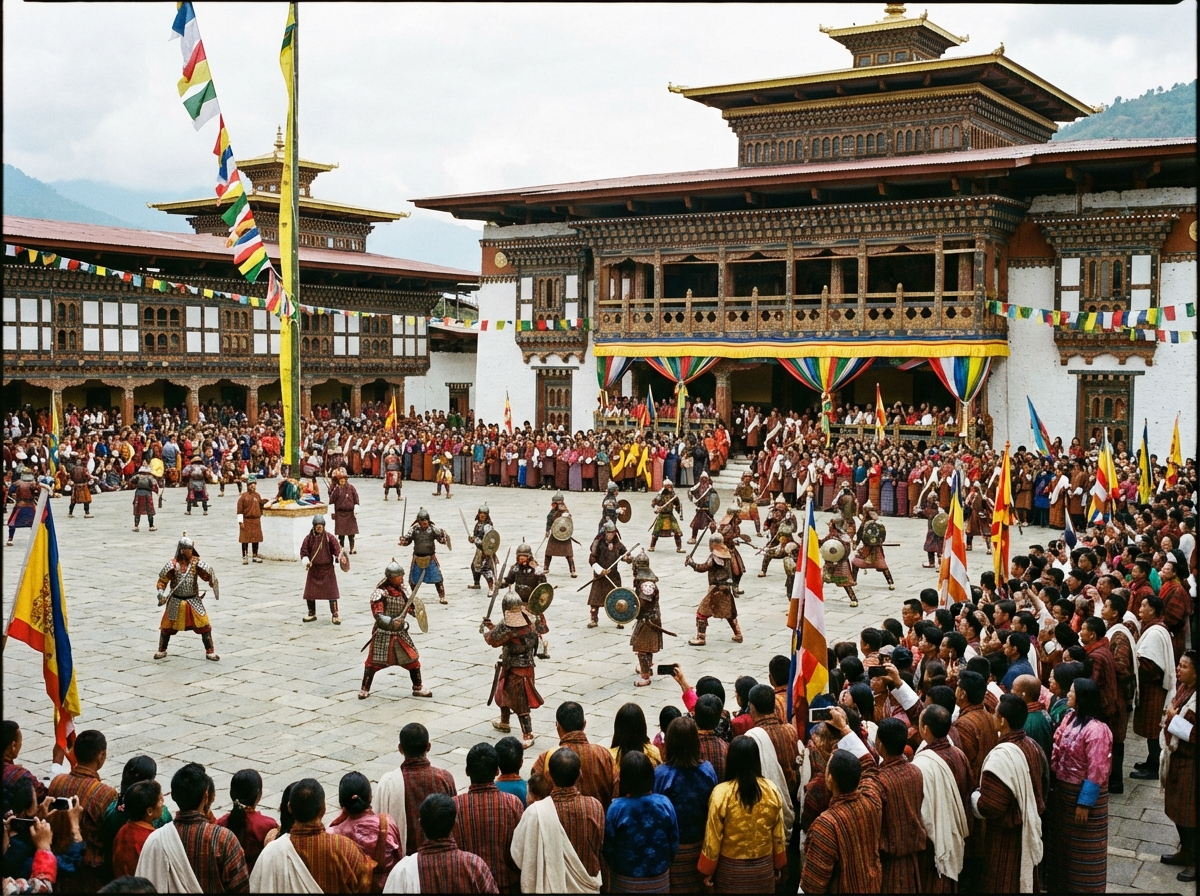 February/March
 This image was generated with AI.
Punakha Drubchen
Unique festival with reenactment of historic battles and traditional warrior formations – only experienced here in Punakha.
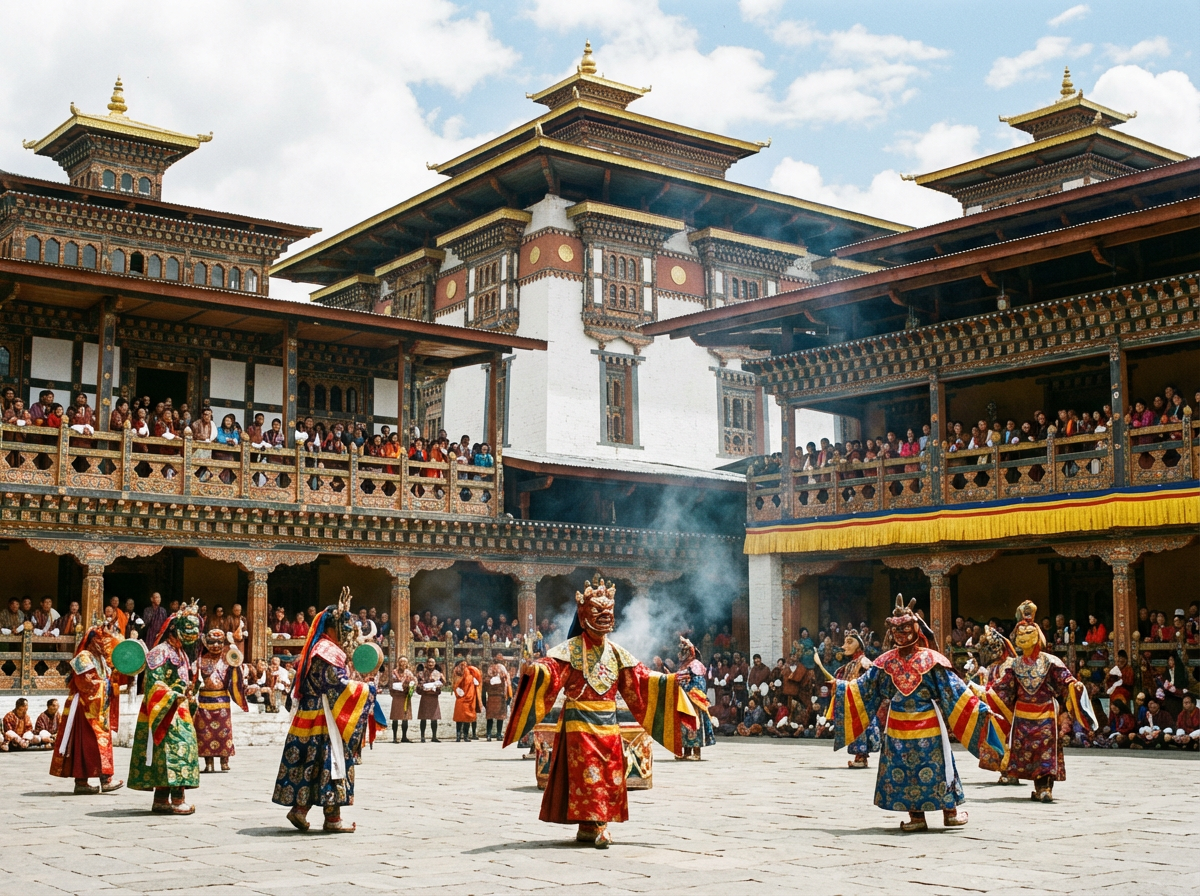 February/March
 This image was generated with AI.
Punakha Tshechu
Classic mask dance festival immediately after Drubchen – spectacular dances in the courtyard of the majestic Punakha Dzong.
Complete Festival Calendar 2026/2026
Hotels in Punakha
Punakha offers a growing selection of accommodations – from international luxury resorts to charming river lodges. Many hotels take advantage of the unique location on the Mo Chhu or Pho Chhu and offer rooms with spectacular river views. The mild climate allows year-round use of terraces and gardens.
Luxury Category
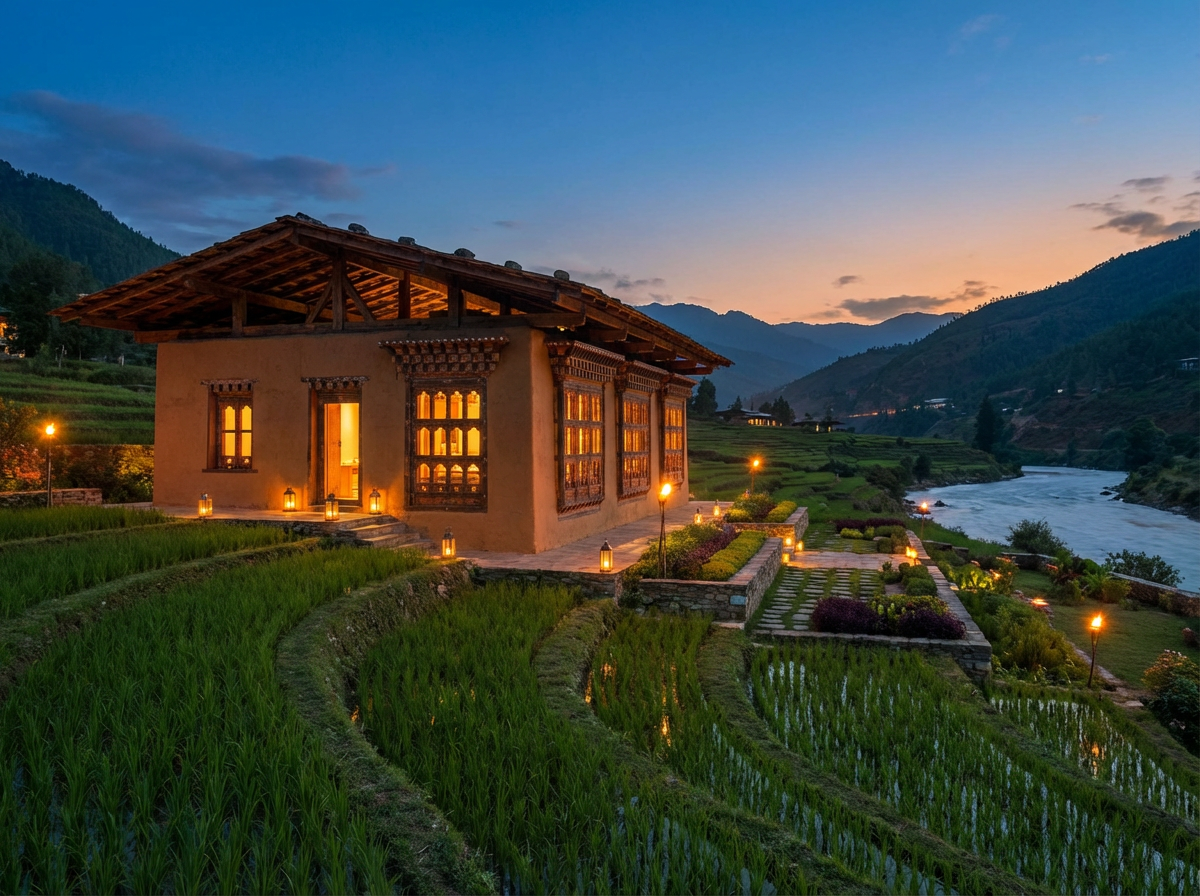 Ultra-Luxury
 This image was generated with AI.
Amankora Punakha
The Punakha lodge of the Aman chain: Intimate atmosphere with only 8 suites, surrounded by rice fields with views of the Dzong – minimalist luxury at its finest.
 Luxury
 This image was generated with AI.
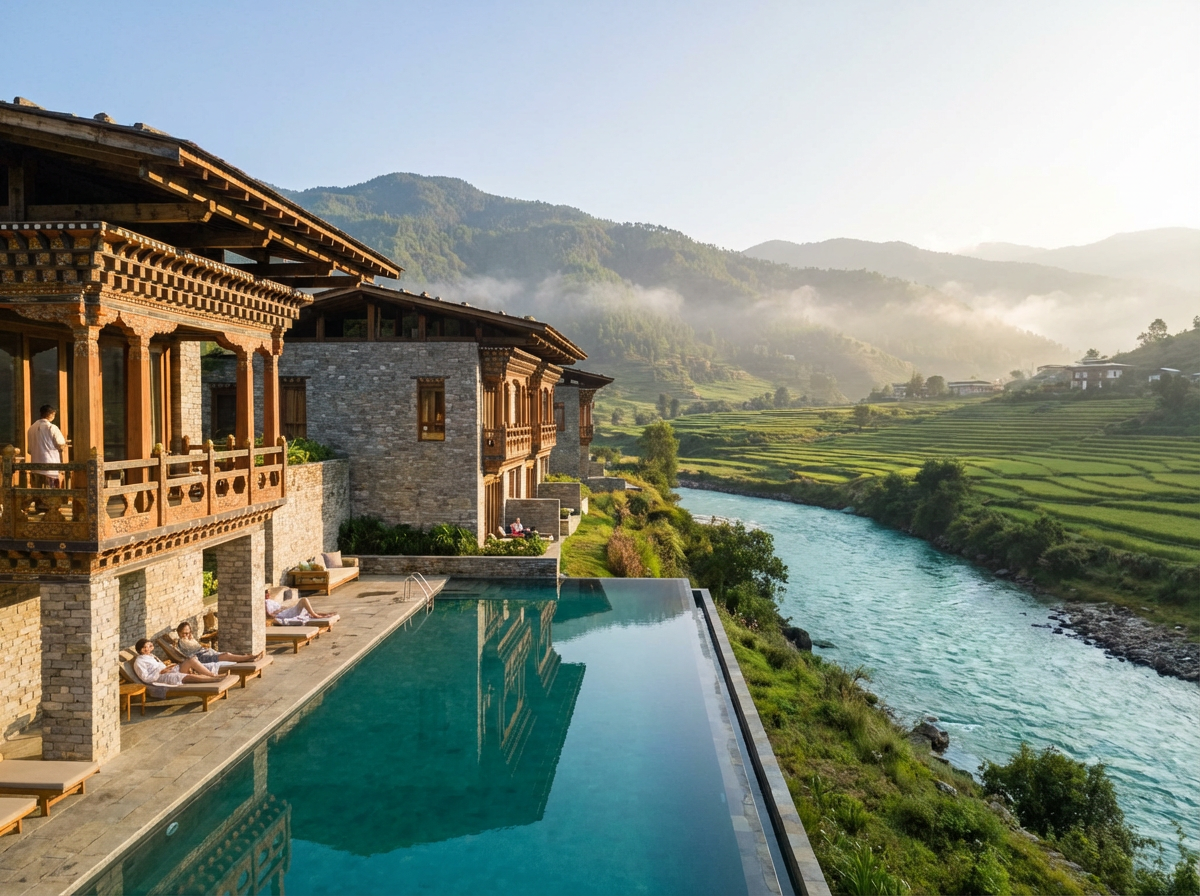
Six Senses Punakha
Wellness oasis directly on the riverbank: Spacious suites with river views, excellent spa with traditional hot stone baths, and farm-to-table cuisine.
 Boutique Luxury
 This image was generated with AI.
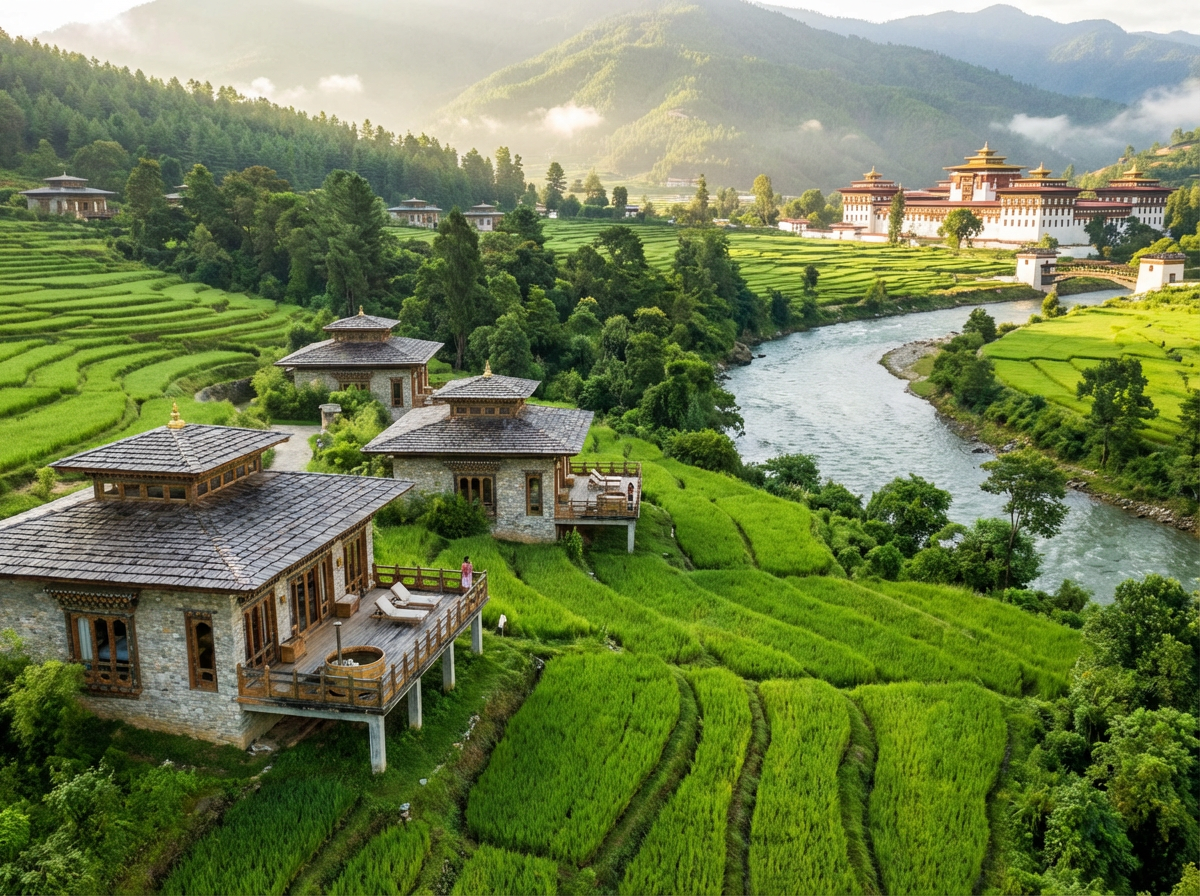
COMO Uma Punakha
Boutique luxury with Shambhala Spa: Elegant villas with private terraces, ayurvedic treatments, and spectacular views of the valley and Dzong.
Mid-Range and Lodges
In addition to the luxury resorts, you will find several comfortable mid-range hotels and charming lodges in Punakha. The Punakha River Lodge, for example, offers authentic ambiance directly on the riverbank. Damchen Resort and Meri Puensum Resort score points with good locations and reasonable prices.
All accommodations in Punakha by category
Recommended Length of Stay in Punakha
For a comprehensive visit to Punakha, we recommend 1–2 nights. With one night, you can see the Dzong and the main attractions; with two nights, you have time for hikes, rafting, and a more relaxed pace.
Minimum: 1 Night – The Highlights
- Day 1: Arrive via Dochula Pass (stop for photos and 108 Chortens), Punakha Dzong in the afternoon, suspension bridge at sunset
- Day 2: Chimi Lhakhang in the morning, continue to Phobjikha Valley or return to Thimphu
Optimal: 2 Nights – With Time for Activities
- Day 1: Arrive via Dochula Pass, Punakha Dzong in late afternoon
- Day 2: Rafting on Mo Chhu in the morning, Chimi Lhakhang, hike to Khamsum Yulley Chorten, suspension bridge at sunset
- Day 3: Sangchhen Nunnery in the morning, continue onward
Festival Season: 3+ Nights – For Drubchen and Tshechu
- Recommendation: Plan at least 3 nights to experience both festivals (Drubchen and Tshechu)
- Schedule: Arrival day for acclimation, 2–3 festival days, departure day
- Note: Early booking essential, hotels often booked 6+ months in advance
Classic 7-Day Route with Punakha
Weather in Punakha and Best Time to Visit
Punakha enjoys the mildest climate in Western Bhutan thanks to its low elevation of just 1,200 meters. Temperatures are significantly higher year-round than in Thimphu or Paro – in summer it can get quite warm here. This makes Punakha particularly appealing during cooler months, while the monsoon (June–August) brings humidity and occasional heavy rain.
| Month | Day Temp. | Night Temp. | Precipitation | Suitability |
|---|---|---|---|---|
| January–February | 17–20°C | 4–8°C | Low | Excellent, festival season |
| March–May | 25–30°C | 12–16°C | Increasing | Excellent, jacaranda bloom in May |
| June–August | 28–33°C | 18–22°C | High (Monsoon) | Limited, humid and hot |
| September–November | 25–30°C | 12–18°C | Decreasing | Excellent, clear visibility |
| December | 18–22°C | 6–10°C | Low | Excellent |
Detailed Information on the Best Time to Visit Bhutan
Getting to Punakha
Punakha is only accessible by road – the nearest airport is Paro, about 4 hours away. Most visitors come from Thimphu via the spectacular Dochula Pass (3,100 m), which takes about 2.5–3 hours. The drive itself is an experience: the Pass with its 108 Chortens and the subsequent descent into the subtropical valley showcase Bhutan's landscape diversity in an impressive way.
| From | Distance | Travel Time | Route |
|---|---|---|---|
| Thimphu | 77 km | 2.5–3 hours | Via Dochula Pass (3,100 m) |
| Paro | approx. 125 km | approx. 4 hours | Via Thimphu and Dochula Pass |
| Phobjikha Valley | approx. 70 km | 2–2.5 hours | Via Wangdue Phodrang |
| Trongsa | approx. 130 km | 4–5 hours | Via Wangdue Phodrang, Pele La Pass |
Practical Information for Punakha
Frequently Asked Questions About Punakha
Why is Punakha Dzong so special?
Punakha Dzong is considered the most beautiful and magnificent Dzong in Bhutan, primarily because of its unique location at the confluence of two rivers. It is the second-oldest and second-largest Dzong in the country, served as the winter residence of kings, and is the site of all royal coronations. The combination of imposing architecture, spiritual significance, and picturesque surroundings makes it unparalleled.
How high is Punakha?
Punakha lies at approximately 1,200 to 1,400 meters above sea level – significantly lower than Thimphu (2,320 m) or Paro (2,250 m). This low elevation gives the valley a subtropical, mild climate and makes it the warmest region of Western Bhutan. Altitude sickness is not a concern in Punakha.
When is the best time to visit Punakha?
The best time to visit Punakha is from October to May. In winter (February/March), the famous festivals Drubchen and Tshechu take place. In May, jacaranda trees bloom purple – particularly in the Dzong courtyard an unforgettable sight. Avoid the humid monsoon season from June to August if possible.
What do the phallus symbols on the houses mean?
The painted phallus symbols you see everywhere in Punakha are traditional protective symbols against evil spirits and misfortune. They trace back to the "Divine Madman" Drukpa Kunley, an eccentric Buddhist master of the 15th century who worked in Punakha. In Bhutanese culture, these symbols have no offensive meaning whatsoever.
How long should I stay in Punakha?
For a comprehensive visit, we recommend 1–2 nights. With one night, you can visit the Dzong, the suspension bridge, and Chimi Lhakhang. With two nights, you have time for rafting, the hike to Khamsum Chorten, and a more relaxed pace. During festivals, plan for at least 3 nights.
Can you go rafting in Punakha?
Yes! Rafting on the Mo Chhu is one of the highlights in Punakha. The season runs from October to March, the rapids (Class II–III) are suitable even for beginners. The approximately 2–3-hour tour offers spectacular views of the landscape and Dzong from the water. Book through your tour operator.
When is the Punakha Festival?
Punakha Drubchen takes place March 6–8, 2026, and Punakha Tshechu March 9–11, 2026. Visiting both festivals back-to-back is a unique experience. The exact dates vary annually according to the Bhutanese lunar calendar – book early as hotels fill up quickly.
How long is the drive from Thimphu to Punakha?
The drive from Thimphu to Punakha takes about 2.5–3 hours for 77 kilometers. The route goes via the spectacular Dochula Pass (3,100 m) with its 108 white Chortens. Plan time for a stop at the pass – on clear days, you'll have a breathtaking Himalayan view from here.
What hotels are there in Punakha?
Punakha offers accommodations in all categories. In the luxury segment you'll find Amankora Punakha, Six Senses Punakha, and COMO Uma Punakha. Popular mid-range options are Punakha River Lodge, Damchen Resort, and Meri Puensum Resort. During festival season, hotels are booked far in advance.
Further Information
Travel On from Punakha
Experience Bhutan's Most Beautiful Dzong?
We plan your custom route to Punakha – with the best hotels, exclusive experiences, and perfect timing for festivals or jacaranda bloom.