Bhutan Practical Information: Everything for Your Trip 2026
Last updated:
A well-prepared journey begins with the right information. On this page, you will find all the practical details for your Bhutan visit – from the national language Dzongkha to time zone differences, power outlet types, and local transport. This way, you can focus entirely on what truly matters: the fascinating experiences that the Kingdom in the Himalayas has in store for you.
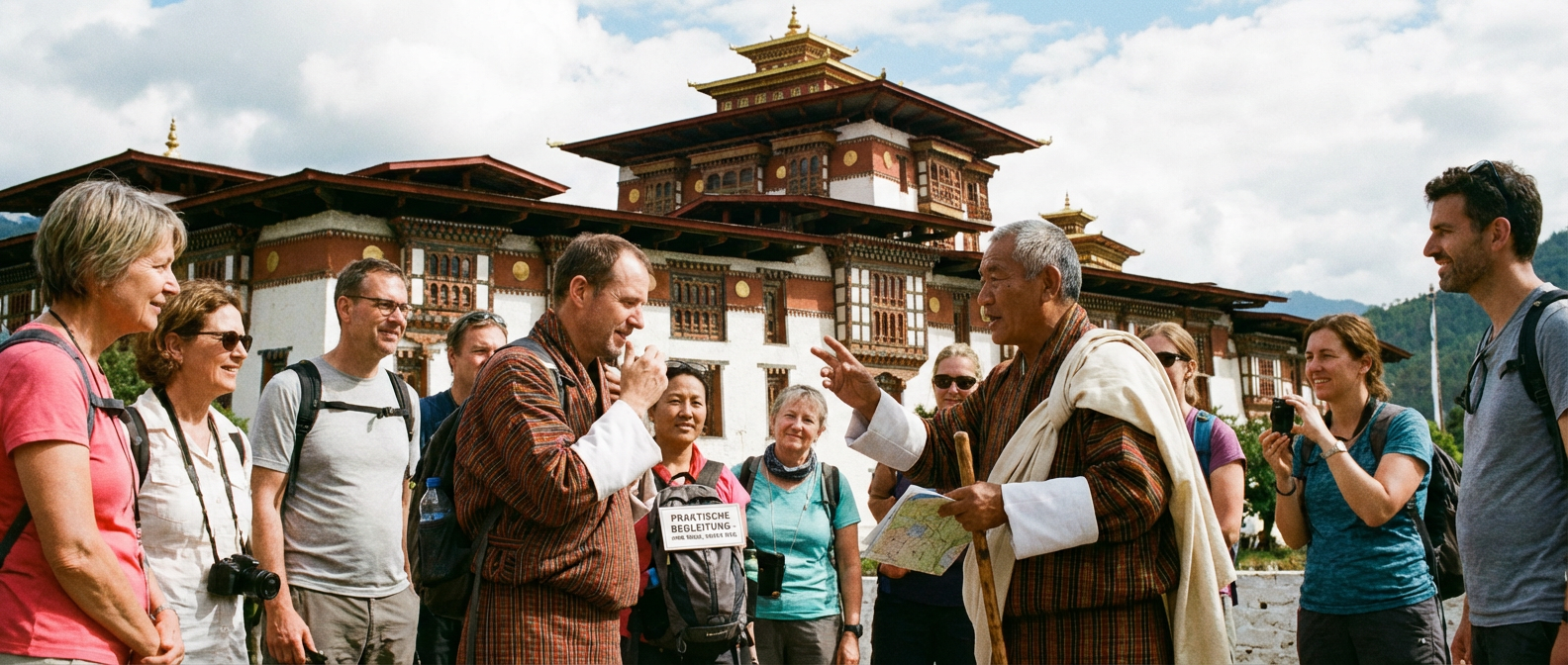
This image was generated with AI.
Quick Facts Bhutan
Below you will find more detailed information on each of these topics. For specialized questions – such as accommodation, transport, or photography – we have prepared separate detail pages.
Language & Communication
Dzongkha is the official national language of Bhutan and is written in Tibetan script. The good news for travelers: English is widely spoken in the tourism sector. Your guide speaks fluent English, as does the staff in hotels and restaurants in tourist regions. However, communication without a guide can be more difficult in rural areas and remote valleys.
Timezone & Time Difference
Bhutan is in the UTC+6 timezone (Bhutan Standard Time). The difference to Greenwich Mean Time (GMT) is +6 hours – when it's 12:00 noon in London, clocks in Bhutan show 18:00. For US East Coast travelers, Bhutan is 11 hours ahead (EST) or 10 hours ahead during Daylight Saving Time (EDT). Bhutan itself does not observe daylight saving time.
| Region | Standard Time | Daylight Saving |
|---|---|---|
| United Kingdom | +6 hours | +5 hours (BST) |
| US East Coast | +11 hours (EST) | +10 hours (EDT) |
| US West Coast | +14 hours (PST) | +13 hours (PDT) |
Currency & Payment
The Bhutanese currency is the Ngultrum (BTN), which is pegged at par to the Indian Rupee – both currencies are accepted equally in Bhutan. In hotels and larger shops, you can often pay with US Dollars as well. Credit cards are accepted in upmarket hotels and some shops but are not widely available throughout the country.
| Aspect | Details |
|---|---|
| National Currency | Bhutanese Ngultrum (BTN) |
| Exchange Rate (approx.) | 1 USD ≈ 84 BTN (check current rate) |
| Accepted Currencies | BTN, INR (equal value), USD |
| ATMs | Available in Thimphu and Paro |
| Credit Cards | In larger hotels and shops, not widespread |
Detailed information on currency, exchange, and tipping
Power & Technical Details
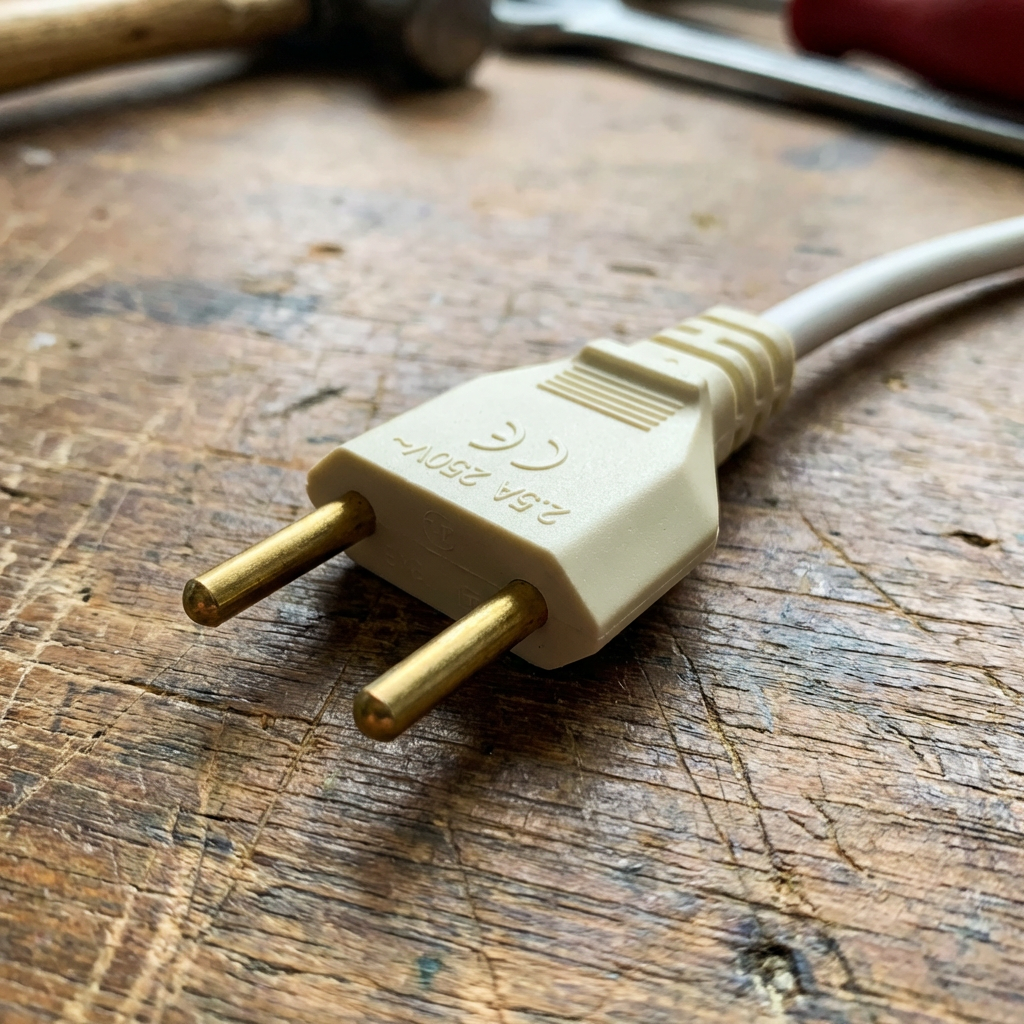
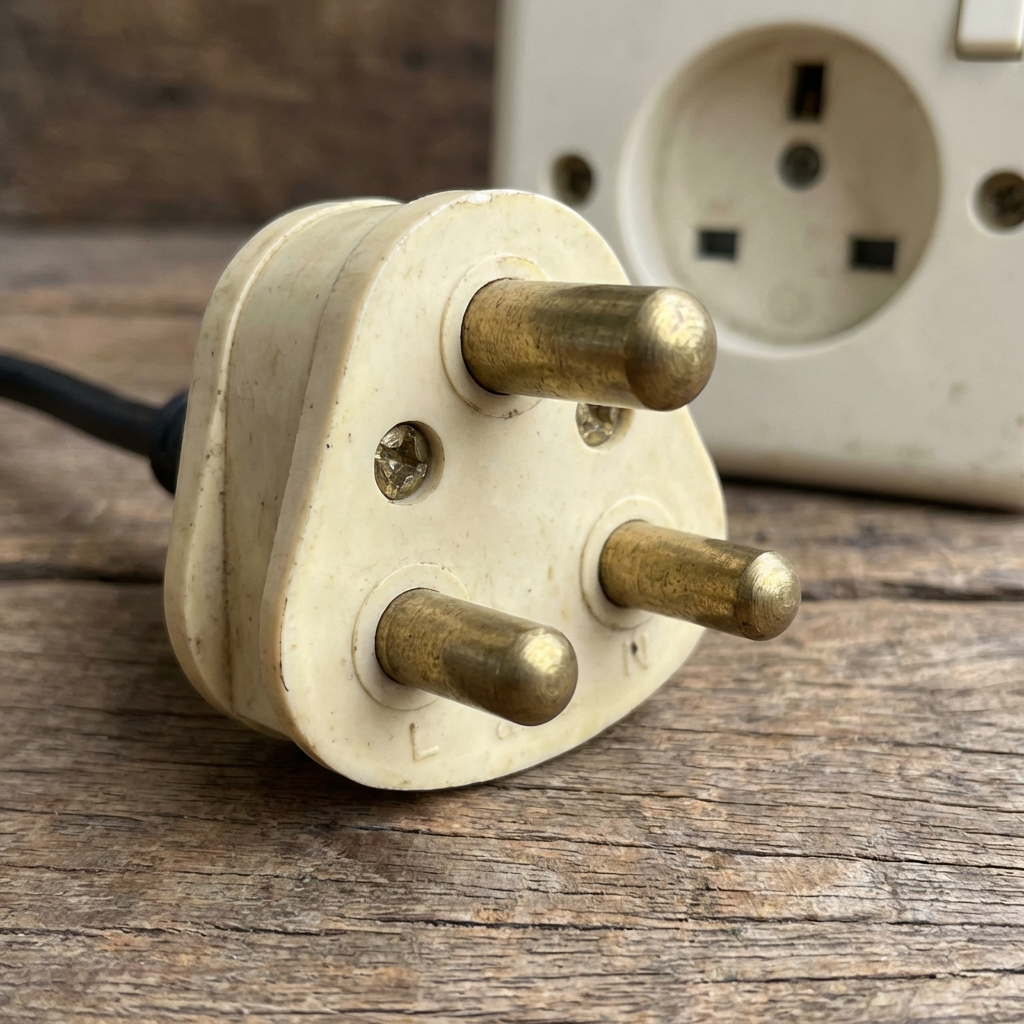
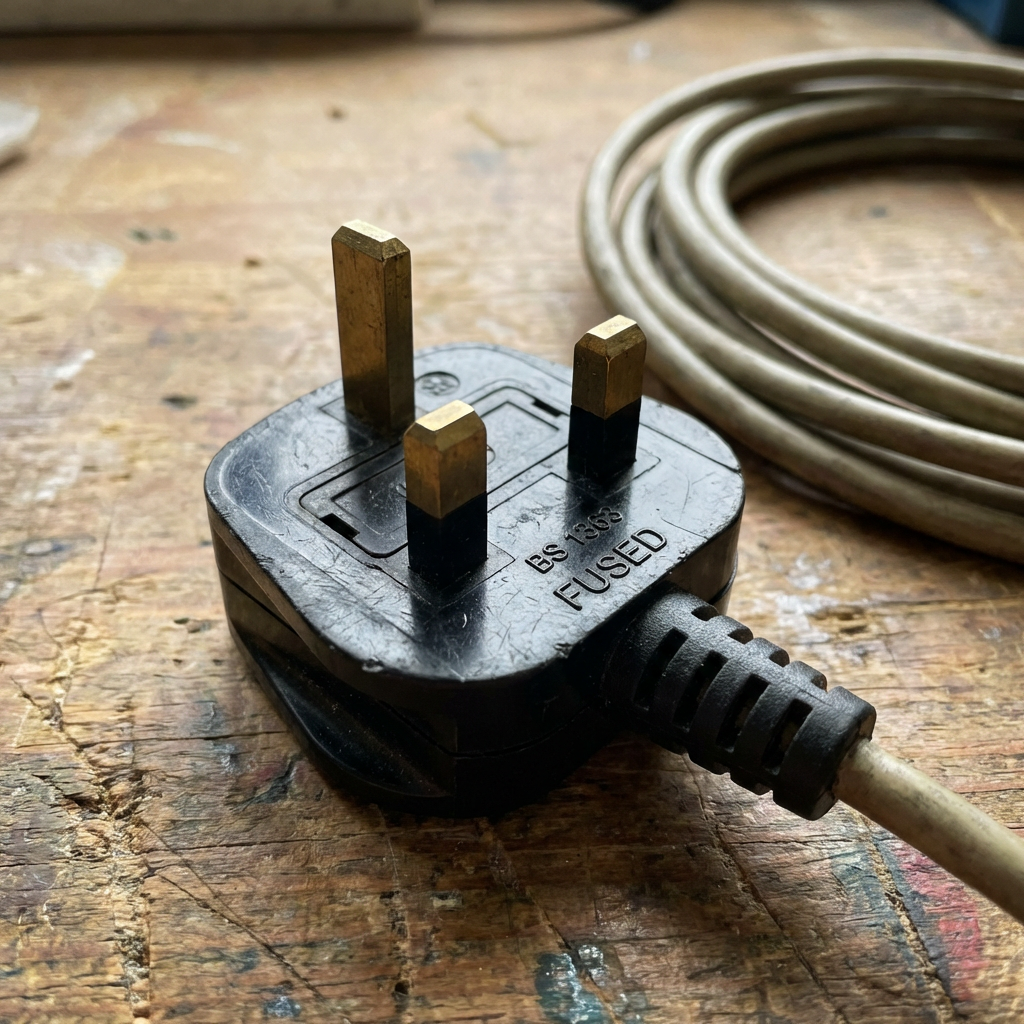
Bhutan uses a mains voltage of 230 Volts at 50 Hz – identical to the UK and most of Europe. However, the outlets are more varied: In addition to the European Type C, you will find the Indian Type D and the British Type G. A universal adapter is therefore recommended. In rural regions, occasional short power outages can occur – a power bank for your devices is sensible.
Outlet Type C
This image was generated with AI.
European plug – fits directly
Outlet Type D
This image was generated with AI.
Indian plug – adapter needed
Outlet Type G
This image was generated with AI.
British plug – adapter needed
All Practical Topics at a Glance
For every practical aspect of your Bhutan trip, we have prepared a comprehensive detail page. Click on the respective topic to get all the information you need.
Accommodation
Bhutan's accommodation options range from simple guesthouses and comfortable 3- and 4-star hotels to world-renowned luxury resorts like Aman and Six Senses. Most tour packages already include accommodation – but you can request individual upgrades.
All accommodation categories and recommendations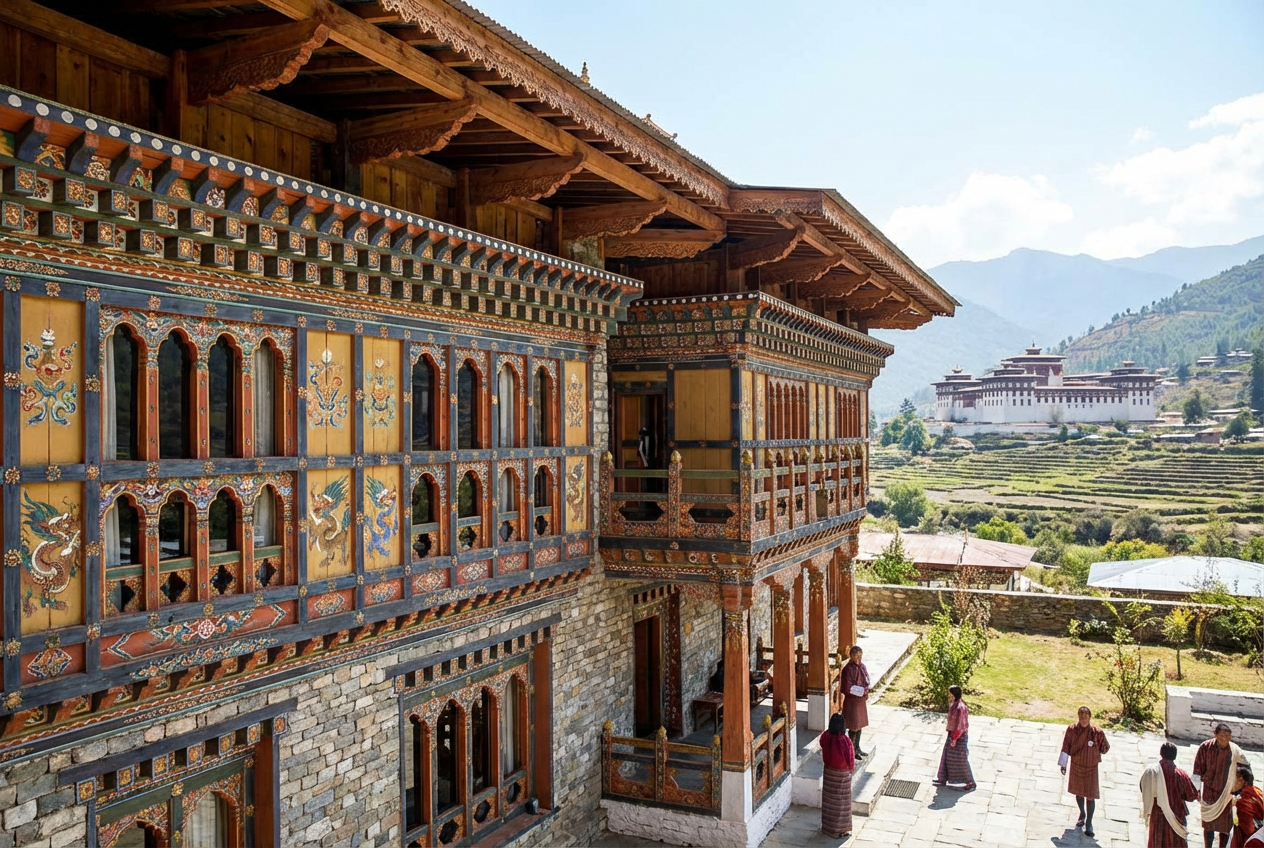
This image was generated with AI.
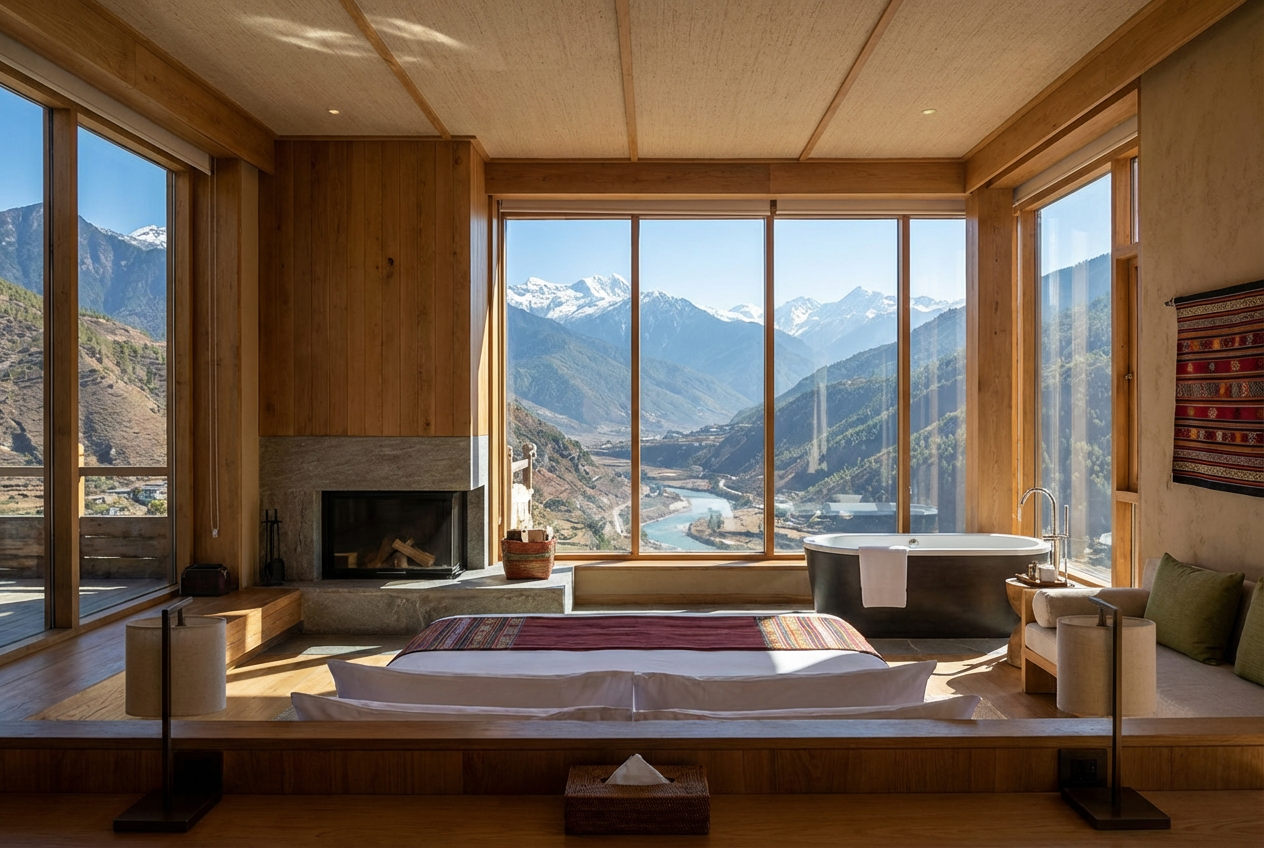
Accommodation Overview
From budget to luxury: All accommodation options in Bhutan.
This image was generated with AI.
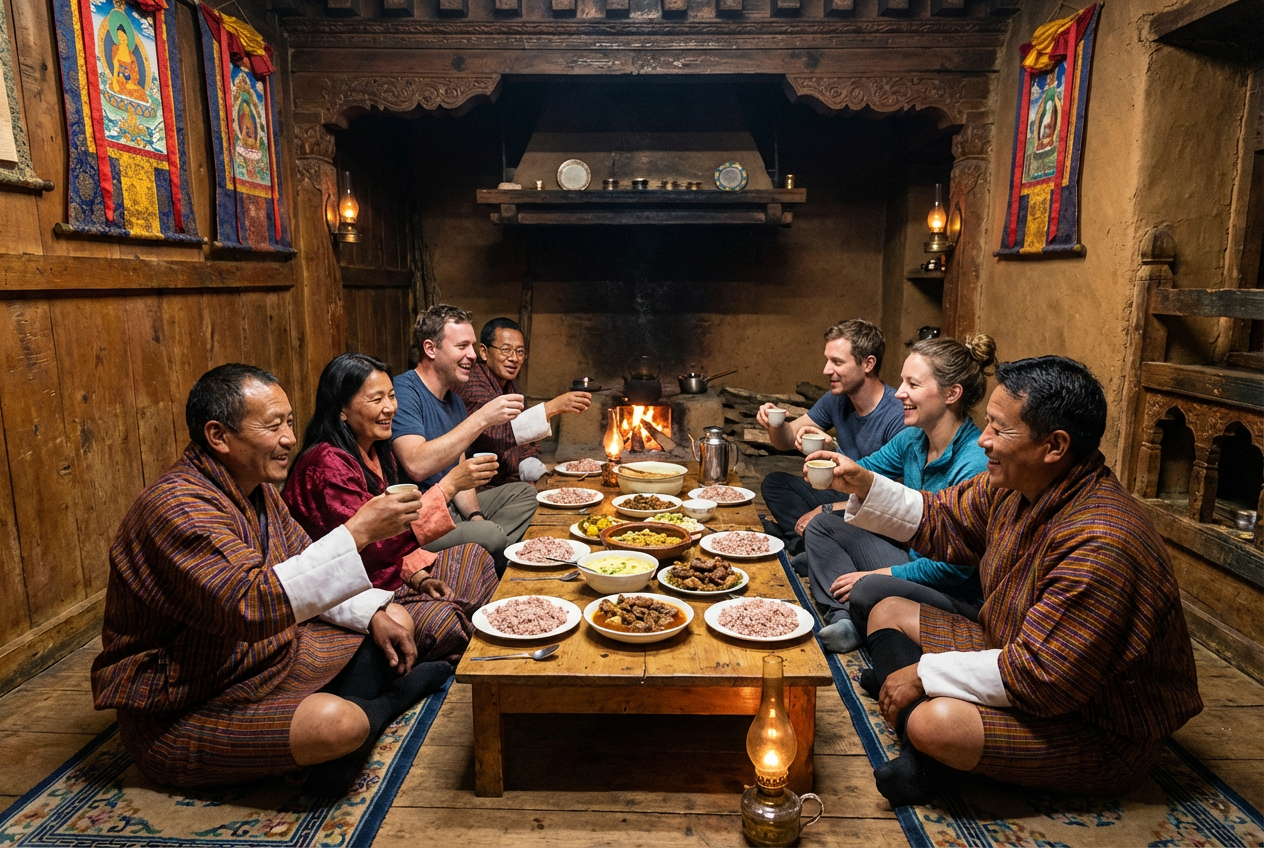
Luxury Hotels
Aman, Six Senses, Como: The best addresses for discerning travelers.
This image was generated with AI.
Homestays
Authentic experiences with Bhutanese families.
Transport in Bhutan
Transport in Bhutan is exclusively with a driver – self-driving is not permitted for tourists. Your vehicle and driver are part of the tour package. The winding mountain roads require patience: Plan more time for distances than the kilometers might suggest.
Travel times, road conditions, and domestic flightsGuide & Tour Operators
A licensed guide is mandatory for visits outside of Paro, Thimphu, and Punakha. But beyond that, a good guide is worth their weight in gold: They open doors to temples and ceremonies that would otherwise remain closed and provide deep insights into culture and history.
Guide requirements, choosing operators, and tipping recommendationsPhotography & Drones
Bhutan is a paradise for photographers – from dramatic mountain landscapes to colorful festivals. Important to know: Drones are strictly prohibited in Bhutan. In many Dzongs and temples, photography inside is not permitted – your guide will inform you about the specific rules.
Best photo spots, equipment tips, and rulesDress Code & Etiquette
Bhutan is a Buddhist country with living traditions. For temple and Dzong visits, modest clothing is expected: long trousers or skirts, covered shoulders. In general, approach the culture with respect – your guide will introduce you to the most important behavioral guidelines.
Dress code, behavioral guidelines, and cultural dos and don'ts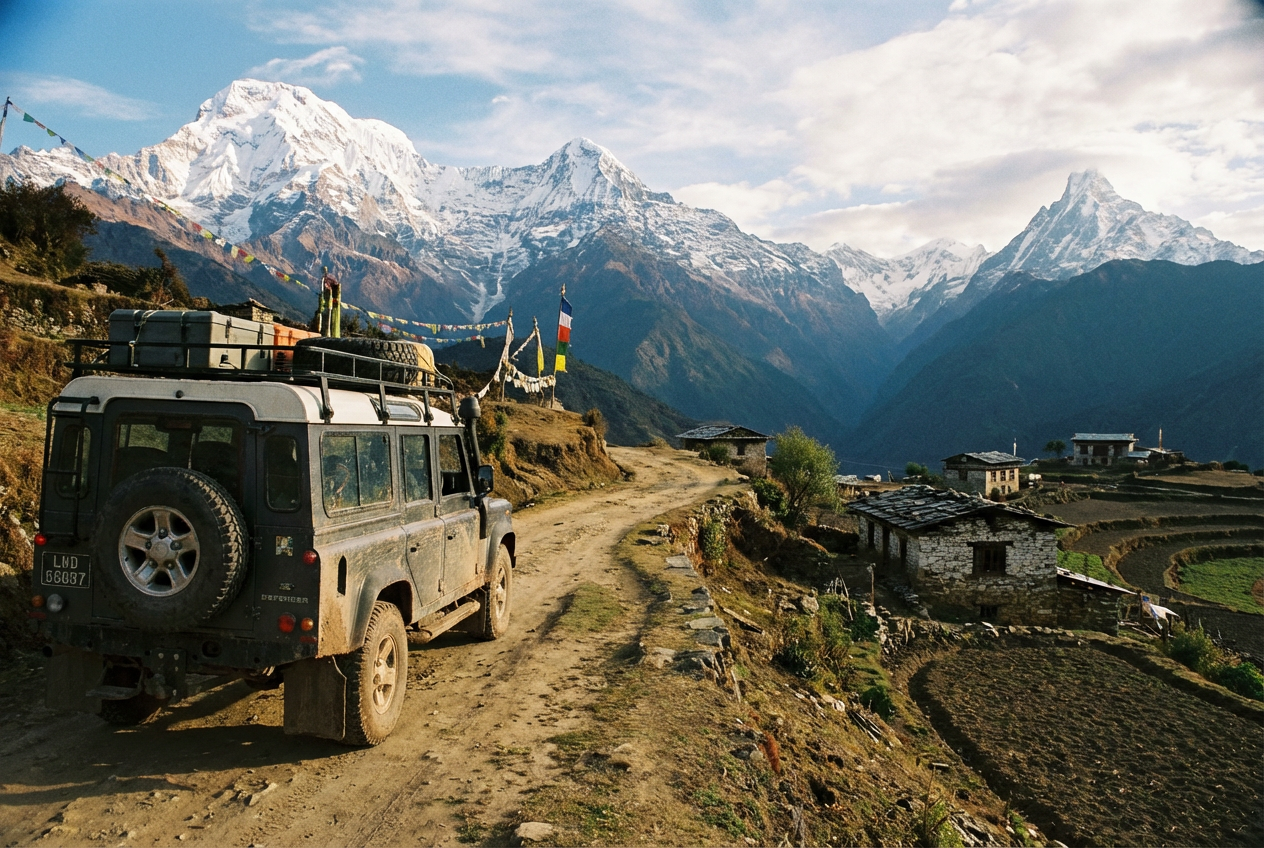
This image was generated with AI.
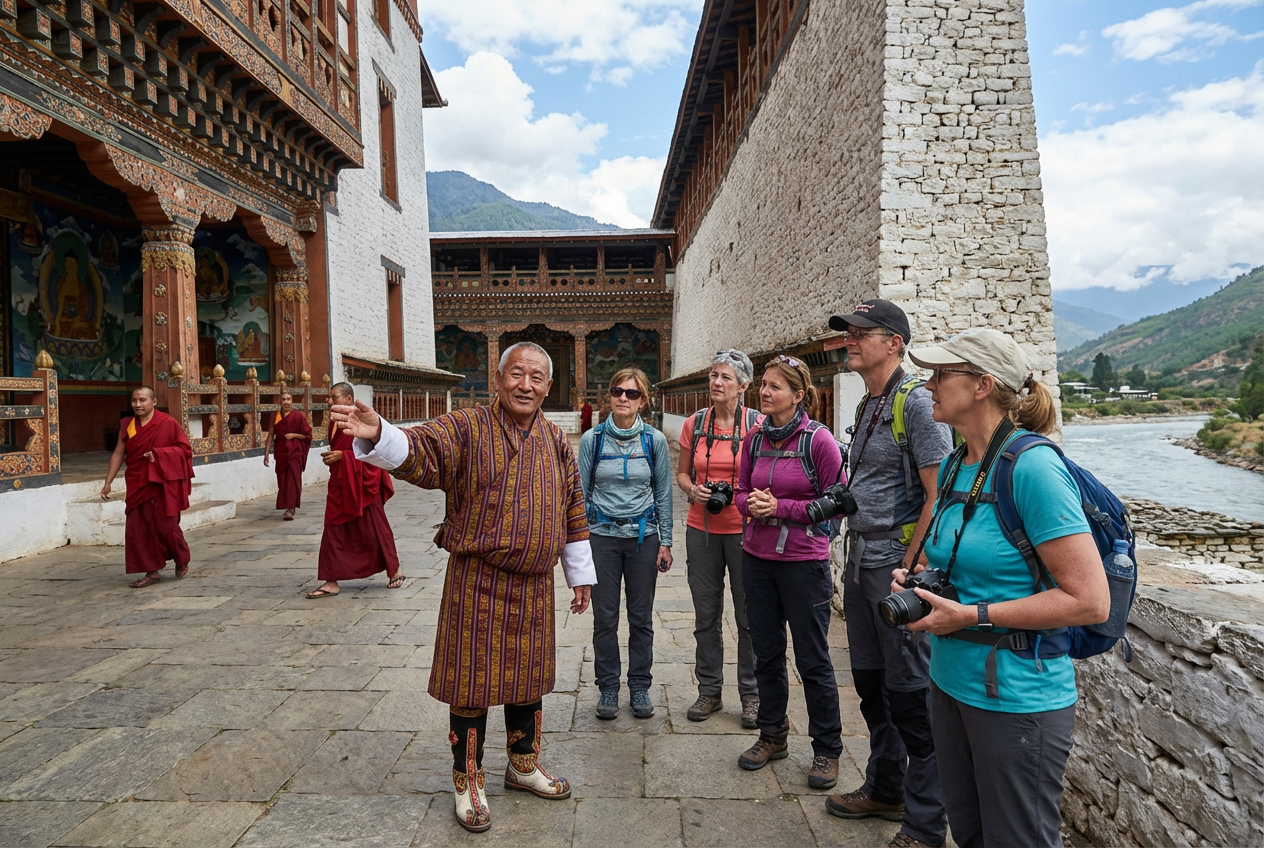
Transport
Travel times, road conditions, and how to get around in Bhutan.
This image was generated with AI.
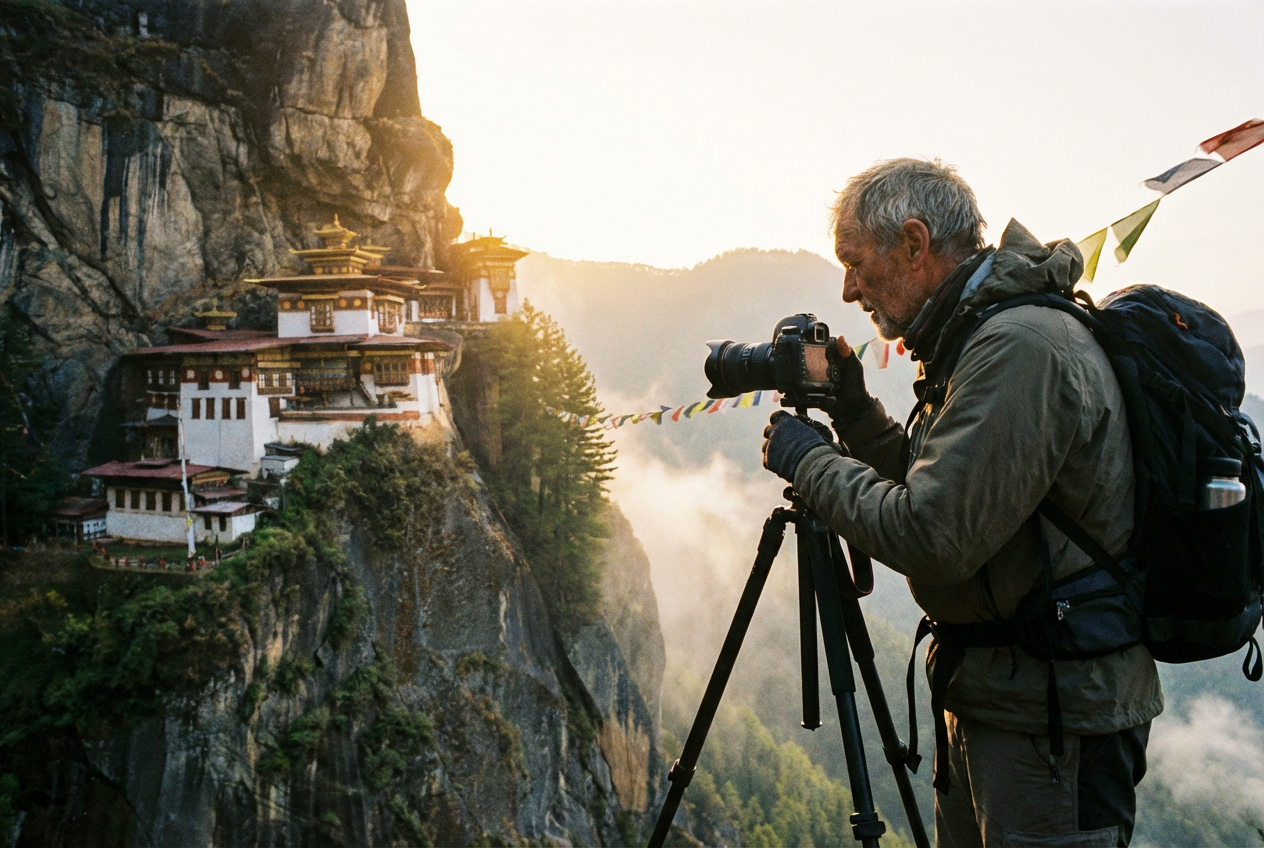
Guide & Tour Operators
Everything about guide requirements, choosing operators, and tipping.
This image was generated with AI.
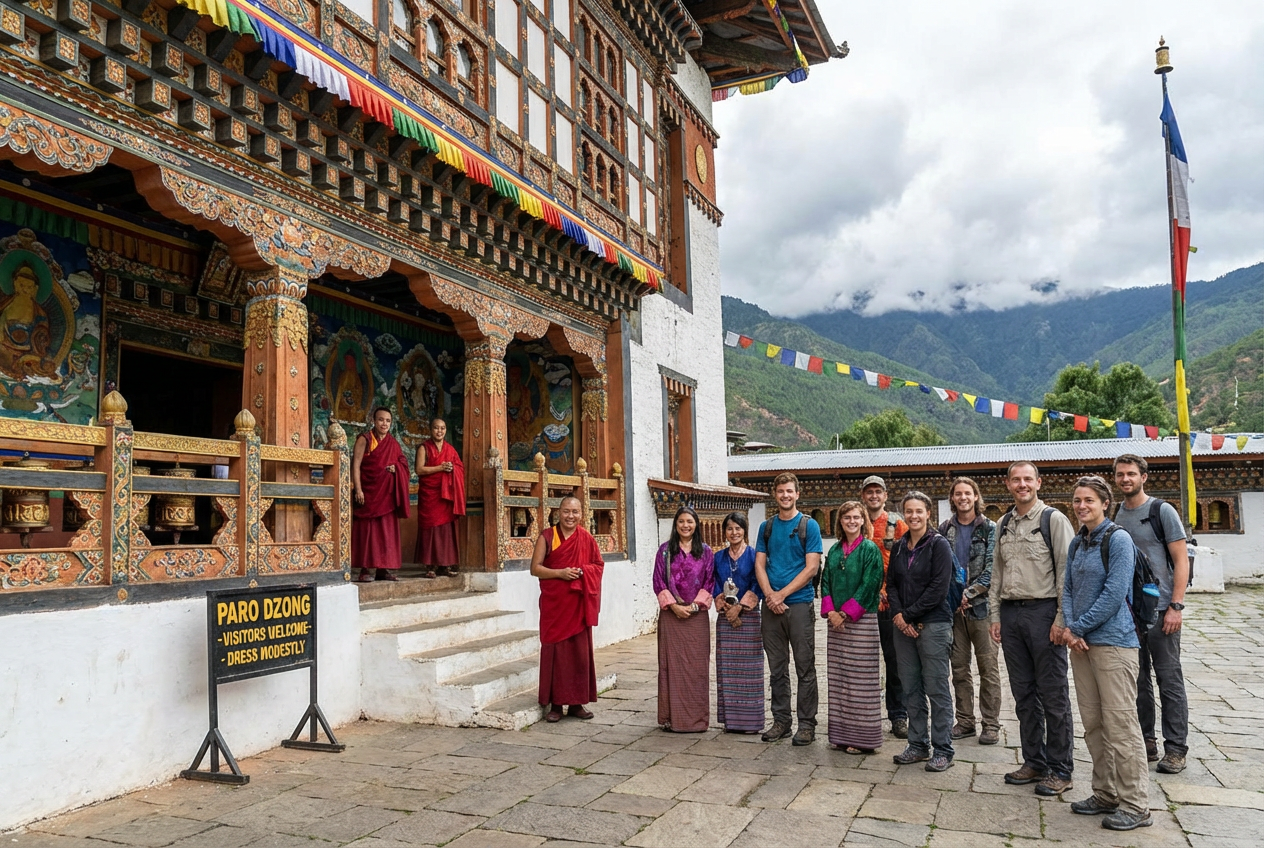
Photography & Drones
Photography rules, best spots, and the strict drone ban.
This image was generated with AI.
Dress Code & Etiquette
Dress code for temple visits and cultural behavioral guidelines.
Good to Know
Some additional practical details that will make your trip easier:
Safety
Bhutan is considered one of the safest travel destinations in the world. The crime rate is extremely low, and tourists are welcomed with great hospitality. The biggest risk is the winding mountain roads – though your experienced driver knows them well.
Environmental Awareness
Bhutan is the only carbon-negative country in the world and takes environmental protection very seriously. Plastic bags are banned nationwide – bring reusable bags. Smoking in public is also heavily restricted.
Internet and Phone
WiFi is available in hotels but limited in remote regions. Local SIM cards from TashiCell or B-Mobile are affordable and offer good coverage in populated areas.
More about internet and SIMMedical Care
Medical care in Thimphu and Paro is solid but limited in rural regions. Travel insurance with repatriation coverage is highly recommended.
More about health and vaccinationsFrequently Asked Questions
What language is spoken in Bhutan?
The official language of Bhutan is Dzongkha, which is written in Tibetan script. English is widely spoken in the tourism sector – your guide, hotel staff, and restaurant employees in tourist regions speak fluent English. Language barriers are therefore not an issue.
What is the time difference between the UK and Bhutan?
Bhutan is in the UTC+6 timezone. The time difference to the UK is +6 hours during winter (GMT) and +5 hours during British Summer Time (BST). When it's 12:00 noon in London, it's 18:00 in Bhutan (winter) or 17:00 (summer).
Can I pay with US Dollars in Bhutan?
US Dollars are often accepted in hotels and larger shops in Bhutan. The national currency is the Bhutanese Ngultrum (BTN). We recommend bringing some USD cash and exchanging it locally for Ngultrum. ATMs are available in Thimphu and Paro.
Do I need an adapter for power outlets in Bhutan?
In Bhutan, you'll find three outlet types: Type C (European), Type D (Indian), and Type G (British). Since the distribution varies, we recommend a universal adapter. The mains voltage is 230 Volts at 50 Hz – identical to the UK and most of Europe.
Is there internet and mobile reception in Bhutan?
Yes, there is WiFi and mobile reception in cities and tourist regions. Hotels generally offer free WiFi. For traveling, we recommend a local SIM card from TashiCell or B-Mobile. Reception can be limited in very remote regions.
Can I fly a drone in Bhutan?
No, the use of drones is strictly prohibited for tourists in Bhutan. Violations can result in confiscation of equipment and significant penalties. It's best to leave your drone at home. Special permit procedures exist for professional film productions.
What should I know when visiting temples in Bhutan?
Respectful clothing is expected for temple and Dzong visits: long trousers or skirts, covered shoulders. Shoes are removed at the entrance. Photography inside is usually not permitted. Your guide will inform you about the specific rules of each location.
How safe is Bhutan as a travel destination?
Bhutan is considered one of the safest travel destinations in the world. The crime rate is extremely low, and tourists are welcomed with great hospitality. The biggest risks are natural hazards such as monsoon-related landslides and the winding mountain roads. Good travel insurance is nevertheless highly recommended.
Further Information
In addition to practical details, you should also plan these aspects of your Bhutan trip:
This image was generated with AI.
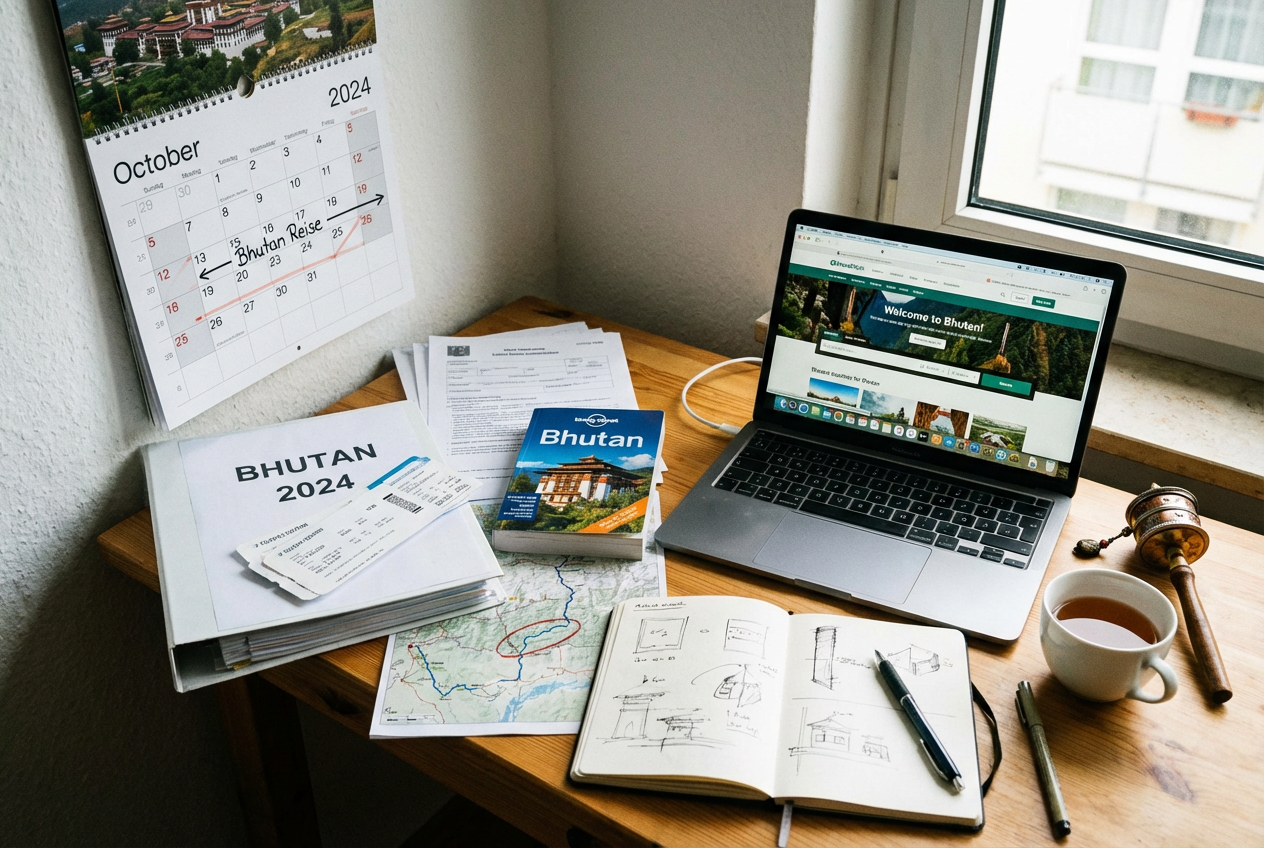
Plan Your Trip
Visa, SDF fees, costs, best time to visit, and getting there.
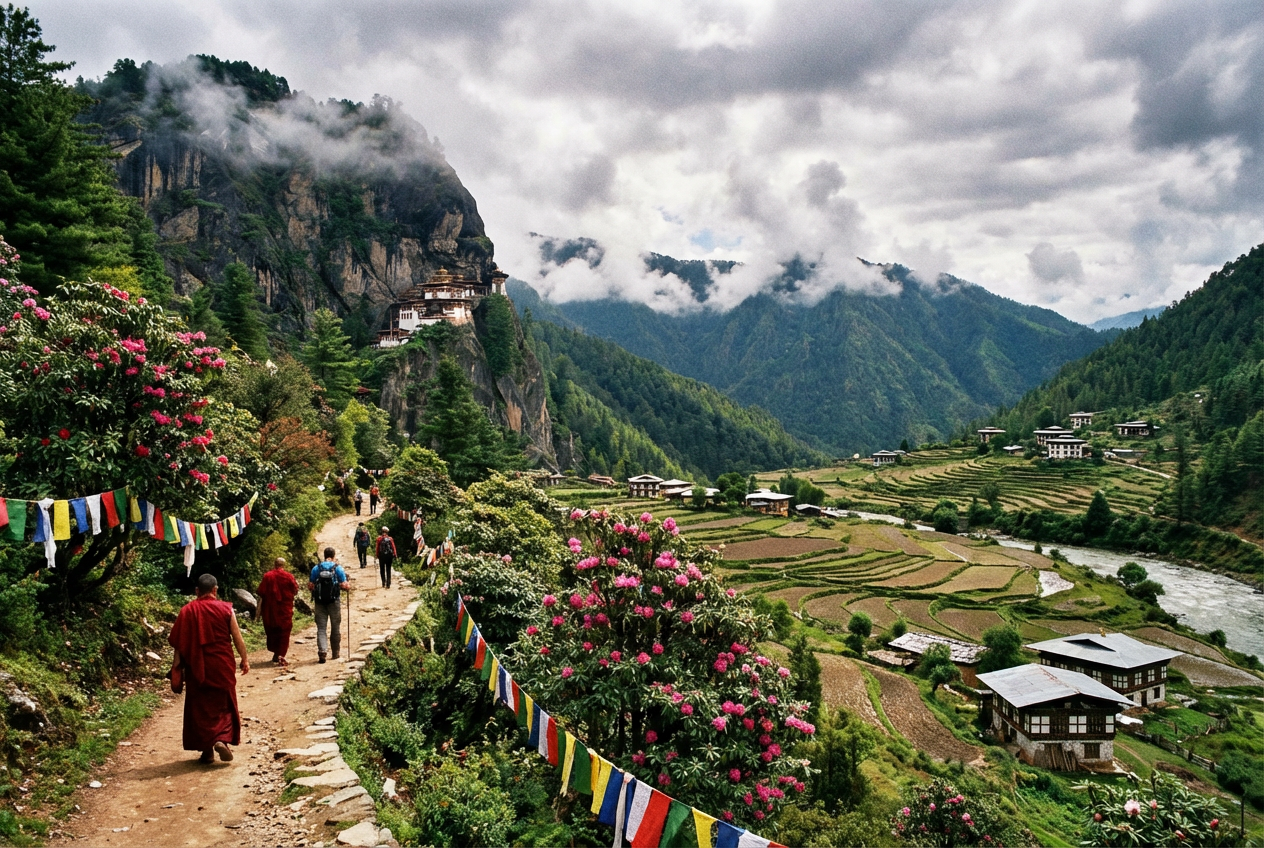
This image was generated with AI.
Routes & Trip Duration
From 7 days to 3 weeks: Find the perfect itinerary.
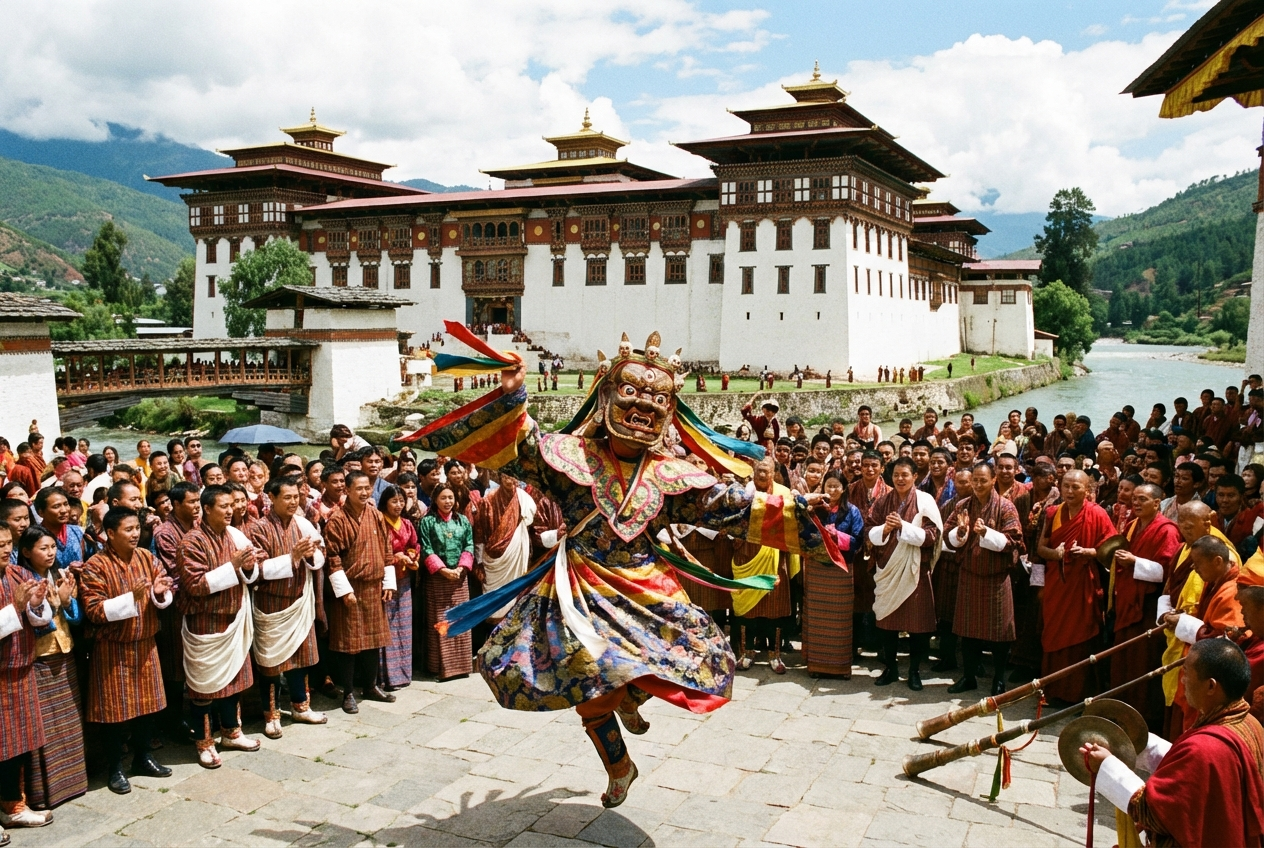
This image was generated with AI.
Experiences
Trekking, festivals, Dzongs, cuisine, and more.
Still Have Questions?
Our team knows Bhutan from personal experience and is happy to answer all your practical questions – no obligation, personalized service.