Photography in Bhutan 2026: Drone Ban, Photography Rules & Best Spots
Last updated:
Bhutan offers photographers extraordinary diversity of subjects – from majestic Dzongs to mist-shrouded Himalayan valleys to vibrant mask festivals. However, the land of the Thunder Dragon has clear rules for photographers: drones are completely banned for tourists, and strict restrictions apply in religious sites. This guide explains all rules and reveals the best photo spots for your Bhutan journey.
Key Facts at a Glance
Drone Ban: Strict Rules to Follow
Bhutan has one of the world's strictest drone laws. Since 2017, flying drones is completely prohibited for tourists and private individuals. Only government organizations are permitted to operate drones under strict conditions. Paro Airport screens for drones – we strongly advise against bringing one at all.
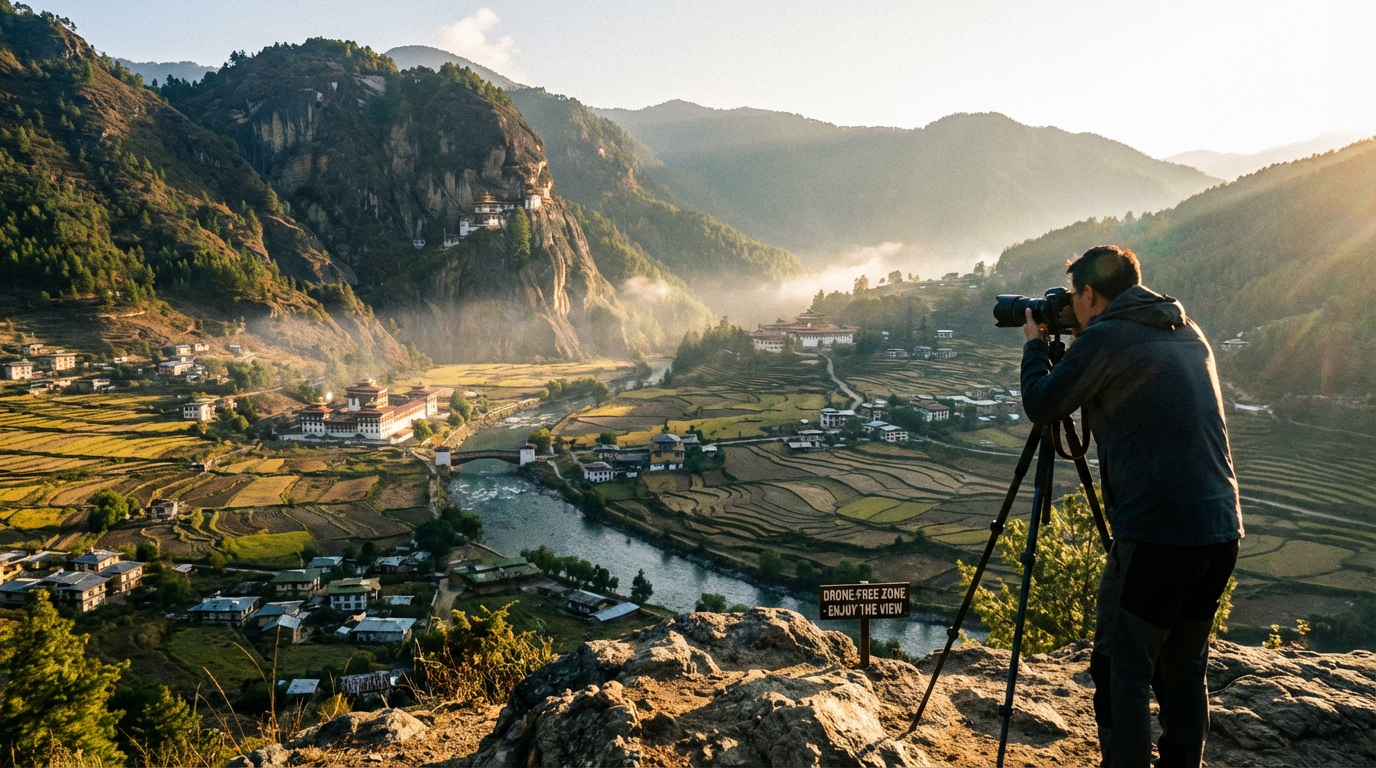
This image was generated with AI.
| Aspect | Regulation |
|---|---|
| Tourist flights | Completely banned |
| Commercial flights | Not permitted |
| Private individuals | Banned |
| Government organizations | Only authorized users |
| In effect since | 2017 |
Penalties for Violations
Violating the drone ban results in serious penalties. These affect not only the tourist but can also create problems for the accompanying guide.
| Consequence | Details |
|---|---|
| Fine (tourist) | USD 230–600 |
| Guide penalty | Also possible |
| Confiscation | Drone is seized and not returned |
| Other consequences | Possible problems at exit |
Why There Are No Exceptions
Theoretically, a permit procedure exists for media productions that can be requested via media@tcb.gov.bt. In practice, such permits are rarely granted and exclusively for documentary or journalistic projects with advance notice.
Photography Rules in Dzongs and Temples
Bhutan's Dzongs and monasteries are living religious sites, not museums. Correspondingly, strict rules apply for photography that visitors should respect. The basic rule: outdoor areas and courtyards are usually permitted, interior spaces and chapels are off-limits.
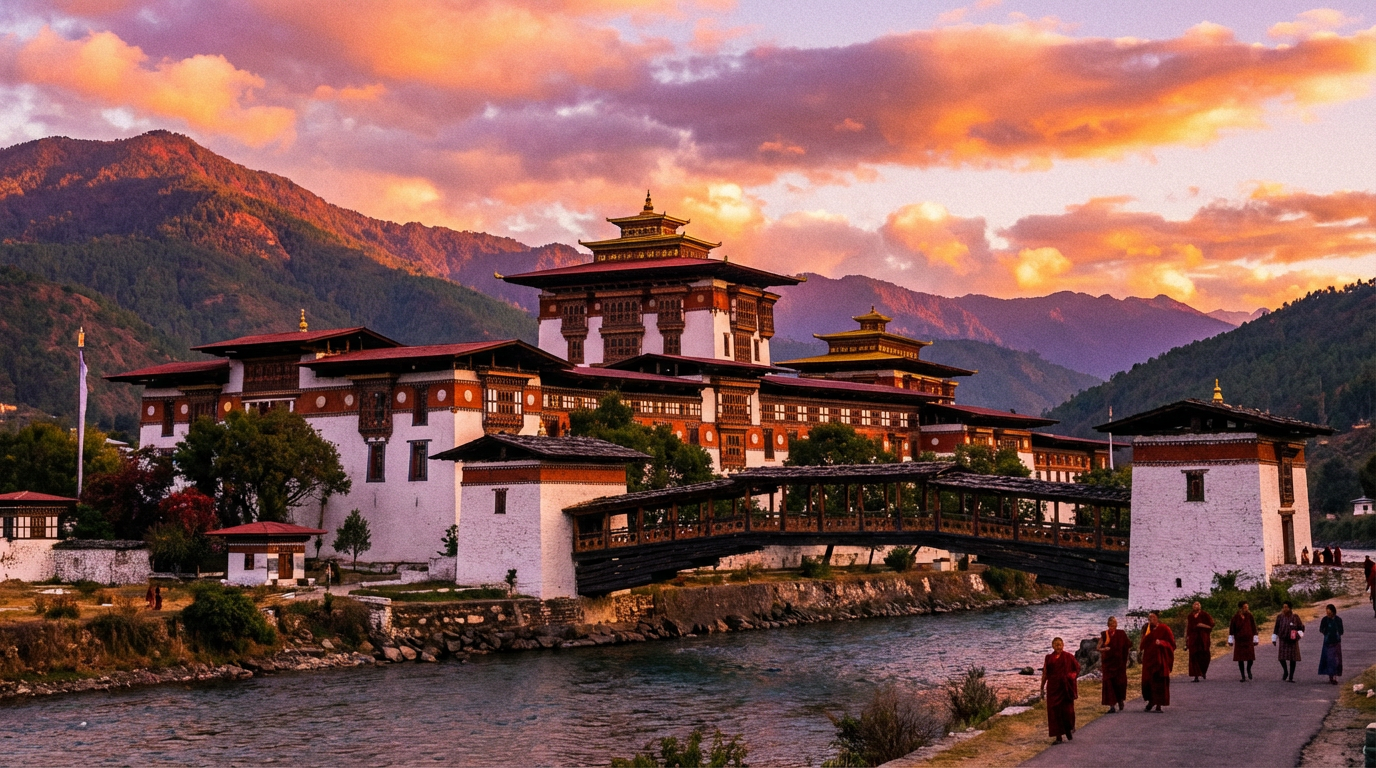
This image was generated with AI.
| Area | Photography Permitted? | Note |
|---|---|---|
| Exterior grounds of Dzongs | Yes | Outer facades, architecture, gardens |
| Courtyards | Usually yes | Ask guide first |
| Interior rooms / chapels | No | Strict rule |
| Statues and altars | No | Also not permitted from outside |
| Wall paintings (interior) | No | Strict rule |
| Monks | With permission | Always ask first |
| Religious ceremonies | With distance | Do not disturb, maintain respectful distance |
Special Case: Tiger's Nest (Paro Taktsang)
The good news: you can photograph the exterior view of Tiger's Nest – Bhutan's most iconic photo subject – without restrictions. The trek offers numerous viewpoints with spectacular perspectives of the monastery.
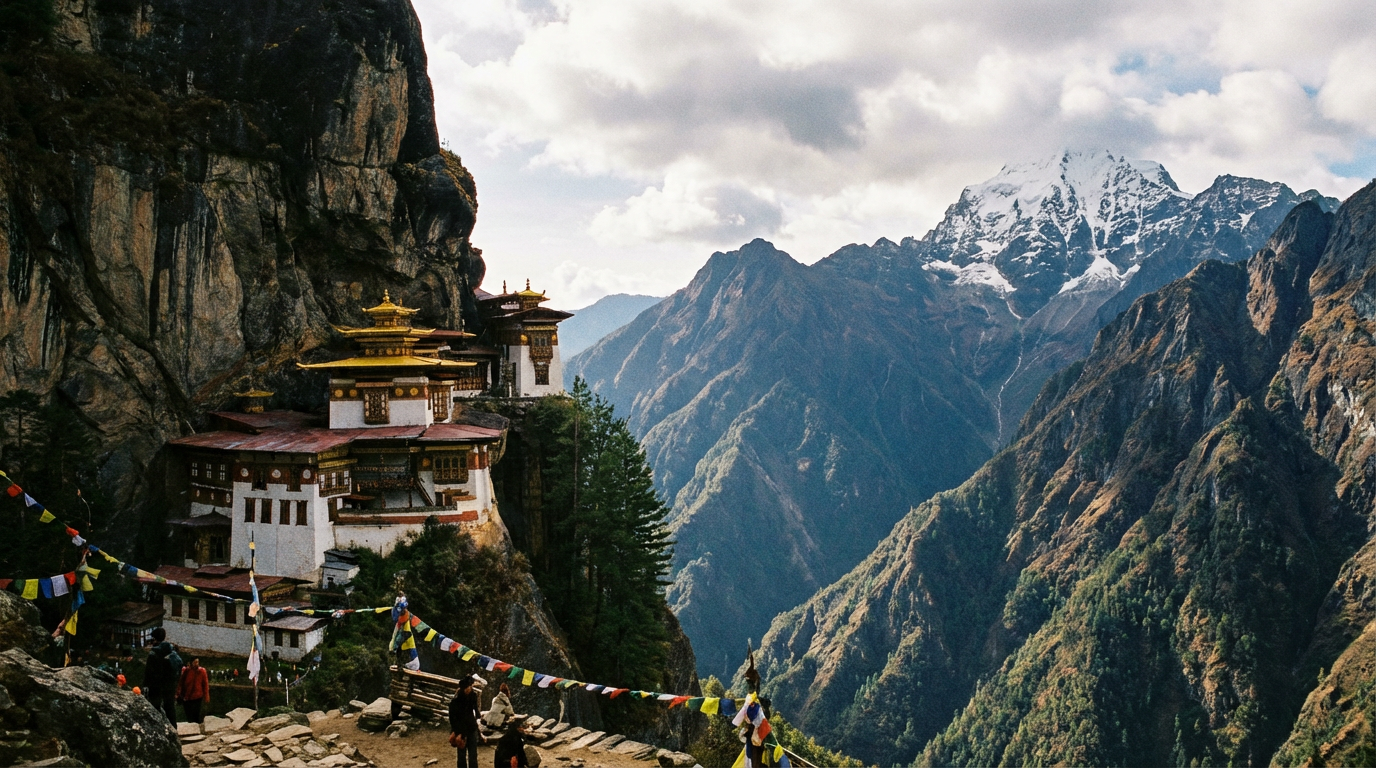
This image was generated with AI.
Photo Permits and Fees
Some temples offer the opportunity to photograph in certain areas for a fee. Costs vary by location, and availability is not universal. Your guide can arrange permits on site.
| Aspect | Details |
|---|---|
| Cost | USD 10–30 per site |
| Availability | Varies by location |
| Organization | Through your guide on site |
| Tripod | Only permitted in outdoor areas |
Cultural Photography Etiquette
Bhutanese are generally friendly toward photographers but expect respect and courtesy. The most important rule: always ask permission before photographing people.
Photographing People
Recommendations:
- Always ask first – a smile and a gesture usually suffice
- Show the photo after taking it – most Bhutanese enjoy this
- Take time for brief conversations – your guide can translate
- Be especially respectful with older people
Avoid:
- Photography without asking
- Disturbing praying or meditating people
- Photographing monks without permission
- Photographing children without parental consent
- Photographing military or security personnel
Photographing Festivals (Tshechu)
Festivals are photography highlights – colorful mask dances, traditional costumes, and vibrant atmosphere. Photography is generally permitted but requires consideration for participants and other spectators.
| Aspect | Recommendation |
|---|---|
| Public areas | Photography permitted |
| Dancers | Maintain respectful distance |
| Flash | Often not permitted or unwanted – prefer natural light |
| Tripod | Usually permitted, but be mindful of space for others |
| Best position | Arrive early for good spot |
| Telephoto lens | Recommended for details of masks and costumes |
Learn more about festivals and Tshechu
The 15 Best Photo Spots in Bhutan
Bhutan offers countless photogenic subjects – from iconic monasteries to vast high plateaus with rare cranes. These 15 locations should not be missed on any photography route.
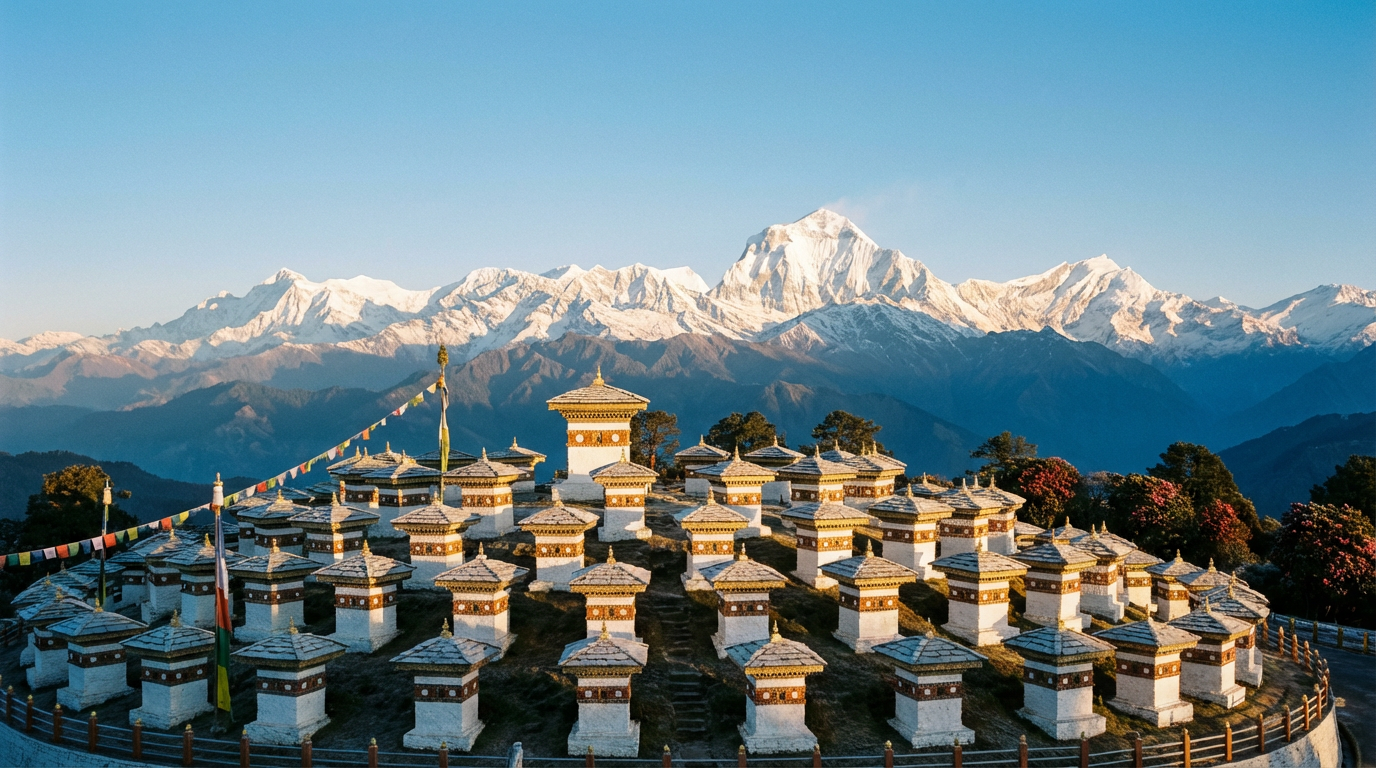
This image was generated with AI.
| No. | Location | Highlight | Best Time |
|---|---|---|---|
| 1 | Tiger's Nest (Paro Taktsang) | Bhutan's most iconic subject | Morning for best light |
| 2 | Punakha Dzong | Most beautiful Dzong, water reflection | Sunrise or evening light |
| 3 | Dochula Pass | 108 Chortens with Himalayan panorama | Clear winter days |
| 4 | Punakha Suspension Bridge | Spectacular suspension bridge | Afternoon light |
| 5 | Tashichho Dzong (Thimphu) | Seat of government, imposing architecture | Evening light |
| 6 | Phobjikha Valley | Vast landscape, cranes in winter | October to February for cranes |
| 7 | Gangtey Monastery | Monastery with valley view | Morning light |
| 8 | Buddha Dordenma (Thimphu) | Large gilded Buddha statue | Sunset |
| 9 | Chele La Pass | Highest passable pass, rhododendrons | Spring for blooms |
| 10 | Paro Valley | Rice fields, river landscape | Harvest in autumn |
| 11 | Bumthang Valley | Spiritual atmosphere, ancient monasteries | Year-round |
| 12 | Trongsa Dzong | Powerful fortress in dramatic setting | Morning mist clearing |
| 13 | Traditional villages | Authentic life, colorful houses | Daytime |
| 14 | Prayer flags | Picturesque everywhere, especially at passes | Windy for movement |
| 15 | Local markets | Colors, people, atmosphere | Weekend markets |
Explore the dedicated photography route through Bhutan
Lighting Conditions by Season
Light quality varies significantly by season. For optimal photography conditions we recommend autumn – but all seasons have their photographic appeal.
| Season | Light Quality | Special Features |
|---|---|---|
| Spring (March–May) | Very good | Clear visibility, rhododendron blooms, occasional afternoon clouds |
| Monsoon (June–Aug) | Challenging | Mist, rain, but dramatic cloud formations possible |
| Autumn (Sept–Nov) | Optimal | Clearest light, best visibility, ideal conditions |
| Winter (Dec–Feb) | Good | Clear air, Himalayan visibility, but cold in higher elevations |
Equipment Recommendations
The right equipment makes the difference between good and great photos. Here are our recommendations for different types of photographers.
Camera and Lenses
| Aspect | Recommendation |
|---|---|
| Camera type | DSLR or mirrorless camera |
| Wide angle | 16–35 mm for landscapes and architecture |
| Standard zoom | 24–70 mm as all-purpose lens |
| Telephoto | 70–200 mm for details, portraits, wildlife |
| Backup | Smartphone as secondary camera |
Accessories and Storage
| Item | Note |
|---|---|
| SD Cards | Bring plenty – at least 64–128 GB total |
| Spare batteries | Multiple – cold reduces battery life at higher elevations |
| Tripod | Outdoor use only, recommended for landscapes |
| Cleaning kit | Dust on mountain roads – blower and cloth |
| Weather protection | For camera and lenses – monsoon or sudden rain |
| Power bank | For longer day trips |
| Camera bag | Well-padded – winding mountain roads |
Professional Photography Tips
With these tips you'll get the best from your photography equipment and Bhutan's unique subjects.
- Rise early:
The best lighting occurs between 6 and 8 a.m. Plan important photo stops for early morning.
- Harness the evening golden hour:
Dzongs in evening light are particularly impressive. Punakha Dzong and Tashichho Dzong glow golden at sunset.
- Include people:
People in the frame give landscapes and architecture scale and life. Photograph with permission and seek interaction.
- Have patience:
Wait for perfect light, the right cloud formation, or a passing monk. The best photos are not rushed.
- Use your guide as a resource:
Your guide knows the best viewpoints and can adjust timing. Communicate your photography wishes.
- Wear contrasting clothing:
For photos where you appear: light or colorful clothing stands out well against often dark Dzong facades.
- Back up daily:
Secure your photos each evening – on a second SD card or laptop. Hotels typically have WiFi for cloud backup.
Frequently Asked Questions
Can I bring my drone to Bhutan?
No, we strongly advise against it. Drones are completely banned for tourists in Bhutan, and violations result in fines of USD 230–600 plus device confiscation. Leave your drone at home – the viewpoints offer spectacular perspectives without aerial shots.
Can I photograph at Tiger's Nest?
Photography is strictly forbidden inside the monastery – cameras, phones, and all electronic devices must be left at the entrance. However, you can photograph the exterior view of Tiger's Nest without restriction. The trek offers numerous viewpoints with spectacular perspectives.
Can I photograph monks?
Basically yes, but only with prior permission. Ask politely – often a friendly smile and gesture suffice. Many monks are happy to agree, others decline, which should be respected. Avoid disturbing monks during prayer or meditation.
What camera equipment should I bring?
A wide-angle lens (16–35 mm) for landscapes and architecture, a standard zoom (24–70 mm) as all-purpose, and a telephoto (70–200 mm) for details and portraits are ideal. Important: bring plenty of storage cards and spare batteries, since cold reduces battery life.
When is the best light for photos in Bhutan?
The golden hour in the morning (6–8 a.m.) and evening before sunset offers the most beautiful light. Autumn (September–November) has the clearest far visibility and best light, followed by spring (March–May). During monsoon the lighting is challenging, but dramatic clouds can create impressive subjects.
Are there photo permits for temples?
Some temples offer the opportunity to photograph in certain areas for a fee of USD 10–30. Availability varies by location, and your guide can clarify on site whether a permit is possible. In most cases, interiors remain off-limits.
Can I photograph at festivals?
Yes, photography at Tshechu festivals is generally permitted and actually encouraged. Maintain respectful distance from dancers, avoid flash, and arrive early for good positioning. A telephoto lens is recommended for details of masks and costumes.
Further Information
Bhutan offers photographers unforgettable subjects – with the right knowledge about rules and etiquette, you'll capture respectful and impressive photos. These topics will help with your further planning:
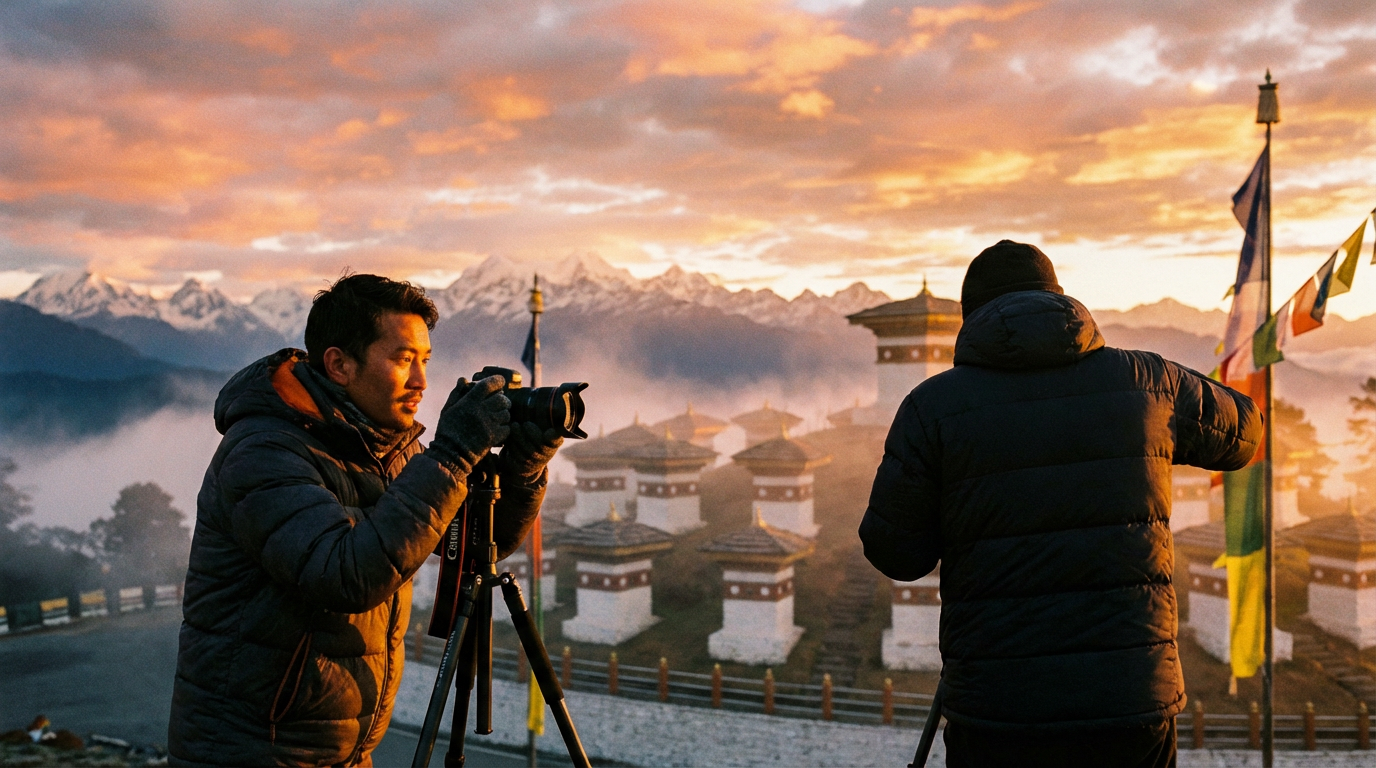
This image was generated with AI.
Photography Route
Optimized travel route for photographers with the best photo spots and ideal times of day.
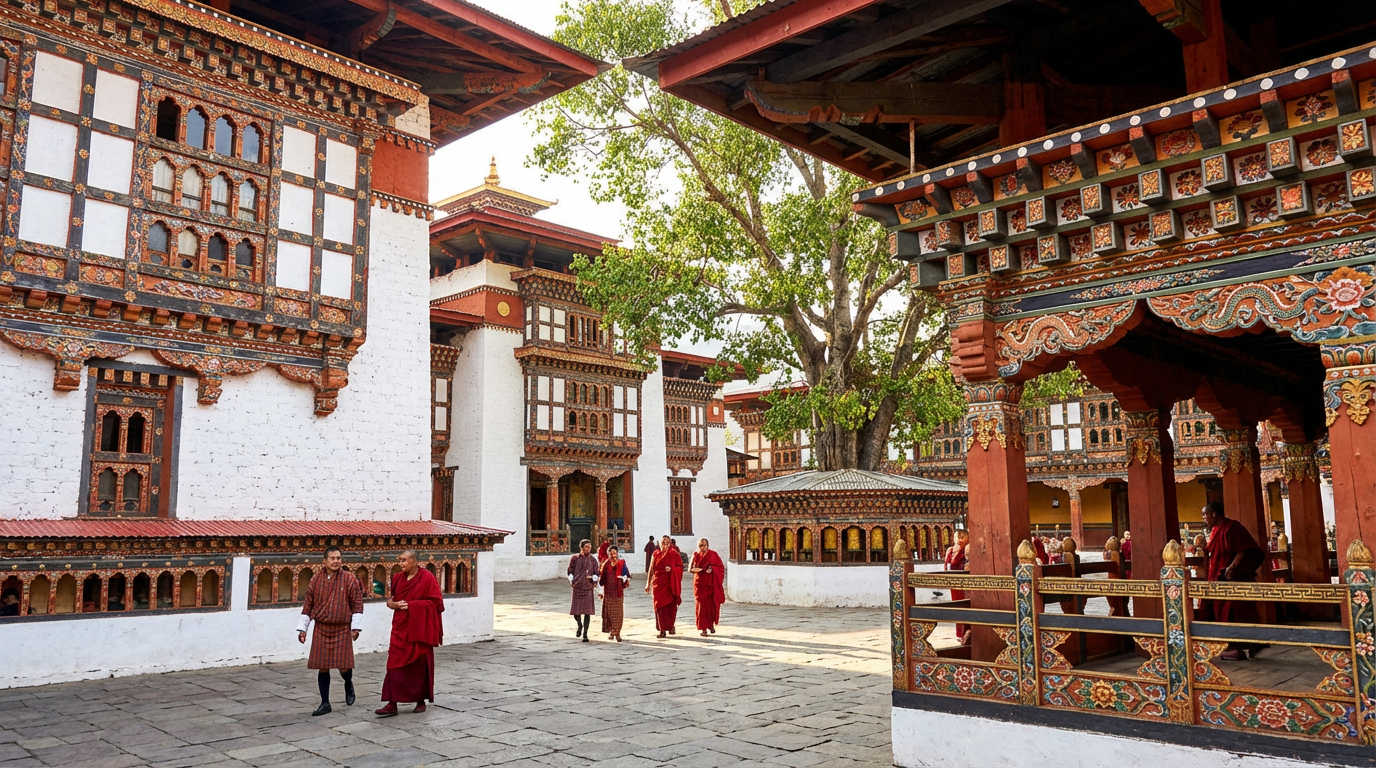
This image was generated with AI.
Dzongs & Monasteries
Everything about impressive fortress-monasteries: history, architecture, and visit rules.
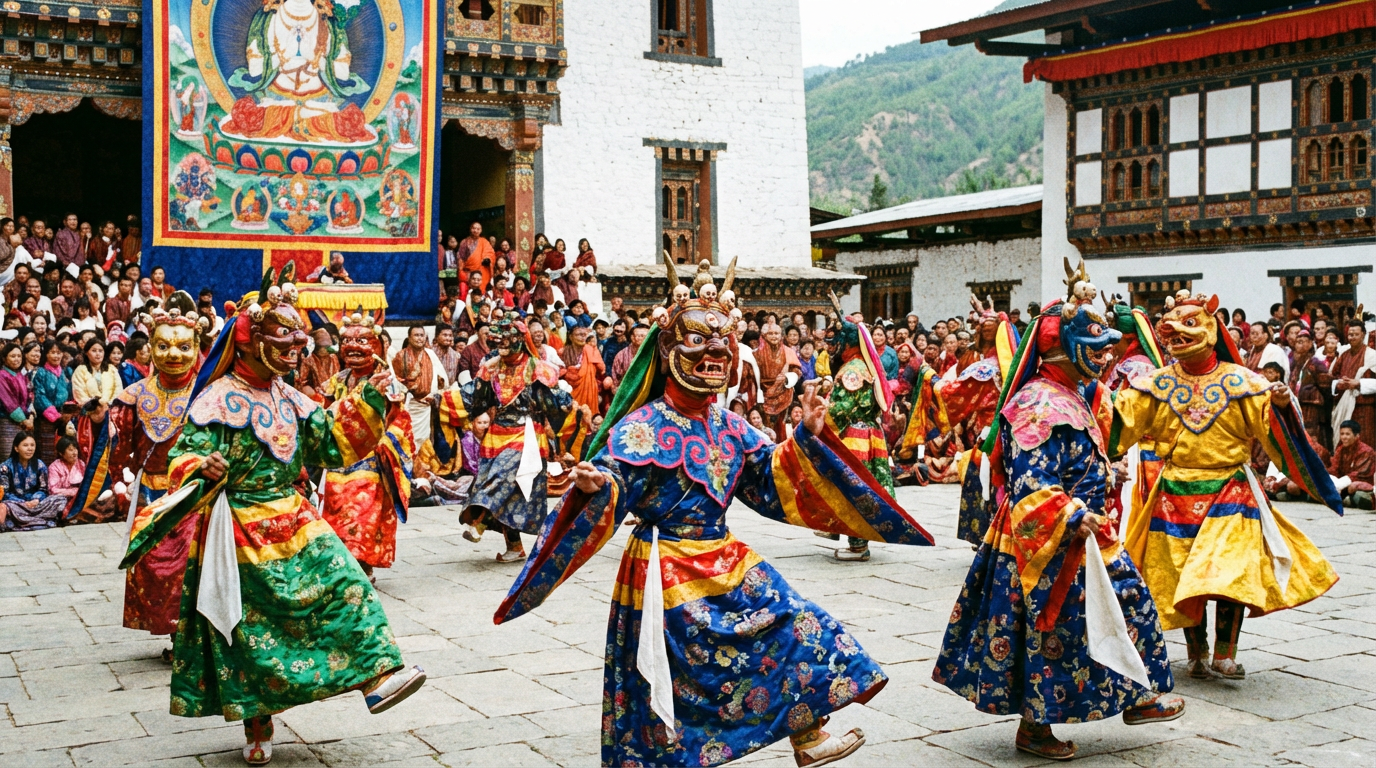
This image was generated with AI.
Festivals & Tshechu
Calendar of major festivals 2026/2026 and tips for unforgettable experiences.
Planning your photography journey to Bhutan?
We'd be happy to advise you on the optimal route for photographers – with the best photo spots and ideal travel season.