Bhutan Photography Route: The 15 Best Photo Spots & Tips for Photographers
Last updated:
Bhutan ranks among Asia's most fascinating photography destinations with its majestic Dzongs, snow-capped Himalayan peaks, and vibrant Buddhist culture. This photography route is specially designed for ambitious photographers and optimizes locations and times of day for the best lighting conditions. From iconic subjects like Tiger's Nest to atmospheric morning mists in Phobjikha Valley, every moment is a photo opportunity.
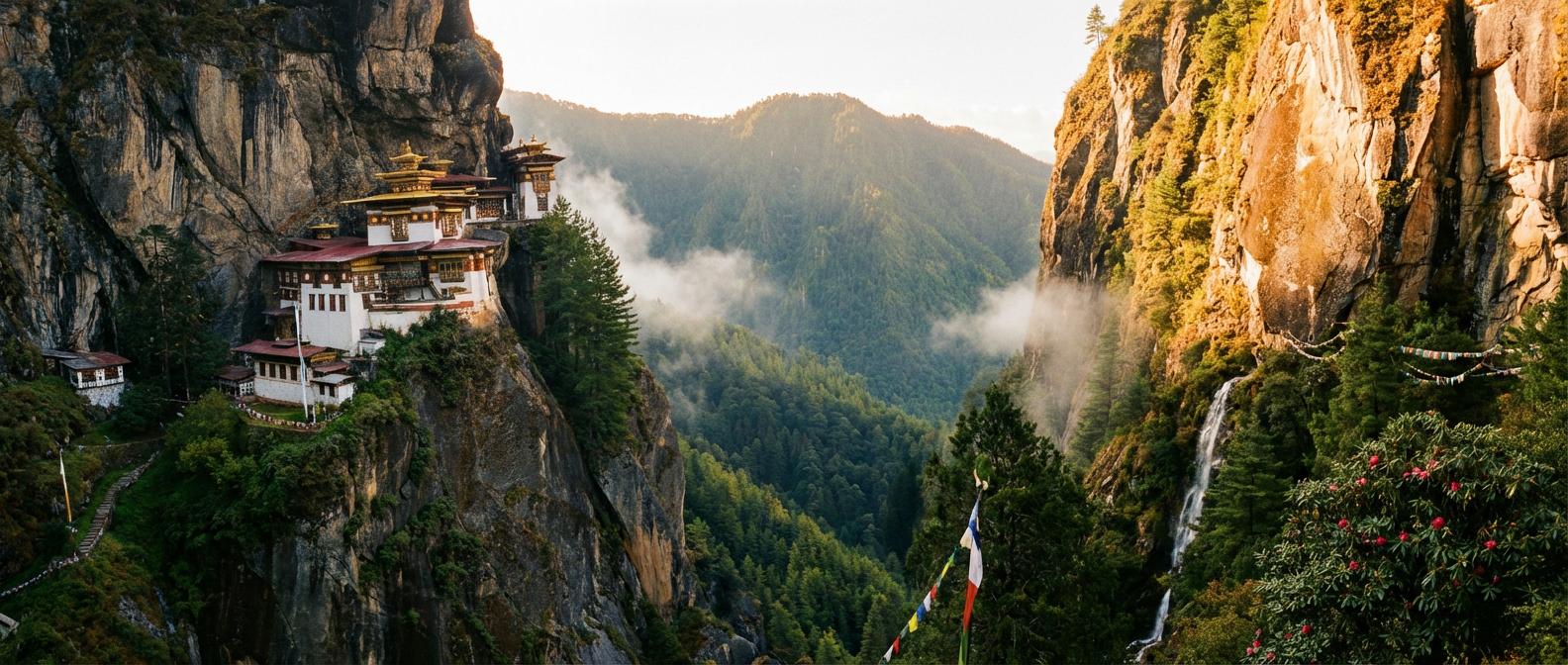
This image was generated with AI.
Why Bhutan is a Paradise for Photographers
What sets Bhutan apart from other photography destinations is its unspoiled authenticity, traditional architecture untouched by modern influences, dramatic landscapes, and the special quality of light in the Himalayas.
Architecture & Culture
Dzongs (fortified monastery-castles) with their unique architecture, colorful prayer flags, traditional construction without modern influences, and vibrant Buddhist ceremonies.
Landscape & Nature
Himalayan panoramas, mist-shrouded valleys, terraced rice fields, pristine forests, and dramatic passes adorned with prayer flags.
People & Traditions
Bhutanese in traditional dress (Gho and Kira), monks in ceremonies, colorful mask dances at festivals, and authentic village life.
Exceptional Light
The clear mountain air creates particularly intense colors, dramatic morning mists in valleys, golden light on white Dzong walls, and spectacular sunrises and sunsets.
The 15 Best Photo Spots in Bhutan
These 15 photo spots were selected for their photographic relevance and accessibility. For each spot, you'll find the best time of day, recommended perspectives, and suitable lenses.
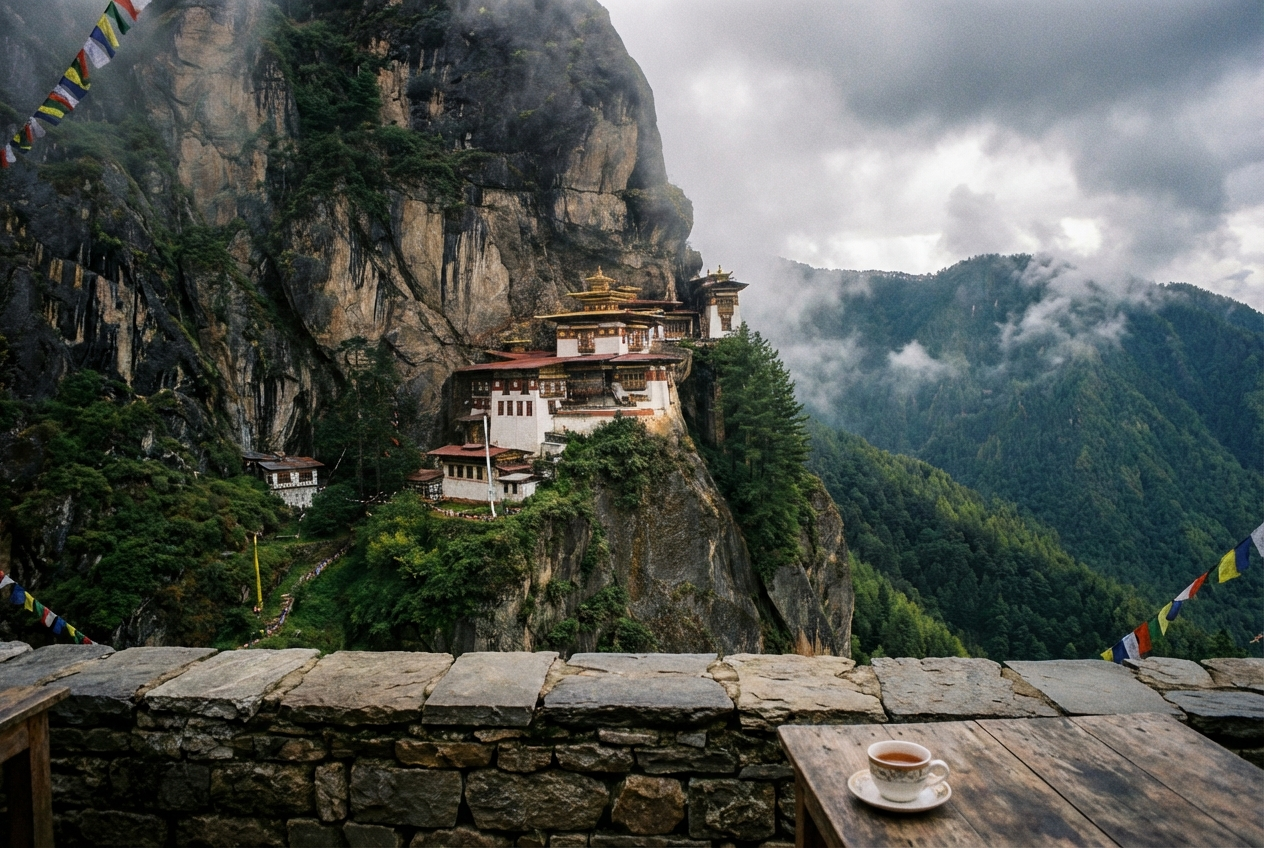
1. Tiger's Nest (Paro Taktsang)
This image was generated with AI.
Tiger's Nest Monastery is Bhutan's most iconic photo subject. Perched on a 900-meter cliff face, it offers dramatic perspectives that change completely depending on time of day and weather. The hike itself provides numerous photo opportunities.
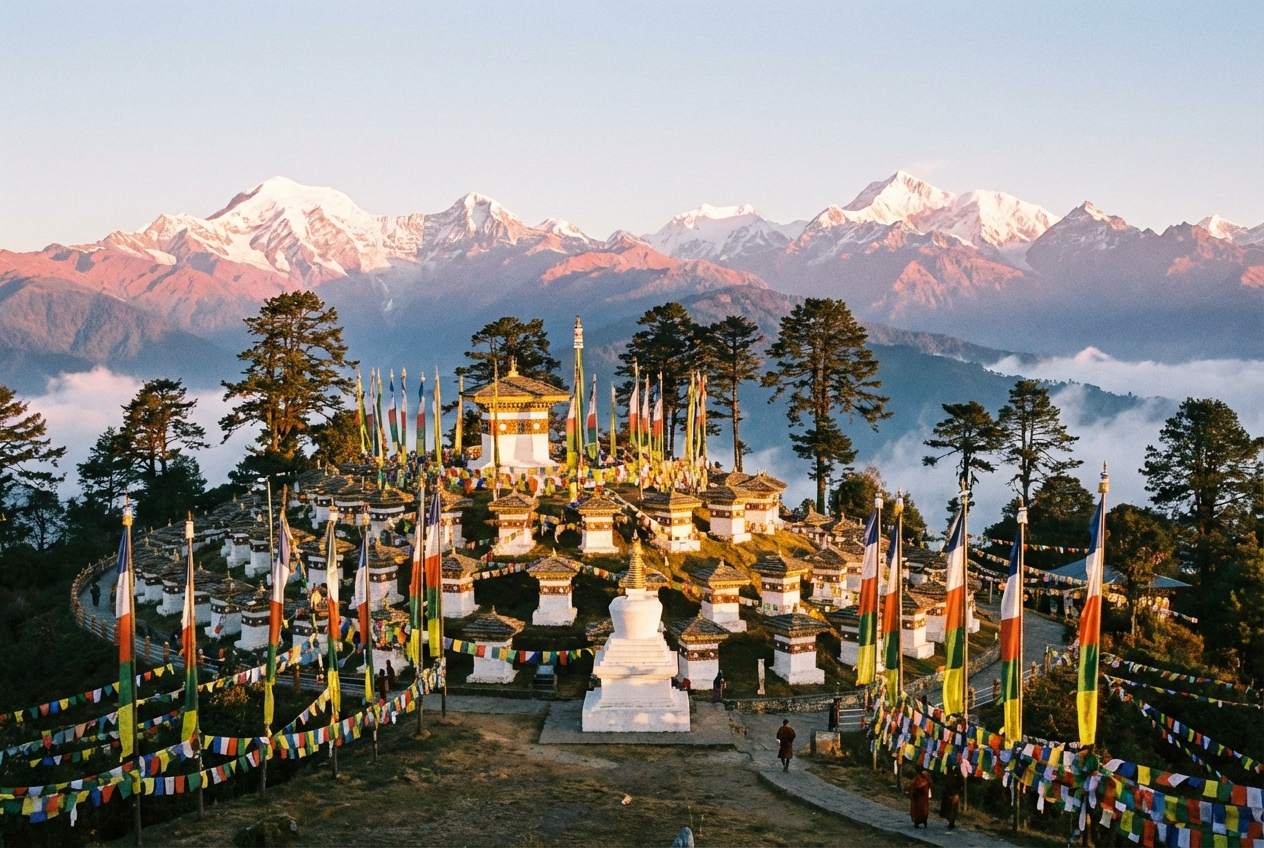
2. Dochula Pass (108 Chortens)
This image was generated with AI.
At 3,100 meters, Dochula Pass offers one of Bhutan's most striking panoramas. The 108 white stupas create a fascinating foreground for the snow-capped Himalayan peaks. In clear weather during autumn and winter, the views are spectacular.
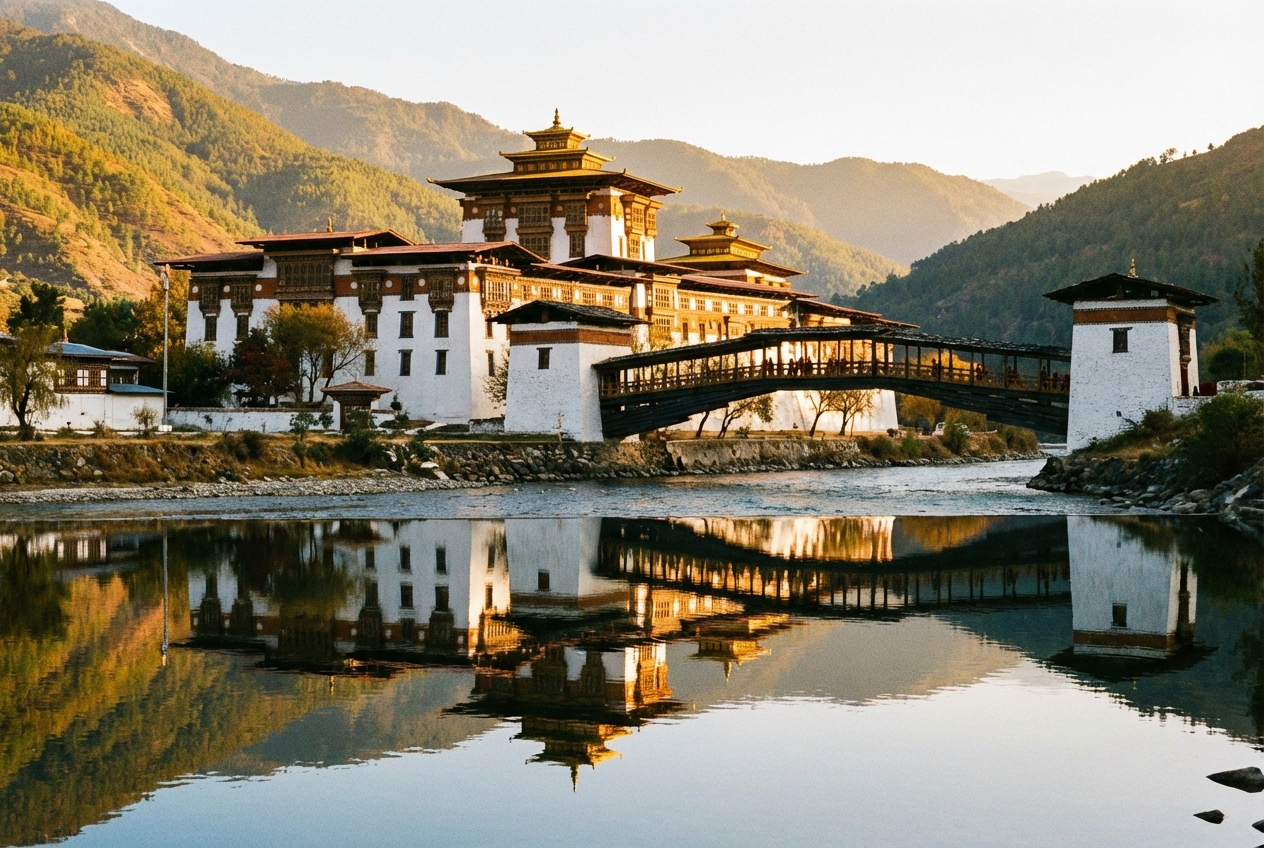
3. Punakha Dzong
This image was generated with AI.
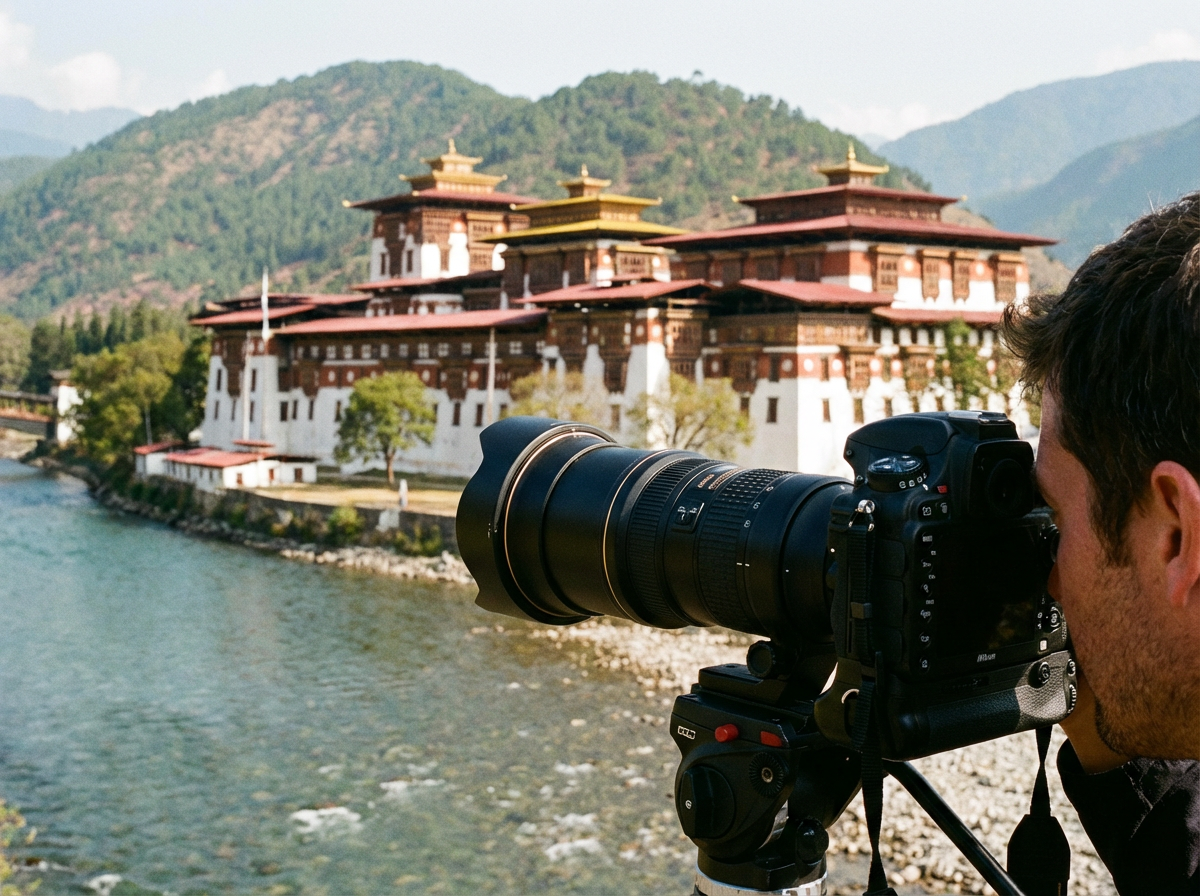
Punakha Dzong is considered Bhutan's most beautiful Dzong and offers numerous photo perspectives. Its location at the confluence of Mo Chhu and Pho Chhu rivers is unique. In spring, violet jacaranda blossoms frame the white walls.
More Top Spots
| Spot | Special Feature | Best Time | Lens |
|---|---|---|---|
| 4. Chele La Pass | Highest drivable pass (3,988m), snow mountains, prayer flags | Early morning | Wide-angle |
| 5. Buddha Dordenma | Giant statue, Thimphu panorama, night photography possible | Sunset/Blue hour | Standard + Telephoto |
| 6. Phobjikha Valley | Glacier valley, morning mists, cranes (Nov-Feb) | Sunrise | Wide-angle + Telephoto |
| 7. Trongsa Dzong | Largest Dzong, dramatic valley setting, mystical mist | Sunrise/Sunset | Telephoto |
| 8. Punakha Suspension Bridge | Longest suspension bridge, prayer flags, river landscape | Late morning | Wide-angle |
| 9. Bumthang Valleys | Authentic village scenes, farmhouses, weavers | Morning/Evening | Standard |
| 10. Kichu Lhakhang | Oldest temple, prayer wheels, contemplative atmosphere | Morning | Standard |
| 11. Taktsang Trail | Prayer flags, waterfalls, different Tiger's Nest perspectives | All day | Standard + Telephoto |
| 12. Thimphu Weekend Market | Street photography, market scenes, traditional dress | Sat/Sun Morning | 35-50mm |
| 13. Chimi Lhakhang | Temple amid rice fields, rural idyll | Golden hour | Wide-angle |
| 14. Memorial Chorten | Pilgrims, pigeons, spiritual documentation | Morning/Evening | Standard + Telephoto |
| 15. Paro Valley from Above | Valley panorama with river, fields, mountains | Golden hour | Wide-angle |
The Optimal Photography Route (10-12 Days)
This route is specially designed for photographers and takes into account the best lighting times at each location. Early departure times for sunrise sessions are planned. The route should remain flexible and be adjusted if weather conditions are poor.
| Day | Location | Photo Highlights | Best Time of Day |
|---|---|---|---|
| 1 | Paro | Arrival, Paro Dzong, acclimatization | Afternoon |
| 2 | Paro | Tiger's Nest sunrise hike - start 6 AM | Early start |
| 3 | Thimphu | Buddha Dordenma sunset, city scenes | Afternoon + Sunset |
| 4 | Dochula → Punakha | Sunrise 108 Chortens, continue to Punakha | Sunrise, then Midday |
| 5 | Punakha | Dzong in afternoon, sunset by the river | 2-6 PM |
| 6 | Punakha | Sunrise by river, Chimi Lhakhang, suspension bridge | Sunrise + Morning |
| 7 | Phobjikha | Valley panorama, Gangtey Goenpa | All day |
| 8 | Phobjikha → Trongsa | Sunrise morning mists, continue to Trongsa | Sunrise, then Midday |
| 9 | Trongsa | Dzong sunset + next morning sunrise | Evening + Early morning |
| 10 | Bumthang | Temples, villages, authentic life | All day |
| 11 | Paro | Return with photo stops along the way | En route |
| 12 | Departure | Optional: early morning at airport | - |
Best Season for Photography
Each season in Bhutan offers different photography opportunities. The clearest views of the Himalayan peaks occur in autumn and winter, while spring attracts with flowers and festivals.
| Season | Advantages | Disadvantages | Special Subjects |
|---|---|---|---|
| October-November | Clearest visibility, best mountain photos, pleasant temperatures | Peak season, more tourists | Himalayan panoramas, clear air, autumn colors |
| March-April | Rhododendron bloom, Paro Tshechu, warmer weather | Sometimes hazy, haze possible | Blooming landscapes, festivals, jacaranda |
| December-February | Snow on mountains, black-necked cranes, fewer tourists | Colder, shorter days, passes possibly closed | Winter landscapes, cranes in Phobjikha |
| May | Green landscape, rice planting | Before monsoon, sometimes hazy | Lush valleys, agricultural scenes |
Detailed information about weather and climate can be found on our page about the best time to visit Bhutan.
Optimal Times of Day and Lighting Conditions
The light in the Himalayas is exceptionally intense due to altitude and clear mountain air. Early morning and late afternoon offer the best light for architectural and landscape photography.
Sunrise (6:00-9:00 AM)
Softest light of the day. Morning mists in valleys create mystical moods. Dzongs are illuminated by warm light. Fewer people at locations. Ideal for: Dochula Pass, Phobjikha Valley, Trongsa Dzong
Golden Hour (3:00-6:00 PM)
Warm tones on white Dzong walls. Long shadows create structure. Ideal for Punakha Dzong, Buddha Dordenma, Paro Valley. Mountains take on a golden shimmer.
Blue Hour
Immediately after sunset. Photograph illuminated Dzongs (e.g., Buddha Dordenma). Tripod required. Strong contrast between illuminated building and blue sky.
Midday (10:00 AM-2:00 PM)
Harsh light, less ideal for landscapes. Good for: Interior shots in temples (if allowed), street photography at markets, details and textures.
Equipment Recommendations
For Bhutan, versatile equipment is recommended that covers both wide-angle landscapes and details and portraits. Keep weight in mind - you'll carry everything on the Tiger's Nest hike.
| Equipment | Recommendation | Use |
|---|---|---|
| Wide-angle | 16-35mm | Dzongs, valleys, landscape panoramas, interiors |
| Standard zoom | 24-70mm | Versatile, street, portraits, architecture details |
| Telephoto zoom | 70-200mm | Details, wildlife, festivals, compression |
| Tripod | Lightweight travel tripod | Sunrise/sunset, long exposures, blue hour |
| Spare batteries | At least 3 pieces | Cold drains batteries faster! |
| Memory cards | 2x 128GB recommended | Plenty of capacity for RAW files |
| External hard drive | SSD, 1-2TB | Daily backup essential! |
| Cleaning kit | Blower brush, cleaning cloths | Dust during trekking, sensor cleaning |
Drones: Strict Rules to Follow
As an alternative to drone photography, we recommend using the numerous natural viewpoints. Passes like Dochula or Chele La offer excellent elevated perspectives. For professional productions, there are paid helicopter tours available.
More on photography rules and drones
Photography Rules in Dzongs and Temples
Bhutan's Dzongs and temples are active religious sites. Photography rules vary by location and area. Always ask your guide before photographing - respectful behavior often opens doors.
| Area | Rule | Tip |
|---|---|---|
| Dzong Exteriors | Usually permitted | Best times: early morning or late afternoon |
| Temple Interiors | Often forbidden, always ask! | Sometimes possible for a fee |
| Monks | Ask politely for permission | Usually friendly, worth waiting a moment |
| Ceremonies | Respectfully, without flash | Photograph discreetly from the edge |
| Thangkas/Statues | Often forbidden | Note signs, ask your guide |
Festival Photography: Capturing Tshechus
This image was generated with AI.
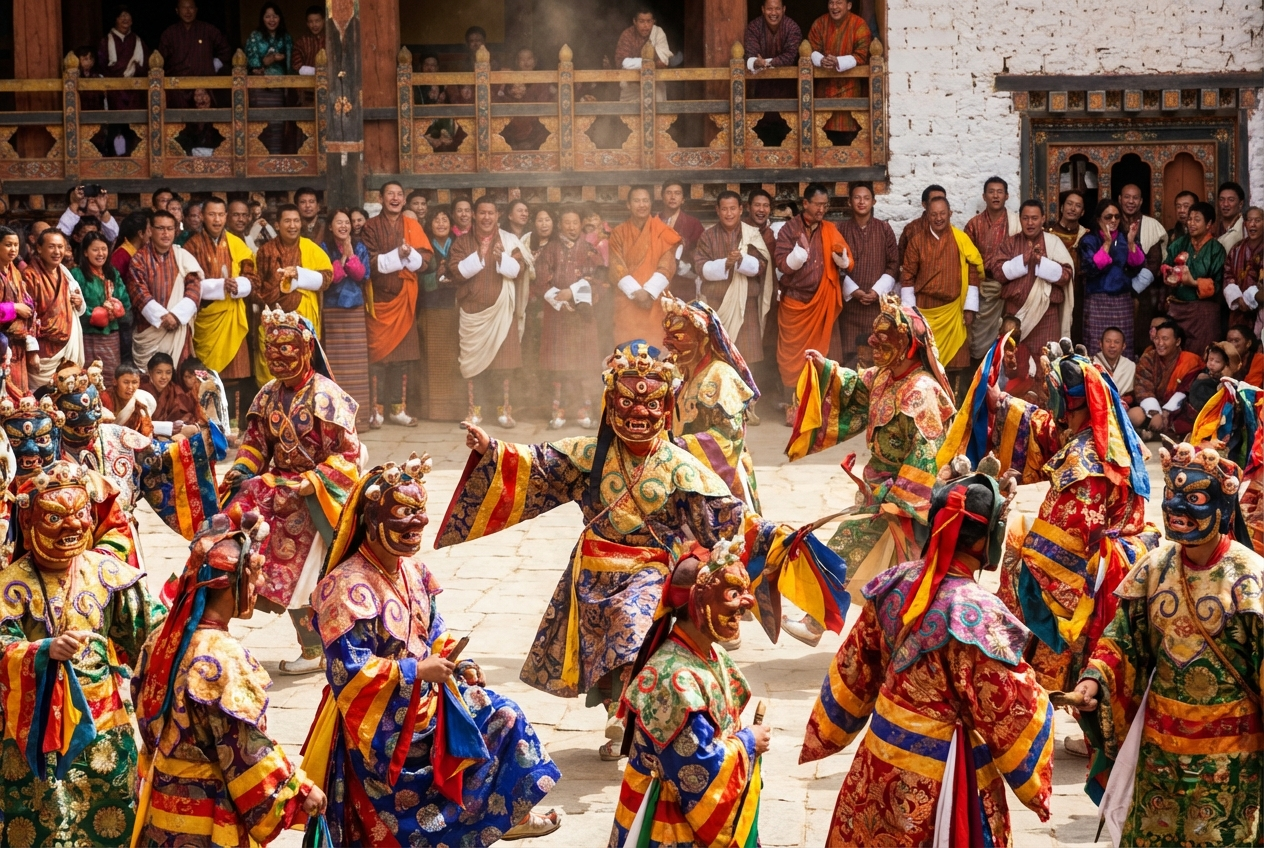
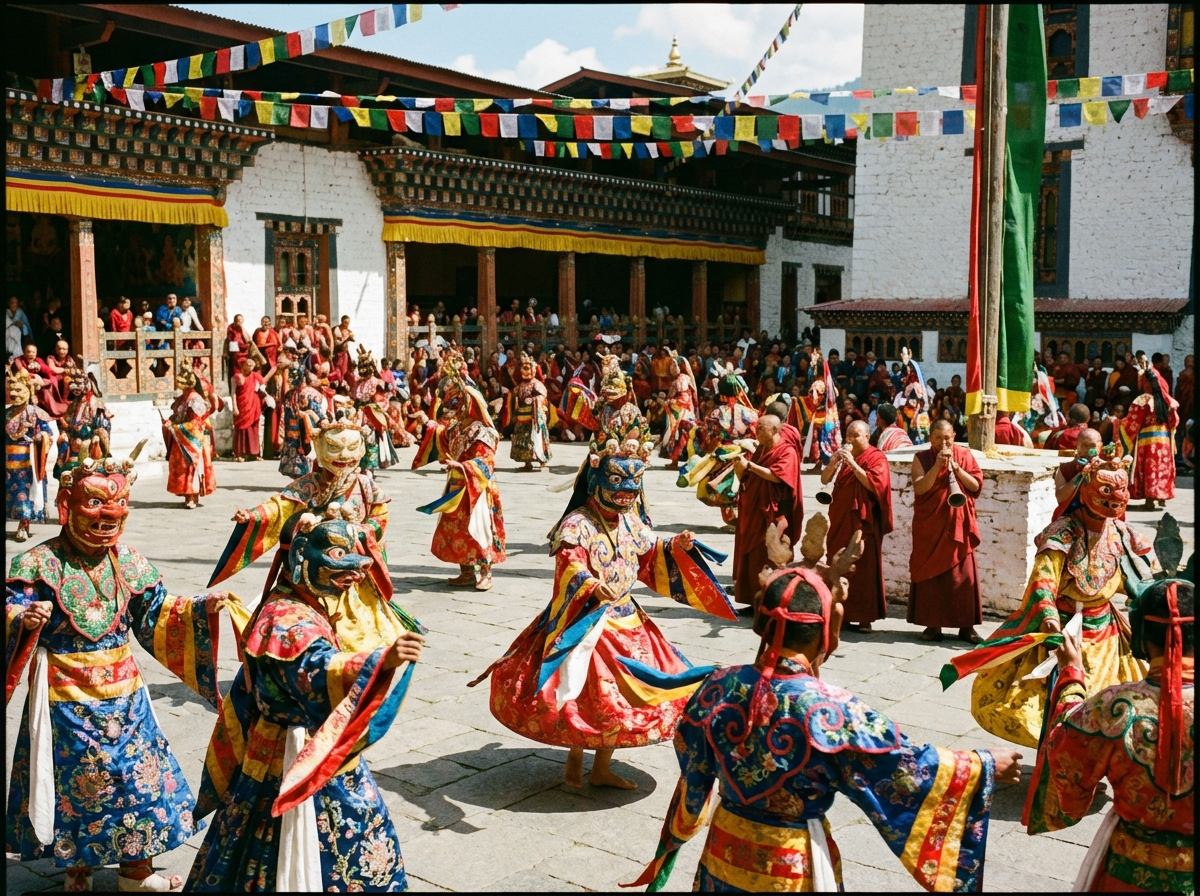
Tshechu festivals are among the most rewarding photography experiences in Bhutan. Colorful mask dances, festively dressed spectators, and the spiritual atmosphere offer unique subjects. However, conditions are demanding: rapid movements, changing light, and crowding require preparation.
| Festival | Location | Typical Time |
|---|---|---|
| Paro Tshechu | Paro | March/April |
| Thimphu Tshechu | Thimphu | September/October |
| Punakha Tshechu | Punakha | February/March |
| Jambey Lhakhang Drup | Bumthang | October/November |
More on festivals and Tshechus
Photographing People in Bhutan
This image was generated with AI.
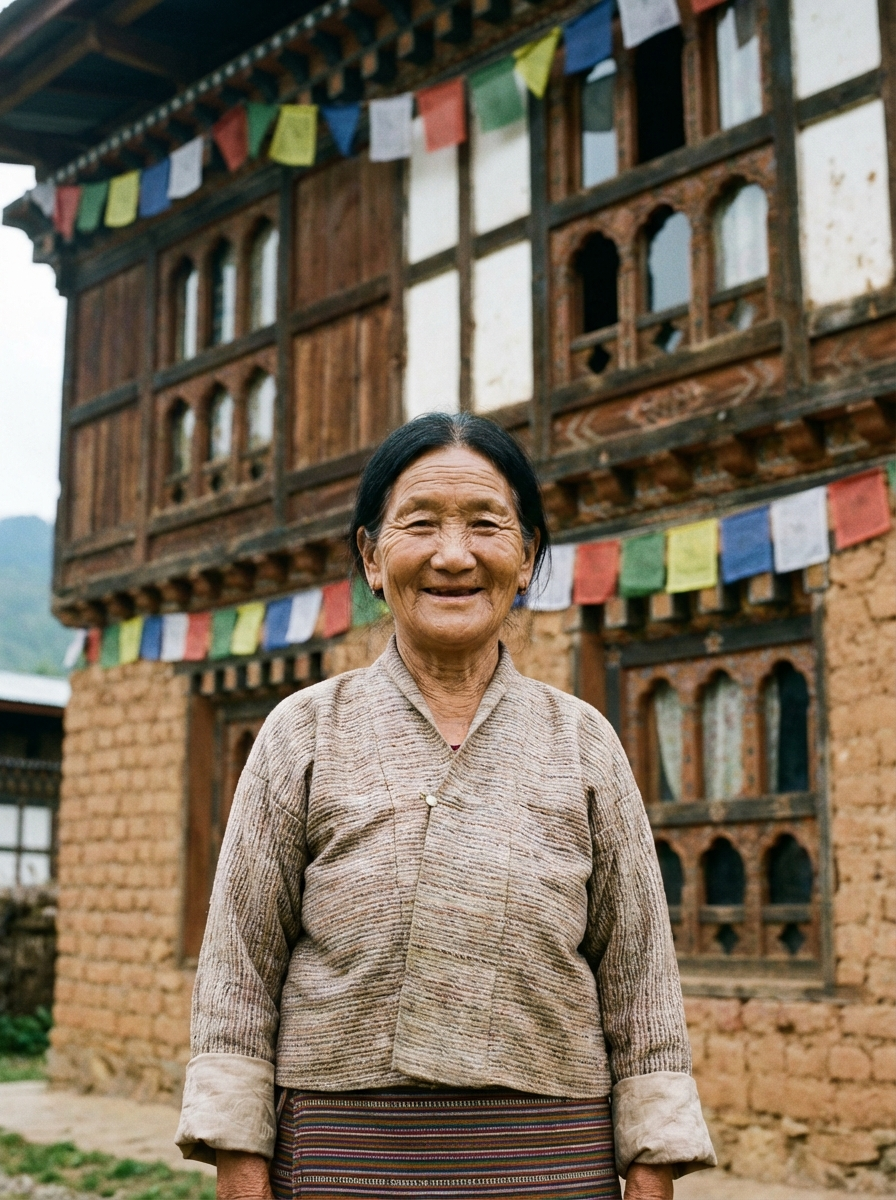
Bhutanese people in traditional dress - Gho for men, Kira for women - make wonderful photo subjects. Most people are open and friendly to cameras, but polite asking should be standard practice.
Best Opportunities for People Photography
- Markets: Thimphu Weekend Market - lively scenes, vendors at work
- Festivals: People in festive dress, emotional moments
- Village life: Bumthang, Phobjikha - authentic daily life
- Pilgrims: Memorial Chorten - spiritual documentation
- Craftspeople: Weavers, painters, carvers at work
Costs of a Photography Tour
A photography-focused tour typically costs somewhat more than a standard tour. Flexible schedules, early departures, and longer stays at locations require adjusted arrangements.
| Item | Amount |
|---|---|
| SDF (11 nights × $100) | $1,100 |
| Visa | $40 |
| Specialized photography tour (incl. guide, accommodation, transport) | $3,500-5,000 |
| Total on-site | $4,640-6,140 |
Additional Costs for Photography Tours
- Flexible schedules for sunrise/sunset sessions
- Longer stays at photo locations
- Specialized photography guide (if available)
- Festival dates mean higher prices and earlier booking
Frequently Asked Questions
Can I fly a drone in Bhutan?
No, drone flights are strictly forbidden in Bhutan. Importing drones is only possible with special permission, which is practically never granted. Violations result in confiscation and penalties. Instead, use the numerous natural viewpoints.
Which lens is most important for Bhutan?
If you can only bring one lens, we recommend a versatile standard zoom (24-70mm or 24-105mm). For the full range of subjects, you should also have a wide-angle (16-35mm) for Dzongs and landscapes and a telephoto (70-200mm) for details and festivals.
When is the best time to travel for photography?
October and November offer the clearest visibility for mountain panoramas. March and April attract with rhododendron blooms and Paro Tshechu. Winter (December-February) offers snow on mountains and black-necked cranes in Phobjikha, with fewer tourists.
Can I photograph in temples and Dzongs?
Rules vary. Dzong exteriors are usually permitted, temple interiors often forbidden. Always ask your guide before photographing. Flash is generally taboo, tripods often not allowed. At "No Photography" signs, respect the prohibition without discussion.
Do I need a specialized photography guide?
A specialized photography guide is not mandatory, but can significantly enhance the experience. They know the best spots and times, understand your needs, and enable flexible schedules. Mention when booking that photography is your focus.
How many memory cards should I bring?
Plan for plenty of capacity - at least 2× 128GB for RAW files on a 10-12 day tour. Back up daily to an external hard drive. Spare cards are cheaper than missed photos. There are few options to buy memory cards in the country.
Can I get a good spot to photograph at festivals?
Yes, but you need to arrive early. Best spots are claimed quickly. A good guide knows the optimal positions. From the edges you often get better angles than from the center. Respect other spectators and photograph discreetly.
Further Information
This image was generated with AI.
Photography & Drone Rules
Detailed information on photography rules in Bhutan, drone ban and exceptions.
This image was generated with AI.
Festivals & Tshechus
All information about colorful festivals: dates, significance and photography tips.
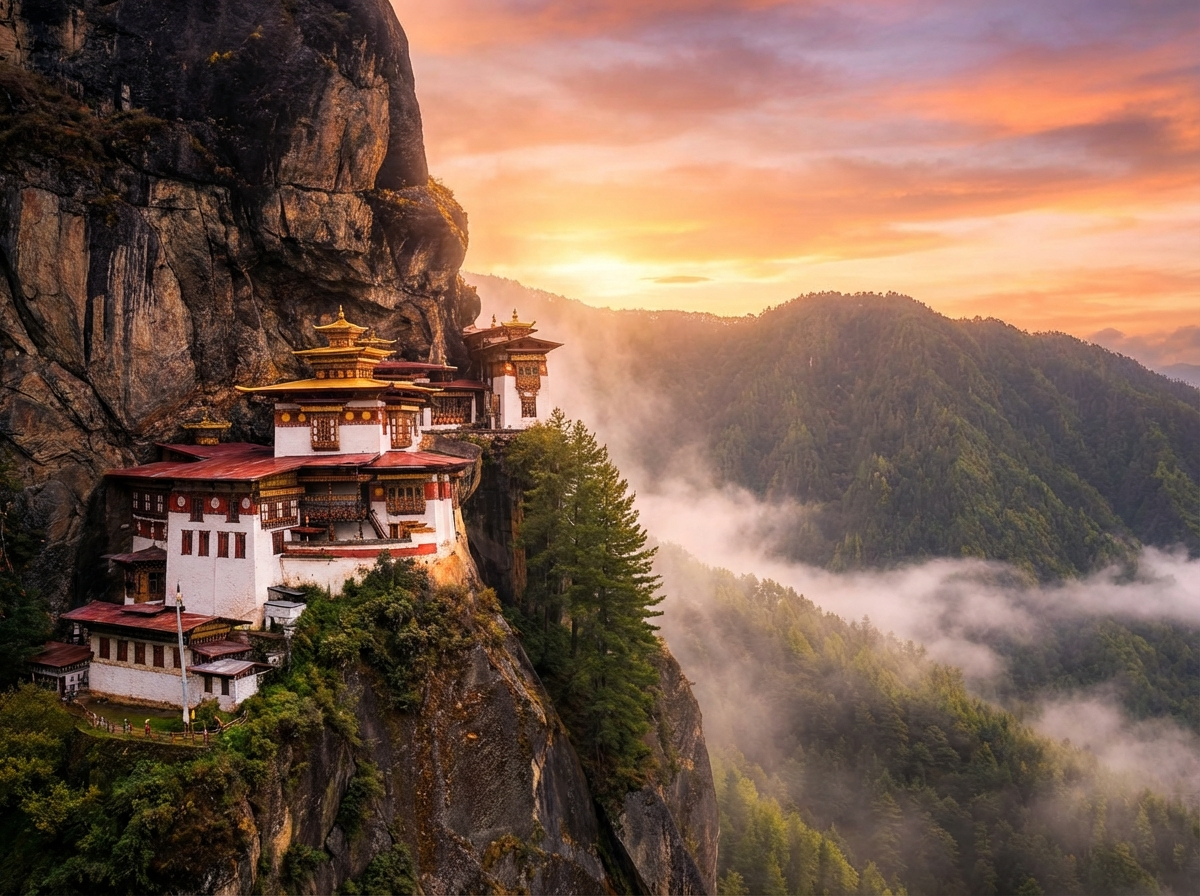
This image was generated with AI.
Tiger's Nest Guide
Everything about Bhutan's most iconic photo subject: hike, best times and photography tips.
Plan Your Individual Photography Tour
We help you plan a Bhutan trip tailored to your photography wishes - with the best spots, optimal lighting times and flexible schedules.