Trongsa Bhutan: The Mighty Dzong & Cradle of the Royal Dynasty
Last updated:
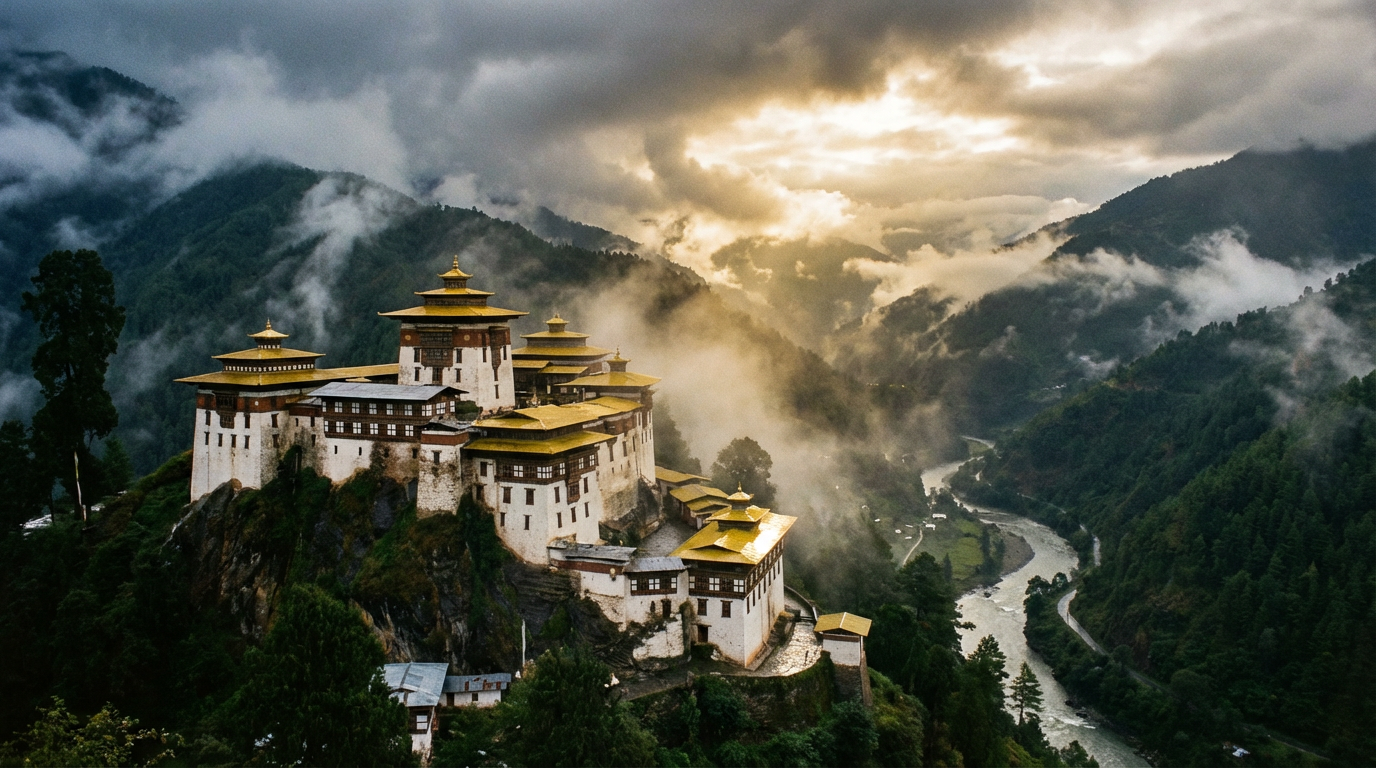
Trongsa lies exactly at the geographic center of Bhutan – and for centuries was also the political power center of the country. Here, on a dramatic rocky outcrop high above the deeply carved valley of the Mangde Chhu, rises the largest and strategically most important Dzong in the kingdom: the Trongsa Dzong, also known as the "Guardian of the East". Whoever controlled this fortress controlled Bhutan – because the only path between West and East led directly past its walls. Here the Wangchuck family resided as Penlops before they founded the royal dynasty in 1907, which rules Bhutan to this day.
Trongsa at a Glance
The strategic significance of Trongsa becomes clear when you understand Bhutan's topography: the country is traversed by deep valleys and high passes, and the only historic connection between western and eastern Bhutan led directly beneath the walls of Trongsa Dzong. Whoever held the fortress here controlled all traffic – and thus the country. Today, for most travelers, Trongsa is a stop on the way to Bumthang, but those who take time discover here the roots of Bhutanese royal history.
This image was generated with AI.
Trongsa Dzong – The Mightiest Fortress in Bhutan
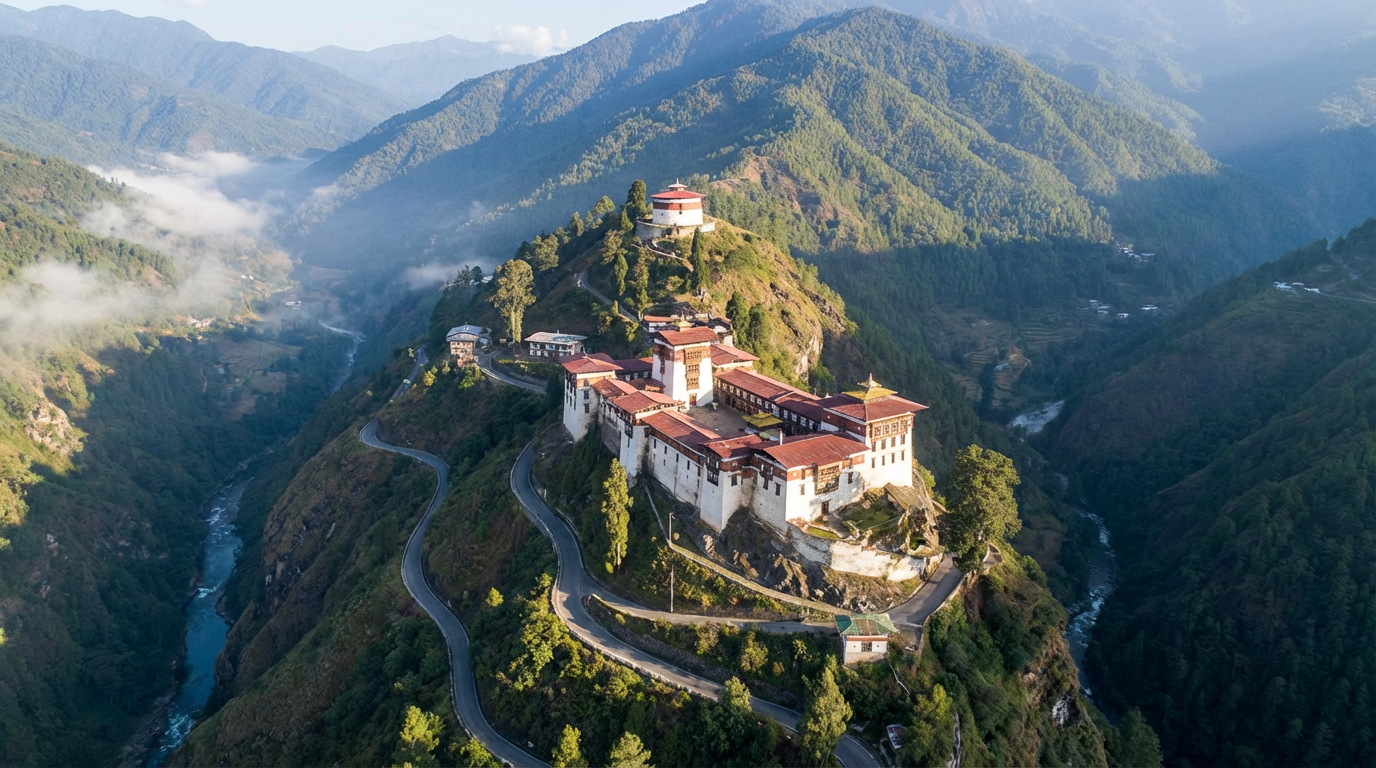
The Trongsa Dzong – with its full name Chökhor Rabtentse Dzong – is not only the largest Dzong in Bhutan, but also the most architecturally dramatic. The mighty fortress extends over multiple levels down a steep rocky outcrop, high above the deeply carved valley of the Mangde Chhu. From the winding mountain road, a breathtaking sight unfolds: the white walls, golden roofs, and labyrinthine courtyards seem to grow right out of the rock. Here it becomes clear why this Dzong was considered impregnable for centuries.
This image was generated with AI.
Architecture and Construction History
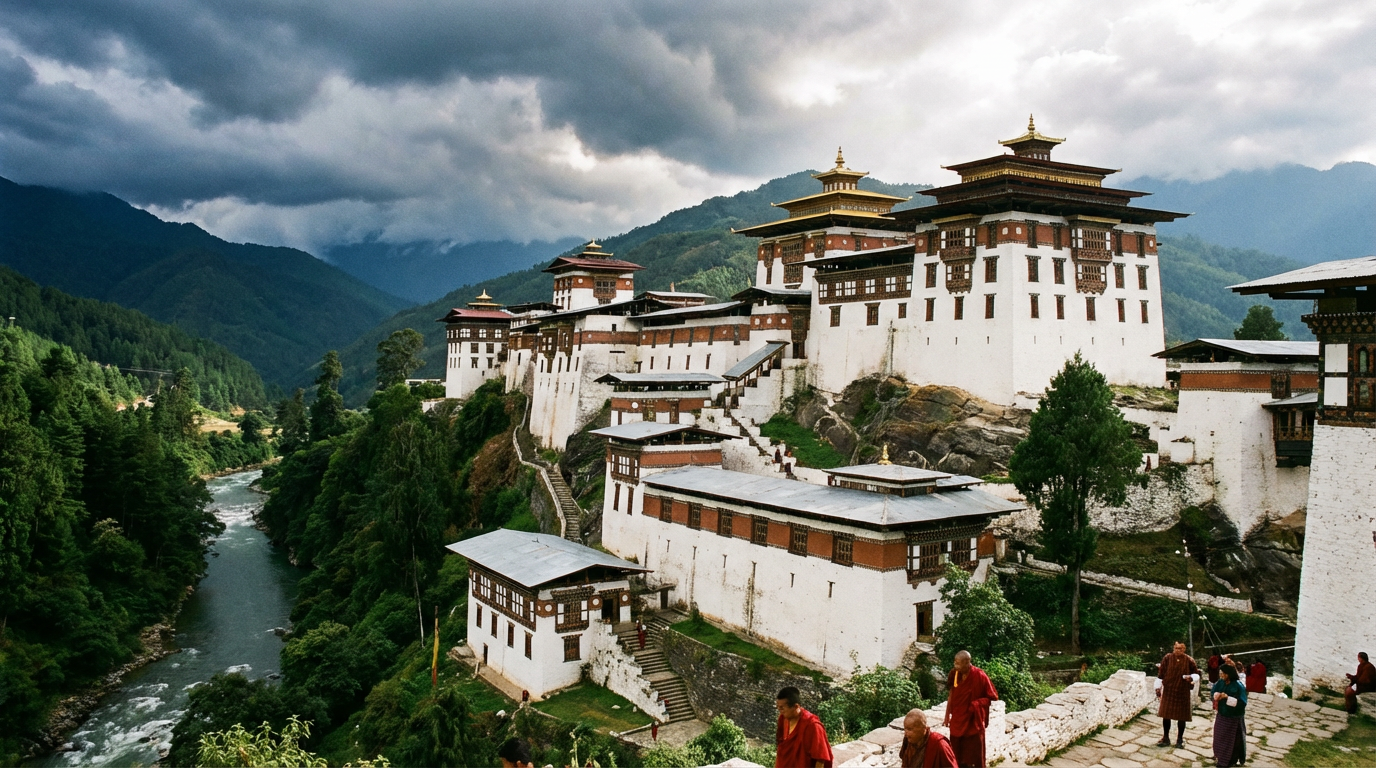
The history of Trongsa Dzong dates back to 1543, when the Drukpa Lama Nagi Wangchuk built the first temple here. The actual Dzong complex was built in 1647 on the order of the Zhabdrung Ngawang Namgyal – the same visionary leader who also had the Punakha Dzong built. Over the centuries, the complex was continuously expanded: in 1715 the Chenrezig Lhakhang was added, in 1771 the Maitreya Temple. The architecture is unique: instead of a compact complex, the buildings are arranged over multiple levels down the slope, connected by stairs, corridors, and labyrinthine courtyards.
| Year | Event |
|---|---|
| 1543 | First temple built by Drukpa Lama Nagi Wangchuk |
| 1647 | Dzong construction by Zhabdrung Ngawang Namgyal |
| 1715 | Chenrezig Lhakhang added |
| 1771 | Maitreya (Jampa) Temple and additional complex |
| 1897 | Damaged by the great Assam earthquake |
| 1927 | Comprehensive renovation |
| 1999 | Further major renovation |
Strategic and Religious Significance
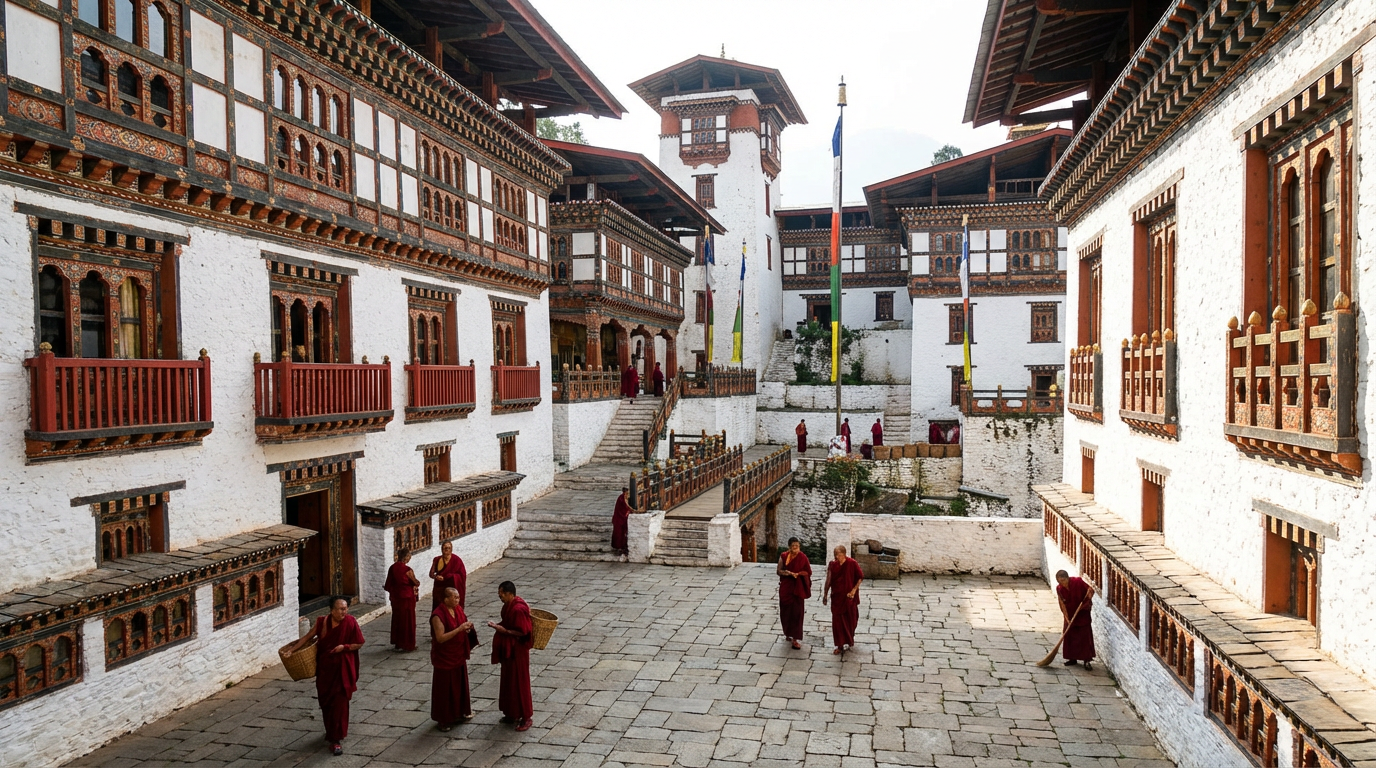
The strategic significance of Trongsa Dzong can hardly be overstated. It controlled for centuries the only connection between West and East Bhutan – every traveler, every merchant, every army had to pass its walls. This strategic advantage made the Penlops of Trongsa the most powerful dignitaries in the country. Today, about 200 monks live in the Dzong, and it serves as the administrative center for the entire Trongsa district. The combination of defensive architecture and spiritual significance makes it a living testament to Bhutanese history.
This image was generated with AI.
Learn more about Bhutanese Dzong architecture
Cradle of the Royal Dynasty
Trongsa is inseparably linked with the history of the Bhutanese monarchy. Here, in this mighty fortress, the Wangchuck family ruled as Penlops for generations before Ugyen Wangchuck was crowned the first King of Bhutan on December 17, 1907. This connection between Trongsa and the crown exists to this day – and is maintained through a unique tradition.
The Wangchuck Tradition
The Wangchuck family established itself in the 19th century as Penlops of Trongsa and became the most powerful aristocratic family in Bhutan. From here they controlled not only the strategically most important point in the country, but also large parts of East and Central Bhutan. When Bhutan needed central leadership in the early 20th century to maintain its independence, it was Ugyen Wangchuck – the Penlop of Trongsa – who gained the support of the other aristocratic families, the clergy, and the people. His coronation as the first Druk Gyalpo (Thunder Dragon King) on December 17, 1907 marked the beginning of the modern Bhutanese nation.
"Whoever controls Trongsa controls Bhutan" – This old Bhutanese proverb illustrates the central significance of the fortress for the country's history. The strategic position made the Penlops of Trongsa the most powerful dignitaries and paved the way for the monarchy.
Every King was Trongsa Penlop
A special tradition links the monarchy to Trongsa to this day: every future King of Bhutan must first serve as Trongsa Penlop before he can ascend the throne. This rule applies to all five previous kings of the Wangchuck Dynasty – including the current fifth king, Jigme Khesar Namgyel Wangchuck, who was appointed Trongsa Penlop in 2004 before assuming the crown in 2006.
| King | Reign | As Trongsa Penlop |
|---|---|---|
| Ugyen Wangchuck (1st King) | 1907–1926 | Yes, before coronation in 1907 |
| Jigme Wangchuck (2nd King) | 1926–1952 | Yes |
| Jigme Dorji Wangchuck (3rd King) | 1952–1972 | Yes |
| Jigme Singye Wangchuck (4th King) | 1972–2006 | Yes |
| Jigme Khesar Namgyel Wangchuck (5th King) | 2006–today | Yes, appointed 2004 |
Tower of Trongsa Museum (Ta Dzong)
Above Trongsa Dzong stands the Ta Dzong – a round watchtower that opened as a museum in 2008 for the 100th anniversary of the Bhutanese monarchy. Tower of Trongsa is dedicated to the memory of the Wangchuck Dynasty and offers a fascinating insight into the history of the kings. Spread over five floors, you will find royal artifacts, historical photographs, religious objects, and interactive displays that bring Bhutan's history to life.
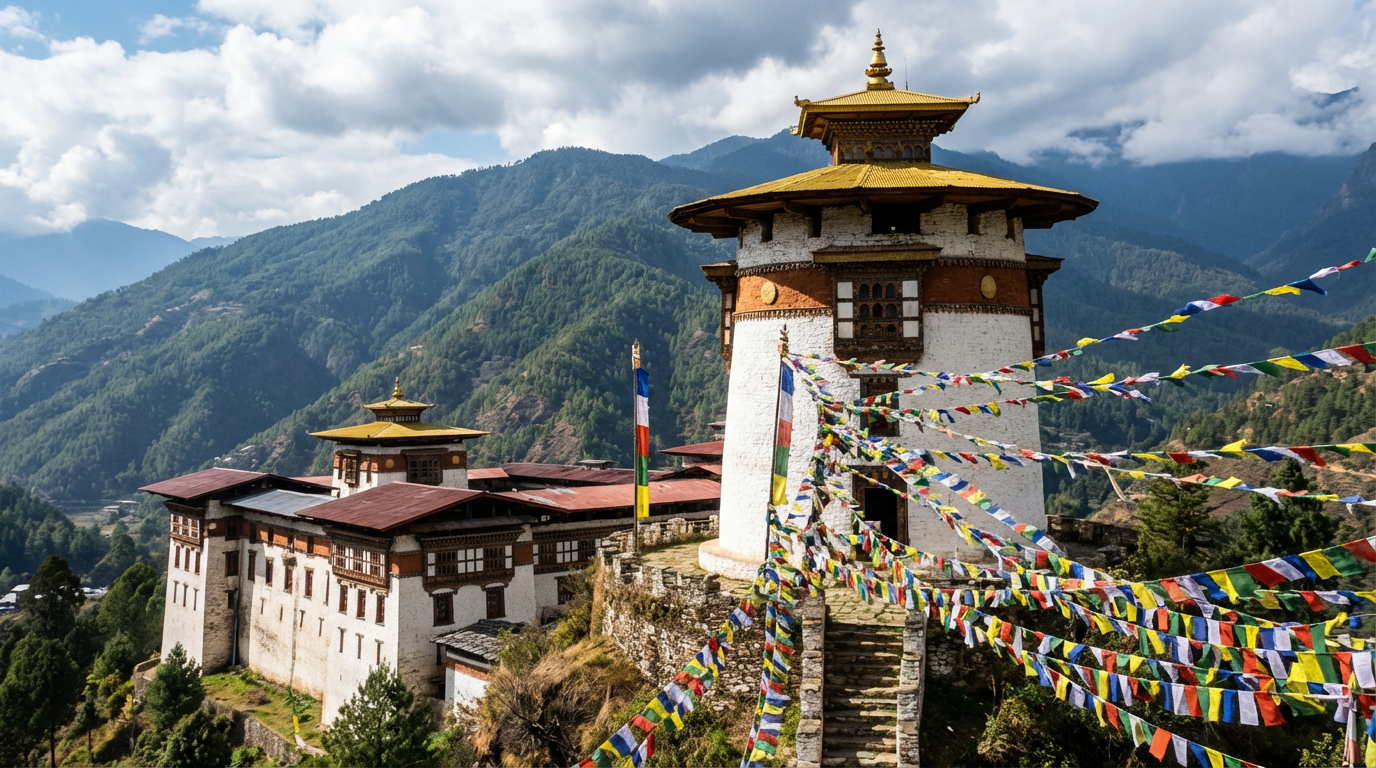
This image was generated with AI.
The exhibition in the museum is didactically excellently presented and understandable even without prior knowledge. You experience the history of the five kings through personal objects, gifts from foreign heads of state, historical documents, and audiovisual presentations. Particularly impressive is the portrayal of the transition from feudal rule to constitutional monarchy under the fourth king.
Other Attractions in the Region
Besides the majestic Dzong and informative museum, the Trongsa region has other interesting places to offer. Especially on the journey from Punakha, several stops are worthwhile and will enrich your trip.
Chendebji Chorten
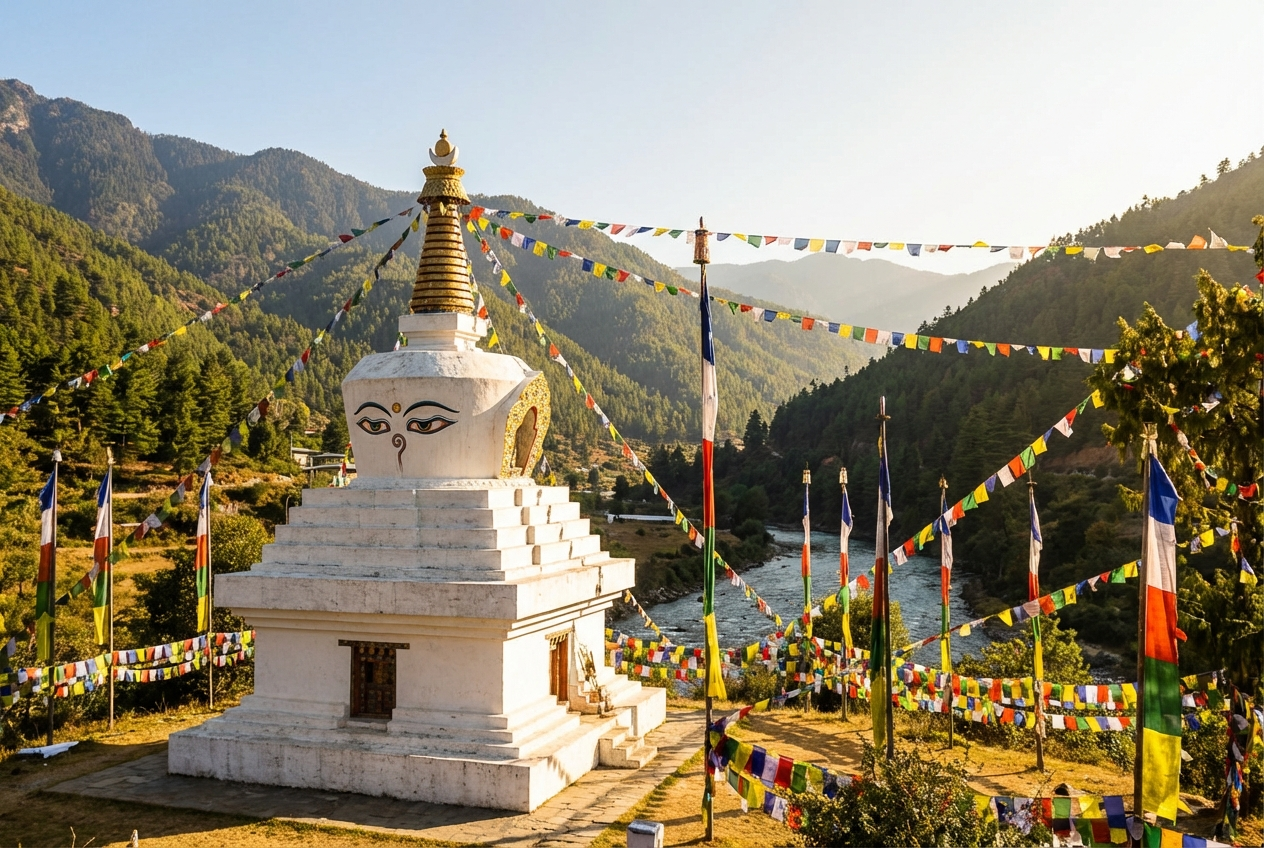
About 13 kilometers before Trongsa, on the way from Wangdue, stands the Chendebji Chorten – an impressive stupa in Nepalese style that resembles the famous Boudhanath in Kathmandu. Built in the 18th century, the Chorten was reportedly erected to banish an evil spirit that haunted the area. Today it is a popular stop for photos and a brief prayer.
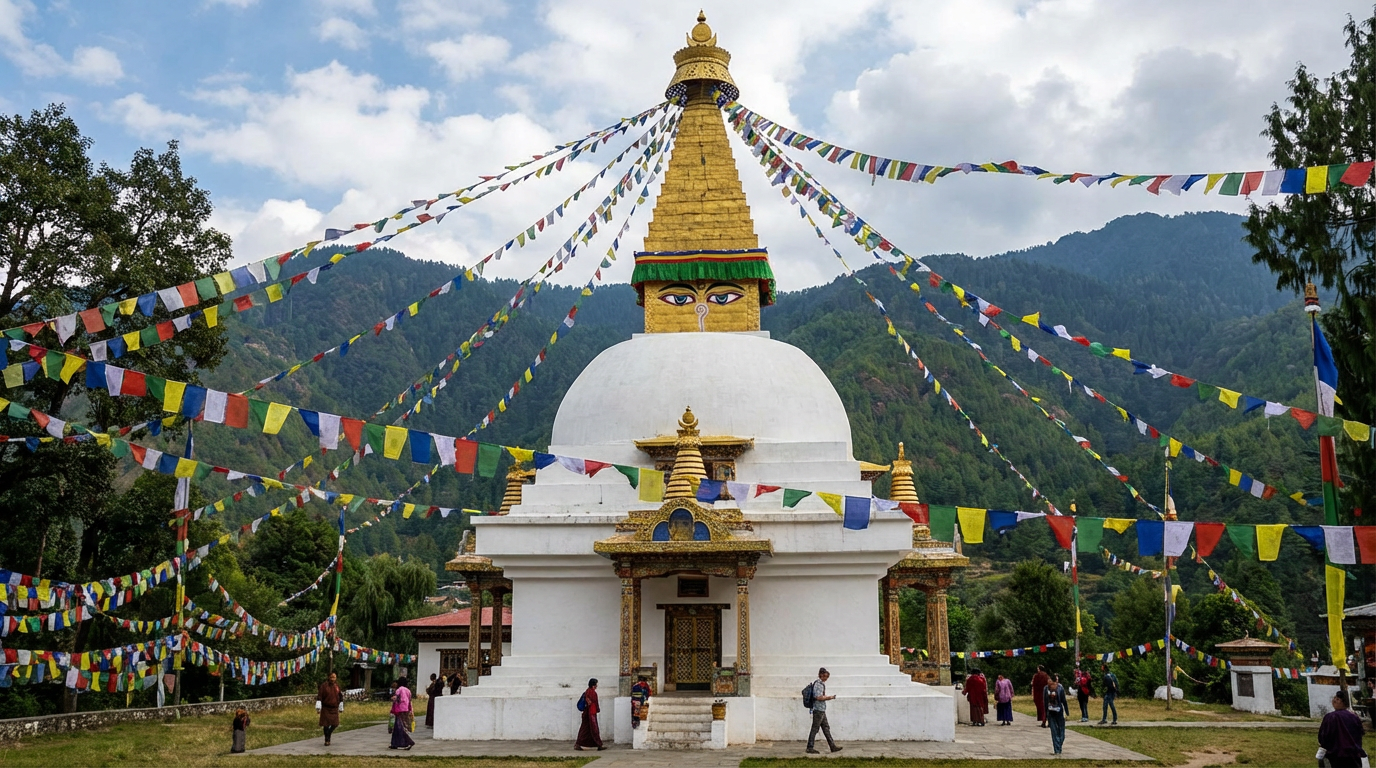
This image was generated with AI.
Kuenga Rabten Palace
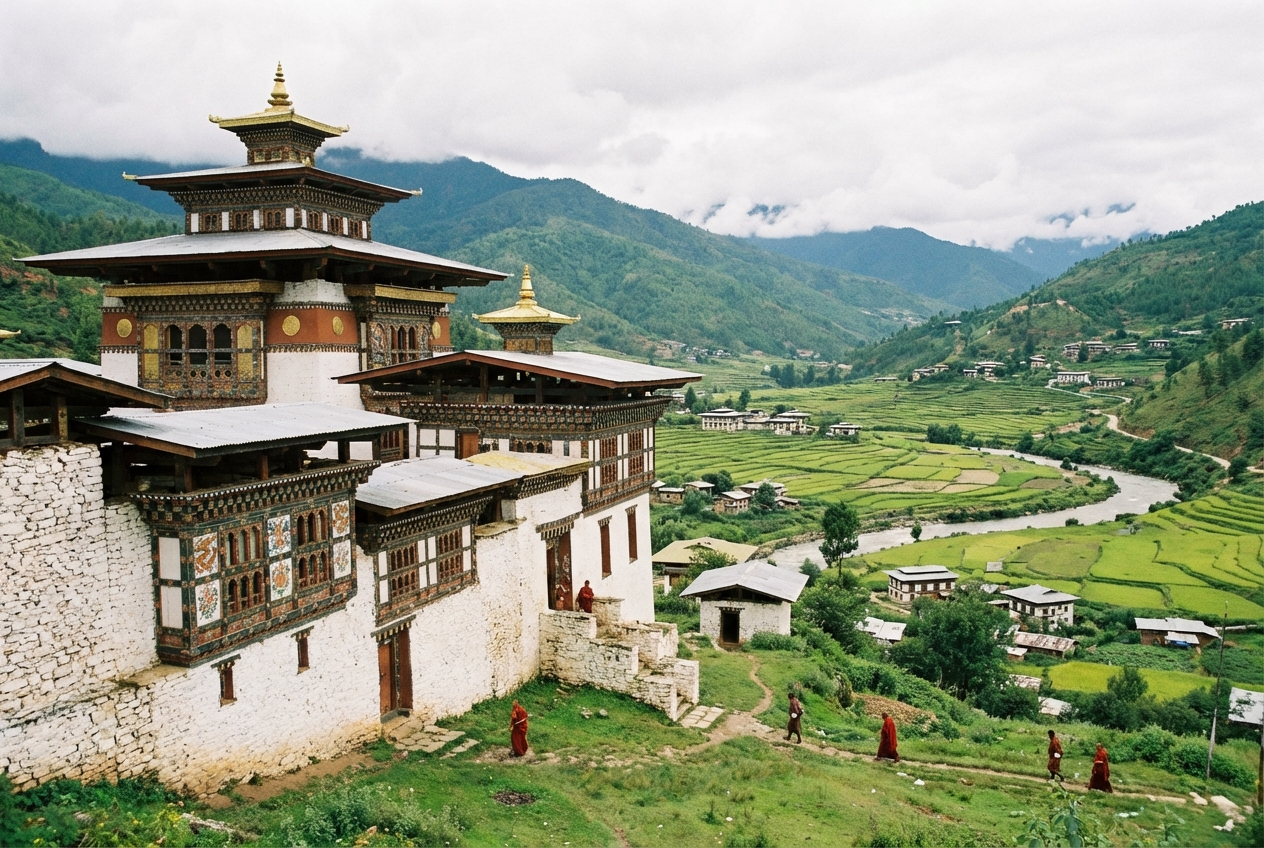
About 23 kilometers south of Trongsa lies Kuenga Rabten Palace – the former winter palace of the second king, Jigme Wangchuck. This lesser-visited location offers an authentic insight into royal life in the early 20th century. The drive there leads through picturesque landscape and is worth it for visitors interested in royal history.
 Along the Way
 This image was generated with AI.
Chendebji Chorten
Impressive stupa in Nepalese style on the way to Trongsa – a popular stop for photos and a brief prayer.
 Royal History
 This image was generated with AI.
Kuenga Rabten Palace
The former winter palace of the second king – an authentic insight into royal life away from tourist crowds.
Trongsa Tshechu – Authentic Festival
The Trongsa Tshechu takes place annually in December or January – according to the Bhutanese lunar calendar. In the courtyard of the mighty Dzong, monks and laypeople perform the traditional mask dances (Cham) that have been passed down for centuries. What's special about Trongsa Tshechu: It is significantly less visited by tourists than the better-known festivals in Paro or Thimphu. Here you experience an authentic Bhutanese festival where local visitors clearly dominate.
Complete Festival Calendar 2026/2026
Hotels in Trongsa
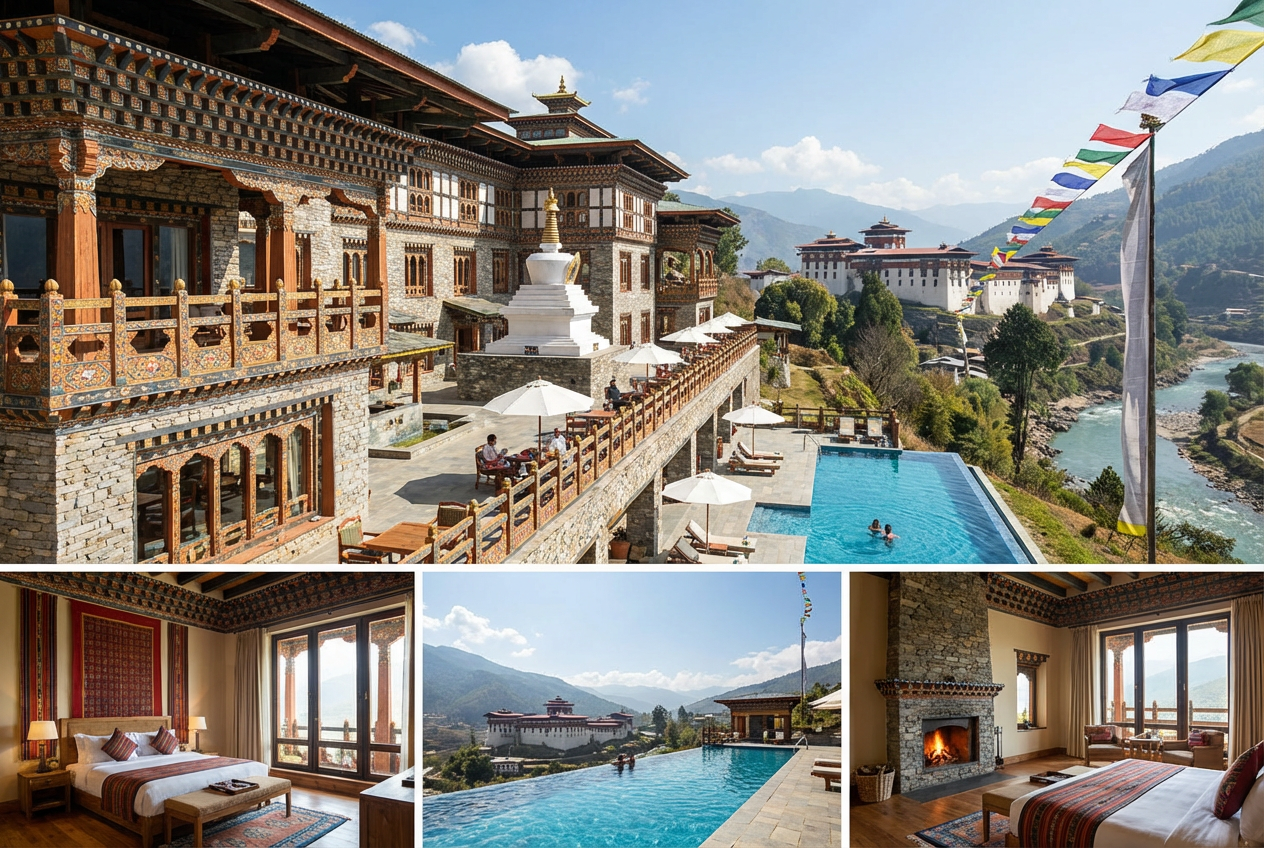
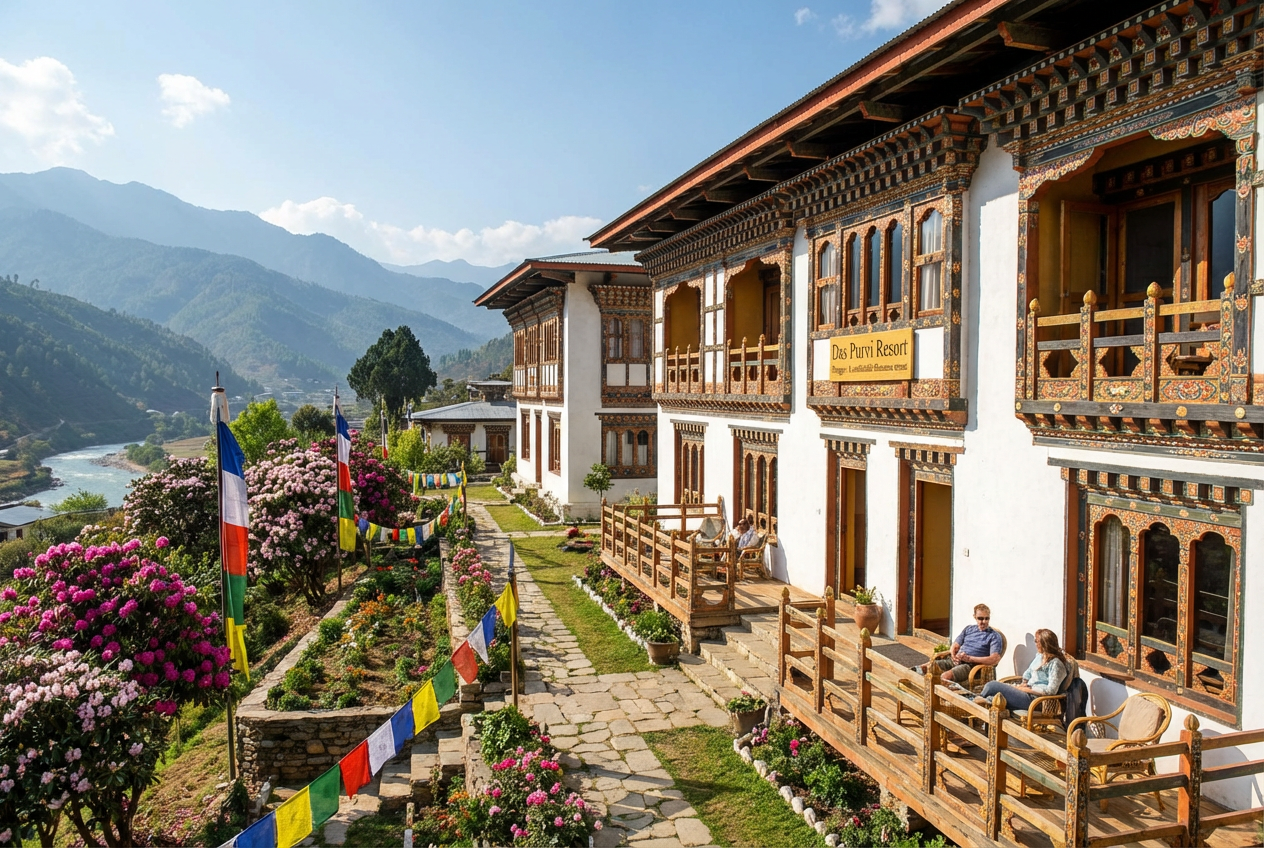
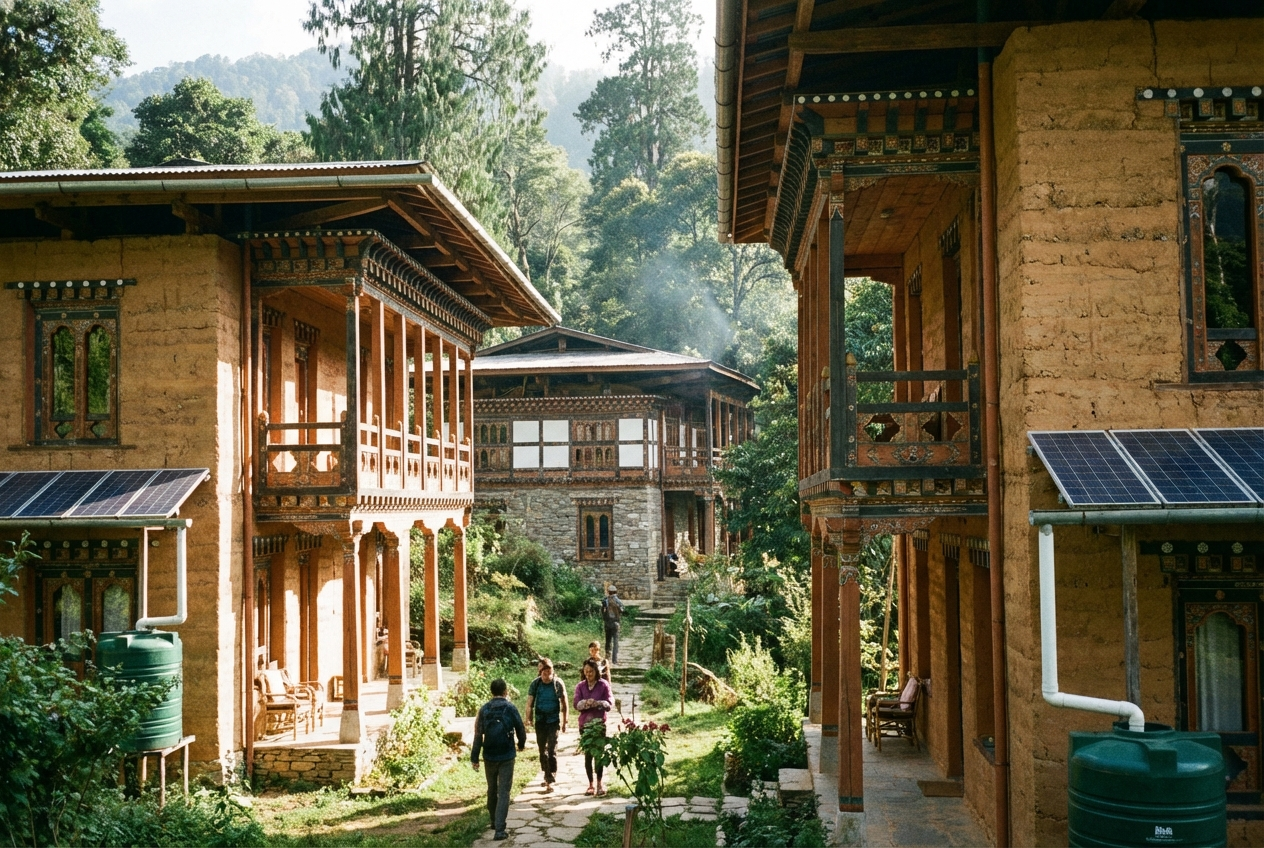
The choice of accommodations in Trongsa is limited, but the available hotels offer consistently good quality. Some properties boast spectacular views of the Dzong – particularly impressive at sunrise or sunset. For travelers planning more than just a transit stop, an overnight stay is worthwhile.
 Recommended
 This image was generated with AI.
Yangkhil Resort
The most popular hotel in Trongsa with a direct view of the Dzong – comfortable rooms and good restaurant.
 Mid-Range
 This image was generated with AI.
Purvi Resort
Solid mid-range option with friendly service and authentic Bhutanese cuisine.
 Sustainable
 This image was generated with AI.
Trongsa Ecolodge
Environmentally conscious accommodation for sustainability-oriented travelers – simple, but charming.
Recommended Stay Duration in Trongsa
Most travelers pass through Trongsa on their way to Bumthang or back westward. For a comprehensive visit, we recommend at least half a day – optimal is one night, which gives you time for the Dzong, museum, and a relaxed stay. If you're just passing through, you should at least stop for the Dzong and the viewpoint.
Transit: Half Day – The Highlights
- Arrival: Stop at viewpoint above for panoramic photo of the Dzong
- 1–1.5 Hours: Visit Trongsa Dzong
- Optional: 30–45 minutes for Tower of Trongsa Museum
- Onward: To Bumthang (2.5–3 hours) or back westward
Optimal: 1 Night – With Time for Everything
- Day 1 Afternoon: Arrival, Tower of Trongsa Museum, Dzong in afternoon light
- Evening: Dinner with a view of the illuminated Dzong
- Day 2 Morning: Dzong in morning light (particularly photogenic), optionally Chendebji Chorten on the return
- Onward: To Bumthang or back to Punakha/westward
Festival Time: 2+ Nights – For Trongsa Tshechu
- Recommendation: Plan 2 nights to experience the festival comfortably
- Festival Days: The mask dances last several hours – allow plenty of time
- Combination: Museum and Kuenga Rabten Palace on non-festival days
- Note: Book hotels early as capacity is limited during festival time
10-14 day route via Trongsa to Bumthang
Weather in Trongsa and Best Time to Visit
Trongsa lies at about 2,200 meters altitude and has a temperate climate – warmer than the higher Bumthang, but cooler than the subtropical Punakha. Temperatures are pleasant year-round, though nights can be particularly cold in winter. Fog and clouds are frequent, often giving the Dzong a mystical atmosphere.
| Period | Day Temp. | Night Temp. | Weather | Suitability |
|---|---|---|---|---|
| October–February | 12–18°C | 2–8°C | Cool, mostly dry, frost possible | Good, festival time (Dec/Jan) |
| March–May | 18–25°C | 8–14°C | Spring, pleasant, rhododendron blooms | Very Good |
| June–August | 22–28°C | 14–18°C | Monsoon, often cloudy and rainy | Limited |
| September | 20–25°C | 10–15°C | Transition, clearing up | Good |
Detailed information on the best time to visit Bhutan
Getting There and Onward Travel
Trongsa lies at the geographic center of Bhutan and is the natural junction between the western and eastern parts of the country. Most travelers come from Punakha/Wangdue over the Pele-La Pass (3,390 m) – a spectacular but winding drive of 5–6 hours. To the east, the route continues over the Yotong-La Pass (3,400 m) toward Bumthang.
| From/To | Distance | Driving Time | Route |
|---|---|---|---|
| Punakha | Approx. 130 km | 5–6 hours | Via Wangdue, Pele-La Pass (3,390 m) |
| Bumthang | Approx. 68 km | 2.5–3 hours | Via Yotong-La Pass (3,400 m) |
| Thimphu | Approx. 200 km | 7–8 hours | Via Dochula, Punakha, Pele-La |
| Phobjikha Valley | Approx. 80 km | 2.5–3 hours | Via Gangtey, Pele-La |
Continue to Bumthang – The Spiritual Heart of Bhutan
Practical Information for Trongsa
Frequently Asked Questions about Trongsa
Why is Trongsa so important for the royal family?
Trongsa is the cradle of the Bhutanese monarchy. The Wangchuck family ruled here as Penlops before Ugyen Wangchuck was crowned the first king in 1907. To this day, every future king must first serve as Trongsa Penlop before ascending the throne. The Dzong houses important crown jewels and relics, and the connection between Trongsa and the crown is an important part of national identity.
How large is Trongsa Dzong?
Trongsa Dzong is the largest Dzong in Bhutan. It extends over multiple levels down a rocky outcrop and encompasses numerous courtyards, temples, and administrative buildings. About 200 monks live and practice here. The labyrinthine structure with many stairs and corridors makes a tour a special experience – plan at least 1–1.5 hours.
How long should you spend in Trongsa?
For a comprehensive visit, we recommend at least half a day, optimal is one night. With one night, you have time for Tower of Trongsa Museum, the Dzong in different light conditions, and a relaxed pace. As a transit visitor, you should plan at least 1.5–2 hours for the Dzong and viewpoint.
What is Tower of Trongsa Museum?
Tower of Trongsa Museum is housed in the former watchtower (Ta Dzong) above the Dzong. It opened in 2008 for the 100th anniversary of the monarchy and is dedicated to the history of the Wangchuck Dynasty. The exhibition showcases royal artifacts, historical photographs, and interactive displays. We recommend visiting the museum before the Dzong to better understand the history.
When does Trongsa Tshechu take place?
Trongsa Tshechu takes place annually in December or January, with exact dates varying according to the Bhutanese lunar calendar. The three-day festival features traditional mask dances in the Dzong's courtyard. It is less visited than festivals in Paro or Thimphu and offers a more authentic atmosphere. Ask your travel operator for current dates.
What is the weather like in Trongsa?
Trongsa lies at about 2,200 m altitude and has a temperate climate. Daytime temperatures range from 12–25°C depending on season, nights can be particularly cool in winter (down to 2°C). Fog and clouds are frequent and give the Dzong a mystical atmosphere. The best time to visit is October to May; monsoon (June–August) brings regular rain.
How do I get to Trongsa?
Trongsa is only accessible by road. From Punakha it's about 5–6 hours over Pele-La Pass (3,390 m). To Bumthang in the east it's 2.5–3 hours over Yotong-La Pass. The drive is scenically spectacular – the first glimpse of the Dzong from above is unforgettable. Most travelers stop here on the way to or from Bumthang.
What hotels are there in Trongsa?
The choice of hotels in Trongsa is limited but of good quality. Yangkhil Resort is the most popular and offers spectacular views of the Dzong. Other options include Purvi Resort (mid-range) and Trongsa Ecolodge (sustainable). Book early during festival time as capacity is limited.
Further Information
Explore Trongsa
Travel from Trongsa
Travel Planning
Discover the Cradle of the Royal Dynasty?
We plan your individual route through Central Bhutan – with the mighty Trongsa Dzong, spiritual Bumthang, and hidden treasures between east and west.