East Bhutan: Pristine Bhutan – Brokpa Culture, Trashigang & Merak-Sakteng
Last updated:
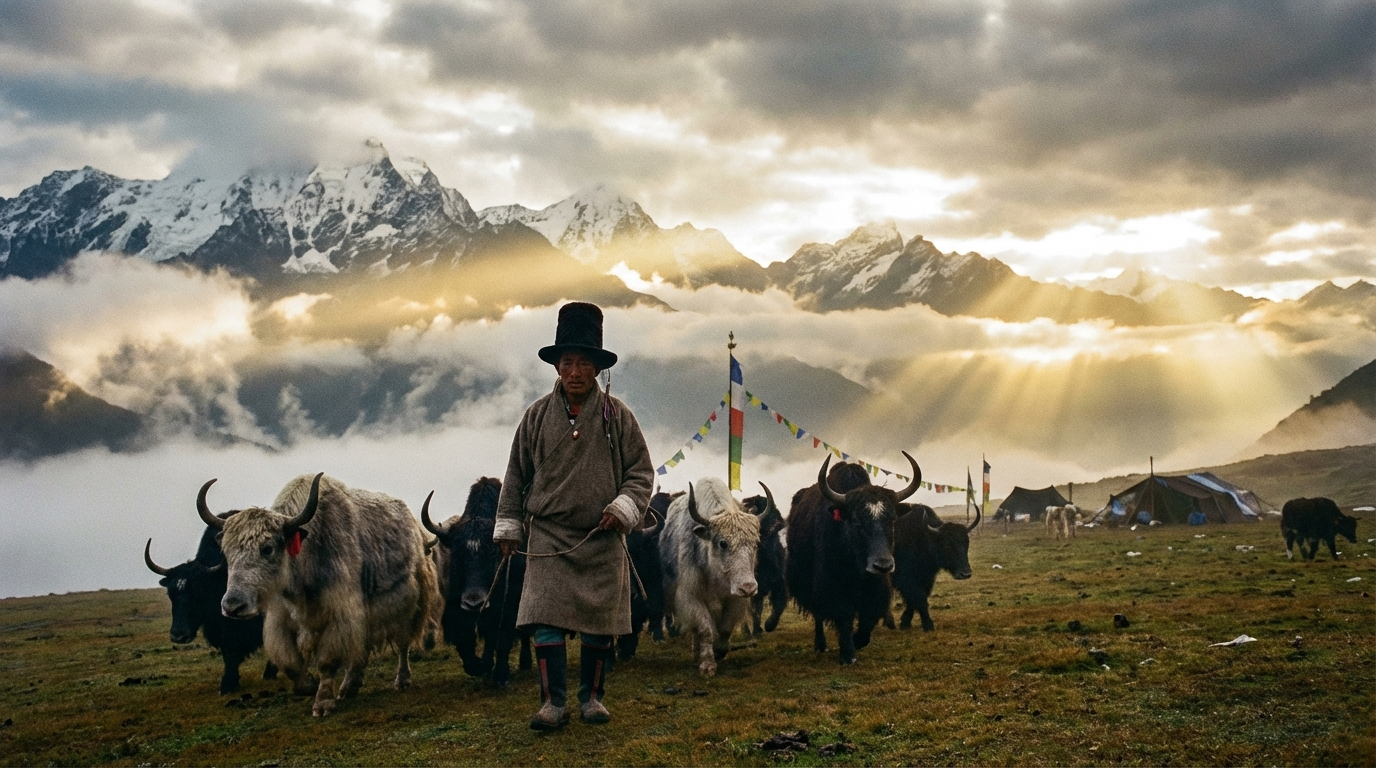
East Bhutan is a different world – even within a country that already sets itself apart from the rest of the world. While western Bhutan welcomes international visitors with Tiger's Nest and Punakha Dzong, the east remains largely undiscovered: Only a few travelers undertake the multi-day journey to reach here. But those who do find a Bhutan that no longer exists in the west: the Brokpa nomads of Merak and Sakteng in their centuries-old traditional dress, the mighty Trashigang Dzong without other tourists, and a landscape as pristine as the Himalayas were generations ago. East Bhutan is not for every visitor – but for the right travelers, it's the highlight of a Bhutan journey.
East Bhutan at a Glance
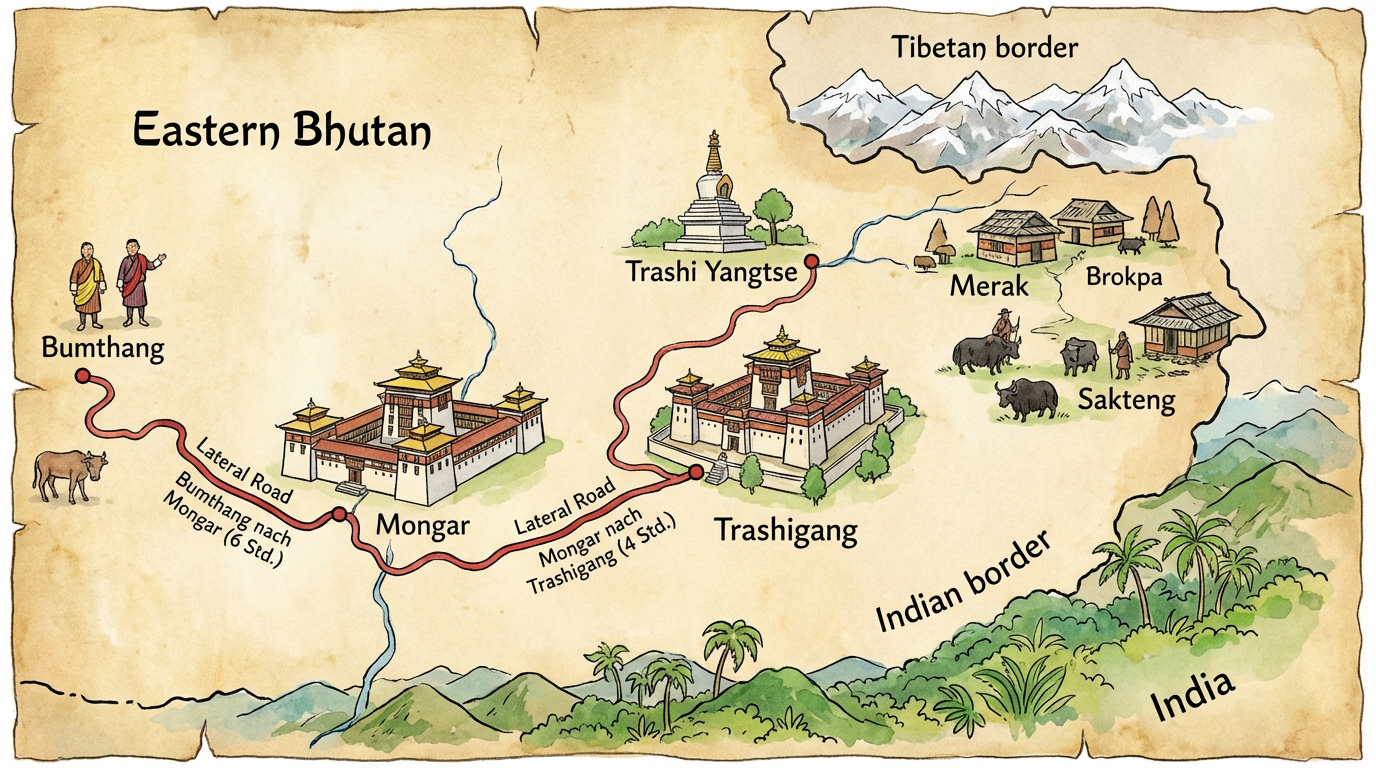
This image was generated with AI.
Is East Bhutan Right for You?
East Bhutan is not the right destination for every Bhutan trip – and that's okay. The region requires time, patience, and a sense of adventure. The following overview will help you decide whether eastern Bhutan matches your travel wishes.
"The two-day drive to Trashigang was exhausting. But when I arrived in Merak and saw the Brokpa in their traditional dress, as if time had stopped a hundred years ago, I knew: every kilometer was worth it. That was the real Bhutan."
What Awaits You in East Bhutan?
East Bhutan offers experiences no longer possible in the more touristy west. The region is rougher, simpler, but also more authentic. Here are the highlights waiting for you:
 Unique
 This image was generated with AI.
The Brokpa Nomads
A unique culture found only in Merak and Sakteng: yak herders in centuries-old traditional dress, with their own dialect and traditions that exist nowhere else in Bhutan.
 Culture
 This image was generated with AI.
Trashigang Dzong
East Bhutan's mightiest dzong, picturesque on a hill overlooking the river – without other tourists, authentic and impressive.
 Nature
 This image was generated with AI.
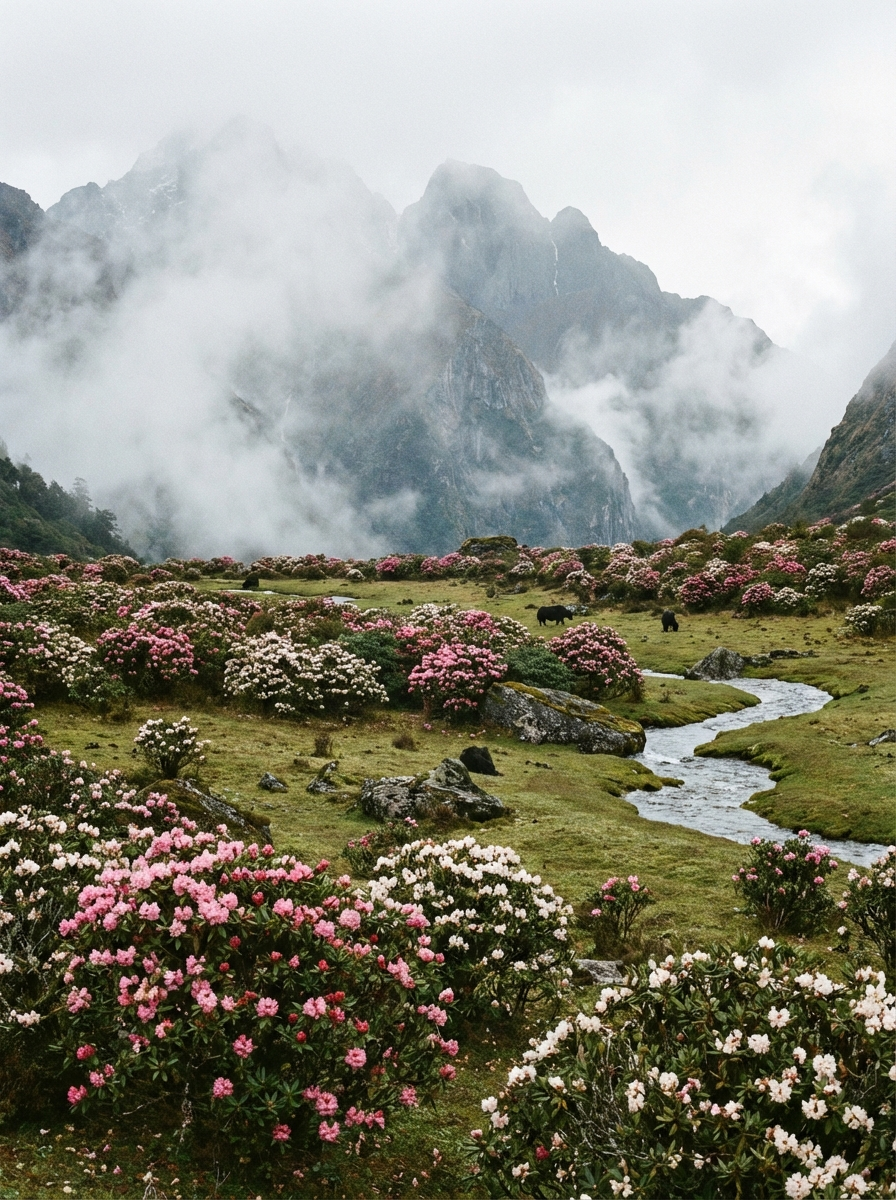
Pristine Nature
The Sakteng Wildlife Sanctuary with 46 rhododendron species, rare animals, and the world's only protected area officially established for the 'Yeti'.
 Festival
 This image was generated with AI.
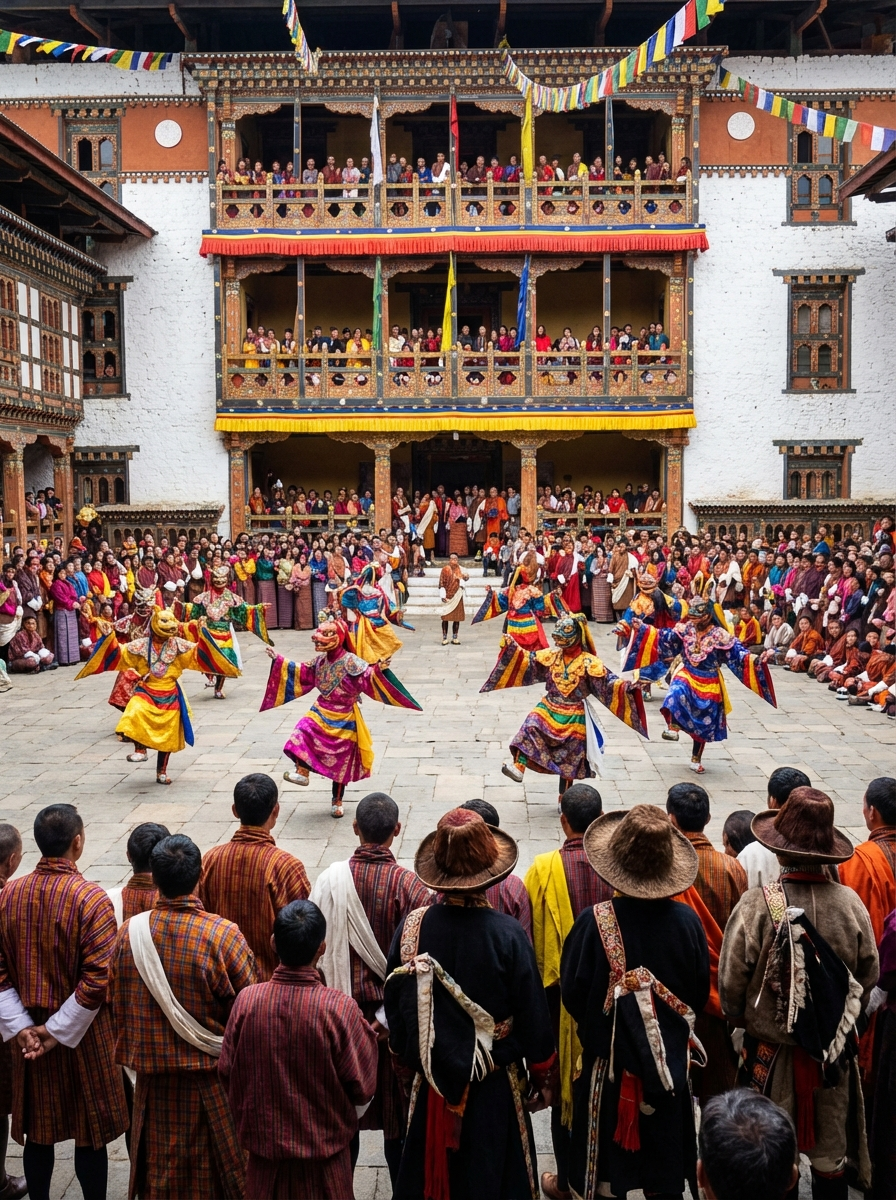
Authentic Festivals
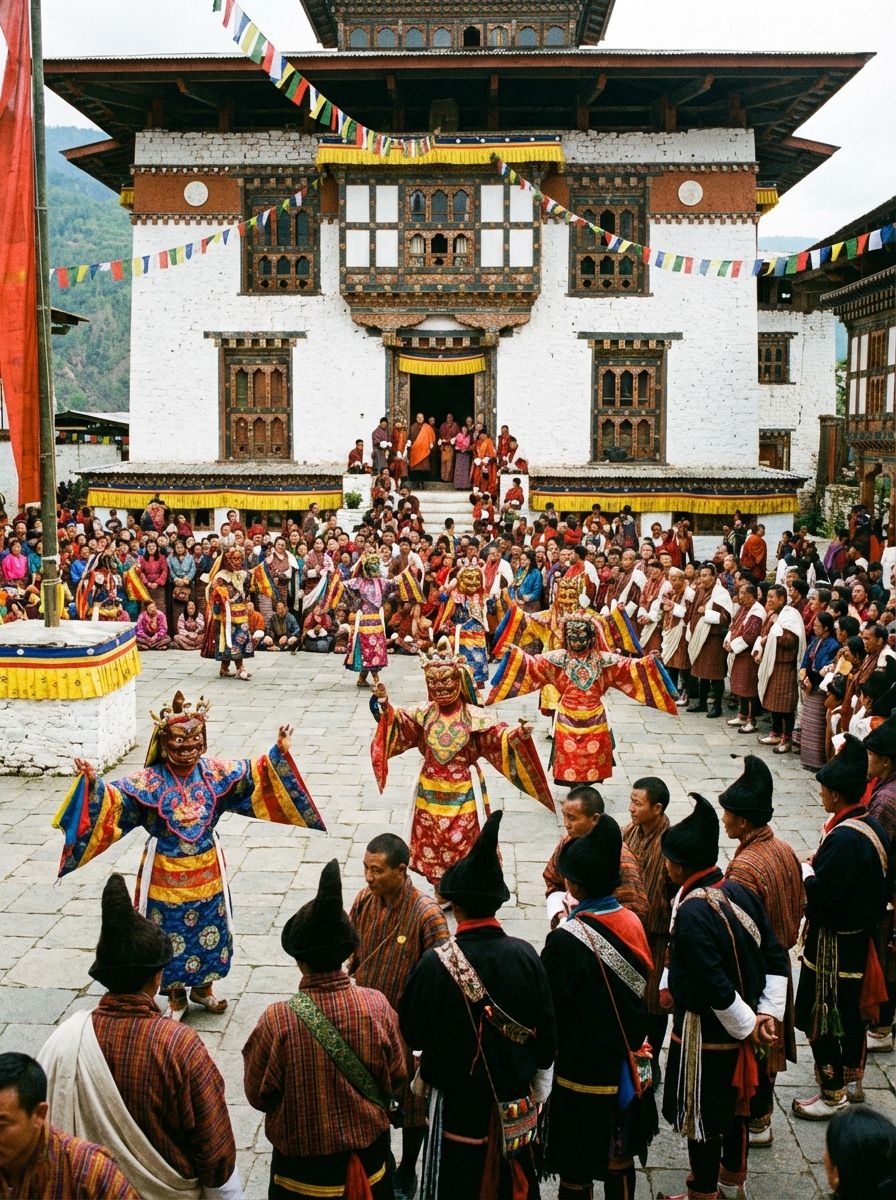
The Trashigang Tshechu attracts few international visitors – instead you experience mask dances in their most original form, surrounded by locals and Brokpa nomads.
Trashigang – Gateway to the East
Trashigang is the administrative center of East Bhutan and Bhutan's largest district by area. The main town sits at relatively low 1,150 meters, meaning a warmer, more subtropical climate than the west. For most travelers, Trashigang is the starting point for visiting the Brokpa villages of Merak and Sakteng – the region's real attraction. But the town itself deserves attention: The Trashigang Dzong, strategically positioned above the confluence of two rivers, is among Bhutan's most impressive fortress monasteries.
Trashigang Dzong – Guardian of the East
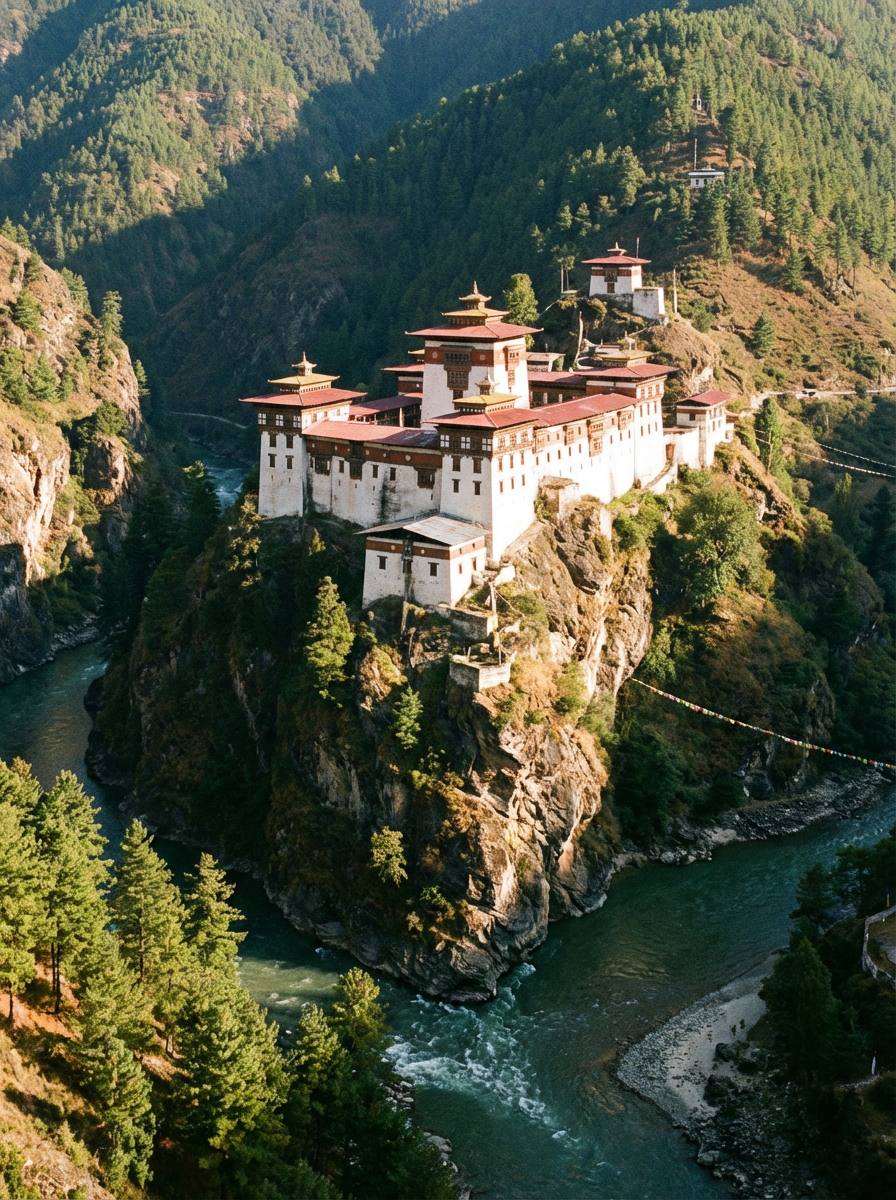
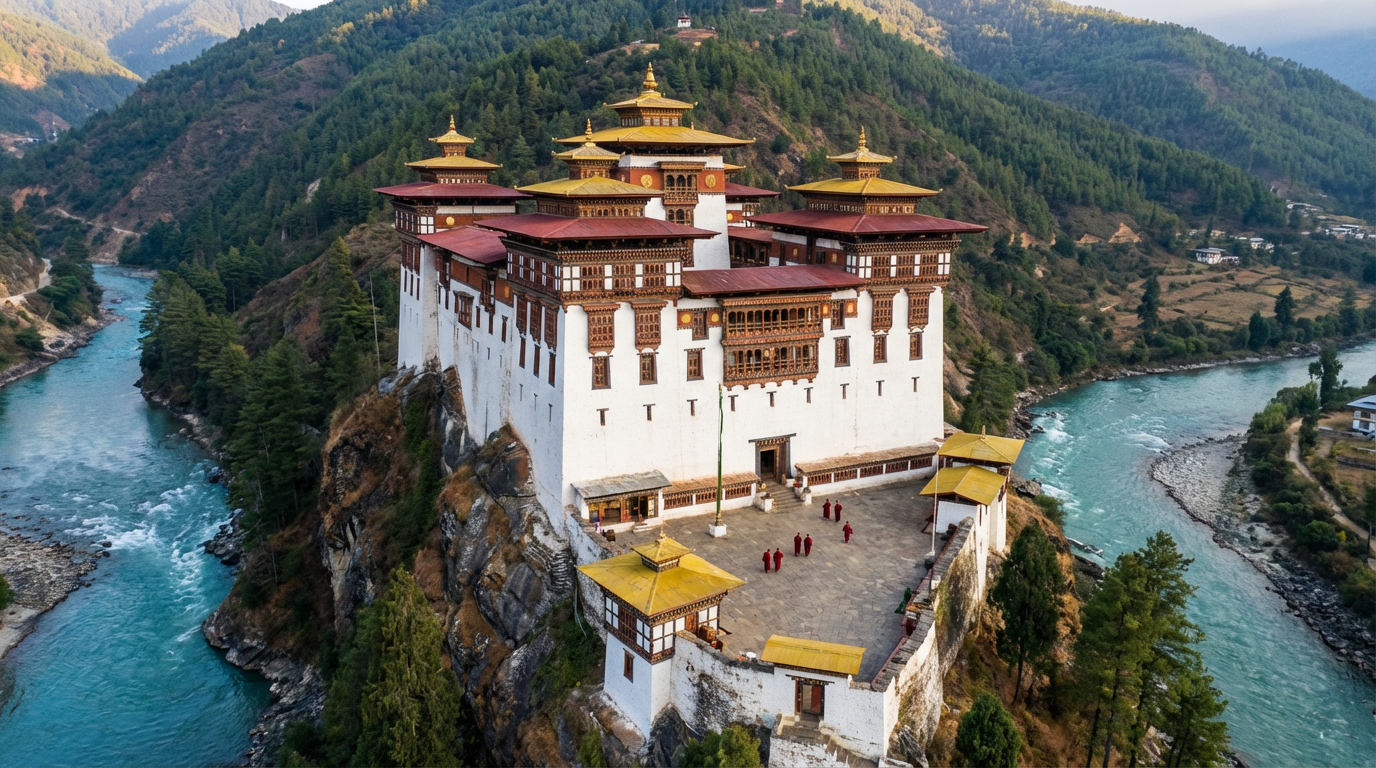
Trashigang Dzong towers on a rocky spur high above the river – a strategic position that once controlled all of eastern Bhutan. Unlike the restored dzongs in the west, Trashigang feels more authentic, less polished, but no less impressive. It's an active monastery and administrative center; visitors can explore parts of the complex and experience the atmosphere without the stream of tourists common in the west.
This image was generated with AI.
Other Sights near Trashigang
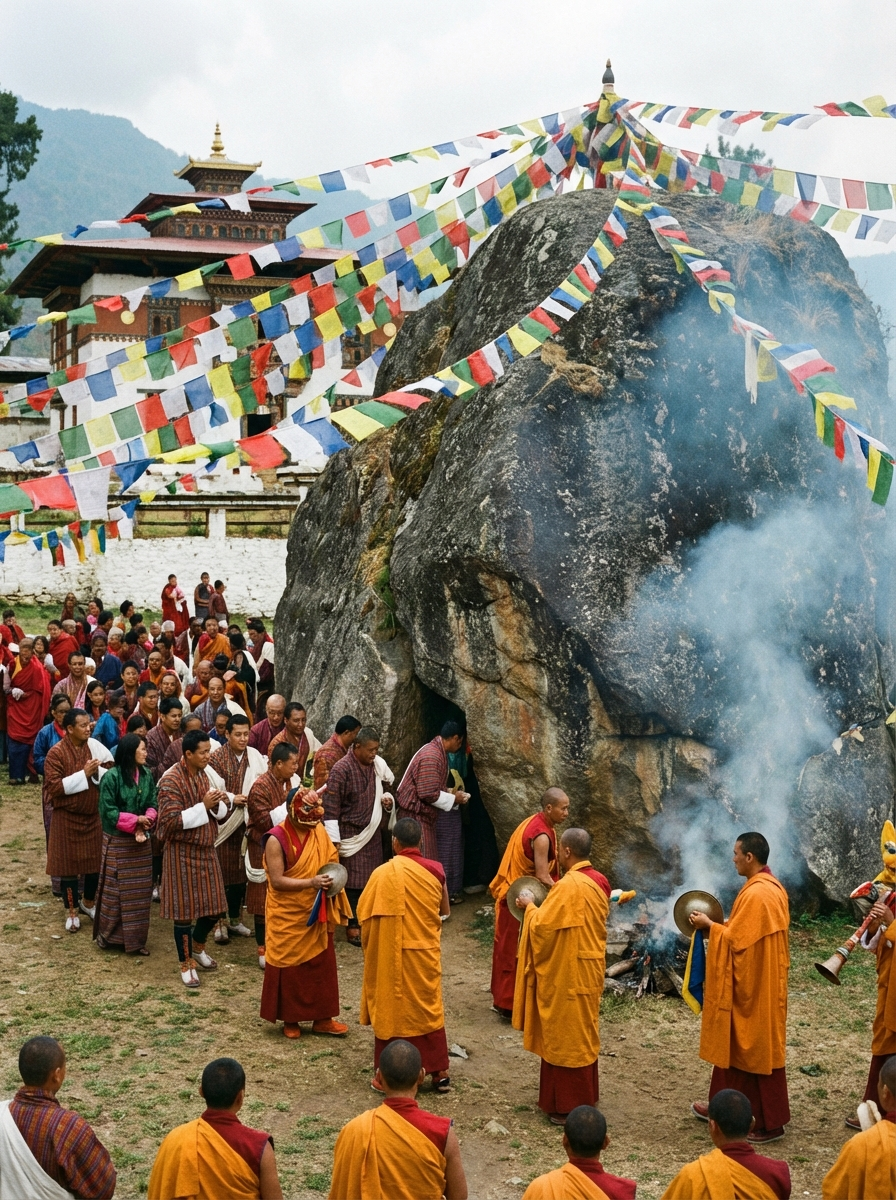
Around Trashigang, it's worth visiting Gom Kora, an important pilgrimage site with its own festival in March and April. The rock there supposedly shows an imprint of Guru Rinpoche. Further north lies Trashi Yangtse, known for its artisans who craft Bhutan's finest wooden bowls. Rangjung houses a modern monastery with an active nun community.
The Brokpa – Bhutan's Highland Nomads
The Brokpa (literally: "highlanders" in Dzongkha) are among the last authentic nomadic cultures of the Himalayas. About 5,000 people live in the two remote villages of Merak and Sakteng at over 3,500 meters elevation, living a life that has barely changed in centuries. They speak their own language (Jyokha, the "language of herders"), wear a distinctive traditional dress, and follow the rhythm of their yak and sheep herds between winter settlements in the valley and summer alpine pastures in the mountains. The Brokpa are the main reason travelers undertake the long journey to East Bhutan – and for culture-interested visitors, one of the most impressive encounters Bhutan has to offer.
The Distinctive Brokpa Traditional Dress
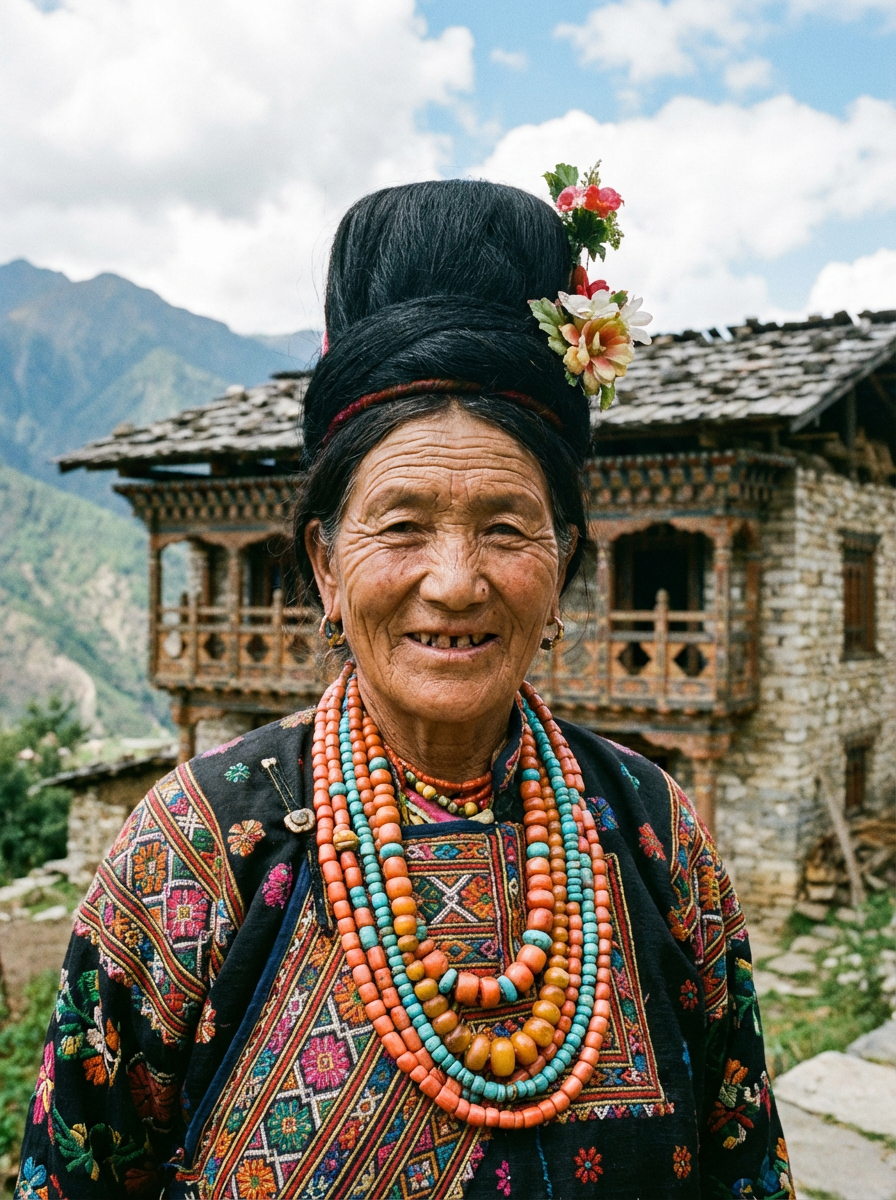
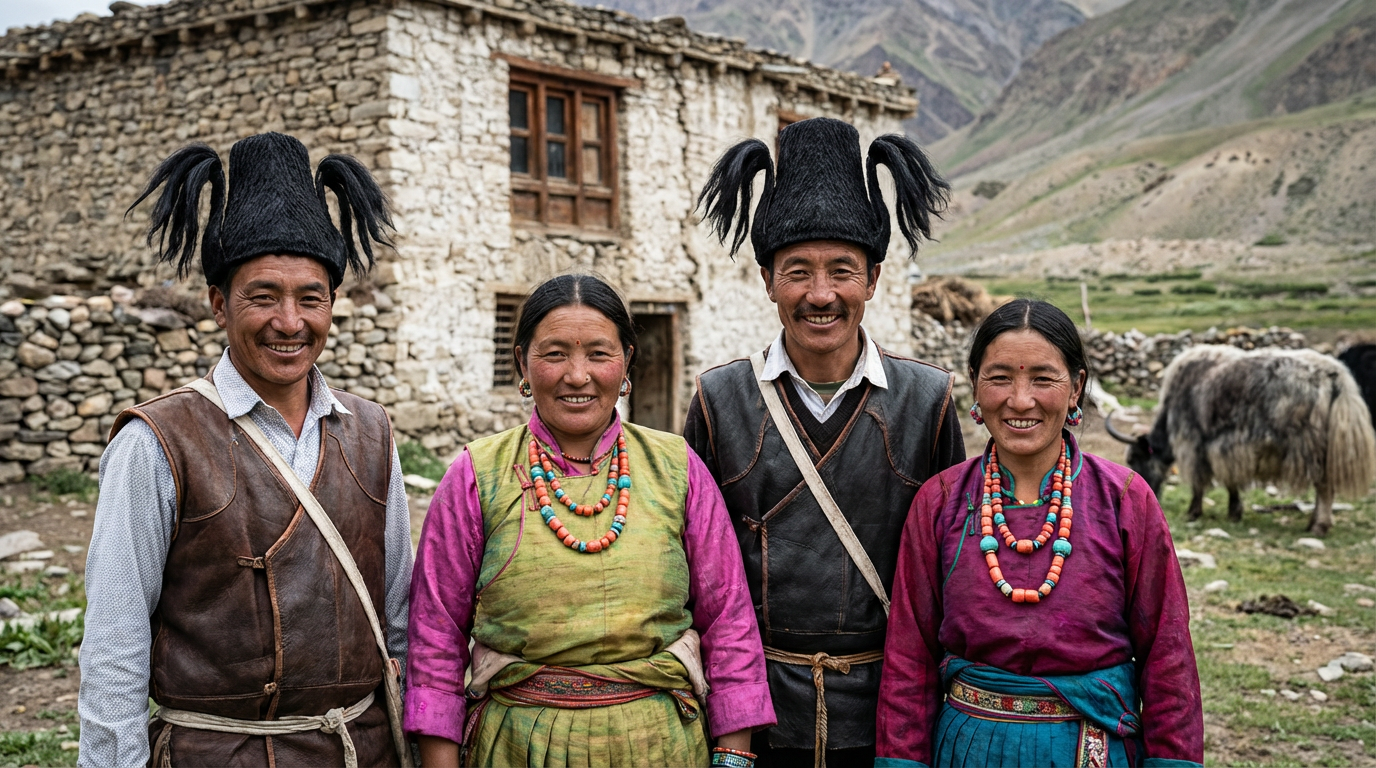
The Brokpa are immediately recognizable by their unique clothing. Men wear garments made from yak-hair wool and distinctive black hats with five long fringes that hang down like tassels – a design found nowhere else in the world. Women dress in tops of raw silk with colorful patterns and wear striking coral necklaces, sometimes several rows overlapping. This dress is not folklore for tourists – it's worn in daily life, a living heritage.
This image was generated with AI.
Brokpa Way of Life
The Brokpa live semi-nomadically: In winter they inhabit stone houses in Merak and Sakteng, in summer they move with their yak and sheep herds to alpine pastures, living in tents. Their economy is based on yak and sheep herding – wool, butter, cheese, and meat. The rhythm of life follows the seasons and the animals' needs, not the clock. Visitors staying in a homestay in Merak or Sakteng experience this rhythm firsthand.
Merak – Village of Yak Herders
Merak is the larger of the two Brokpa villages and the typical first stop for visitors. At about 3,500 meters elevation, the village sits in a wide highland valley surrounded by rhododendrons and alpine meadows. Stone houses with low doors (for warmth) cluster on the slopes, yaks graze on surrounding meadows. Since 2012, Merak has been accessible by road – before that it required a two-day trek. Today the drive from Trashigang takes 2–4 hours, but the remoteness remains.
Sakteng – At the Edge of the World
Sakteng is even more remote than Merak, a day's hike or an adventurous drive away. The village at the edge of the Sakteng Wildlife Sanctuary feels like the end of the world – and geographically almost is: the Tibetan border lies just a few kilometers away. Here, Brokpa culture is even more pristine, encounters even more authentic. Those who make it here experience a Bhutan that most Bhutanese have never seen.
Learn more about homestays in Bhutan
The Sakteng Wildlife Sanctuary
The Sakteng Wildlife Sanctuary is a 740-square-kilometer protected area ranging from 1,500 to over 5,000 meters elevation. It was officially established to protect the Brokpa habitat – and, according to local accounts, the "Migoi," the Bhutanese Yeti. Whether you believe in yetis or not: the sanctuary harbors extraordinary biodiversity, including 46 rhododendron species (more than anywhere else in Bhutan), red pandas, possibly snow leopards, and diverse birdlife. For nature lovers it's a paradise – and for everyone, proof of how seriously Bhutan takes conservation.
Festivals in East Bhutan – Authentic and Pristine
East Bhutan's festivals are less known than Paro Tshechu or Thimphu Tshechu – and that's what makes them special. You experience mask dances and religious ceremonies as they've occurred for centuries, surrounded by locals rather than other tourists. The Trashigang Tshechu especially is recommended for those seeking an authentic festival experience.
 December
 This image was generated with AI.
Trashigang Tshechu
In December (by Bhutanese calendar): One of Bhutan's most authentic festivals. Even the Brokpa nomads come from their mountain villages – a rare meeting of different cultures.
 March/April
 This image was generated with AI.
Gom Kora Festival
In March/April at the sacred pilgrimage site Gom Kora: A special pilgrimage festival with unique dances and deep spiritual significance.
Brokpa Festivals in Merak and Sakteng
The Brokpa have their own festivals, different from Buddhist tshechusfestival. In summer, local celebrations take place in Merak and Sakteng featuring unique dances – including the Terchaam (a ritual naked dance) and the Ache-Lhamo of the herders. In autumn, the Jomo Kuengkhar Festival honors the local mountain goddess. These festivals are rarely open to outsiders – ask your operator if a visit is possible.
Complete Festival Calendar for Bhutan
Suggested Route: 7 Days in East Bhutan
The following route suggestion shows how an East Bhutan extension can look. These 7 days are added to your existing West Bhutan route – so plan for at least 14–21 days total trip.
| Day | Route | Travel Time | Highlights |
|---|---|---|---|
| 1 | Bumthang → Mongar | approx. 6–7 h | Lateral Road, spectacular landscape, Thrumshingla Pass (3,800 m) |
| 2 | Mongar → Trashigang | approx. 3–4 h | Trashigang Dzong, arrival in the east |
| 3 | Trashigang → Merak | approx. 2–4 h | Arrival at the Brokpa village, first encounters |
| 4 | Merak (full day) | – | Cultural immersion, village walks, homestay experience |
| 5 | Merak → Sakteng (hiking) | approx. 5–6 h on foot | Trek through rhododendrons, Sakteng Wildlife Sanctuary |
| 6 | Sakteng → Trashigang | approx. 5–6 h | Return journey, time for reflection |
| 7 | Trashigang → Mongar | approx. 3–4 h | Begin return journey westward |
Detailed 14-21 Day Routes with East Bhutan
Getting to East Bhutan – The Reality
Let's be honest: getting to East Bhutan is long and exhausting. There's no way around it. But it's also spectacular – over high passes, through constantly changing landscapes, with views you won't find anywhere else. The drive is part of the experience, not just a means to an end.
| From | To | Distance | Travel Time | Note |
|---|---|---|---|---|
| Bumthang | Trashigang | approx. 270 km | 8–10 hours | Via Thrumshingla Pass (3,800 m), usually with stop in Mongar |
| Thimphu | Trashigang | approx. 540 km | 2–3 days | Not doable in one day, stops in Punakha, Trongsa, Bumthang |
| Trashigang | Merak | approx. 40 km | 2–4 hours | Partly unpaved road, passable since 2012 |
| Merak | Sakteng | – | 5–6 h on foot | Or adventurous drive, hiking recommended |
Accommodation in East Bhutan
Accommodation in East Bhutan is simpler than in the west – there are no luxury resorts like Aman or Six Senses. In Trashigang you'll find some comfortable hotels, but don't expect five-star standards. In Merak and Sakteng, homestays are the only and best option – simple, but authentic.
In Trashigang
Trashigang has a small selection of comfortable, clean hotels. The best options offer rooms with private bathrooms, hot water, and acceptable WiFi. No luxury, but solid mid-range. Book early as capacity is limited.
In Merak and Sakteng
There are no hotels in the Brokpa villages – here you stay in homestays with local families. Conditions are simple: shared rooms, pit toilets, cold water (if running at all), no heating except the open fire. But that's exactly what makes the experience special. You live with a Brokpa family, eat together, and experience the culture firsthand. Warm clothing and a sleeping bag are recommended.
Everything about homestays in Bhutan
Weather and Best Time to Visit East Bhutan
Weather in East Bhutan varies greatly by elevation. Trashigang at 1,150 meters is warmer and more subtropical than western Bhutan. Merak and Sakteng at over 3,500 meters are cold – expect cool nights even in summer and frost in winter.
| Period | Trashigang (1,150 m) | Merak/Sakteng (3,500+ m) | Suitability |
|---|---|---|---|
| October–February | 15–22°C daytime, mild | 5–12°C daytime, frost at night | Good – dry, clear visibility, festival season (Dec) |
| March–May | 20–28°C, warm | 10–18°C, rhododendron blooms | Excellent – best for trekking and nature |
| June–August | 25–32°C, monsoon | 15–20°C, heavy rain | Limited – landslide danger, difficult roads |
| September | 23–28°C, decreasing rain | 12–18°C, clearing up | Good – transition to peak season |
Detailed Information on Best Time to Visit
Practical Information for East Bhutan
Frequently Asked Questions about East Bhutan
Is East Bhutan worth visiting?
It depends on your expectations. If you have at least 14–21 days, seek authentic cultures away from tourism, and don't mind long drives, East Bhutan is an unforgettable experience. The Brokpa nomads of Merak and Sakteng, the pristine landscape, and the absence of other tourists offer a Bhutan that no longer exists in the west. For first-time visitors with less than 10 days or comfort-oriented travelers, western Bhutan is better suited.
How do I get to Trashigang?
The standard route is by road from Bumthang – about 8–10 hours drive over the Thrumshingla Pass (3,800 m), usually with an overnight stop in Mongar. From Thimphu or Paro allow 2–3 days drive. There's an airport near Trashigang (Yongphula), but flights are very irregular and weather-dependent – not suitable as a planning basis.
Who are the Brokpa in Bhutan?
The Brokpa (literally: "highlanders") are an ethnic group of about 5,000 people living in the villages of Merak and Sakteng at over 3,500 meters. They're semi-nomadic yak and sheep herders with their own language (Jyokha), distinctive clothing (black yak-hair hats with fringes, coral jewelry), and traditions distinct from Bhutan's Buddhist majority. The Brokpa are the main reason to visit East Bhutan.
How long do I need for East Bhutan?
For a meaningful visit to East Bhutan, allow 7–10 additional days – in addition to your West Bhutan route. 3–4 days are just for travel to and from. Usually 1 night in Trashigang, at least 2–3 nights in Merak/Sakteng to truly experience the culture. Total: 14–21 days for your complete trip.
What is the Merak-Sakteng Trek?
The Merak-Sakteng Trek is among Bhutan's least commercialized treks. The full version takes about 18 days, going through the Sakteng Wildlife Sanctuary with its unique flora. Most visitors choose shorter versions: a hike from Merak to Sakteng (5–6 hours) through alpine meadows and rhododendron forests. The trek is culturally and scenically impressive but demanding due to altitude and isolation.
Are there hotels in Merak and Sakteng?
No, there are no hotels in the Brokpa villages. You stay in homestays with local families. Conditions are simple – no western toilets, no hot water, no heating except the fire. But that's what makes the experience authentic. Trashigang has several comfortable hotels.
When is the best time to visit East Bhutan?
Best time is March to May (spring with rhododendron blooms, pleasant temperatures in the highlands) and September to November (stable weather, clear visibility, festival season). The Trashigang Tshechu in December is a special experience but cold in the highlands. Monsoon (June–August) is not recommended – landslides can block roads.
Do I need a special permit for East Bhutan?
Yes, a special permit is required to visit Merak and Sakteng. The region was closed to foreigners until 2010 and is only accessible with permission today. Your tour operator requests the permit as part of the normal visa process – plan adequate lead time (at least 4–6 weeks).
Is East Bhutan safe?
Yes, East Bhutan is safe. The region is very remote, but crime is practically nonexistent – like everywhere in Bhutan. The challenges are more logistical: difficult roads, limited medical care, high altitude. An experienced operator and guide know the region and ensure your safety.
Further Information
Routes with East Bhutan
On the Way East
Practical Info
Discover Real Bhutan?
A trip to East Bhutan requires careful planning and local expertise. We'll honestly advise you whether the east is right for you – and if so, create a route that takes you to the Brokpa nomads and pristine Bhutan.