Dress & Etiquette in Bhutan: The Complete Guide for Respectful Travel
Last updated:
Bhutan is a country with deep spiritual traditions and clear behavioral rules – especially in religious sites. The good news: For travelers, these regulations are simple to follow once you know them. This guide explains everything you need to know about dress codes for temple and Dzong visits, traditional clothing, as well as the special laws regarding tobacco and alcohol, so you can travel respectfully and comfortably through the Kingdom.
Dress & Etiquette at a Glance
This image was generated with AI.
Dress Code for Everyday
Outside of religious sites and official buildings, there are no strict clothing requirements for travelers. You can dress like on any other trip – comfortably and practically. Many Bhutanese also wear Western clothing in everyday life, although traditional dress is still mandatory on official occasions.
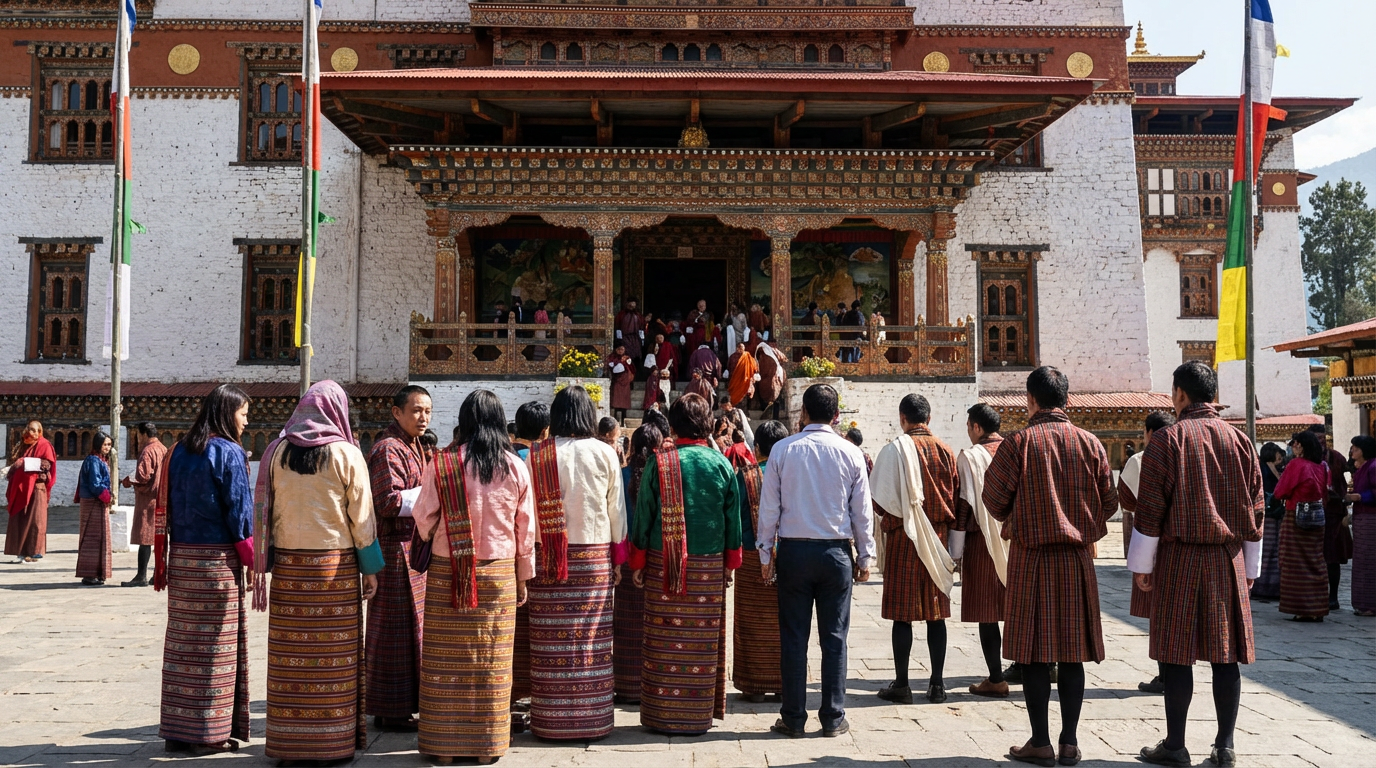
Dress Code for Temples & Dzongs
When visiting Dzongs, temples, and monasteries, there are mandatory dress codes. These rules are consistently enforced – without appropriate clothing, you will be denied entry. Your guide will notify you in time, but it's wise to be prepared from the start.
What You Should Wear
| Body Part | Requirement | Practical Implementation |
|---|---|---|
| Shoulders | Completely covered | T-shirts with sleeves, shirts, blouses – no sleeveless tops or tank tops |
| Legs | Knees covered | Long pants, long skirts, or dresses – no shorts, no short skirts |
| Tops | Depends on cut | Collared shirts: short sleeves allowed. Without collar: long sleeves required |
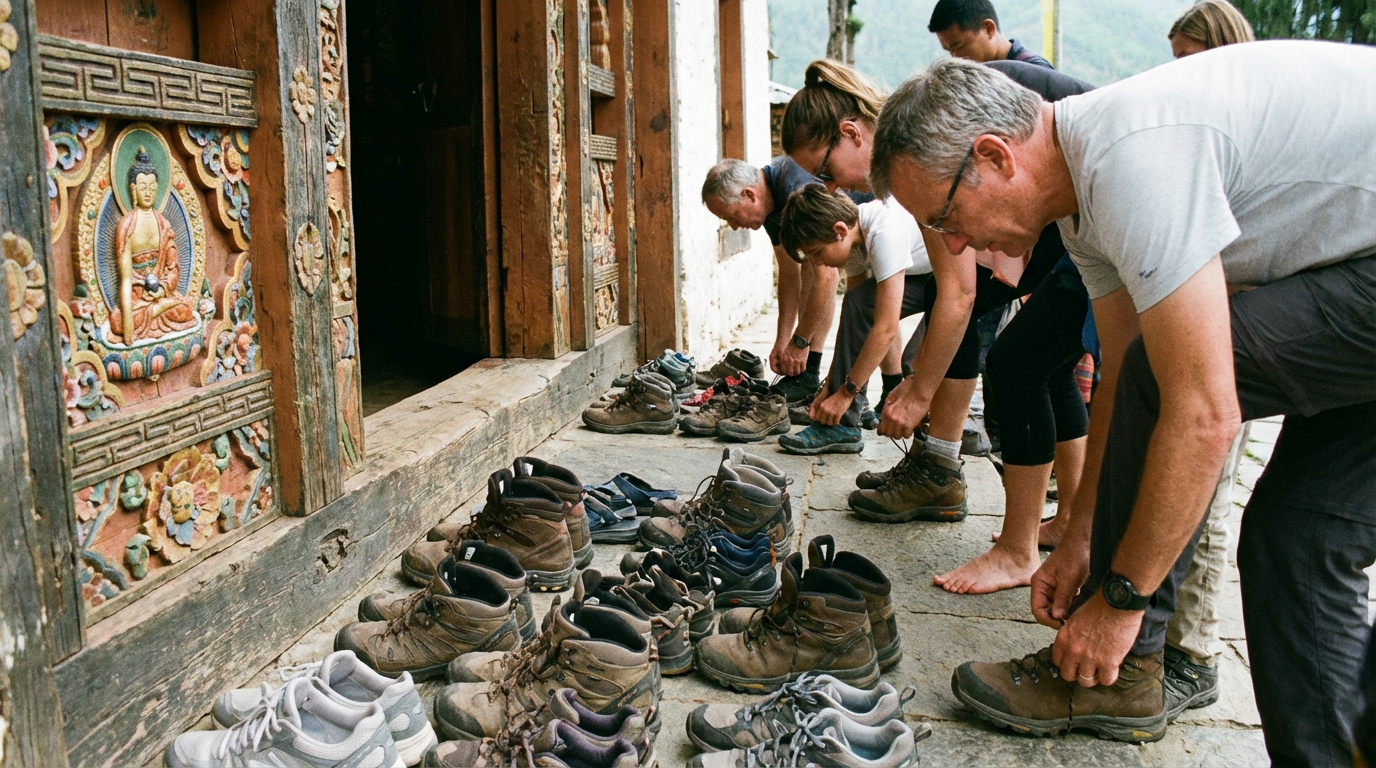
| Shoes | Remove before entering | Shoes that are easy to put on and off – no complicated lacing |
What to Avoid
Why These Rules?
The dress codes have deep spiritual roots. Bhutanese believe that blessings are received through the crown of the head – head coverings would block this blessing. Sunglasses are considered disrespectful as they prevent eye contact with the deities. Modest clothing is a sign of respect for the sacred.
This image was generated with AI.
Traditional Bhutanese Clothing
Traditional Bhutanese clothing is more than fashion – it's a living part of national identity. Bhutanese are required to wear it on official occasions, in schools, and in government buildings. For travelers, it's not required, but trying on or wearing traditional dress can be a special cultural experience.
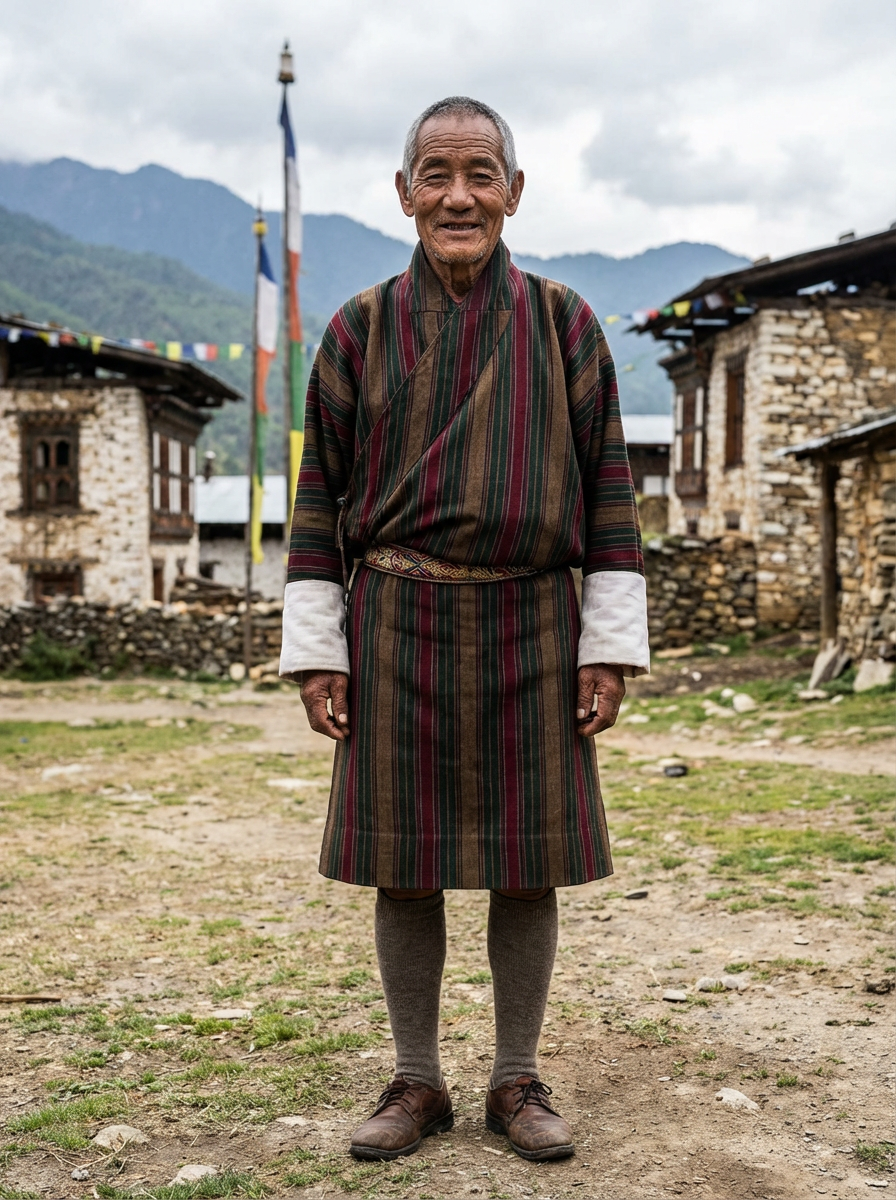
Gho - Traditional Men's Robe
This image was generated with AI.
- Shape: Knee-length robe, similar to a kimono
- Belt: Tied with a fabric belt (Kera) around the waist
- Special feature: The upper folded area (Hemchu) serves as a practical pocket
- Worn with: Long socks up to the knee and formal shoes
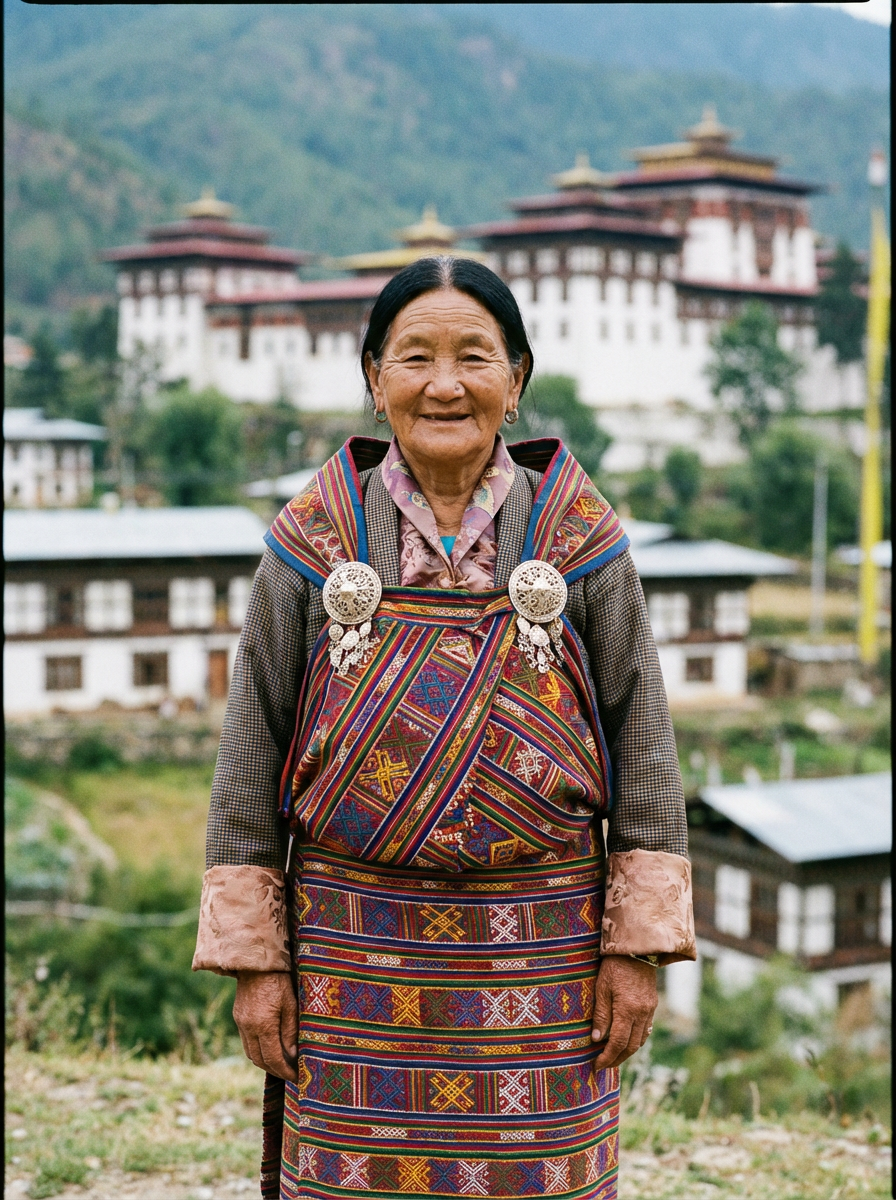
Kira - Traditional Women's Dress
This image was generated with AI.
- Shape: Floor-length rectangular cloth, artfully wrapped around the body
- Fastening: Attached at shoulders with silver brooches (Koma)
- Worn with: Wonju (undershirt) and Toego (short jacket)
- Fabrics: Often featuring elaborate woven patterns that indicate regional status
Traditional Clothing for Tourists
Learn more about traditional crafts and shopping in Bhutan
Behavior in Religious Sites
In addition to proper dress, there are further behavioral rules you should follow in Dzongs, temples, and monasteries. Most are intuitive and show basic respect. Your guide will point out everything important.
Basic Rules
| Rule | Details |
|---|---|
| Clockwise | Always circle Chortens (stupas) and prayer walls to the right – never to the left |
| Don't touch | Do not touch murals, statues, and religious objects |
| Pointing | With an open hand and palm facing up – never with a finger |
| Prayer flags | Don't step over fallen prayer flags – always walk around them |
| Quiet | Maintain silence, speak quietly, don't disturb people in prayer |
At the Altar
When visiting an altar, it's customary and welcome to leave a small monetary offering. Often a monk will pour sacred water into your cupped hand. You drink a symbolic sip and rub the rest on top of your head – this symbolizes receiving the blessing. A respectful bow before the altar completes the visit.
Photography
| Area | Photography Allowed? |
|---|---|
| Public areas, courtyards | Usually allowed – ask your guide to be sure |
| Interior rooms, chapels | Generally prohibited |
| Monks and believers | Only with explicit permission |
| Religious ceremonies | Ask your guide – varies by situation |
Learn more about Dzongs and monasteries in Bhutan
General Etiquette
Greetings
In Bhutan, a slight bow of the head is a universal sign of respect. On more formal occasions, hands are folded in front of the chest, similar to the Namaste greeting. Respect for age is important – greet older people first.
Public Behavior
| Behavior | Recommendation |
|---|---|
| Showing affection | Be reserved in public – holding hands is acceptable, kissing less so |
| Volume | Quiet and modesty are appreciated – avoid loud talking |
| Photographing people | Always ask permission first |
| Gestures | No rude hand signals – pointing with a finger is considered disrespectful |
Environmental Awareness
Learn more about Bhutan's sustainability philosophy
Tobacco & Smoking Ban
Tobacco Import Regulations
| Aspect | Regulation |
|---|---|
| Maximum amount | 200 cigarettes (2 packs) per person |
| Declaration requirement | Must be declared at customs – keep receipt |
| Taxes | 100–200% on imported tobacco |
| Minors | No tobacco can be imported for anyone under 18 |
Where Is Smoking Allowed?
Allowed (with restrictions):
- Certain hotel rooms (with operator's permission)
- Private spaces with consent
- Some bars and discos (if allowed by the operator)
Prohibited:
- Public indoor spaces
- Public outdoor areas
- Public transportation
- Near religious sites
Alcohol Rules
Unlike tobacco, alcohol is not prohibited in Bhutan. You'll find it in restaurants, hotels, bars, and licensed shops. However, there are some restrictions you should be aware of.
| Rule | Details |
|---|---|
| Sales hours | Not before 1:00 PM and not after 10:00 PM |
| Dry Day | Tuesday – no alcohol sales nationwide |
| Minimum age | 21 years to purchase |
| Import limit | Maximum 1.5 liters per adult |
Traditional Bhutanese Drinks
| Drink | Description |
|---|---|
| Ara | Traditional spirit from rice, corn, or barley – also used in religious ceremonies |
| Bangchang | Fermented grain drink, served warm – similar to beer |
| Sinchang | Similar to Bangchang, made from millet, barley, or wheat |
Practical Clothing Tips
With knowledge of the dress code, you can now pack strategically. Here are our recommendations for different clothing categories and seasons.
| Category | Recommendation |
|---|---|
| Tops | Long-sleeved shirts, sleeved t-shirts – no sleeveless tops |
| Pants | Long pants, no shorts for temple visits – lightweight pants for warm days |
| Skirts/Dresses | Knee-length or longer – wrap skirts are practical |
| Shoes | Comfortable and easy to put on and off – no complicated lacing |
| Jacket | Weather protection and warmth for evenings – useful even in summer |
| Layers | Layering principle for temperature fluctuations between day and night |
Season-Specific Recommendations
Spring (March - May)
- Light layers – pleasantly warm during the day
- Rain jacket – monsoon precursors appear toward end of May
- Warm jacket for evenings and higher altitudes
Summer / Monsoon (June - August)
- Waterproof clothing – a rain jacket is essential
- Quick-drying materials
- Waterproof footwear with good sole
Fall (September - November)
- Warm layers for cooling evenings
- Light clothing for sunny days
- Sweater or fleece jacket
Winter (December - February)
- Warm winter clothing – especially for evenings
- Thermal underwear for higher altitudes and mountains
- Hat and gloves (outside temples)
- Warm socks – temples can be cold
See the complete packing list for Bhutan
Checklist Before Temple Visit
Common Mistakes to Avoid
Even well-prepared travelers sometimes make small mistakes. This list helps you avoid the most common pitfalls.
1. Wearing Shorts to a Dzong Visit
Problem: You'll be denied entry with short pants
Solution: Always pack long pants or a long skirt
2. Pointing at Religious Objects With Your Finger
Problem: Considered disrespectful to the deities
Solution: Point with an open hand, palm facing up
3. Stepping Over Fallen Prayer Flags
Problem: Prayer flags are sacred – stepping over them is disrespectful
Solution: Always walk around them, even if it's a detour
4. Importing Tobacco Without Declaration
Problem: Counts as smuggling, high penalties possible
Solution: Declare at customs, keep receipt
5. Being Loud Inside or Near Religious Sites
Problem: Disturbs believers and is seen as disrespectful
Solution: Speak quietly, enjoy the silence
6. Photographing Without Asking
Problem: Often prohibited inside, impolite to photograph people without permission
Solution: Always ask guide or affected person first
Frequently Asked Questions
Do I have to wear traditional Bhutanese clothing as a tourist?
No, as a traveler you are not required to wear traditional clothing like Gho or Kira. You can, however, rent or purchase them if you wish – a wonderful cultural experience. At temple and Dzong visits, there are dress codes regarding covered shoulders and knees.
What happens if I'm not dressed appropriately?
You will be denied entry to Dzongs and temples with inappropriate clothing. In some cases, you can buy or rent a shawl or cloth at the site to cover yourself. Best to plan ahead and wear appropriate clothing from the start.
Can I buy cigarettes in Bhutan?
No, tobacco product sales have been prohibited nationwide in Bhutan since 2004. You can import a maximum of 200 cigarettes (2 packs) from abroad, but you must declare them at customs and pay high taxes. Keep the receipt throughout your stay.
What is 'Dry Day' in Bhutan?
Every Tuesday is "Dry Day" in Bhutan – no alcohol is sold nationwide on this day. Restaurants and hotels cannot serve alcohol. If you want a glass of wine with dinner on Tuesday, you'll have to wait until Wednesday.
Can I take photos in temples?
Photography is usually allowed in the courtyards and public areas of Dzongs. Inside rooms and chapels, it's generally prohibited. Always ask your guide before taking photos. Monks and other people should only be photographed with their explicit permission.
Are flip-flops allowed in Bhutan?
You can wear flip-flops in everyday life, but they're not allowed at Dzong and temple visits – they're considered too informal for sacred sites. Pack comfortable, closed shoes that are easy to put on and off, as you'll need to remove them before temples.
How strictly are dress codes enforced?
Dress codes for Dzongs and temples are consistently enforced – without appropriate clothing you'll be denied entry. In everyday life and hotels, the rules are more relaxed. Your guide will notify you in advance of temple visits so you have time to dress appropriately.
Further Information
With this information, you're well prepared for your Bhutan trip. These topics may also interest you:
This image was generated with AI.
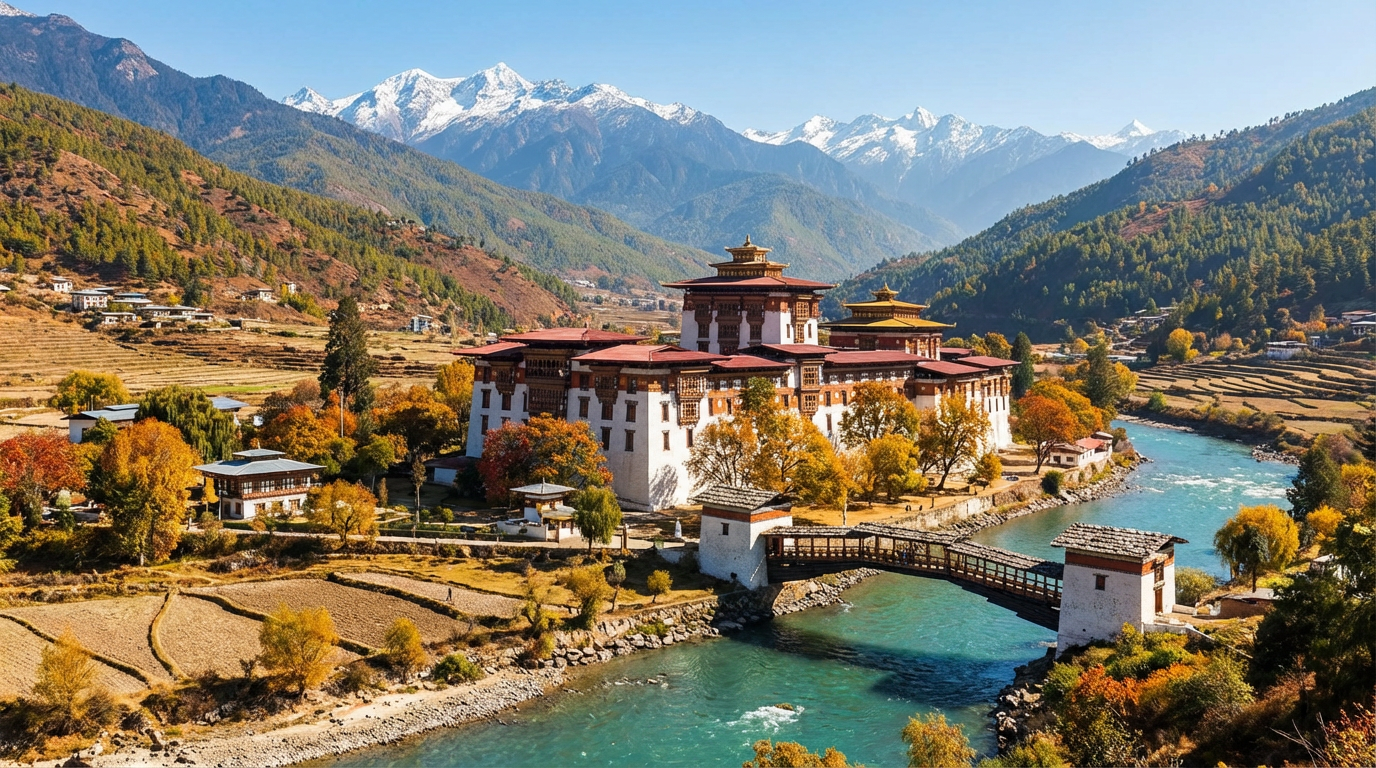
Dzongs & Monasteries
Bhutan's impressive fortress-monasteries - history, significance, and the most beautiful Dzongs in the country.
This image was generated with AI.
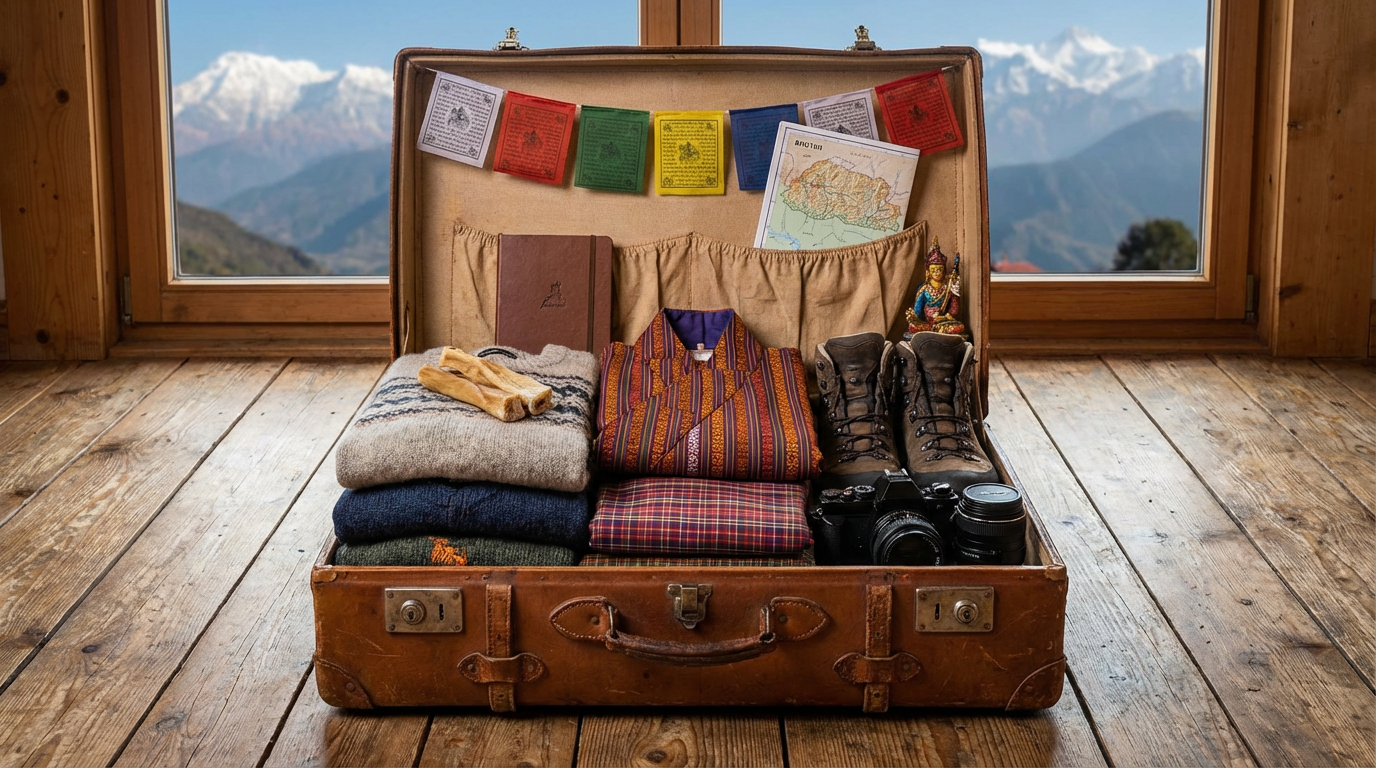
Packing List for Bhutan
What to pack - by season and activity, including trekking tips.
This image was generated with AI.
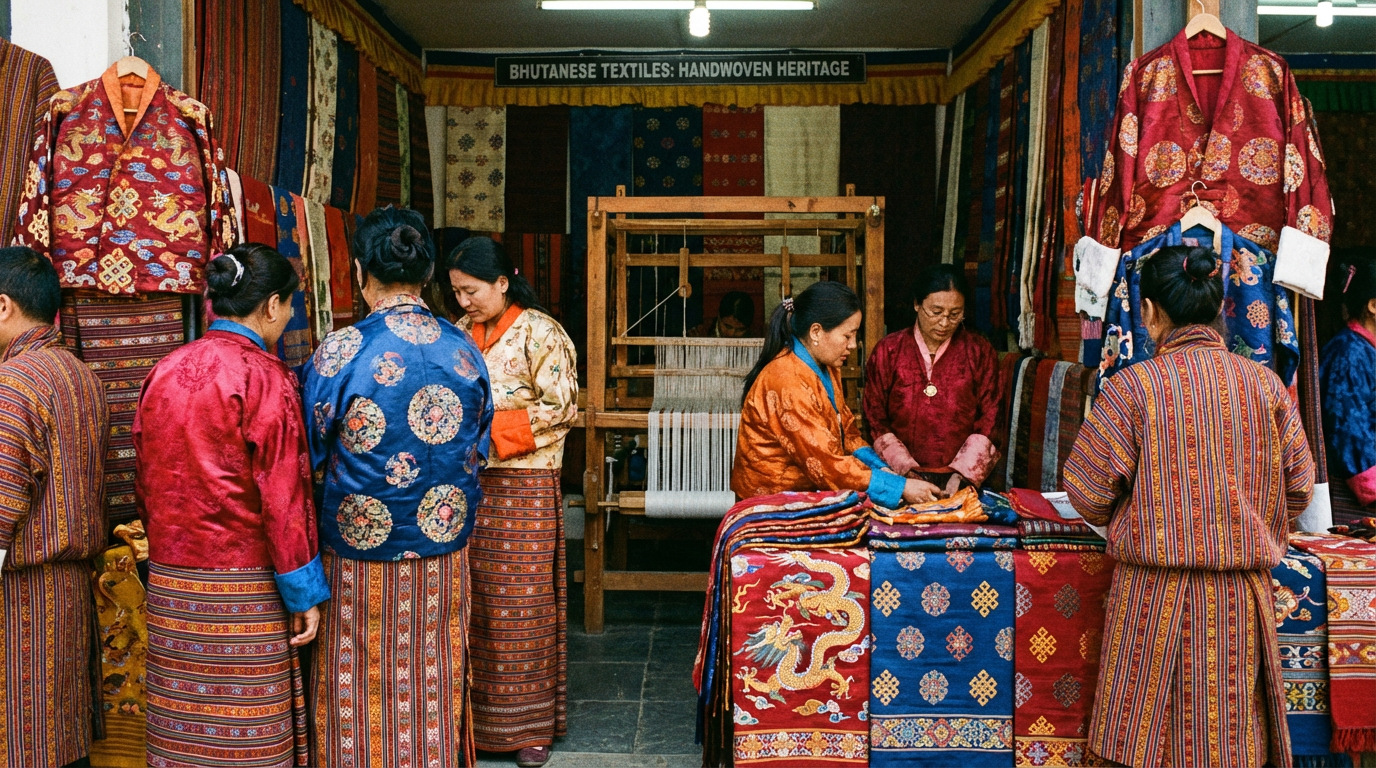
Crafts & Shopping
Traditional textiles, masks, and souvenirs - where and how to shop in Bhutan.
Well Prepared for Bhutan
We advise you on all practical questions and plan your individual Bhutan trip - respectfully and authentically.